A New Era Of Ballroom Design: Adaptability Through Colour And Space
The newly unveiled ballroom at Four Seasons Hotel Mumbai embodies a shift in strategic design through an immersive and adaptable setting in the heart of Worli.
- 18 Mar '26
- 11:46 am by Manisha AR

The role of colour in luxury venues has evolved far beyond decoration. Today, it is a strategic tool that shapes perception, defines scale, and orchestrates atmosphere. In an era of multi-disciplinary programming, spaces must flex seamlessly to accommodate diverse lighting conditions, décor styles, and installations of all scales. The newly unveiled ballroom at Four Seasons Hotel Mumbai exemplifies this trend, offering an immersive, adaptable environment in the heart of Worli.
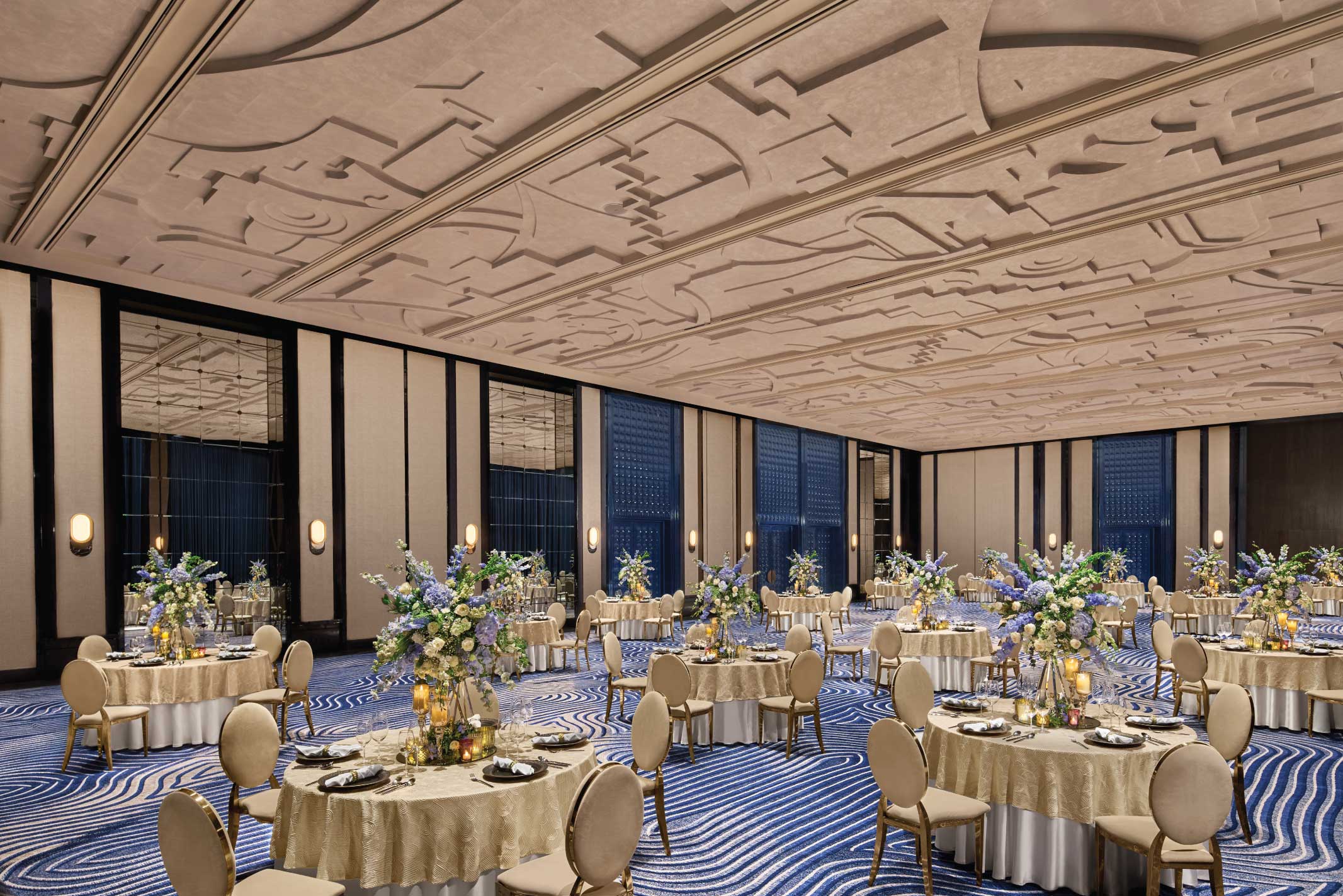
Spread across 10,000 sq-ft, the ballroom known as The Great Room, can be customised for a glamorous launch, an intimate soirée, or a lively wedding. Guests arrive through a private porch and dedicated entrance, moving into a foyer and pre-function lounge designed to quietly orchestrate the early moments of gatherings like rituals, cocktails, casual conversations, all before entering a hall that stretches and breathes. With a 5,700 sq-ft pillarless main space and seamless connectivity to The Great Room, the design allows events to scale effortlessly without sacrificing intimacy. Despite its expansive footprint, the ballroom feels liberating rather than imposing, a rare balance that speaks to the thoughtfulness of contemporary spatial design.
Also read: Neutrals Make A Statement At This Sea-Facing Apartment In Mumbai
A Study in Blue
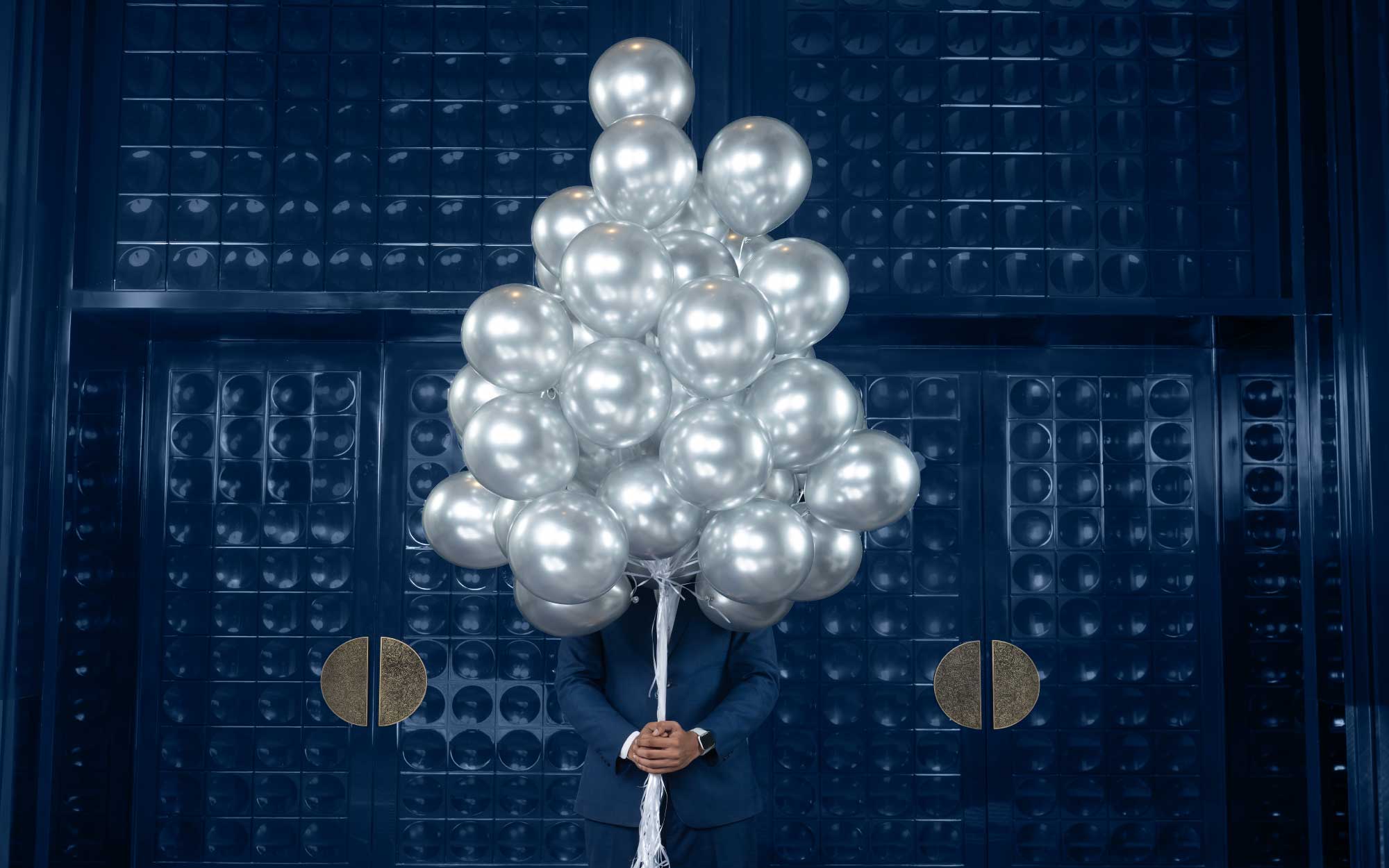
Colour is central to this experience. Dominant deep-blue tones, paired with warm metallic accents and luminous whites, are carefully calibrated to modulate scale and create a flexible canvas. Maze-like carpeting, sculptural ceilings, and textured doors compress the space in key areas to foster intimacy, while the blue tones absorb LED light, softening the glare from modern audiovisual setups.
Historically, blue has been associated with prestige and luxury—a rarity in nature that made pigments like ultramarine from lapis lazuli or indigo from plants precious and exclusive. This lineage of rarity and understated elegance persists in art and design, from Vermeer’s ‘Girl with a Pearl Earring’ and Hokusai’s ‘The Great Wave’ to Yves Klein’s International Klein Blue, and continues to inform contemporary luxury branding. Tiffany’s signature blue and Augustine Bader’s monochromatic pop-ups are examples of how the hue conveys elegance without ostentation, a principle the Four Seasons ballroom interprets with grace.
Technology plays a complementary role in the ballroom’s adaptability. A full wall of LED panels, portable repeater displays, and advanced audiovisual systems allow the space to be transformed visually, while modular layouts and customizable lighting adapt the room to any program. At the same time, a live kitchen brings the growing trend of experiential hospitality to life, allowing guests to engage directly with culinary creation through live demonstration spaces. Menus feature locally sourced ingredients, and interactive demonstrations reflect a commitment to sustainability, reinforced by partnerships with eco-conscious décor vendors and zero-waste practices.
Also read: A Sculptural Green Onyx Bathroom Anchors This 16,000-Square-Foot Home Above Mumbai
Modern Luxury Is Not Defined By Size Alone
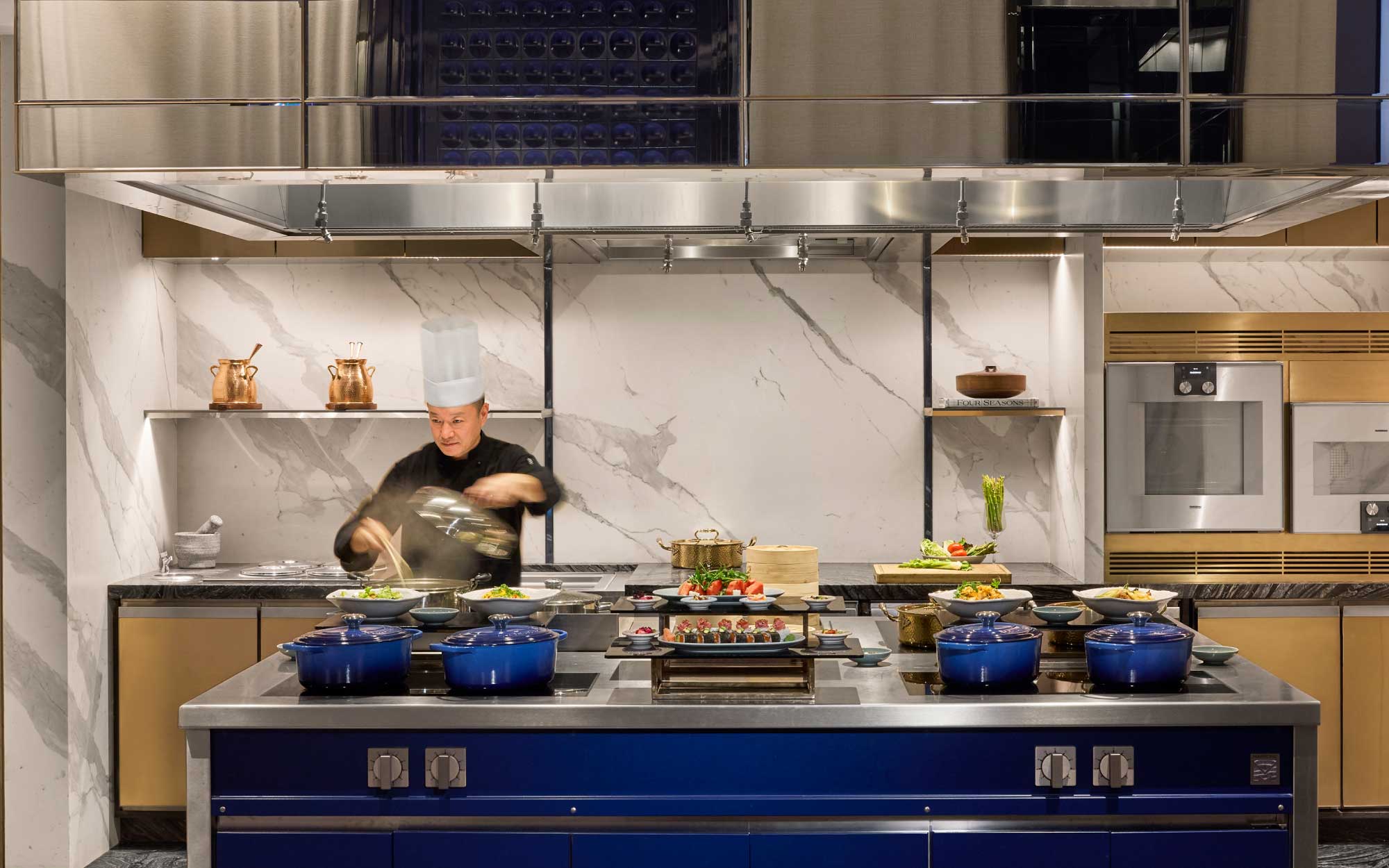
In this sense, the Four Seasons ballroom serves less as a static venue and more as a lens through which to view the evolution of event design. Every element, from deep-blue walls to interactive kitchens, sculptural ceilings to modular layouts, works in concert to make each event immersive, flexible, and memorable. More than a single architectural feat, it is a manifestation of a wider trend: luxury spaces are becoming immersive, flexible, and thoughtfully curated environments where every detail, from colour to culinary experience, contributes to the narrative of the event itself.
For designers, planners, and hospitality professionals, the ballroom is a reminder that modern luxury is no longer defined by scale alone. It is measured by how a space adapts, engages, and resonates with its occupants. And in a city like Mumbai, where density often limits spatial experience, creating a venue that feels both expansive and personal is as much an architectural achievement as it is a design statement.
*This article is an advertorial for Four Seasons Hotel, Mumbai.