Ai Weiwei Reimagines Pichwai Through Lego Bricks For His First Solo Exhibition In India
The non-conformist silence of Gaitonde meets the defiant, noisy resistance of Ai Weiwei at his debut solo at Nature Morte, New Delhi.
- 16 Jan '26
- 5:27 pm by Urvi Kothari

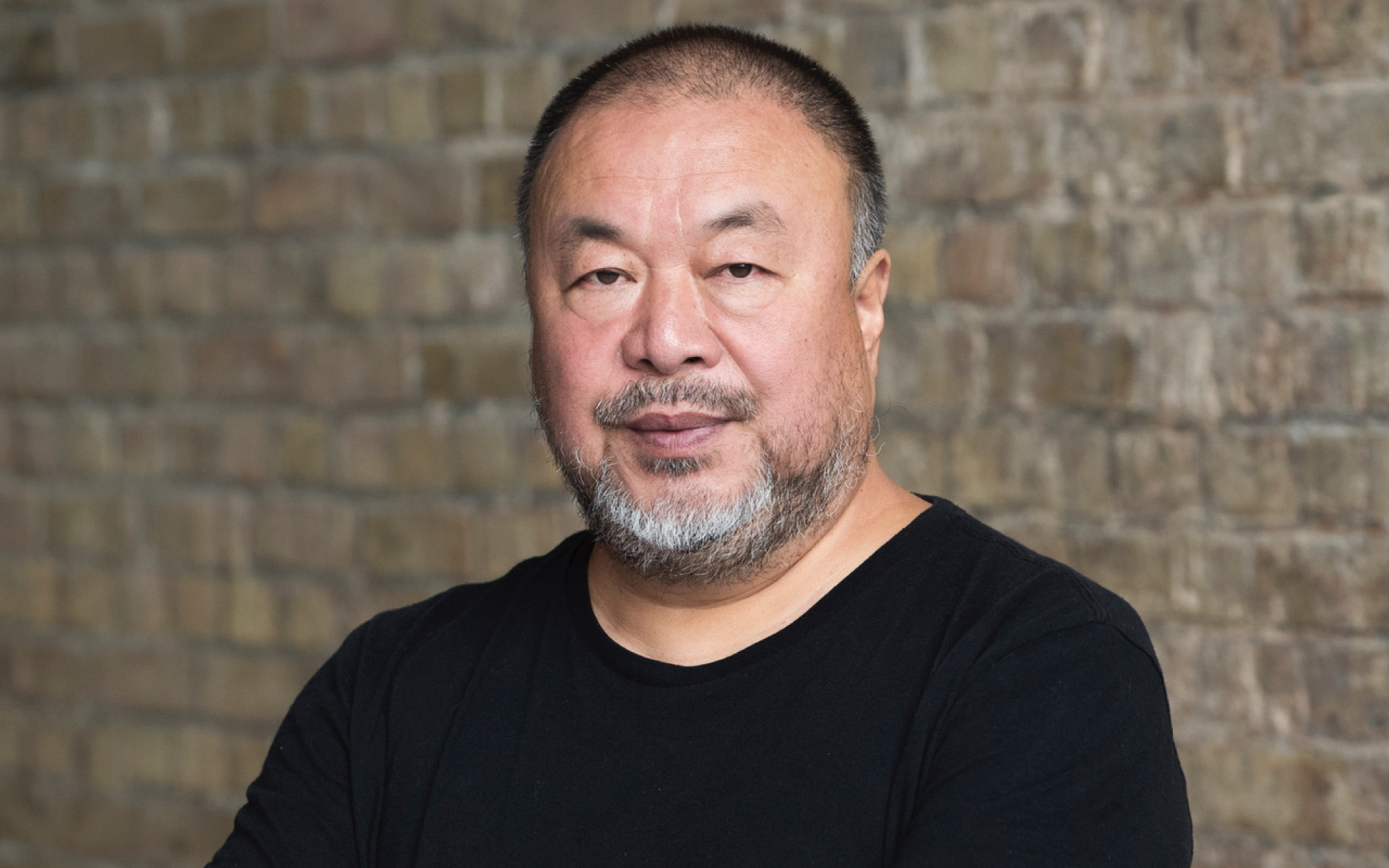
“Everything starts from silence,” the late Indian modernist V.S. Gaitonde once remarked. For Gaitonde, silence was a spiritual vacuum, a place to strip away the noise of the ego until only the essential remained on the canvas. Decades later, at Nature Morte’s Dhan Mill space, this same silence takes on a more muscular, defiant quality. It is the silence of the cell – specifically the 81 days of detention Ai Weiwei endured in 2011. At his debut solo show in India, Chinese artist Ai Weiwei proves that while authority can enforce silence, it cannot govern the art born from it. “This is my first exhibition in India. Although there are only a dozen of my artworks, they cover several key points that trace more than 20 years – and almost 30 years – of my creative activity,” shares Ai Weiwei. For this debut solo, the world-renowned artist presents works across sculpture, installation, film, photography, ceramics, painting, writing and social media, often fusing traditional craftsmanship with a conceptual approach shaped by his activism and advocacy for human rights.
Also read: This 4,500 Sq. Ft. Weekend Home In Karjat Floats On A Gorge
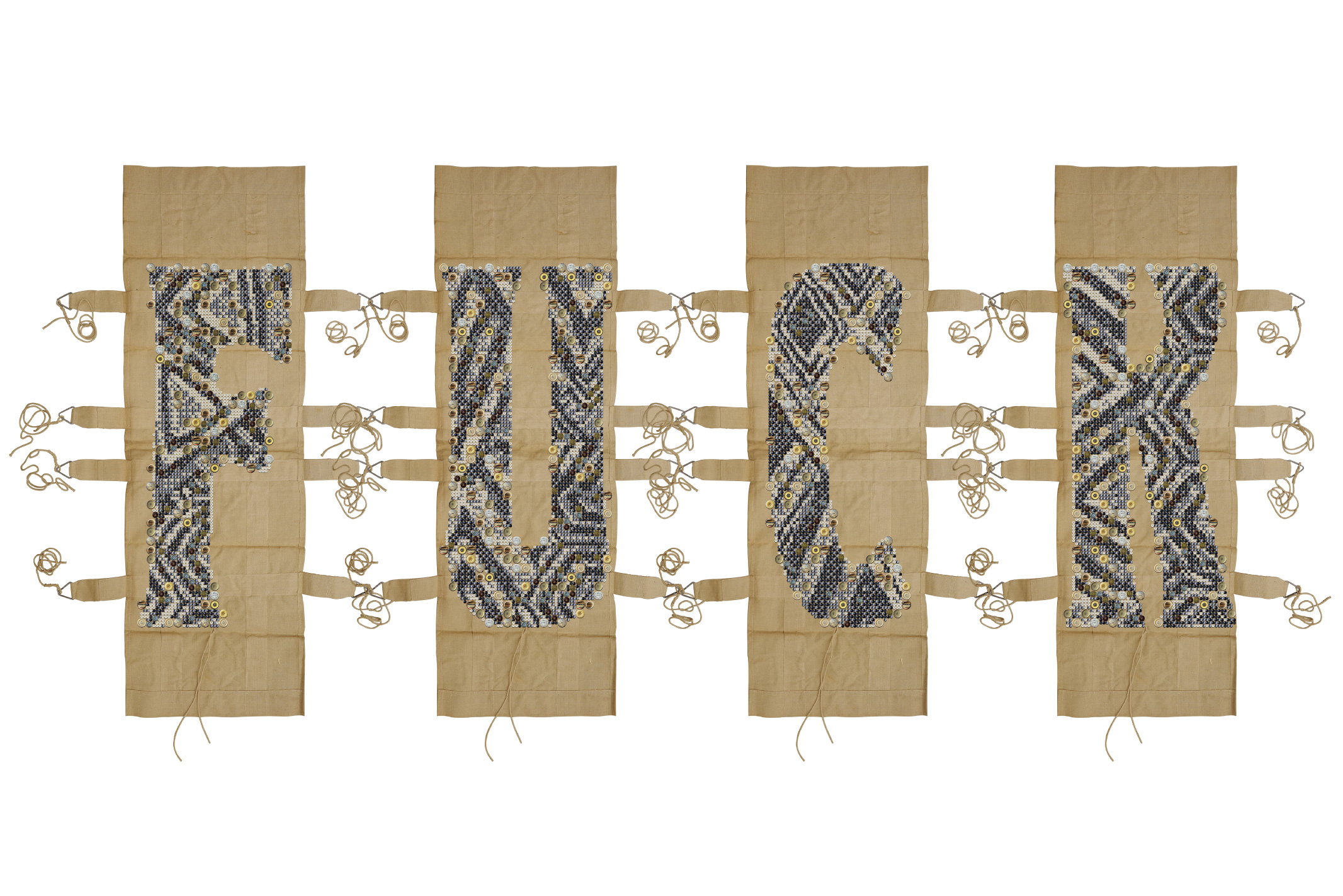
This very defiance is presented very literally with the artwork titled F.U.C.K., composed of hundreds of tiny metal buttons stitched onto four World War II-era military stretchers. The stretchers–tools of trauma and rescue–become a canvas for a blunt, monosyllabic rejection of power. It is a work that feels particularly urgent in 2026, serving as a reminder that the language of resistance is universal, whether it is spoken in Mandarin, Hindi, or the digital shorthand of a Lego brick. “Bringing Ai’s work to India isn’t about creating a spectacle — for us, it is about urgency. His work speaks to the present moment with total clarity: history, power, borders, memory. India is a place where these questions are lived, not abstract, and this exhibition invites that conversation without flinching,” shares Aparajita Jain, Co-Director at Nature Morte.
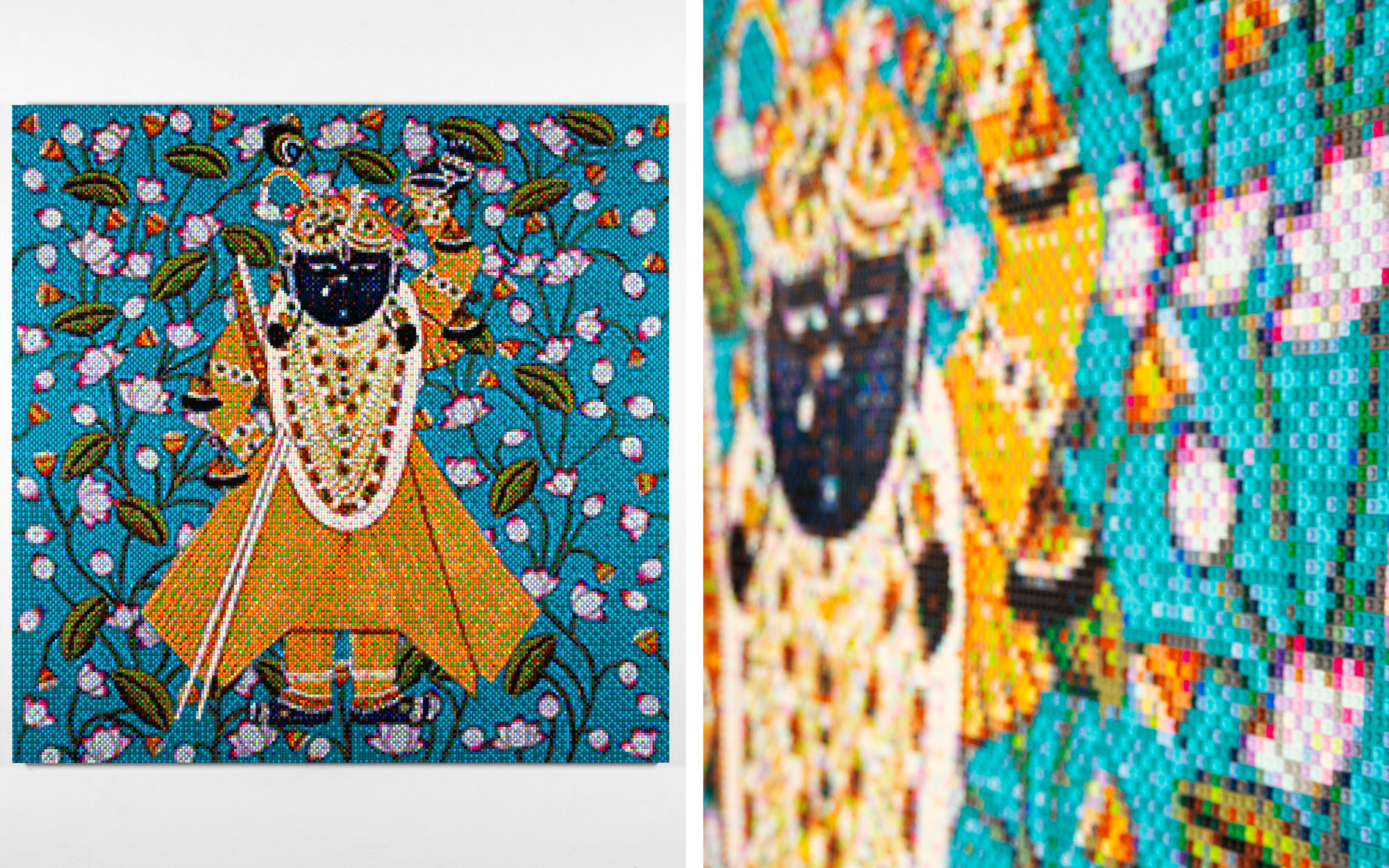
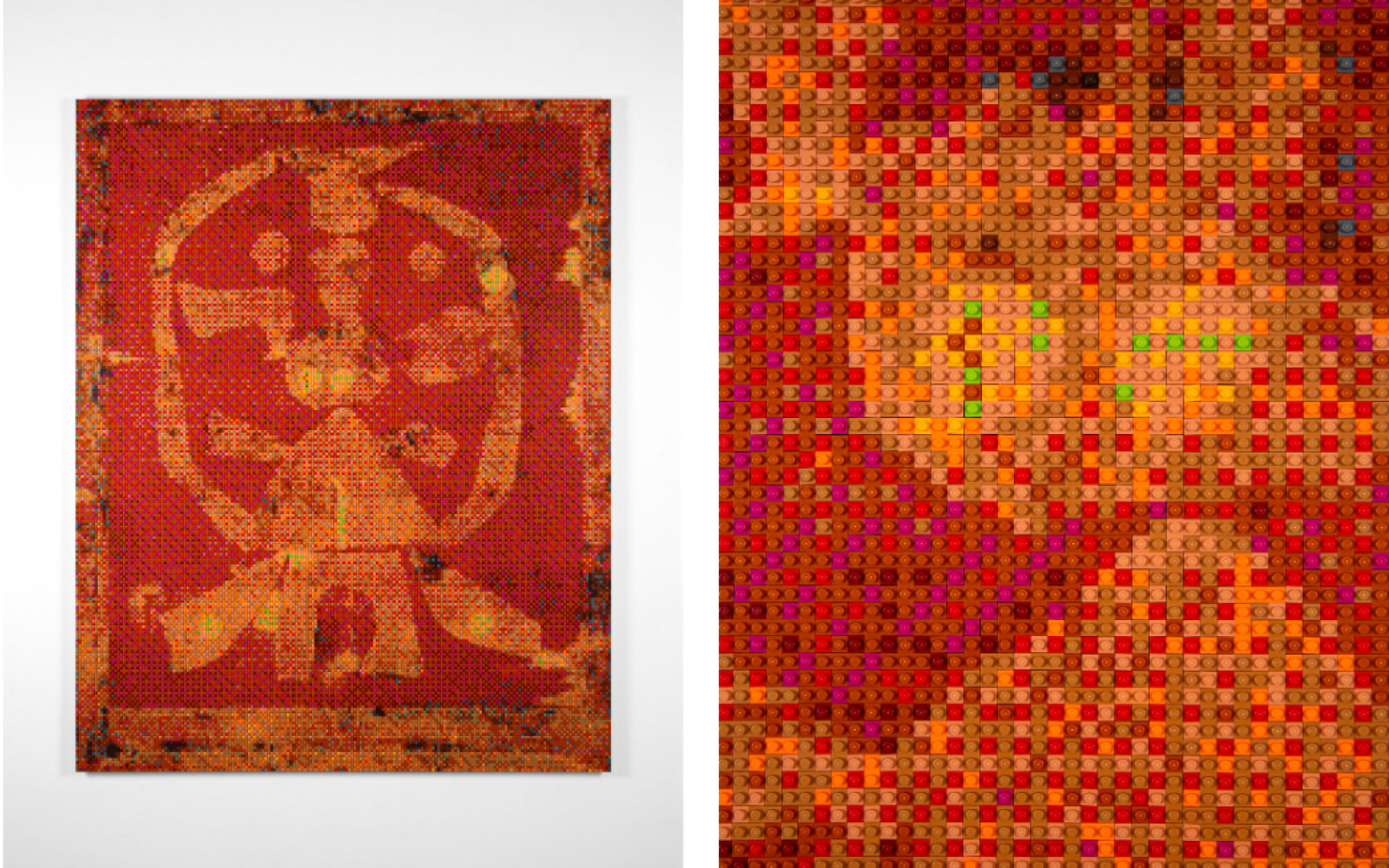
The centrepiece of the curation is undoubtedly his signature series of large-scale compositions rendered in Lego bricks. Weiwei has employed this medium to present a contemporary statement to Western practitioners, such as Monet’s ‘Water Lilies’ and Japanese artist Hokusai’s Surfing. However, for the very first time, he engages with the Pichwai, a 400-year–old tradition of devotional cloth paintings from Rajasthan. He uses mass-produced global toy bricks to represent the spiritual intricacies of Nathdwara art. It almost feels like Weiwei is democratising the sacred. This extends to an ongoing social commentary as to how we consume culture in today’s technocratization. The showstopper installation is the non-conformist silence of V.S. Gaitonde that meets the defiant, noisy resistance of Ai Weiwei. Gaitonde’s ethereal silence is transformed into a pixelated grid. This fragmented grid at once harmonises as one steps back and revisits the masterful presentation.
Also read: The White Lotus Season 4: Everything We Know About The Paris And French Riviera Locations
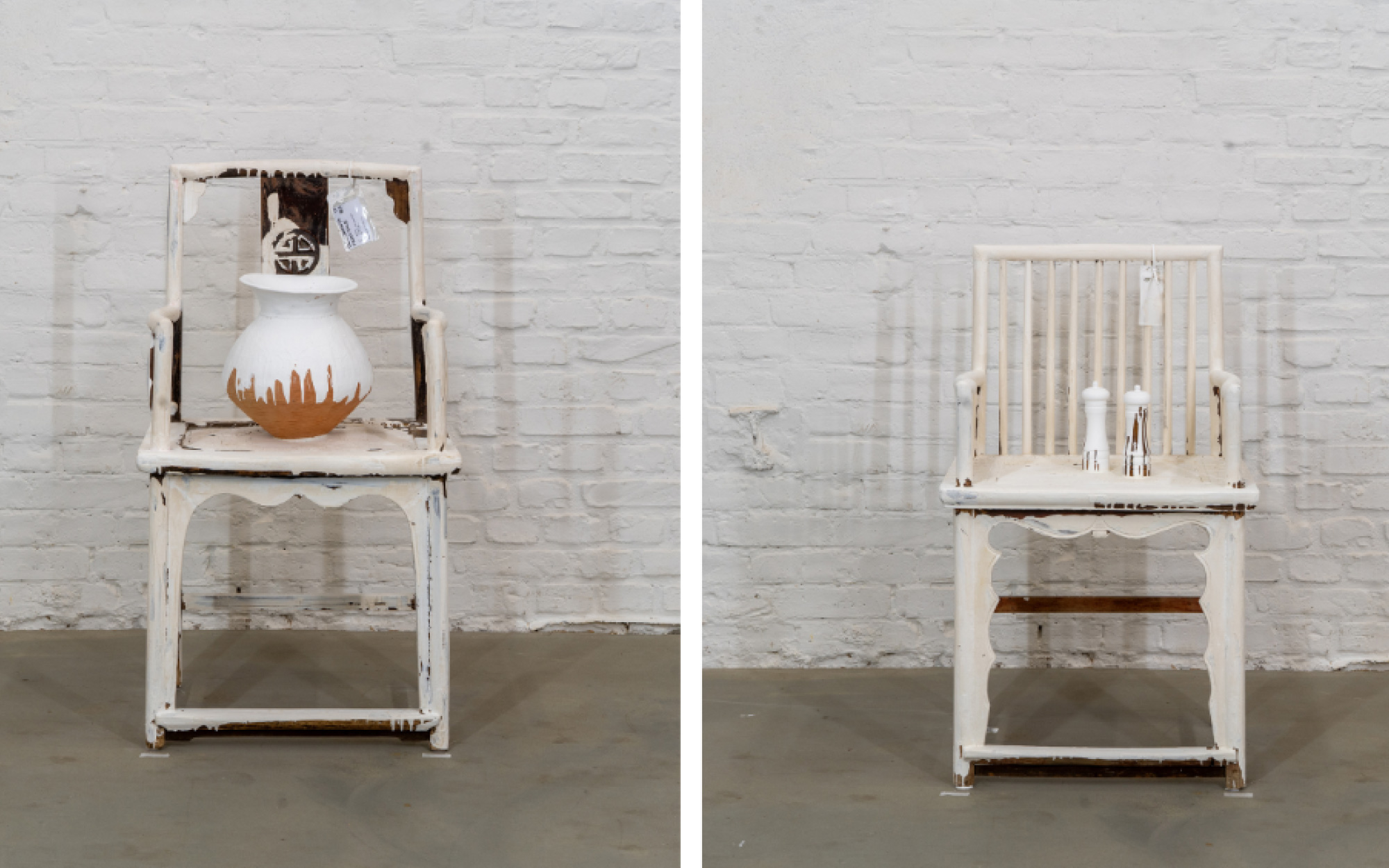
What makes this exhibition particularly compelling is the way Ai Weiwei situates global concerns within the Indian context. He presents for the first time a body of works titled ‘Whitewashed Remnants of History of the State of Emerging Future Works’. This body of work explores the silence of erasure. The artist has taken locally sourced Indian antiques – chairs, vases, and ancient tools and dipped them in thick, opaque white paint. White, in the Indian visual and cultural lexicon, carries multiple and contradictory meanings: purity, mourning, bureaucracy, and erasure. Ai exploits this ambiguity masterfully.
Also read: DP Curates: 5 Spectacular Stationery Objects To Reset Your Desk For 2026
If everything starts from silence, then this exhibition is the loud, necessary explosion that must follow. Also a part of the India Art Fair parallel programme, this exhibition marks a pivotal point where the East meets the West. In collaboration with Galleria Continua, the show will be on display till February 22.