
1 Million Square Feet Of Modernism: Manuel Rabaté To Helm Adjaye-Designed KNMA
KNMA appoints Manuel Rabaté as CEO. The former Louvre Abu Dhabi Director will lead the museum’s transition to its landmark 1,000,000 sq. ft. Adjaye-designed site.
- 9 Mar '26
- 4:45 pm by Manisha AR

Manuel Rabaté begins his tenure as CEO and Director of the Kiran Nadar Museum of Art (KNMA) this month. Previously the Director of Louvre Abu Dhabi, Rabaté brings 25 years of experience in the international museum sector to the role.
“Manuel Rabaté is one of the international art world’s most experienced and respected leaders,” said Kiran Nadar, Founder and Chairperson of KNMA. The appointment comes as the museum prepares to open an expanded facility on National Highway 8 in Delhi. “We welcome Manuel Rabaté as CEO and Director with the vision and skills to achieve our aspirations,” Nadar added.
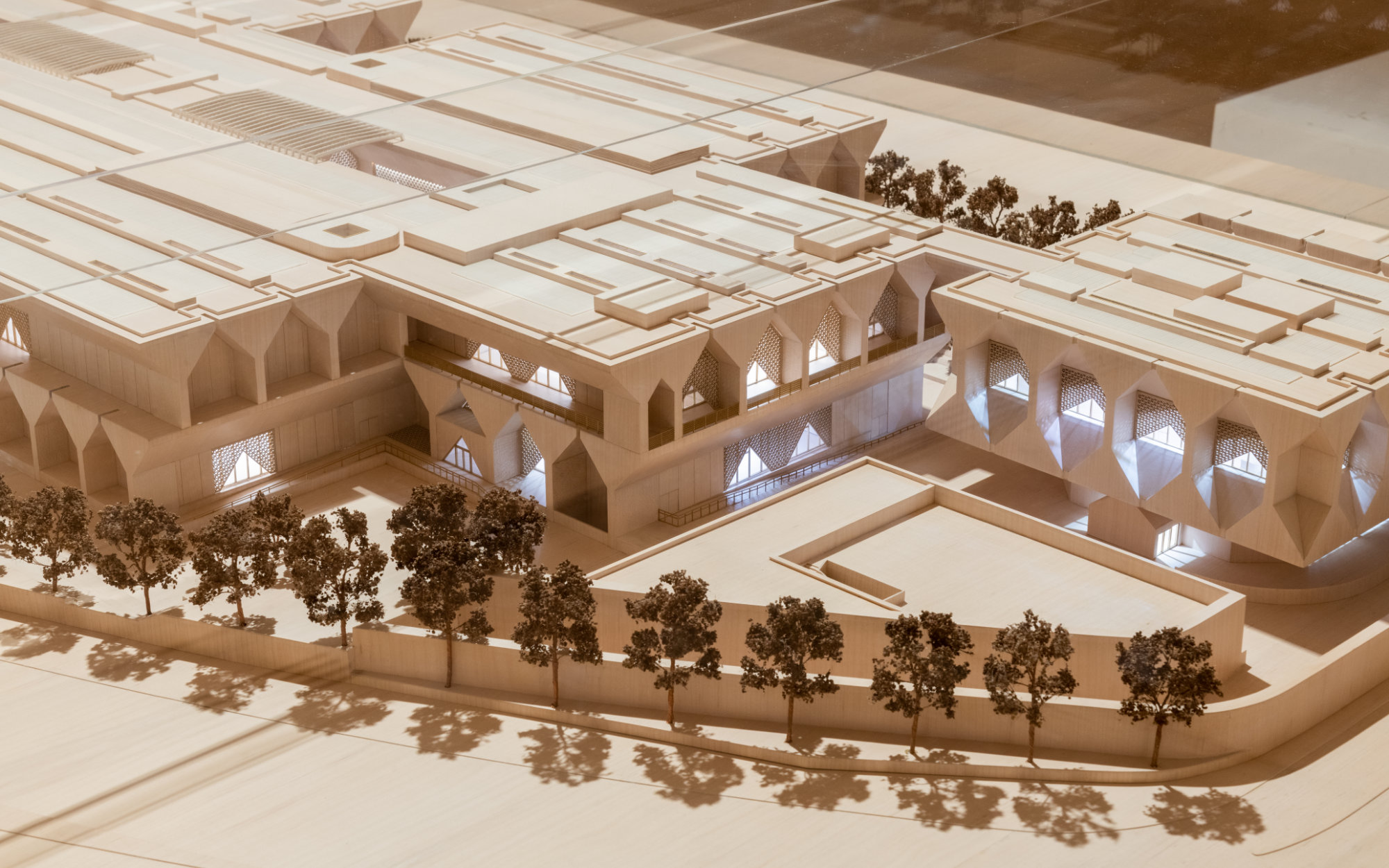
As the KNMA transitions from its current Saket location, its leadership and operational scope will expand to oversee a new site designed by Ghanaian-British architect Sir David Adjaye. Known for his ability to blend community-focused design with nuanced historical and cultural context, Adjaye’s design integrates traditional Indian architectural concepts with a contemporary aesthetic. The facility will feature over 1,000,000 square feet of exhibition and gallery space, a footprint significantly larger than the Louvre Abu Dhabi. The building is conceived as a cluster of pavilions surrounding courtyard spaces and gardens. While its scale is comparable to state-run institutions such as the Louvre or the Met, the KNMA will continue to operate as a private philanthropic collection.
Also read: With The Artist: Why Anju Dodiya Believes Art Is More Than the Hunt For Meaning
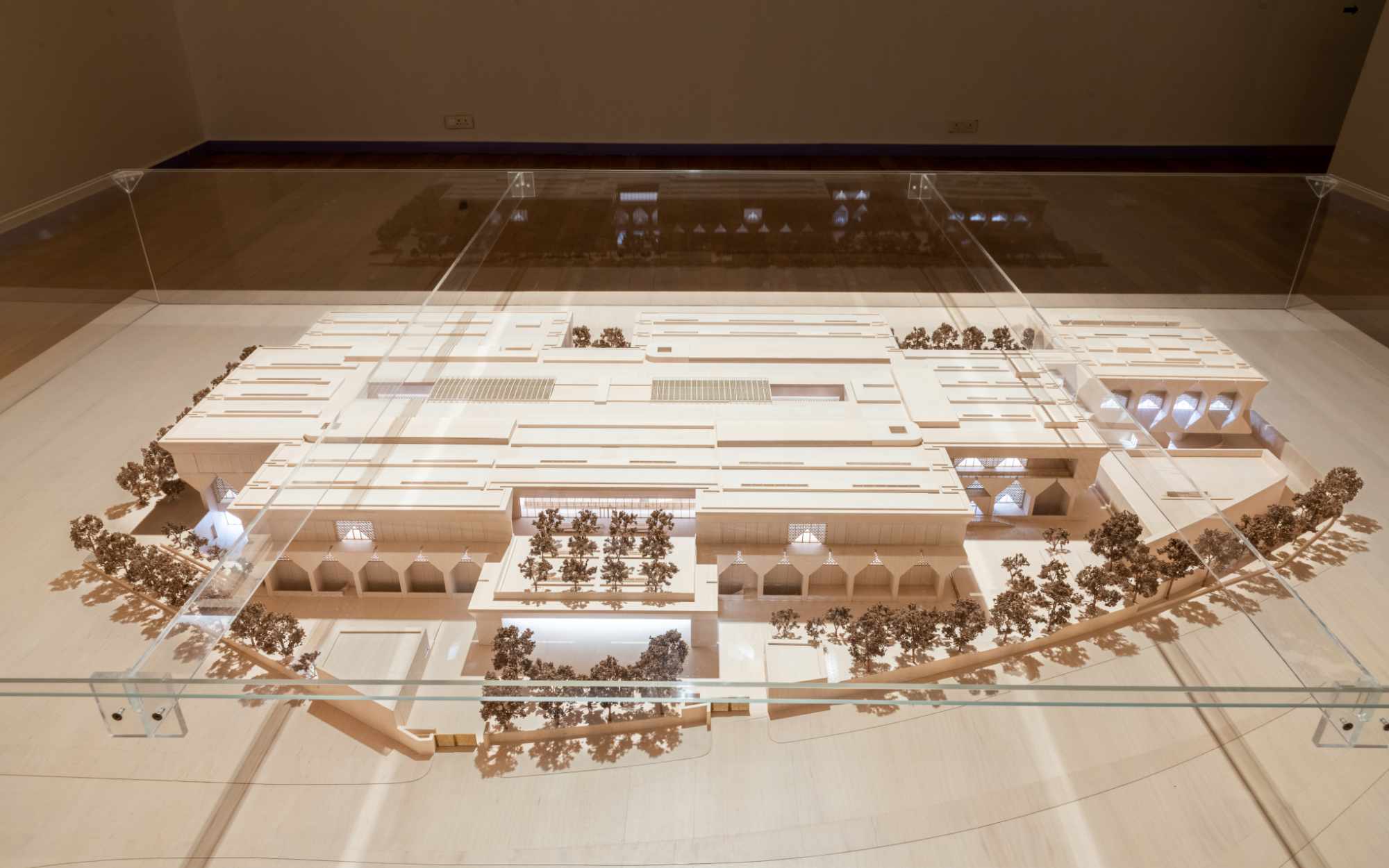
A Massive New Home for South Asian Art On The Horizon
Located near Delhi’s Indira Gandhi International Airport, the new KNMA facility is in the final stages of completion and is scheduled to open within the next two to three years. The programmed space includes art galleries, auditoriums, a library, and restaurants, designed to accommodate visual arts, music, dance, and theatre.
The museum’s collection currently exceeds 16,000 artworks from South Asia; the museum intends to offer a more contemporary approach to collection building. Rabaté’s “universal museum” approach, which prioritises chronological connections over geographic divisions, could move the KNMA away from a Eurocentric framework. By situating South Asian art within a global context, the museum aims to present movements like Indian Modernism as parallel developments rather than as reactions to Western art. The collection spans from the 3rd century CE to the 20th century, encompassing classical, folk, and tribal art alongside contemporary experimental practices.
Significant works within the collection include M.F. Husain’s “Gram Yatra” (1954), a 14-foot painting consisting of 13 vignettes that recently set a record for the most expensive modern Indian work sold at auction. The collection features Amrita Sher-Gil’s self-portraits, which are designated as National Art Treasures. These works serve as a primary example of the cross-cultural dialogue Rabaté aims to facilitate, specifically regarding the evolution of the female gaze in a global context. The holdings also include a significant concentration of Indian Modernism through the Progressive Artists’ Group (PAG), with works by S.H. Raza, F.N. Souza, V.S. Gaitonde, and Tyeb Mehta.
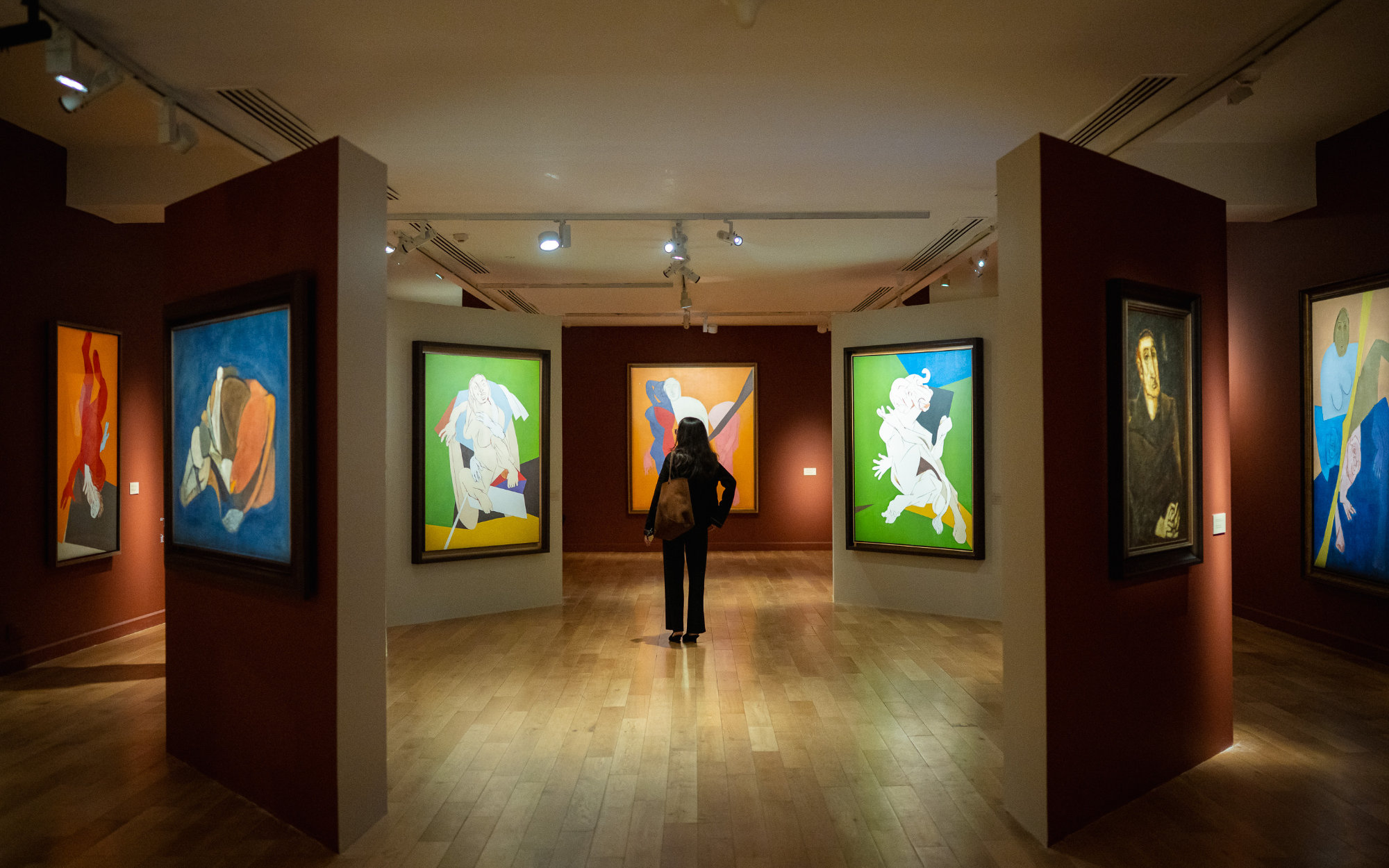
KNMA’s Global Reimagining of South Asian Art
Beyond modernism, the museum represents established contemporary figures such as Arpita Singh, who recently debuted at the Serpentine in London, and Nalini Malani, whose work is scheduled for the 2026 Venice Biennale. The contemporary collection is further distinguished by large-scale installations from Bharti Kher and Subodh Gupta.
Rabaté was selected to transition the KNMA from a founder-led private collection into a public institution of global standing. His appointment draws directly on his decade at the Louvre Abu Dhabi, where he led a similar transformation by aligning collections with international standards for conservation and education. This background includes managing specialised climate control for delicate works, such as the Indian miniatures, recruiting expert curatorial teams, and navigating the complex logistics of high-profile international loans.
This appointment positions Rabaté to lead the KNMA as it develops alongside the state-led Yuge Yugeen Bharat Museum. As the government project is set to become the world’s largest museum upon its completion in Delhi, Rabaté’s role will include maintaining a distinct international profile for the KNMA. His background in cultural diplomacy and large-scale management is intended to ensure the institution remains a prominent and distinguished fixture within India’s expanding cultural infrastructure.
Also read: Ai Weiwei Reimagines Pichwai Through Lego Bricks For His First Solo Exhibition In India
Manuel Rabaté received both the Knight of the National Order of Merit (Chevalier de l’Ordre National du Mérite) in 2015 and the Knight of the Order of Arts and Letters (Chevalier de l’Ordre des Arts et des Lettres) in 2020 for his work. An alumnus of Sciences Po Paris and HEC Business School, his academic background is a blend of the arts and management. Before moving to Abu Dhabi in 2016, he served as the CEO and Director (at different times) of Agence France-Muséums, where he oversaw the creation and development of the Louvre Abu Dhabi. Before that, he served as the Deputy Director of Cultural Development at Musée du quai Branly – Jacques Chirac.
Ahead of assuming his new responsibilities, Rabaté noted that the KNMA is currently “defining what a 21st-century museum can be” through its focus on artists, community engagement, and education. In this role, he will collaborate with the museum’s senior leadership to manage the next phase of growth, building on the institutional vision established since its founding to further its national and international standing.