#DP Exclusive: Spread Across 6,600 sqm A Home In Vapi That Breathes
PBR House by Studio Saransh frames orchards with geometry, balancing structure, materials, and the landscapes of Gujarat.
- 5 Mar '26
- 1:30 pm by Manisha AR

|
Getting your Trinity Audio player ready...
|
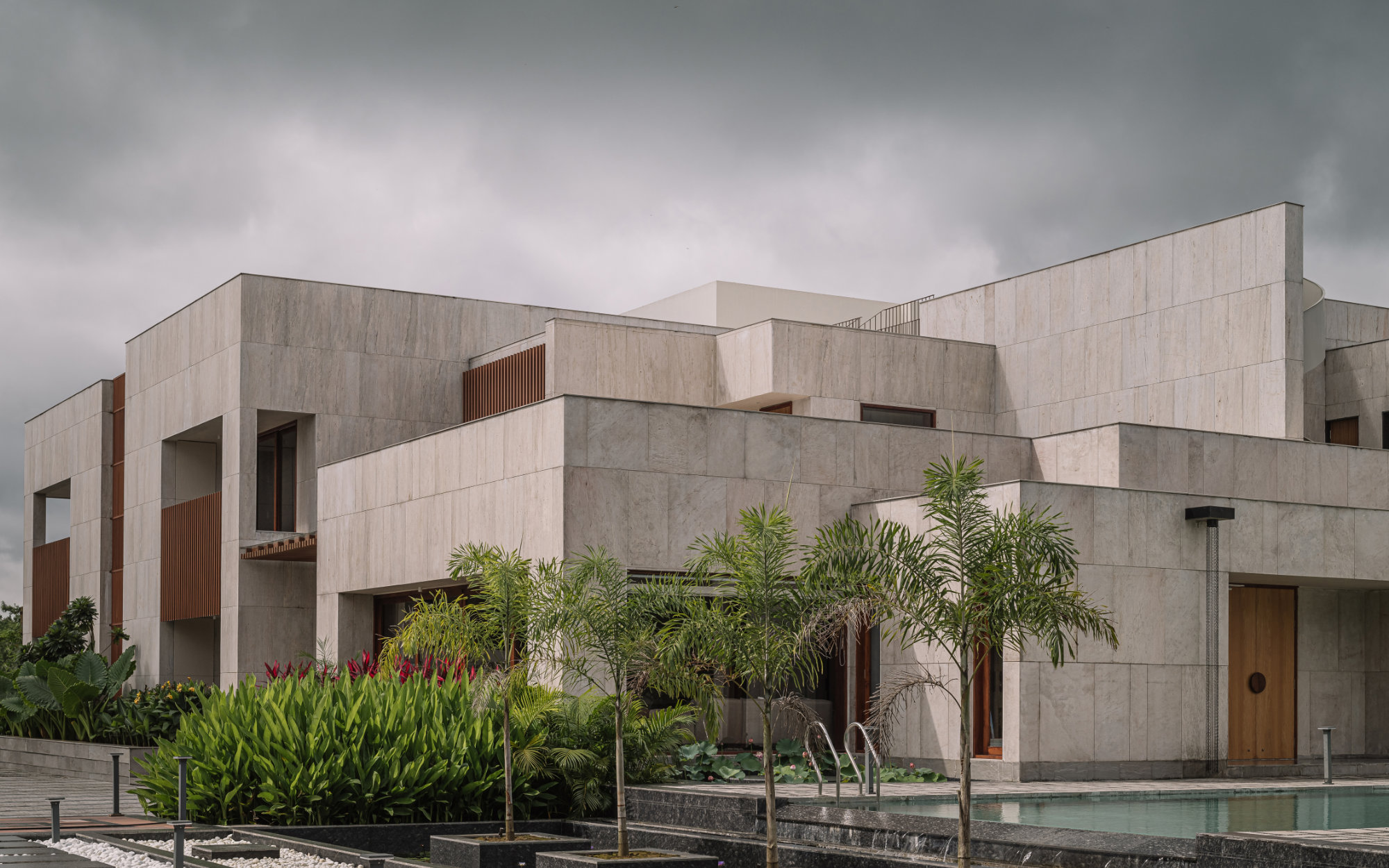
The most radical gesture behind PBR House is what it leaves unbuilt. Set within a 6,660 sqm orchard plot on the outskirts of Vapi, the home occupies only a fraction of the land, allowing gardens and cultivated fields to shape the experience of arrival. At a time when residential architecture often strives to disappear into its landscape, PBR House takes a more assertive stance. Located on the edge of Gujarat’s industrial capital of Vapi, where factory skylines dissolve into agricultural land, the project refuses mimicry. Instead, Studio Saransh employs deliberate geometry to frame the orchards, keeping architecture and landscape distinct, in deliberate dialogue.
Malay Doshi, Principal Architect at Studio Saransh, resists the contemporary rhetoric of disappearance. The house does not ‘blend in,’ it engages and acknowledges its pastoral setting while maintaining tectonic clarity. Instead of leaning on architecture as scenery, the design hinges on structure, proportion, material weight, and shadow.
Also read: Plunge Into The World’s Most Magical Waters Designed For Thermal Cure
A Modern Adaptation Of Vernacular Structures
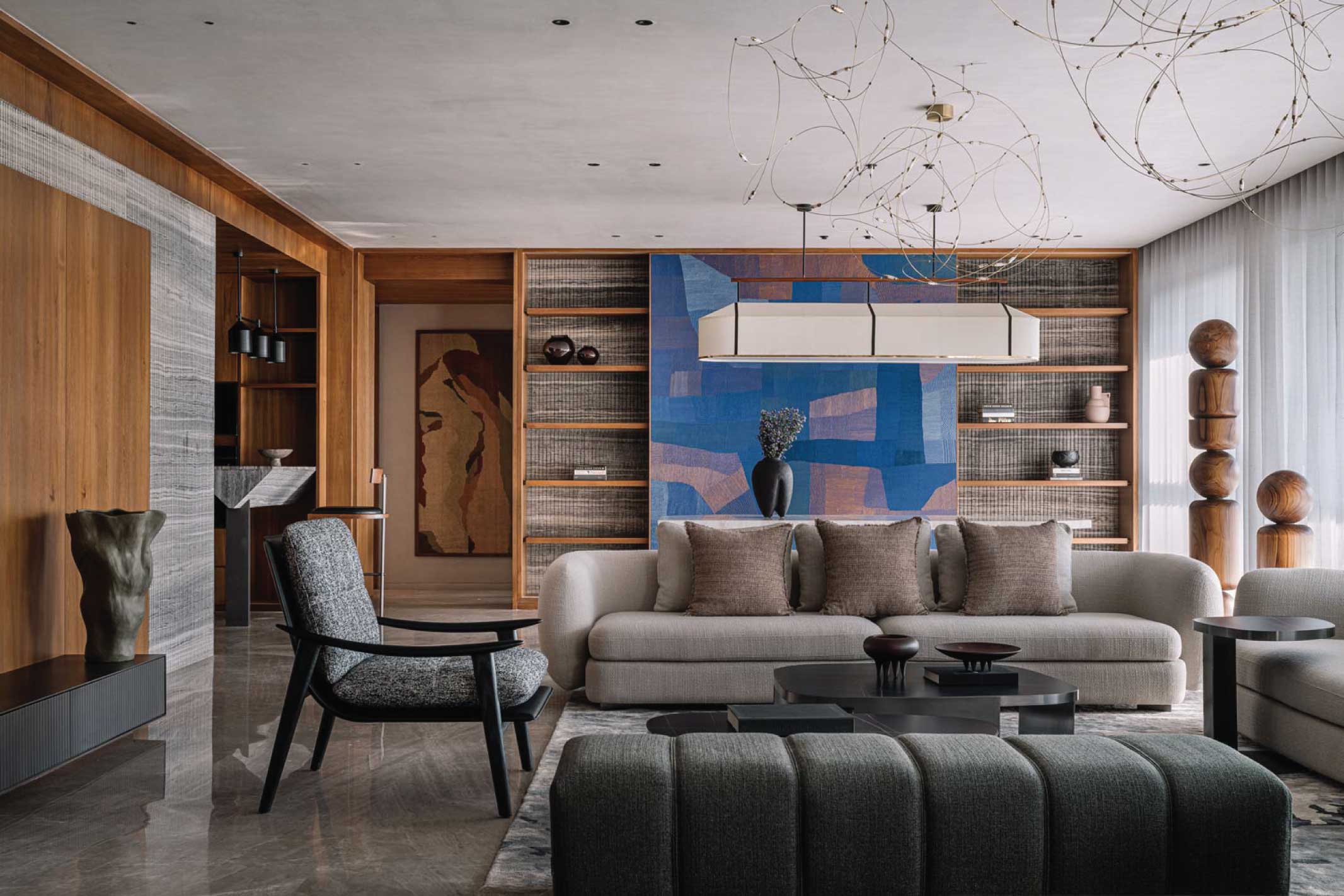
At the centre of the plan lies a contemporary reinterpretation of the Gujarati haveli. Traditionally, a climatic device and communal hub, the courtyard becomes the spatial hinge of the home. From this space, two wings unfold with measured precision: a western social wing containing the living room, kitchen, dining area, and puja, and an eastern private wing of bedrooms.
Rising within this central space is a sculptural staircase. Grounded in terrazzo, it transitions into metal and timber treads before culminating in a suspended landing. The stair gathers the home’s material vocabulary of stone, wood, and metal into a single tectonic gesture. Its lightness offsets the solidity of the enclosing walls, reflecting the project’s ongoing negotiation between mass and levity.
Also read: Honey, I Shrunk the City: 3 Designers Scale Down Indian Cities Into Statement Objects
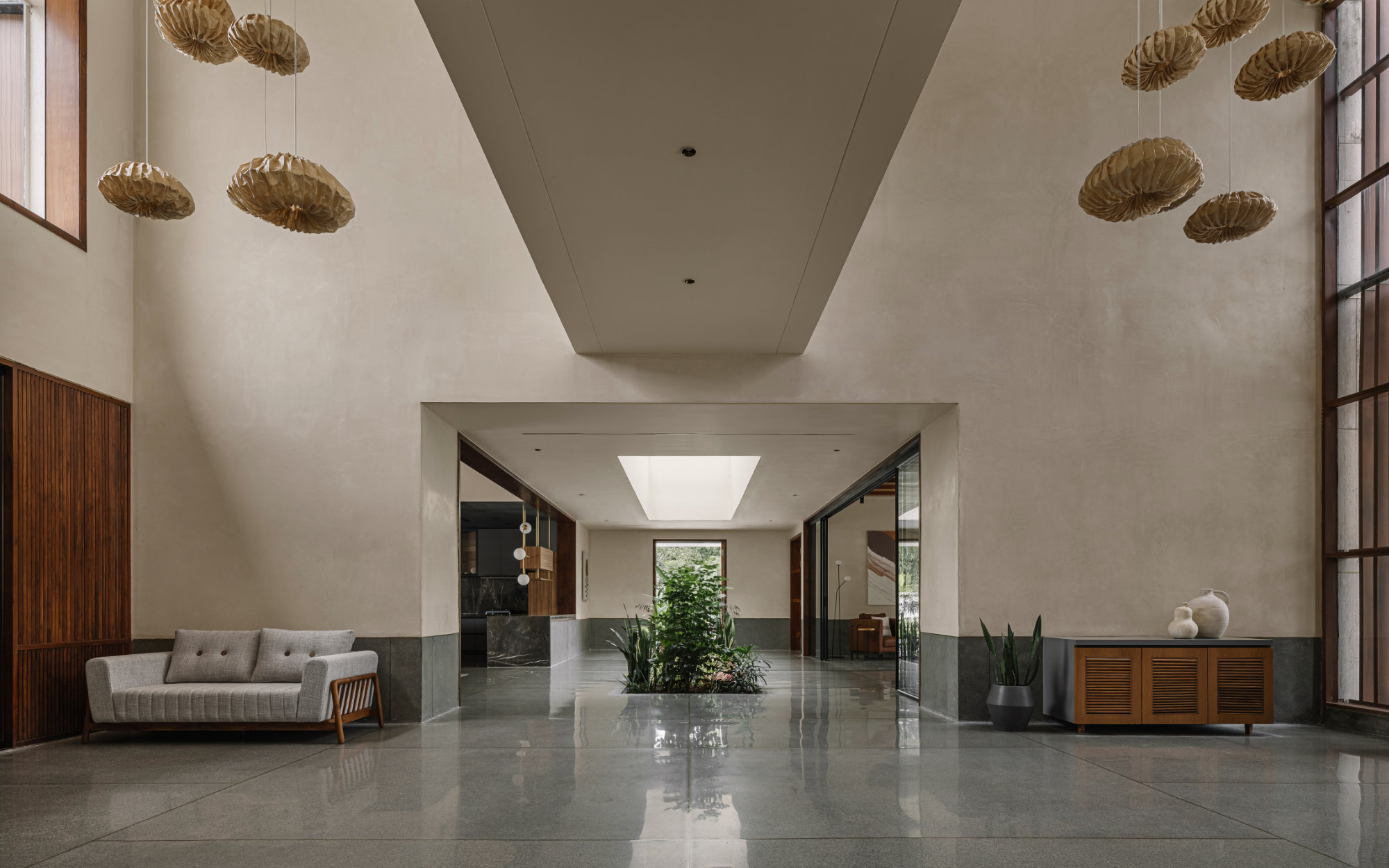
Sculptural Precision To Guide Movement
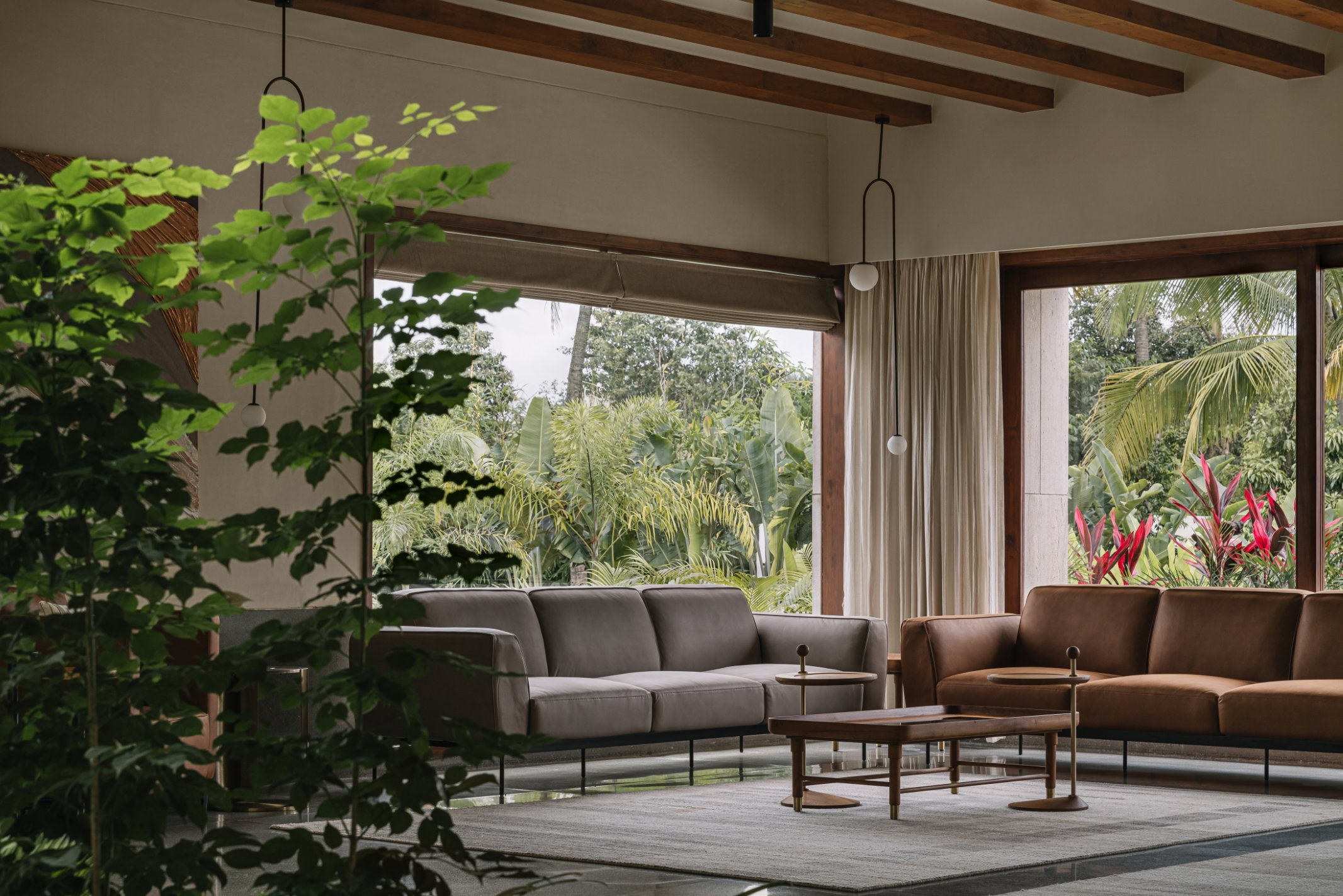
Movement through the house is shaped by compression and release. A low vestibule opens into a double-height volume while narrow passages expand toward courtyards. The home comfortably accommodates large gatherings, yet just as easily contracts into intimate, contemplative corners.
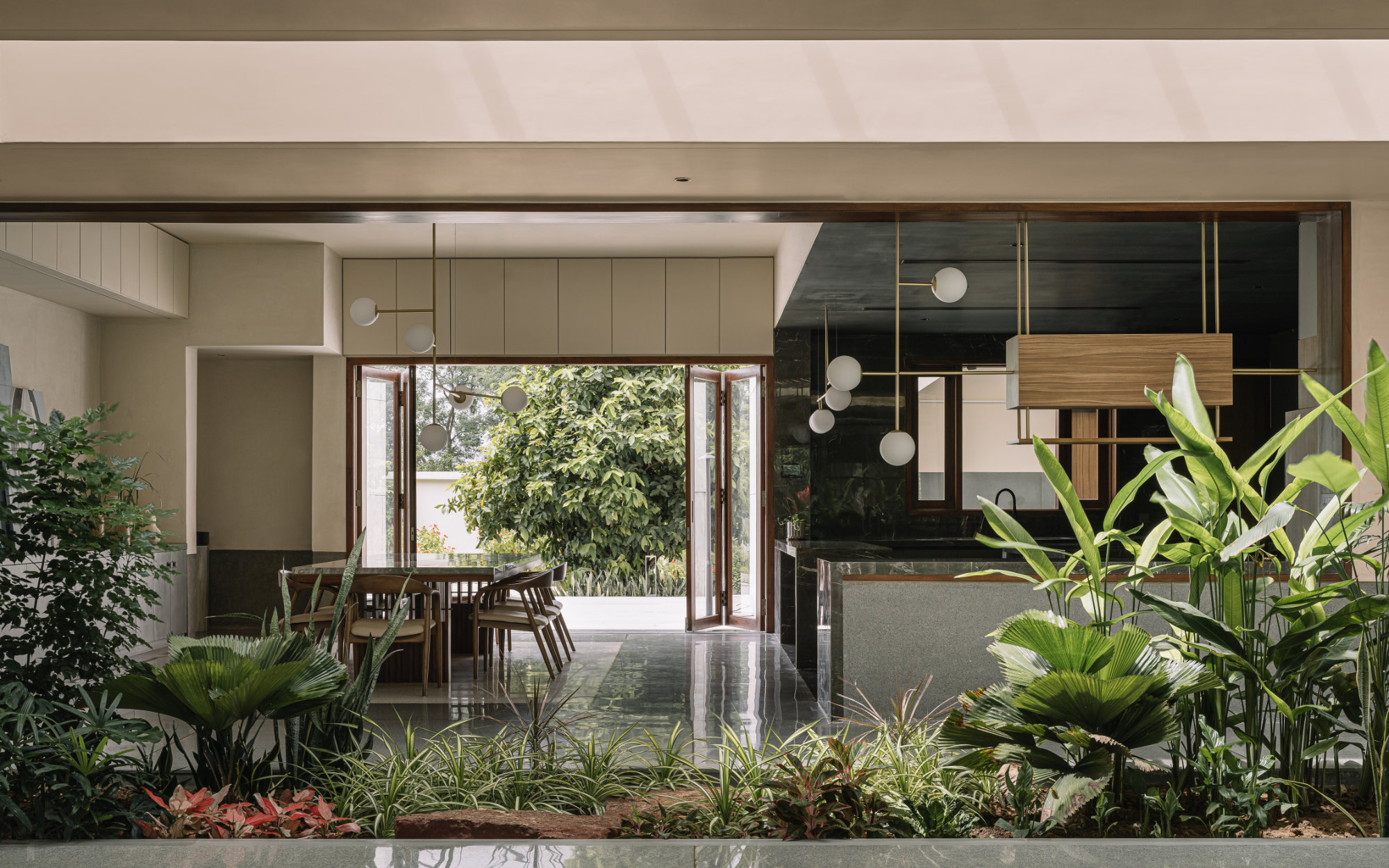
One passageway extends the living and dining areas toward the pool, softening the threshold between interior and exterior. Another gathers around the staircase, lending a quiet theatricality to movement. A third aligns with the kitchen, where everyday rituals unfold against a linear garden edge.
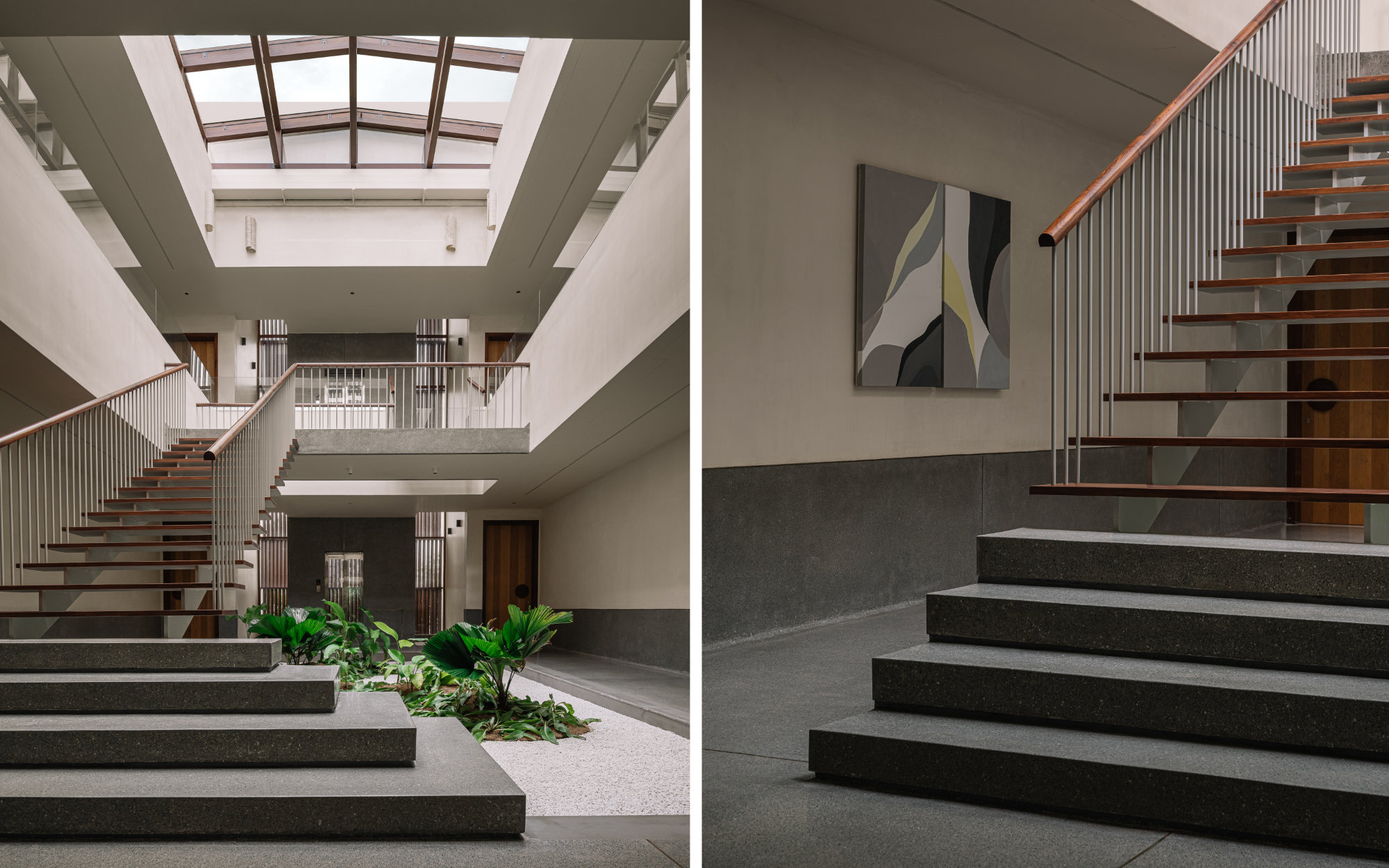
Above the staircase, a retractable roof further transforms the atmosphere. On temperate days, it withdraws completely, opening the house to the sky. Light shifts, and shadows lengthen, making the architecture feel responsive, almost porous.
The puja room occupies a deliberate place within the social realm, reinforcing its role as a shared family space rather than a secluded ritual corner. Positioned beside a lily pond, it integrates spirituality into the rhythms of daily life.
Also read: A Sculptural Green Onyx Bathroom Anchors This 16,000-Square-Foot Home Above Mumbai
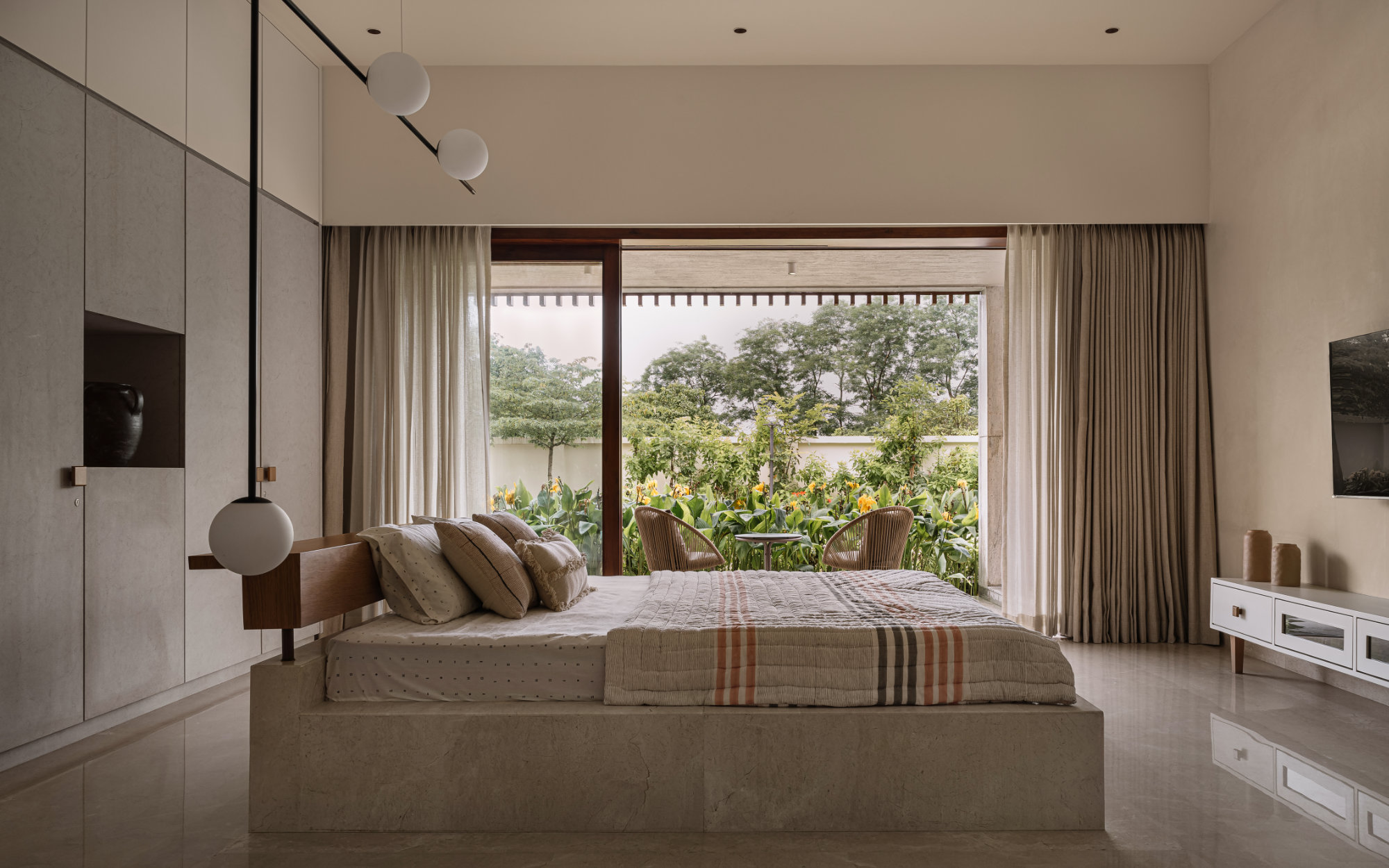
Embedding Memory Into Design
Upstairs, the private quarters adopt a more introspective tone. Materiality becomes tactile and personal. The master bedroom incorporates a cement tile inlay made custom by Bharat Flooring as a quiet homage to the family’s previous home. The mother’s room is wrapped in warm oak panelling, while the daughter’s bedroom introduces a sculptural marble island bed. Each space expresses individuality while remaining aligned with the home’s restrained material language.
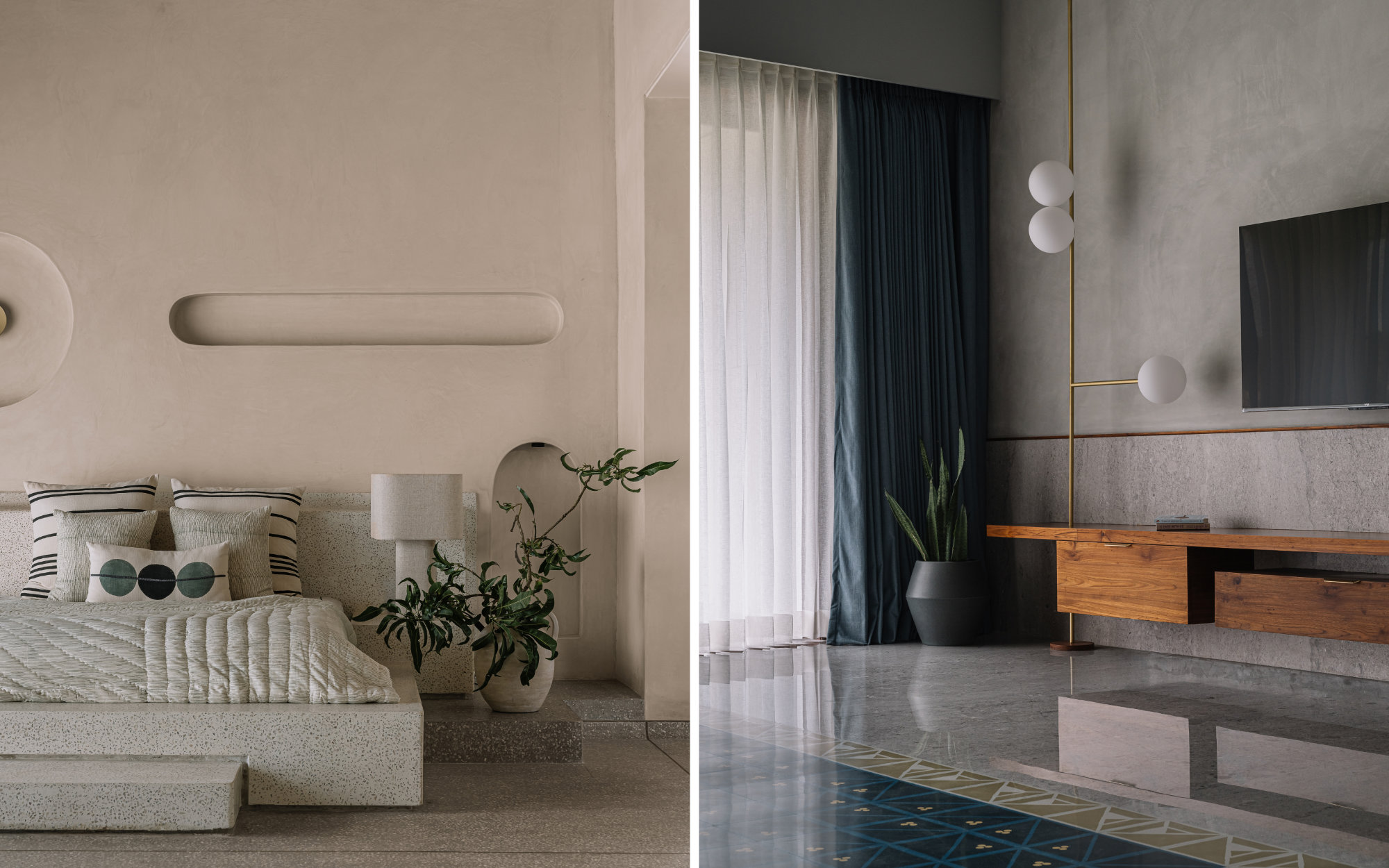
Perhaps the project’s most decisive act is its restraint. By limiting the footprint to roughly twenty percent of the site, the design preserves the agricultural character of the land. Gardens, decks, and gathering spaces dominate, allowing the architecture to emerge as a carefully carved form within greenery rather than an imposition upon it.
Reclaimed Valsadi teakwood that was ethically sourced and crafted on site by local artisans grounds the project in regional material culture. Its reuse is both practical and symbolic, embedding sustainability and memory within the construction.
Also read: This 4,500 Sq. Ft. Weekend Home In Karjat Floats On A Gorge
The living room’s expansive span posed a structural challenge. A conventional slab risked shrinking the space, so the architects reimagined the traditional jack-arch system for a contemporary setting. What started as a technical solution soon gained emotional resonance: the client’s previous home had wooden joist floors, and the new design quietly recalls that memory. Timber rafters reemerge in select bedrooms, translating the structural language into interior moments. The result is a poetic reminder that architecture can carry the traces of lived experience.
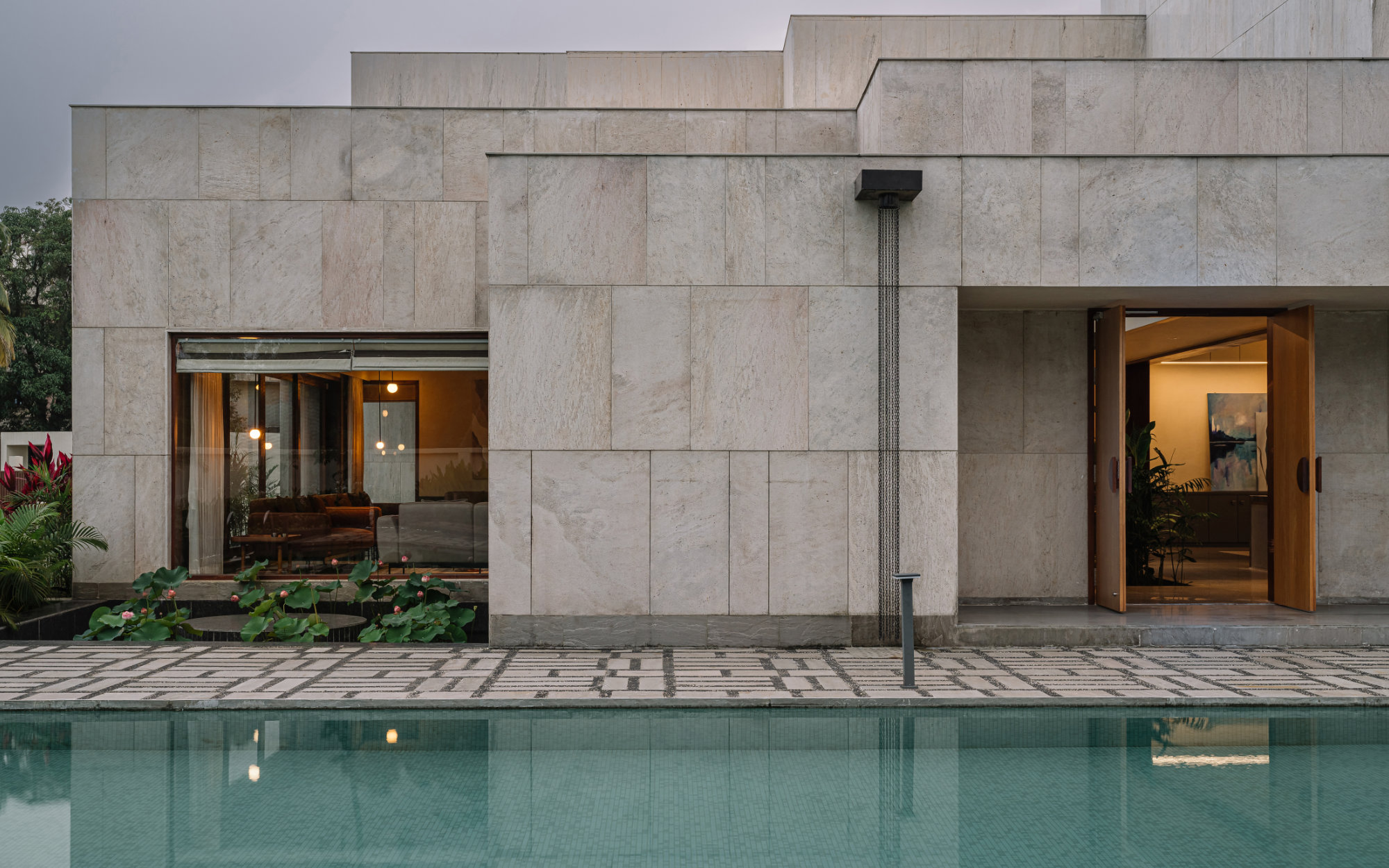
PBR House exists in the in-between. Neither wholly rural nor overtly industrial, it draws strength from the tension between the two. It neither romanticises the pastoral nor rejects the presence of industry. Positioned between orchard and factory skylines, the architecture asserts that contextual sensitivity need not mean visual surrender, and engagement can be articulated through proportion, material, and intent.