#DP Exclusive: Modernising ‘Nani Ka Ghar’: A Traditional Courtyard Anchors This Ahmedabad Apartment
Step inside a traditional Indian courtyard home within the bounds of an apartment setting, which has been translated in the most artistic and out-of-the-ordinary way.
- 21 Apr '26
- 3:15 pm by Navisha Sogani

|
Getting your Trinity Audio player ready...
|
A courtyard is commonly known to be an essential part of any traditional Indian home. Essential not just architecturally, but culturally and emotionally as well. Inspired by the same spatial understanding, this 2,400 sq. ft. home in Ahmedabad contemporaries a traditional courtyard – astonishingly within an apartment setting.
Despite the usual restraints—limited space and openings for natural light and air—principal designer Shweta Jain of Space Karma, in collaboration with stylist Saniya Tadha, imagined the home to uncompromisingly host the courtyard centrally, opening up the space from all directions. With calm, modern and luxurious living at heart, the home embodies the soul of traditions passed down by ancient wisdom.
Also read: 3 Home Theatres That Take Movie Nights & Popcorn Seriously
Out Of The Ordinary
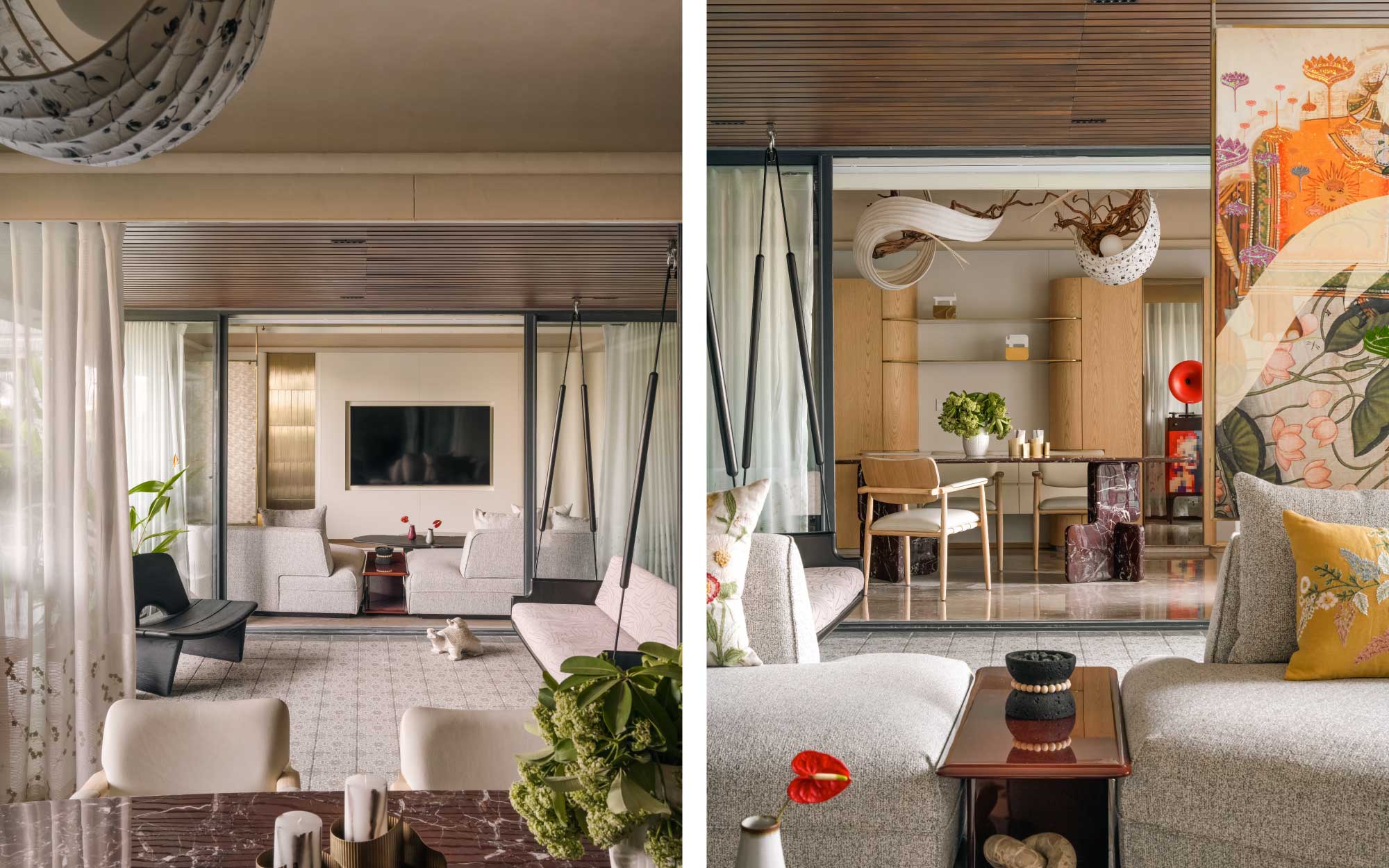
The layout of the home in itself is reminiscent of the quintessential ‘nani ka ghar’ (grandmother’s home), with a swing in the ‘aangan’ (courtyard) centrally placed and the living, dining and a ‘mandir’ on each side. “Instead of a literal courtyard, the design introduces a courtyard-inspired heart, around which movement, light and daily life subtly organise themselves”, shares Shweta Jain. It becomes the anchor to all the parts of the home, much like in traditional Indian homes.
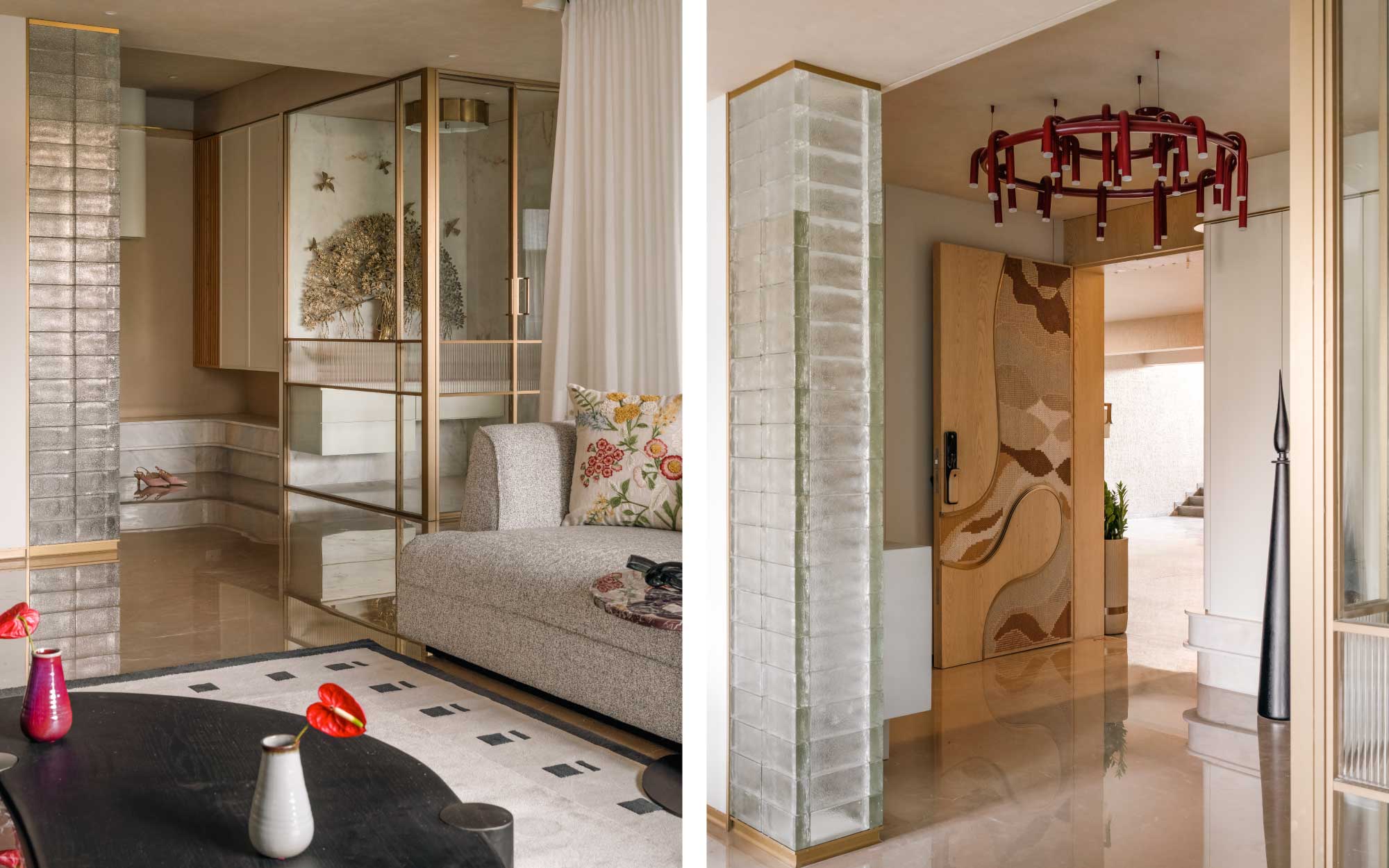
The familiarity is met with an exquisite, artistic, almost sculptural quality across various elements through the space. Right at the entrance, the door is designed like an artwork, elevating from its mere functionality. Created in collaboration with Ujjval Shah from Noya Design, it is a layered composition of metal, veneer and handwoven threadwork. The restrained and muted entrance door is contrasted by a contemporary red chandelier picked up from China in the foyer, creating a strong visual highlight.
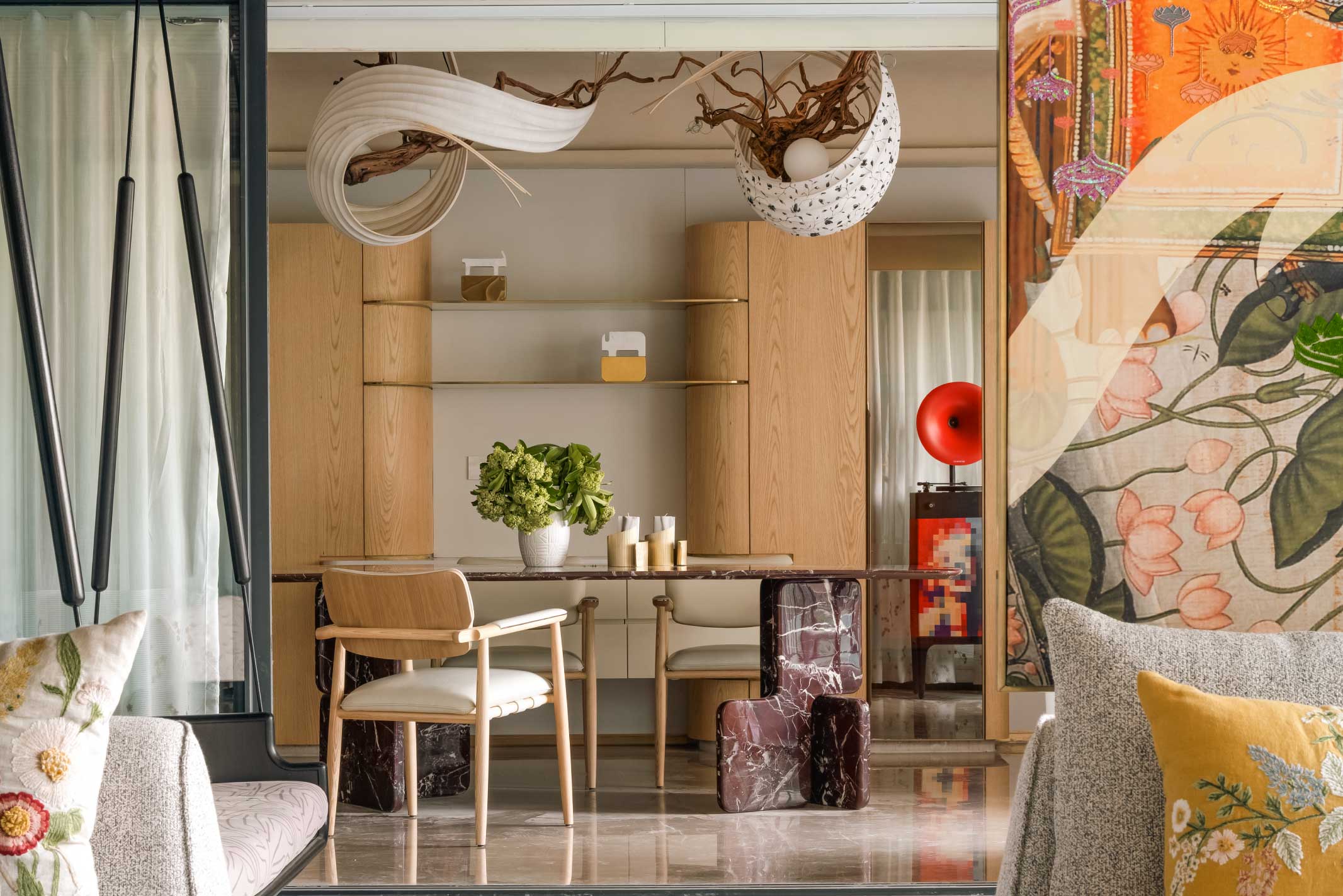
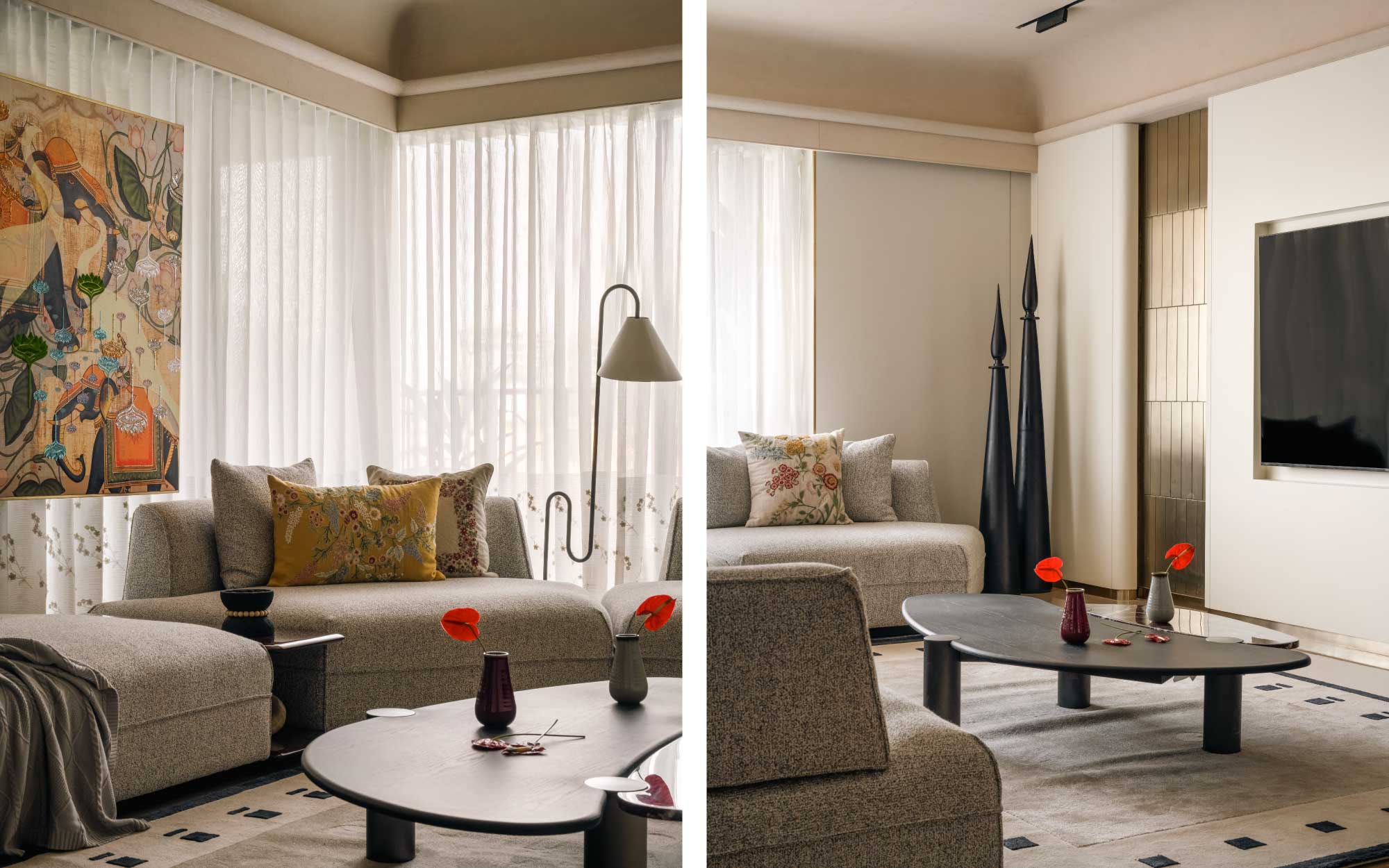
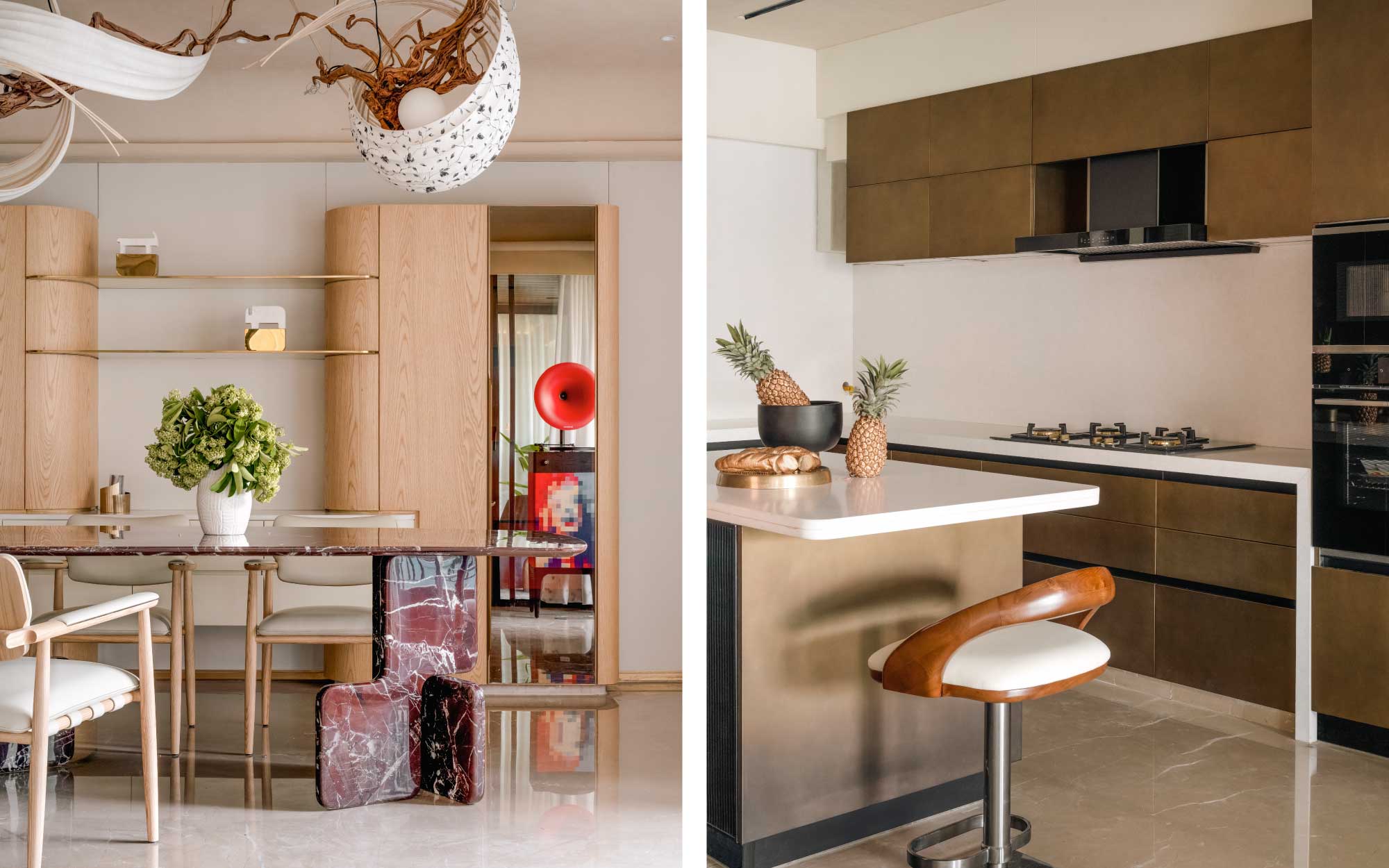
The three spaces – living, courtyard and dining – become one as the soft, partitioning curtains curl up to a corner, while overlooking the greenery in the court below. An innate fluidity is a key characteristic throughout the design of the home, further enhanced by curved forms in the furniture. Adding to the drama, a large nature-inspired artwork in the living room also moves to a side with the curtains revealing the TV on the other side of the wall and transforming the space completely. One can view the TV from the dining room across the living space. “The artwork is UV printed with sequins and textile handwork, created in collaboration with Ujjval, and is inspired by Indian flora and fauna. The idea was to bring the greens visible from the balcony and landscape outside into the interiors, not through literal elements but through art,” shares Shweta Jain. A handcrafted suspended light by Radhika Sanghvi over the dining table adapts well within the fluid forms.
Also read: India Returns To The Venice Biennale After 7 Years – DP Talks To Curator Amin Jaffer
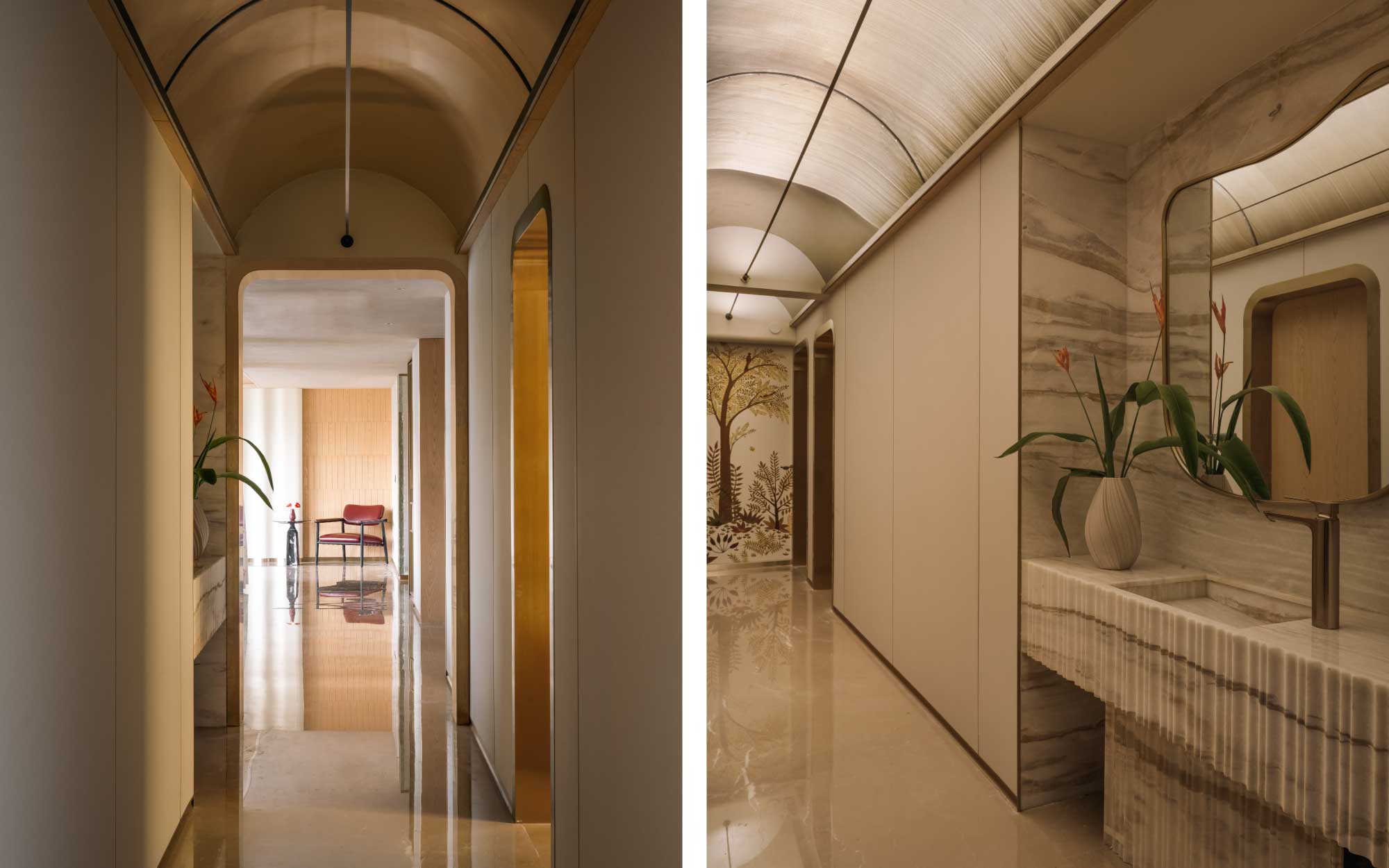
Another, rather crucial feature in the home, the passage connecting the living spaces to the private spaces, exhibits a warm yet dramatic ambience. The vaulted metal-clad ceiling here is flushed with concealed lighting that gently washes across the curved surface—transforming a simple circulation space into an architectural statement. Creating an experience and not just treating any space as purely functional is a key philosophy followed through the design of this home.
An Extension Of Nature
The home, being on the first floor of the building, overlooks a lush green landscaped common open space. Retaining the courtyard space with more plants added in the balcony and not merging it with the interiors was a conscious decision to maintain the visual connectivity of the home with the existing landscape, thus making it one with nature. “When sitting in the courtyard, one experiences two layers of greenery—and the panoramic landscape below. This space has naturally become the slow morning and evening zone of the home, with a swing and lounge seating creating a more informal and private experience”, describes Shweta Jain.
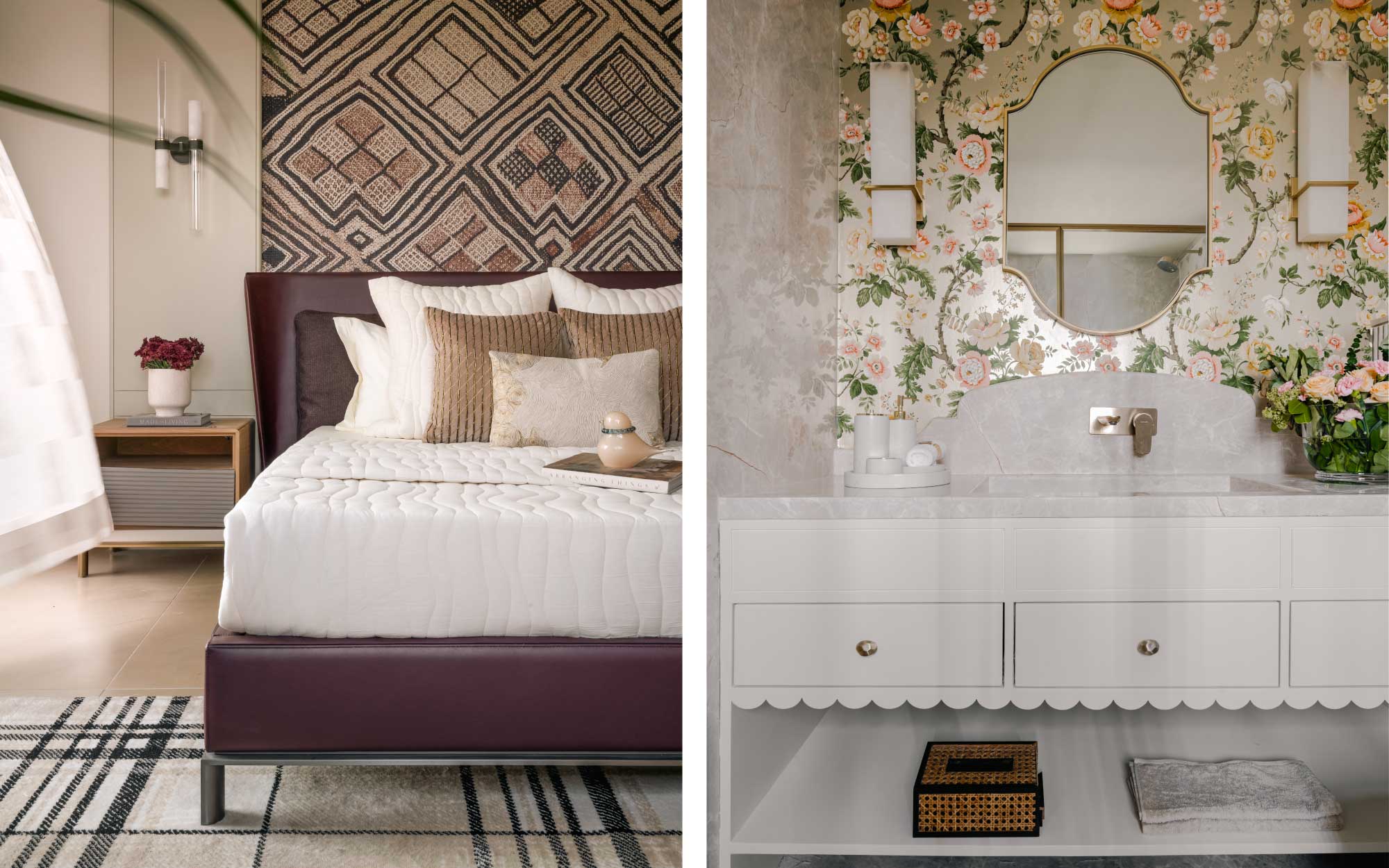
The warm and muted colour palette draws from earthy tones and textures of nature, a deliberate choice to play with the unconventional. The light ash veneer paired with soft, milky white, almost almond-toned walls and the marble on the floor not only evokes a soothing and cohesive environment but also maintains a quiet backdrop to draw attention to conventionally overlooked architectural elements and materials. “Traditionally, door frames are executed in wood and tend to blend into the background. In this project, we deliberately moved away from that convention for two reasons. First, we wanted to explore a new material vocabulary within the home. Second, we wanted to reverse the visual hierarchy and allow thresholds and transitions to become the defining moments,” Shweta Jain explains.
Also read: No Cubicles, Just Character: 3 Architect-Designed Offices That Reject The Corporate Mould
Exclusivity In Familiarity
The best brief from any client is the freedom to think outside the box. In this case, Shweta received and implemented just that—to make it simple and memorable. Taking cues from the family’s lifestyle, such as hosting guests frequently for casual gatherings as well as for spiritual events, the design has been adjusted adequately. The mandir near the entrance is made of glass, ensuring visibility from multiple corners of the home. “The glass enclosure also serves a practical purpose. When opened, the mandir space seamlessly extends into the living area, allowing more room for people to gather and sit during poojas and family rituals,” reveals Shweta Jain.
The existing kitchen layout was redesigned into an open and symmetrical design by removing a small storage space to make it inviting even to the guests. Adjacent to the kitchen, the dining room features an artistic table with a ceiling-suspended chandelier, making a bold statement. Each space – kitchen, dining, living and courtyard – is visually connected with one other at all times, encouraging interaction across spaces.
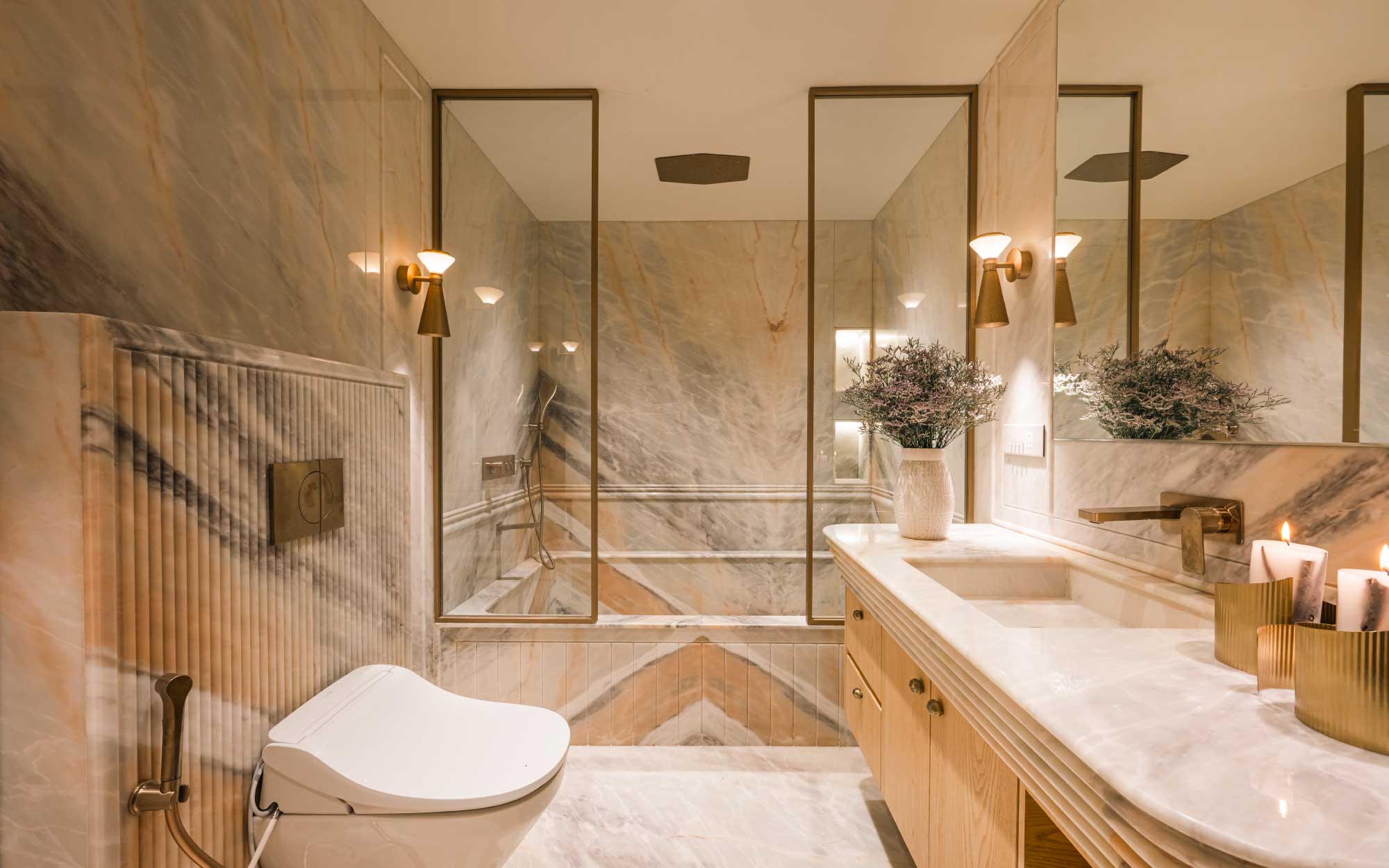
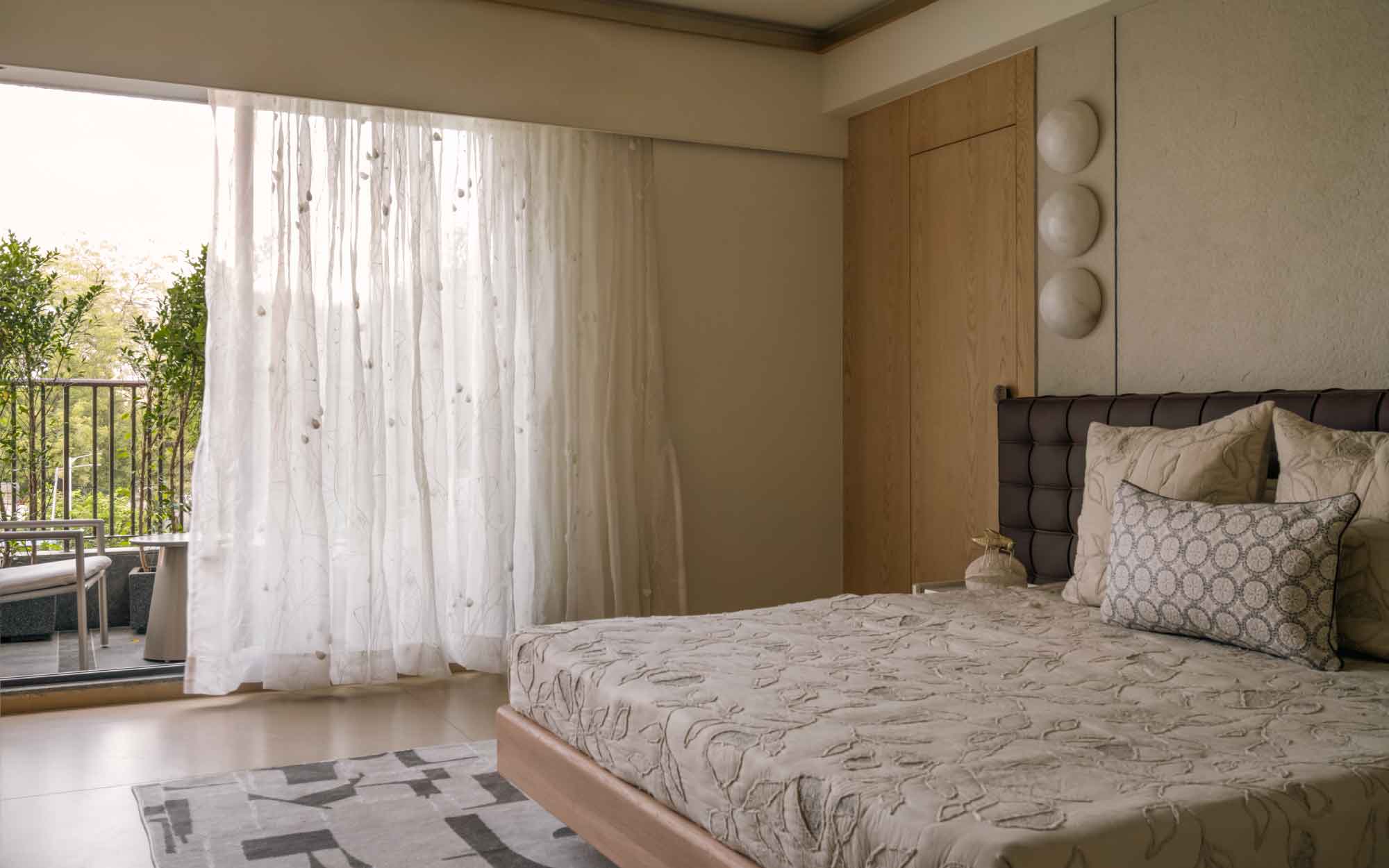
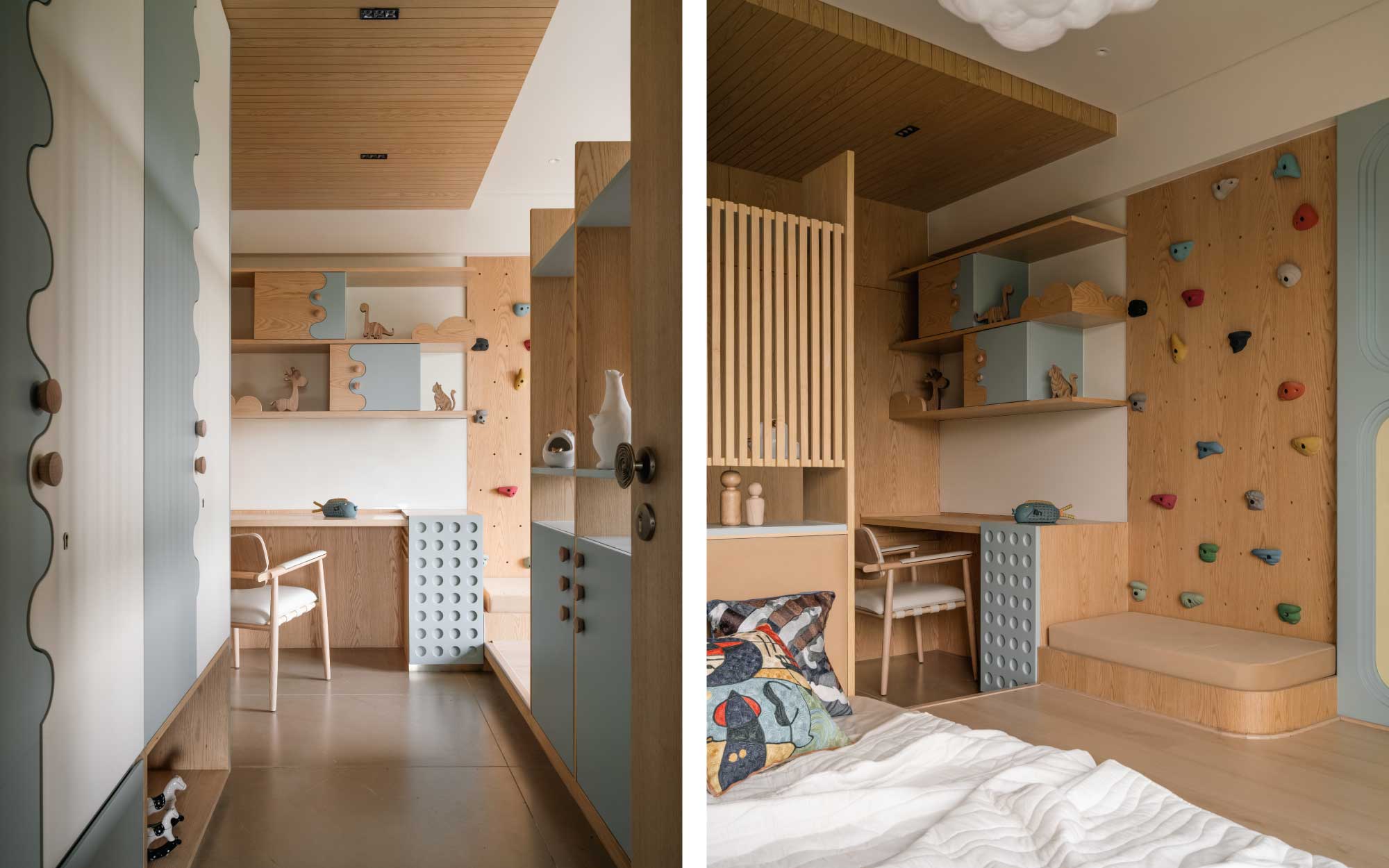
The three bedrooms in the home – for the grandparents, a young couple and the kids – have been designed catering to their individual needs. “The parents’ and grandparents’bedrooms were designed to prioritise comfort, familiarity and quiet elegance, aligning with the overall material palette of the house while ensuring that each space feels restful and personal,” Shweta explains. “While the kids’ room carries a sense of fun and flexibility, the other bedrooms in the home follow a calmer and more understated approach.” The bathrooms in the home were also designed to enhance the comfort and luxury of the overall scheme. Marble as a choice of material creates an opulent environment, especially in the couple’s bathroom.
Also read: Here’s Your Design Vibe According To Your Horoscope In The Fire Horse Year 2026
The Courtyard Edit is a home that celebrates quiet luxury, openness and thoughtful material expression. Rather than relying on grand gestures, it allows everyday moments to reveal a series of elements that quietly stand out and together define the character of the project – light moving across surfaces, views toward greenery and the softness of natural materials to shape the experience of living. For Shweta, the home resulted in a successful “experiment with materials, spatial experiences and subtle design drama”.