The New Geography of Craft From India To New York, Paris and London
Through House of Santal, EVOKE, and Æquo, Indian craft is being repositioned within the global design ecosystem not as a heritage object, but as contemporary collectible design.
- 2 Jun '26
- 1:23 pm by Manisha AR

|
Getting your Trinity Audio player ready...
|
A brass-and-teak cabinet by an Indian studio in New York, dhokra-inspired sculptural objects on Rue Mazarine in Paris and handwoven seating from Karaikudi displayed in the windows of a London gallery. Across major design capitals, Indian craftsmanship is appearing in new contexts, not as a heritage artefact or decorative reference, but as contemporary collectible design.
If you were to walk through the design districts of New York, Paris, or London today in search of collectible design from India, you would no longer struggle to find it. Across galleries, boutiques, and carefully curated interiors, Indian designers and artisans are claiming an increasingly visible place within the global design landscape.
Also read: The New Wave Of Indian Craftsmanship: Exploring India’s Furniture Legacy Across Its Four Corners
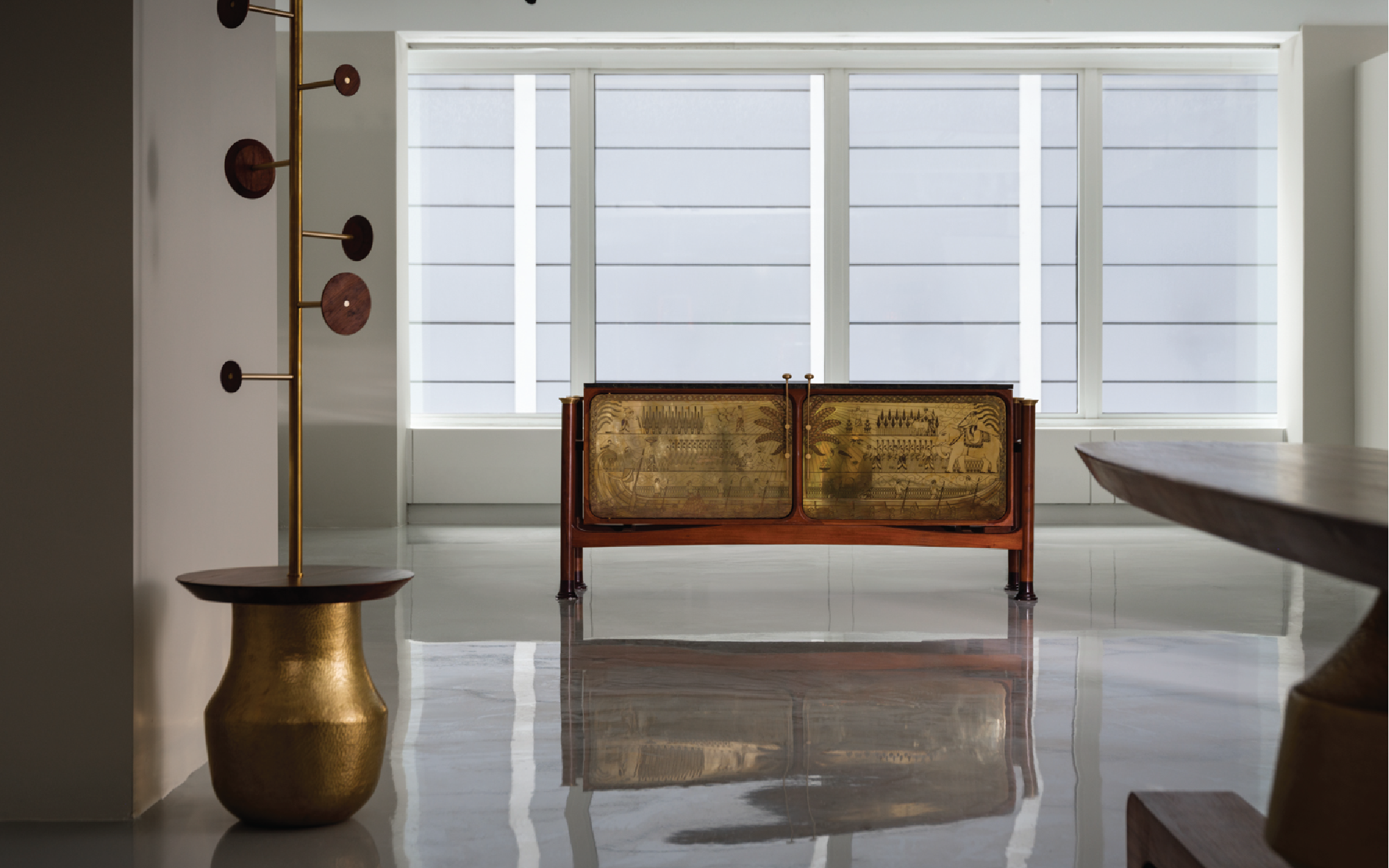
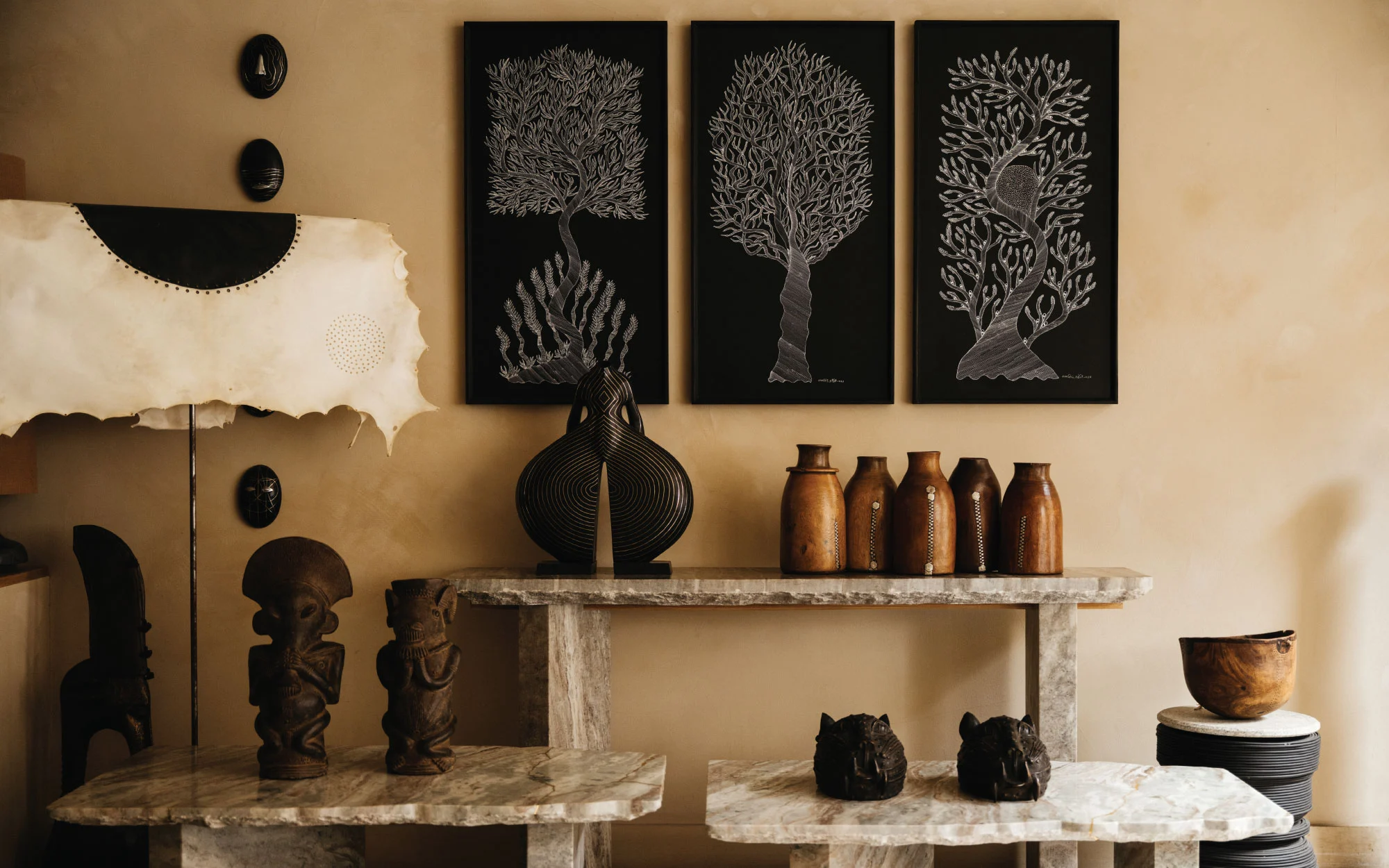
Just steps away from Rockefeller Center in New York, a new gallery opened in February with an inaugural exhibition dedicating 8,000 sqft entirely to contemporary South Asian design. Titled ‘At The Threshold of the Courtyard,’ House of Santal brings together works by more than a dozen Indian designers and studios, including Chacko’s etched brass-and-teak cabinets that had designers on social media in awe, Rhizome’s coat stand made using Lotas, and Arisaa’s sculptural wall hangings.
Two months later, in Paris, Æquo announced the opening of its new gallery on Rue Mazarine, joining one of the city’s historic gallery-lined streets. The inaugural exhibition showcased the wider practices that intersect at Æquo and featured works by Wendy Andreu, Marie Gastini, Valériane Lazard, Linde Freya Tangelder, and Frédéric Imbert. Many of the pieces emerged directly from Æquo’s model of bringing global designers into dialogue with Indian artisans through collaborations developed at its Mumbai space.
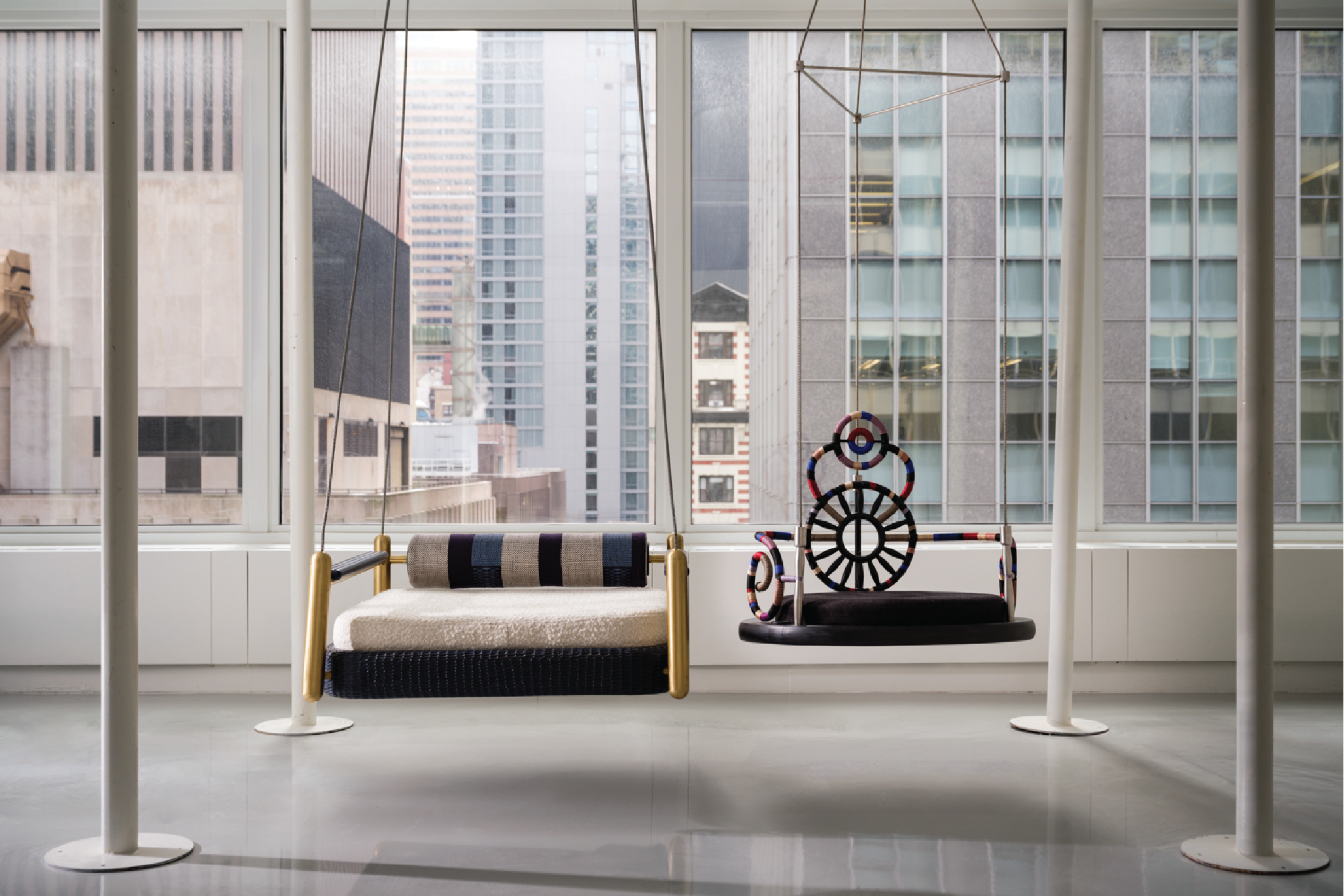
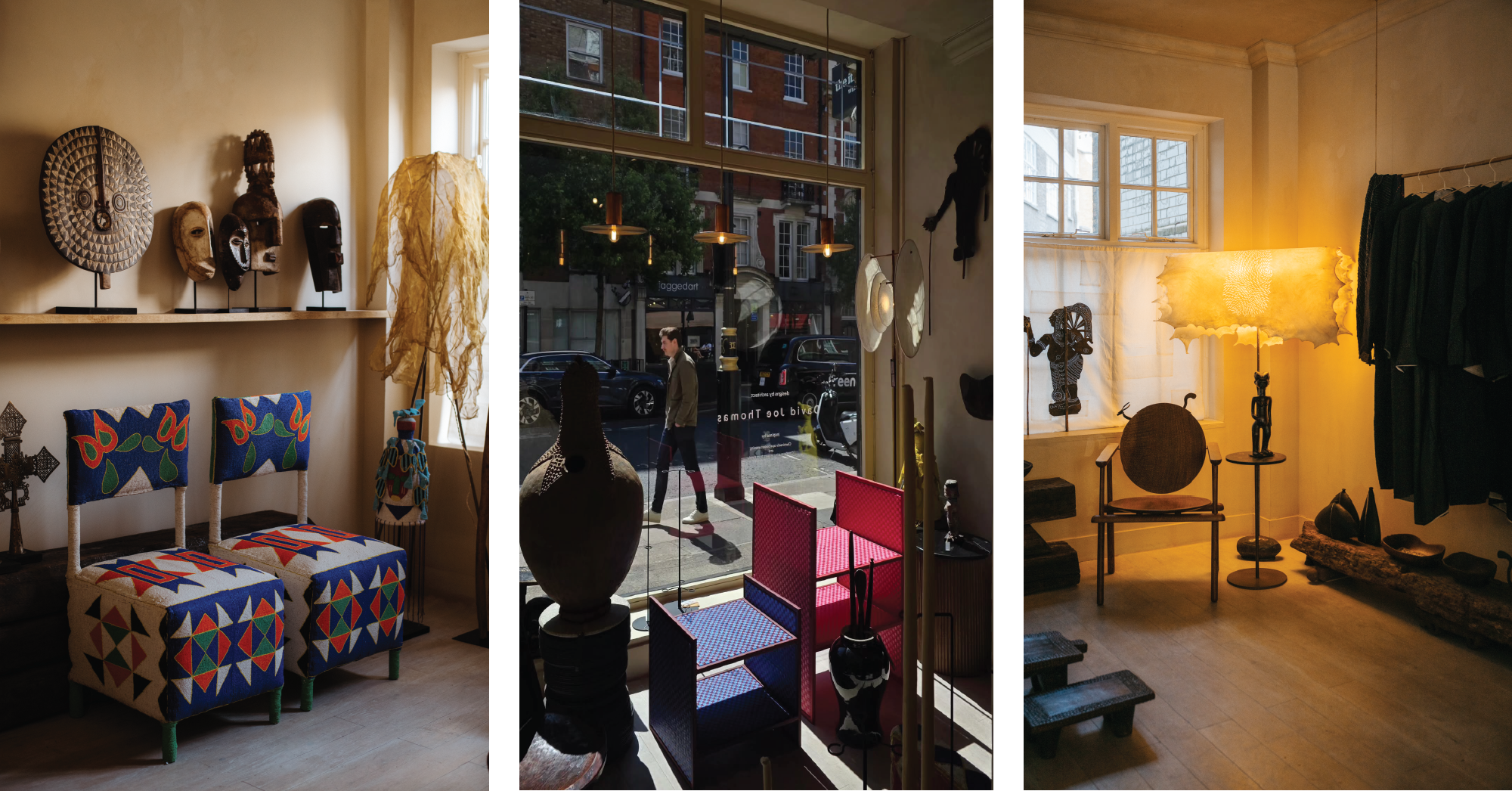
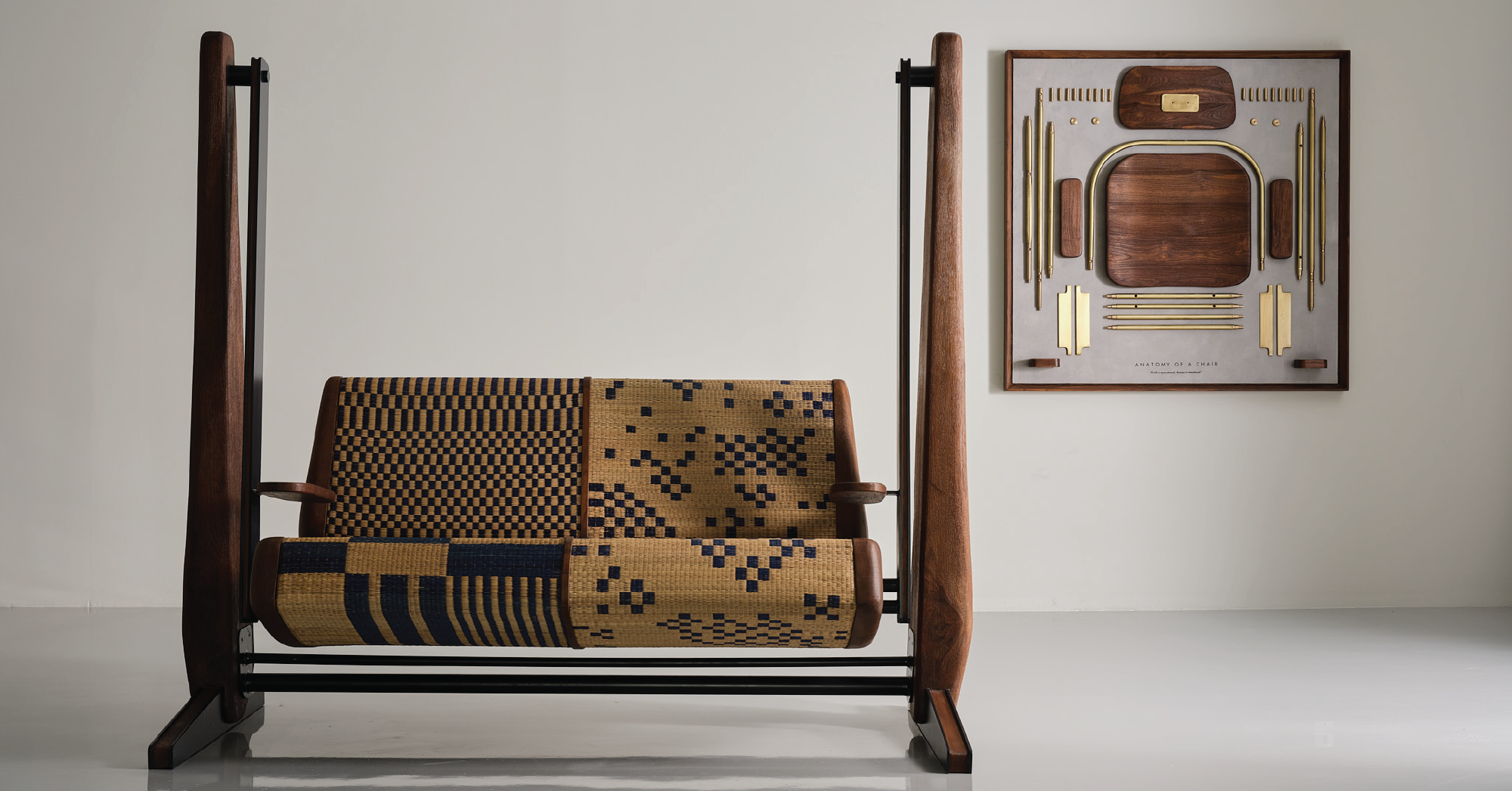
Meanwhile, on London’s Marylebone High Street, architect-designer David Joe Thomas’ KASERA seating collection appeared in gallery windows at EVOKE around the same time. Developed with weavers from Karaikudi through KAASH in Bengaluru, the family of seats stands out for its bold checkerboard weaves and sharply angular forms, impossible to miss amid the street’s restrained façades.
Also read: Unfamiliar By Design: Inderjeet Sandhu On Rethinking Taste At Milan Design Week 2026
The Emerging Global Market for Indian Craft
From galleries and boutiques to carefully curated interiors, Indian designers and artisans are now operating within a more defined global circuit of display and exchange. Together, these spaces point to the emergence of a new ecosystem for South Asian collectible design being shaped by transnational collaborations, hybrid gallery models, and a growing emphasis on craftsmanship as cultural authorship.
House of Santal serves as an entry point for the US market into this infrastructure of exchange. “The underlying thread that anchors the curation is a deep engagement with legacy craft, not as ornament, but as a foundation for contemporary design,” shares Raksha Sanikam, founder of House of Santal. “I hope House of Santal can open up conversations around representation, value, and authorship across the entire production chain,” she adds.
In 2018, Sanikam pivoted from venture capital to interior design. While exploring design shows across India, she was struck by the depth of Indian craft traditions. “Craft has always existed around us, but often limited to surfaces or categorised as ‘ethnic’,” she says. “Over the last two decades, a new generation of designers has begun working with craft at its core, pushing its boundaries and reimagining what it can become.” She later completed a Master’s in Interior Architecture at Pratt before opening House of Santal.
Also read: Nilufar’s Grand Debut At Nilaya Anthology Curated By Nina Yashar
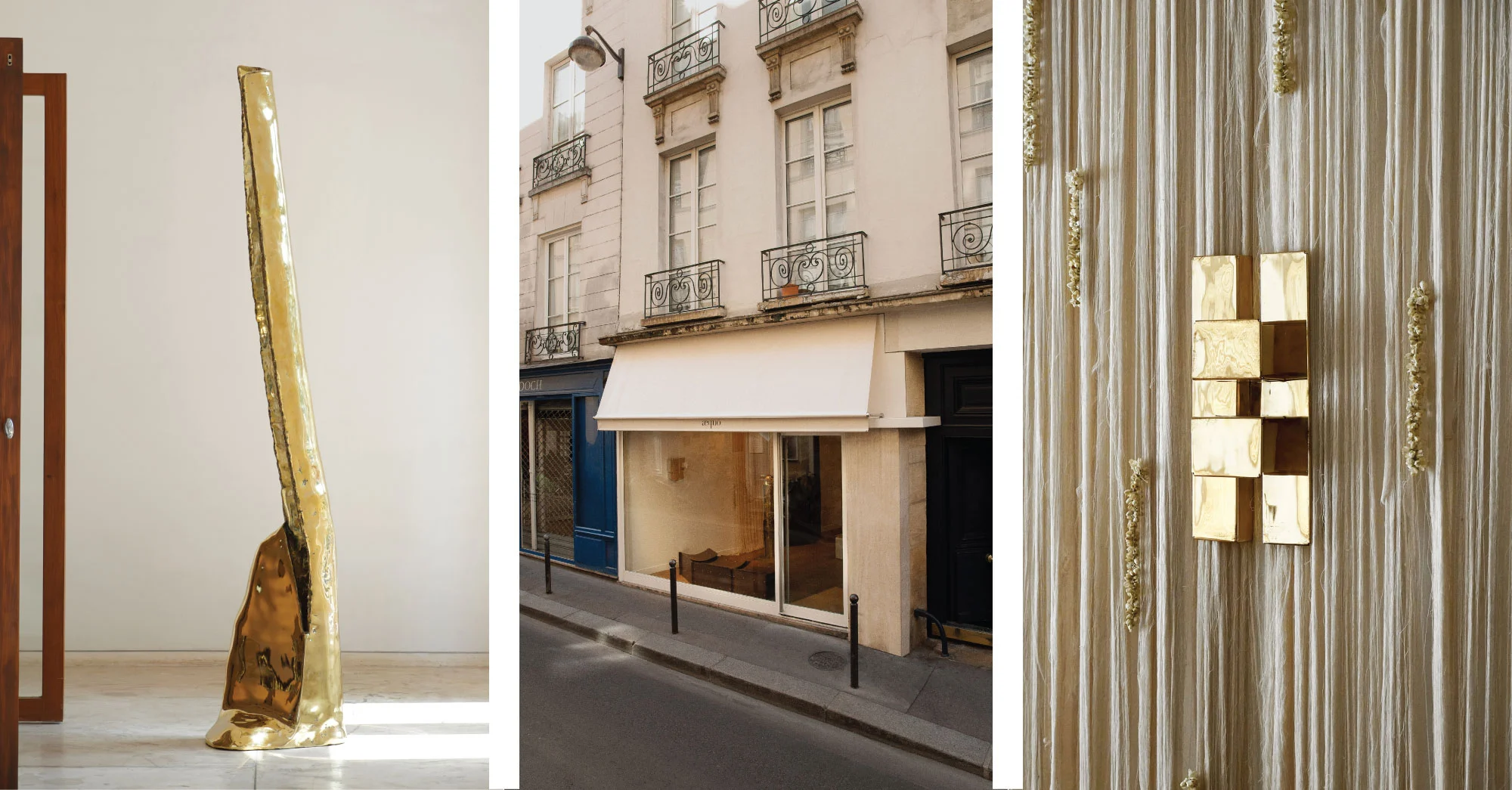
A similar sentiment is echoed by Florence Louisy of Æquo, who views the renewed attention around craft as less a disruption than a continuation. “We observe this renewed attention with interest, as it creates a stronger resonance around the work we have been building over the years,” she says. “There is today a growing appreciation for narrative, for the irregularity of the handmade, and for the singularity that comes from objects shaped by human gestures rather than industrial systems.”
Founded in 2022 by Tarini Jindal Handa, alongside creative director Florence Louisy, Æquo bridges Indian craftsmanship with global design through collaborations between master artisans in India and industry creatives. This year marks a new chapter for the gallery, with its debut in the Collectible Design section at India Art Fair, where the Æquo booth presented Marie Gastini in partnership with Villa Swagatam, an upcoming move to a new space in Mumbai, and a Paris outpost led by art advisor Arthur Yedid and architect and interior designer Ivan Oddos.
Also read: With Craft At Their Core 3 Homes Where Fireplaces Are Too Hot To Handle
How New Design Spaces Present, Not Just Exhibit Craft
For EVOKE, Æquo, and House of Santal alike, these spaces operate less as conventional retail environments and more as interpreters and mediators. While each is listed as a gallery or retail storefront, its curatorial approach extends beyond display.
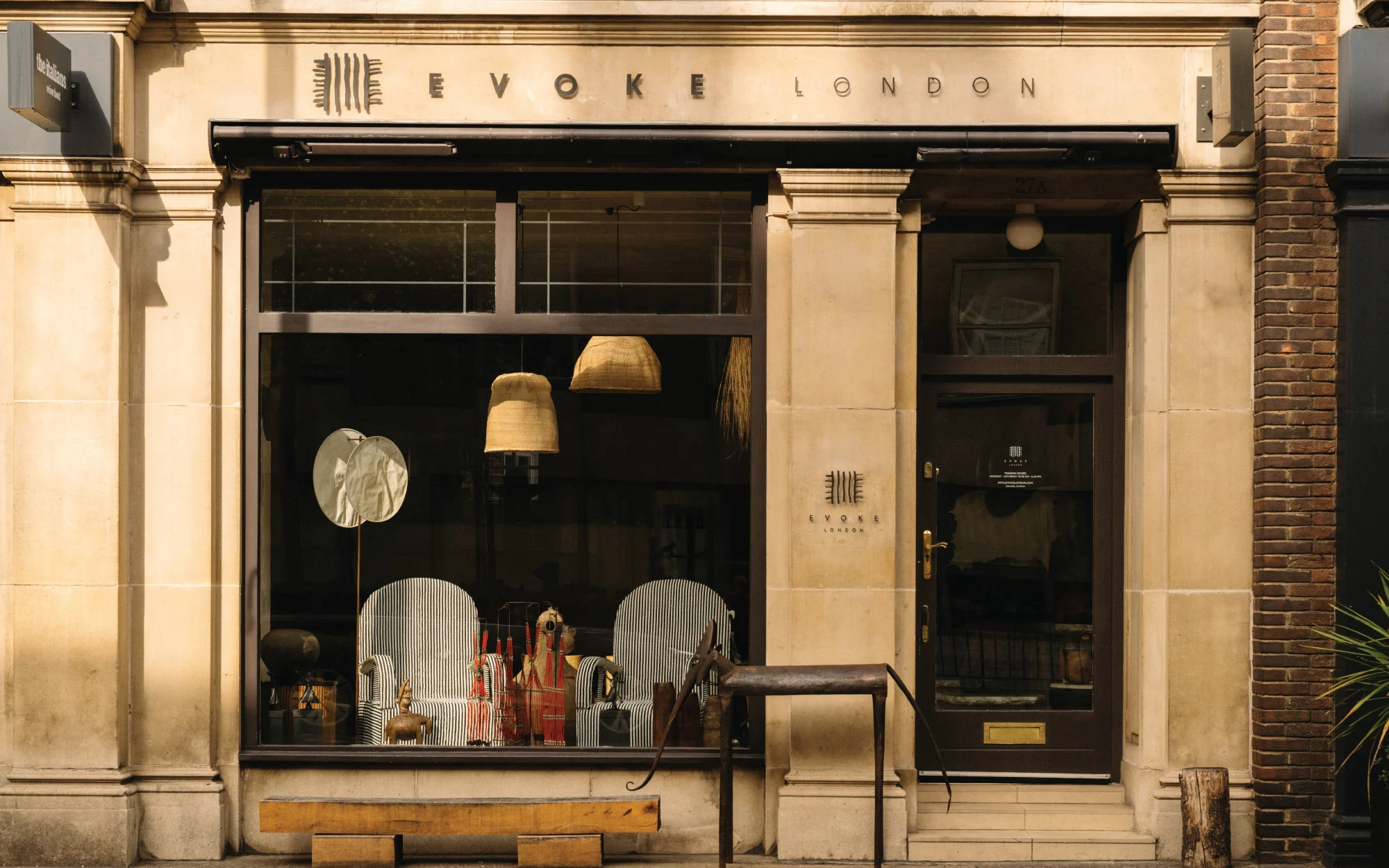
At EVOKE, selection is instinctive and story-led, “drawn to pieces that carry a strong sense of identity, craftsmanship, and cultural narrative,” says Leonora Stathakis. “What interests us most is the dialogue between traditional craftsmanship and contemporary living — how vernacular forms, materials, and making methods can exist meaningfully in modern spaces without losing their integrity,” she explains, situating the renewed interest in craft within a broader shift towards authenticity, preservation, and cultural curiosity.
Louisy similarly emphasises the importance of context in Æquo’s approach. “For a long time, we felt that Æquo had to exist beyond India to give wider visibility to what emerges from these collaborations, and to continue positioning Indian craftsmanship within the international contemporary design landscape,” she says.
Also read: DP Curates: 5 Sculptural Chairs By Indian Designers That Are Rooted In Natural Materials
Yet this expansion is not without complexity. As collectible design becomes more globalised, questions emerge around authorship, translation, and positioning, particularly when traditional craft systems enter contemporary luxury and gallery contexts.
In 2019, Stathakis was introduced to Vandana Poddar, design entrepreneur and artist, and later crossed paths with her son Sridhar. Conversations around African and Indian craft traditions eventually led to the opening of EVOKE in 2021, followed by its sister space KAASH in Bengaluru. Though both Vandana Poddar and Stathakis were born in South Africa, their professional experiences across design, interiors, and craft unfolded in different contexts. Shared values around preservation, fairness, and tradition became the foundation for the trio’s collaboration.
“EVOKE London is not structured as a traditional gallery with a seasonal rotation of artists or exhibitions,” says Stathakis. “Our approach is more organic and relationship-driven, centred around a growing collection of artefacts, objects, and works sourced through travel, research, and long-term collaborations.” This slower, relationship-based model stands in contrast to the increasingly visible global appetite for collectible design. Steadily, it has become a market that continues to expand across collectors, architects, boutique hotels, and lifestyle spaces seeking material authenticity and traceable production.
Also read: Move Over, Birkin: The Coffee Table Is The New ‘It Piece’ To Invest In
Collectible Design as Cultural Exchange
Ultimately, these spaces present craft as living and evolving rather than preserved behind glass. Rather than freezing tradition in nostalgia, they position it as an active contemporary practice capable of shaping global design culture. Together, they suggest that Indian craftsmanship is entering a new phase of international visibility, not as an adjunct to fashion or heritage tourism, but as a serious category within the global collectible design market.
Over time, the broader shift may lie in how art, design, and culture from India operate as a form of soft power, reshaping conversations around provenance, authorship, and cultural value through these emerging networks. Increasingly, cultural artefacts are encountered not only in museums or archives, but through these contemporary design spaces where they can be lived with, collected, and brought home.