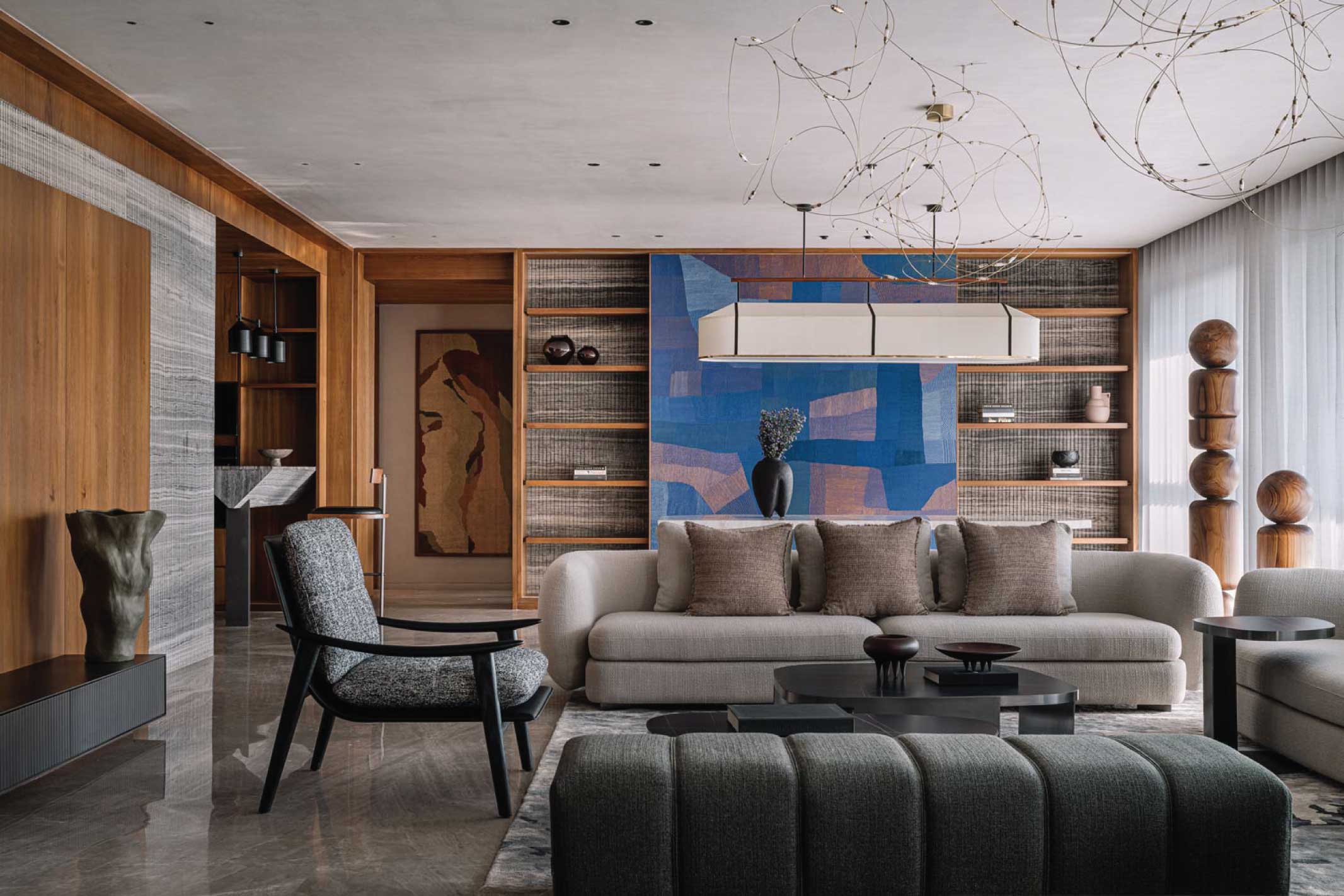
#DPExclusive: Only Four Materials Make Up This 4,000 Sq Ft Ahmedabad Home
Across two foyers and a sequence of introspective rooms, this 4,000 sq. ft. Ahmedabad apartment by Workshop Inc. demonstrates that depth comes only from the meticulous assemblage of honest materials.
- 14 May '26
- 1:45 pm by Mehar Deep Kaur

|
Getting your Trinity Audio player ready...
|
What if a home needed only four materials to say everything? Wood, stone, metal, fabric—and the conviction to let them speak. For this multigenerational family in Ahmedabad, Varun and Keta Shah of Workshop Inc. built an entire universe from this distilled vocabulary, proving that a home’s richness has nothing to do with how much it contains, and everything to do with how honestly it is assembled.
The brief arrived as a refusal for a showpiece, and a yearning for a cocoon. “The conversations revolved around the idea of a home that is introspective and cohesive,” Varun recalls, “a place that gently celebrates its inhabitants rather than performing for guests.” From that foundational conviction, every design decision followed. What emerged across the existing spatial envelope—no structural interventions, only surface and sequence—is proof that material reductivism, applied with rigorous intent, can yield abundant depth.
Also read: 1,000 Artworks, One Address: Kit Kemp’s New NYC Hotel Becomes A Repository Of Colours And Patterns
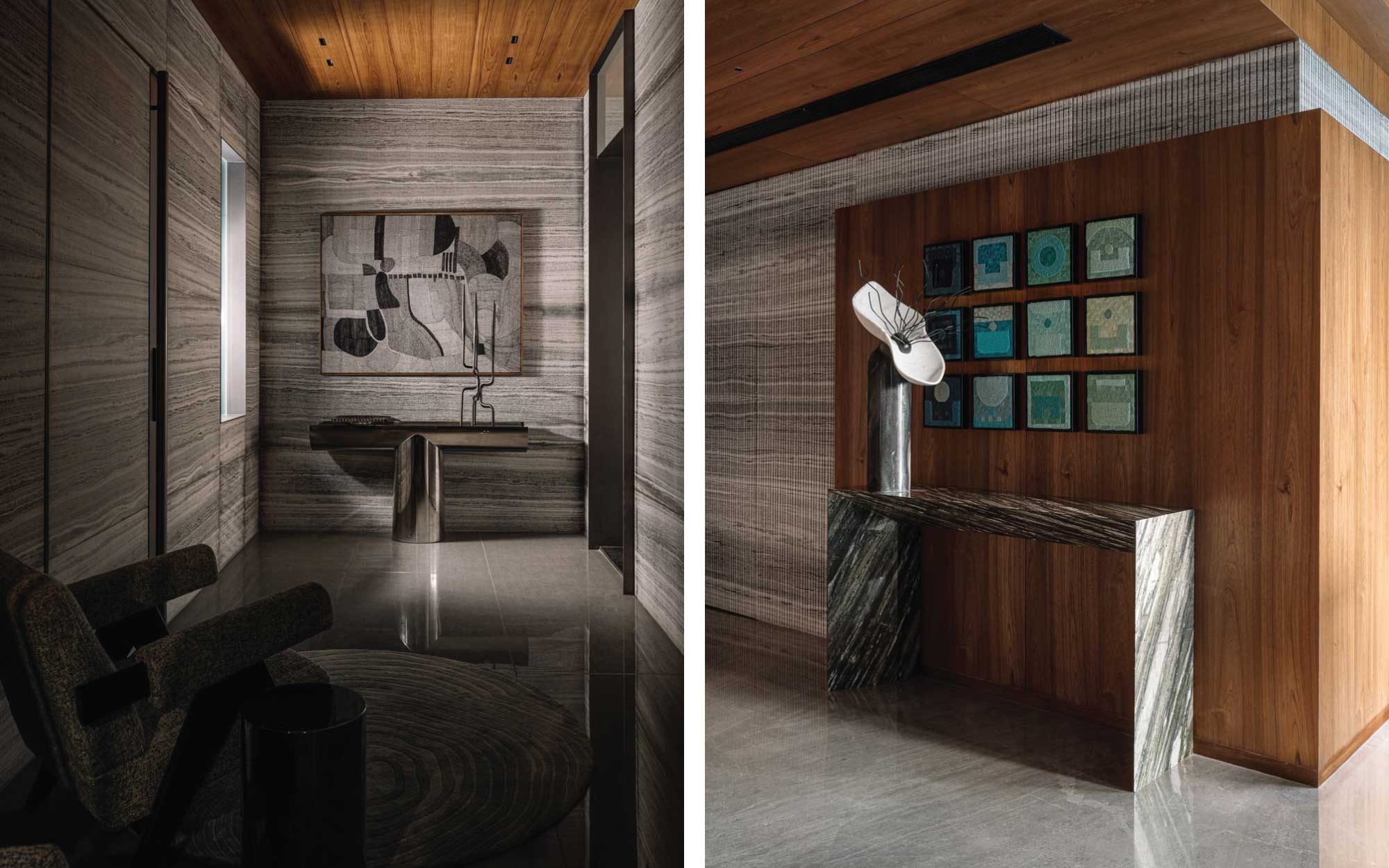
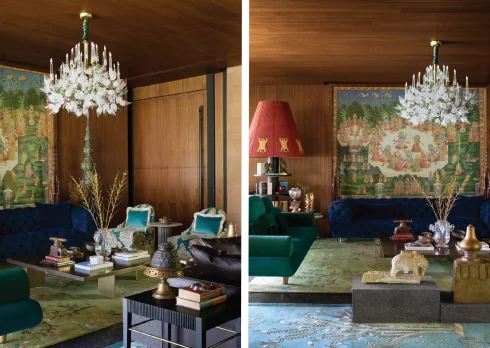
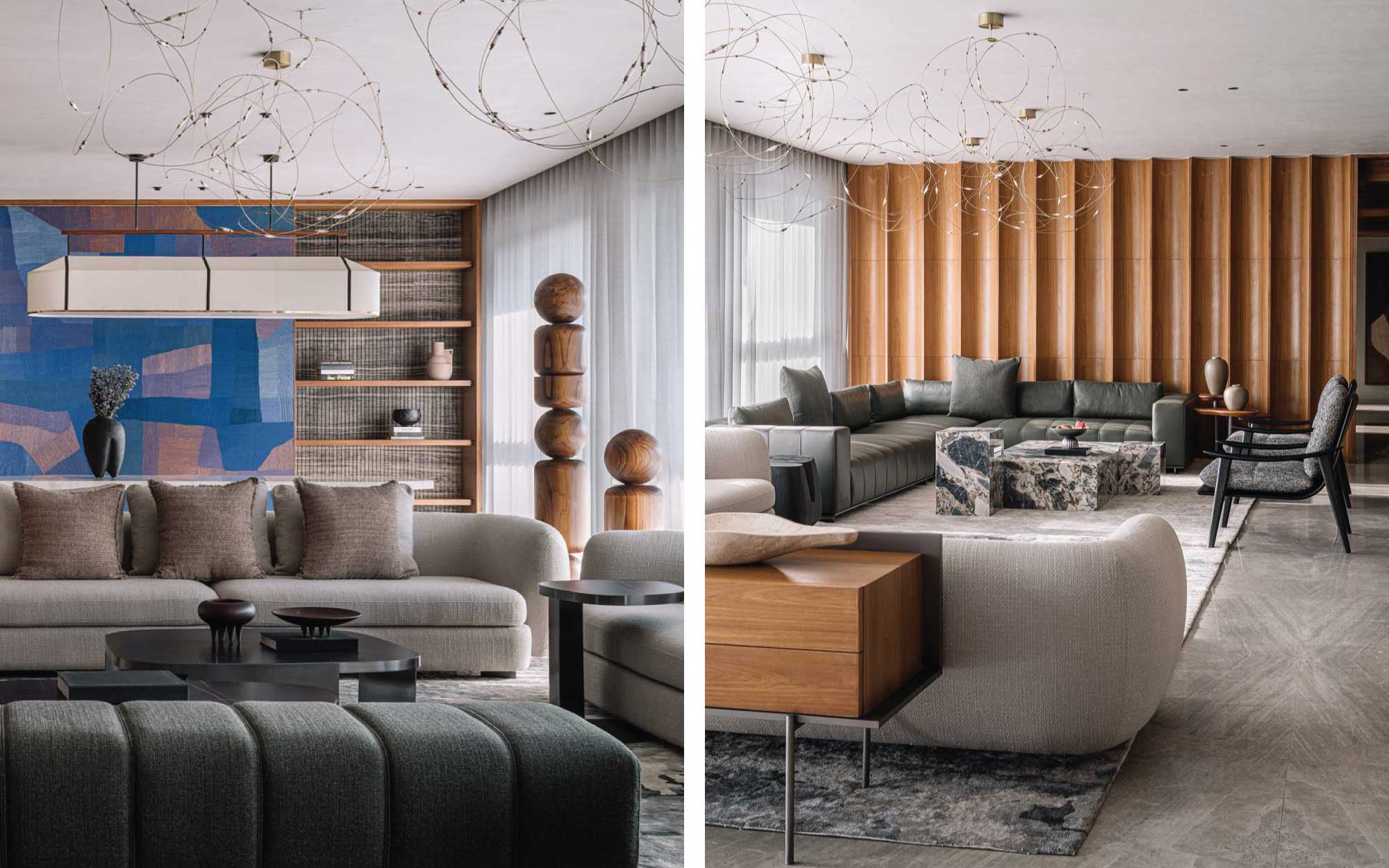
The journey begins with a two-foyer sequence that functions less as an entry and more as a decompression: a deliberate shedding of the city before the private world opens up. The second foyer is the beginning of a soft grey marble floor that extends seamlessly forward. Of the living room, Keta notes: “It was the most demanding space, where the family gathers, so it had to carry the greatest range of expression.” Here, the material language unfolds fully. Scalloped wood on one wall, panelled wood on the others, a full-height sliding fabric panel in deep blue that introduces colour without breaking the tonal agreement.
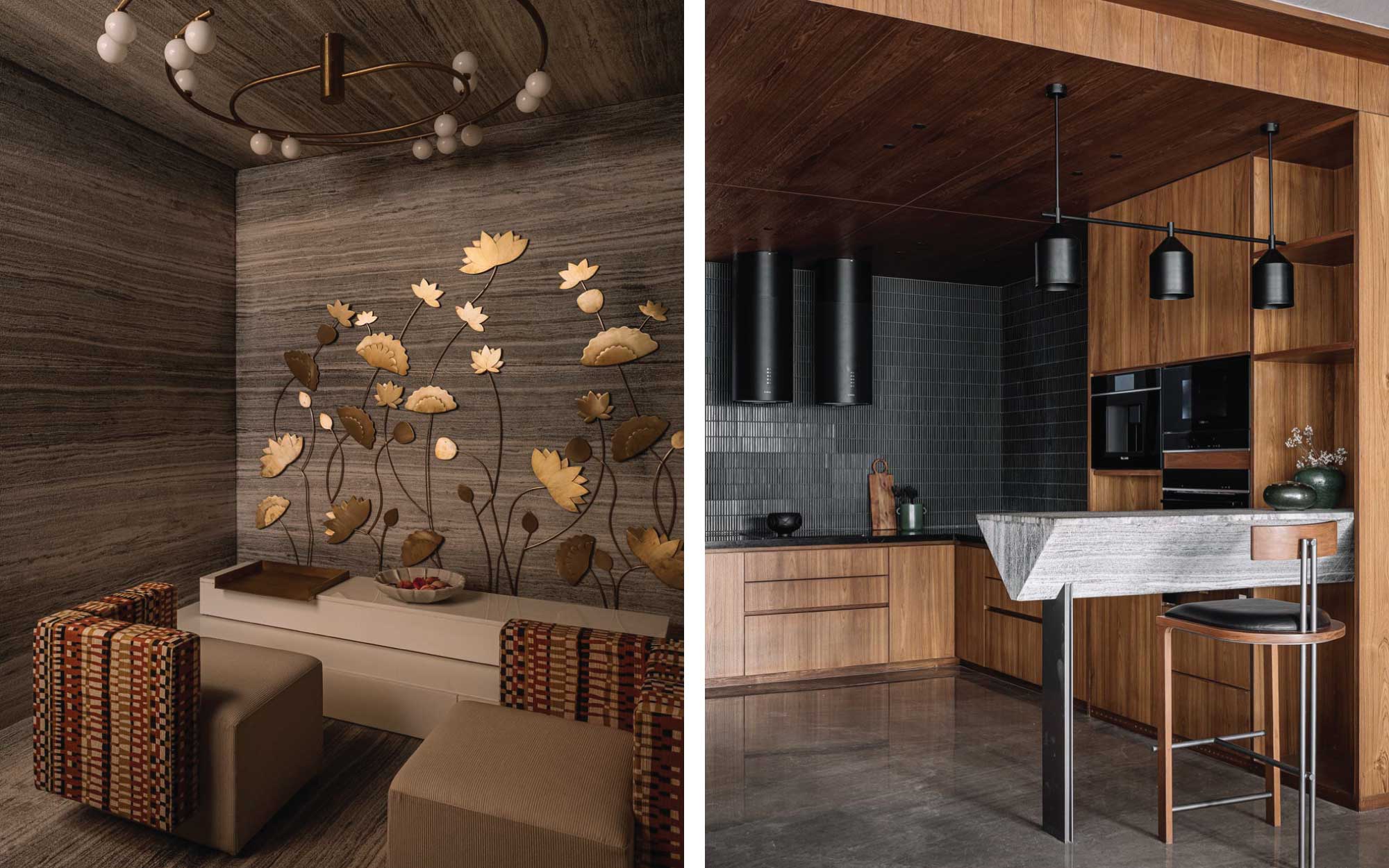
However, it is the Pooja room where the home reaches its most charged moment. The travertine reappears, now layered with floral brass detailing that guides the eye toward the directional wall. “There was a clarity of purpose there that made every decision feel certain”, Varun notes. Materiality, in this room, becomes meaning. The same stone that announced the home now quietly consecrates it. The home office follows a similar compositional logic to the living room‘s focal wall: a sombre blue fabric panel behind a characteristic ebony wood table, focused and unhurried. Unexpected moments of play surface throughout: a cuboidal rack in powder-coated metal, wooden sculptures, custom lighting by Shailesh Rajput and Hatsu that sculpts surprise into corners where one least expects it.
Also read: Art Without A Rulebook: How Different Materials Find Their Place As Art In Homes
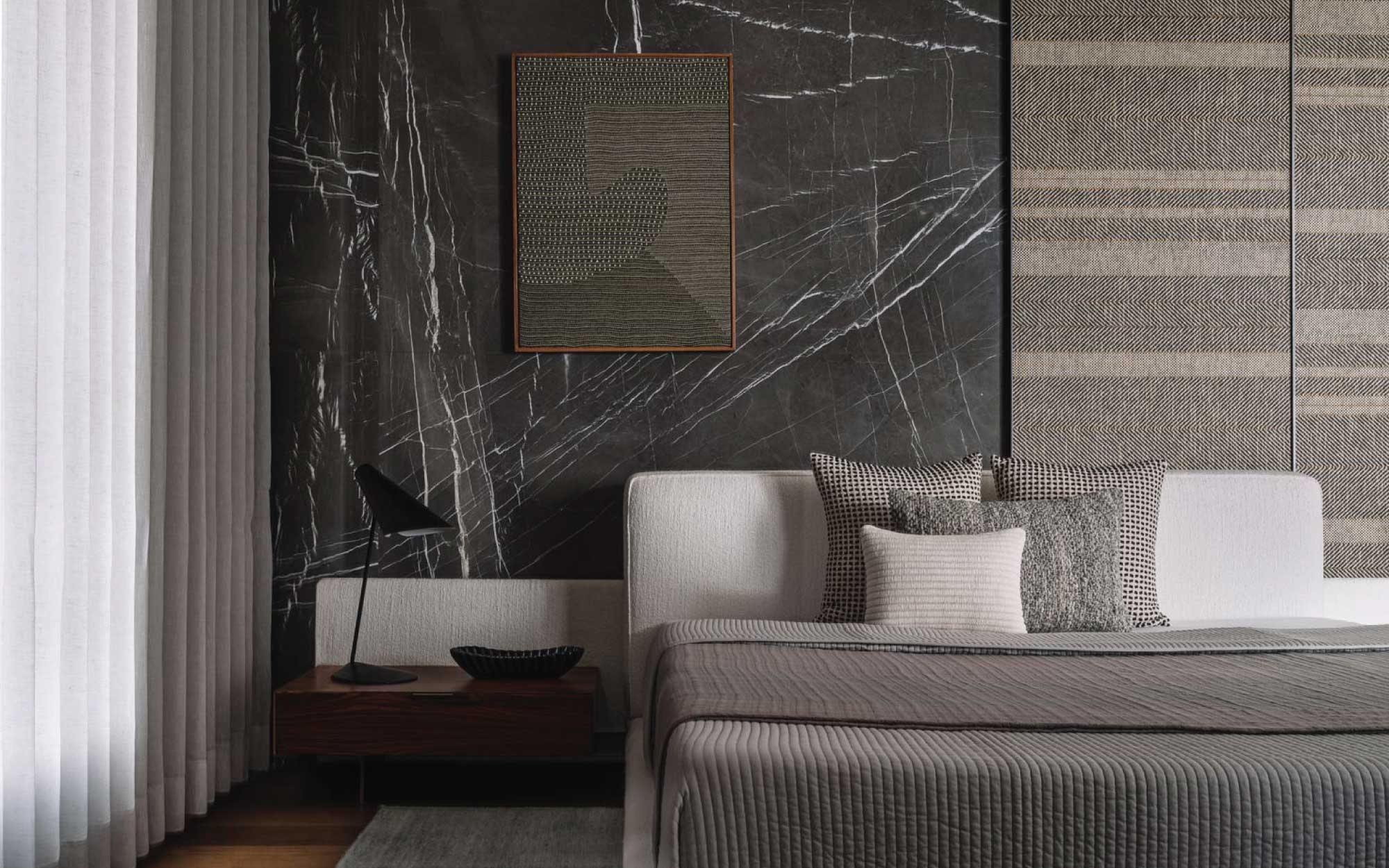
The private quarters interpret the same vocabulary through entirely different temperaments. Here, the wall panelling does double duty—setting the tonal register of each room while concealing bathroom entries within its surface. The couple’s master suite is bold and sensorial—wrapped in stone and fabric, anchored by a custom lounging sofa that speaks to generous, unhurried living. The guest bedroom shifts the mood entirely: steadier, more rooted, predominantly in Indian travertine stone panels. And the son’s bedroom is perhaps the most singular space in the home—an envelope of wood with only the subtlest metal accents, a cocoon of material singularity designed for focus and quiet.
Also read: Kerakoll H40 Gel: A Legacy Of Shaping India’s Iconic Spaces
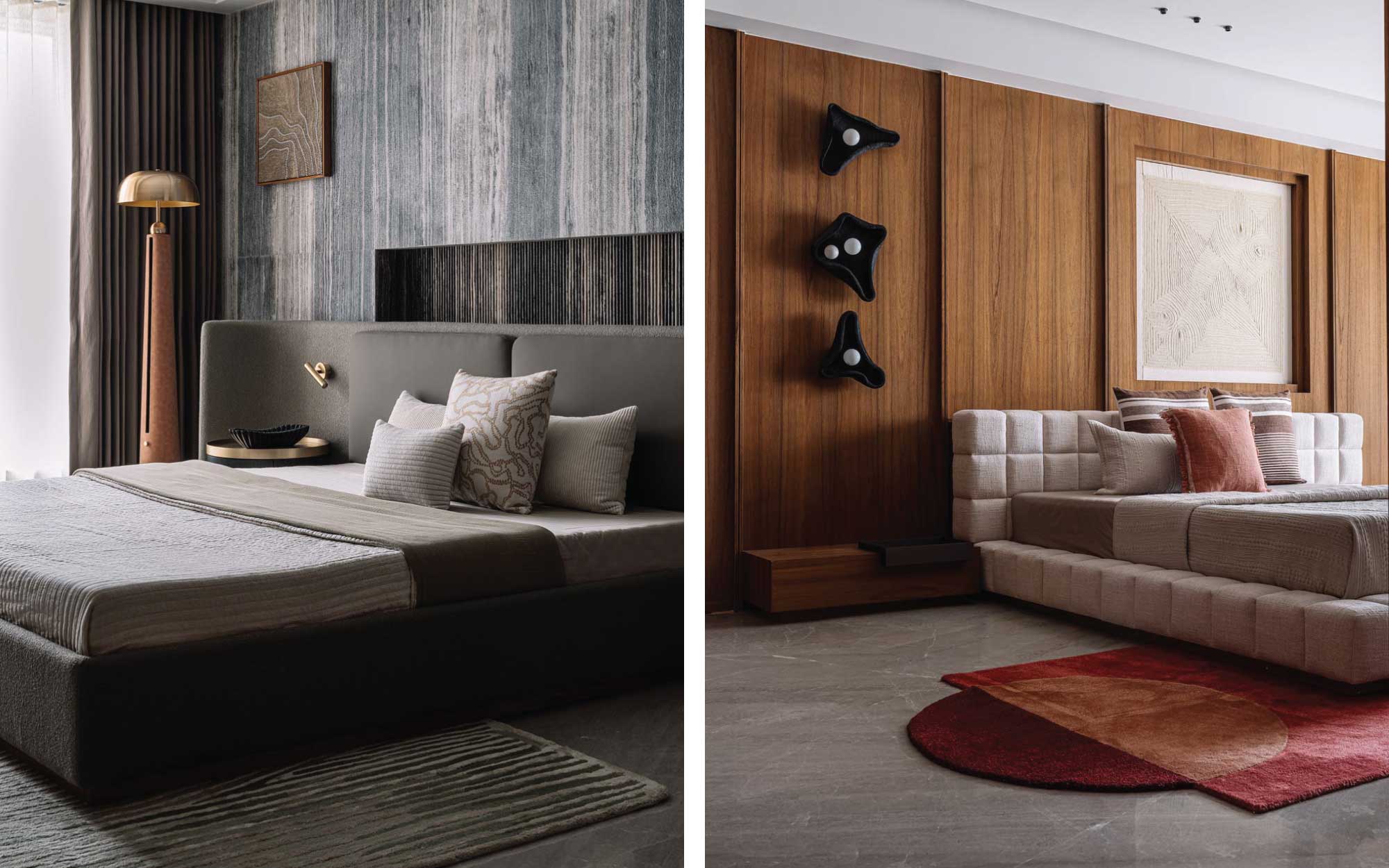
What distinguishes this apartment is its resistance to contemporary trends. While residential interiors increasingly practice room-by-room theming—each space treated as an isolated design statement—Workshop Inc. commits to disciplined experimentation: same four materials, different applications, textures, and moods.
“Restraint is not a limitation,” the Workshop Inc. philosophy holds. “It is the highest form of richness.” Walking through this apartment, that conviction is impossible to argue with. The same four materials move through every room, yet no two spaces feel alike in character. Textures speak quietly; the mind slows to meet them. It is the kind of design that asks you to keep moving, keep looking, and rewards you for doing so.
Each room is a variation on the same quiet theme, each one a different emotional note in the same composition. The home earns its depth not through variety, but through the careful calibration of everything within it. Not a showpiece. A refuge. Exactly as asked.