A Seriously Chic Mandir That Deserves Its Own Spotlight
Embodying restrained minimalism and contemporary refinement, this rowhouse, with its contemplative alfresco patios and sun-drenched mandir, unfolds in tandem within a quaint Pune neighbourhood.
- 6 May '26
- 12:47 pm by Rishma Gill

|
Getting your Trinity Audio player ready...
|
In the realm of architecture, the anatomy of restrained minimalism fuses a particularly discerning, disciplined approach coupled with strokes of distinctive boldness. Through this craftfully curated design sensibility, Lahoti and Associates bring to life “Akanch”, a 2000 sq. ft home in Pune, with a seamless flow dictated by texture, muted materials and porous transitional thresholds where the indoors blend most naturally with the outdoors. Styled by Beautiful Living, woven textiles and stunning drapes lend a unique charm that flows in sync with the calm energy of this abode.
This ancestral abode, with its rich archive of memories and inherited histories, was to be transformed through thoughtful renovations. Preserving the integrity of the original structural framework was essential to maintaining its distinctive character. The client’s vision prioritised a spacious layout that would create a seamless flow throughout the home, without compromising intimate yet functional spaces that resonate with the family’s penchant for minimalism.
Softening the transitions between rooms and between the indoors and the outdoors rendered certain walls redundant. Removing these led every room to display its own distinct identity while transitioning naturally into the next, a design philosophy that resonates deeply with Atish Lahoti, the founder of Lahoti and Associates. As he puts it, “The openness is a result of precise planning and controlled design, not chance.”
Also Read: No Cubicles, Just Character: 3 Architect-Designed Offices That Reject The Corporate Mould
A Tactile Rhetoric Moulded In Texture
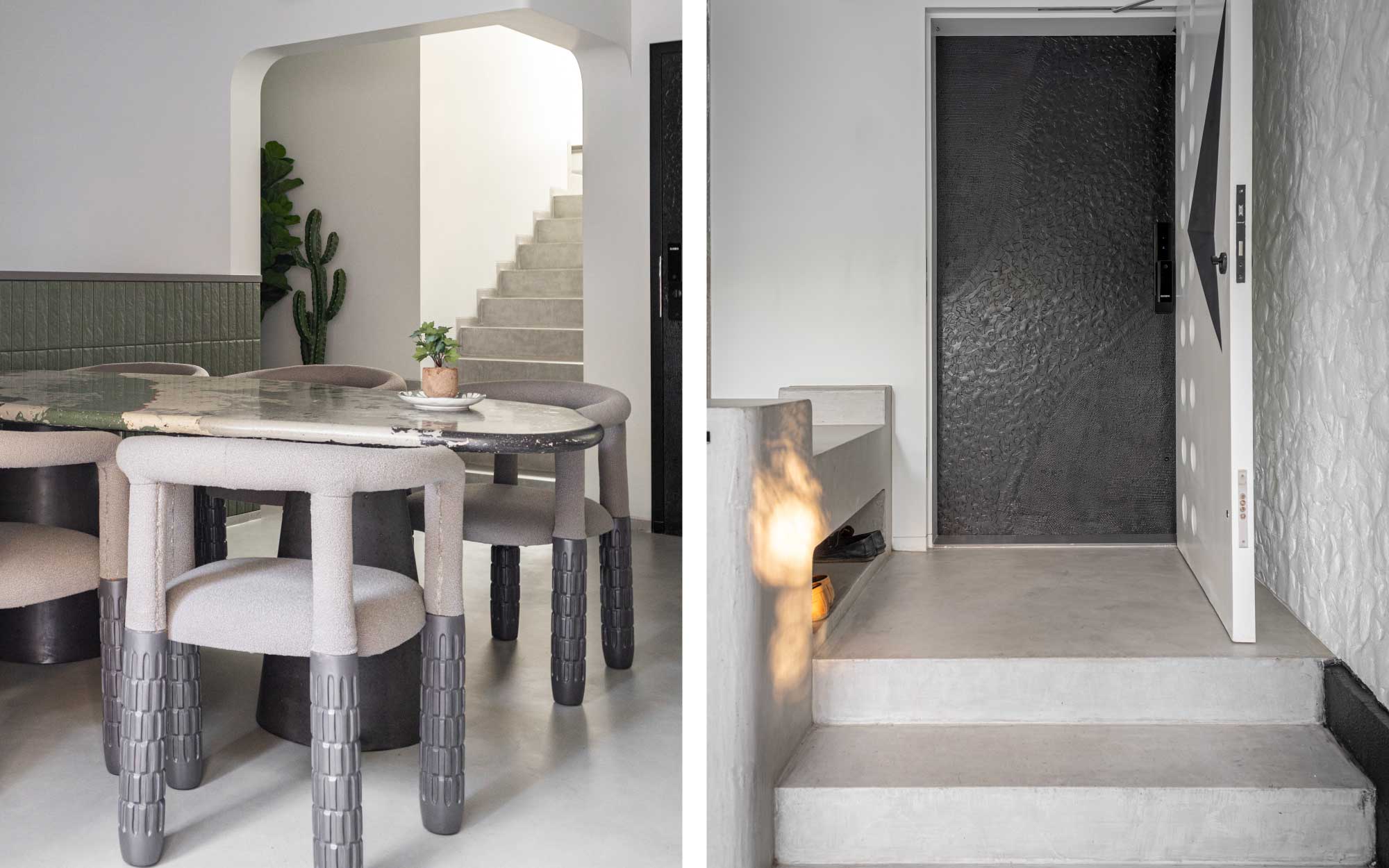
Textures drenched in muted grey and an earthy colour palette play muse to this restrained design sensibility. Diverse natural materials are poised authentically, lending their compelling flow to surfaces adorned with cement textures, lime finishes and stone. This raw, grounded, tactile experience is further heightened by the sparse micro topping floor that sheathes the entire home. Sustainability is a philosophy that resonates deeply with the design firm’s ethic. Therefore, retaining the existing flooring and overlaying it with micro cement helped reduce waste. Stone Polymer Composite flooring used across the project avoids wood-based materials, its energy-efficient production making it a responsible alternative.
Adding warmth, depth and relief to this austere experience are surfaces in basalt stone, black-finished wood, and telephonic black granite. It is this carefully curated symphony of materials that lends “Akanch” its distinctive sense of eternal calm and fluidity. Lahoti remarks, “Execution involved intense coordination and attention to detail, so everything feels effortless yet deeply considered.”
Sculptural Elements That Stand Apart As Visual Anchors
In keeping with the essence of openness and fluidity, the living room, dining room and backyard come together through transitional thresholds that hold their own as prominent inclusions. These aesthetic highlights dictate continuity, inviting light and views from the outdoors to the interiors.
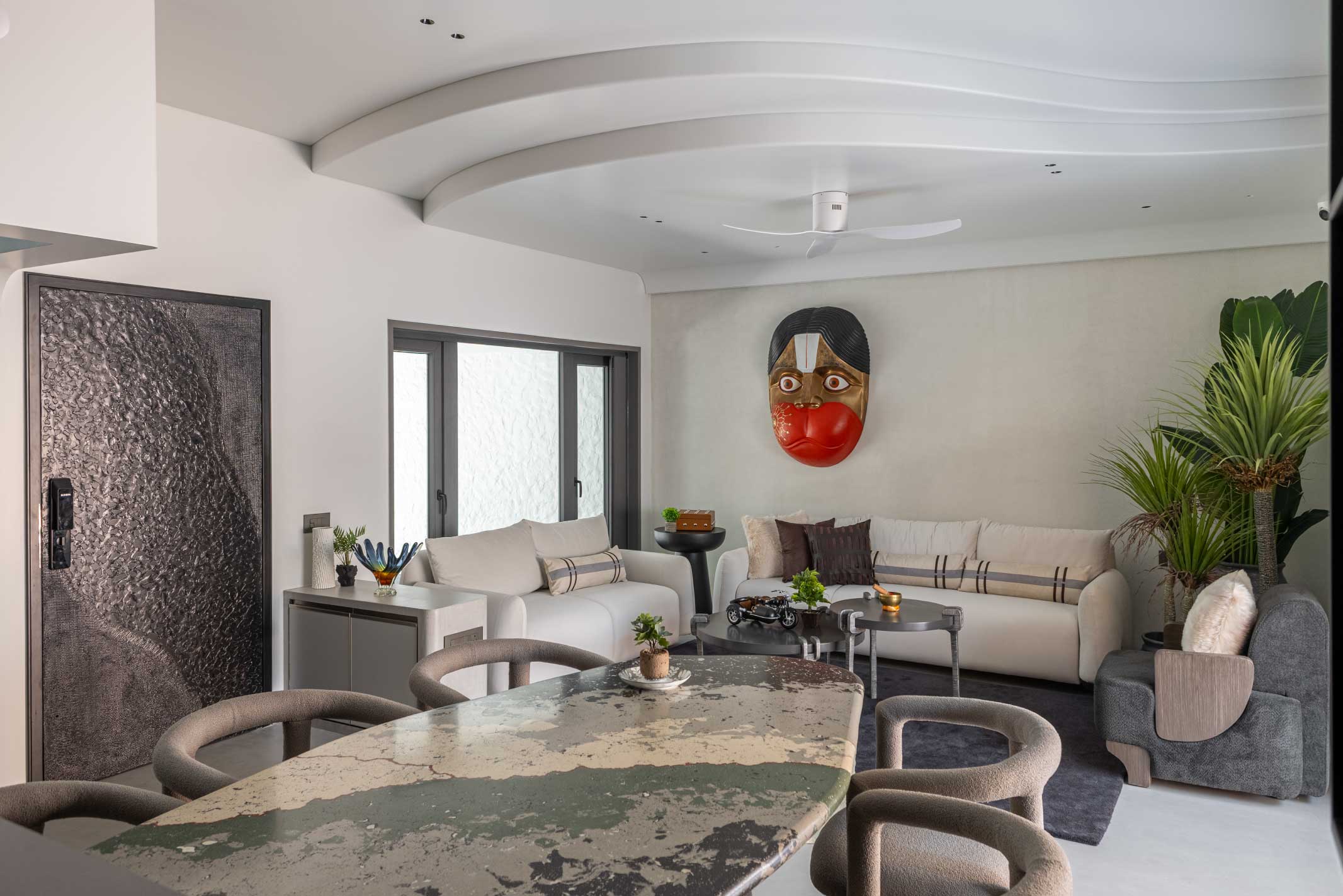
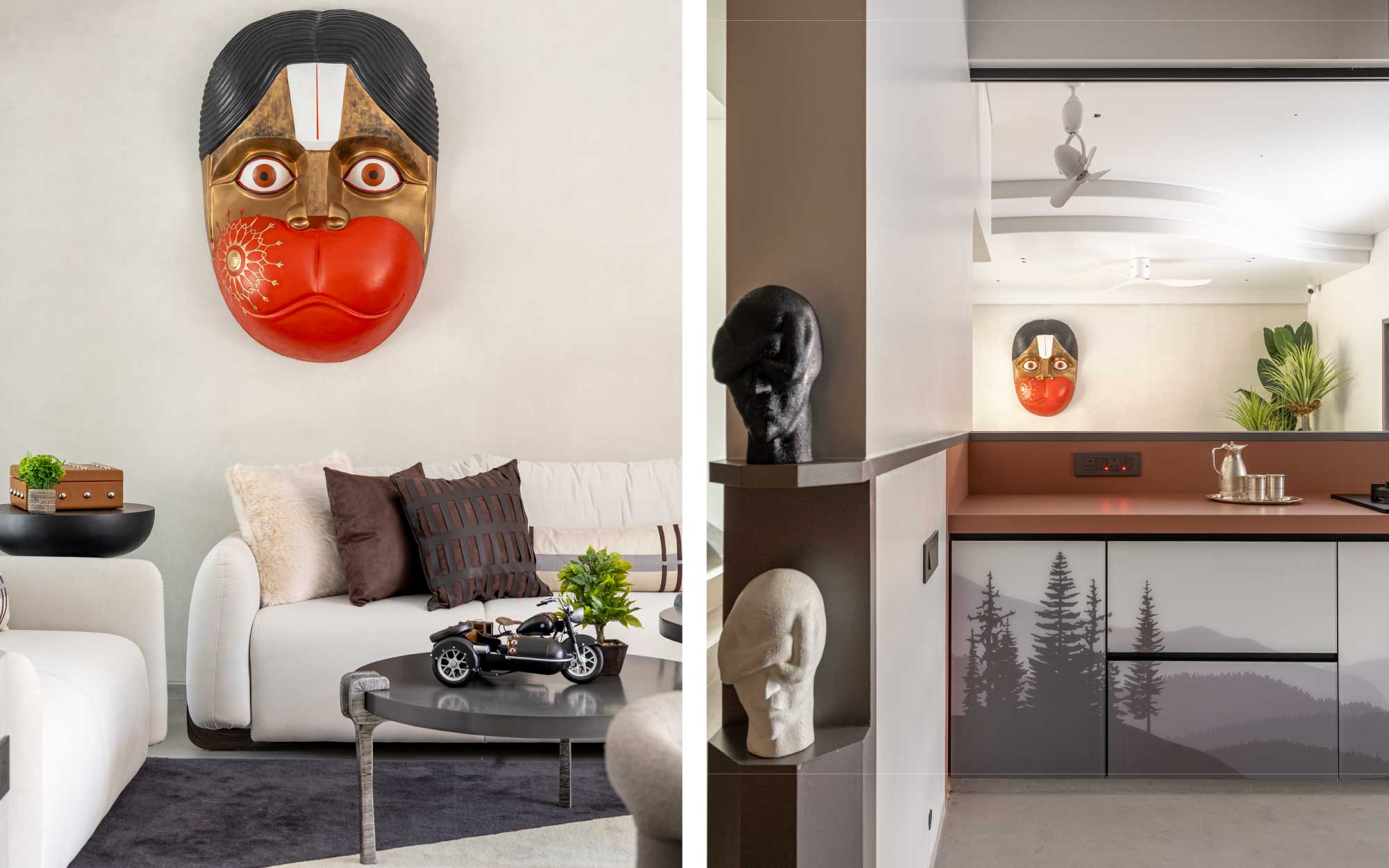
The living room, with its carefully curated muted tones, is the central gathering space. In contrast to the subdued palette, the visual anchor that draws one’s attention is a striking artwork of Hanuman ji. Positioned on the south-facing wall, its rich-red and burnished-gold serves as a focal point. Placed with intention, its presence is strategically visible from various parts of the home. Culturally significant and symbolic of dispelling negative energy, it brings forth positivity and protection for the residents. This sculptural element, aligned with the principles of Vastu, heralds spirituality into the everyday rhythm of life.
Also Read: #DP Exclusive: Spread Across 6,600 sqm A Home In Vapi That Breathes
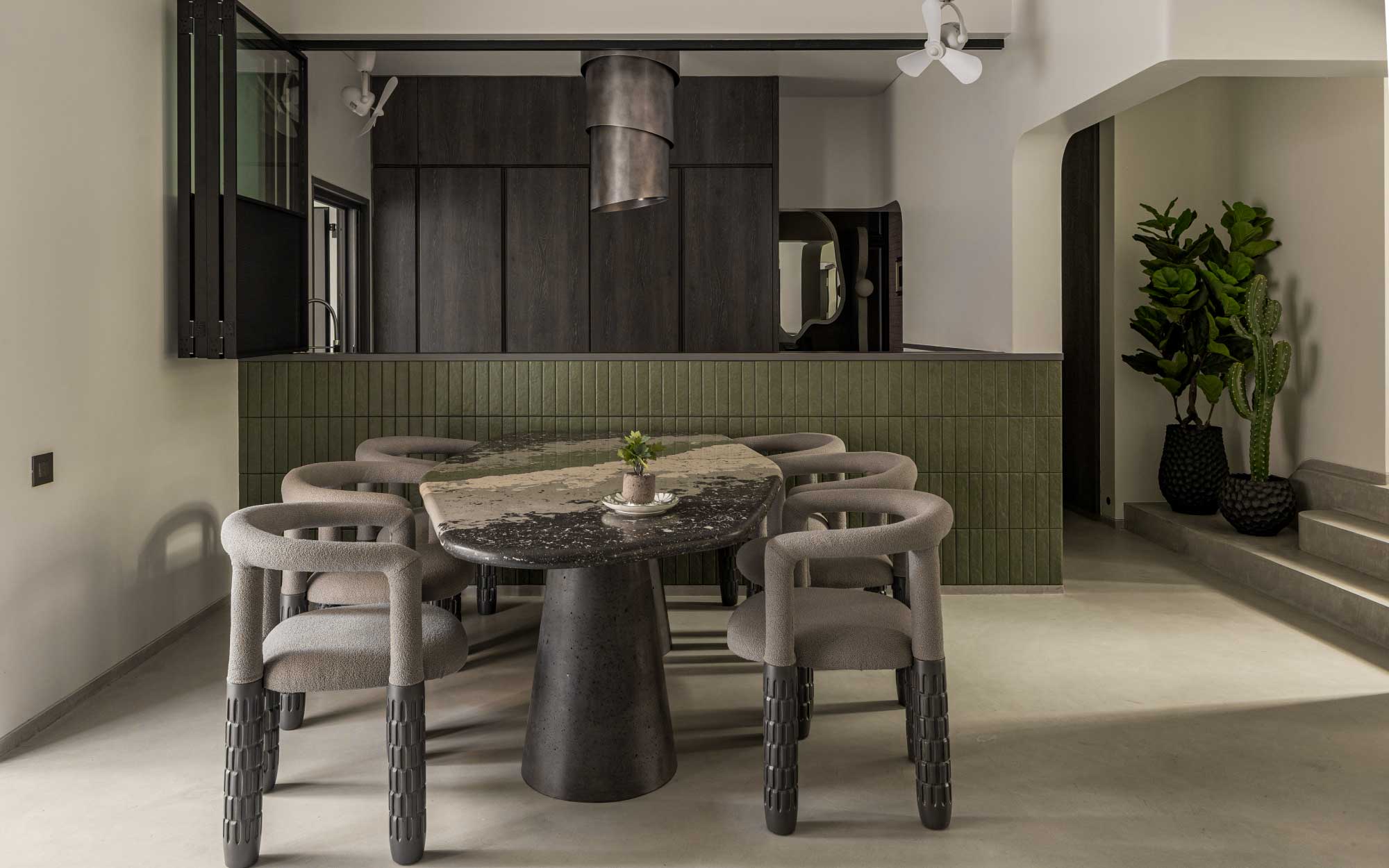
Adjacent to the living room, the dining area boasts a sculptural table, its surface marbled in brown and beige, peppered with rustic green. The kitchen forms an understated, elegant backdrop, its clean lines intent on practicality and visual simplicity. A service window with sliding folding shutters finished in matte glass enhances the flexibility of the space. Imbued with natural light and ventilation, the space is functional, bringing forth easy interaction with the adjoining areas. With this in mind, Lahoti observes, “Every intervention in Akanch is deliberate, minimal in expression, but impactful in how the space functions and feels over time.”
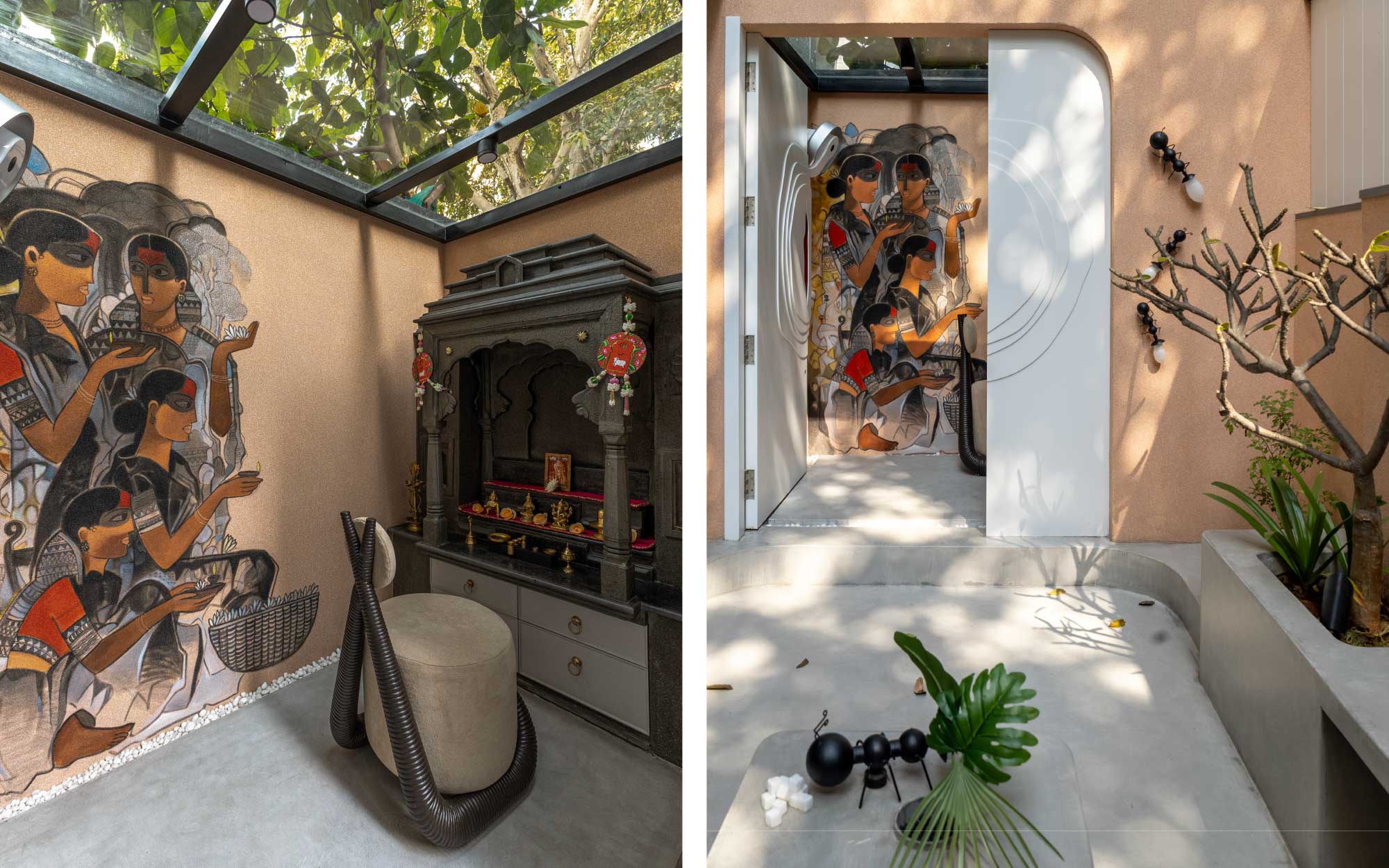
A Sanctum Imbued With Art and Light
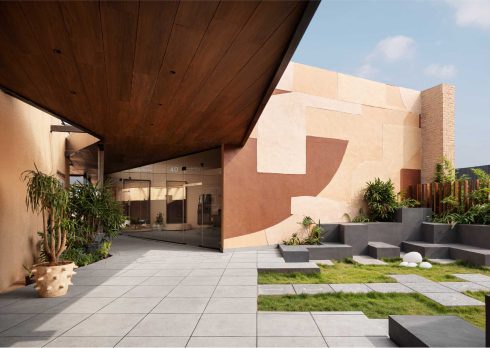
Large floor-to-ceiling openings extend the living room into a lush backyard. On one end, conceived as a sacred sanctuary, stands an open-to-sky mandir panelled with glass roofs. Sunlight gently dapples its walls, creating an ephemeral, ever-evolving atmosphere. This technique is reminiscent of traditional temple designs that favour access to the sun’s luminescence to sanctify a meditative space. Inspired by traditional Maratha sensibilities, the mandir’s design has been reinterpreted through a contemporary lens; rich texture and subtle forms taking precedence over excessive ornamentation. A large mural of female figures reverential in their demeanour, by artist Sameer Dixit, brings to life a sense of grace, faith and devotion. Keeping in mind the client’s aspirations, Lahoti notes, “The client envisioned a home that is both logically planned and emotionally engaging, where every element has purpose.”
Also Read: Why The Gender of Space Matters In The Cities We Build, According To 3 Leading Women Architects
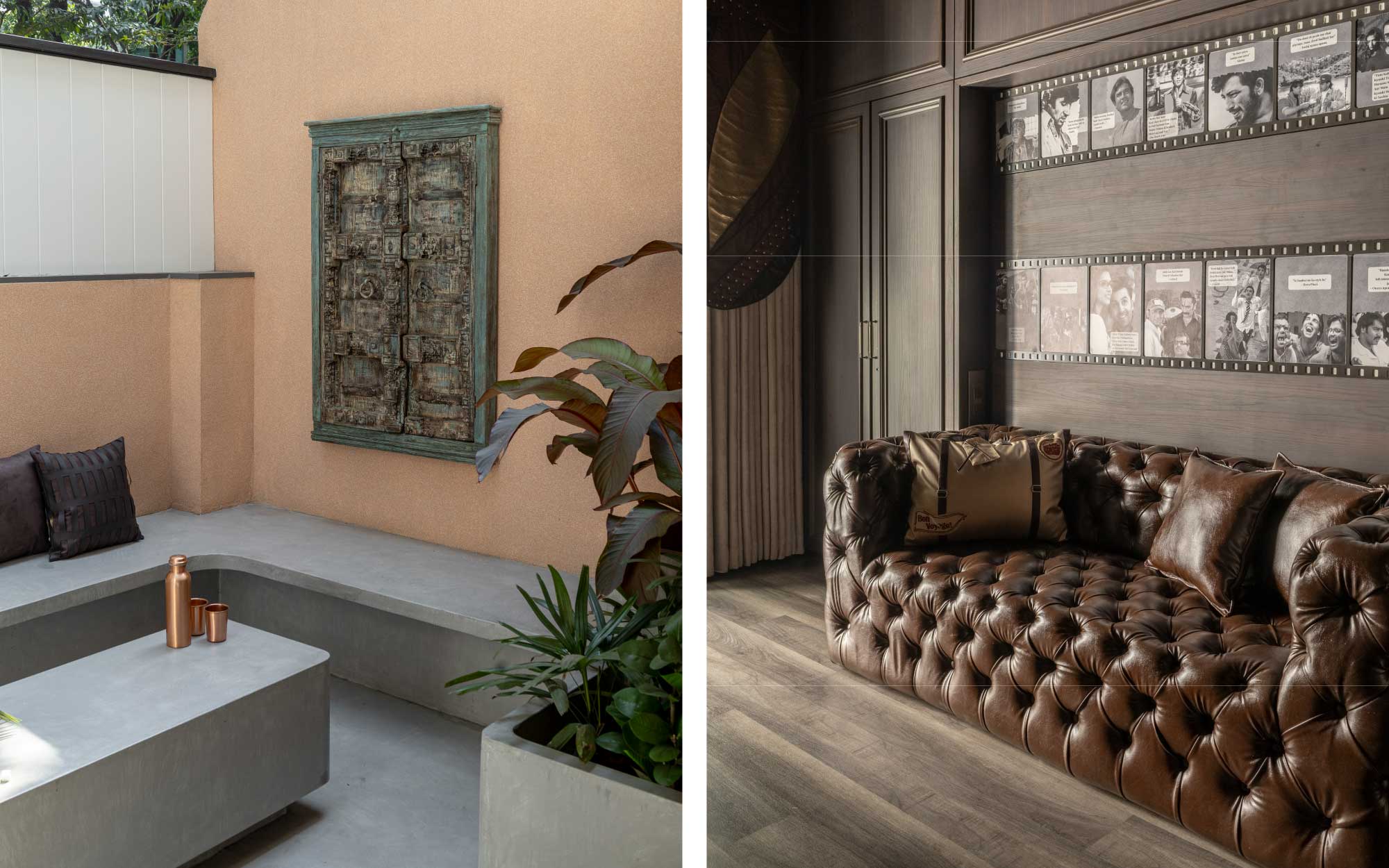
The mandir opens up onto an alfresco patio, a hushed, contemplative space ideal for reading or daydreaming while languidly basking in the sublime outdoors. Concrete sit-outs lined with luxurious cushions are dotted with youthful frangipani trees, ferns and kamini plants, delicately perched upon fluid curvatures carved into stone. Once again, a harmonious play is staged between the minimal in architecture and the organic fecundity of nature. Landscaper Ekta Mehta has ensured a layered arrangement of plants that would naturally thrive in Pune’s tropical savanna climate.
Balconies project themselves onto the quaint streets below. Here, verdant tree tops lend their magnificent branches to criss-cross open skies of cerulean blue. Lahoti remarks, “Akanch was envisioned as a home that balances aspiration with restraint where every decision was guided by longevity, clarity, and a deep connection to its surroundings.”
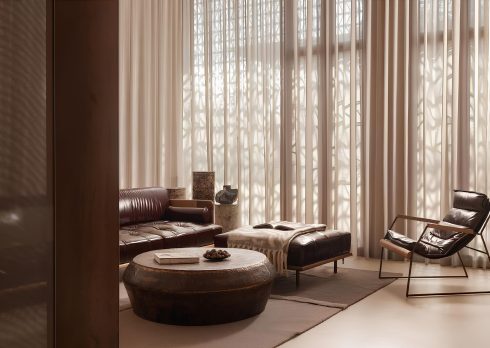
A particularly private seating nook leads to the media room. This entertainment space encompasses a dark, opulent, wood-panelled vibe. Deep-toned leather seating, coupled with exposed brick walls, lends a relaxed atmosphere ideal for movie nights.
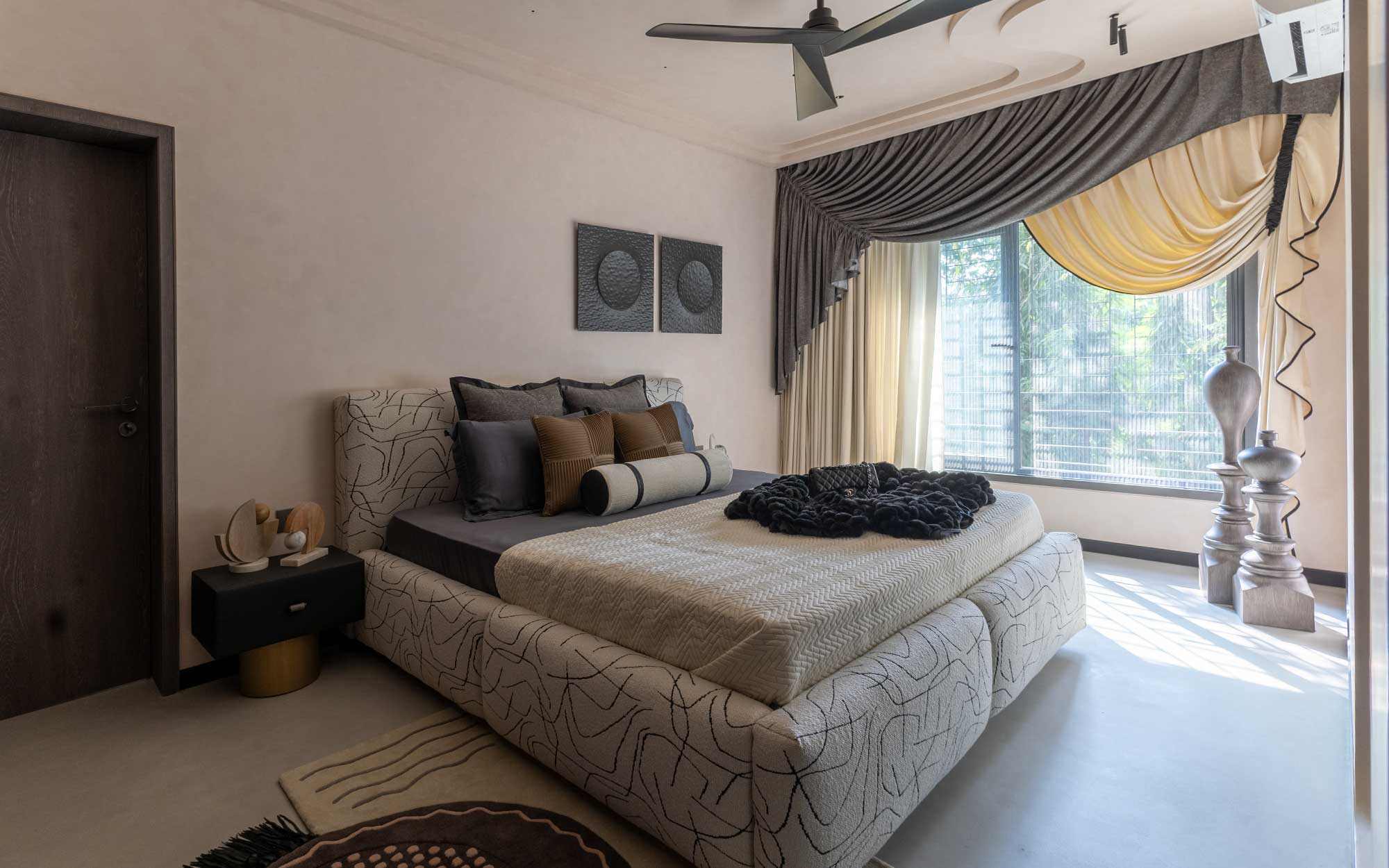
Monochromatic Bedrooms Punctuated With Asymmetrical Drapes
The bedrooms in this home, with their neutral textiles and monochromatic artwork, reinforce the minimal design language of the residence. Linear detailing takes centre stage while dramatic drapes and subtle ceiling articulation introduce fluidity and visual depth to these private spaces. The master bedroom hosts an avant-garde bed and side tables, both understated in their approach. Warmth and comfort are conjured through woven fabrics and lime plaster finishes.
Akanch, with its immaculate restraint in both form and colour, dotted with sparse yet striking embellishment, stands as an authentic expression of contemporary minimalism coupled with sustainable functionality. As an acronym, ‘Akanch’ incorporates the initial letters from all four family members’ names, making it emotionally resonant and purposeful for its residents. Derived from the Marathi word Akanksha, it is symbolic of the fulfilment of desires and aspirations.