With Craft At Their Core 3 Homes Where Fireplaces Are Too Hot To Handle
From stone hearths to intricately carved marble fireplaces, these three homes reimagine the fireplace as an architectural centrepiece, melding European influences with contemporary design to anchor their living spaces.
- 15 May '26
- 2:58 pm by Simran Almeida

|
Getting your Trinity Audio player ready...
|
As the sun comes with guns blazing, the mind often reminisces about the colder times. Times when the hearth was sweltering, and hot chocolate was called for with books in hand. In northern India, where winters arrive with a biting chill, the fireplace has long been more than a seasonal indulgence. It is woven into the rhythms of daily life, drawing families together in the evenings, warming expansive rooms, and becoming a quiet site of pause and conversation. Far from being a mere decorative flourish, the hearth continues to serve a deeply functional role, especially in regions where the cold lingers and central heating remains uncommon. Conventionally, Chulhas (stoves), Bukharis (metallic, portable wood heaters), and then fireplaces, are the result of colonisation and the European way of life. These fire-spitting hearths, when placed in modern homes, are transformed into pièce de resistance with their ventless and often electric characters. From stone fireplaces to marble-carved hearths, DP warms up in front of these three hearths to understand what makes them the anchor of their homes.
1. Reclaiming Nature At Aatman In Uttarakhand
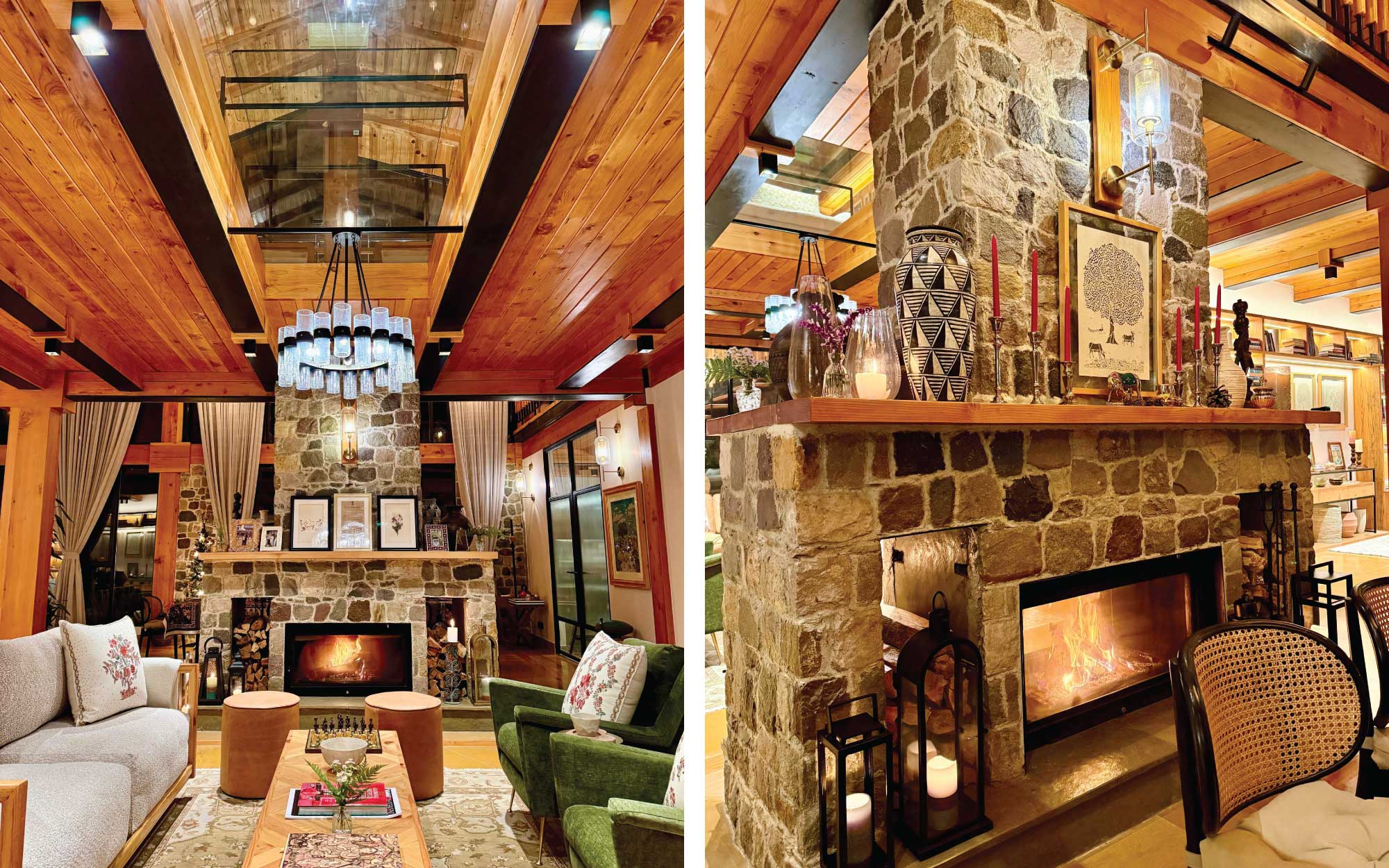
Within the hills and hamlets of Uttarakhand, designer Rahul Mishra and his wife, Divya Bhatt Mishra, conceive a sustainability sanctuary featuring a double-sided stone fireplace. Aptly christened Aatman, this home—the designer’s first architectural project—embodies his beliefs of living “quiet, grounded, and deeply connected with nature.” With sustainability and craft at its core, the house uses reclaimed materials, artisanal furniture, and solar energy to create a harmony with the surrounding mountains and nature. “The idea was that as one enters the house, the fireplace would be the first thing encountered — not merely as a heating element, but almost as a monumental art piece,” shares Rahul Mishra.
Anchoring the publicly accessible areas of the home, the fireplace can be experienced from any side of the room courtesy of its dual sides. “Emotionally, it was intended to recreate the timeless ritual of gathering around fire,” reckons Mishra. Sculpted with reclaimed stone and encased in ceramic glass panels, the fireplace incorporates secondary combustion, which ensures the wood burns more efficiently, generating greater heat and minimising smoke and toxic emissions. “The fuel system and combustion chamber were personally developed to ensure optimal airflow and ventilation,” explains Mishra. He adds, “The system allows the speed of burning to be regulated, making the fireplace capable of comfortably heating the large living space even during the coldest Himalayan winters.”
2. A Victorian Era Hearth At Kailasa In New Delhi
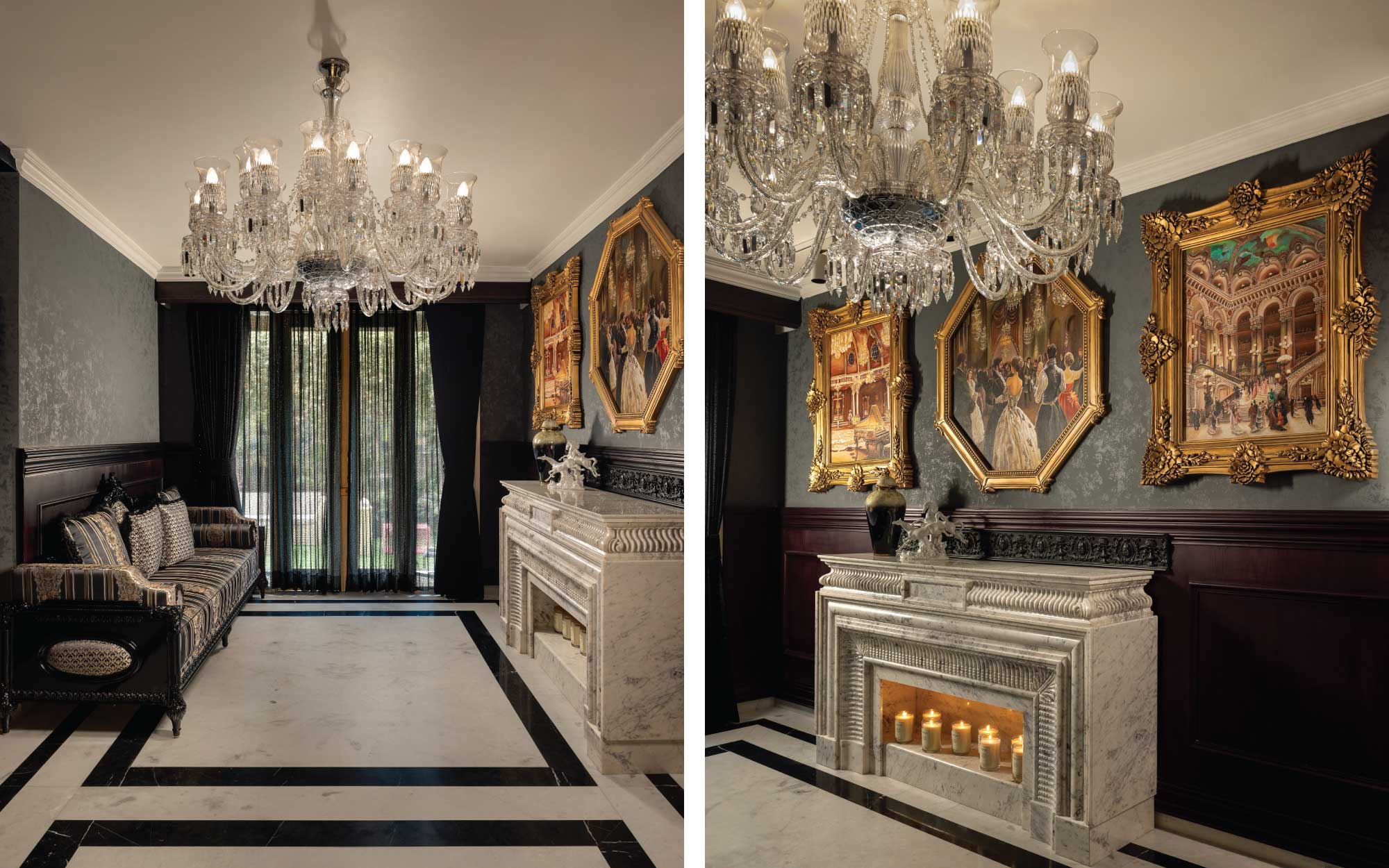
In this 6,000 sq. ft. maximalist residence in New Delhi, envisioned by Qube Designs, the fireplace draws on its original roots—Victorian and European styles. Monikered ‘Kailasa,’ the home unfolds across two levels, embracing the nuances of maximalist design style with a moody palette, wooden accents and walls punctuated with vibrant art. Positioned in the entry foyer, the hearth is etched in marble and offsets a mahogany panel, making it the highlight of this publicly accessible space. “Overall, the fireplace was designed to echo the larger language of the house—classical, detailed, and rich in texture,” explains Karan Sethi of Qube Design.
Corralled with charcoal hues and intricate wainscoating, the fireplace anchors the room with understated drama. “I wanted to bring in elements like Victorian-style frames, a bold European chandelier, and then anchor the space with a fireplace that carries the same sense of detail and presence,” shares Sethi. With a fluted marble frame and a voluptuous silhouette, the fireplace is an ode to India’s artisanal heritage. “For me, every small detail matters—whether it’s the edge of the marble, the depth of the carving, or how the frames sit around the fireplace,” avers Sethi.
3. An Ode To Craftsmanship At The Charcoal House In Gurgaon
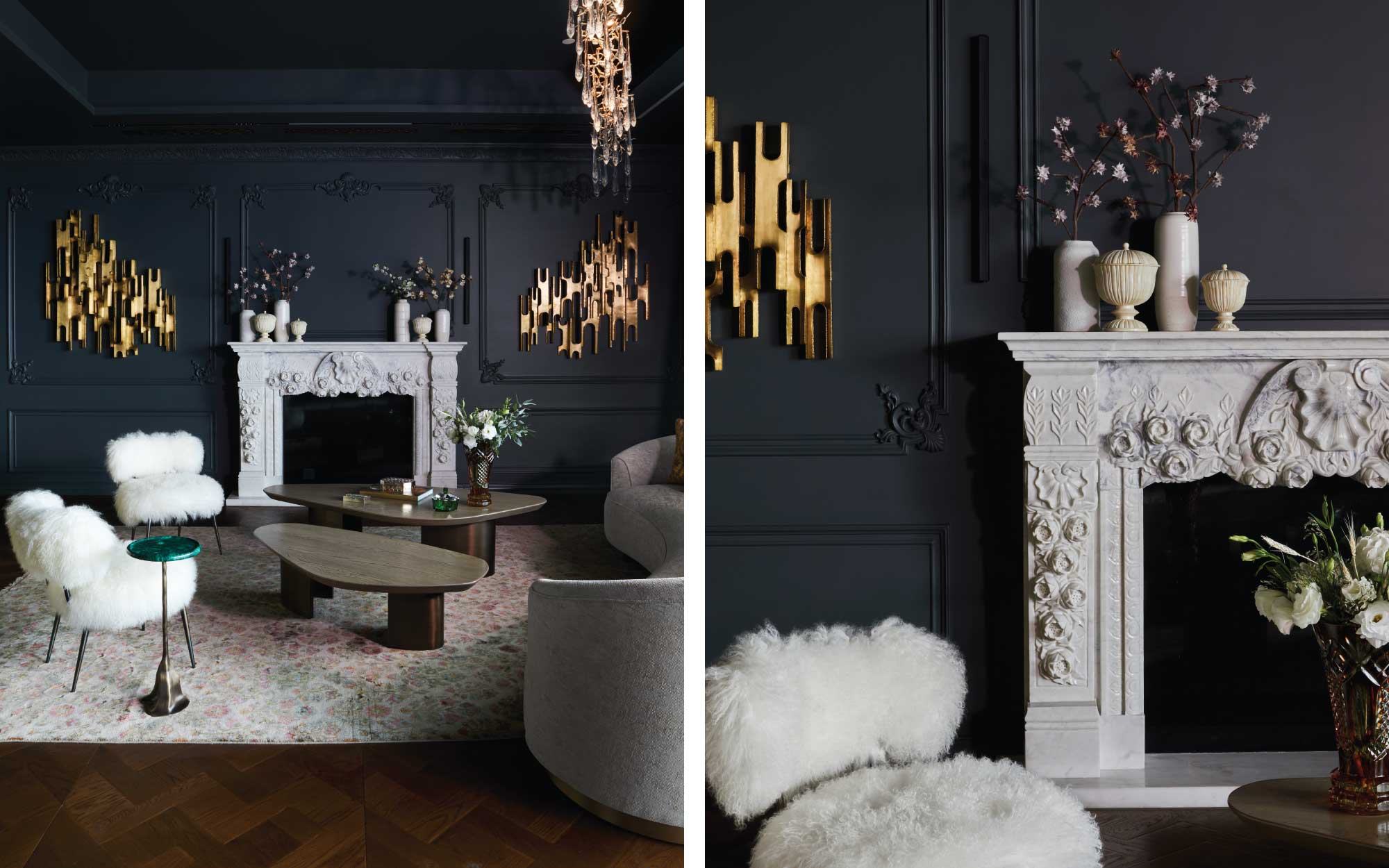
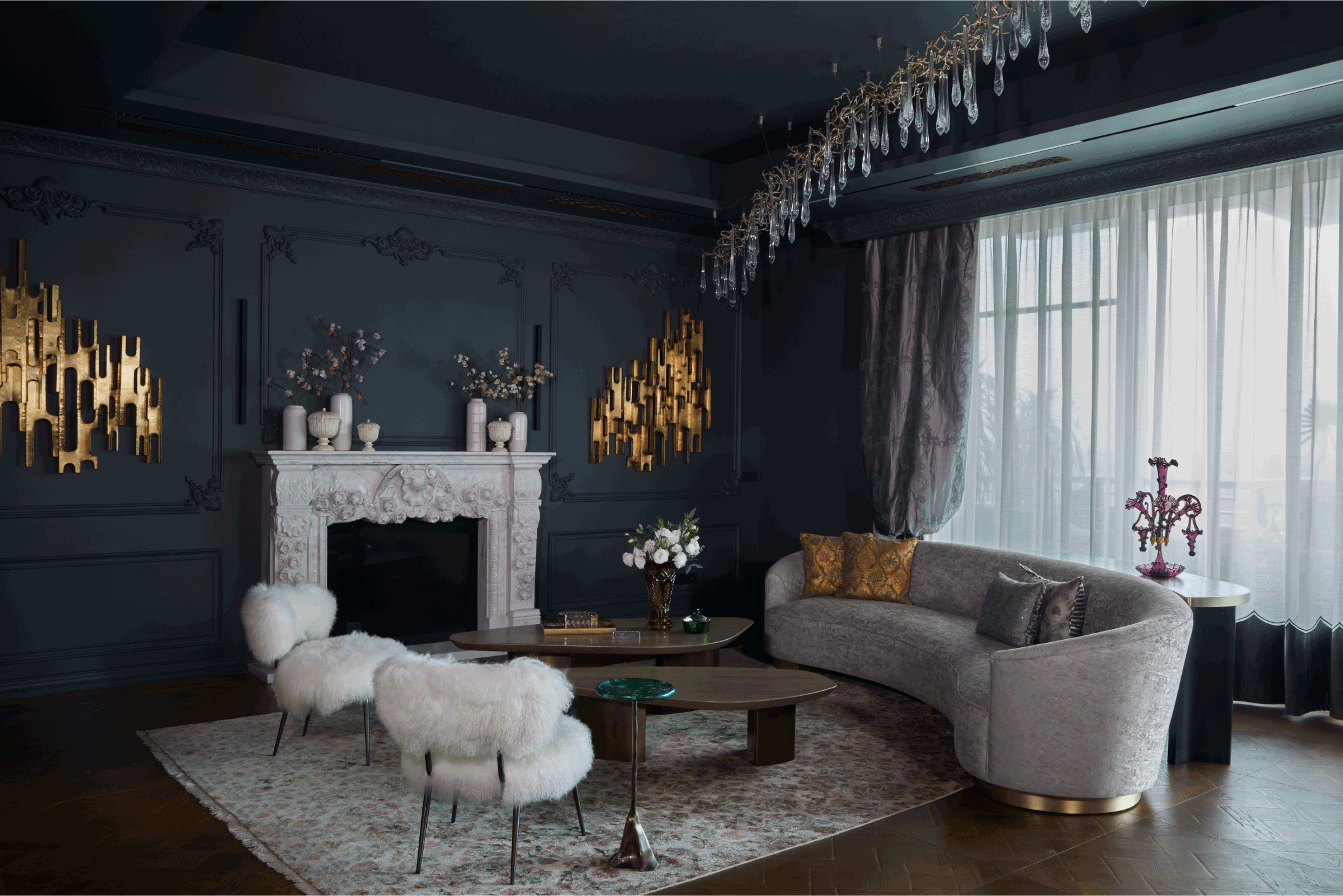
In reverence to craftsmanship, the fireplace in this 7,500 sq. ft. home is envisioned by Design by Disha Subramanium. Dubbed The Charcoal House, it is dipped in crepuscular hues, paired with neo-classical mouldings and objets d’art from a gamut of Indian artists. Set in the living room, a marble fireplace transpires with carved floral motifs juxtaposed against the virile charcoal walls. “The inspiration comes from European salons, where fireplaces often act as central anchors, but here it is interpreted in a more subdued, moodier manner,” explains Disha Subramanium.
The carvings on the marble allude to the country’s rich legacy of craftsmanship and how it punctuates every contemporary space as a constant reminder of the heritage. “It was conceived more as an anchor within the space, something that quietly holds the room together rather than drawing immediate attention,” notes Subramanium. She adds, “The idea was to place a softer classical element within an already classical but dark envelope, allowing contrast to emerge in a controlled and restrained way.