Annalisa Rosso, Curator Of Salone Raritas, Picks Her Top 7 Collectable Designs Defining Milan Design Week 2026
In an exclusive conversation with DP, Salone Raritas curator Annalisa Rosso picks the most compelling collectable designs from Milan Design Week 2026.
- 12 May '26
- 11:20 am by Simran Almeida

|
Getting your Trinity Audio player ready...
|
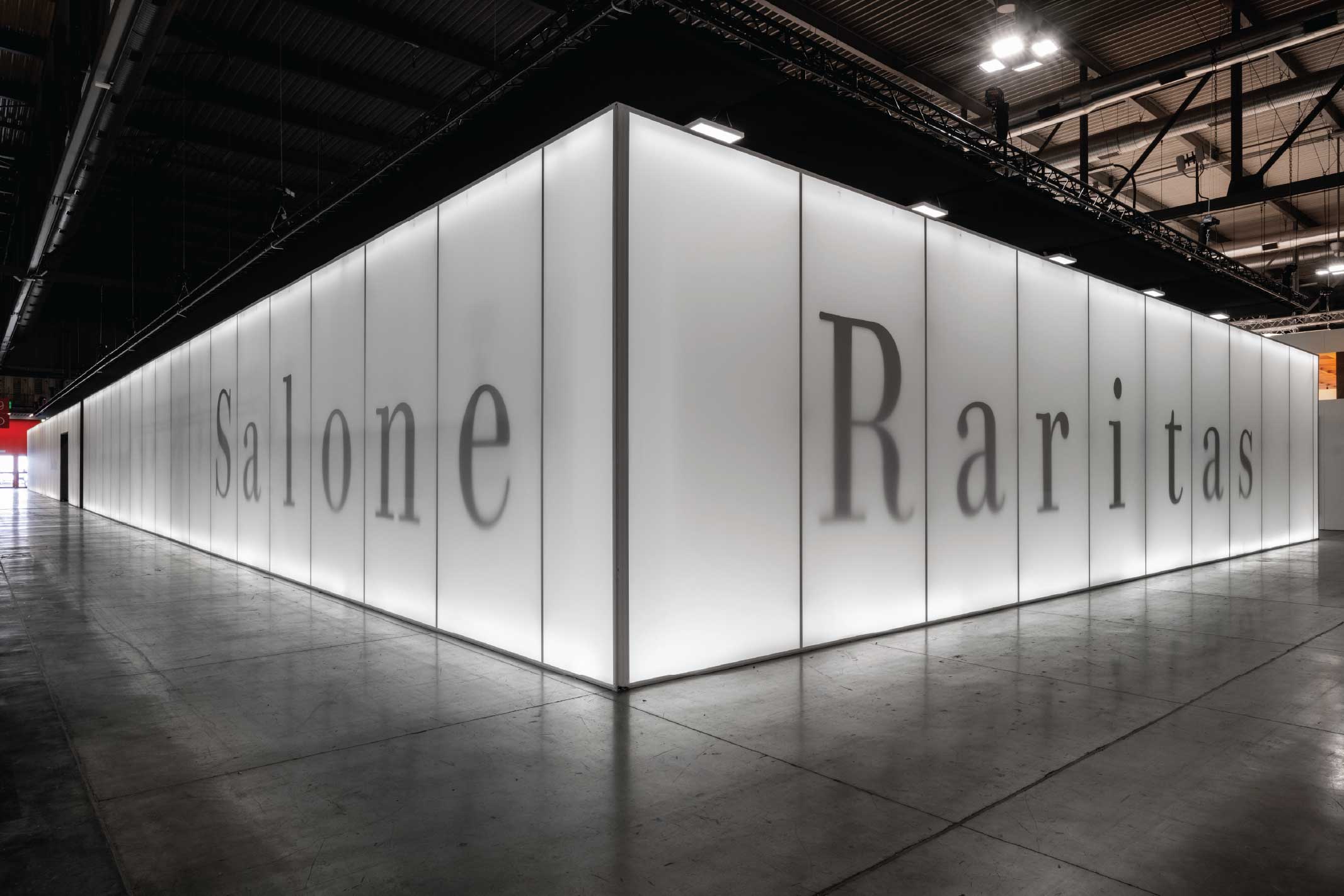
As the overconsumption stint becomes a whim of a previous lifetime, the design industry shifts subtly. This shift reflects a culture of thoughtful collecting. Conscious, meticulous and positioning craft as a vanguard while honouring artisans in distant towns, collectable design returns almost like a yearning. In keeping with this, the 64th edition of the Salone del Mobile. Milano debuted Salone Raritas. Presented in Pavilion 9 at Rho Fiera, Milano and curated by Annalisa Rosso, the editorial & cultural director and fair advisor, it displays collectable objects from 28 international exhibitors in a lantern-like space crafted by Formafantasma.
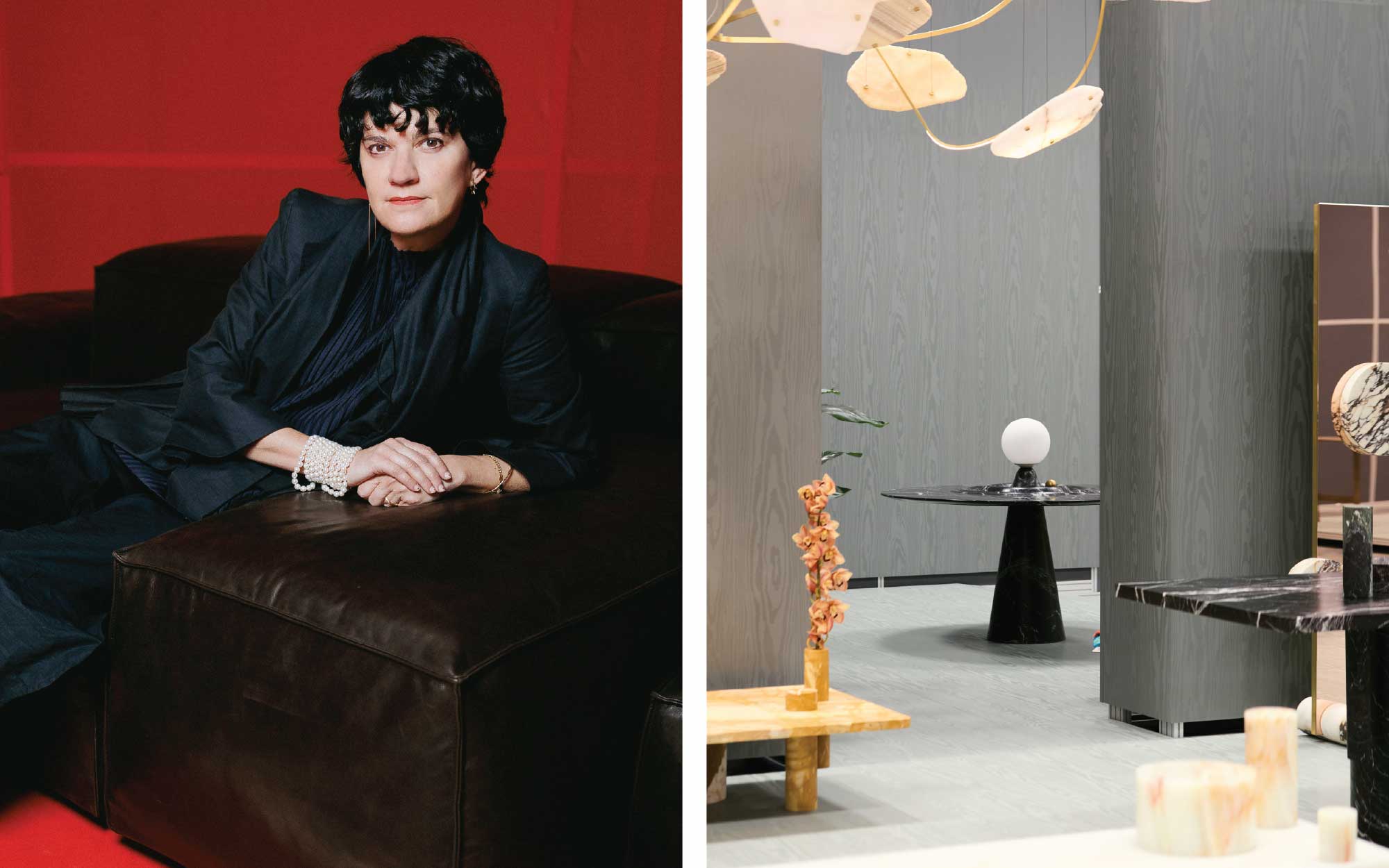
With fast production on the decline, Milan Design Week carried a recurring trend of a slower, deliberate rhythm of producing by hand, turning objects into pieces that can be collected. They gently interrogate the human capacity to comprehend, translate and ultimately transform the physicality of materials. “What Salone Raritas was trying to say is that this conversation doesn’t have to happen only at gallery fairs or in the secondary market. It belongs here, at the heart of the industry, in dialogue with the people who actually build and commission spaces at scale,” Rosso shares in an exclusive conversation with DP. As this Salone Raritas debuts balancing “periods, geographies, languages, typologies, and consequently different emotional impacts,” through collectables we ask Annalisa Rosso to pick her most compelling collectable designs and designers from Milan Design Week 2026.
1. Massimo Lunardon At Salone Raritas
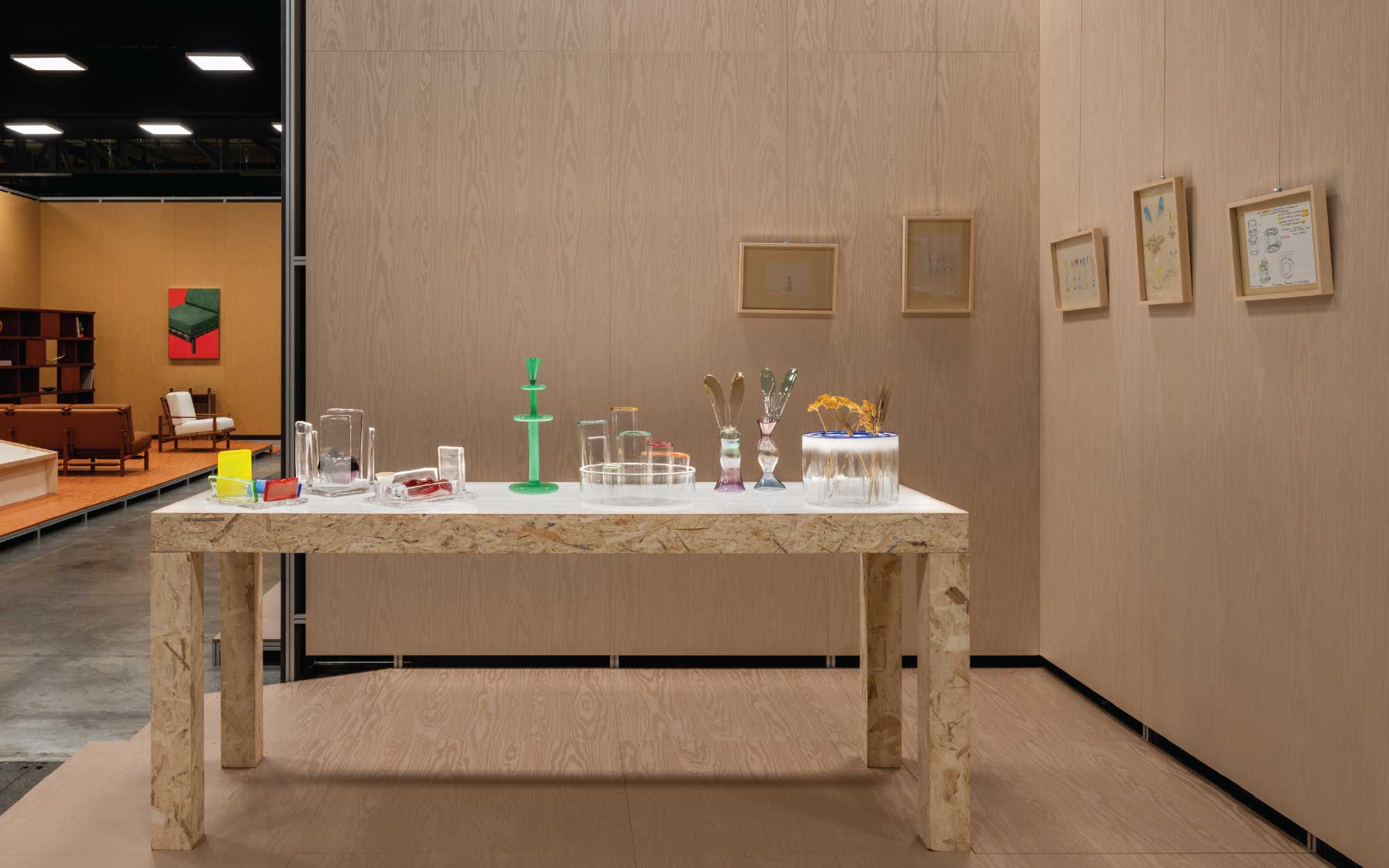
Discovering the ancestral bond in nature, artefacts, and our most primaeval memories, Venetian glassmaker Massimo Lunardon join forces with late Italian architect and designer Andrea Branzi for Massimo Lunardon Edizioni at Salone Raritas. In reverence for their long-standing collaboration, the presentation unfolds as both tribute and dialogue—placing Branzi’s glass works at the heart of the booth. “The project stands out for its cultural relevance and for the extraordinary dialogue between the two: Lunardon, master glassblower and artist, and Branzi, one of the most influential Italian architects and designers of the contemporary era,” reflects Rosso.
Conceived as a contemplative landscape, it displays rare and limited-edition glass works, allowing light to refract and animate their surfaces. Reflecting on the theme of transparency, Branzi’s idea of glass as a ‘traversable’ material dissolves boundaries between people, objects, and the organic life within a space. At its core, the ‘Ice Dolmens’ (2022–2023) recast megalithic monuments as thick, glacial planes of glass evoking archaic terrains while reflecting on the correlation.
2. Paradisoterrestre At Salone Raritas
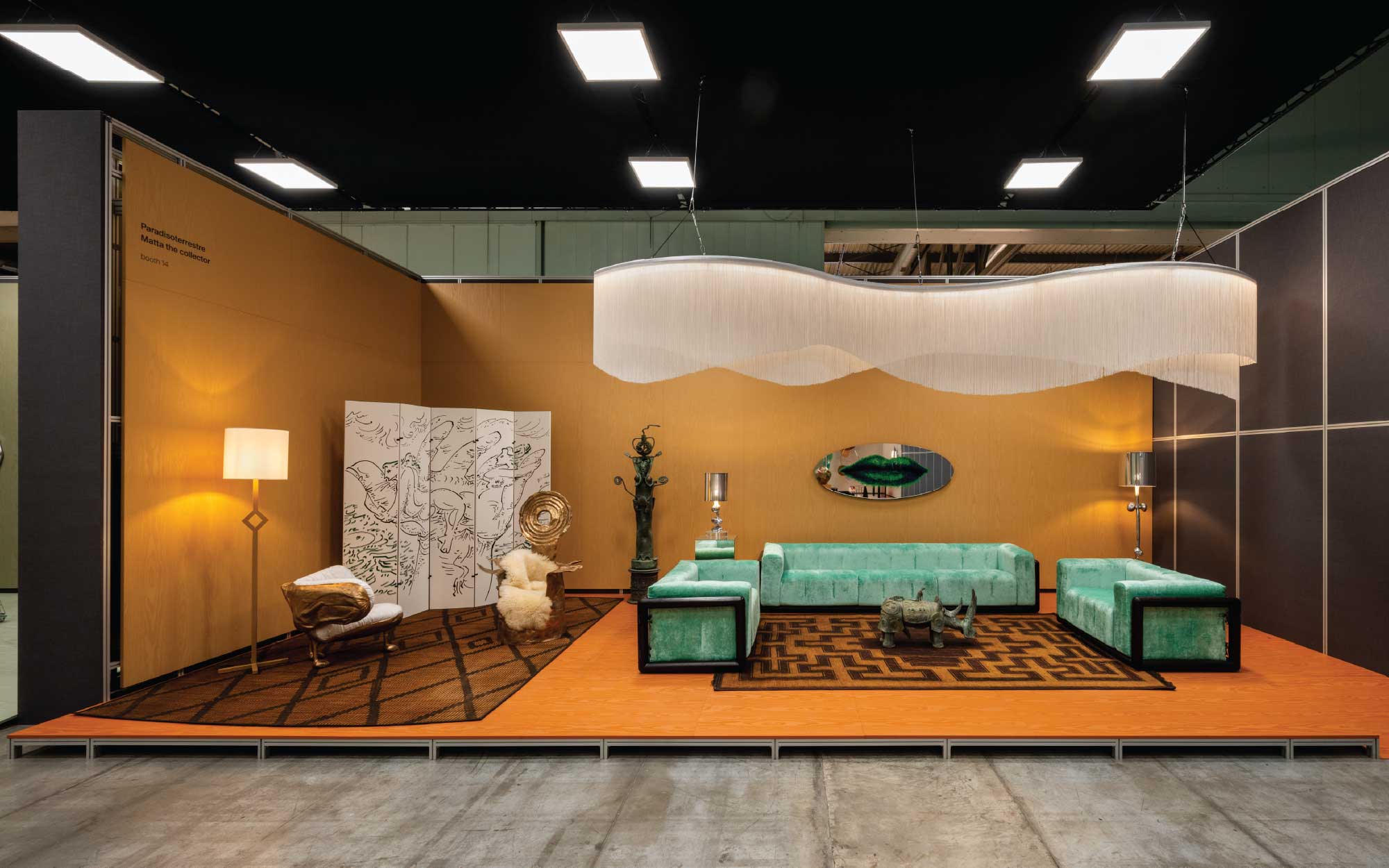
Revisiting the radical spirit of the 1970s through a contemporary lens, the Italian design brand Paradisoterrestre champions dialogue with memory, authorship, and re-edition. In the liminal space between the gallery and a design house, the brand champions historical pieces and limited editions with renewed cultural urgency. Salone Raritas presents a scenography with a distinctly 1970s vibe. “Paradisoterrestre presented a project to narrate the material and cultural legacy of the eclectic entrepreneur Dino Gavina, its historic founder, featuring works by surrealist artist Roberto Matta, Japanese architect Kazuhide Takahama, Japanese artist Mariyo Yagi, and Carlo Scarpa,” explains Rosso.
Unfolding as more than a retrospective, it begins with a vintage living room by Italian architect and designer Carlo Scarpa, with a constellation of works positioned around it, each piece oscillating between a collectable object and a narrative artefact. In a first, they unveil limited-edition re-editions of the Ore Tre, Mezzanotte, and Rombo lamps, born out of Roberto Matta’s surreal imagination. “(It presents) A body of work entirely in wood that translates textile logic into sculptural form with remarkable sensitivity,” shares Rosso. From Gavina’s Ultramobile collection, Margarita and Sacco Alato lend function an ethereal edge. Nearby, a rare Gavina–Takahama screen, paired with Yagi’s Garbo lamp, forms a suspended vignette of cultural continuity.
3. Marco Guazzini At 5VIE
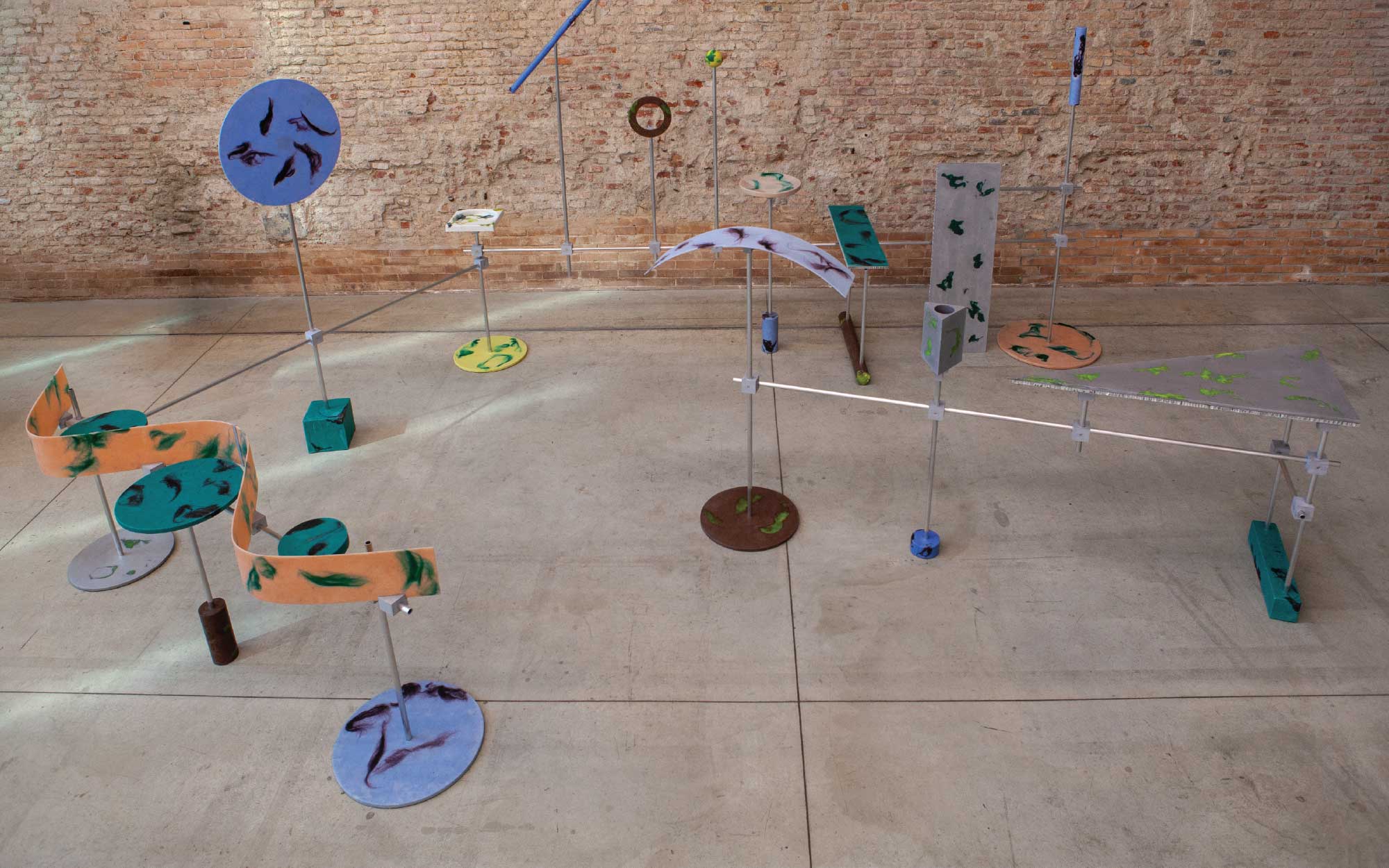
What if objects could vibrate with memory long after the encounter has ended? Italian designer Marco Guazzini’s Risonanze project answers this question perfectly at Le Cavallerizze during 5VIE for Milan Design Week 2026. Curated by Maria Cristina Didero, “(it) stood out for its rigorous experimentation with new materials, where technical innovation is not an end in itself but becomes a way to develop a different design language,” points Rosso. At the core of this showcase lies the designer’s material experimentation through Marwoolus® and Alwoolus™—devised materials reinterpreting marble through wool fibres, aluminium, and innovative binders.
Drawing from Prato’s textile legacy and Pietrasanta’s marble traditions, it balances hardness with softness. Conceived as a suspended constellation, it connects consoles, desks, coat stands, and imagined forms through flowing aluminium tubes, melding typologies into a dialogue of colour, texture, and movement. With marble, wool, and reflective metals orbiting together like celestial fragments, these objects are entirely handcrafted in Guazzini’s Pietrasanta workshop. Marco Guazzini inhabits the fertile space between serial production and artistic practice without ever attempting to resolve the tension between the two.
Also Read: Nilufar Opens A Grand Hotel In A Depot At Milan Design Week 2026
4. Nilufar Gallery at Via della Spiga, Milan
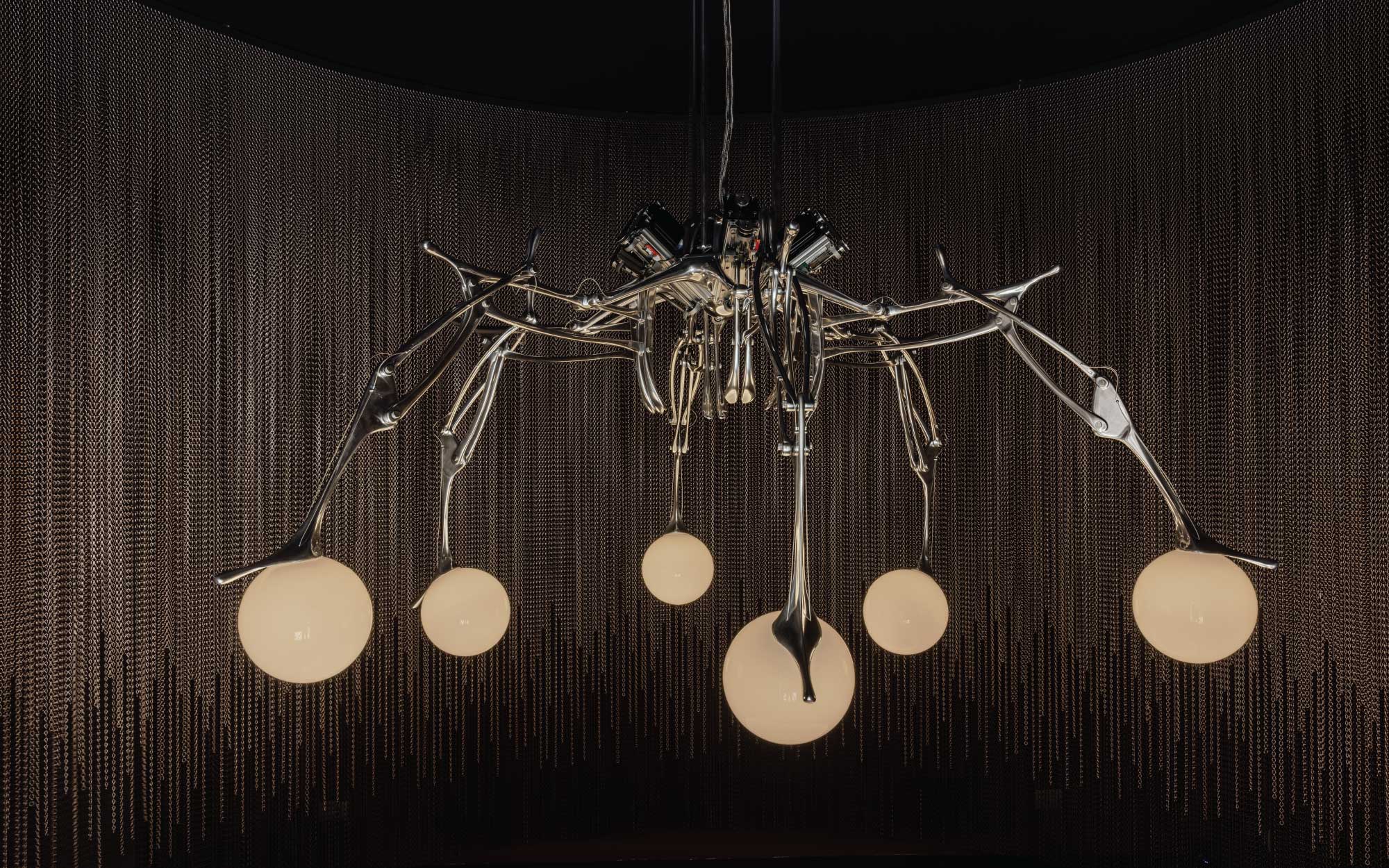
Transcending a mere lighting piece, Nilufar gallery presents ‘LUMIAC’ at Via della Spiga, Milan. “At Nilufar Gallery, the Lumiac ceiling lamp by Andrea Mancuso offered a compelling reflection on the relationship between human and machine,” shares Rosso. Conceived as a ‘Light Unit Mechanised Intelligence Apparatus Computer,’ the work draws a deliberate parallel to MANIAC, one of the earliest autonomous computers of the 1950s.
At its core, a chandelier acts like a mechanical mind, choreographing light and movement in defiance of static design. “This kinetic object moves between function and poetry,” muses Rosso. It is corralled within twin curtains of Kriskadecor’s aluminium chains, where its glow is softened into an intimate, cocooned experience that unfolds gradually through light and shadow. Beyond this, Nilufar’s curation layers vintage icons, contemporary works, and Nilufar Edition pieces into a seamless dialogue—featuring Andrea Mancuso’s Terrario table, Maximilian Marchesani’s Famiglia lamp, and archival works by Ico Parisi and Ignazio Gardella.
5. Zaven At Galleria Luisa Delle Piane
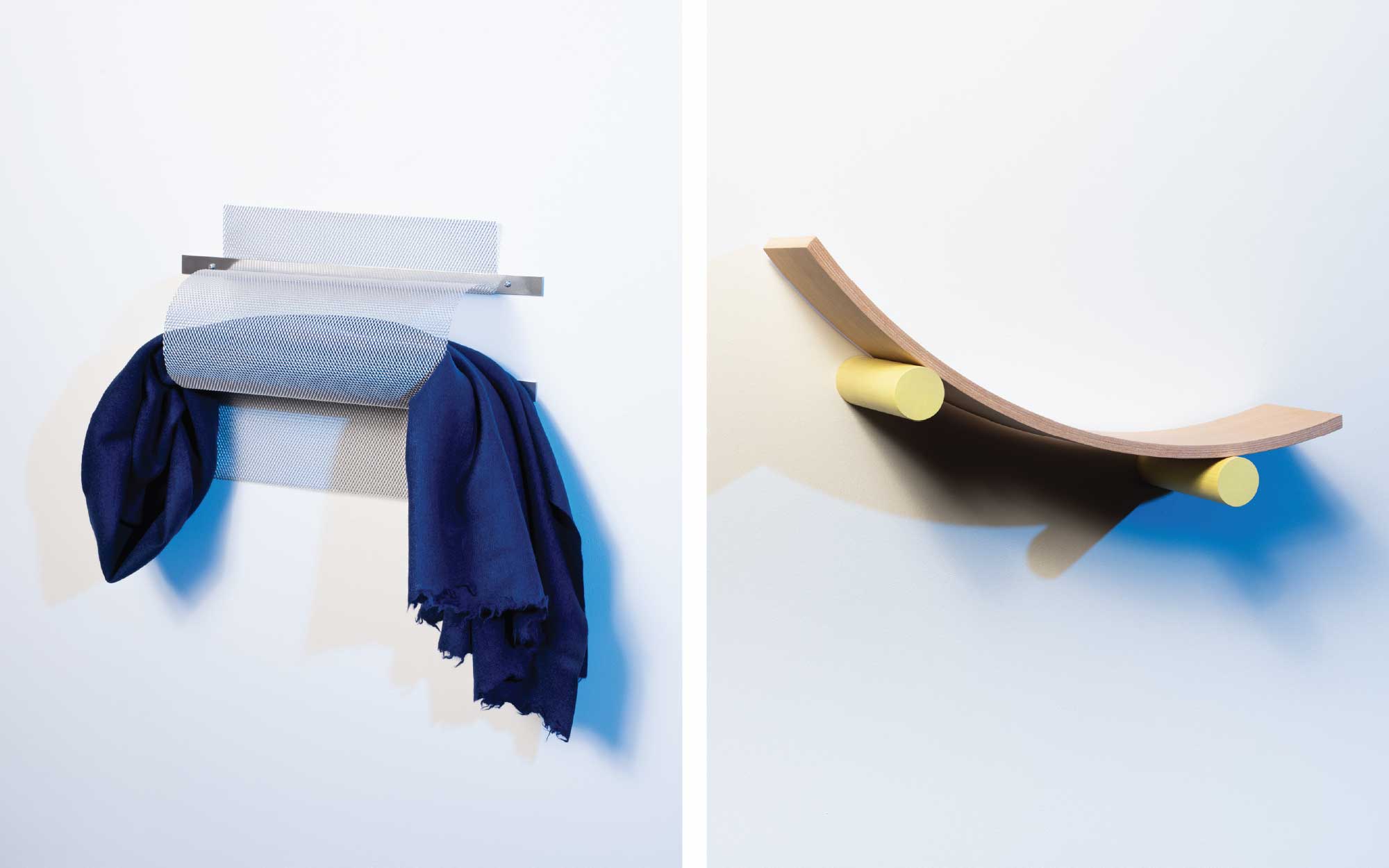
Interrogating the consequence of functionality, Zaven, a Venice-based design studio, presents ‘Massimo Carico’ at Galleria Luisa delle Piane at Milan Design Week 2026. It puts the spotlight on the most mundane thing, shifting focus from object to substructure. The title ‘Massimo Carico’ operates as a dual provocation: part persona, part principle. It suggests identity, as if these once-anonymous forms are named and claimed, while simultaneously referencing the threshold of load-bearing capacity. It places “a series of 23 self-produced shelves that become supports open to interpretation.”
Shapeshifting in form, material and proportion, these elements are released from their practical role, transforming into spatial devices that hover between weight and lightness. “These are objects that do not impose a narrative, but rather activate different, personal ways of thinking and use,” explains Rosso. Emerging from an intensive process of drawing and making, each piece carries Zaven’s distinct imprint.
Also Read: Navigating Milan Design Week 2026: 3 Design Collabs You Can’t Scroll Past
6. Parasite 2.0 X Bianco67 At Salone Raritas
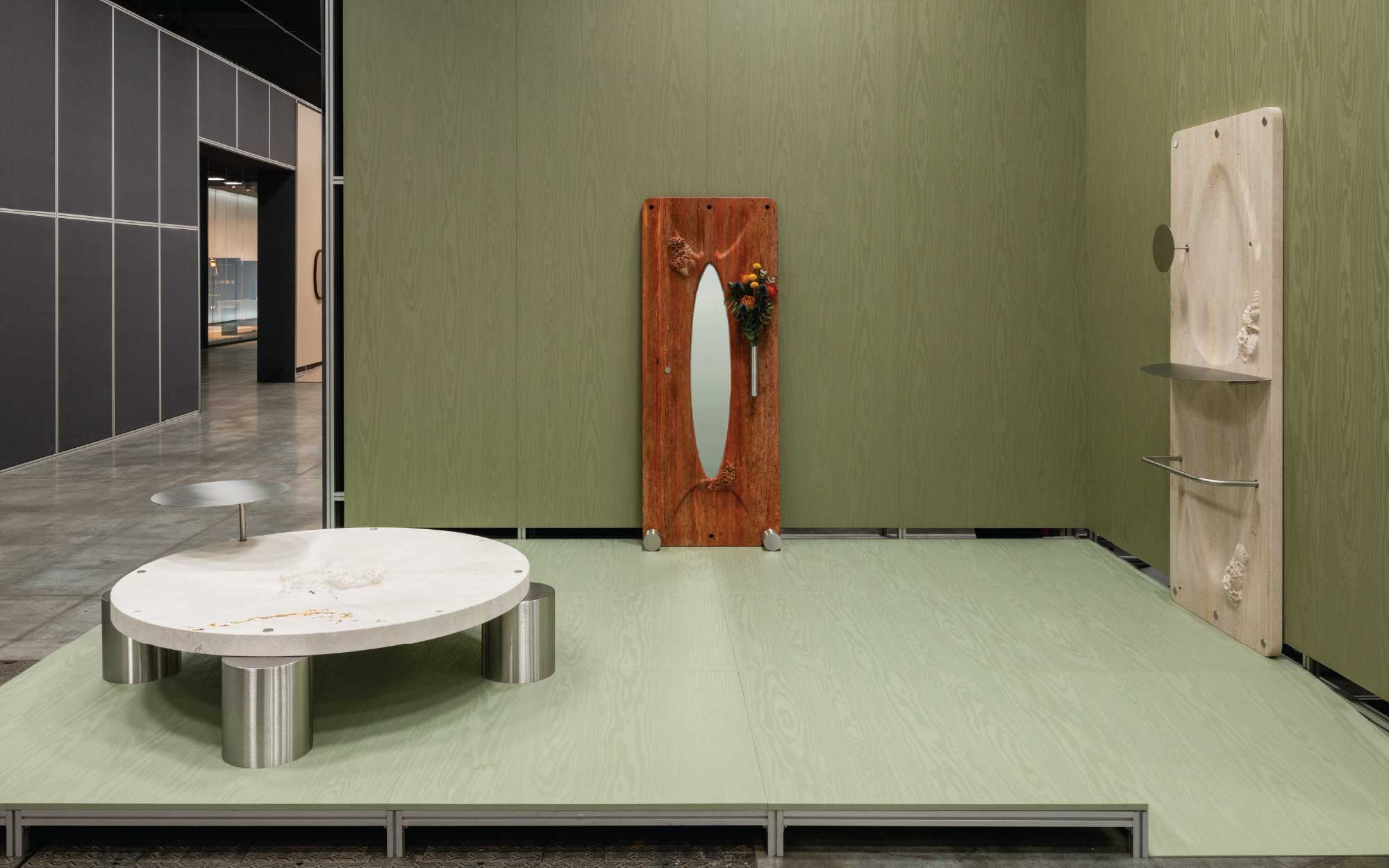
Reframing waste as a prospect of a forthcoming Milan-based design and research agency, Parasite 2.0, joins forces with Italian stone atelier Bianco67 for ‘Secunda Natura. Nothing Here Is Just A Wall,’ at Salone Raritas. Asking questions of permanence and second life, the collaboration transforms overlooked travertine off-cuts into sculptural elements that defy the hierarchy between residue and resource. “It started from an uncomfortable place: production off-cuts, fragments of travertine excluded from manufacturing, waste becoming the actual departure point,” shares Rosso.
Conceived as a fluid architectural landscape, the installation unfolds through a modular system of walls, mirrors and tables with tonal variations and textured surfaces that evoke both classical ruins and marine imaginaries. Bianco67’s six-axis robotic process offers a second life to something as mundane as waste. “Six-axis robotic processes work with a precision that approaches craftsmanship, producing a modular system that resists fixed definitions,” explains Rosso. It orchestrates a conversation with form, function and technique.
7. Fornasetti X cc-tapis At Fornasetti Store
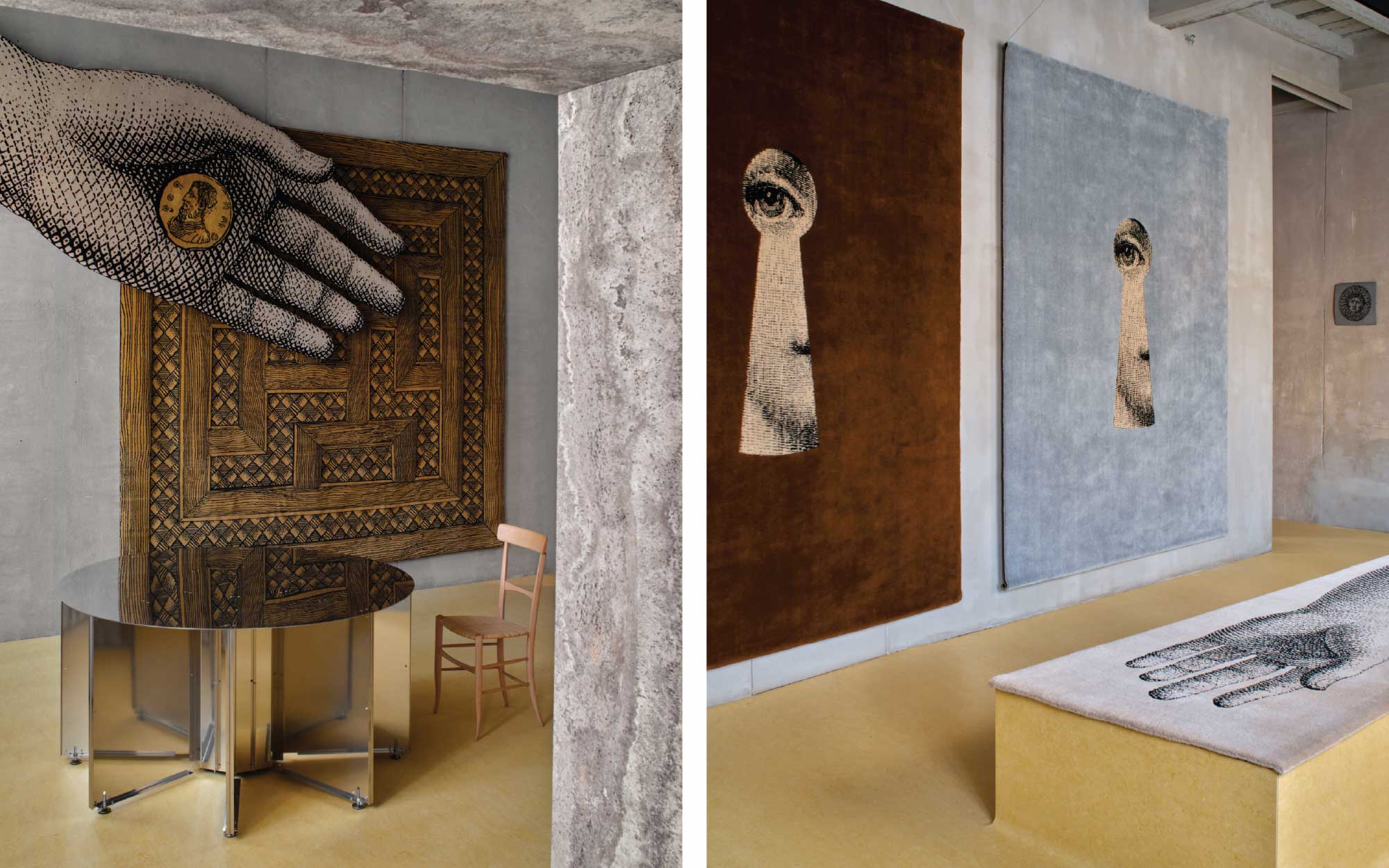
Through trompe l’oeil, repetition and fragmented planes, Fornasetti and cc-tapis unveil ‘(Meta)Fisica’ during Milan Design Week 2026 at the Fornasetti store in Milan. Beyond the blurred thresholds of art, architecture and ruse, this immersive exhibition of Piero and Barnaba Fornasetti explores the tactile language of rugs. “The question with collaborations like this is always whether one identity absorbs the other, or whether something third emerges. Here, I think that tension itself was the point,” muses Rosso. It transforms the gallery’s six rooms into a labyrinth of uncanny imagery, where rugs transform into collectable landscapes. Borrowing its name from Piero Fornasetti’s 1958 screen ‘La Stanza Metafisica’ (The Metaphysical Room), the exhibition unfolds like a portable architecture with faces, ruins, celestial motifs, and imagined landscapes drifting across surfaces with theatrical intensity.
Taking references from the archival motifs translated into wool and silk by cc-tapis artisans across India and Nepal, the rugs hanging throughout the store merge surrealist iconography with intricate craftsmanship. At the centre of the display is a multi-channel soundscape by Catalan artist Carlos Casas, heightening its metaphysical atmosphere. Guided by symbolic animal figures—a crow, fox, snake, and cat—the composition moves through shifting states of perception, while suspended speakers by Giorgio di Salvo allow sound to ripple through the labyrinth like an invisible architecture. It is a metaphysical passage, where design transcends function to inhabit the realms of memory, fantasy, and theatre.