Why The Mark Hotel In NYC Has Become The Met Gala’s Go-To Dressing Room
As The Mark is set to complete its centenary next year, Design Pataki deciphers its aesthetic vision and what makes it the perfect venue for the MET Gala.
- 4 May '26
- 1:33 pm by Simran Almeida

|
Getting your Trinity Audio player ready...
|
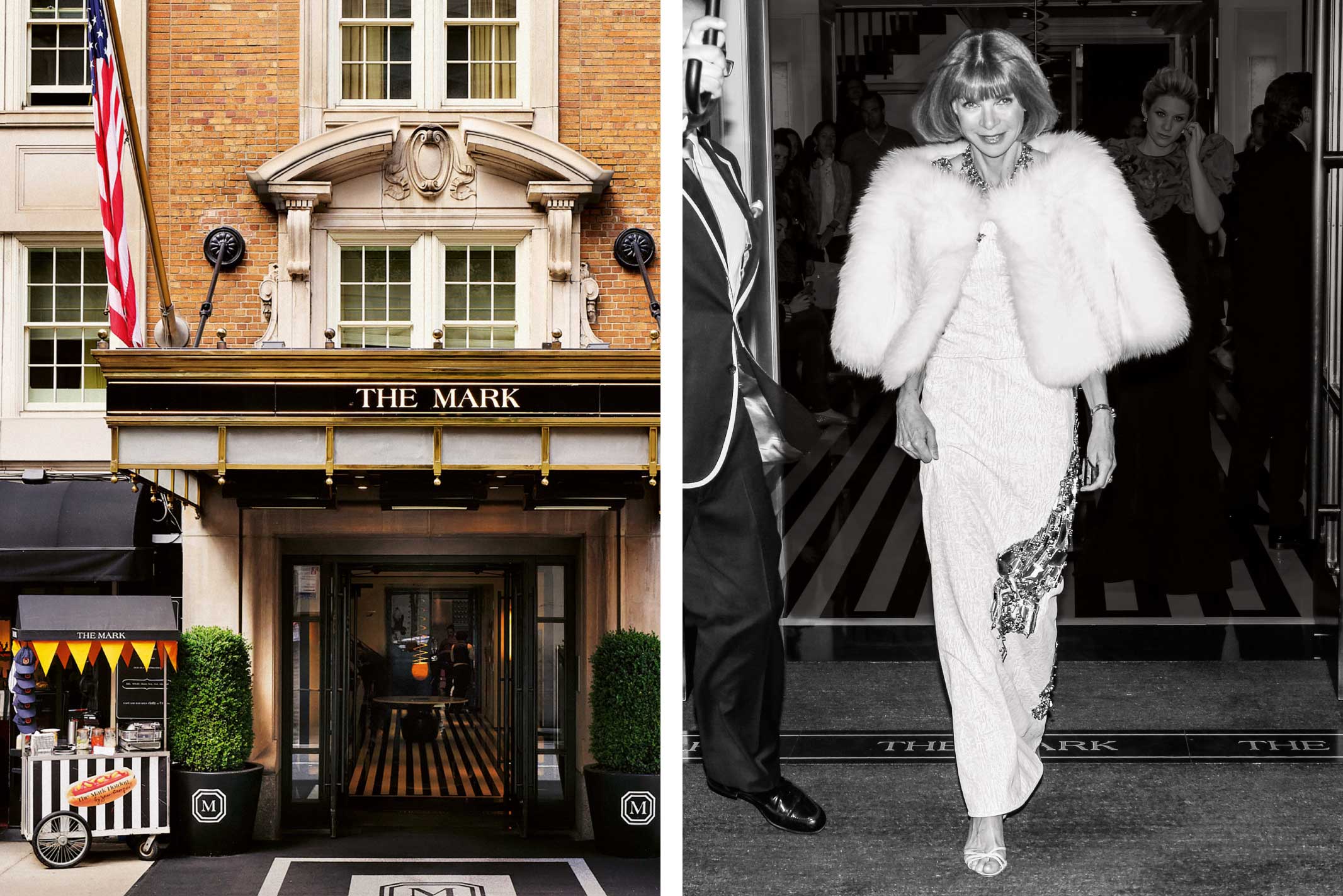
Next week, New York will dress full glam for the Met Gala 2026. And just like that, all eyes will be on the Upper East Side of New York City to get first dibs on who-wore-what. Amidst this whirlwind of bigwigs donning ‘artwear’ and Louboutins clicking incessantly, one property corralled in a pre-war building actually catches the first glimpse. In between the opulence of Madison Avenue—bookended by magnificent cafes and boutiques—and the verdancy of Central Park, The Mark, with its distinct colossal awning, has been performing for the flashes for close to a decade. Its first iteration transpired in 1927 during the Gilded Age.
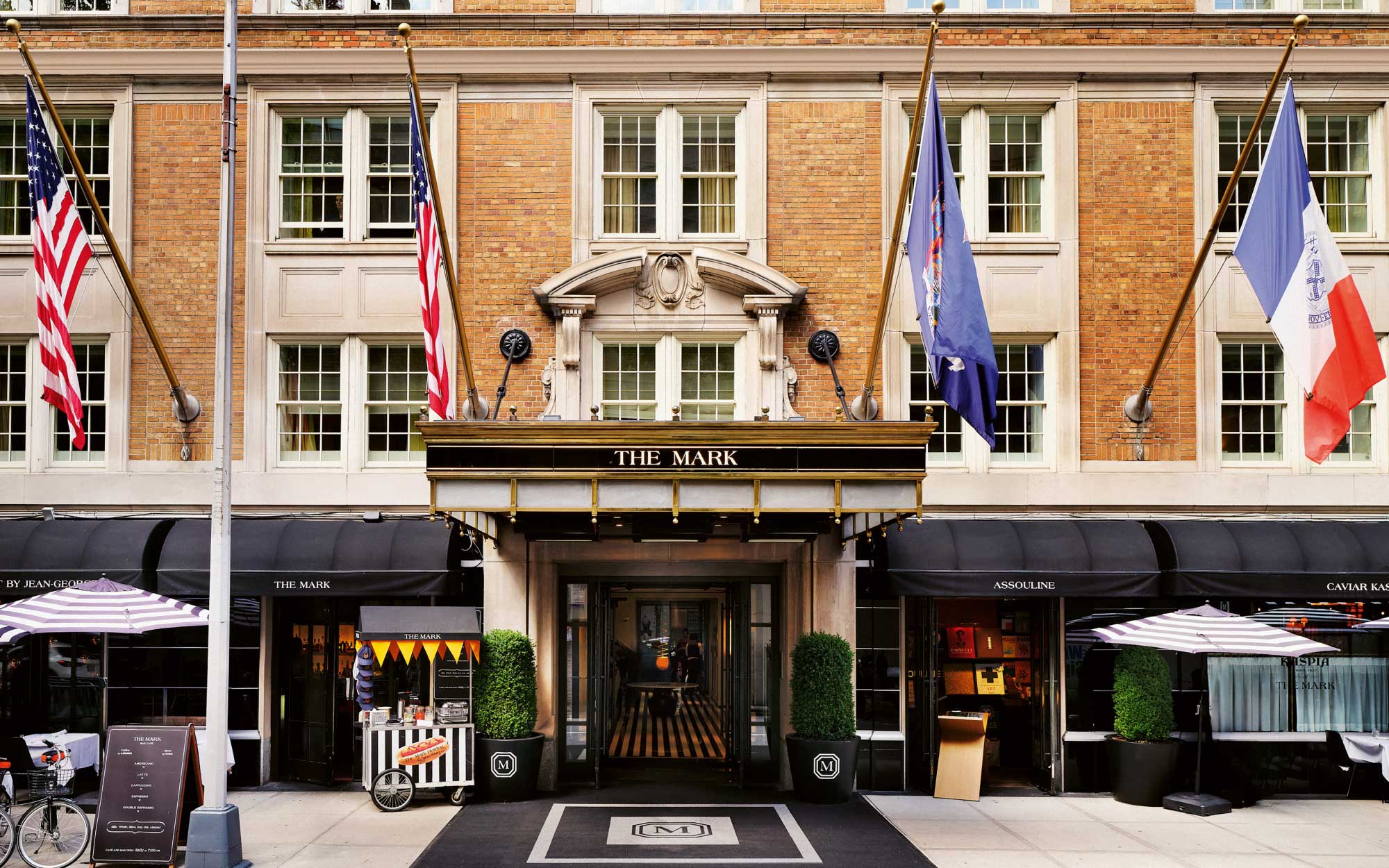
With the glimmer of limestone façades embellished with delicate arabesques, arched French windows, a copper mansard roof, and alfresco spaces adorning the ‘Gotham’ skyline, the property alternates between heritage and contemporary. As one strolls down the Museum Mile, an unmissable sweep of stripped flooring peeps from underneath the awning courtesy of the French interior designer Jacques Grange. His serendipitous encounter with Izak Senbahar—President of Alexico Group—ultimately landed him this commission.
Also Read: 480 Artisans, 90 Days, And One Stunning Indian Carpet At The MET Gala
A Lore Of Revolution
The hotel’s tale began as Hyde Park Hotel (Mark Hopkins Hotel), which catered to long-stay residents and New York’s well-heeled circles. Its brick and limestone façade with Crittall-style casement windows was conceived by Schwartz & Gross in the Neo-Italian Renaissance style. With the city’s economic headwinds rapidly shifting in the late 20th century, the hotel found itself under the stewardship of an international patron. Managed by the Mandarin Oriental Hotel Group for a stint, it was acclaimed globally, while being caught between being discreet and the pull of being seen. In 2009, the property reached its cusp after being acquired by the Alexico Group.
Navigating New York City
Located approximately 29 km away from JFK International Airport, it is easily accessible by taxi, provided you can evade city traffic. The drive gives you an introduction to New York City in all its flavours, from the warehouse grids in Queens, brick homes, and bodegas to soaring glass towers that reflect the segueing light throughout the day. In the city, sirens, horns, and the movement of starry-eyed dreamers coalesce, rendering it as towering, restless, and unmistakably alive.
An Architecture Of Paradoxes
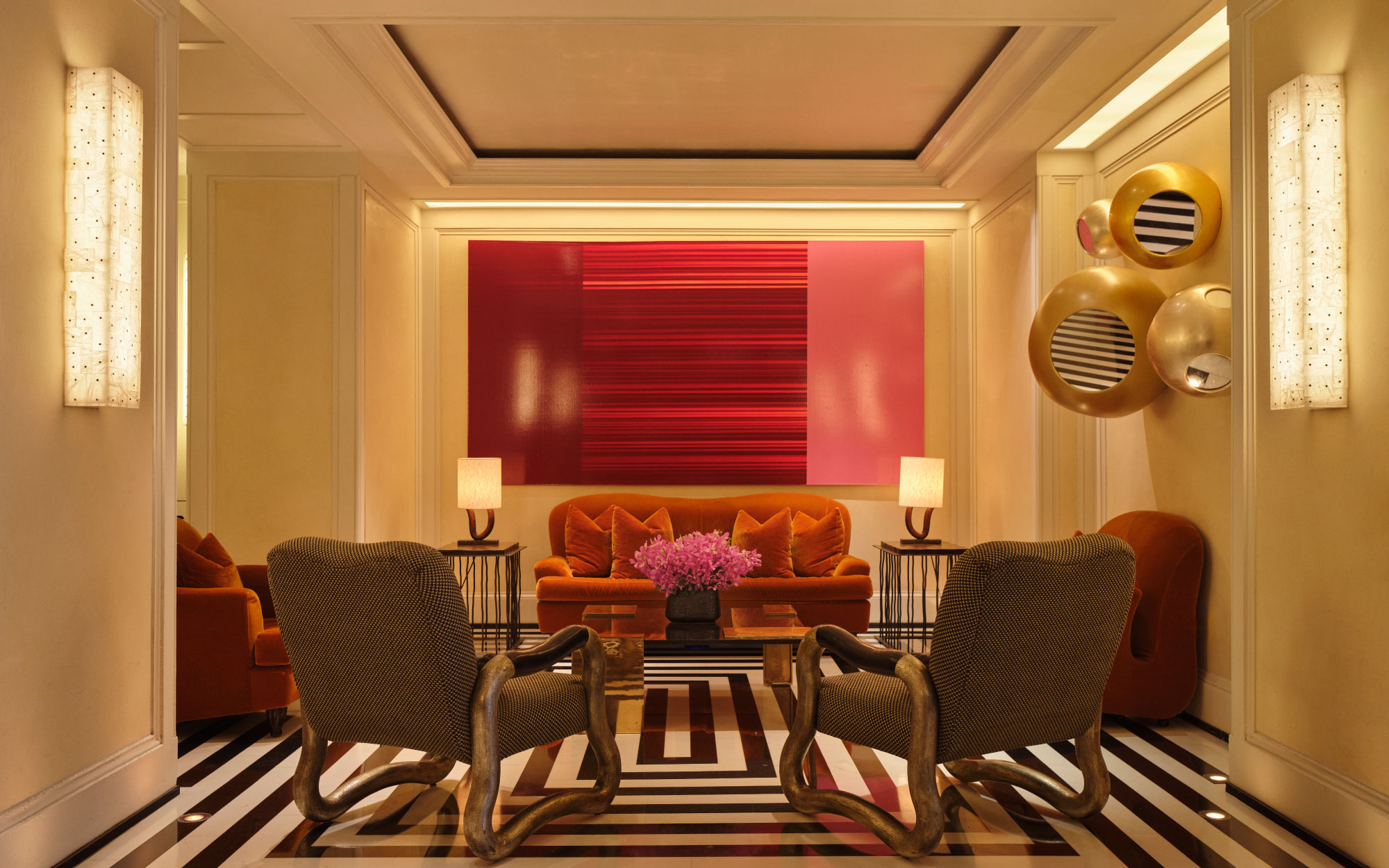
In 2009, the hotel’s bedrooms and common areas were reimagined in a classic hip downtown clubhouse-esque style by Grange, while keeping the façade in its original guise. “The building carries a certain Upper East Side inherent pedigree, one that deserved to be preserved rather than overwritten,” Grange tells DP. The façade features Warren Neidich’s ‘NO VACANYCY (2022).’ This neon sign, deliberately misspelt, poses questions of physical occupancy of a space and position within the city. Within the façade’s Hadean opulence, one steps directly into a lobby that establishes the eclectic and vibrant design style, recurring in the common areas. At the same time, the rooms shift to a more neutral palette, one perfect for achieving warmth and tranquillity during winters. With the monochrome stripped flooring, bespoke furnishings, coffered ceilings and whimsical lighting, the property is a dialogue between Parisian chic and New York’s urban vigour.
With a taste as imperious as it is fastidious, Izak Senbahar appoints a constellation of designers alongside creative director Richard Pandiscio and illustrator Jean-Philippe Delhomme, who appear in near-apparition through objets d’art. From Ron Arad’s ‘Ge-Off Sphere’ chandelier in the lobby and Paul Mathieu’s ‘Mohair Club’ chair to Mattia Bonetti’s rock-crystal sconces and ‘Orbs’ and Anne and Vincent Corbière’s lamps and furniture, every piece tells tales of its creator’s practice. As Grange proclaims, “Contemporary design was introduced through clean lines and bold gestures throughout the hotel and mint finishes in the bathrooms, paired with colourful, hand-selected bespoke art and a curated mix of collectable pieces, creating a dialogue between past and present rather than a departure from it.”
Also Read: Anna Wintour Would Approve Of These 5 Walk-In Wardrobes
The Art Of Neutrals
While Grange took on the commission, for never before had he handled a project of this scale. Thus, his only option was to turn to his friends and clients with one question: What would your ideal hotel room look like? The result was a three-part checklist. First, the bathroom: expansive, indulgent, almost spa-like in its character. Second, silence, the suites must be almost monastic quiet, removed from the outside world and bordering rooms alike. And finally, an omnipotent entity—light—illuminating not just the room, but extending its radiance into corridors and elevators. “The intention was to move away from the traditional notion of a hotel room and instead create spaces that feel lived in and intuitive,” posits Grange.
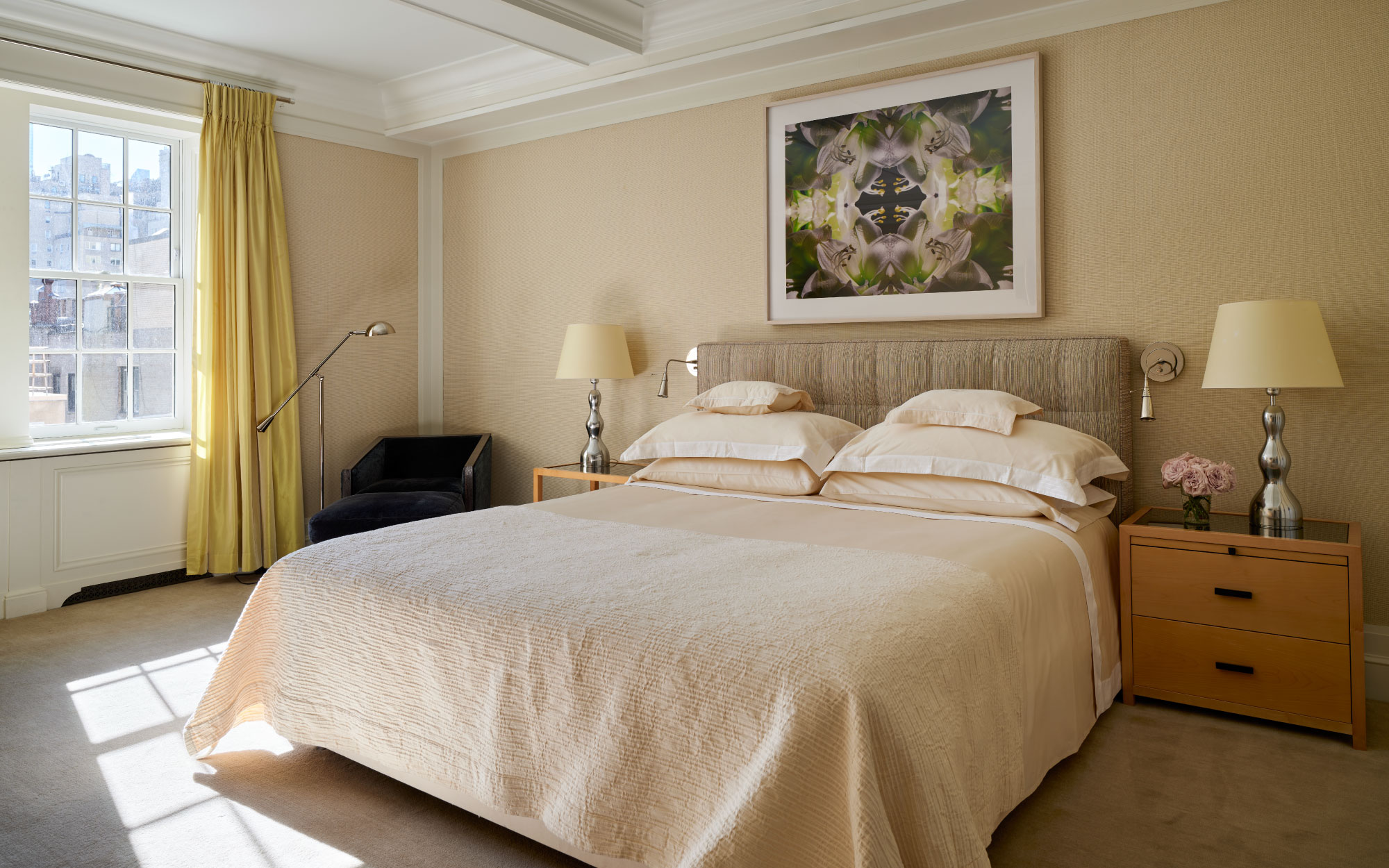
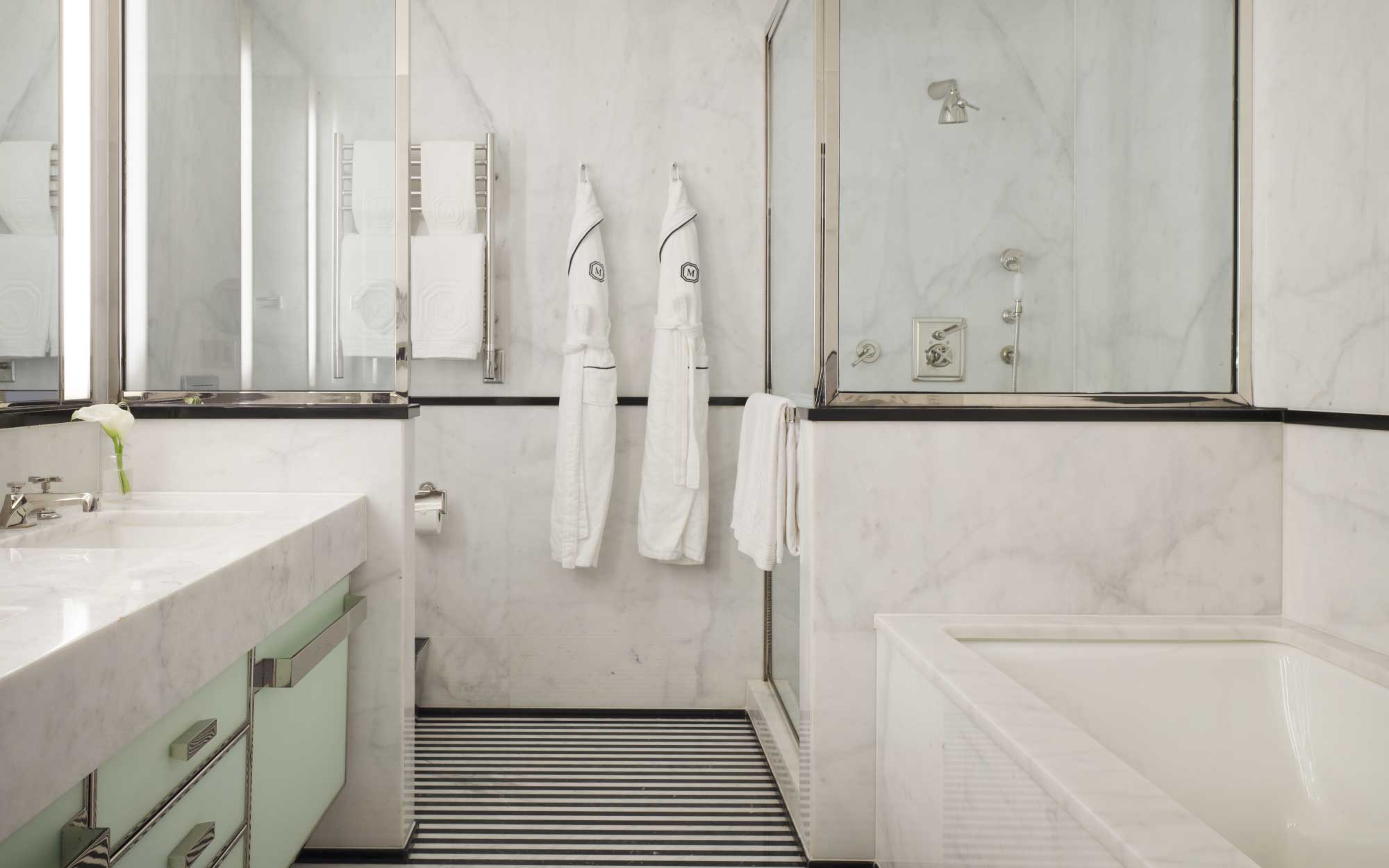
With 153 keys—comprising 106 rooms, 46 suites, and a series of penthouses—the rooms at The Mark sit in juxtaposition with the vibrant New Yorkers, publicly accessible spaces. Adorning creams and muted greys, the ‘Seventy-Seven King’ hosts Grange’s furniture with subtle mid-century cues while a discreet Crestron system lends a note of seamless futurism. From concealed storage and freezer drawers to compartments scented with Frédéric Malle Jurassic Flowers and pieces by Karl Lagerfeld, every detail ticks the overarching boxes. The bathrooms echo the lobby’s signature striped flooring, unfolding in white marble with deep soaking tubs and products illustrated by Jean-Philippe Delhomme.
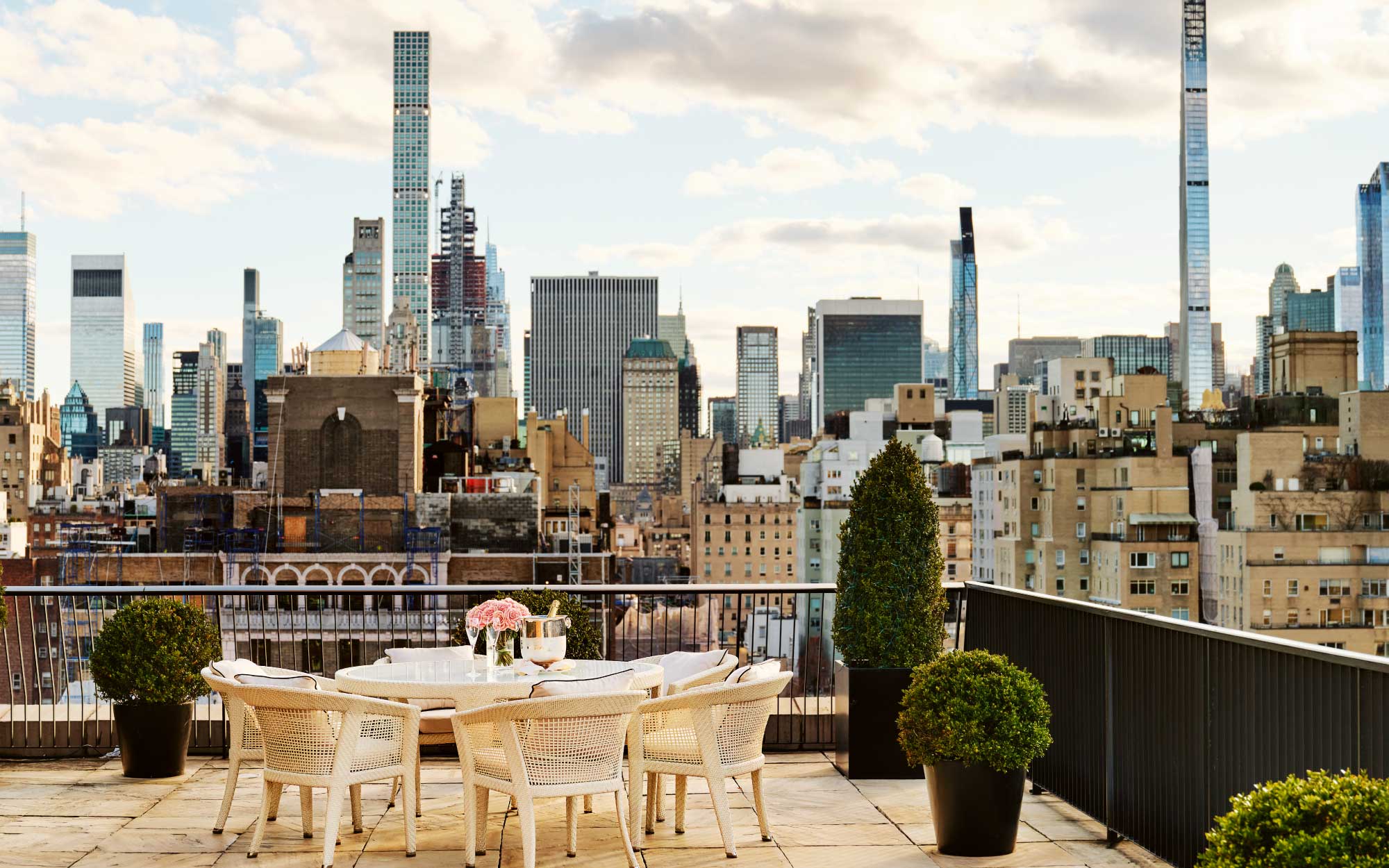
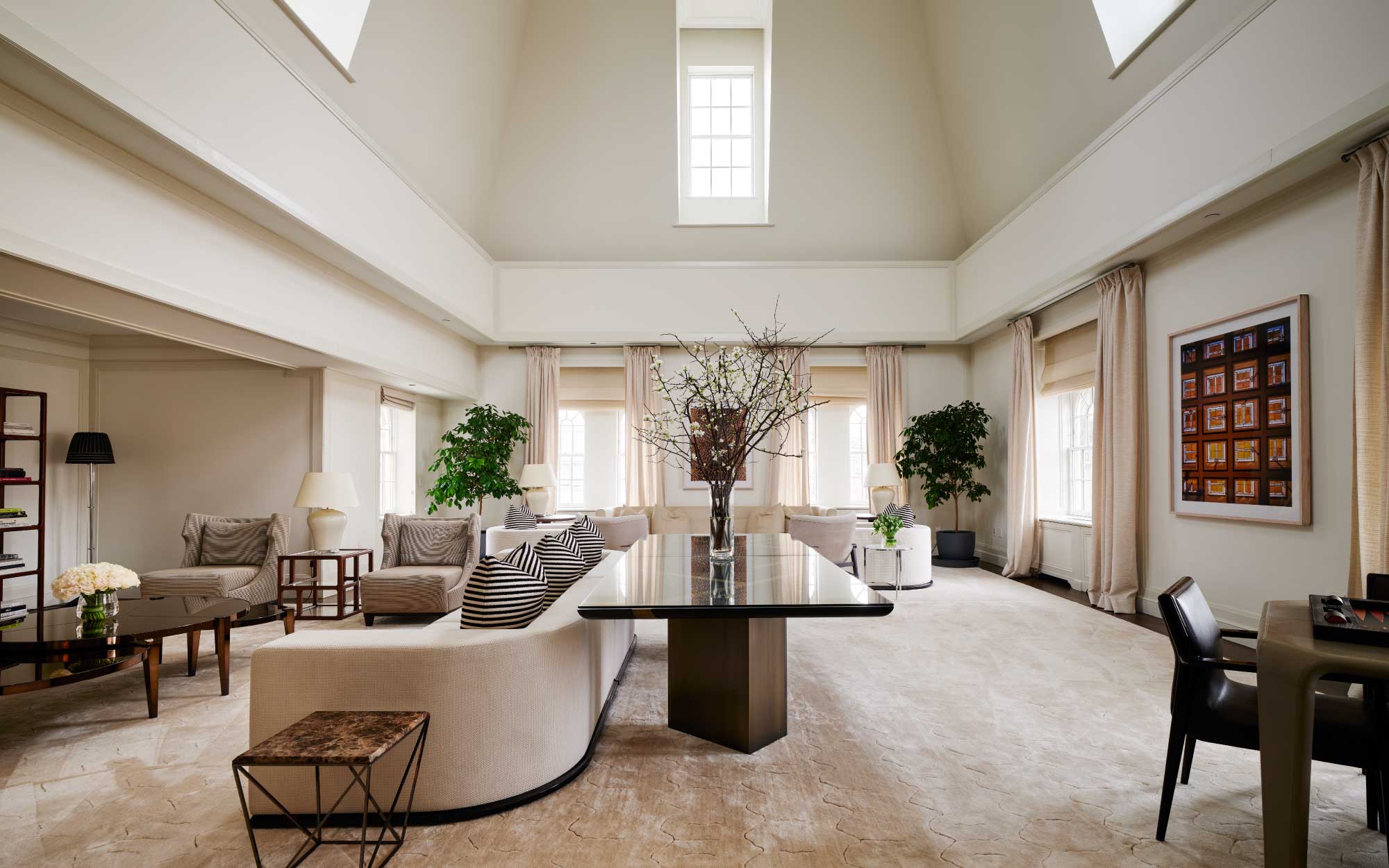
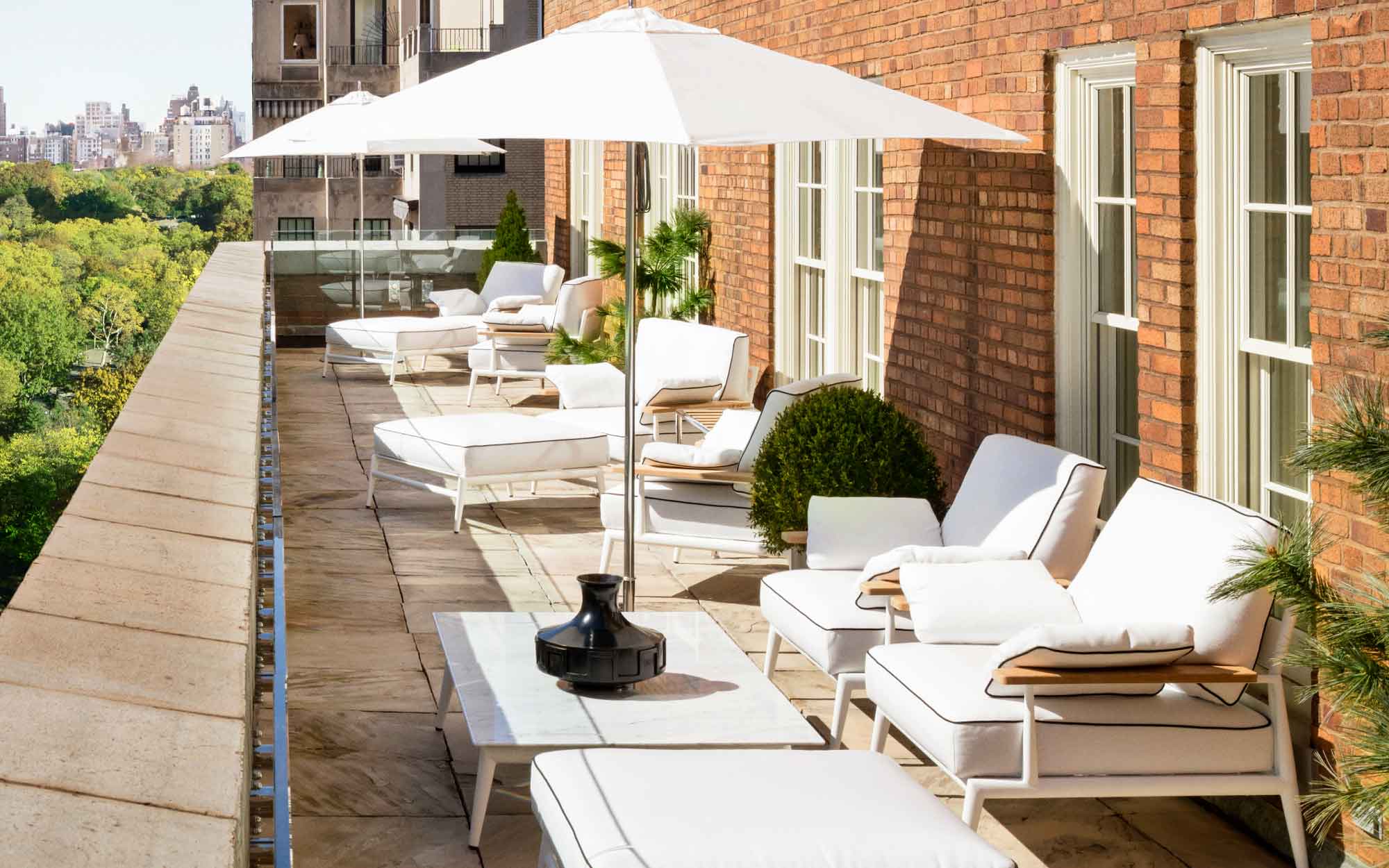
In its upper registers, the Madison Suite and the Central Park Penthouse effortlessly transition into private apartments. With views of Madison Avenue’s bustle and tranquil Central Park, the suites sit perfectly between an intimate apartment and a gallery. “Suites feature different hand-selected art and interior details, and objects that give each space its own point of view and sense of individuality,” reflects Granges.
New York’s Haute Food Scene
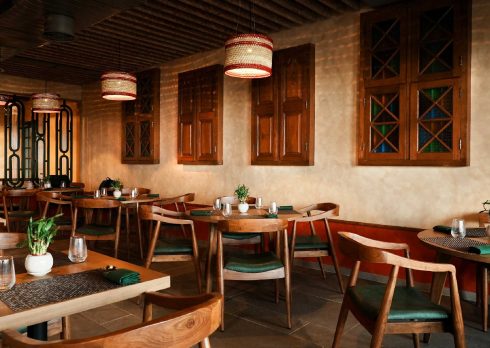
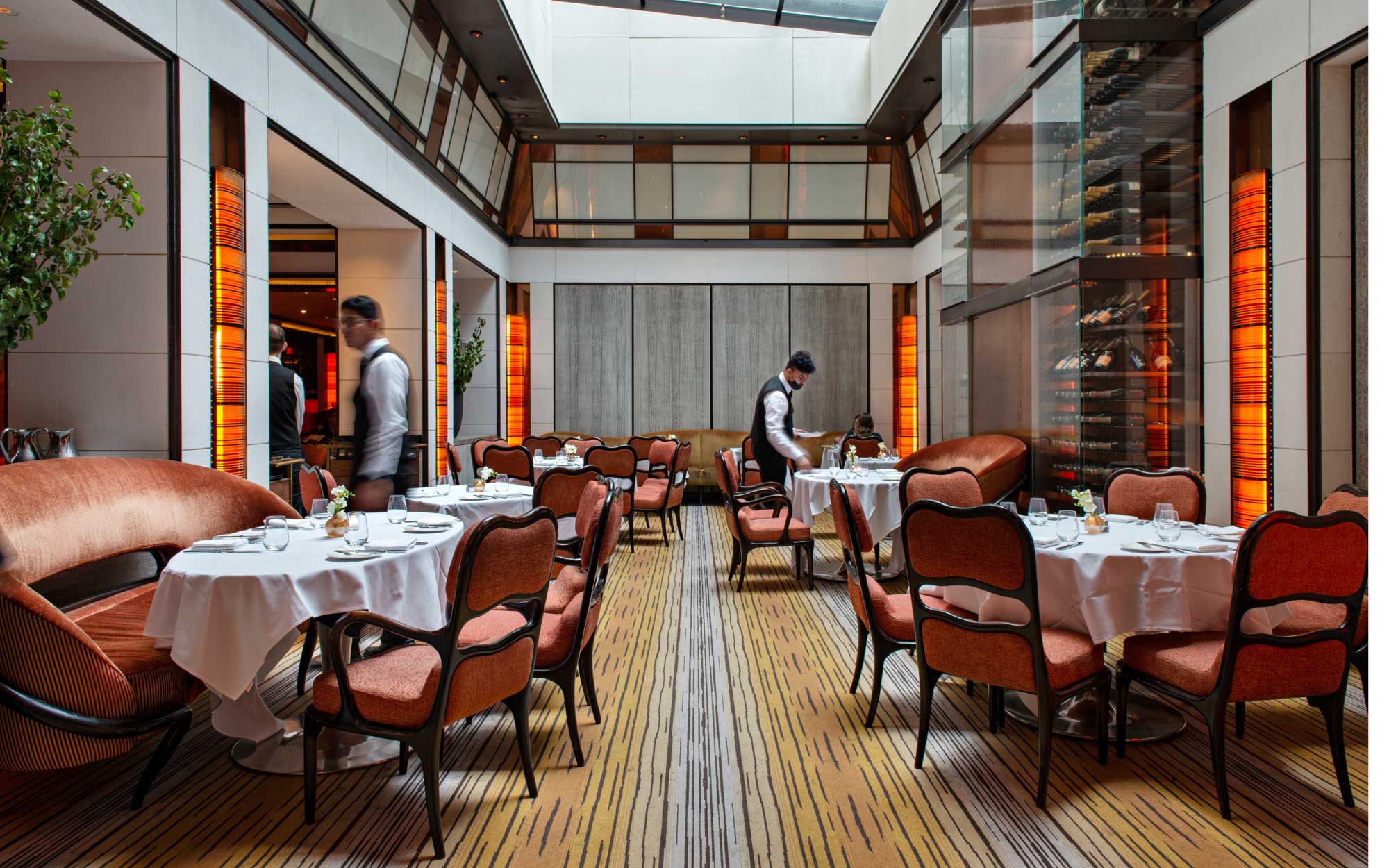
A holiday in Saint Barths led Senbahar to yet another fortuitous discovery for The Mark—this time, in the form of Jean-Georges Vongerichten. His all-day restaurant operates on adaptability with a 70+ dish repertoire, allowing comfort and indulgence to coexist. Breakfast, in particular, dissolves the boundaries, functioning as an informal salon where business negotiations, rituals, and neighbourhood gatherings unfold, rendering the space warm. With avocado toast, buttermilk pancakes, truffles and burgers, the menu is much more than just haute cuisine. This balance of sophistication and pleasure extends even today, in The Mark Restaurant, which is now under chef Pierre Schutz.
Also Read: New York’s Only Indian Restaurant To Get A Michelin Star in 2022 – Step Into Semma
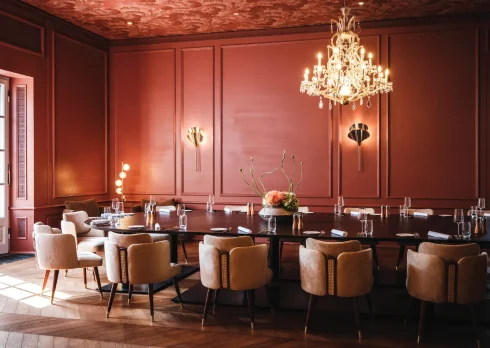
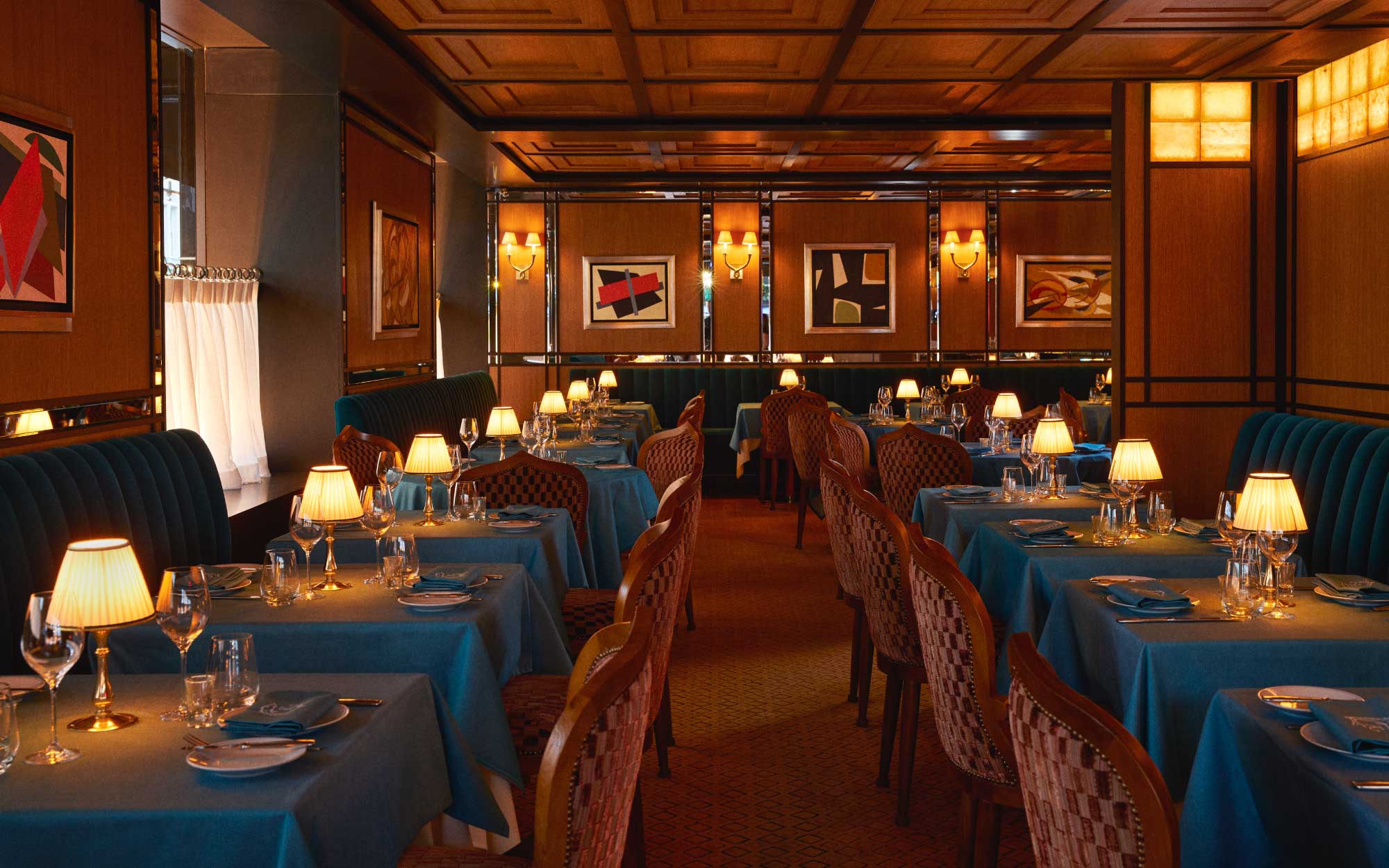
In contrast, Caviar Kaspia introduces a more codified indulgence—its Parisian lineage rendered through blue tablecloths, emerald mohair, and a ritualistic menu anchored by caviar and the iconic twice-baked potato. This is a cuisine of control: portioning, temperature, and sequencing are tightly regulated, minimising interpretation in favour of consistency. Completing the triad, The Mark Bar operates as a self-contained social ecosystem. Anchored by a counter from Guy de Rougemont and furnished with Vladimir Kagan’s sinuous forms, it negotiates between art objects and inhabitable space. Across all three, what emerges is not excess but orchestration: a culinary identity that is unmistakably New York.
Wellness On Your Own Terms
At The Mark, wellness is approached with an understanding of how its guests choose to inhabit the city. The absence of a full-service spa feels intentional. The hotel offers a bespoke approach—most notably through in-room treatments by an aesthetics doctor, Dr. Barbara Sturm, allowing wellness to unfold in the privacy of one’s own space, on one’s own terms. This philosophy extends to the second-floor fitness centre that focuses only on the essentials. At The Mark, wellness is not about retreating from the city, but about moving through it while being rested, restored, and impeccably put together.
Final Thoughts
As New York City continues to move at lightning speed, there remain pockets of history that narrate tales of its previous lives. The Mark Hotel is one such address, not the city’s most imposing, but perhaps among its most assured. “The Mark has never relied on trend-driven design, which is precisely why it continues to feel relevant,” shares Grange. Its strength lies in proportion: everything to the right scale, the right palette, the right warmth. An edifice that has held its corner for nearly a century, it reads less as a hotel and more as an heirloom passed between generations. Breakfast tables populated by regulars who inhabit them like an extension of their own living rooms, with the adjoining bookshop folding seamlessly into this quiet, lived-in ritual. In a landscape increasingly defined by spectacle, The Mark Hotel occupies a rarer category: the hotel as neighbourhood fixture, where belonging is the ultimate luxury.
DP Loves
#1 The black-and-white striped marble flooring from the lobby to the bathrooms becomes the signature visual thread that holds the entire design narrative together
#2 The hidden storage details in the rooms: a freezer masquerading as a drawer, house-scent candles and snacks tucked into another — small touches that signal real thought
#3 The breakfast room atmosphere — watching Upper East Side regulars go about their morning routines gives you the hotel’s true identity in a single sitting
#4 Caviar Kaspia’s signature potato dish — deceptively simple, perfectly balanced, the sort of thing you find yourself describing to people days later
#5 The Assouline bookshop and the new centenary monograph — an ideal cold-weather pit stop
#6 The neon sign above the entrance—a single playful gesture that tells you everything about the hotel’s relationship with its own prestige
*Design Pataki was part of a press trip to The Mark Hotel, NYC