Navigating Milan Design Week 2026: 3 Design Collabs You Can’t Scroll Past
Discover three high-profile design collaborations in Milan, that transformed traditional craftsmanship into immersive narratives, prioritising sensorial experiences and the emotional resonance of collectable design.
- 29 Apr '26
- 6:22 pm by Aditi Singla

|
Getting your Trinity Audio player ready...
|
Every year during Milan Design Week, the city transforms into a sprawling stage where design escapes the confines of the fairground and spills into palazzos, courtyards, and unexpected urban corners. The 2026 edition continues this momentum, foregrounding collectable design, immersive installations, and a renewed dialogue between craft, industry, and culture—reaffirming its status as the world’s most influential design rendezvous. The week’s most compelling narratives are authored through collaborations—where fashion labels, architects, and legacy brands intersect to blur disciplinary boundaries. It’s not an overstatement to say that these major collaborations have become the clearest barometer of where contemporary design is headed.
Design Pataki turns its lens to three impressive collaborations shaping the discourse this year: Kelly Wearstler’s immersive collaboration with H&M Home, Aesop’s spatial dialogue with March Studio, and Jaipur Rugs translate Kengo Kuma’s architectural ethos through FACES, a new rug collection.
Also read: Nilufar Opens A Grand Hotel In A Depot At Milan Design Week 2026
- H&M Home x Kelly Wearstler
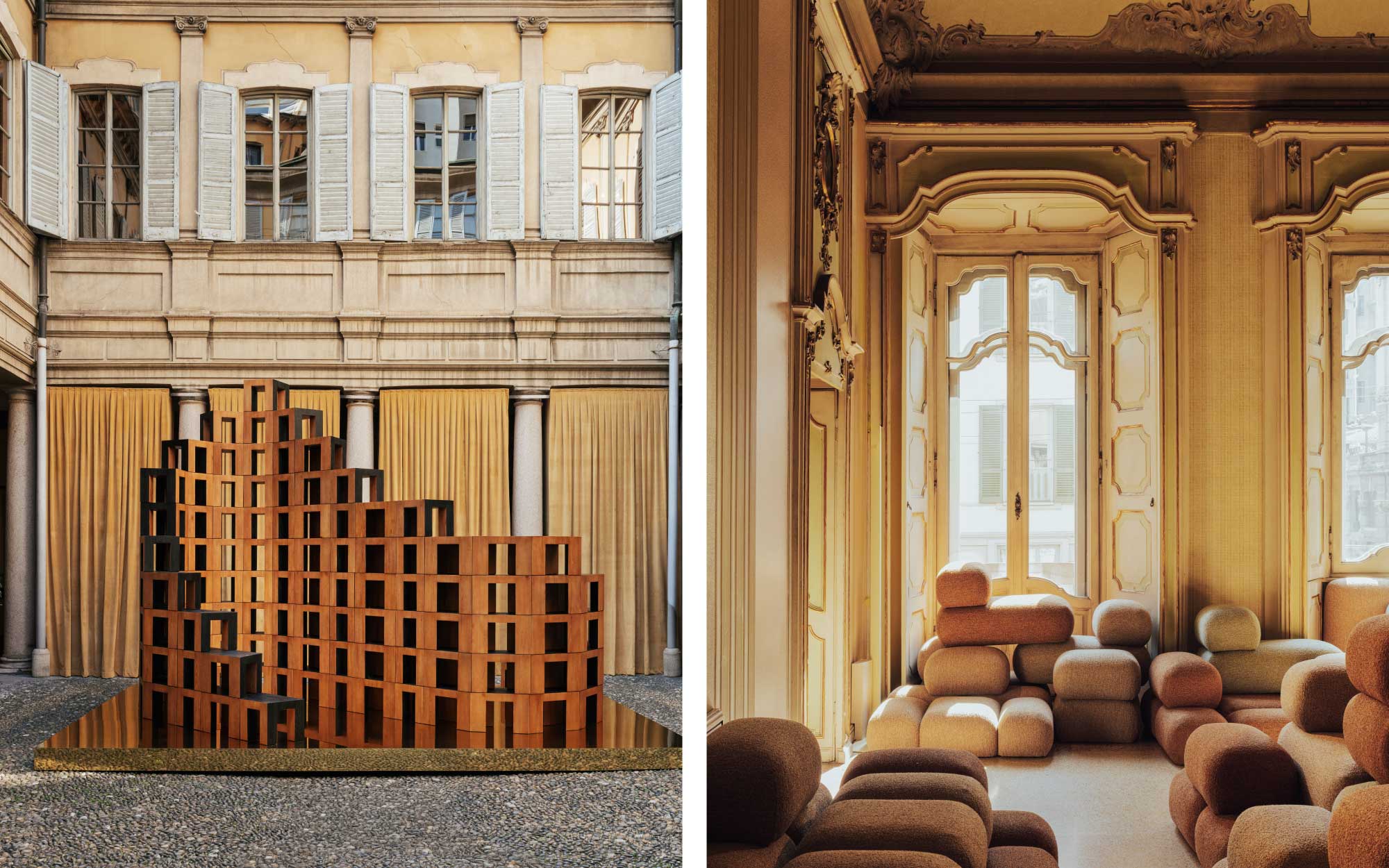
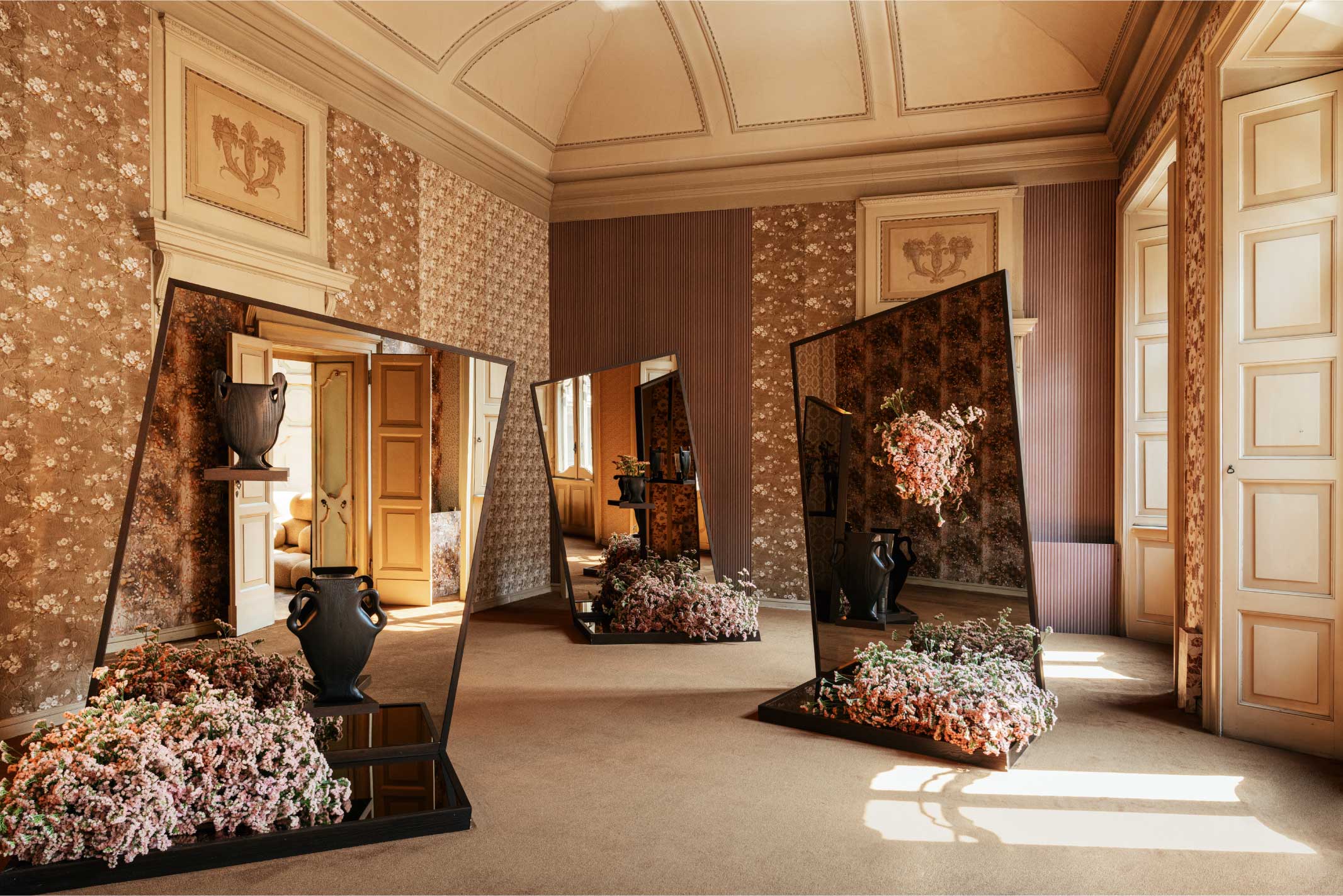
H&M Home debuts its first-ever furniture-led designer collaboration alongside Kelly Wearstler, unveiled within the rarely opened 17th-century Baroque palace, Palazzo Acerbi, from April 21 to 26, 2026. Marking a dual debut for both the brand and the Los Angeles-based designer, the showcase introduces nine curated objects from a full 29-piece collection, rooted in modular synergy and daily rituals. “This collaboration with Kelly Wearstler is about exploring how design can shape the way we live, through pieces that are both expressive and adaptable,” says Evelina Kravaev-Söderberg, H&M HOME Head of Design & Creative. “Through the installation at Milan Design Week, we are expanding our design universe and offering new ways to experience H&M HOME. Presenting the collection at Palazzo Acerbi allows us to translate these ideas into a physical environment that invites people to connect with the collection on a deeper level.”
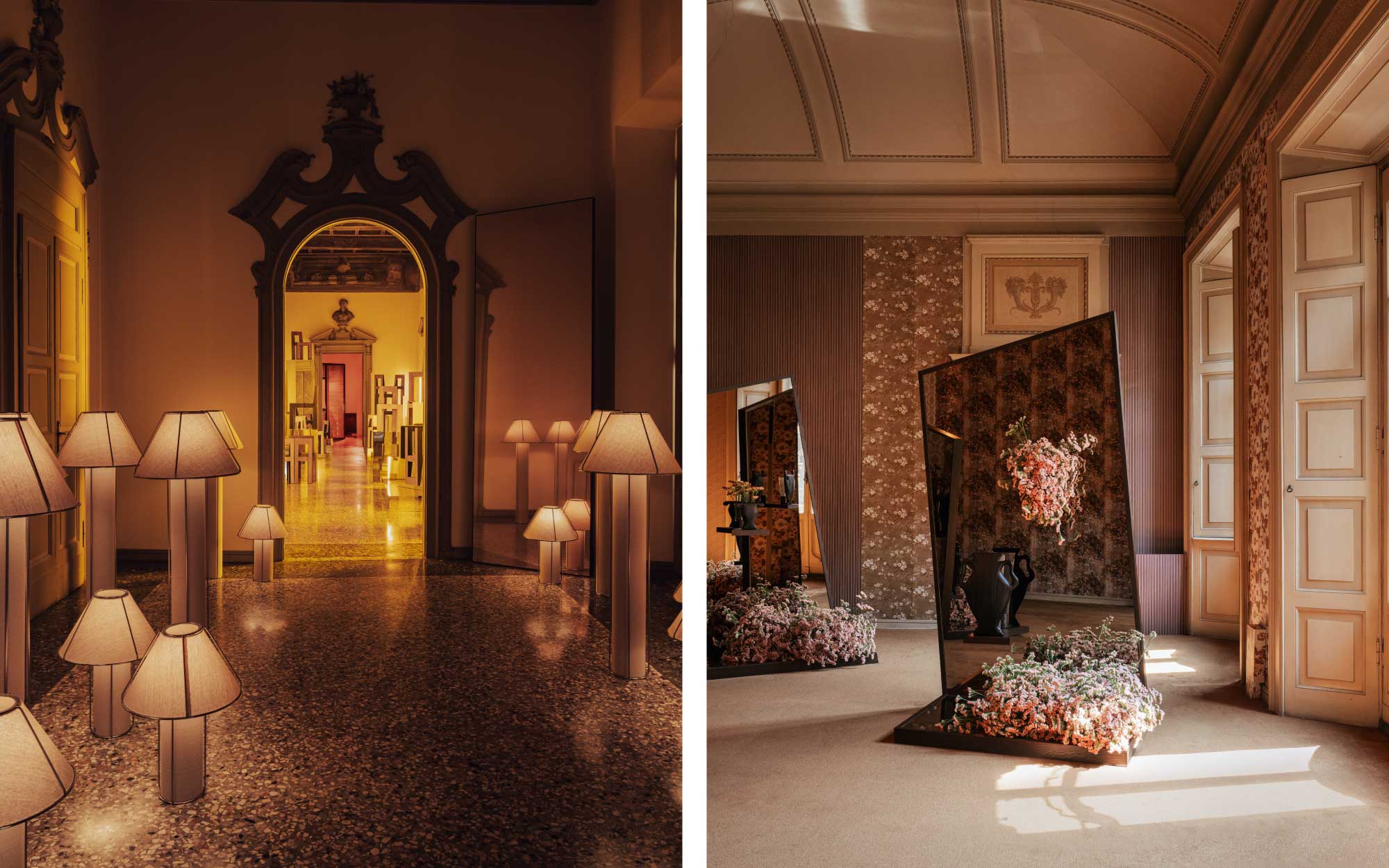
Produced by Studio Boum, the installations unfold room by room as a choreographed sensory journey: NOXEN stools anchor the courtyard, while enlarged EMERA table lamps establish rhythm at the entrance; the dining room elevates NOXEN chairs on mirrored plinths, and the music room frames AUREX lamps within shuttered cabanas layered with sound and light. The lounge comprises SOLUNA lounge chairs and POMA accent chairs in sculptural stacks, while the floral room centres the CURVA vase amid vintage botanicals and bronze mirrors. In the dressing space, the high-gloss MONA clothing rack becomes both system and statement, before the experience resolves in a quieter reading room with AVERN armchairs and the circular ORTRA sofa table.
“This is my Milan debut, alongside H&M HOME. I couldn’t have asked for a better partner or a more extraordinary stage. Palazzo Acerbi stopped me the moment I walked in. Centuries of history, our collection is in direct conversation with all of it. Bringing this collection to life in Milan and showing people how these pieces come alive in a real space, that’s everything,” says Kelly Wearstler. Threading the entire experience is a bespoke scent developed for SIDE HUSTLE, evoking the 1934 James Dolena Pool House, where notes of orange flower, Indian jasmine, Japanese quince, mate absolute, and palo santo unfold like a cinematic memory.
The full collection launches on September 3, 2026, in select stores and online, signalling a bold new chapter for H&M home.
Also read: No Cubicles, Just Character: 3 Architect-Designed Offices That Reject The Corporate Mould
- AESOP X March Studio
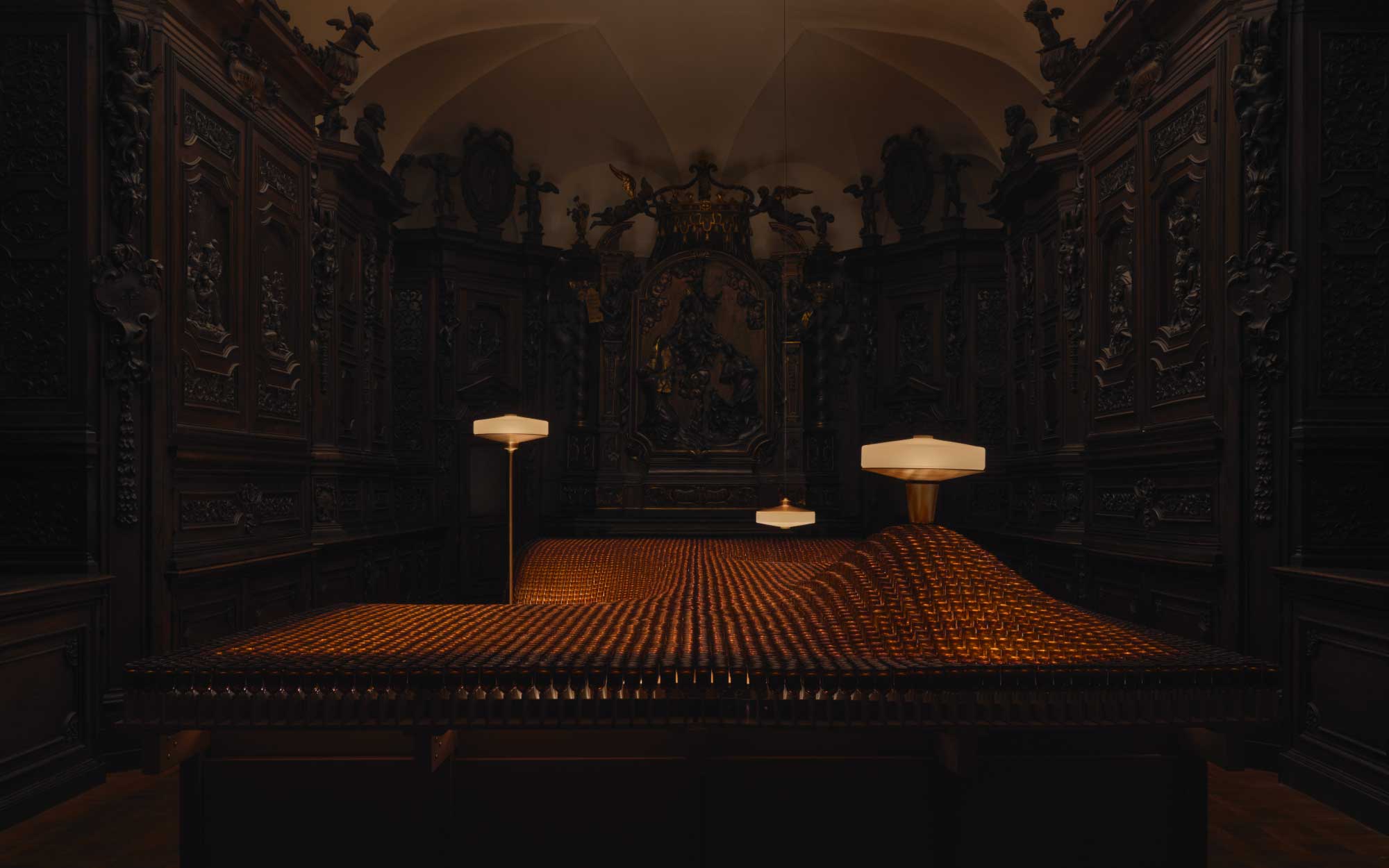
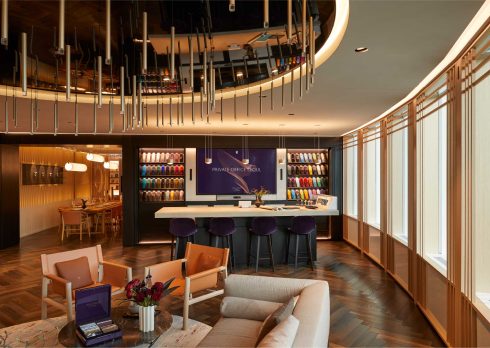
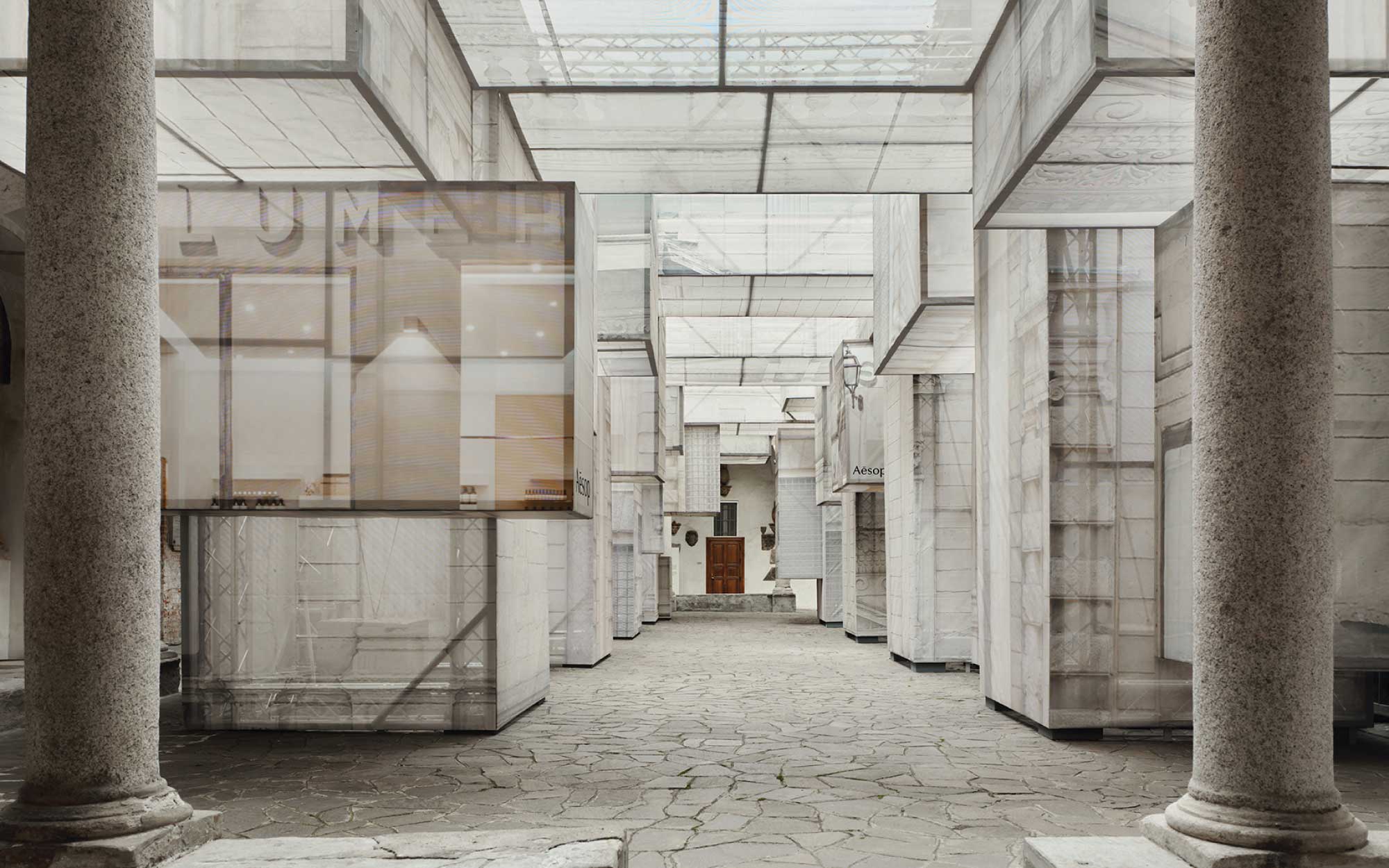
For the third consecutive year, Aesop returns to Salone del Mobile with ‘The Factory of Light,’ a multi-sensorial installation conceived by Australian architect Rodney Eggleston of March Studio. It is housed within Santa Maria del Carmine, just steps from its Brera store, and gives a calm space to escape the Milan Design Week craziness. The installation unfolds as an exploration of purposeful craft and the nuanced role of light across Aesop’s spatial and sensorial language, introducing ‘Aposē,’ a trio of lamps unveiled here for the first time, with a limited-edition table version available to purchase. Constructed from salvaged trompe-l’oeil tarpaulins and culminating in a sacristy installation of 10,826 repurposed fragrance bottles that refract light in an amber-hued wave, the project underscores Aesop’s commitment to adaptive reuse, transformed packaging, and sustainable design.
Upon entering the space, guests are greeted at the basin, the centre point of every Aesop store. They begin with a ritual of using Solais Replenishing Hand Serum before passing through a concealed threshold into four sensory chambers—Hear, See, Touch, and Smell—each revealing the artisanal processes behind Aposē. Designed by Aesop’s in-house team, the Aposē lamp draws on the familiar aluminium tube of its formulations, reimagined at an enlarged scale and composed of a hand-cast brass plinth and a mouth-blown glass crown crafted near Murano, emitting a soft, diffused glow. In its entirety, ‘The Factory of Light’ distils Aesop’s enduring philosophy into a spatial narrative where light is not merely functional, but a crucial element shaped by craft, material memory, and rigorous sensibility.
“Salone del Mobile is an ideal setting for us to share our unique perspective on light and how it fits within our wider design philosophy,” says Aesop Brand President Garance Delaye. “This year’s theme explores how our approach to spaces, objects, and formulations has been guided by an understanding of how to best harness light—and the shadows it may cast. From the signature amber tint of our bottles, originally chosen to protect formulations from the sun, to the ingredients our scientists select to bring luminosity to the skin, light is something we approach with scientific rigour and a poetic sensibility—as is our way.”
Also read: Statement Floors: The Most Decisive Design Move In Modern Homes
- Jaipur Rugs X Kengo Kuma
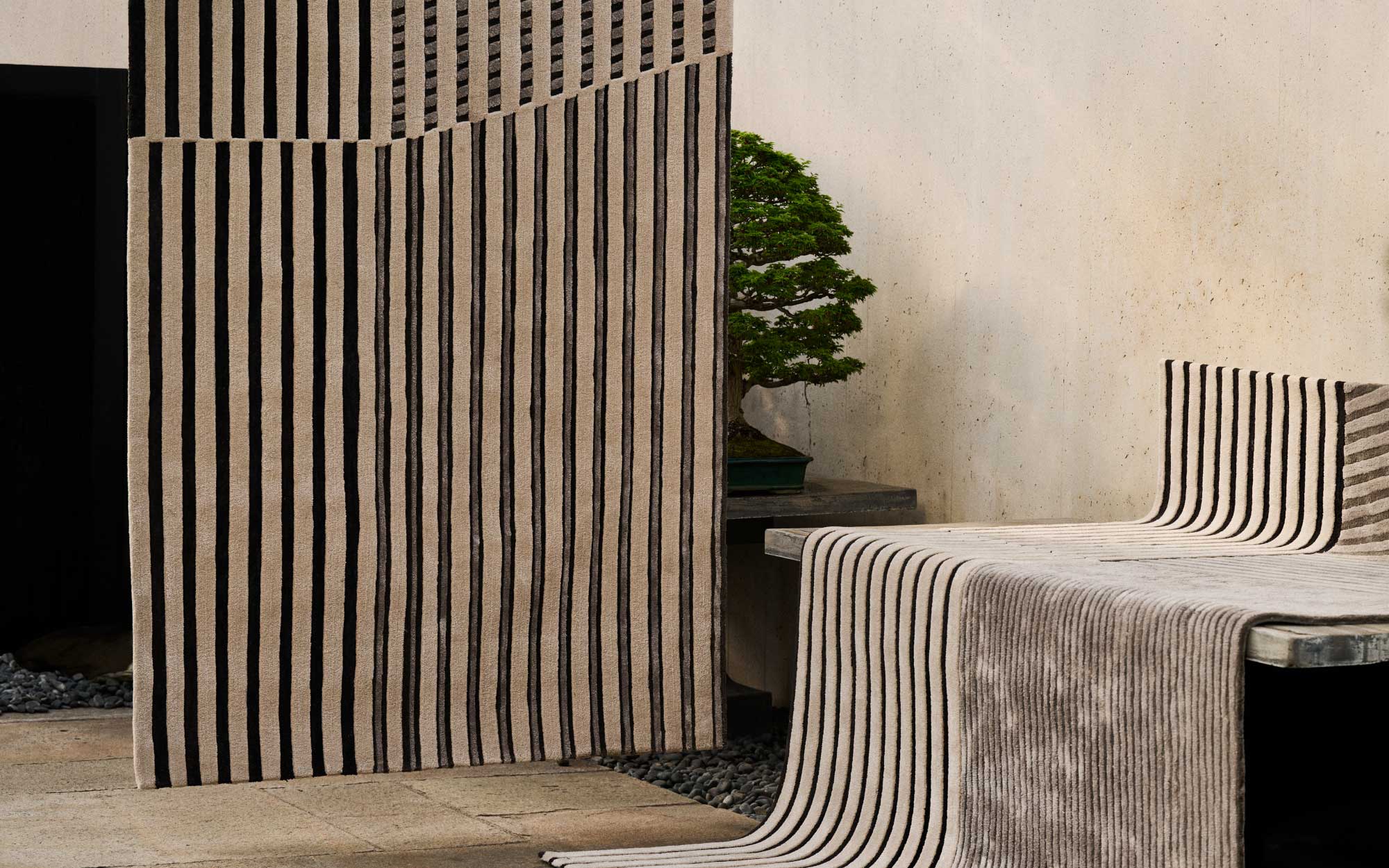
At Salone del Mobile Milano 2026, Jaipur Rugs unveils FACES, a contemplative new collection that interprets the architectural language of Kengo Kuma through the lens of contemporary interiors. Conceived as a study of fragments, textures, and the ephemeral ‘faces’ of architecture, the collection translates Kuma’s quiet design philosophy into tactile, immersive surfaces. Instead of replicating buildings, the collection focuses on how Kuma works with light, material, and spatial transitions, translating these ideas into rugs. “With FACES, we are not translating architecture into rugs—we are translating a way of seeing. Kengo Kuma’s work is deeply emotional yet restrained, and through our artisans, we’ve reinterpreted that sensitivity into something tactile, human, and lived-in,” says Yogesh Chaudhary, MD, Jaipur Rugs.
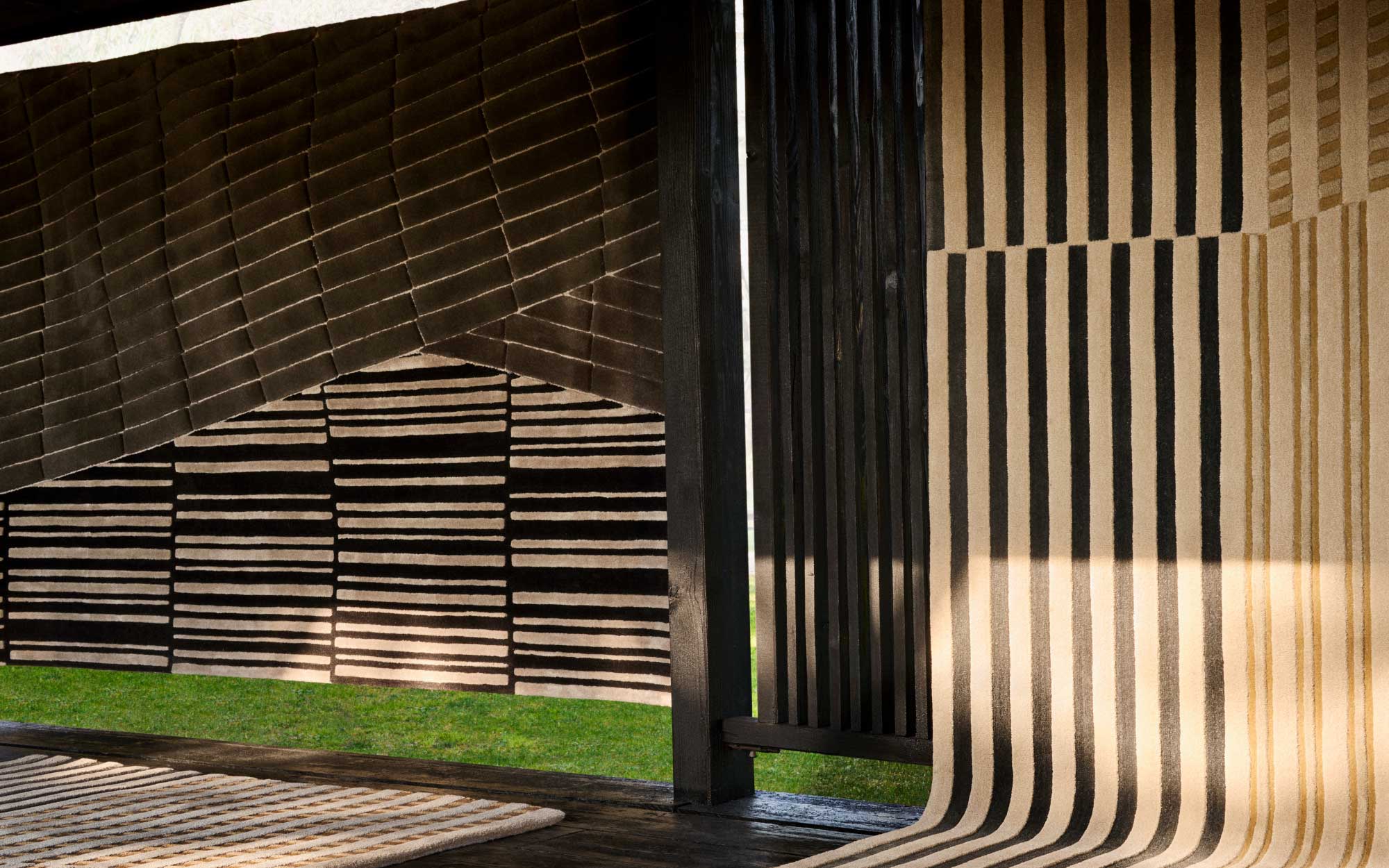
The collection sits at the intersection of Japanese minimalism and Indian artisanal heritage, reflecting a shared sensitivity to craft, material honesty, and the poetics of space. Each design is based on a specific principle—Sukima (spatial intervals), Bokashi (gradual tonal shifts), Chirashi (scattered composition), Kigumi (structural joinery), and Kasane (layering)—and interprets these through material, texture, and pattern. The collection positions rugs as an extension of spatial design rather than purely decorative elements, combining Japanese design thinking with Indian craftsmanship. “Presenting FACES at Salone 2026 is significant for us. It is not just a collection, but a statement on how Indian craftsmanship can engage with global design narratives at the highest level,” says Chaudhary. This is a collection designed for architects, interior designers, and collectors who seek nuance over statement, where the value lies not in overt expression, but in the depth of experience it offers.