
The Ridiculously Futuristic Ferrari Luce Ignites A New EV Era Of Pure Speed
Ferrari’s first fully electric car arrives. The striking new model called Ferrari Luce, designed in collaboration with LoveFrom, balances simplicity, engineering excellence, and the emotional experience expected from a Ferrari.
- 26 May '26
- 3:50 am by Aditi Singla

In Rome, beneath the sculptural architecture of the Vela di Calatrava, Ferrari unveils the Ferrari Luce, the marque’s first-ever fully electric car, one shaped as much by design as by engineering. Originally referred to as the Elettrica in the development phase, Luce (pronounced Lu-chey), which means ‘light’ in Italian, marks an unprecedented creative collaboration between Ferrari’s Chief Design Officer, Flavio Manzoni, and LoveFrom, the design collective founded by Sir Jony Ive and Marc Newson. Together, they reimagine what a Ferrari can look, feel, and sound like in an EV era—without losing the emotion and theatre that define the Prancing Horse.
The Ferrari Luce name evokes clarity and direction. It lights the way towards the future and defines the intent to create a Ferrari 360°, not merely the “electric Ferrari” but an entirely new Ferrari, designed for deeper engagement and performance, with a unique and recognisable character. The new supercar launches in a range of bold colours. The colours include Azzurro la Plata, Giallo Luce, Rosso Dino, Bianco Artico, and Rosso Fiammante, all selected to complement the car’s sheen surfaces and futuristic detailing. In particular, the specially developed yellow is inspired by the historic yellow of the Ferrari logo and can also be found on the wheel hubs and the steering wheel.
Also read: The Most Colourful Public Art Installations Perched At The Edge Of The World
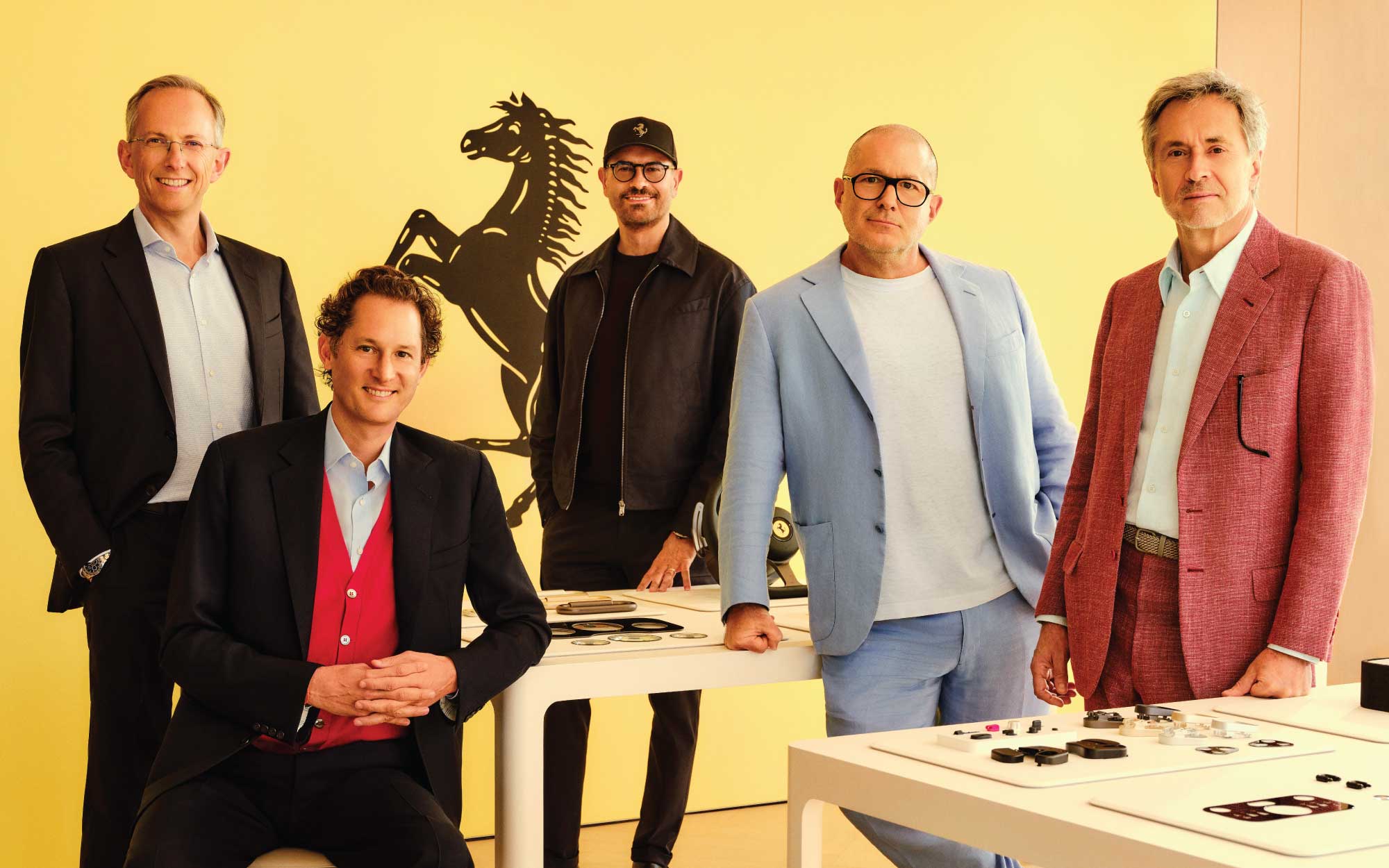
LoveFrom Designs The Interiors And Interfaces For The Ferrari Luce
Designed around experience, materiality, and emotion, Ferrari has used Luce as an opportunity to rethink the very architecture of the Prancing Horse. With its glass, high-tech minimalism, and historical references, the interior of the first electric Ferrari marks a bold departure from the traditional cockpit. When the company first began discussing its first electric Ferrari, both the chairman and Ferrari itself were keen to adopt a highly ‘disruptive’ approach. In keeping with tradition, Ferrari chose to engineer, develop, and manufacture the main components in-house; from the electric motors to the battery pack, every element is created in Maranello to guarantee quality, control, and uniqueness. But for its design, Ferrari chose to get it rendered by hand from outside the Ferrari Design Centre. In doing so, Loveform was given full autonomy in approaching the vehicle’s design. After approximately 6 months of development work in San Francisco, the Lovefrom team presented a fully realised proposal in Maranello, encompassing both the exterior and interior design, as well as the user experience.
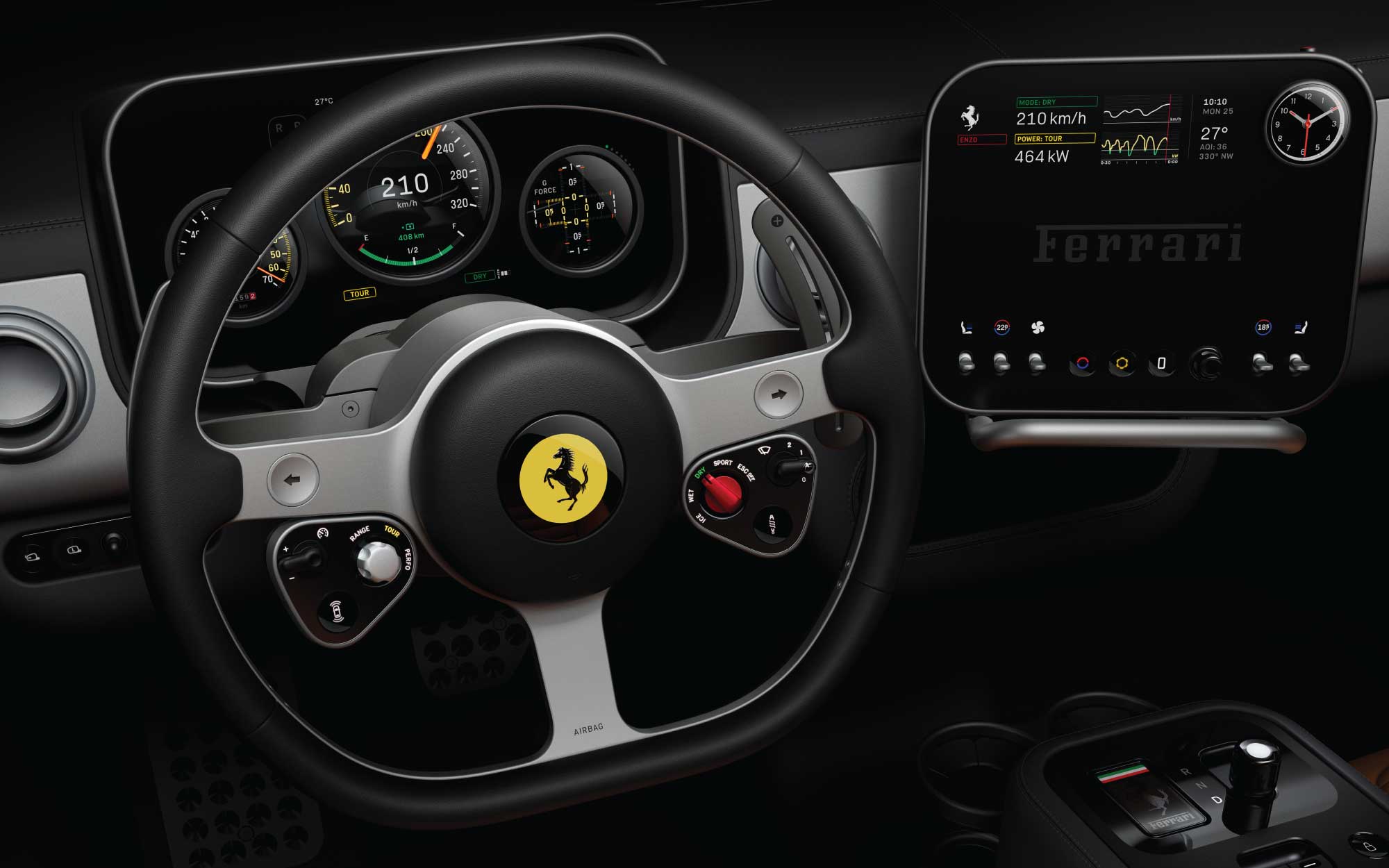
Designed For Greater Control Over Driving
One can see the convergence between the automotive world and high technology. Luce has a strikingly minimal, shell-like form defined by an uninterrupted glass house that wraps dramatically around the body. Floating aerodynamic wings hover around the form, almost like independent sculptural elements, while transparent light panels and halo-inspired tail lights lend the car a futuristic look. The collaboration with LoveFrom is immediately evident—the design language is cleaner, quieter, and more restrained than anything Ferrari has produced before. And not just that, Luce is powered by a 122 kWh battery pack developed entirely in Maranello, offering over 530 km of range and ultra-fast charging capabilities.
Also read: Where Architecture Frames The City And Privacy Becomes A Way Of Life
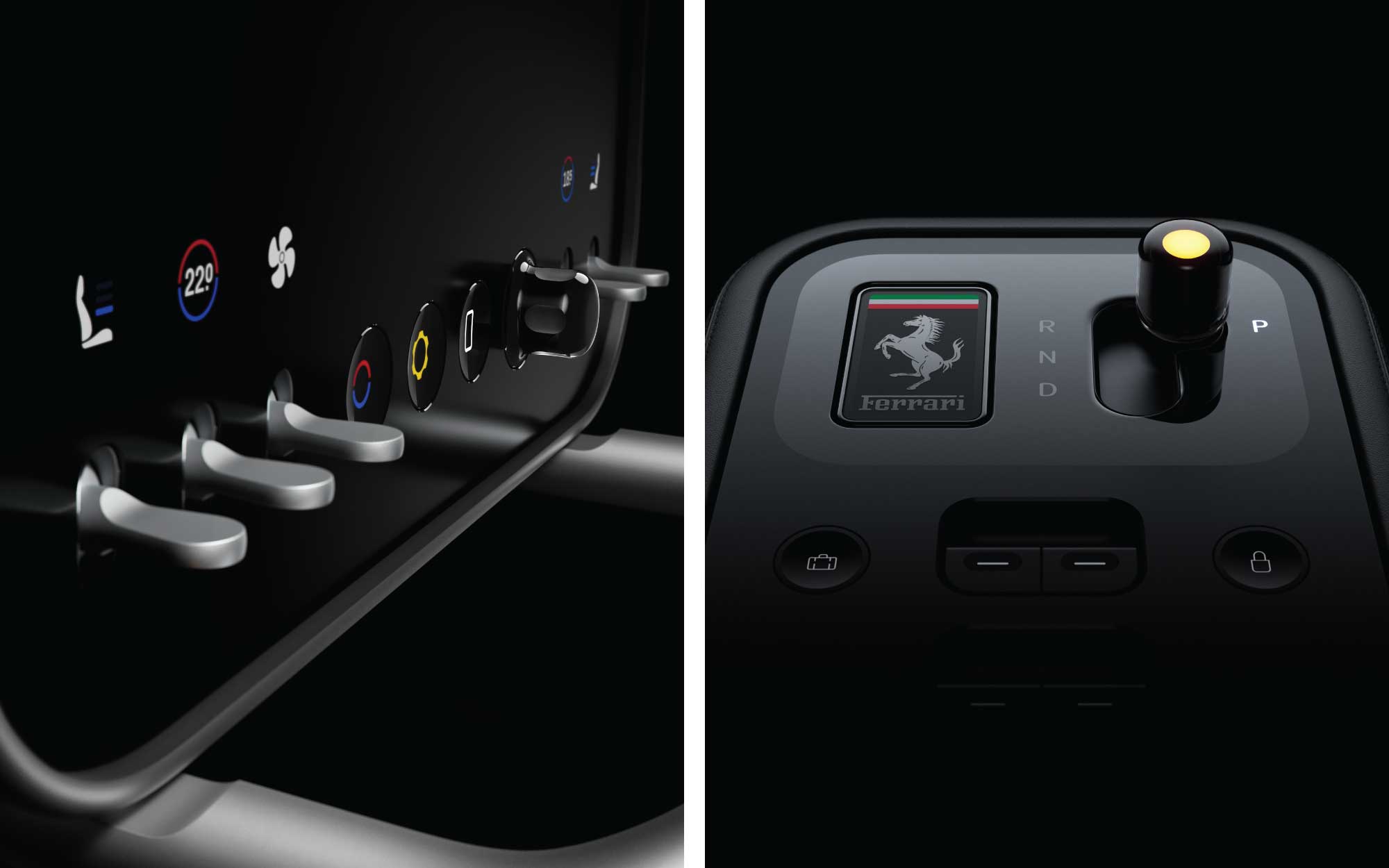
Ferrari Cut Down The Screens And Brought Back Real Driving Feel
The Luce also signals a significant shift in Ferrari’s understanding of luxury and usability. For the first time, a Ferrari offers four doors and five seats with an expansive interior. The interior design is by Sir Jony Ive, the designer who revolutionised the world of consumer electronics with the iPhone and iPad. His obsession with austerity extends into the Luce cabin, where the interiors feel remarkably serene for a Ferrari. It has been conceived almost like a luxurious space where precision-machined aluminium controls, leather-wrapped surfaces, Corning Gorilla Glass, and OLED displays developed with Samsung come together in an interface that prioritises clarity over visual overload. The interface is designed with clear organisational principles of input and output. Controls and displays are grouped functionally, with the most essential commands and feedback directly in front of the driver. Mechanical toggles, rotatory dials, knobs, and switches remain central to the driving experience, something a car enthusiast would love.
Also read: The Rise Of Brick-Led Soft Architecture In India’s Residential Design Landscape
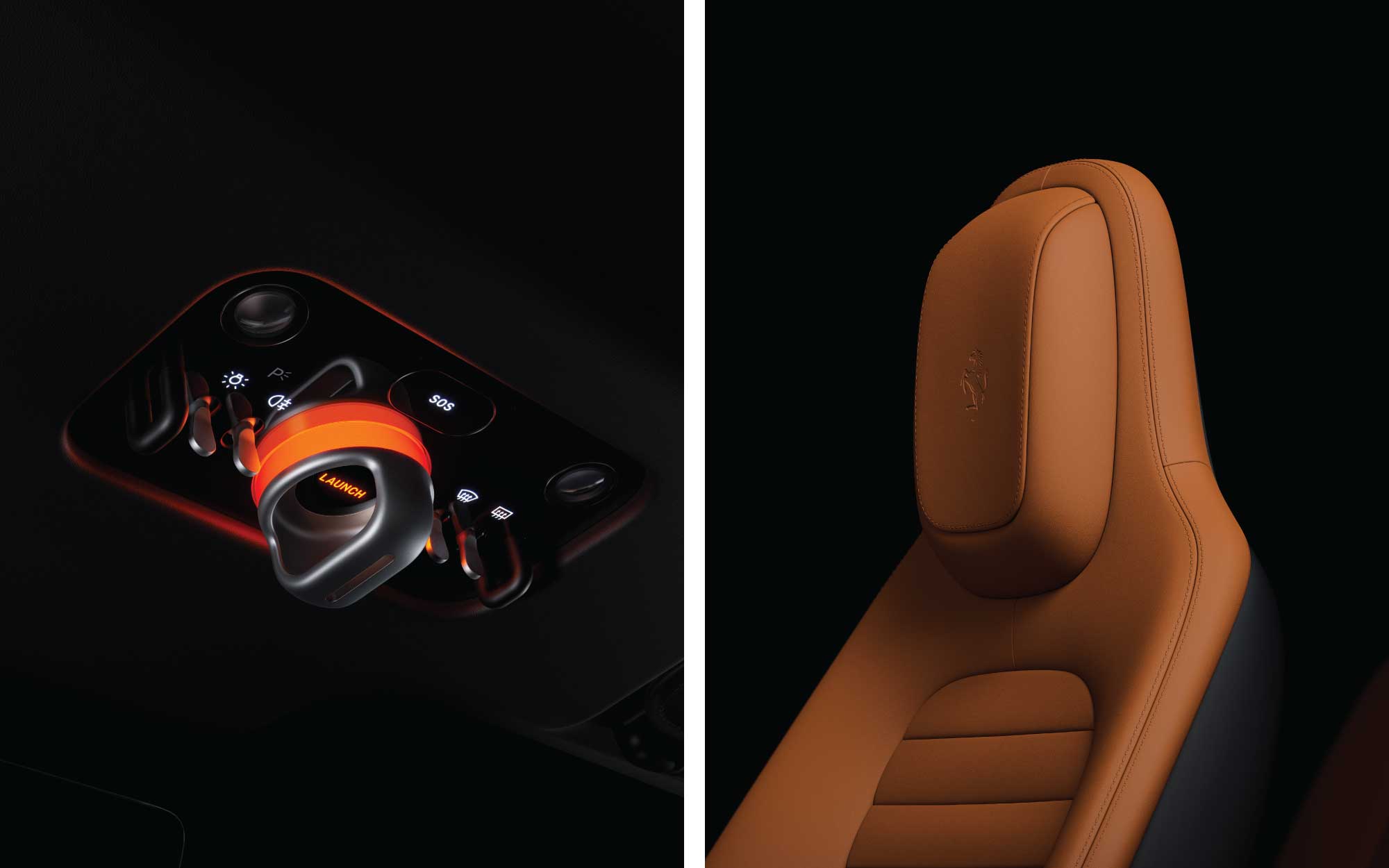
An Electric Experience You Can Feel
The key represents the driver’s persistent, personal connection to their Ferrari Luce. Made with Corning Gorilla Glass, the key lights up in Ferrari’s iconic yellow when docked, almost as if the car is waking up. Unlike most electric vehicles that emphasise silence and sterility, Ferrari Luce has engineered an entirely new sensory experience around sound. Instead of synthesising an artificial engine note, the Luce amplifies the natural vibrations and frequencies generated by its electric motors, creating what Ferrari describes as an ‘authentic and functional’ soundtrack. It is a distinctly Ferrari response to electrification—not nostalgic imitation, but reinterpretation. The Ferrari also introduces an entirely new connectivity services ecosystem: MyFerrari Luce, allowing owners to remotely manage key vehicle functions and prepare the car for optimal performance before every drive.
For Ferrari, the Luce is not simply its first electric car. It marks a new chapter, yet one that continues its long history of uncompromising innovation, driving performance, and an engineering culture that seeks to redefine the limits of what is possible.