Venice Biennale 2026: Meet The 5 Artists Representing India At The India Pavilion
Meet the 5 artists that will define the India Pavilion at the Venice Biennale as they explore the shifting notion of home.
- 7 May '26
- 4:24 pm by Urvi Kothari

|
Getting your Trinity Audio player ready...
|
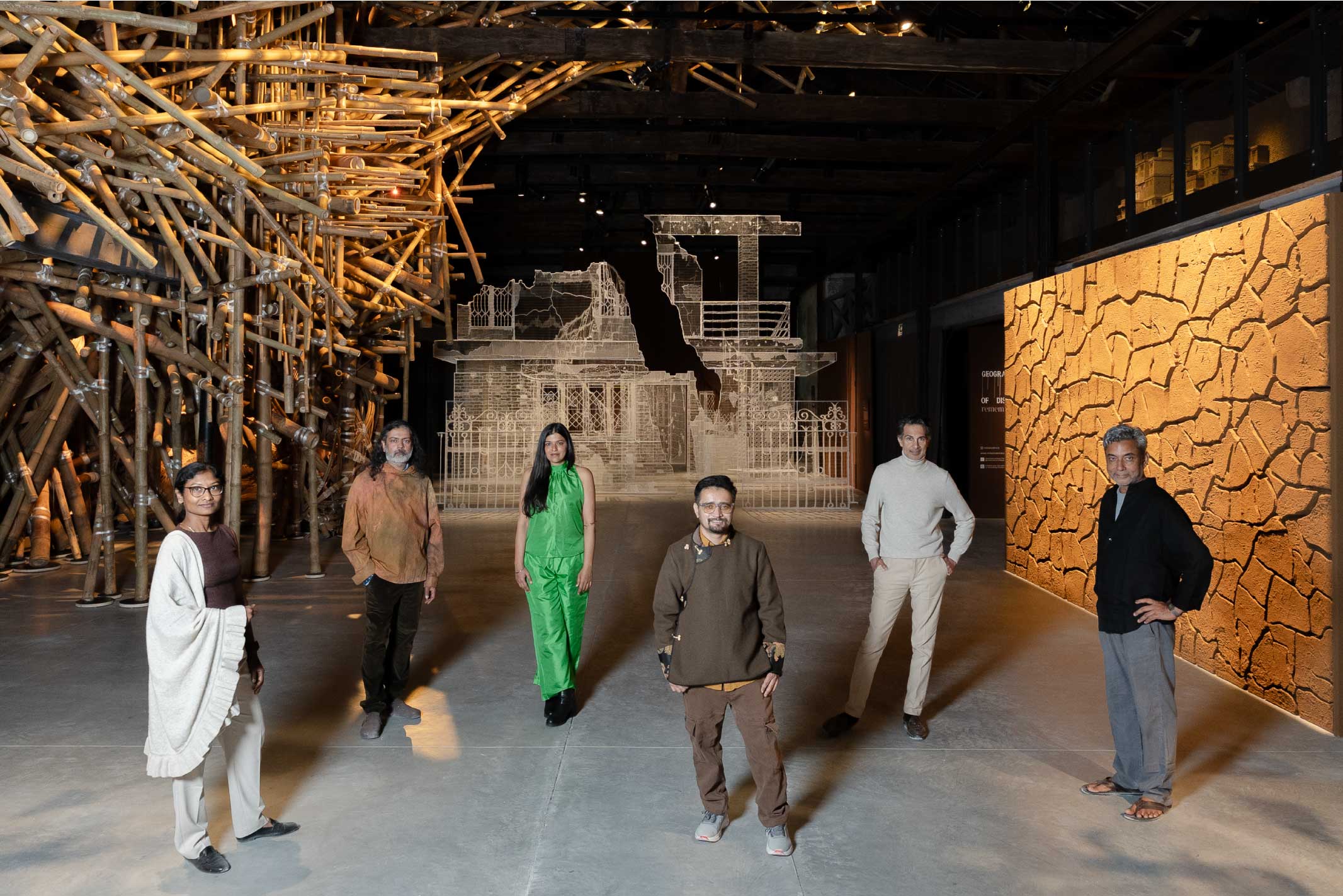
“I returned to the question of ‘home”, shared curator Dr. Amin Jaffer as he reflected on the 61st Venice Biennale’s overarching theme ‘In Minor Keys’. As an Indian living outside the subcontinent for generations, this simple thought seems quite inevitable as Dr. Jaffer reflects on the notion of identity, memory and rituals. Taking this as the starting point, it culminated into India Pavillion’s curatorial theme ‘Geographies of Distance: remembering home’. Presented by the Ministry of Culture, Government of India in partnership with the Nita Mukesh Ambani Cultural Centre (NMACC) and Serendipity Arts Foundation, this seminal exhibition will reveal the cultural nuances of a nation in the throes of economic boom with a vibrant global diaspora.
Across the exhibition, elements of ‘home’ appear fractured, suspended, scaffolded, or vulnerable as the artists explore longing and a deep-rooted sense of attachment to the place to which we belong. Each artist considers India’s transformation, mobility and the global diaspora. “I wish to deliver an exhibition in which each artwork is given due attention and space, but which harmonise aesthetically and form a coherent narrative—that of remembering home. To ensure a curatorial link between the five projects, it is essential that the artists understand and endorse the conceptual and aesthetic vision behind the project,” shares curator Jaffer. The exhibiting artists represent many regions and generations of artists and craftsmanship. This \curation presents 5 visual voices that are here to make waves of change in the global arts scene.
1. Alwar Balasubramaniam (Bala)
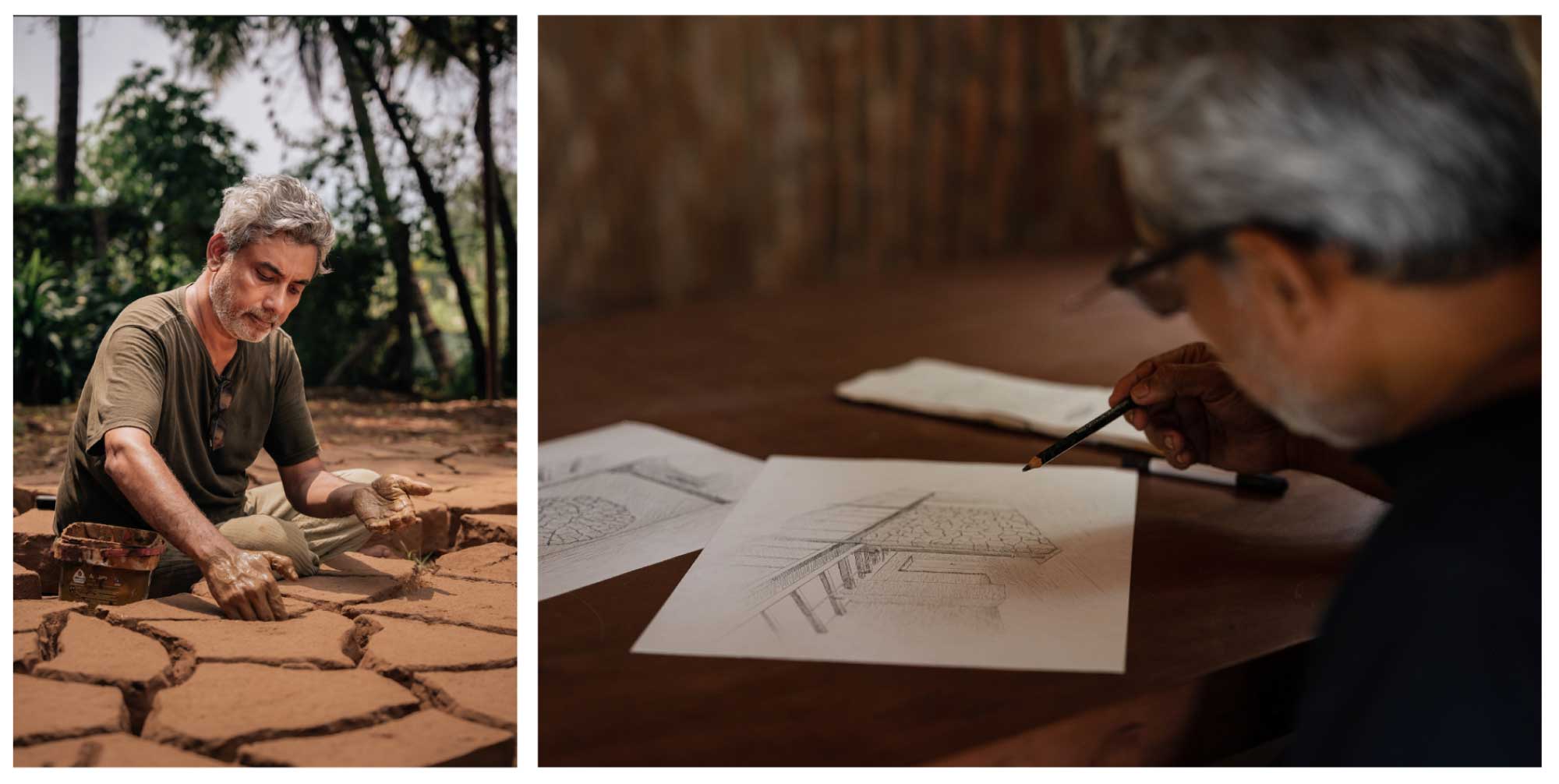
“Home is both physical and internal”, shares Alwar Balasubramaniam as he responds to the curatorial theme. Bala has had a sustained and ever-deepening relationship with the natural world and forces surrounding us. At the India Pavilion, he presents ‘Not Just For Us’, an ongoing exploration into the elements of earth and natural processes, from bonding to separation. “For my work I have used the earth from the land around my studio and ancestral home in Tamil Nadu, where the soil carries the memory of generations before me. It is also a condition of awareness. I was born there, left, returned, and eventually settled again near my ancestral village,” Bala adds.
2. Sumakshi Singh
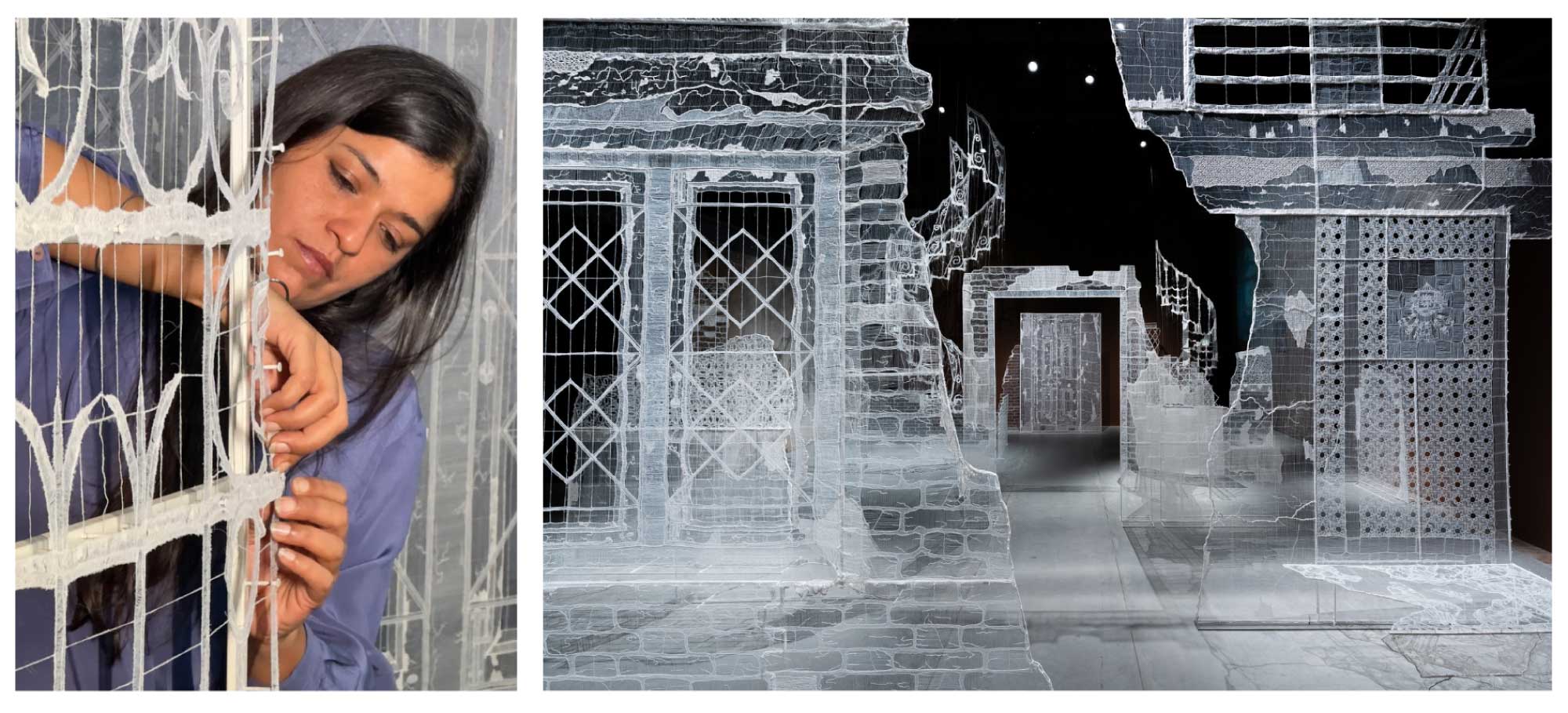
New Delhi based Sumakshi Singh presents ethereal installations that explore the fragile architecture of memory and loss. “My work draws from my childhood home, 33 Link Road – a space that held not just family, but friends and a wider community. This potent container of shared histories now stands demolished, after serving its function for 74 years- its solid, sheltering surfaces dissolved into memory,” shares Singh. Her installations convert hard architectural forms into soft silent shrines, as they embody the weightless veil made entirely of delicate white thread—silk, nylon, and cotton—some finer than hair. SIngh adds, “This work is in conversation with the city of Venice itself, where transience and fragility coexist with the extraordinary beauty of human life and art.”
3. Ranjani Shettar
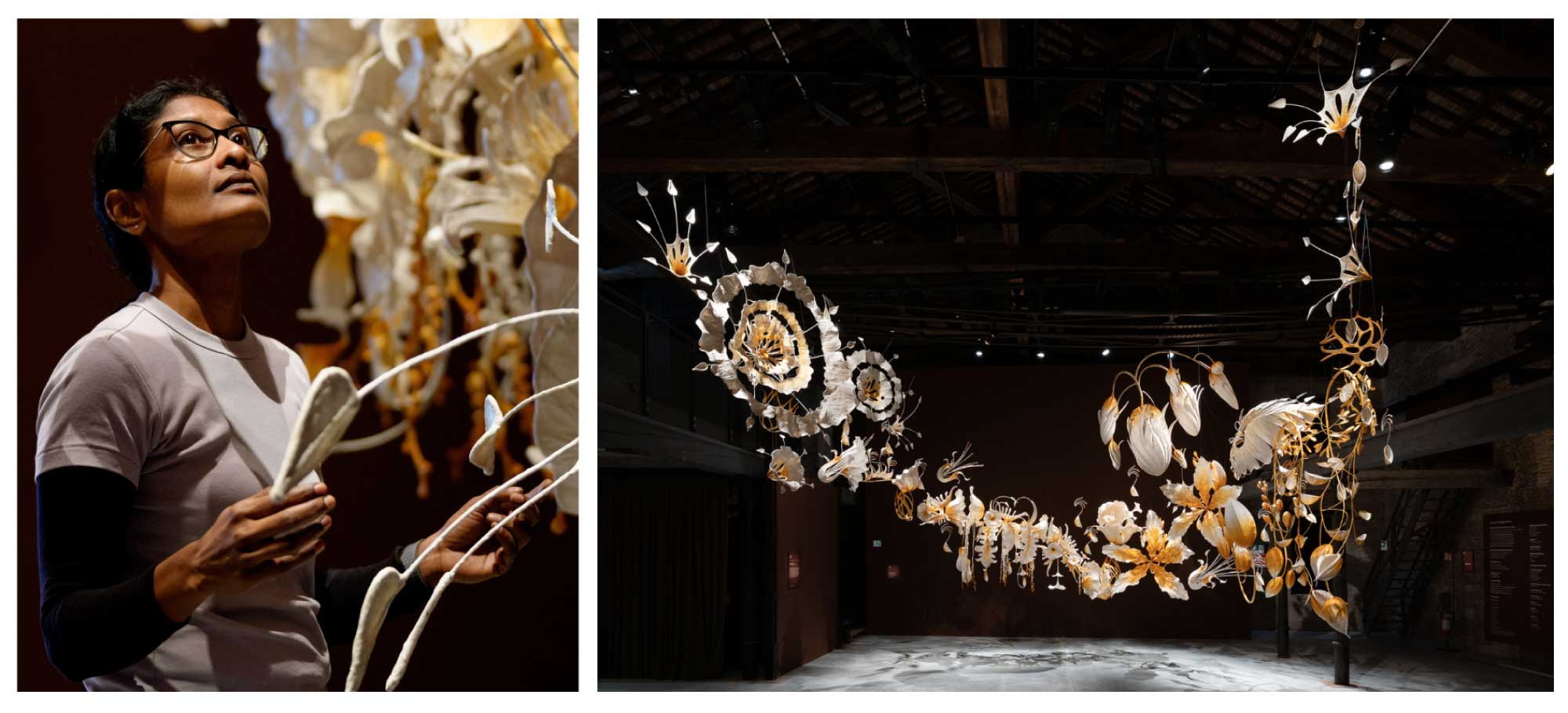
Hailing from Karnataka, Ranjani Shettar translates natural materials into organic floral forms hand-made entirely from India’s centuries-old traditions. “To me, the natural world is home. It is abundant and provides not just inspiration but materials that I consciously employ to create and connect to it. It is also a state of mind, something sensed and carried, not just a fixed address,” shares Ranjani Shettar. At the pavilion Shettar presents ‘Under the Same Sky’, an installation composed using hand woven cotton fabric, binder, steel and lacquer to evoke ecological forms, flora and the natural world around us. She shares, “The artwork consists of multiple elements that come together like choreography. Together, they form a visual experience characterised by harmony, rhythm, melody, cadence, and crescendo.”
4. Asim Waqif
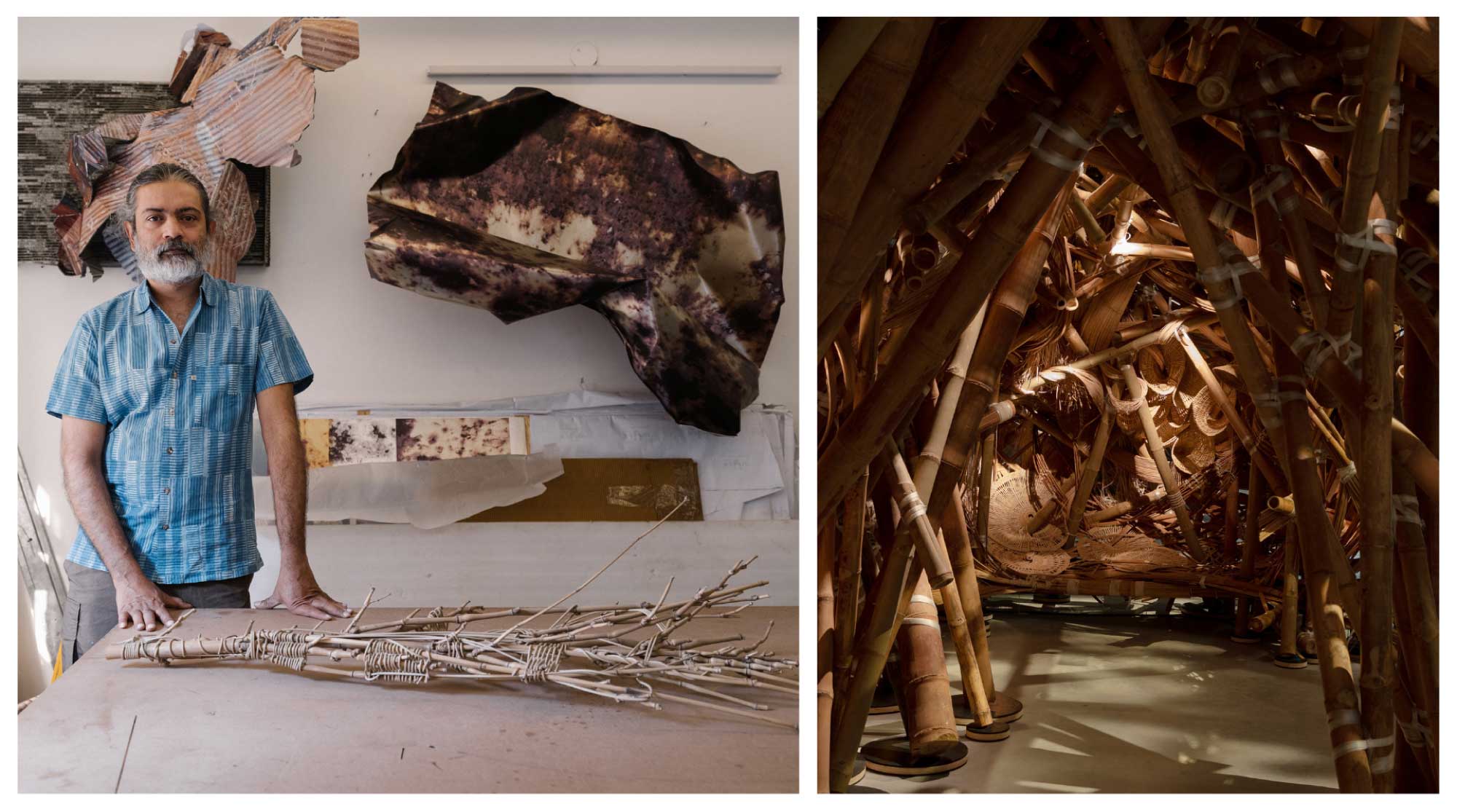
New Delhi based artist-architect takes the biennale platform to present critical commentary on a slowly fading craft. “This craft is fading to a memory”, shares Asim Waqif, whose practice involves working with bamboo. “In India, traditional use of bamboo in utensils, baskets, ikra and construction is disappearing under the pressure of developmental aspiration and the lure to participate in the market economy. Often, artisans don’t want the younger generation to continue their work,” he comments. Waqif presents a site specific installation made using bamboo, reed weaving and various ropes and cords. “I have been working with bamboo on and off for almost 30 years, and this project is informed by all these cumulative experiences,” he says.
5. Skarma Sonam Tashi
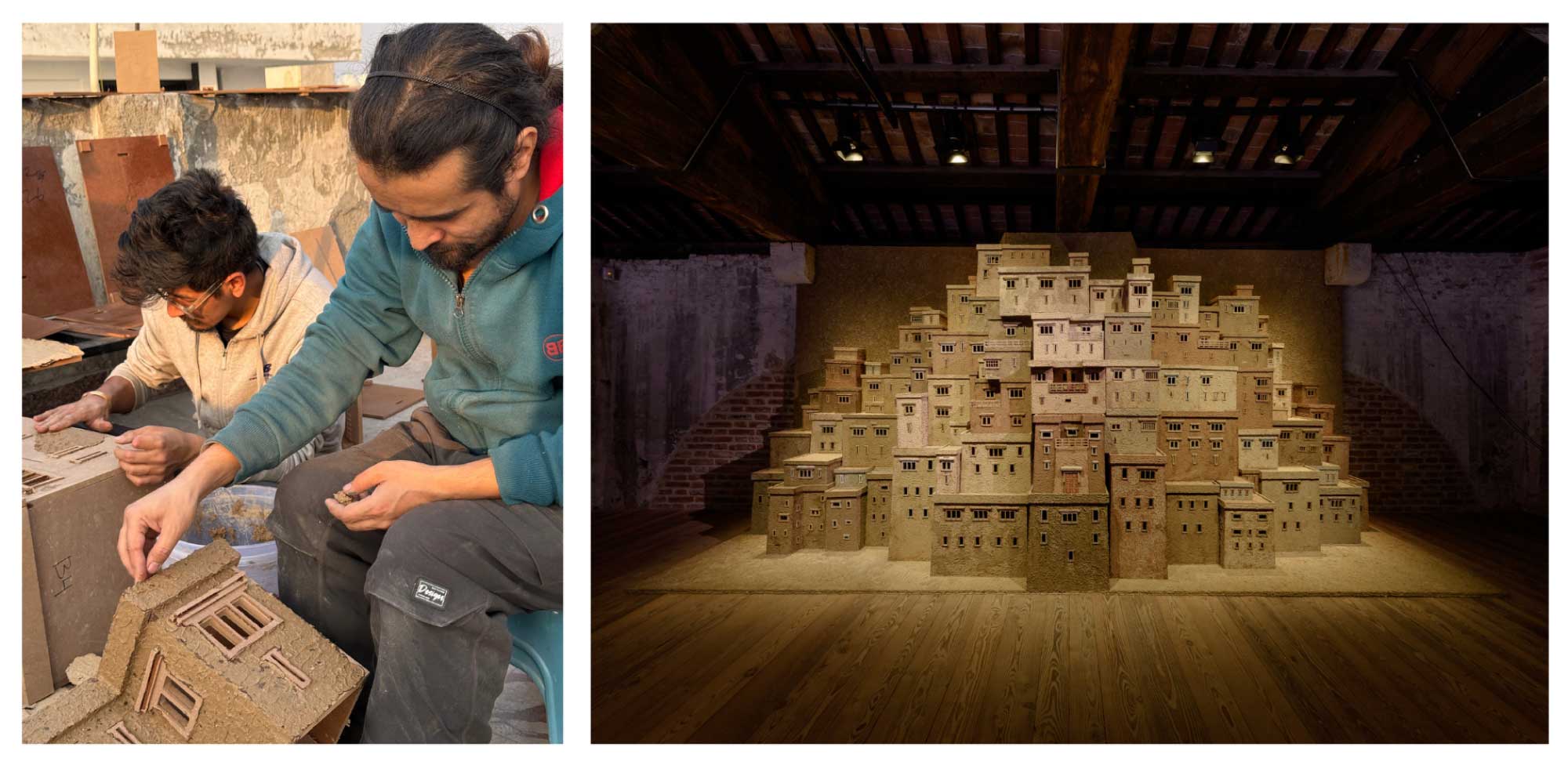
Artist Skarma Sonam Tashi reflects on his relationship with his homeland, Ladhakh as he presents an installation titled ‘Echoes of Home’. “The work draws on traditional Ladakhi houses, which are built using earth, stone, timber wood, and collective knowledge passed down through generations”, shares Tashi. He works with organic recycled materials and traditional techniques such as paper mâché, recycled cardboard and clay to showcase the fragility of the natural world. “It appears on the mezzanine like a settlement resting on a mountain slope,” he adds.
India’s return to the Venice Biennale after seven years makes a quiet but clear statement. Instead of presenting a fixed idea of India, curator Amin Jaffer focuses on the shifting and personal meaning of home. The pavilion avoids spectacle and leaves viewers with a simple question: what does home mean to them?. In doing so, it moves beyond geography and connects to a larger global conversation, where home feels uncertain in today’s geo-political climate.
The India Pavilion will preview on May 6 at the Arsenale and will be on display until November 22, 2026.