
Nilufar Opens A Grand Hotel In A Depot At Milan Design Week 2026
At Milan Design Week 2026, Nilufar Depot at Viale Lancetti transforms into the Nilufar Grand Hotel, reimagining hospitality as a cinematic, immersive curatorial universe where design becomes storytelling.
- 24 Apr '26
- 10:48 pm by Simran Almeida

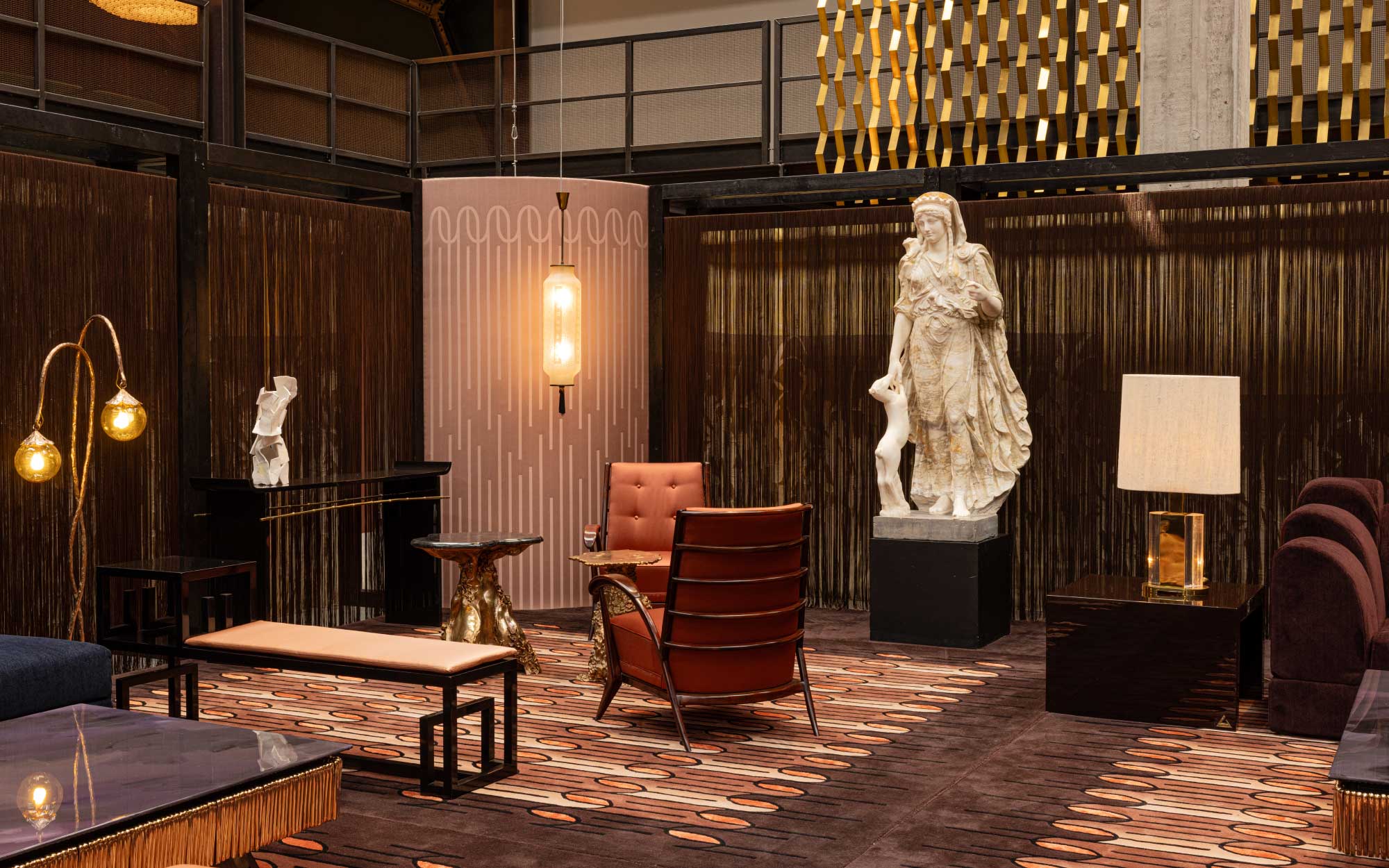
Hotel rooms have conventionally been identical with no discernible differences. As the language of hospitality drifts toward the immersive and introspective, Nina Yashar, the founder of Nilufar gallery, scripts a work of ‘realistic fiction’ at Milan Design Week 2026. Titled ‘Nilufar Grand Hotel,’ the installation transforms Nilufar Depot at Viale Lancetti into a complete mise-en-scène of a hotel where design checks in. Originally a silverware factory, the depot was inaugurated in 2015 by Nina Yashar, who transformed it into an immersive, theatrical design space during Milan Design Week 2015. Transcending the boundaries of time or geography, this hotel welcomes collectable objects as its VIP guests to ensconce every room, blurring the boundaries between beauty and belonging. “With Nilufar Grand Hotel, I wanted to imagine a place that doesn’t exist, yet feels profoundly real,” explains Yashar.
The Theatre Of Hospitality
From a theatrical ground-floor reception and atmospheric dining room paired with a fumoir to first-floor gallery-esque bedrooms and a penthouse suite filled with objects from eras, aesthetics, and geographies, every room operates as a curated chapter. With a roster of names—from Rooshad Shroff’s debut collection and Vikram Goyal to global names like david/nicolas, Bethan Laura Wood and Filippo Carandini—the project plays host to several attentive guests along with new pieces from Nilufar Edition that instil a sense of joie de vivre. “My interest in hospitality stems from a personal curiosity, a desire to understand how collectable design can inhabit lived, everyday spaces and turn them into intimate, memorable experiences,” reflects Yashar. Embodying the gallery’s motto, ‘Discovering, crossing, creating,’ the project probes hospitality as a cultural industry and its deep entanglement with design, in which spaces subtly orchestrate encounters, exchanges, and atmospheres.
Checking In At The Grand Hotel
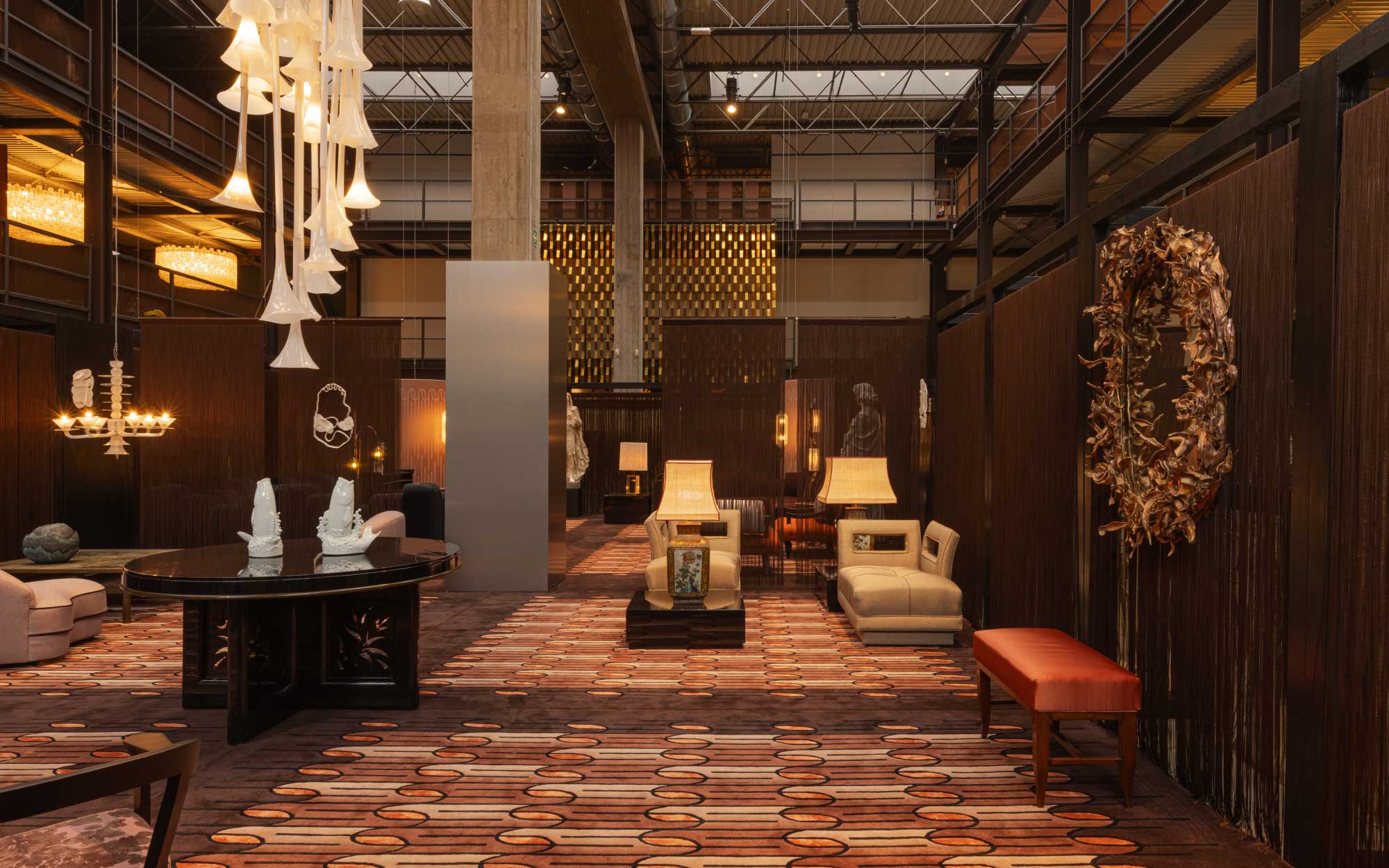
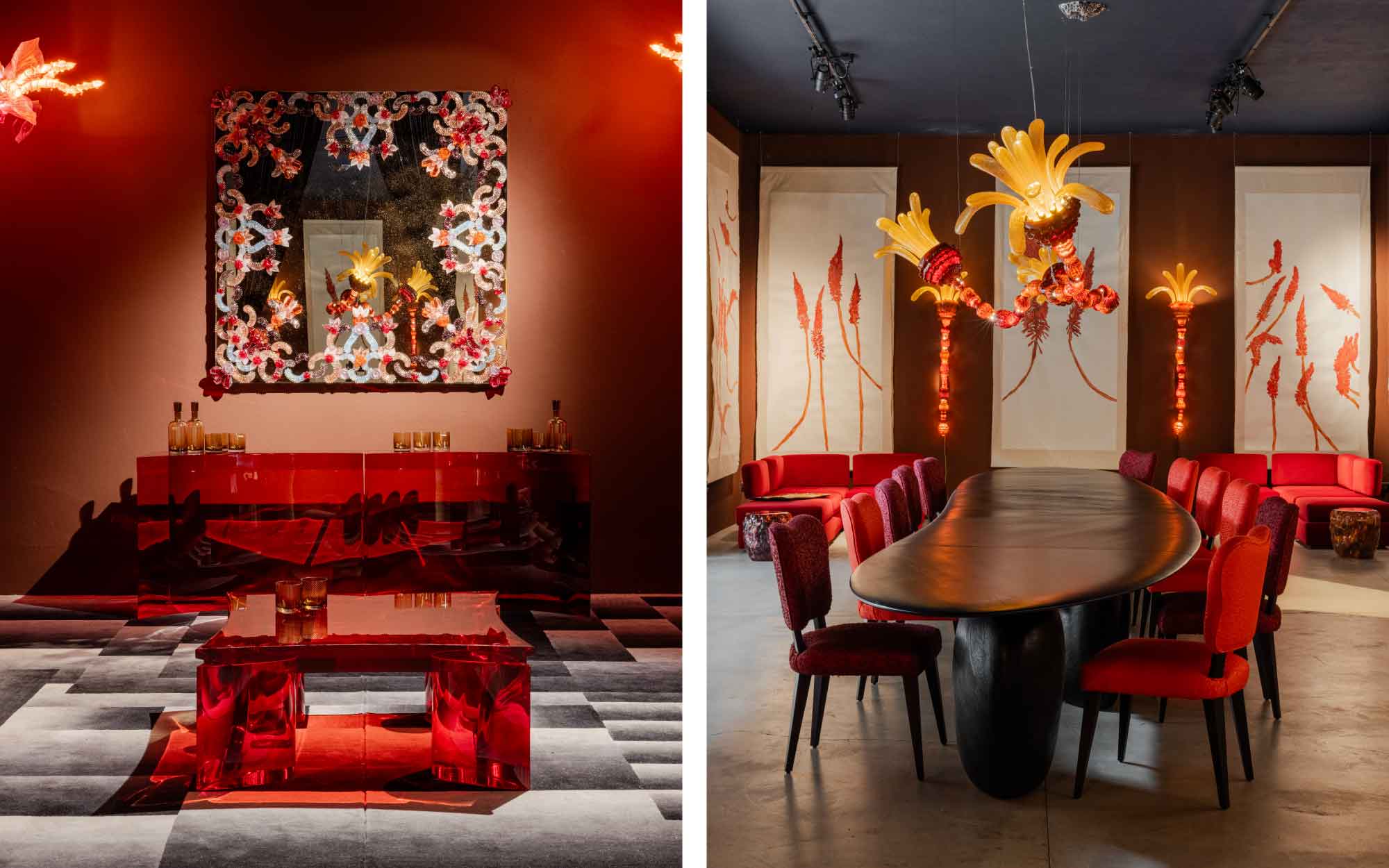
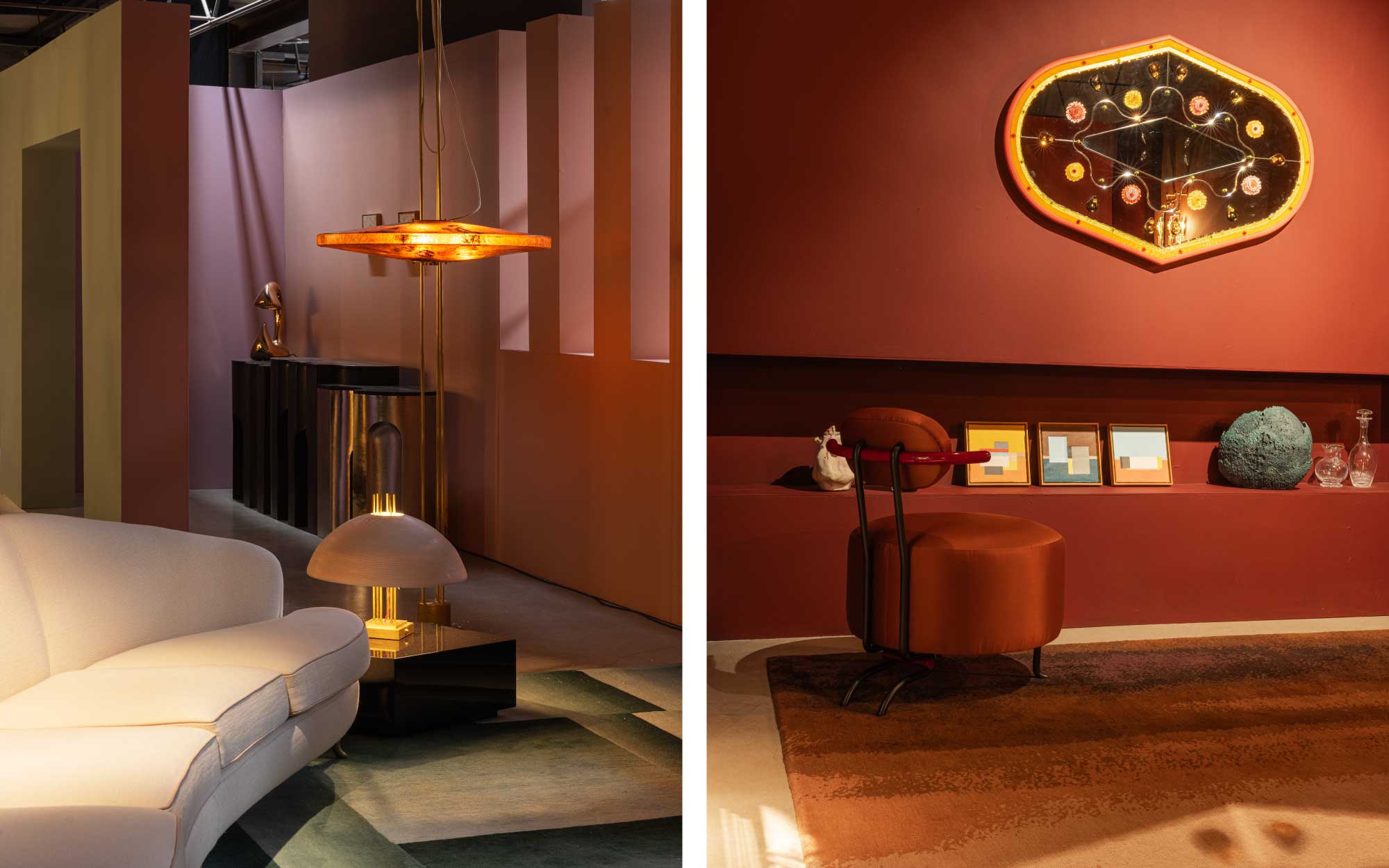
From the outset, the Depot’s atrium reimagines the codes of arrival. A reception desk by Lola Montes anchors the check-in moment, blooming with hand-modelled magnolias, while Christian Pellizzari’s ‘Calla’ chandelier casts a glow that renders the space ethereal. Vintage icons by James Mont and Paul László converse effortlessly with contemporary gestures by Vikram Goyal, while Gal Gaon’s dining table and fumoir featuring armchairs and pouffes from Derin Beren Yalcin’s ‘Disposition’ collection, shift the vibe from convivial to intimate hush.
Also Read: Mandarin Oriental Expands Exceptional Homes With 10 New Villas Across Florence, Sardinia & Marbella
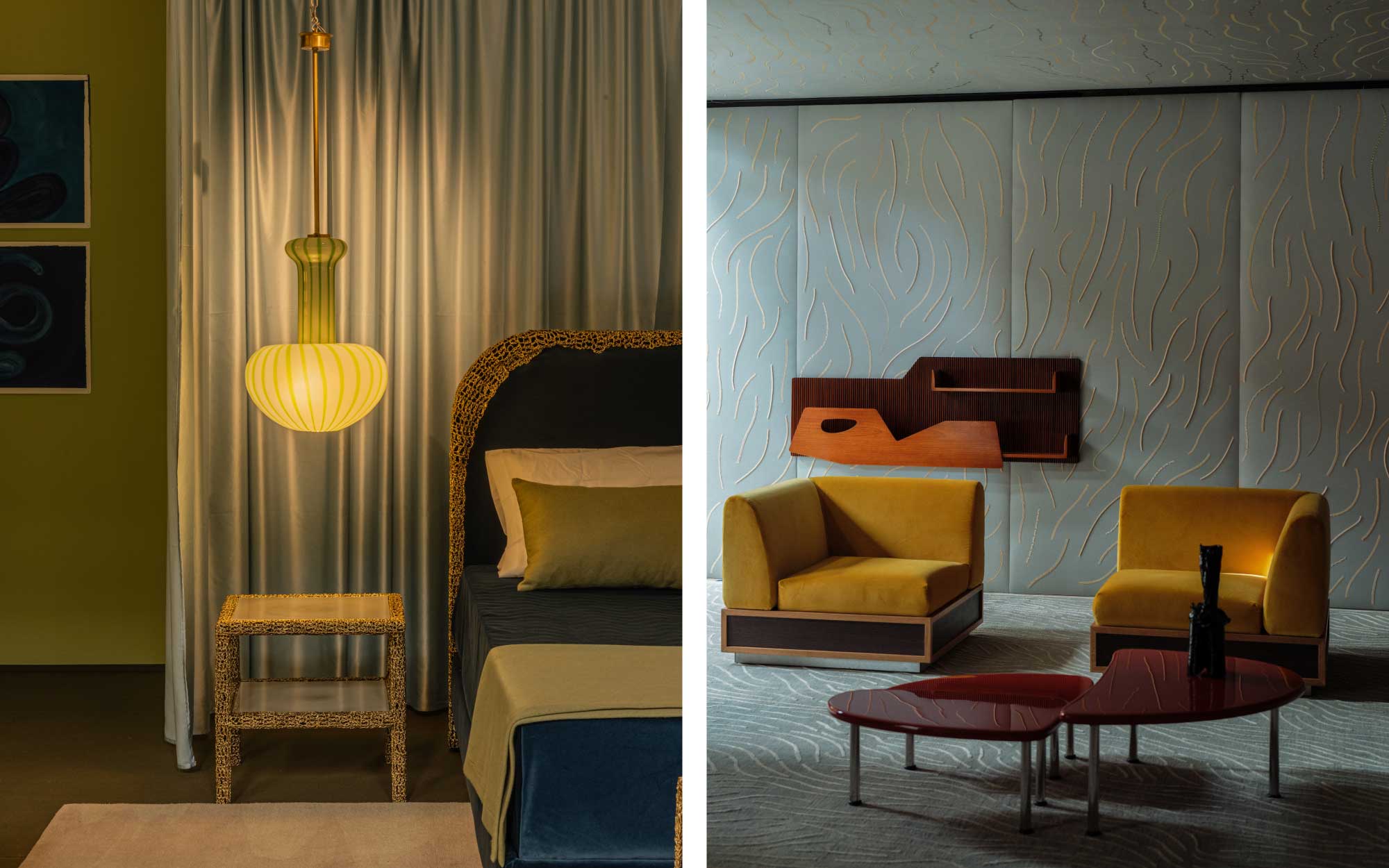
The journey unfolds through signature rooms by david/nicolas, Filippo Carandini, and Allegra Hicks—each an expression where material reveals the design style. While Hicks distils tactility into calm restraint, david/nicolas dissolve architecture into a surface featuring relief work. Carandini reflects, “Half-tones drawn from blues and greens, with yellowish accents that fully emerge in the gold of the bronze and the mirror, or in the silver-leaf details, functioning as points of light—almost like stars.” From greeting to immersing the guests, the ground floor serves as a medium through which the hotel turns into a sensory getaway, almost a cinematic narrative.
The Micro Environments
Upstairs, there is an enfilade of interconnected rooms rather than discrete galleries. A meandering pathway guides visitors through a sequence of immersive vignettes echoing the intimacy of art-lounges. It begins with a quieter, more introspective meditation room inspired by the Japanese ryokan. Rare works by masters such as Gabriella Crespi, Ingo Maurer, and George Nakashima are staged within a light-drenched room. Within this space, time appears to be suspended, and every object holds the residue of nostalgia.
Also Read: Chef Ritu Dalmia Puts Indian Cuisine On The Global Design Map At Salone Del Mobile 2025
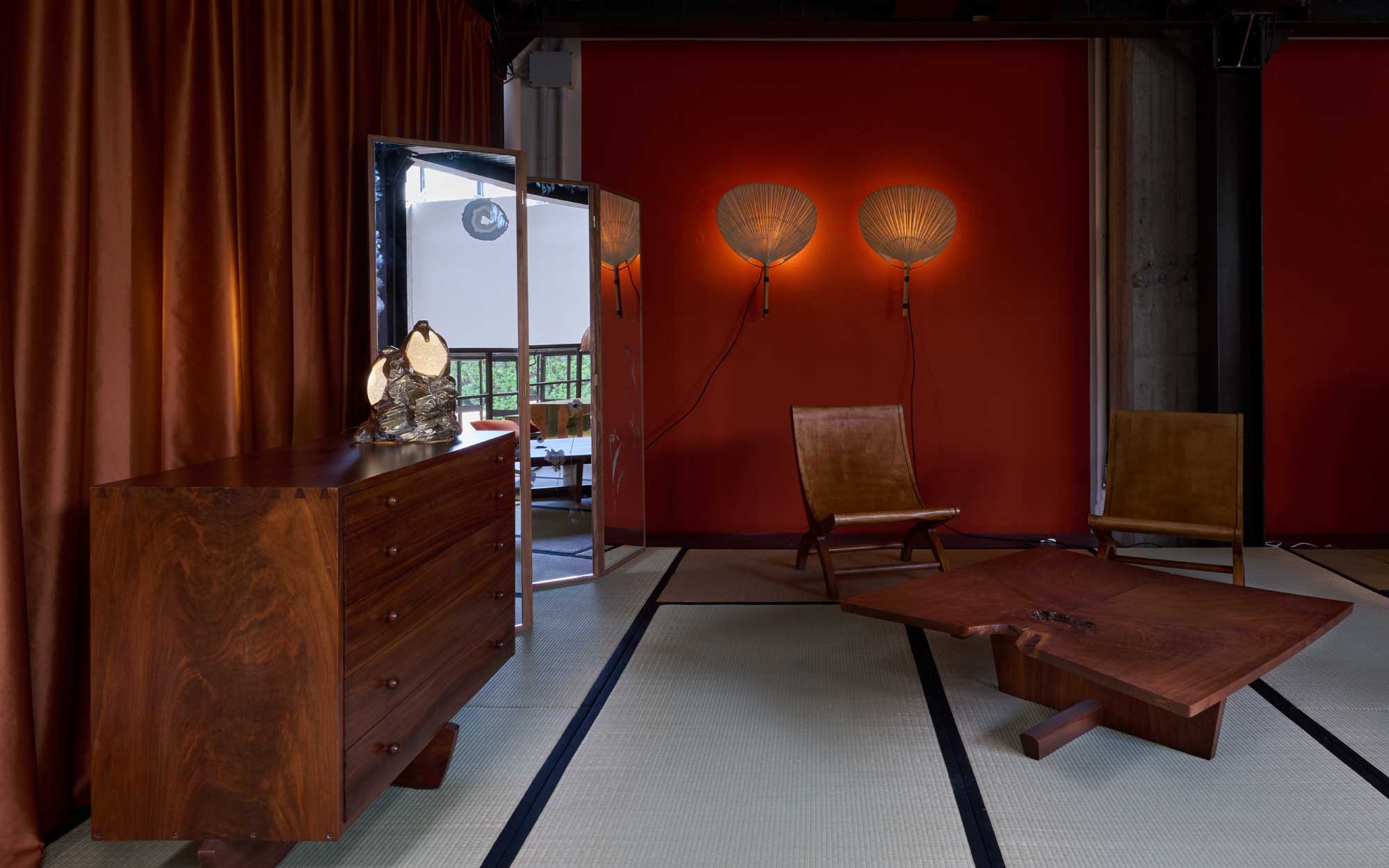
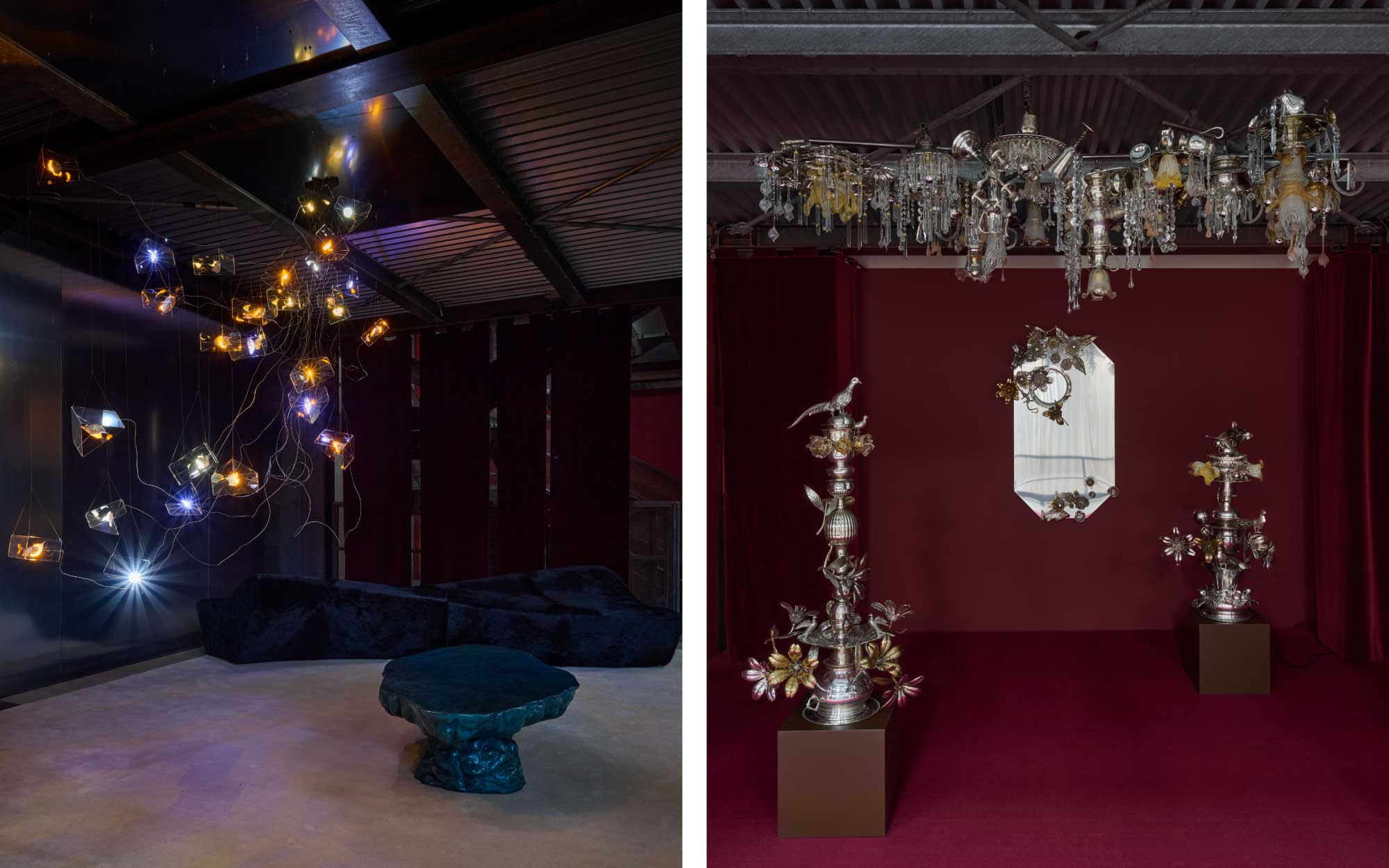
Here, Objects of Common Interest choreographs a crew of rounded volumes and glowing surfaces, while VON PELT Atelier resurrects bourgeois ornament into luminous fragments of memory and irony. The spatial layout opens into softly framed ‘rooms within rooms,’ narrowing into transitional passages, and expanding again into atmospheric pockets, with each installation defining its own micro-environment. Further along the pathway, Lebanese designer Georges Mohasseb translates cactus’ resilience into sculptural furniture through Studio Manda, a mirror by Bethan Laura Wood reflects the colours and patterns, crafting a layered temporal field.
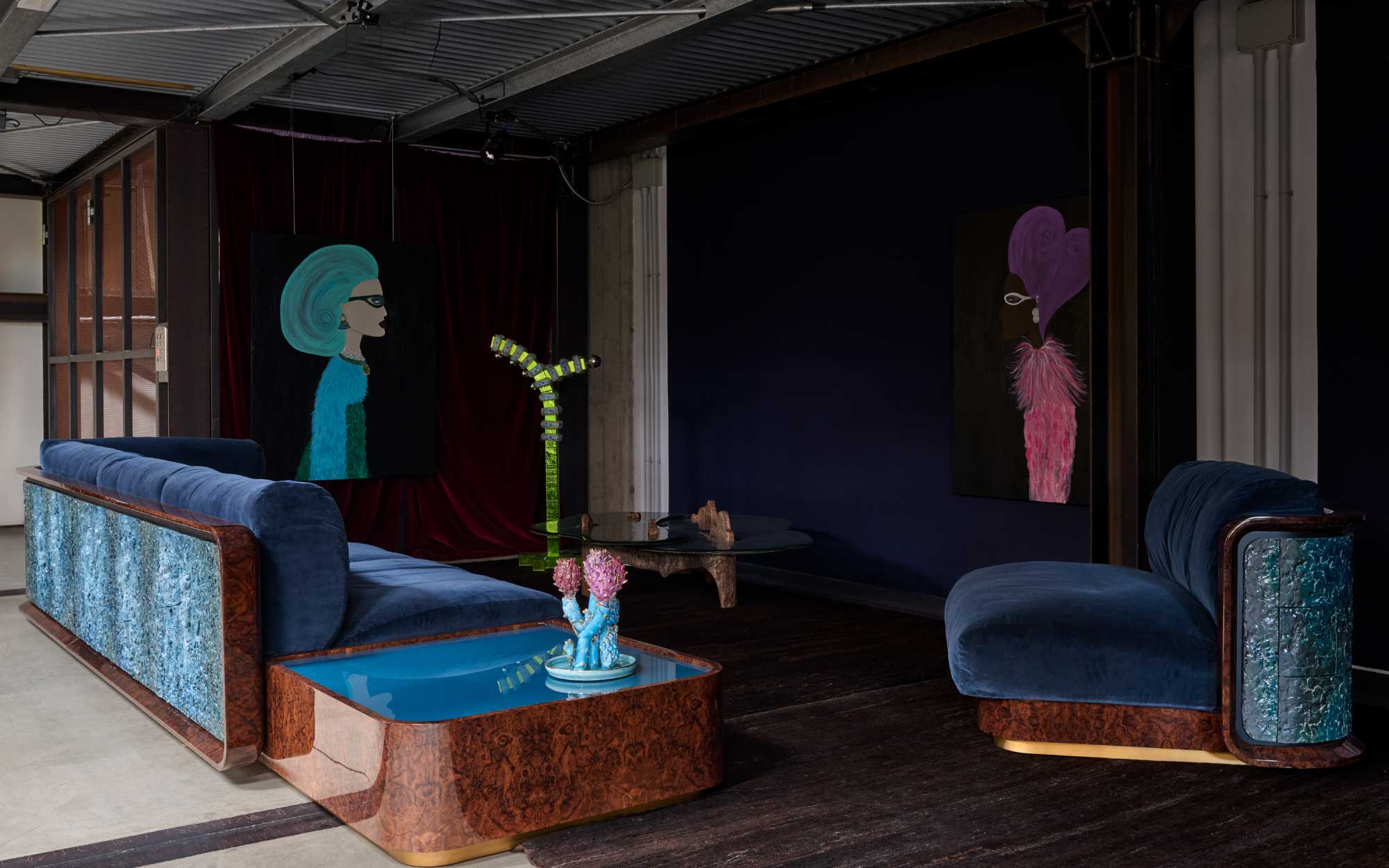
This gently fragmented area remains visually connected through works by Rebecca Moses, whose series Hair: Structure, Ritual, Identity and Private Moments weaves painting into the construction of the exhibition itself, conjuring a sense of intimate lounges for art gazing. Her works slip between portraiture and interior, turning walls into surfaces where identity, gesture, and space have a meet-cute.
The Final Curation
The Penthouse suite is Nina Yashar’s final eclectic composition. It unfolds as a suite of interconnected living zones rather than fixed rooms, where bedroom, lounge, and contemplative corners have no boundaries. Here, design slips into telling tales with contemporary works by Bethan Laura Wood and the Indian debut of Roshaad Shroff, while Venetian glass traditions, vintage references, and Nilufar Edition pieces stage a richly layered performance that feels part dream, part reality. The penthouse behaves like a medley of eras and sensibilities.
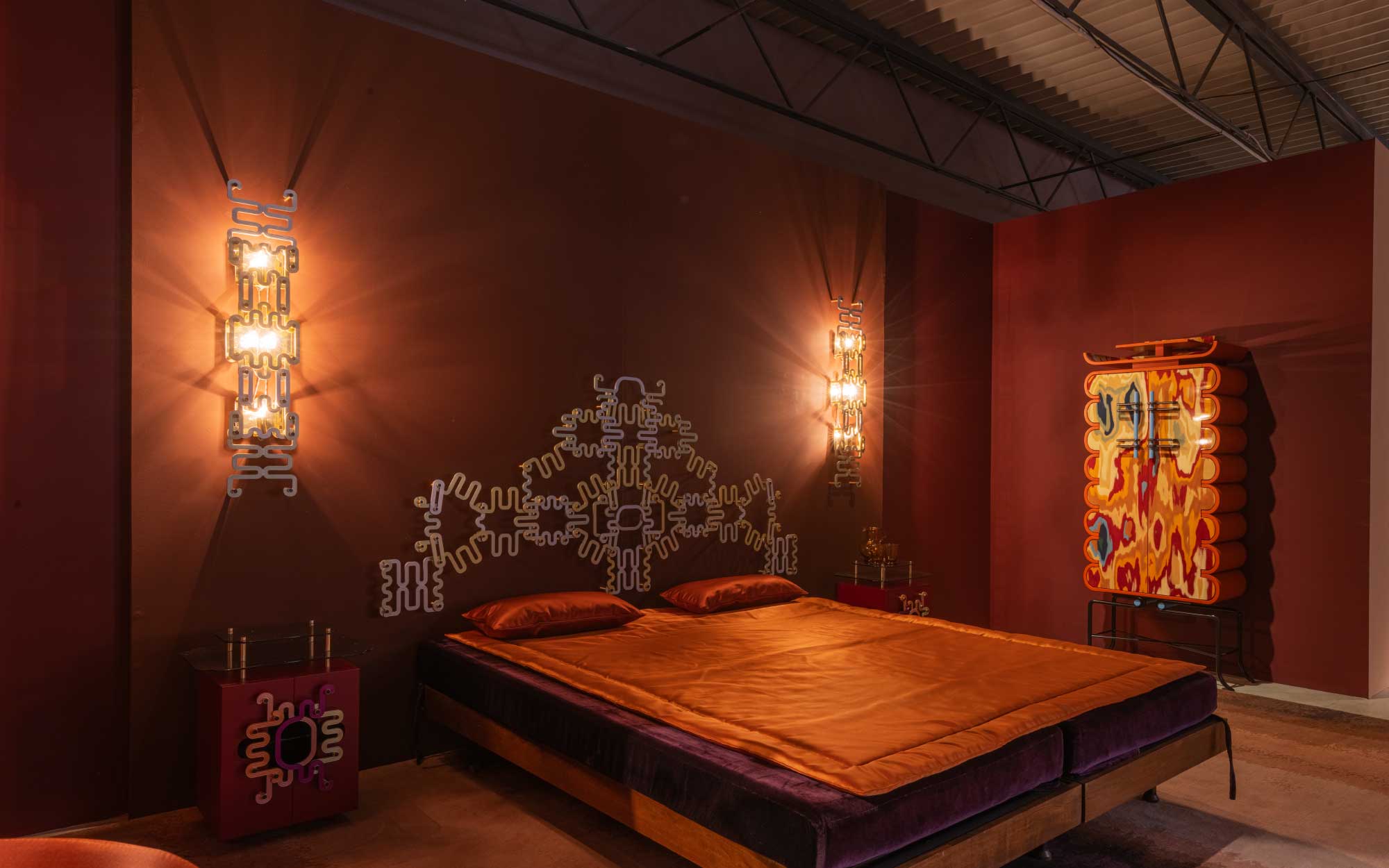
The space deepens with a material-rich constellation of voices: Vikram Goyal brings in sculptural bronze forms that anchor the suite, and Audrey Large introduces digitally warped, tactile objects that feel almost like artefacts from a parallel future. Alongside them, Anestis Michalis adds ceramic works that sit somewhere between ruin and relic, grounding the space in a more primal, textural register. Ultimately, the penthouse is not an ending but an accumulation of designers, geographies, and temporalities.
Beyond, an alfresco courtyard becomes the pause within the relentless haste of Milan Design Week, offering a moment of calm amid an overwhelming landscape of art, objects, and sensorial excess. Here, Italian designer Andrea Mancuso’s ‘Punteggiato’ collection of perforated aluminium tables and chairs reimagines the courtyard through a softened industrial language.
More than an installation, Nilufar Grand Hotel reads as a curatorial proposition where hospitality becomes a language of ideas rather than service. “Each environment is conceived as a story, composed of encounters, sensibilities, and visions that interact with one another. For me, this project represents a natural step in Nilufar’s journey, a way to continue evolving, questioning ourselves, and opening new possibilities without losing the experimental energy that has defined us from the start,” shares Yashar. This radical gesture by Nilufar feels like stepping into a tale already in its telling, half-dreamed, half-built, and entirely real in its atmosphere.