Immersive Retail: These 7 Indian Fashion Houses Have Transformed The In-Store Experience
- 18 Mar '26
- 11:41 am by Beverly Pereira

|
Getting your Trinity Audio player ready...
|
Luxury retail in Mumbai and Delhi shows how the full-bodied brand experience can leave more than just an imprint. Store visits aren’t limited to purchases; these retail spaces become receptacles for immersive brand worlds and inspiring sensory encounters that linger long after the transaction. No longer mere displays for inventory, luxury fashion flagships are embodiments of a brand’s ethos. Beyond offering exclusivity, these experiential environments respond to a clientele that seeks belonging to both a global aesthetic and a culturally anchored phenomenon.
Using textures that invite touch, deeply intentional lighting and sensory-based storytelling through sound, scent and spatial composition, luxury retail spaces of the now are carefully choreographed to transform the act of browsing into immersion. DP curates seven luxury fashion boutiques that immerse visitors into a crafted narrative using bold, theatrical design that resonates well beyond the physical store.
Also read: Why The Gender of Space Matters In The Cities We Build, According To 3 Leading Women Architects
1. Kanika Goyal Label By Aayushi Malik Designs | New Delhi
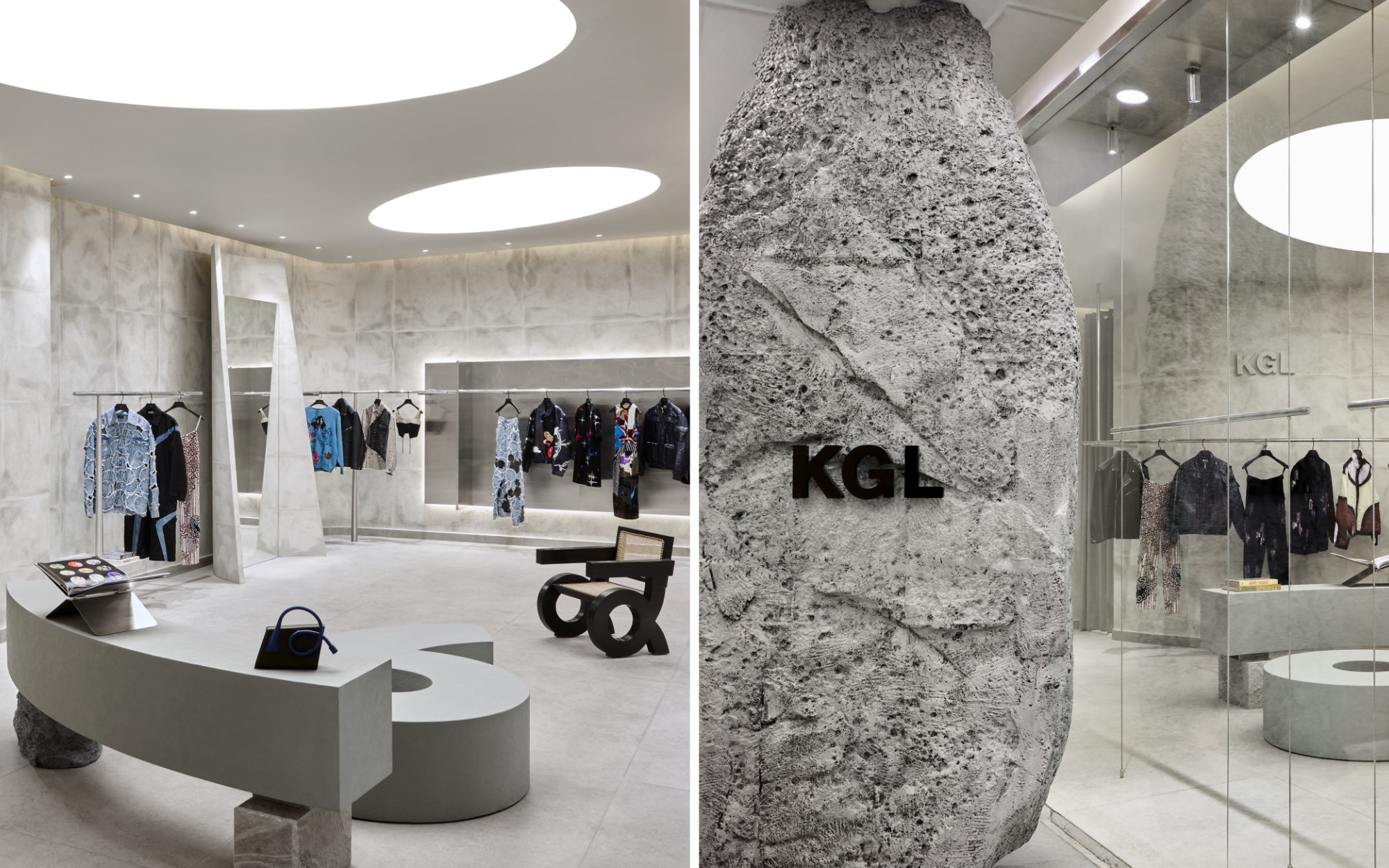
After a decade of shaping a distinctive voice within contemporary Indian fashion, Kanika Goyal Label has stepped into its first dedicated retail address at The Dhan Mill in South Delhi’s Chattarpur neighbourhood. Before all else, the designer knew that she wanted to translate the label’s layered design philosophy into a physical environment that extends well beyond garments on racks. Goyal worked with designer Aayushi Malik to bring to life a store that draws from a visual language that blends architecture, material and experience. The detailed approach extends right up to its context-driven location that encourages curiosity, conversation and discovery. Inside KGL, concrete greys and warm neutral tones carve out a raw yet inviting environment to display ready-to-wear collections, accessories and limited-edition capsules. Surfaces shift between smooth planes and rock-like textures, while stainless-steel fixtures hark back to a quiet industrial precision. The guiding idea revolves around the paradoxical concept of balance between opposing energies.
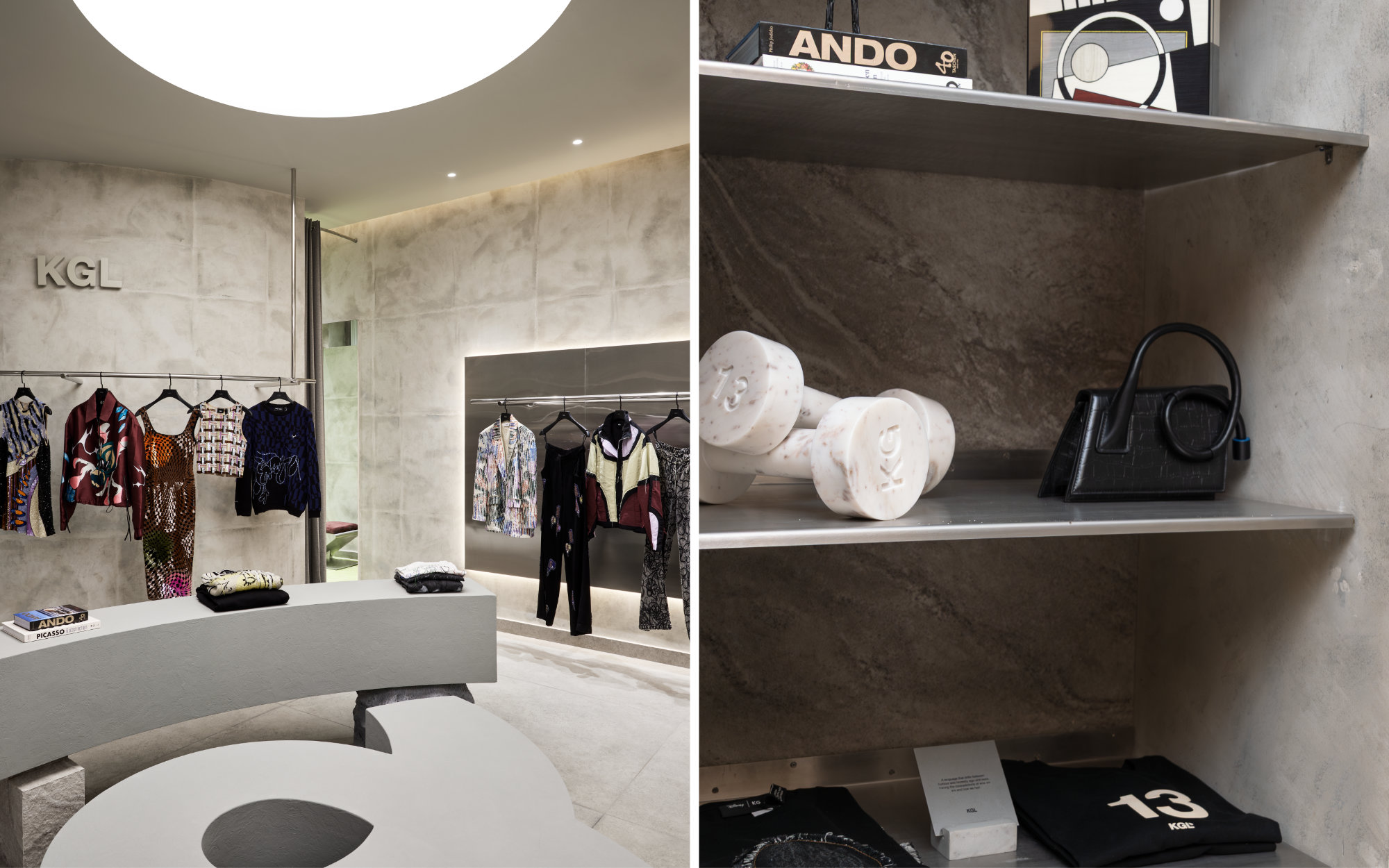
“The debut KGL store is defined by its material restraint and architectural clarity. A palette of greys, raw textures and stainless steel creates a calm backdrop, while feature elements like the KGL signage rock, sculpted stainless-steel counter and angular mirrors introduce a subtle edginess within a largely brutalist language. This allows the brand’s bold, narrative-driven garments to remain the visual focal point,” Malik explains. Fluid shelving softens the otherwise structured geometry of angular mirrors. This echoes the brand’s play between spontaneity and restraint. Throughout the store, motifs reference deeper narratives associated with KGL. Small but impactful details like door handles, hardware and even elements of the staff uniforms carry fragments of the brand’s identity, including the Gurmukhi character that forms part of the KGL logo and the number thirteen, a personal reference for the designer tied to the Punjabi word tera meaning “yours.”
2. Chorus By Karishma Swali And Chorus Design Collective | Mumbai
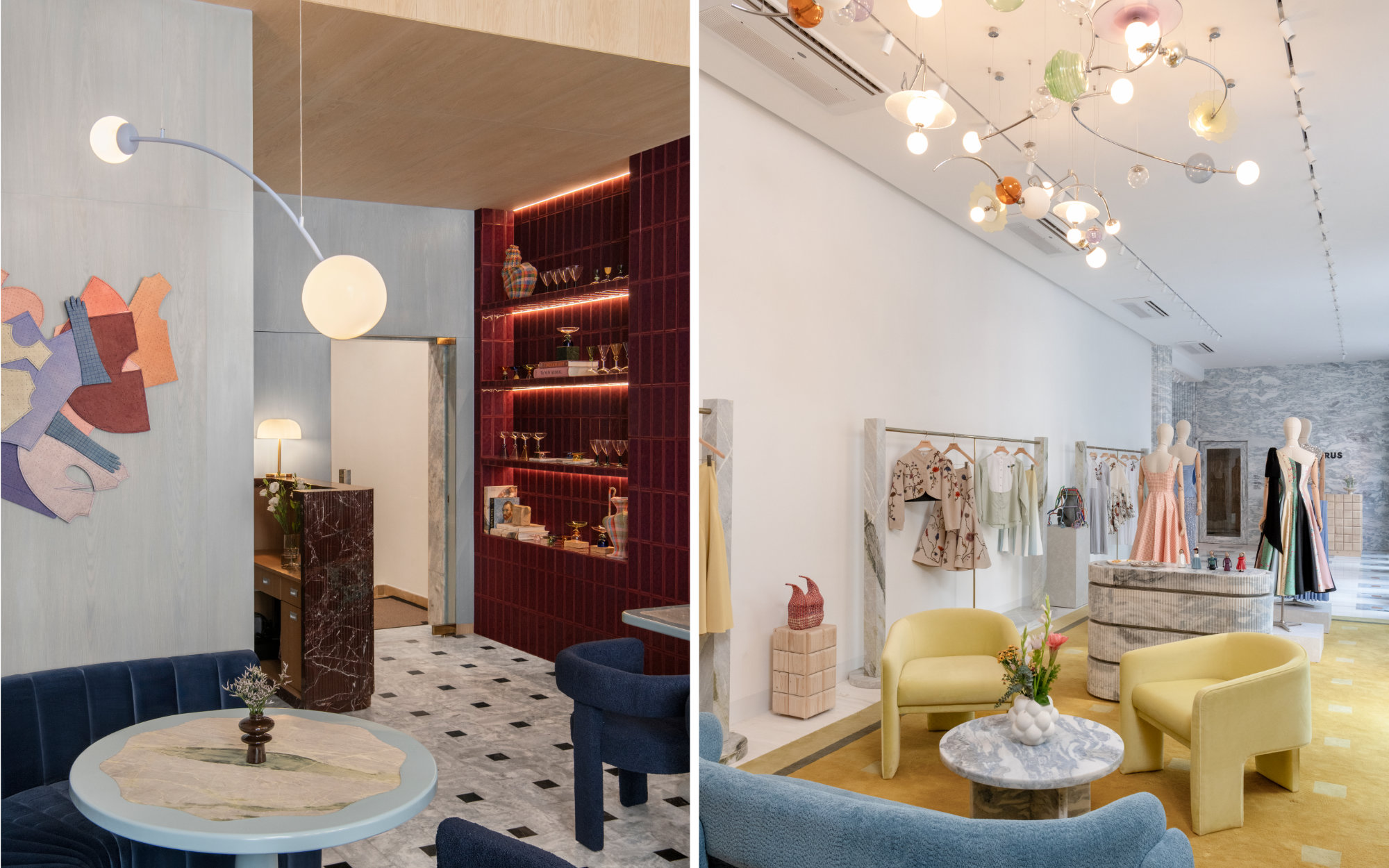
In Mumbai’s storied arts precinct of Kala Ghoda, the Chorus flagship by Karishma Swali and Chanakya International reveals itself less as a store and more as a slow unfolding of craft and human touch. Designed by Chorus’ co-founder and creative director Swali with the Chorus Design Collective, the three-story flagship functions as both an atelier and an art gallery that blurs boundaries between boutique, café and lifestyle hub. Natural stone, woven skins, monumental embroidered works, and warm timber are not embellished afterthoughts. Instead, craft resurfaces almost as if it were woven into the very architecture of the store. On the ground floor, Chorus Ready-to-Wear crops up amid a wash of cloudy blue marble offset by ochre stone and buttery yellow furniture, while objects from Chorus Concept, crafted from raffia, stone and ceramic, sit alongside contemporary, hand-crafted jewellery. “The palette came together intuitively, led by the materials themselves. Taking from the elemental energies of earth, light, air and water, the space is conceived as a study in balance, reflecting a contemporary sensibility grounded in natural rhythm and human touch,” says Swali.
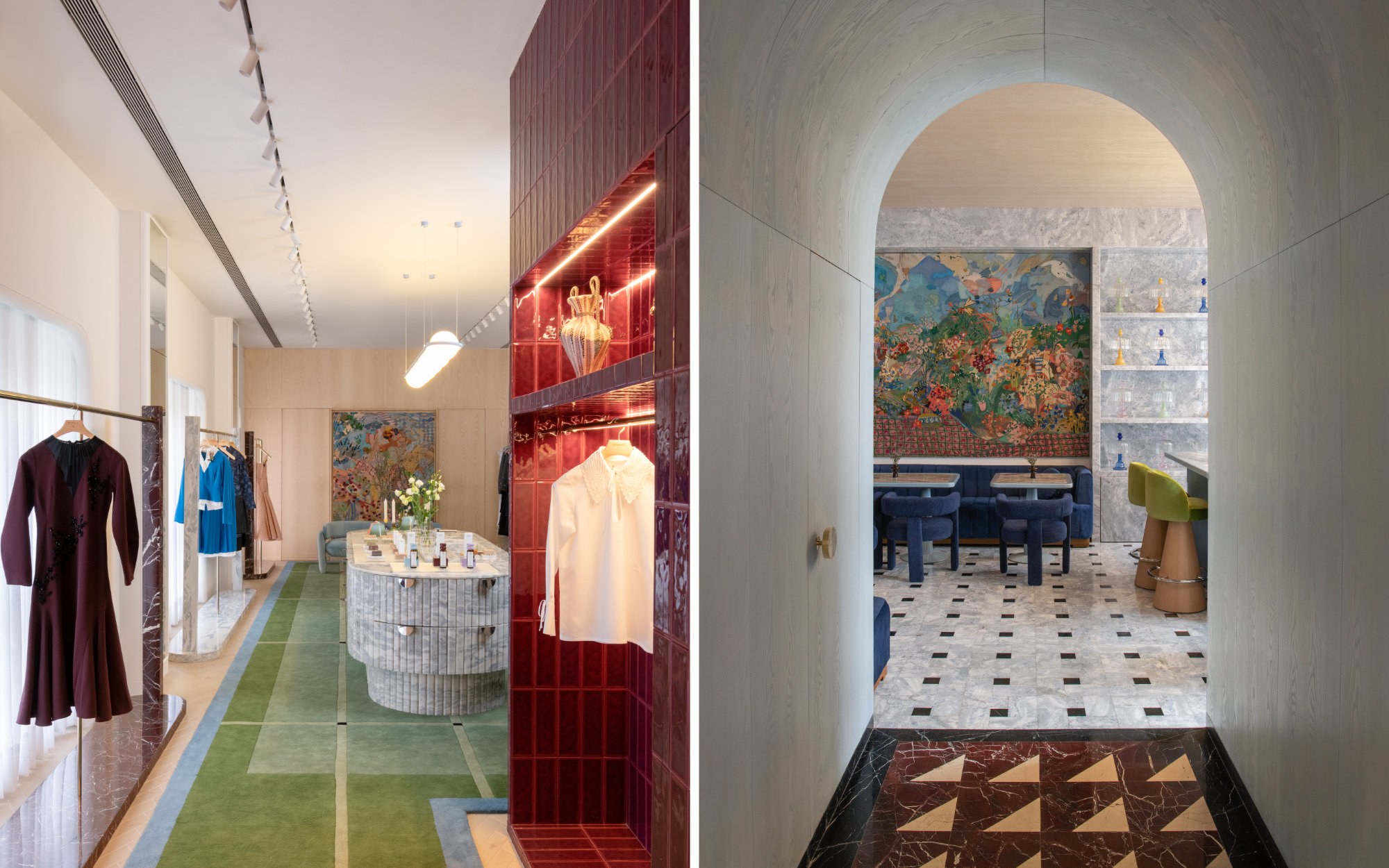
Moving up to the first floor, one experiences a shift from elemental to intimate. Draped on marble railings, garments and accessories take on the quiet contemplative quality of sculptural art as fluted marble tables become a stage for Chorus Wellness products styled like still-life compositions. Ceramic burgundy walls temper cooler surfaces, while yet another wall plays home to ‘Flowers in the Forest V’, a heavily textured textile composition crafted from organic cotton, jute, silk and linen by the Chorus Collective. Further upstairs, abundant natural light spills into Chorus Café with even more monumental textile pieces and a reading room brimming with art and design reads. Not far, an archway leads to Chorus Edition, where bespoke garments encourage even more tactile engagement. For Swali, the shift from Studio Moonray to Chorus came as a natural progression that transforms retail into a ritual deeply connected to craft.
Also read: Move Over, Birkin: The Coffee Table Is The New ‘It Piece’ To Invest In
3. Dhruv Kapoor Store By Dhruv Kapoor | New Delhi
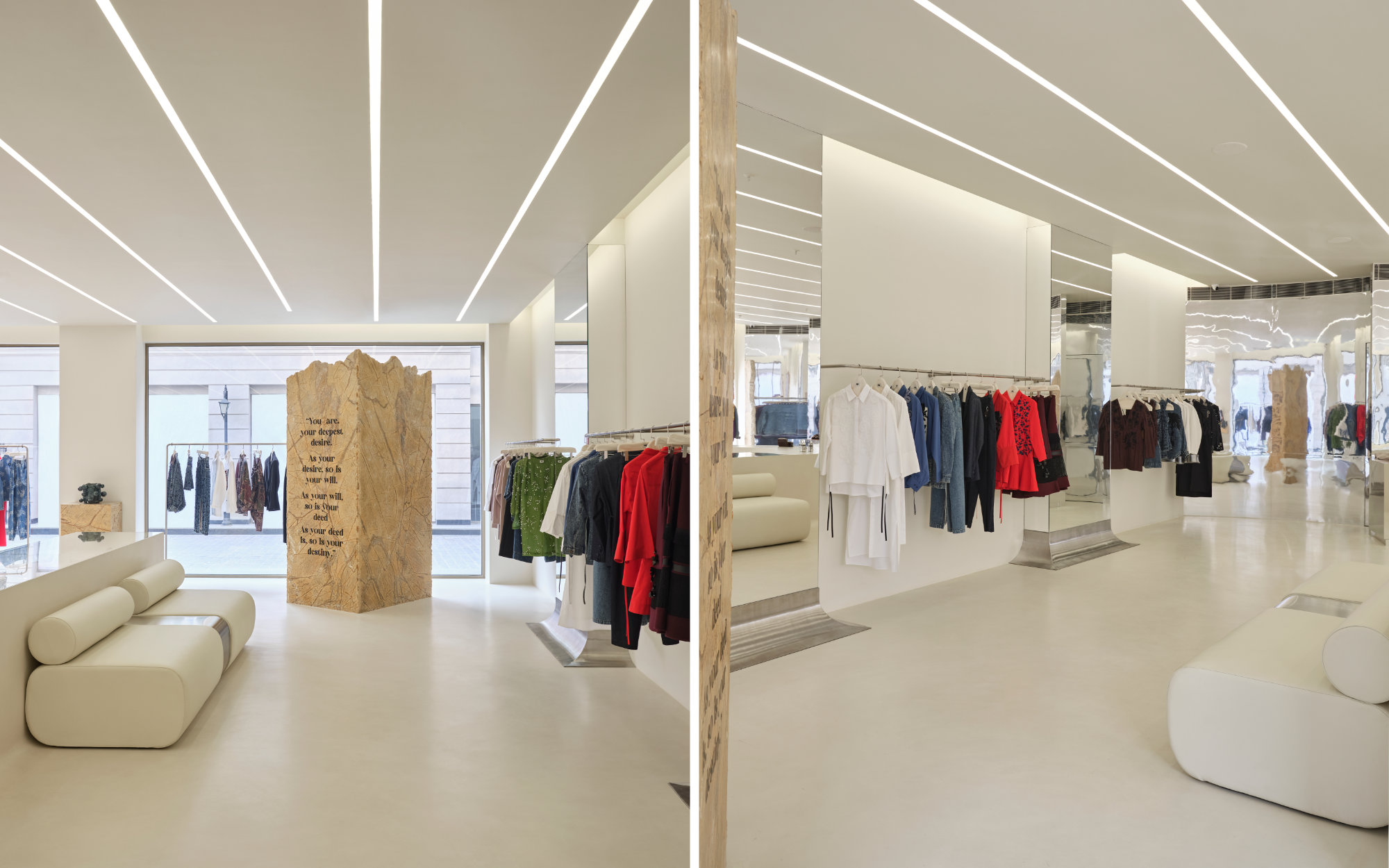
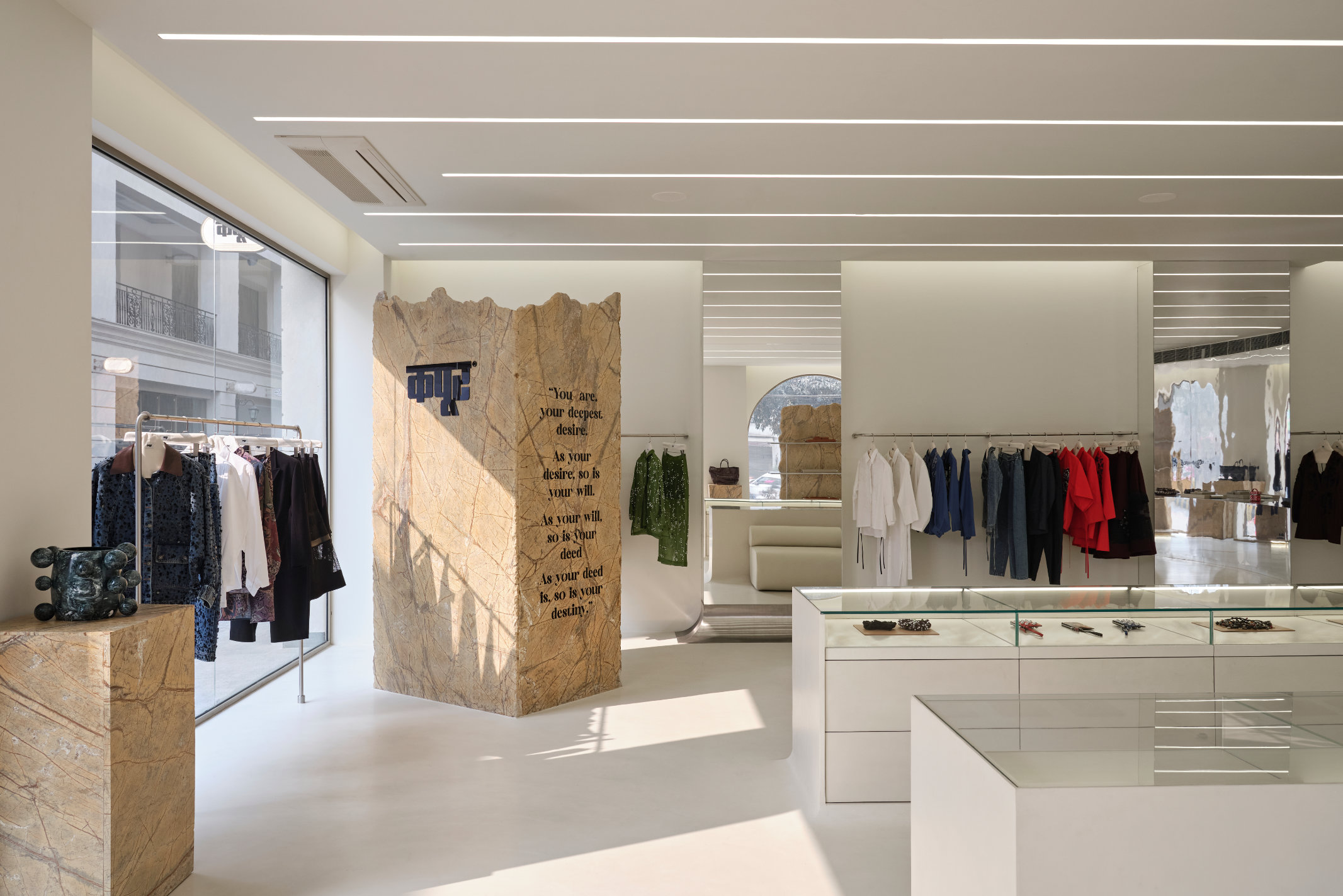
At Delhi’s The Corridors, the retail experience is anything but conventional. Wide walkways, gallery-like storefronts and meticulously zoned stores permit each brand to communicate its own voice with clarity. It’s no wonder then that Dhruv Kapoor, a brand that emphasises identity and self-expression, chose this ultra-premium shopping destination to mark its foray into the retail space. Conceived as a threshold between moments, the store mirrors the tension that defines the label—streetwear but polished. Memory meets modernity, structure flirts with soft monumental forms, and street-inflected energy steers clear of conventional retail codes. Designed by Kapoor himself, the store draws on an overarching palette of materials that seemingly flow into one another, including micro-concrete flooring, brushed metal, raw marble surfaces, and glass-and-mirror-finish walls, creating a sense of continuity. Seamless transitions and rounded edges feature throughout the store, while light is calibrated with precision to transform the display of garments into a layered mesh of thoughts, concepts, and ideas. “The continuity is what resonates most with me. It reflects how the brand operates between polarities without forcing them apart,” says Kapoor.
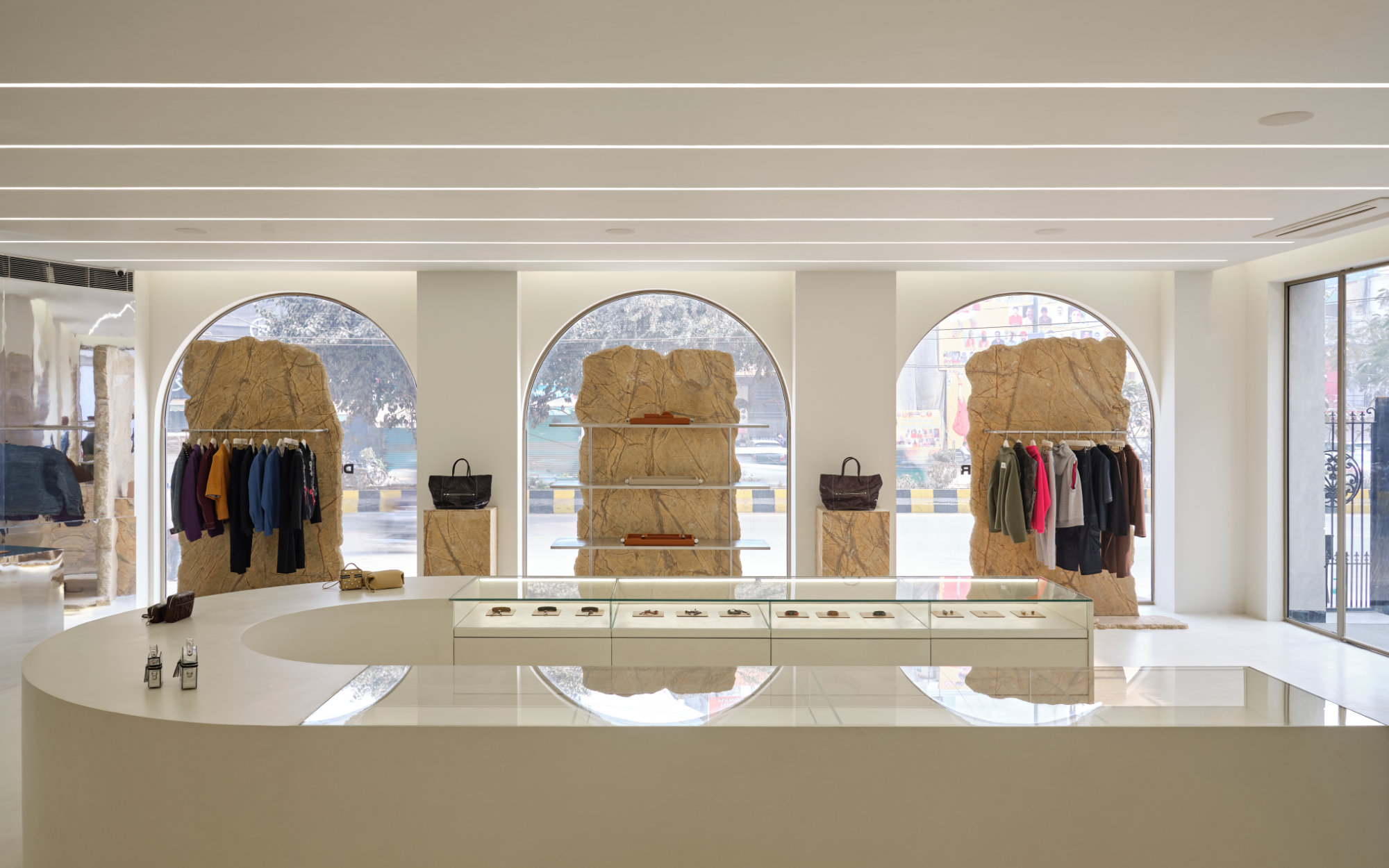
The arched window façade, composed of natural stone, forms the base language with monolithic elements serving as quiet anchors. “It is solid, tactile and present without trying too hard. It was important that the exterior did not scream for attention but instead invited curiosity. It reflects how I think about clothes as well. Confidence does not always need volume; sometimes, it’s about weight and presence,” says the designer. A bespoke fragrance lingers lightly in the air, while Kapoor’s own playlist, engineered to hum at a specific frequency, sets the pace for an unhurried shopping experience. “The rhythm subtly influences how you move throughout the space. The tempo sits at a range that maintains awareness and presence without pushing intensity,” Kapoor explains.
4. Papa Don’t Preach By DesignHex | New Delhi
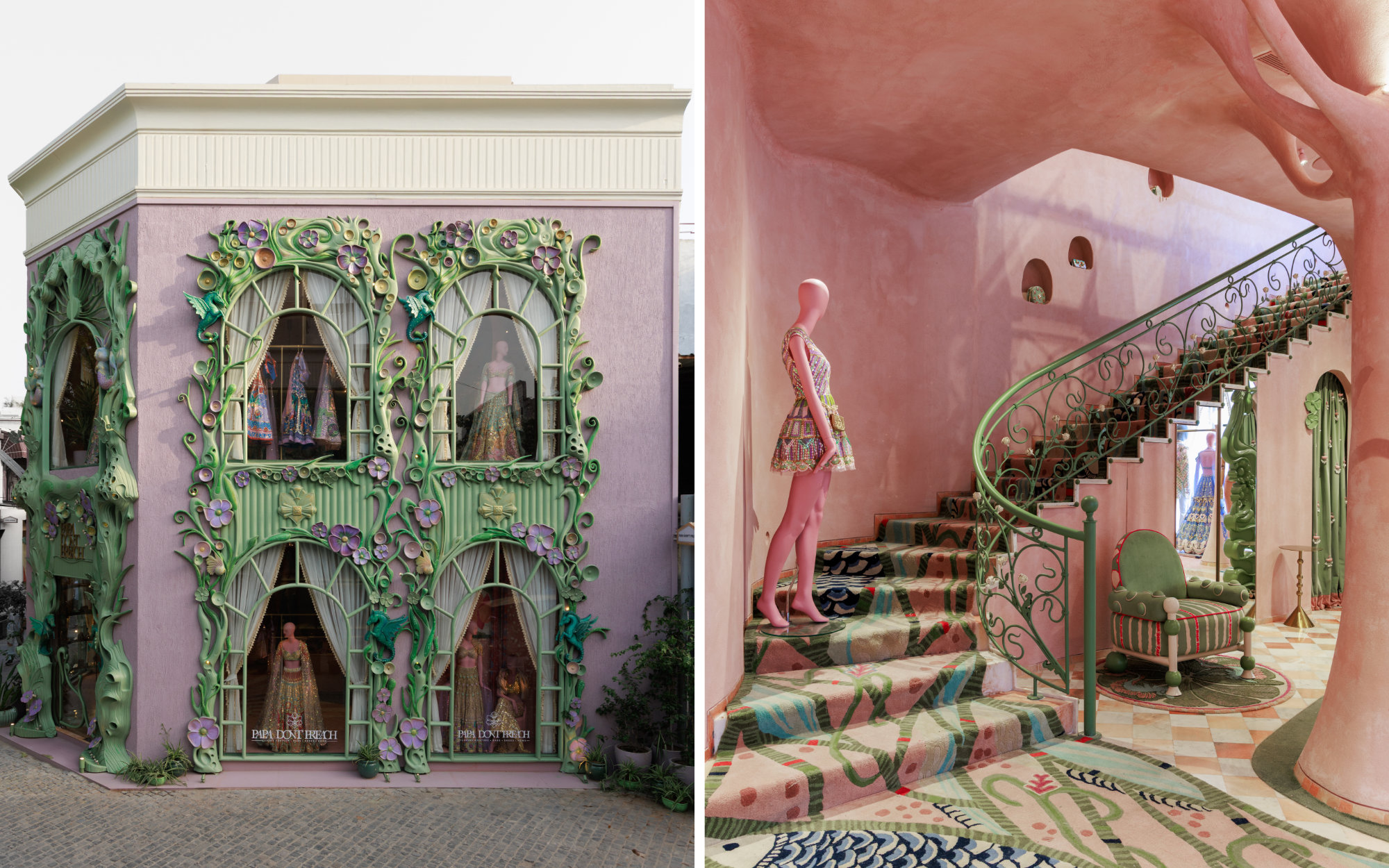
At Delhi’s ever-evolving The Dhan Mill, former industrial sheds house some of the capital’s most design-forward fashion boutiques. For its flagship store, the pastel-maximalist design house Papa Don’t Preach by Shubika frames every embellished garment in a fantastical spatial experience. Part theatre, part atelier, part dreamscape, the 2,100 sq ft store was designed by DesignHex. The façade itself is an arresting 3D mesh of intricately hand-carved and CNC-cut wooden creatures inspired by an underwater fable. From fish and their fins to dreamy marine forms, the gentle lavender-and-sage sculptural storefront exudes a sense of depth at the very outset. A distinctive softness and luminosity that’s hard to miss is truly reflective of the brand’s affinity for unapologetic glamour and its indisputable status as a sentinel of style. “Rather than conceiving a conventional boutique, we envisioned the Papa Don’t Preach Store as an immersive reverie at their largest flagship. Fluid contours, sumptuous textures, and moments of quiet revelation allow each piece to be discovered rather than displayed,” says Shimona Bhansali, chief designer and founder of DesignHex.
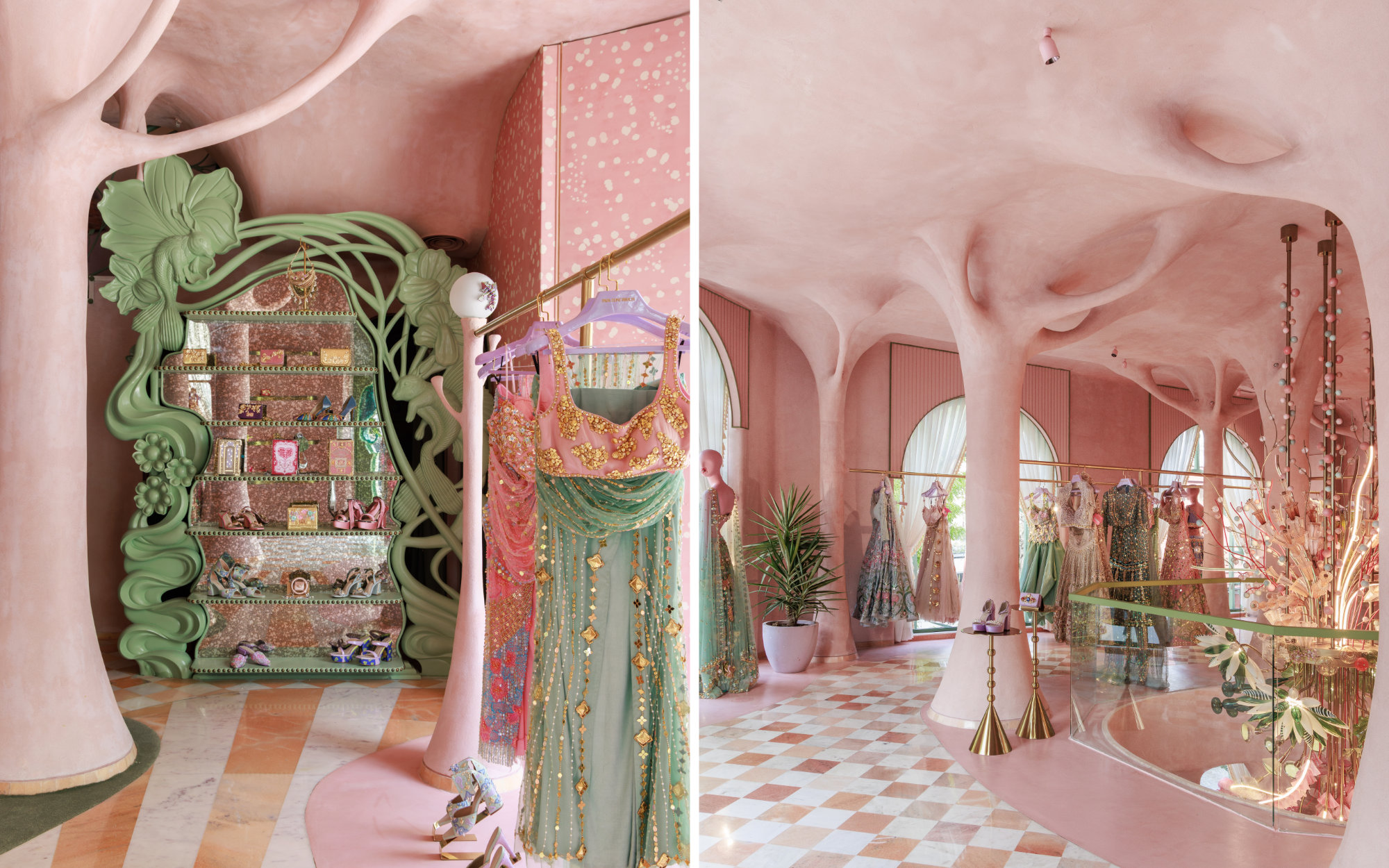
Stepping inside, a quieter palette of blush pinks and smoky pastels beckons, mirroring the brand’s fantasy-tinged narrative. Garments shimmer under tree-like structural columns that appear to branch out in this light-filled cocoon. Underfoot, a patchwork of white and pink marble intertwines with micro-concrete surfaces for a subtle contrast. Chandeliers by Glass Forest, rugs by House of Rugs and furniture by the Hex Gallery dress up this flagship in a manner suited exclusively to the space, “The spatial cadence shifts between expansiveness and cocooned intimacy, inviting curiosity and connection. What endures is not a retail impression, but a lingering chronicle,” says Bhansali who accomplished a project of this scale and complexity within two months.
Also read: The Global Indian Edit: 3 NYC Architects Who Are Shaping The City’s Skyline
5. Gully Labs By The Melange Studio | New Delhi
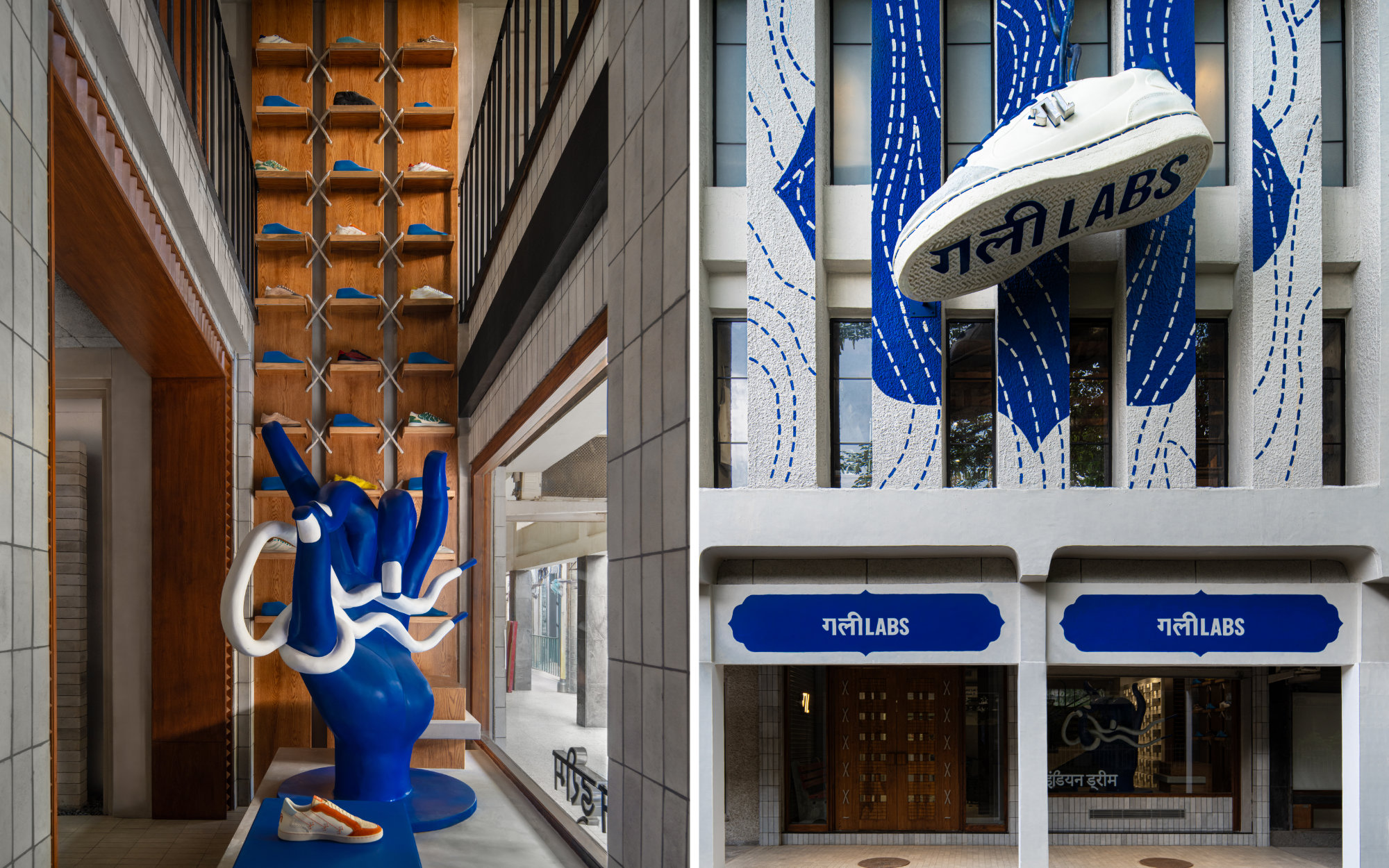
At Delhi’s Panscheel Park, a giant sneaker hovers over Gully Labs’ debut standalone store. Designed by The Melange Studio, the three-story retail space channels the pulse of Indian street culture into a spatial narrative that unfolds at the turn of every corner. A physical embodiment of the philosophy built around sneakers, streetwear and Indian craft, the Gully Labs store draws from the energy of the “gully” as it were through materiality, detail and experience. Rooted in the Indian streetscape, the materiality feels all too familiar—Lakhori brick, handmade tiles, concrete blocks, stone slabs and wood evoke everyday urban India. Through the roughness of it all, a polished contemporary edge emerges as one soaks in the strategically blocked brand colours and recurring grid motif. “At our studio, every project begins with a context-driven process. We spend a lot of time understanding what the brand truly stands for and what it wants to communicate,” says Dhruv DV, co-founder of The Melange Studio, who kept returning to the raw vibrancy of Indian street culture and the unfiltered rhythm of the gully. “The textures, the layering and the spatial gestures were imagined as an interpretation of that lived, everyday dynamism.”
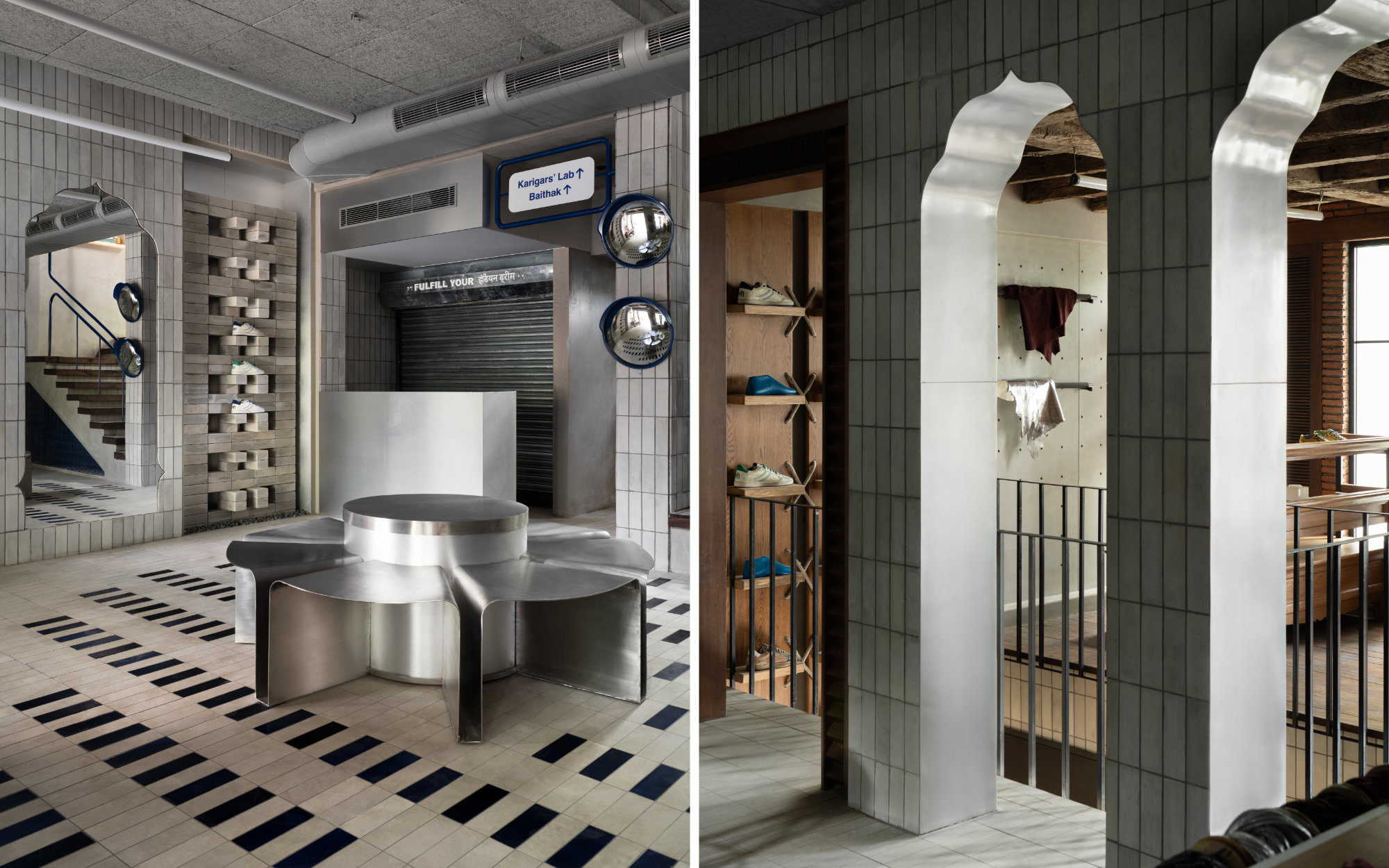
Mirrors, benches, manhole covers and letter boxes across the store simultaneously echo the daily language of the streets. The main retail space sprawls across the ground floor, where sneakers and apparel are positioned against a backdrop of corrugated shutters, grey brick surfaces and jharokha-inspired portals. “At the same time, I didn’t want the space to feel nostalgic in a literal sense. The architecture had to be raw and rooted, yet contemporary. We blended Indian craft into the environment in a way that feels integral rather than ornamental, allowing the space to breathe authenticity while still feeling progressive,” says the designer. The mood shifts to an experiential setting on the first floor with its shoe customisation studio and coffee counter. Not far, a display that reveals the artisanal processes behind sneaker production is set within a raw timber-wrapped shoe-making museum. Eventually, the journey culminates at the second level, where a Baithak-style space designed as a flexible cultural hub becomes a space for collaboration and conversation.
6. Maison Rahul Mishra By Rooshad Shroff | Mumbai
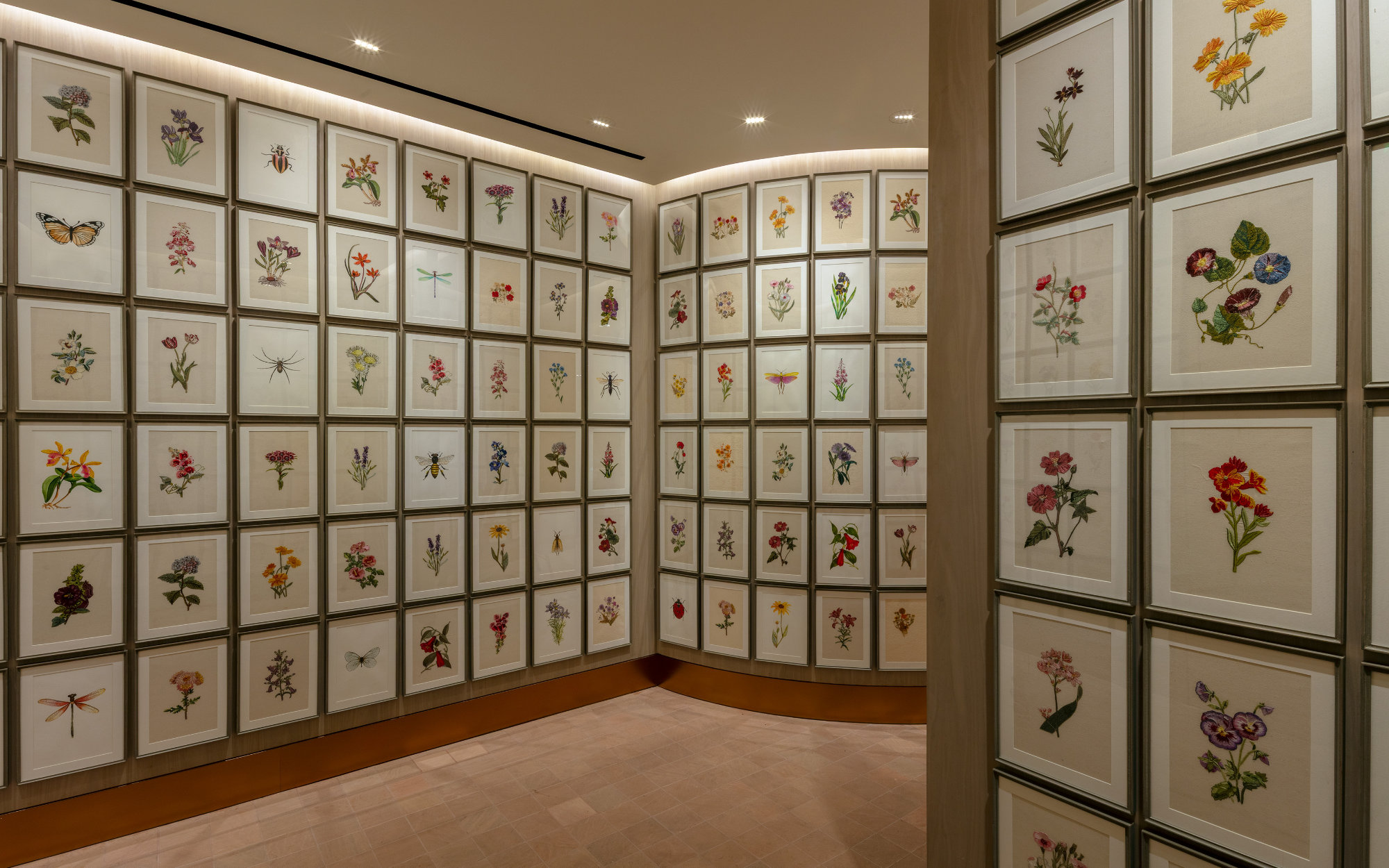
Set in Mumbai’s art and cultural district of Kala Ghoda, Rahul Mishra’s largest flagship to date translates the couturier’s poetic design language into spatial form. Here, craft, couture and architecture gently unfold in a mindfully designed sequence choreographed by architect Rooshad Shroff. “The store couldn’t simply be a backdrop for garments—it needed to become a physical extension of his universe, one that immerses visitors in the rich tapestry of embroidery, storytelling and craftsmanship that defines his work,” says Shroff. Built as a physical extension of the world that shapes Mishra’s garments—nature, storytelling and meticulous hand embroidery—the immersive journey begins with restraint. Almost like a preface to the act of encountering iconic collections, the opening chamber, swathed in silence, displays sketches, muslin swatches and fragments of botanical embroidery.
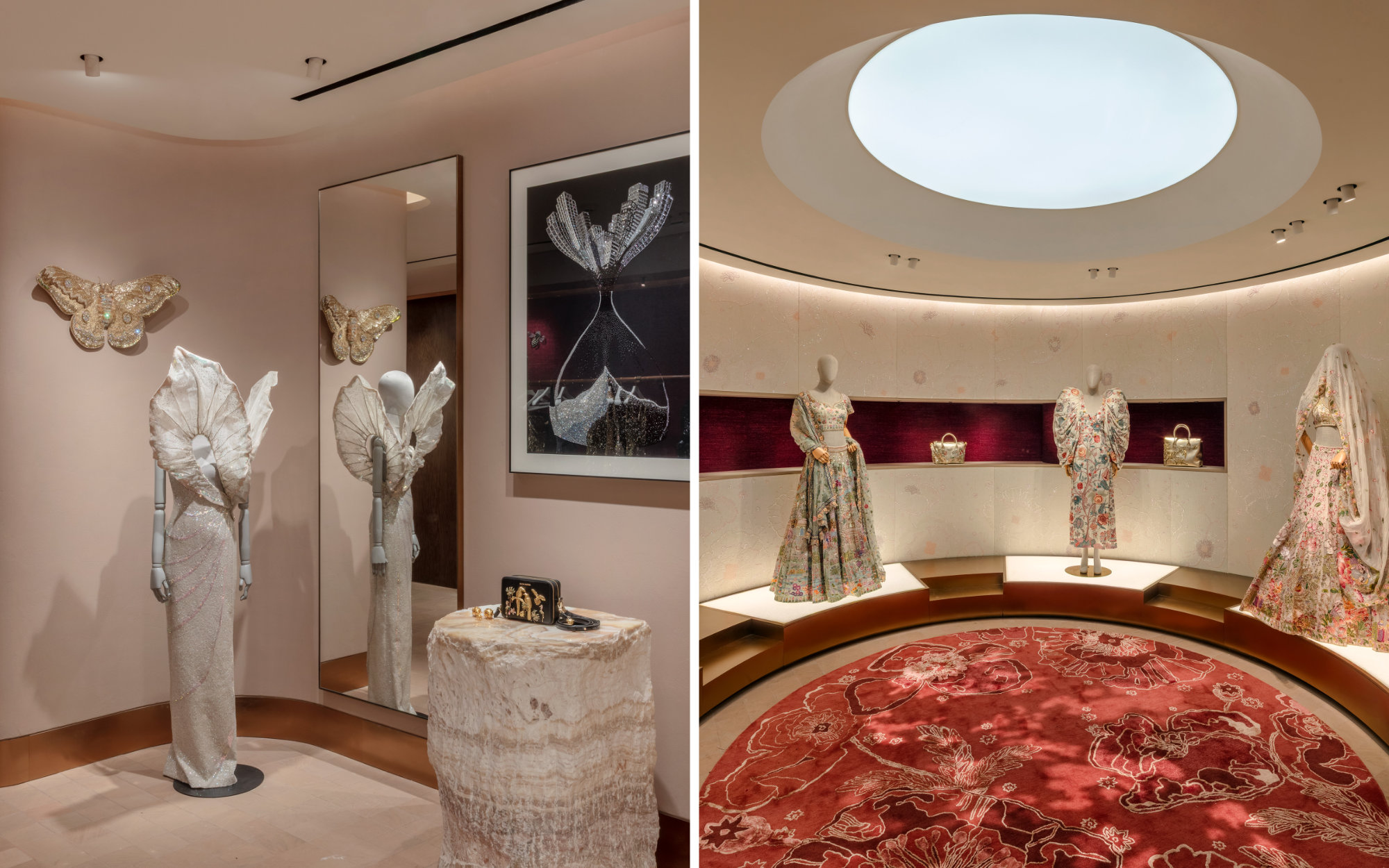
The 7,500 sq ft store gradually unfolds as each room reveals new layers of Mishra’s visual vocabulary. Set in an intimate and contemplative atmosphere, mannequins take on the quality of sculptural figures, and embroidered panels and textile surfaces become works of art. From embroidery-rich walls and wood marquetry to handwoven carpets, bespoke fixtures and etched marble lighting, materials echo the design house’s meticulous craft as motifs like botanical landscapes, birds and insects find expression on walls, floors and objects. In the soaring chamber, a flock of hand-crafted metal birds appears suspended mid-flight, their movement echoing through intricate marquetry motifs across the walls. “It was deeply moving to witness how Rooshad looked back at our work, picked up subtle, often overlooked elements from past collections, and reimagined them into the language of architecture and interiors. The store doesn’t just showcase garments—it extends the emotion, the thought, and the craft that shaped them,” says Mishra.
Also read: DP Curates: 5 Spectacular Stationery Objects To Reset Your Desk For 2026
7. Shantnu Nikhil By Essentia Home | New Delhi
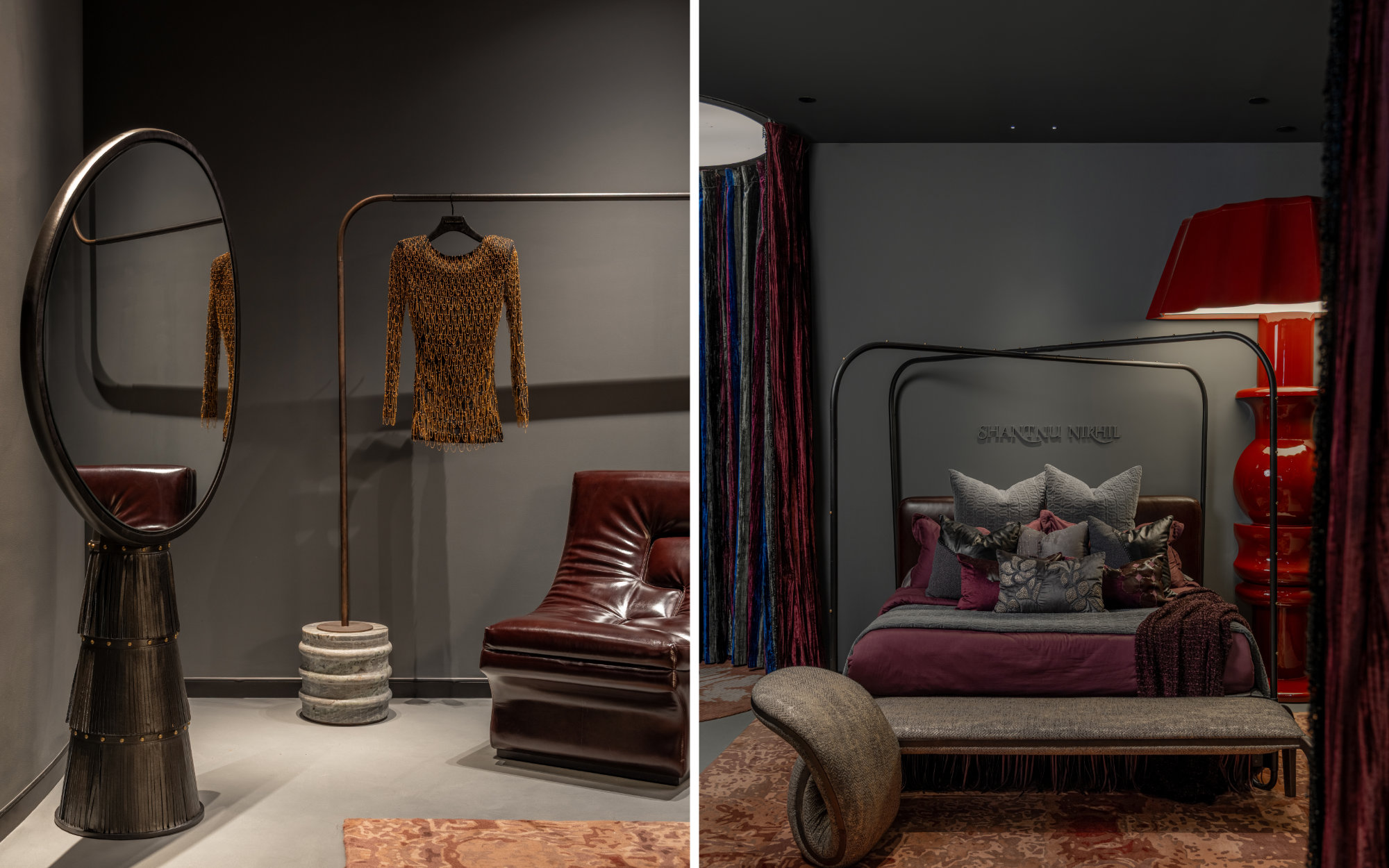
For their debut womenswear flagship in Delhi, Shantnu & Nikhil arrive at The Dhan Mill as an intimate couture suite where glamour, structure and sensuality quietly shape the environment behind a rich red jaspar stone facade. Conceived in collaboration with Essentia Home, the new address signals a deliberate shift in focus towards the modern, confident and empowered woman who inhabits a private world of her own. Less boutique and more boudoir, the ambience feels cinematic yet familiar. Central to the store, a bed and an expansive wardrobe bring in an unexpected gesture associated with the privacy of home, allowing garments to be experienced in a setting that feels deeply personal.
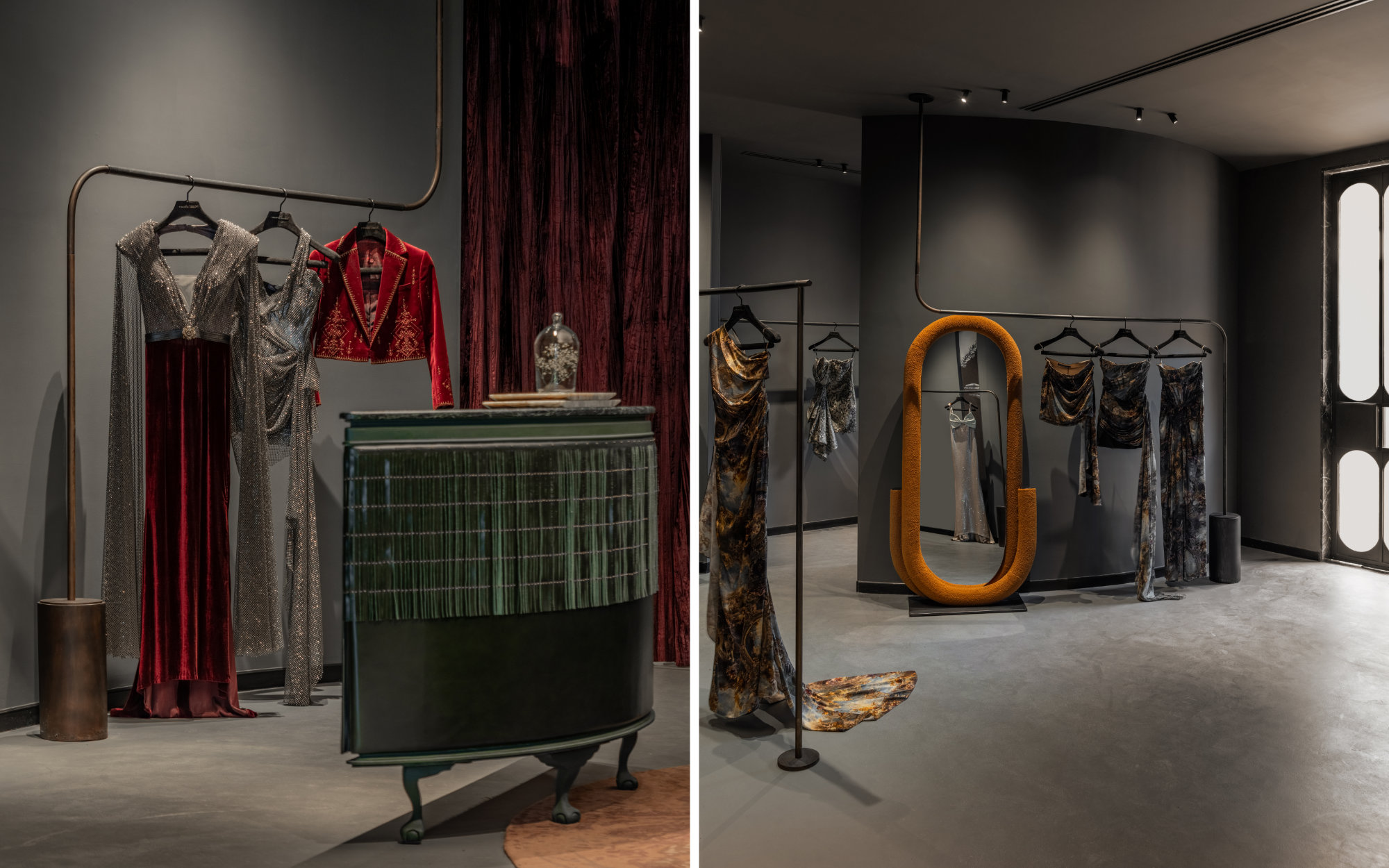
Materiality was approached as an extension of the design house’s sartorial vocabulary. “Materiality played a crucial role in expressing the shared design sensibilities of Essentia Home and Shantnu & Nikhil,” says Monica Chawla of Essentia Homes. “The palette combines metal, leather and richly textured stone, layered with intricate detailing that mirrors the craftsmanship seen in the brand’s garments.” Sculptural furniture, stone sculptures used as accessory displays, tactile surfaces and layered textures shape the spatial design even as they mirror the contrasts that often underscore the label’s collections. A palette of immersive tones wraps the suite, heightening the sense of quiet glamour, while light meets shadow play, fluidity meets structure, and strength meets sensuality with practised ease. “The lighting was designed to enhance mood rather than simply illuminate products. Sculptural lamps and a dim, layered lighting strategy create a warm, intimate ambience that supports the boudoir concept,” Chawla explains, adding that the lighting highlights textures, curves and materials.