#DPExclusive: This Lake-facing Bengaluru Abode Cradles Quiet Luxury And New Parenthood
At once calm and deeply considered, this 3,250 sq ft Bengaluru home by The Design Collaborative translates emotional needs into spatial efficacy, yielding a sanctuary for a growing family.
- 2 Feb '26
- 11:58 am by Mehar Deep Kaur

Homes, much like lives, are rarely static. They expand, soften, and shift with the seasons we step into. For a young couple in North Bengaluru, preparing to welcome their first child, the idea of home was suspended between care and craft. It needed to hold space for new rituals and the tender comforts that cradle life’s earliest chapters. Conceived by The Design Collaborative, Casa Ecru emerges from this tender in-between: a first home shaped by warmth, restraint, and the gentle promise of growth.
Overlooking a placid lake, the 3,250-square-foot apartment unfurls like a cocoon rather than a showcase. The directive, as principal architect Ramitha Anand shares, came with an emotional undercurrent. “They were stepping into two new roles at once—homeowners and parents. Their abode needed to feel calm and nurturing, without losing its pragmatism.” Equally, it needed to feel authored—bespoke in character rather than generic in expression. Ergo, the designers’ approach was intuitive: to layer minimalism with warmth and functionality with details, crafting a space that could buttress both everyday living and personal tastes. The spaces were imagined to move fluidly from one to the next, without any rigidity.
Also Read: How India’s Top Architects Are Shaping Community Spaces
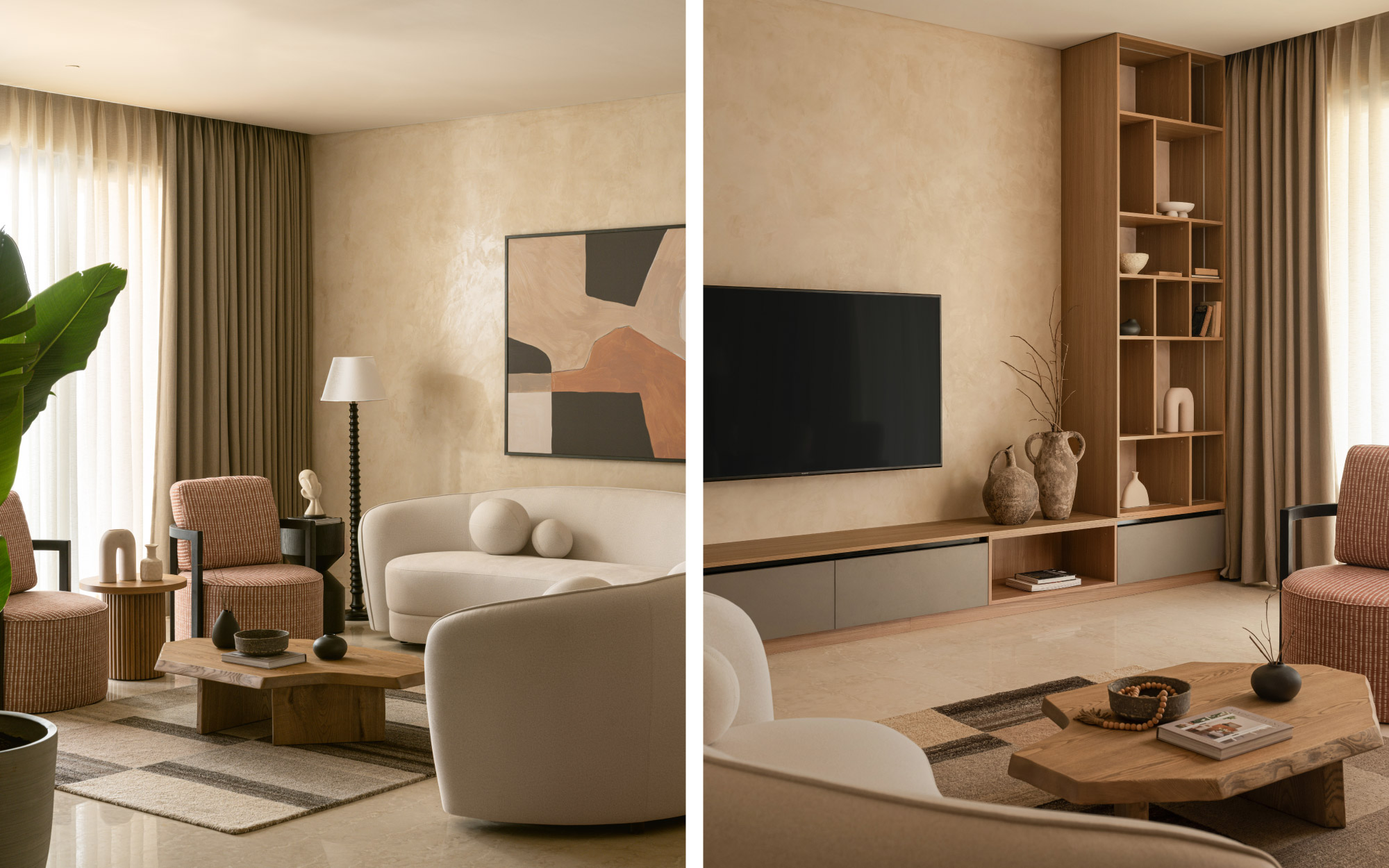
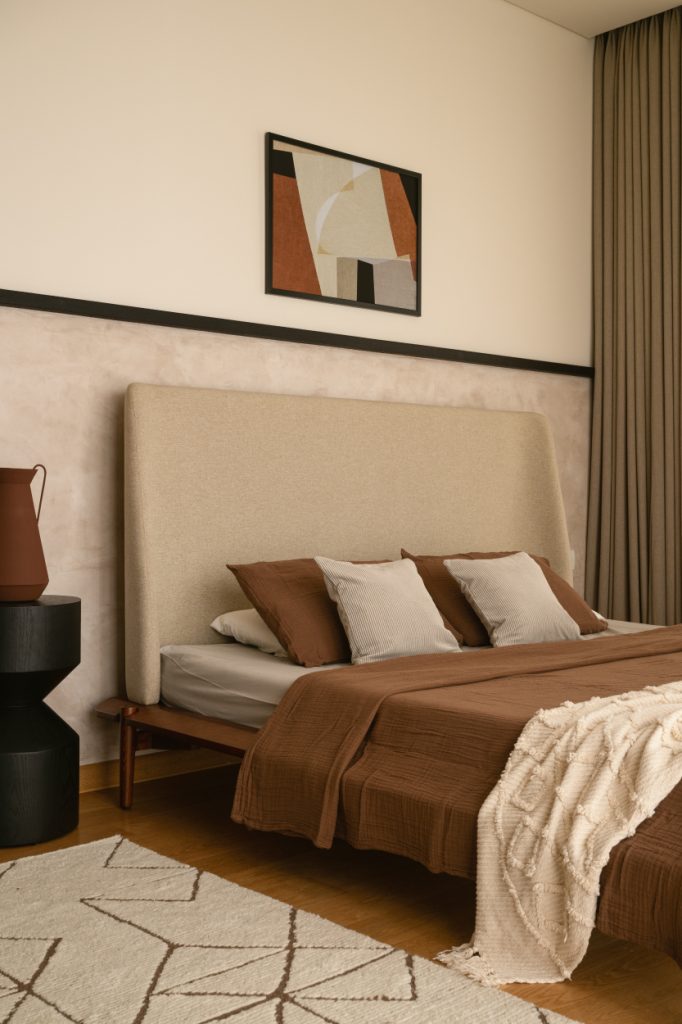
Materially, Casa Ecru is swathed in warm neutrals—beiges, earthy tones, soft rust accents—with black used sparingly to define edges. Lime-washed walls, wood, textured fabrics, and patterned tiles enliven this composition. “We limited the palette on purpose,” Anand explains. “That allowed texture and craftsmanship to come forward.”
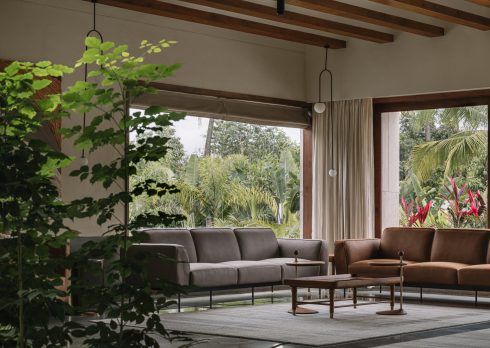
Arrival is deliberately discreet. A private lift lobby, paired with a compact powder room, acts as a buffer before the home opens into the living space. There is no dramatic reveal, no performative foyer. Instead, the living room unfolds with a measured generosity, extending towards a large deck that draws in light and the lake beyond. The boundary between inside and outside is blurred, allowing the view to become part of the room rather than a framed backdrop.
Also Read: Kanso House Mumbai: Minimal and Soulful Style
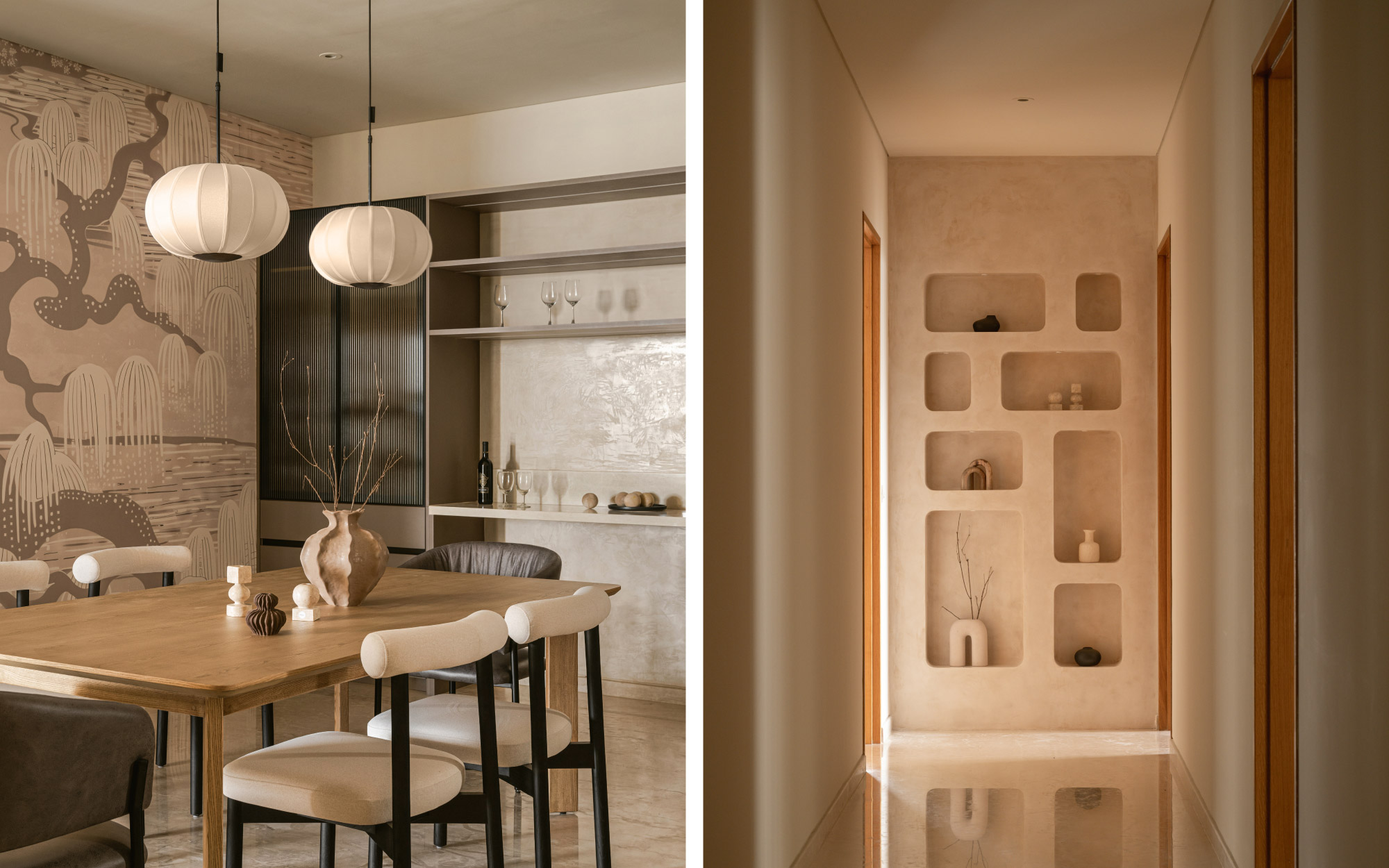
A linear passage runs along the length of the home, functioning as its primary spine. To one side sits the dining area, where layered lighting elevates the atmosphere. Anchored by a generously proportioned stone dining table, the space is designed to transition effortlessly from everyday meals to intimate evening gatherings. “This was one of my favourite spaces to design,” Anand admits. “It had to shift moods without ever feeling heavy.”
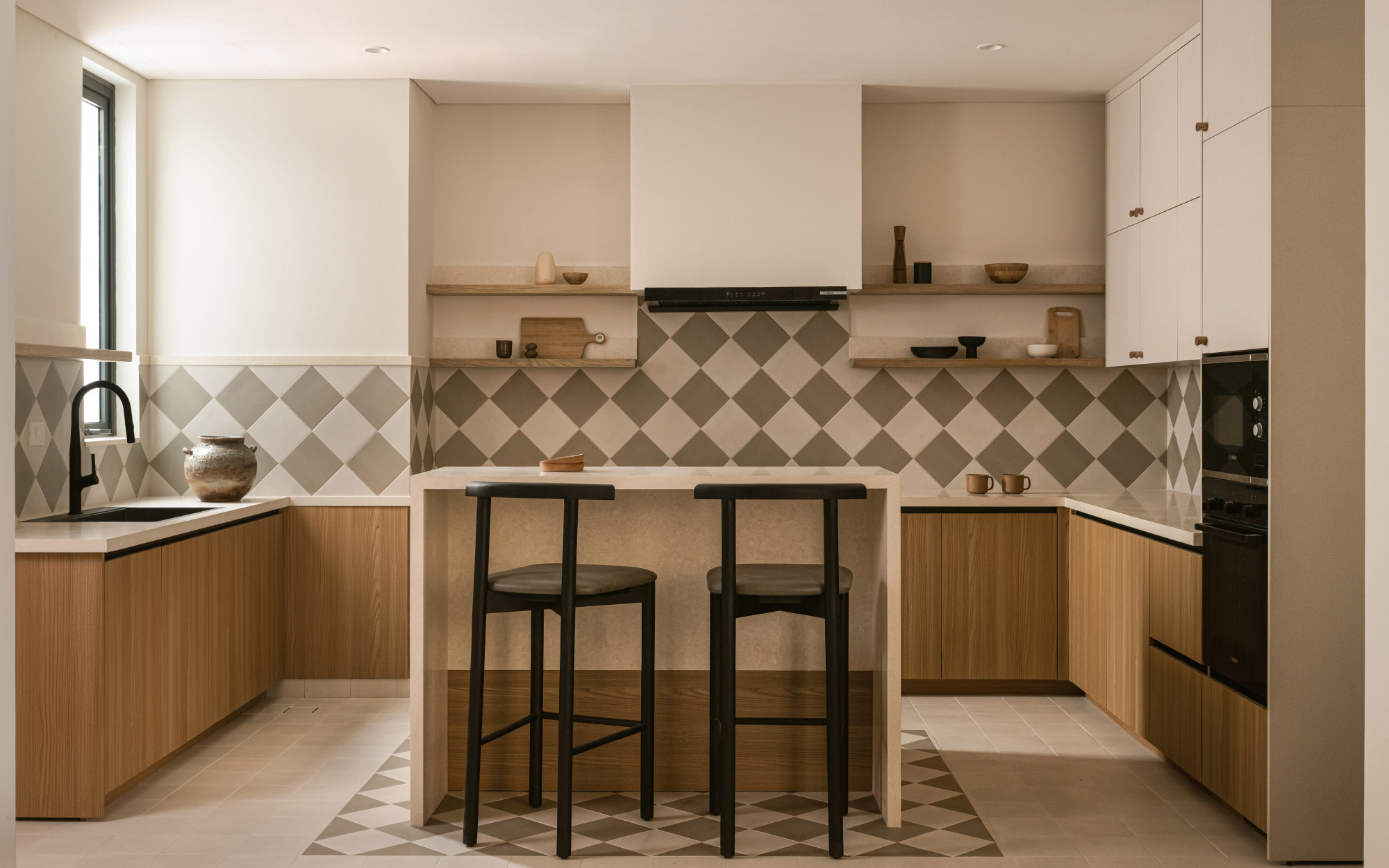
Structural changes were intentionally pared back, limited to opening up the wall between the dining area and the kitchen to forge a connected volume. A central island now doubles as a breakfast counter, establishing the kitchen as both a functional workspace and a point of casual interaction. Rendered in contrasting tones, the geometric dado adds just enough rhythm to break the monotony, while utility, laundry and staff areas are efficiently tucked away. The planning is precise, but never clinical.
Also Read: 10 Things To Know About Gender-Neutral Nurseries
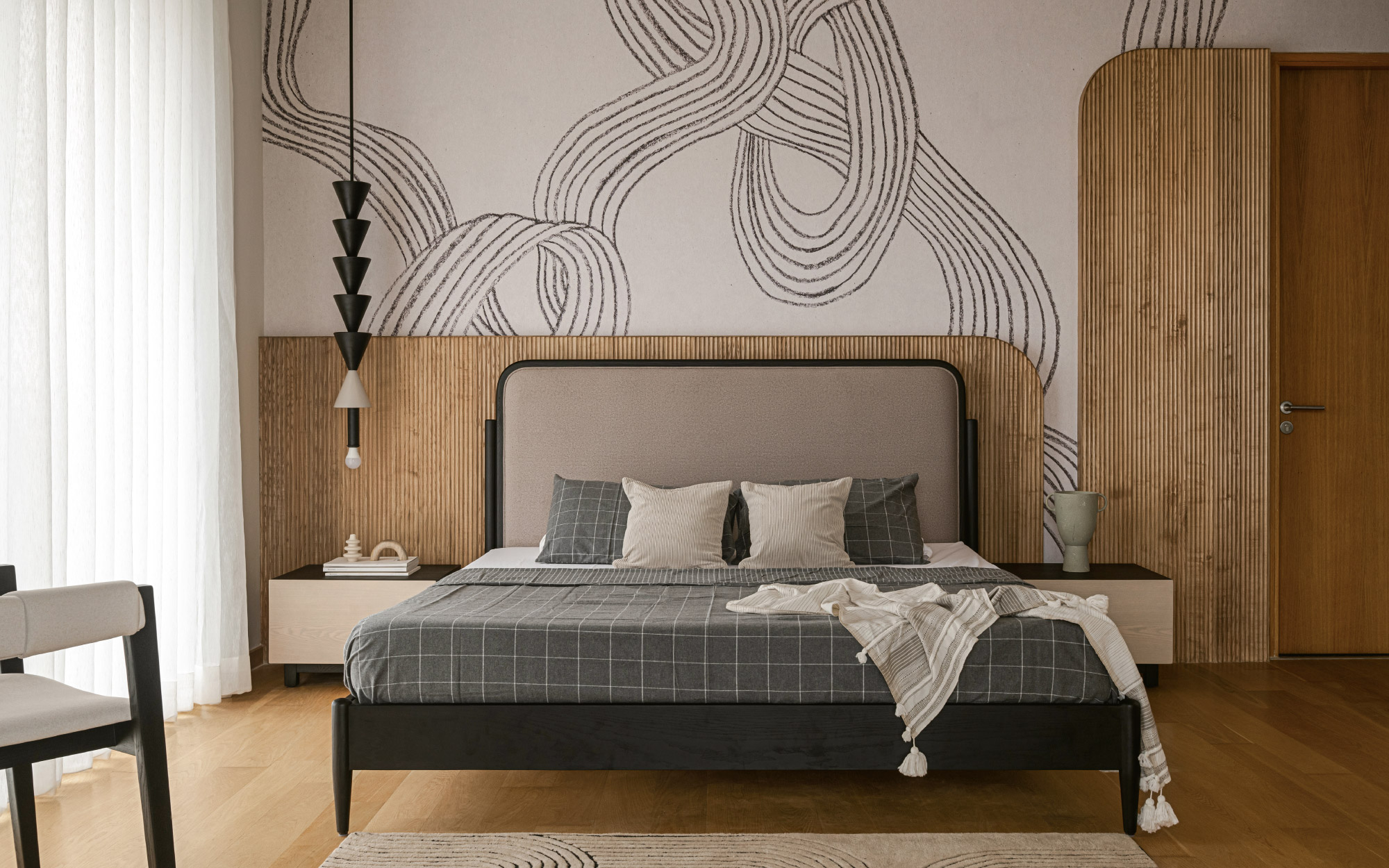
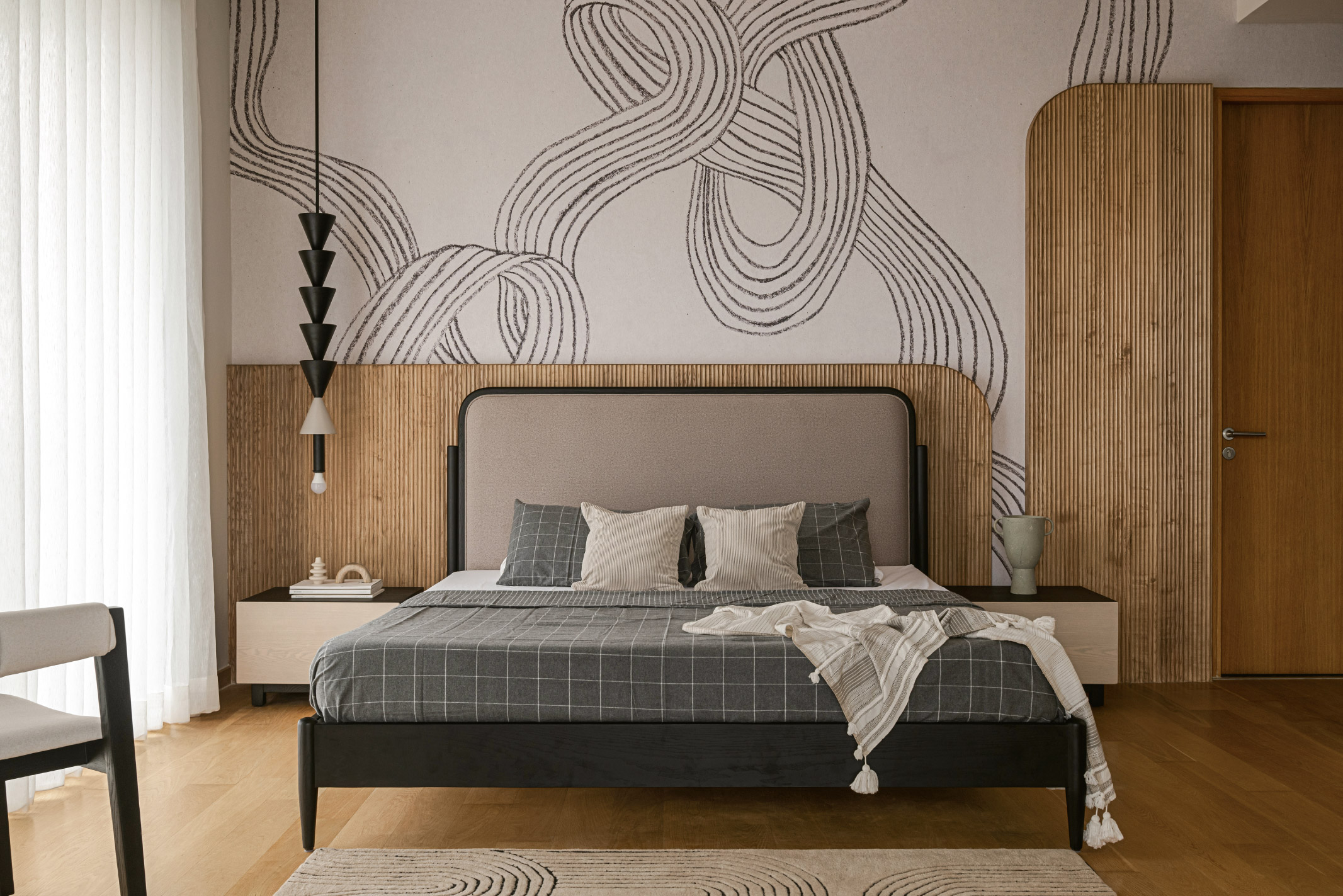
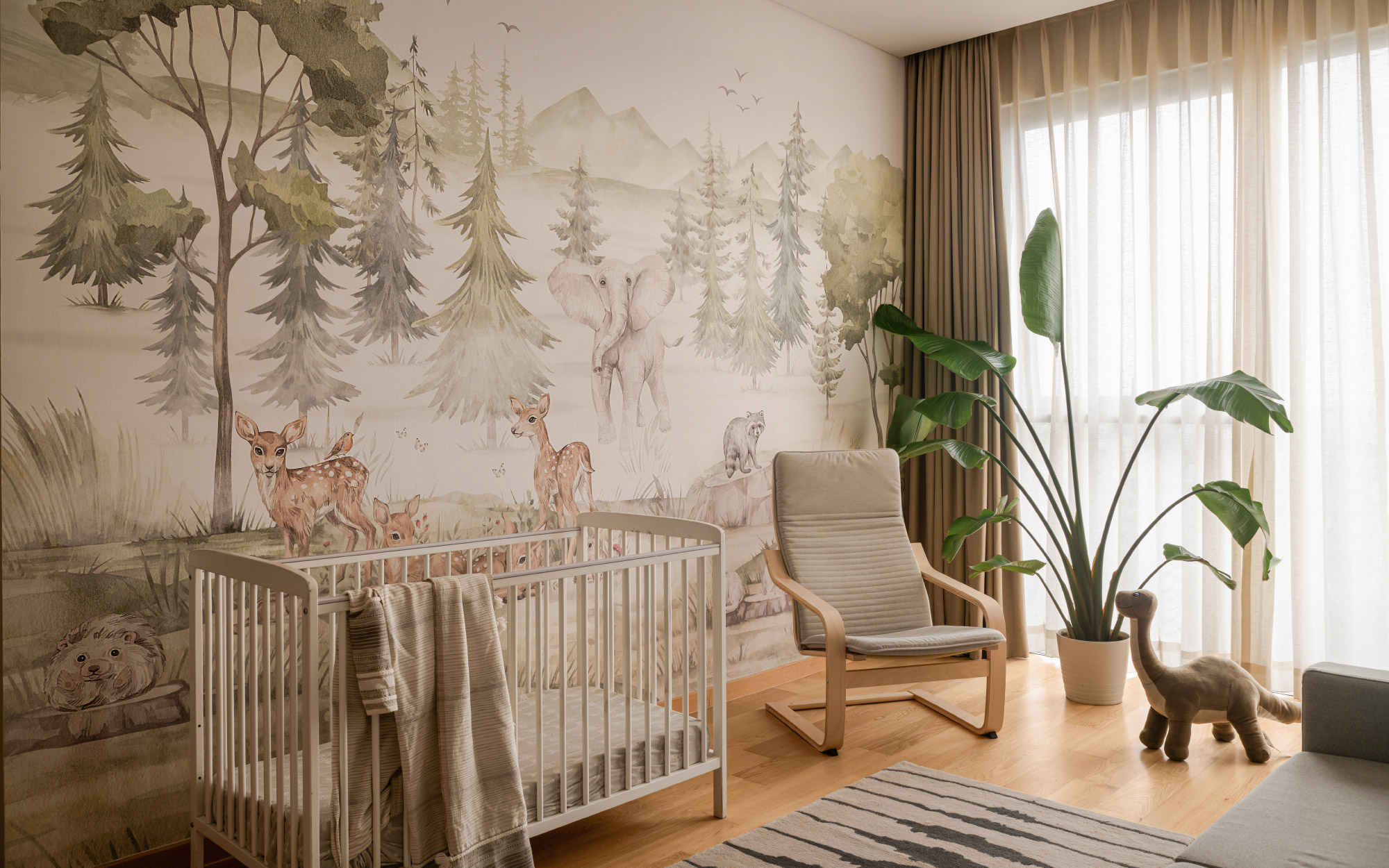
Journeying ahead, the nursery illustrates a subtle tonal shift. Soft green hues and a jungle-inspired theme bring in a whimsical cadence. “We wanted it to feel joyful, not overstimulating,” notes Anand. At the far end of the corridor, the guest bedroom occupies a more contemplative persona—haptic and understated. Situated right opposite, the master suite presented the project’s most complex challenge. An awkward layout and a large circular structural column threatened to dominate the space. Instead of masking it, the column was transformed into a tailored bookshelf as a direct response to the couple’s bibliophilic pursuits. Doused in a spectrum of black, white and grey, the graphical room further accommodates a study zone, and flows into a walk-in wardrobe and a wrap-around balcony.
Sustainability here is embedded, with durable materials, bespoke joinery and timeless surfaces that ensure longevity, while the clutter-free layout allows the home to evolve with the family. Rather than chasing novelty, Casa Ecru commits to nuance, distinguishing itself in its capacity to adapt without losing character. Underpinned by an unobtrusive yet deeply considered spatial intelligence, the abode remains as practical as it is poised.