
Ai Weiwei Turns Venetian Silk Into Political Space At Salone Del Mobile 2026
Ai Weiwei uses gold-threaded motifs, including surveillance cameras, handcuffs and chains, the Twitter bird, and llamas to exhibit a lexicon of authority, resistance, and digital poetics.
- 26 Mar '26
- 12:12 pm by Sana Krishna

Silk, for Ai Weiwei, is a language of memory—a conduit linking past to present, East to West, craft to conscience. Born in China, the cradle of silk, he returns to this historic medium in collaboration with Rubelli, the storied Venetian textile house, transforming its Milan showroom into an immersive terrain for Salone del Mobile 2026. Threads encode motifs of surveillance, censorship, and resistance, transmuting fabric into a vessel of conscience. Across centuries and continents, silk—once the lifeblood of exchange between China and Venice—assumes renewed urgency as aesthetic refinement entwines with political rigour, and beauty itself becomes an act of ethical insistence.
Ai Weiwei is not only a prominent contemporary artist but also the acute conscience of his nation—a chronicler of the fractures, silences, and dislocations that shape its history. Born in north-western China, Weiwei’s formative years were profoundly marked by his father’s exile, a shadow whose echo informs the vigilance and lyricism of his work. The austerity of his surroundings, the pervasive absence of freedom, and the latent violence of social and political constraints nurtured a sensibility both alert and reflective. From these conditions emerged a practice in which memory, politics, and poetics intertwine, producing work that is intensely personal and resolutely civic.
Weiwei’s practice spans sculpture, installation, film, photography, ceramics, painting, architecture, writing, and social media. Across these forms, the ordinary becomes symbol, the monumental intimate, and the familiar uncanny. His work attests to an extraordinary ability to translate conceptual rigour into spatial and structural form. This ethos finds singular expression in his collaboration with Rubelli, where art and textile expertise converge in a reimagined immersive environment. “Art has always had a special place at Rubelli. Thus, I was extremely pleased to work on this incredible opportunity, which allows Ai Weiwei to engage with a new material strongly connected to his China silk, allowing Rubelli to write a new chapter in the relationship between humans and silk”, says Nicolò Favaretto, CEO of Rubelli.
Also Read: Ai Weiwei Reimagines Pichwai Through Lego Bricks For His First Solo Exhibition In India
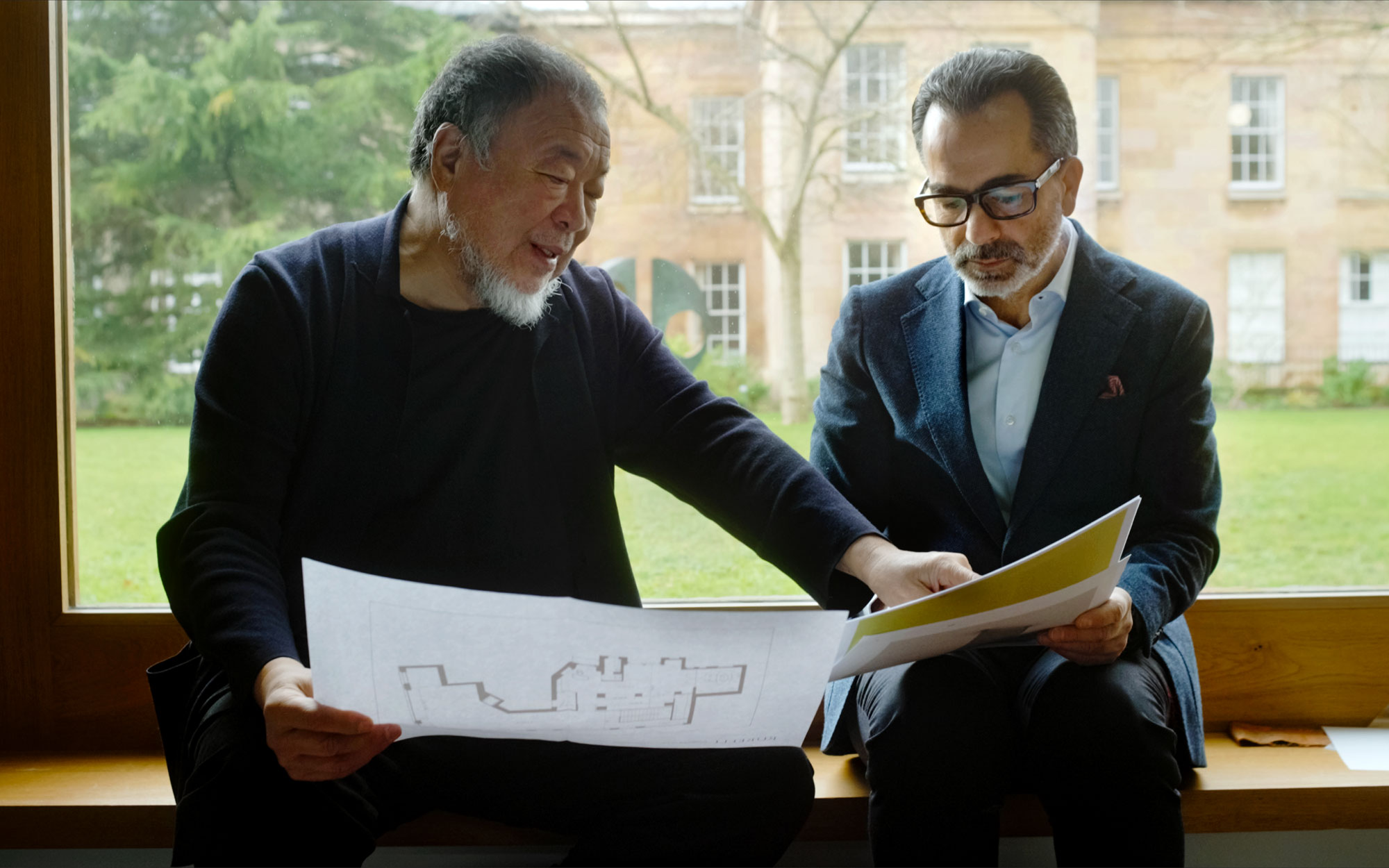
The Venetian textile house, founded in 1889, brings centuries of weaving mastery and archival knowledge, providing a foundation of historical precision and technical authority. For this project, Weiwei engages silk—a material with millennia of cultural resonance in China—as a medium for socio-political reflection, linking his homeland’s heritage with Rubelli’s Venetian tradition of textile weaving. In the showroom on Via Fatebenefratelli, silk becomes at once material, narrative and ethical statement.
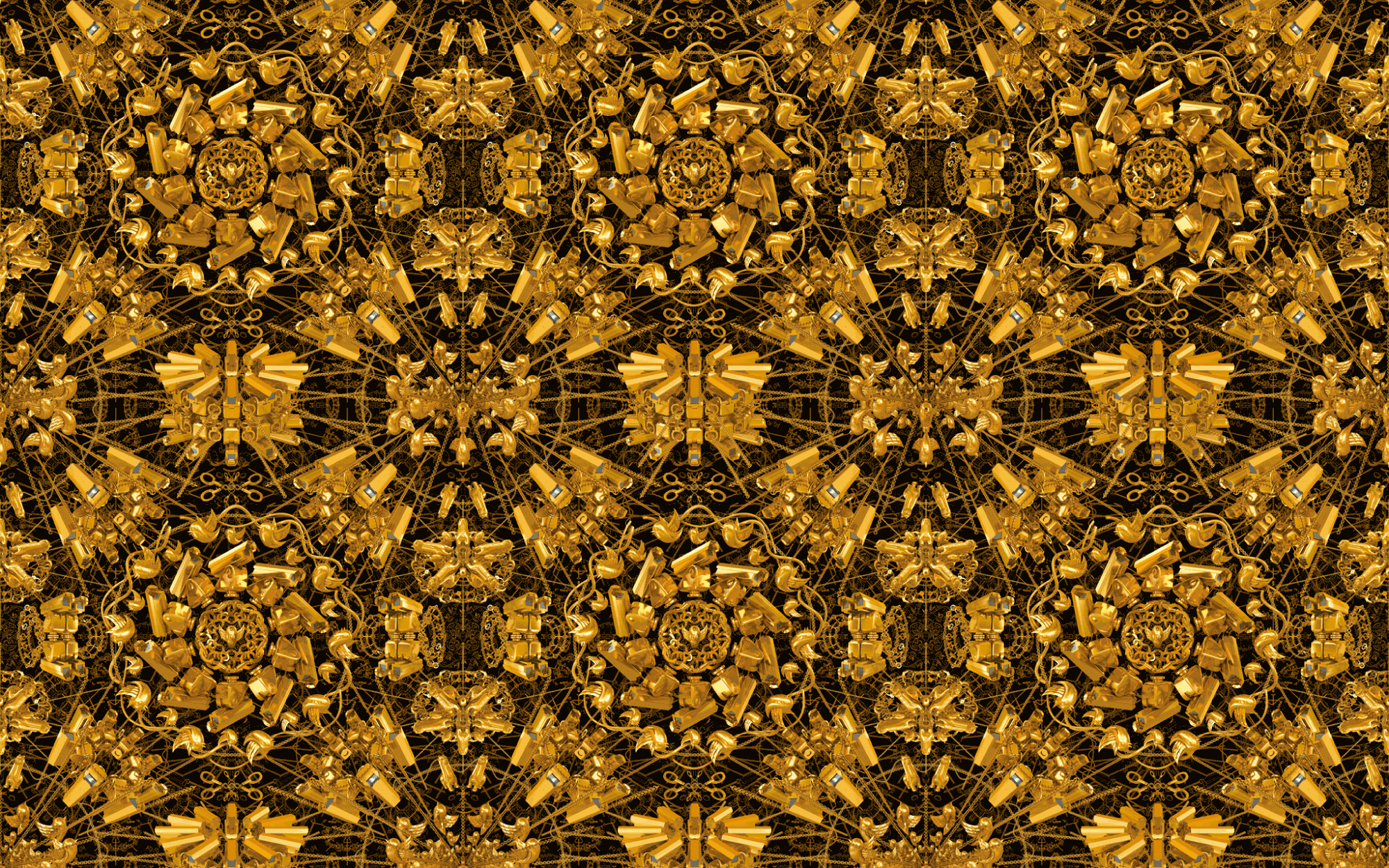
Visitors are enveloped by intricate silk lampas, its dense weave of symbols tracing the artist’s history and struggles. Gold-threaded motifs articulate a lexicon of authority, insubordination, and digital expression: the ever-watchful gaze of surveillance cameras; chains and handcuffs recalling oppression and the artist’s own imprisonment; the Twitter bird, an icon of digital communication and freedom of speech; and the subversive llama, emblematic of freedom, dissent, and the triumph of irony and creativity over state rigidity. Through silk and gold, Rubelli renders each element of the design, transforming decoration into a subtle yet potent act of protest. These motifs shift from instruments of oppression into objects of resplendent tactility; protest becomes ornament, critique takes shape in threads, and the softest material carries profound ethical weight.
Also Read: Belgian Pavilion At Venice Architecture Biennale – In Conversation With Bas Smets
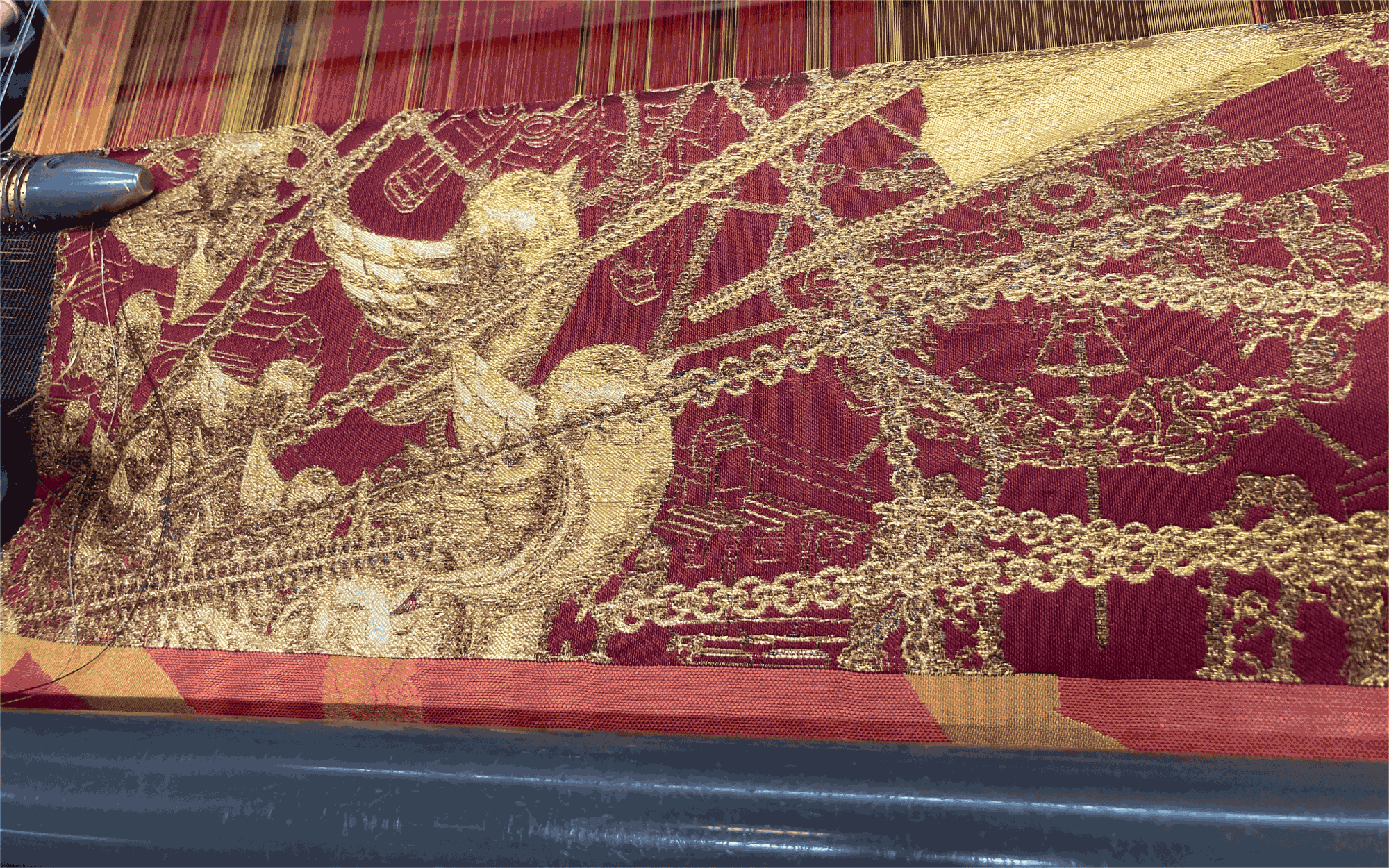
The installation operates as both an architectural and a narrative space. Weave becomes syntax, motifs function as argument, and ornament transforms into intervention. Threads articulate tension and possibility, beauty and vigilance, memory and political consciousness. Rubelli’s technical mastery converges with Weiwei’s conceptual audacity, producing an alchemy rare in contemporary practice: elegance entwined with moral clarity, luminosity suffused with ethical intent. Visitors navigate a space that enfolds, challenges, and provokes imaginative engagement. An accompanying documentary deepens the encounter, in which Weiwei reflects on how textiles, traditionally delicate and decorative, become carriers of memory and conscience. The craft itself transcends technique, emerging as a form of ethical and intellectual agency—a medium through which ideas, critique, and emotion are translated into material form. “The immersive installation surrounds the visitor with opulent brocades in silk and gold, while the pattern is, in fact, an exploration of the challenges we face today. Two tables will display antique silk documents from the Rubelli archives, grounding Weiwei’s message in the past. The strong contrast lends additional power to his message, and we invite all those who visit Milan to experience it”, shares Favaretto.
Also Read: Mapping the personal-collective memory with Samanta Batra Mehta
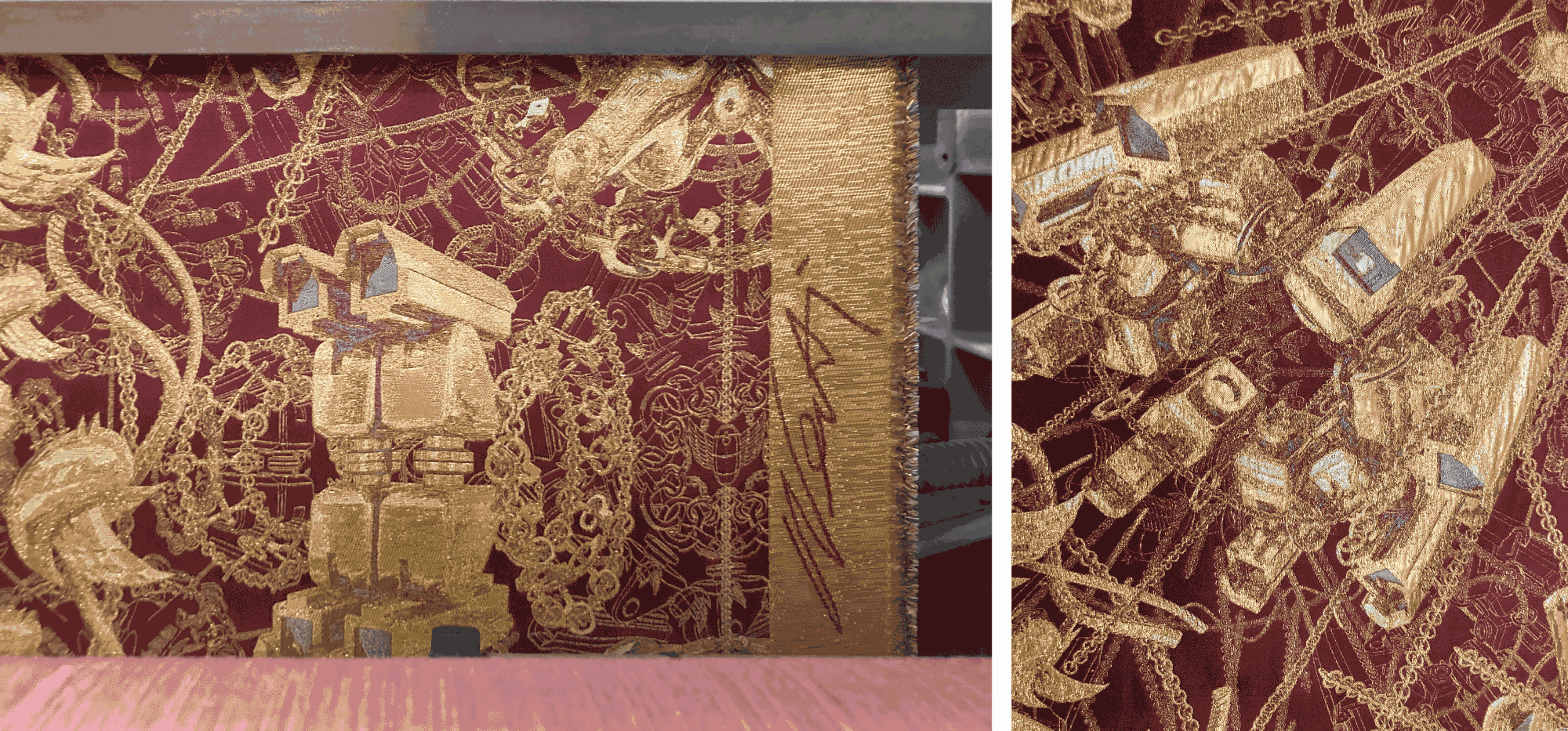
Across a career spanning decades, continents, and media, Weiwei has maintained the inseparability of intellect and conscience, form and political resonance, craft and ethical engagement. From Han Dynasty urns to immersive silk installations, from architectural interventions to film and social media, his work embodies a poetics of vigilance, memory, and ethical insistence.
The Rubelli collaboration extends this trajectory, synthesising heritage, material intelligence, and conceptual rigour into an immersive, visually transcendent, and morally insistent space. Weiwei asserts once again that art is never neutral: it witnesses, interrogates, and transforms.