The Rise Of Brick-Led Soft Architecture In India’s Residential Design Landscape
Curves replace corners and brick sheds its linear identity in three Indian residences, revealing how the rise of soft architecture is redefining the language of home design.
- 17 Mar '26
- 2:33 pm by Aditi Singla

|
Getting your Trinity Audio player ready...
|
Amidst India’s largely rectilinear residential fabric, a more fluid architectural language is slowly beginning to emerge, one that privileges curves over corners. It is seen that homes are shedding their rigid silhouettes for undulating façades, scalloped silhouettes and sculpted volumes, interrupting the monotony of straight-lined streets with a presence that feels both unexpected and strangely organic. Therefore, the emergence of soft architecture reflects a more introspective and context-aware approach to home design. Integral to this shift is an unexpected protagonist: brick. Traditionally seen as modular and linear, it is now meticulously corbelled, layered and perforated to create flowing envelopes that catch light gently and dissolve hard edges. Design Pataki explores three such brick residences that exemplify the rise of soft architecture in India, revealing how curvature and craft are redefining how we build and how we live.
Also read: Honey, I Shrunk the City: 3 Designers Scale Down Indian Cities Into Statement Objects
1. 100K Brick House by Language.Architecture.Body.
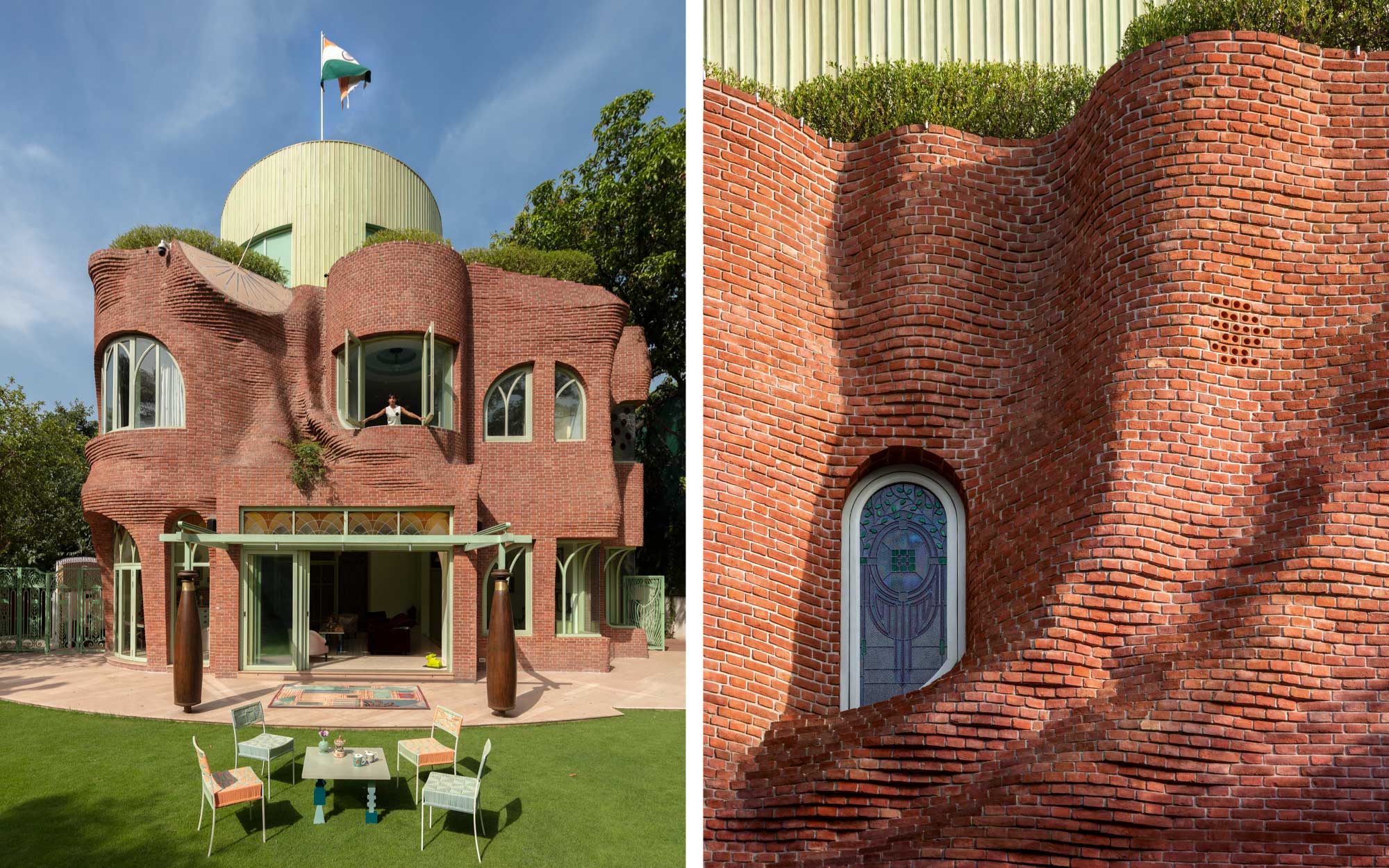
In Delhi’s Golf Links, one of the elite neighbourhoods in the city, Principal Architect Shonan Purie Trehan of Language.Architecture.Body. sculpts a sprawling 8,000 sq ft home that defies rectilinear perimeters, softening the street’s presence in a city full of defensive walls. Aptly dubbed the 100K Brick House, it features a soft, flowing brick façade that responds to the rigid orthogonal setbacks that define urban plots in Delhi. Here, brick indeed takes centre stage as the architectural protagonist. “The form began as a hand-sculpted physical model, which was then translated into parametric drawings mapping every brick course,” shares Trehan. Sharing her choice of materials, she explains, “To build a home in Delhi, we felt the need to return to material memory, so we returned to handmade brick. But the question we asked was: what can traditional handmade brick become when re-examined through contemporary design technology and extraordinary artisanal skill? The result is a façade that appears fluid but is extremely disciplined.
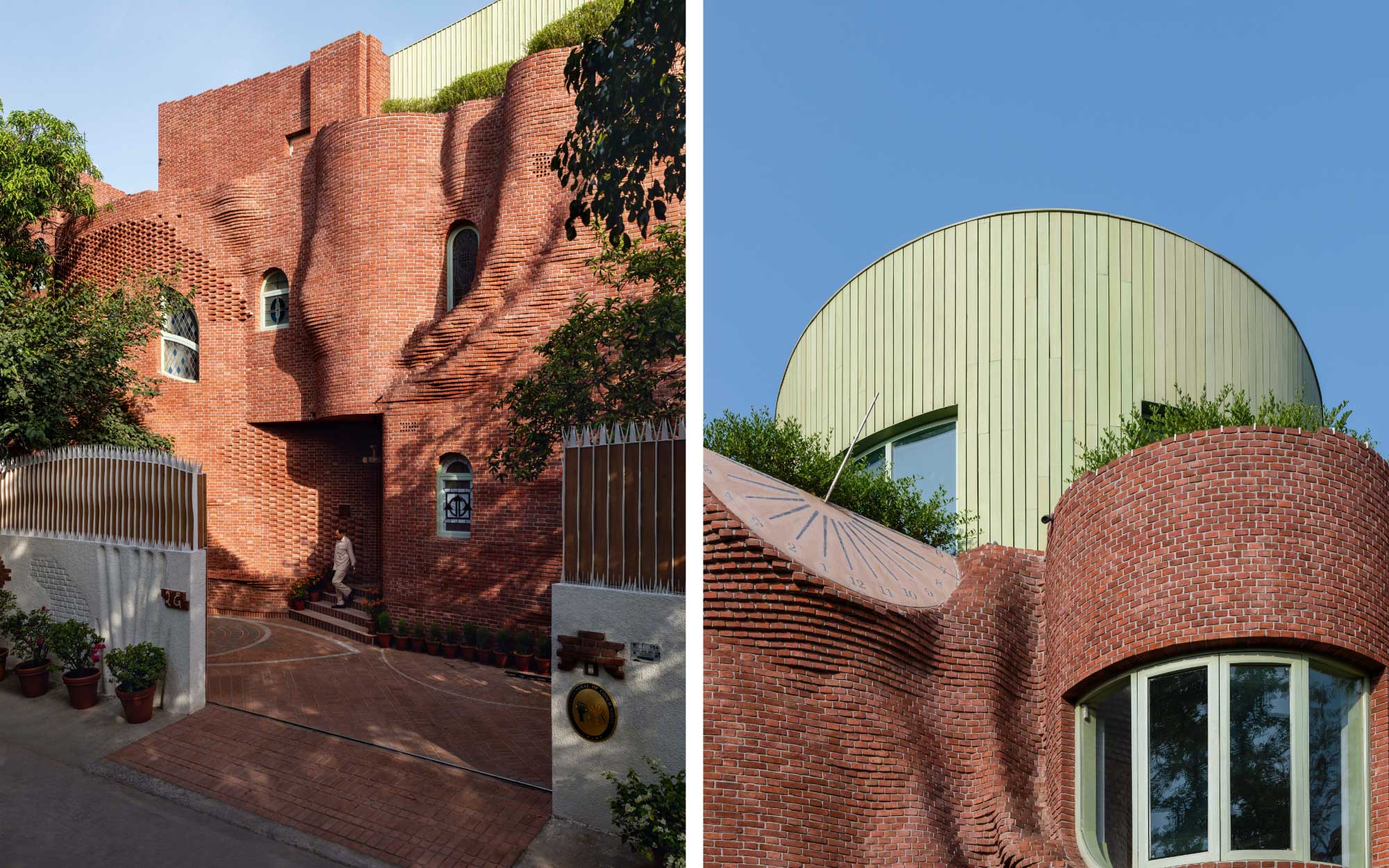
The façade, for all its suppleness, stands on the discipline of embodied knowledge, rigour and imagination. Achieving such softness demands extraordinary precision, and a team of highly skilled masons addressed it. Each brick has been laid with patience and belief. “Swaran Sharma of Devsons, a seasoned builder deeply experienced in brick construction, believed in the ambition of the project from the outset. Without his technical clarity and conviction, this façade would not have been possible,” shares the architect.
Within the brick skin, small moments of delight are embedded: a trickle of water, stone-inlaid poetry, miniature brick sculptures. The brick courses subtly register the sun’s movement, so the silhouette is also a timepiece, alive with seasonal shadow shifts. The project arrives at a moment when soft architecture is beginning to contour India’s residential imagination. Rooted in ecology and lived movement, curvature here is not a fleeting trend but a form of spatial intelligence, influencing how we gather, circulate, and pause. The 100K Brick House embodies this idea with authority.
Also read: Statement Floors: The Most Decisive Design Move In Modern Homes
2. Gadi House by PMA Madhushala
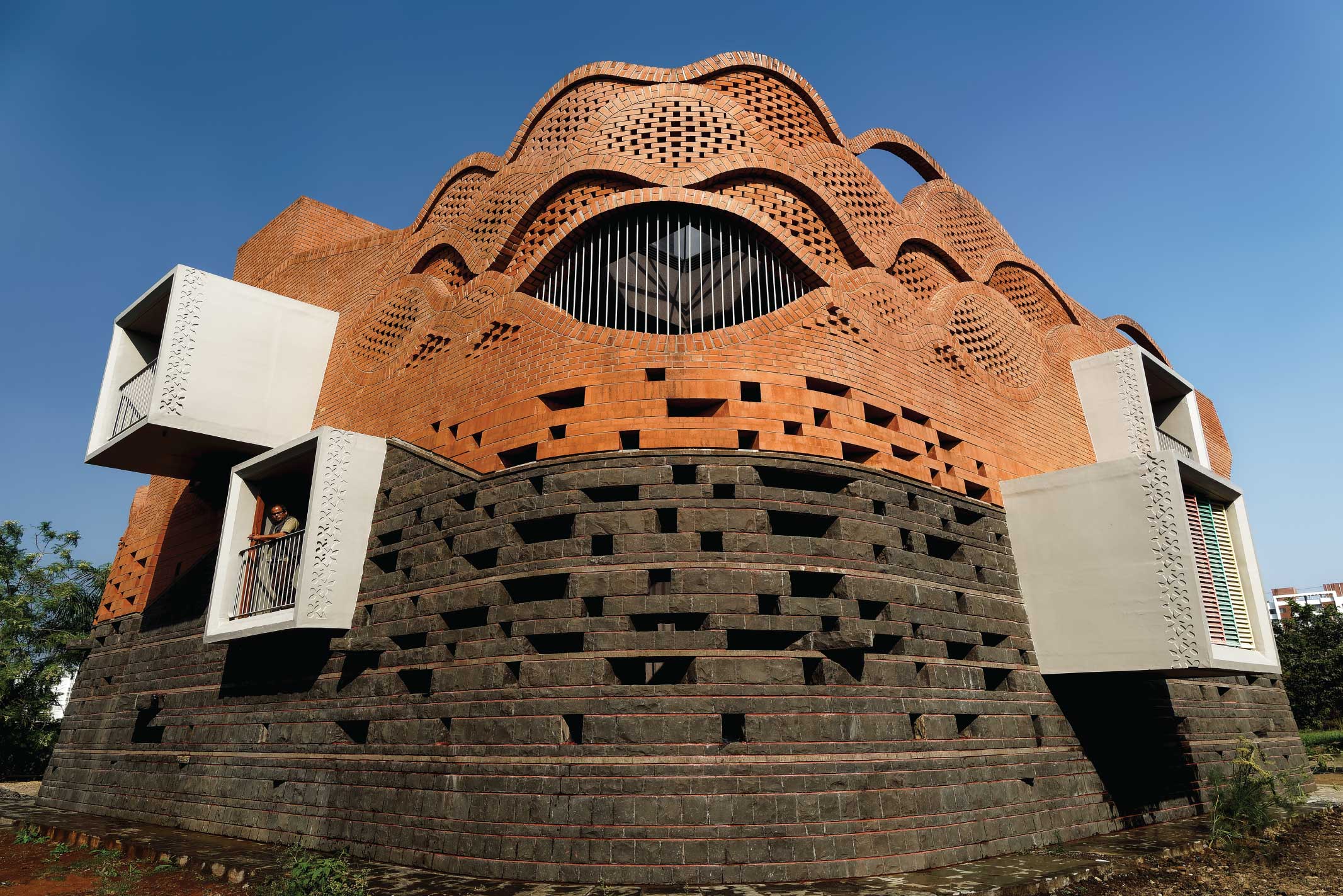
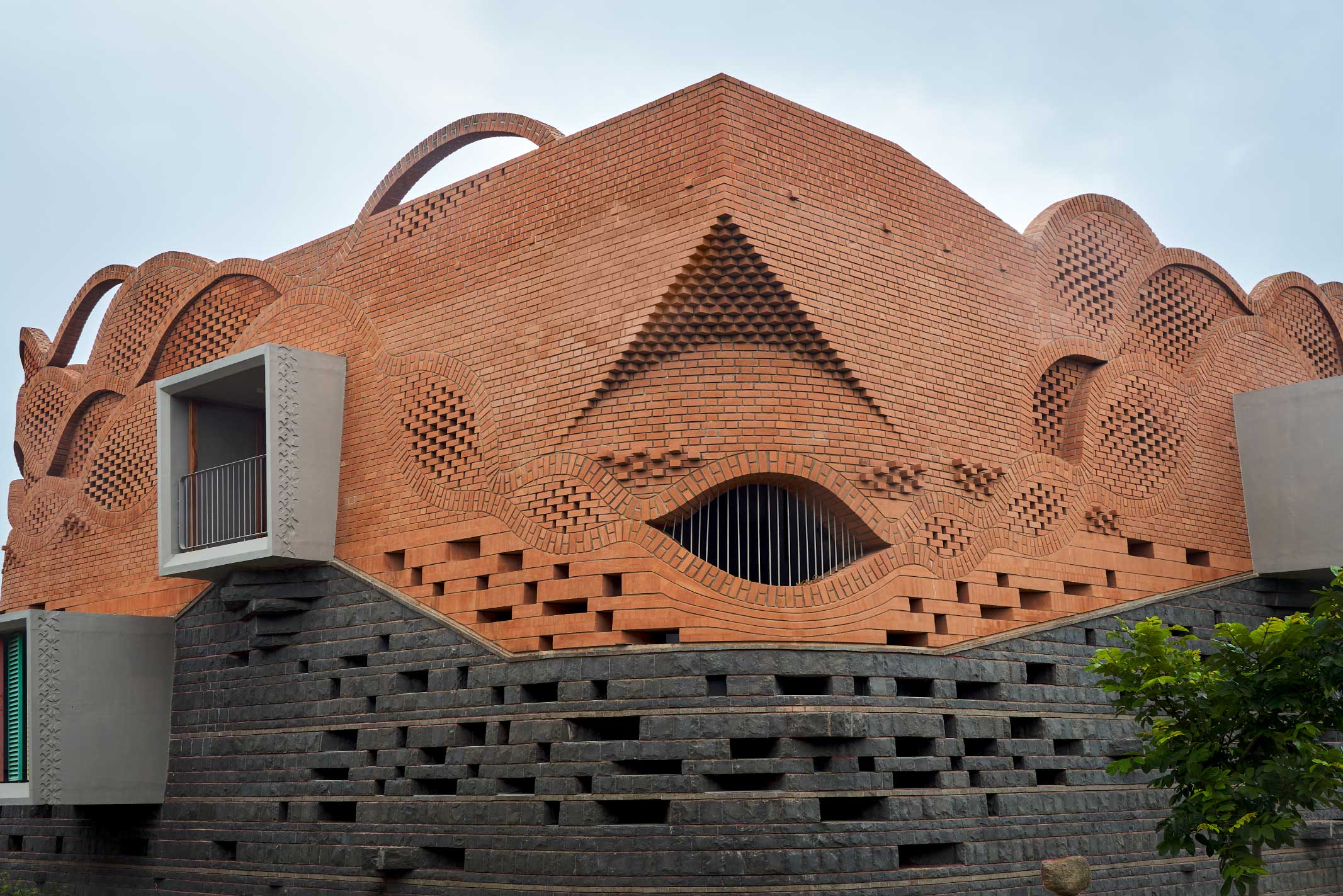
On a sprawling site in Talegaon, Maharashtra, Gadi House by PMA Madhushala reinterprets the idea of the traditional ‘gadi’—a regional house form—through a contemporary lens. Designed as a private home for two brothers, it emerges as a sculpted bastion of memory. The 4500 sq. ft. home stands firmly within its landscape like a fortress, yet its architectural language reveals a softer, more fluid sensibility. The most striking aspect of the house is its façade. A heavy stone base forms the lower portion of the structure, creating a grounded and protective plinth that echoes the defensive walls of historic forts. Above it, layers of exposed brick begin to take over, gradually softening the composition. Across the façade, brick is used not just as a structural element but also as a tool for curvaceous pattern and texture. “The material and aesthetic characteristics of stone and brick are considered with the traditional understanding while designing the home,” says Madhushala. “The amalgamation of both materials is further enhanced with openings made like a honeycomb loop structure with brick curves, giving the entire structure a crown-like appearance.”
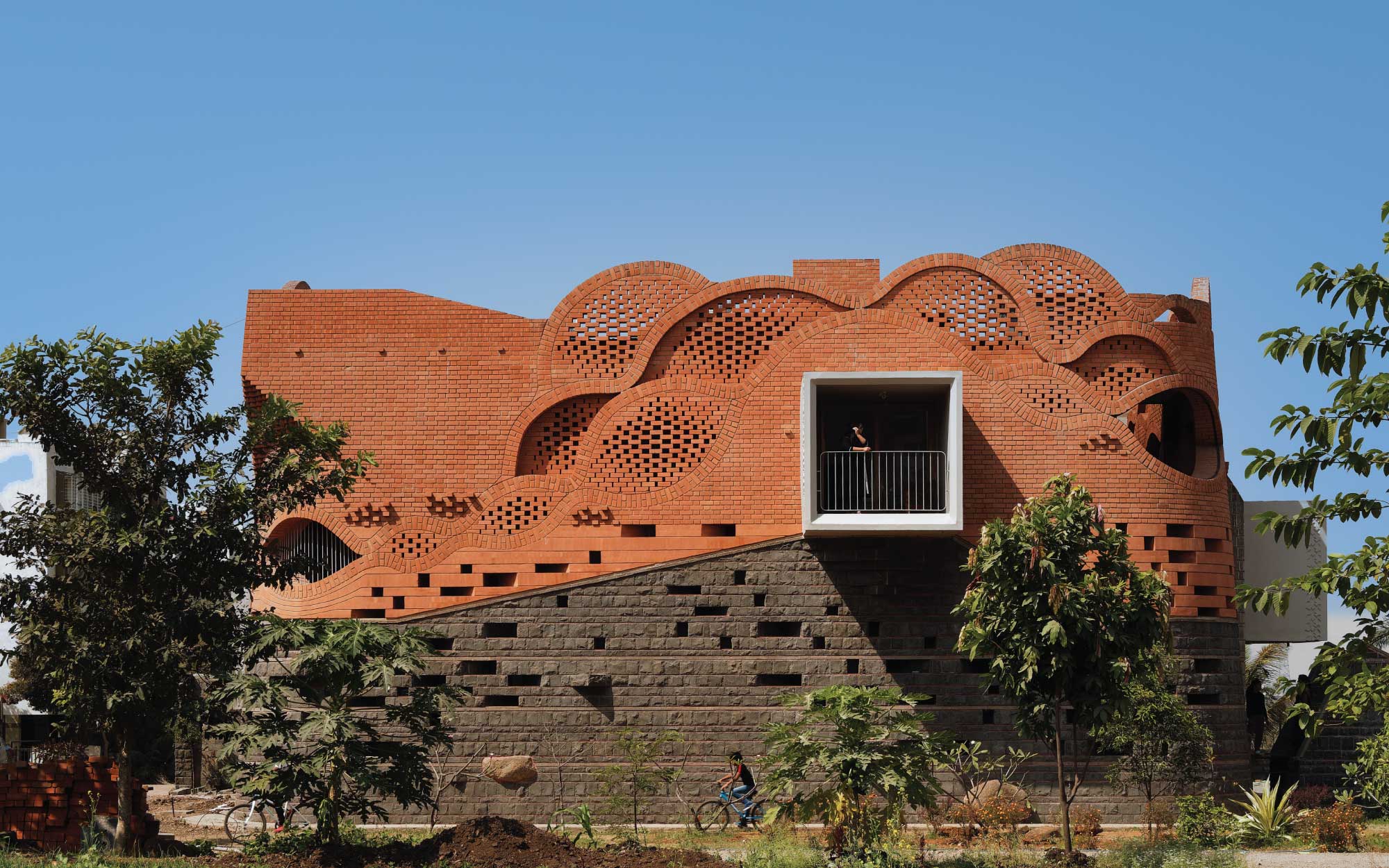
The project draws heavily from the knowledge of local artisans, incorporating traditional masonry techniques alongside modern construction systems. Elaborating further, Madhushala explains, “The external thick load-bearing wall has been designed to resist seismic forces and extreme climatic conditions. The internal structure has been built with reinforced concrete blocks for ease of construction and minimization of material usage.” In the broader conversation around the rise of soft architecture in Indian homes, Gadi House offers a compelling argument for material-led experimentation. Its façade moves beyond rigid walls, using the inherent flexibility of brick to create curves, patterns, and porous surfaces. What emerges is a home that feels both protective and expressive.
Also read: Plunge Into The World’s Most Magical Waters Designed For Thermal Cure
3. House Of The Dancing Cactus By Art & Architecture
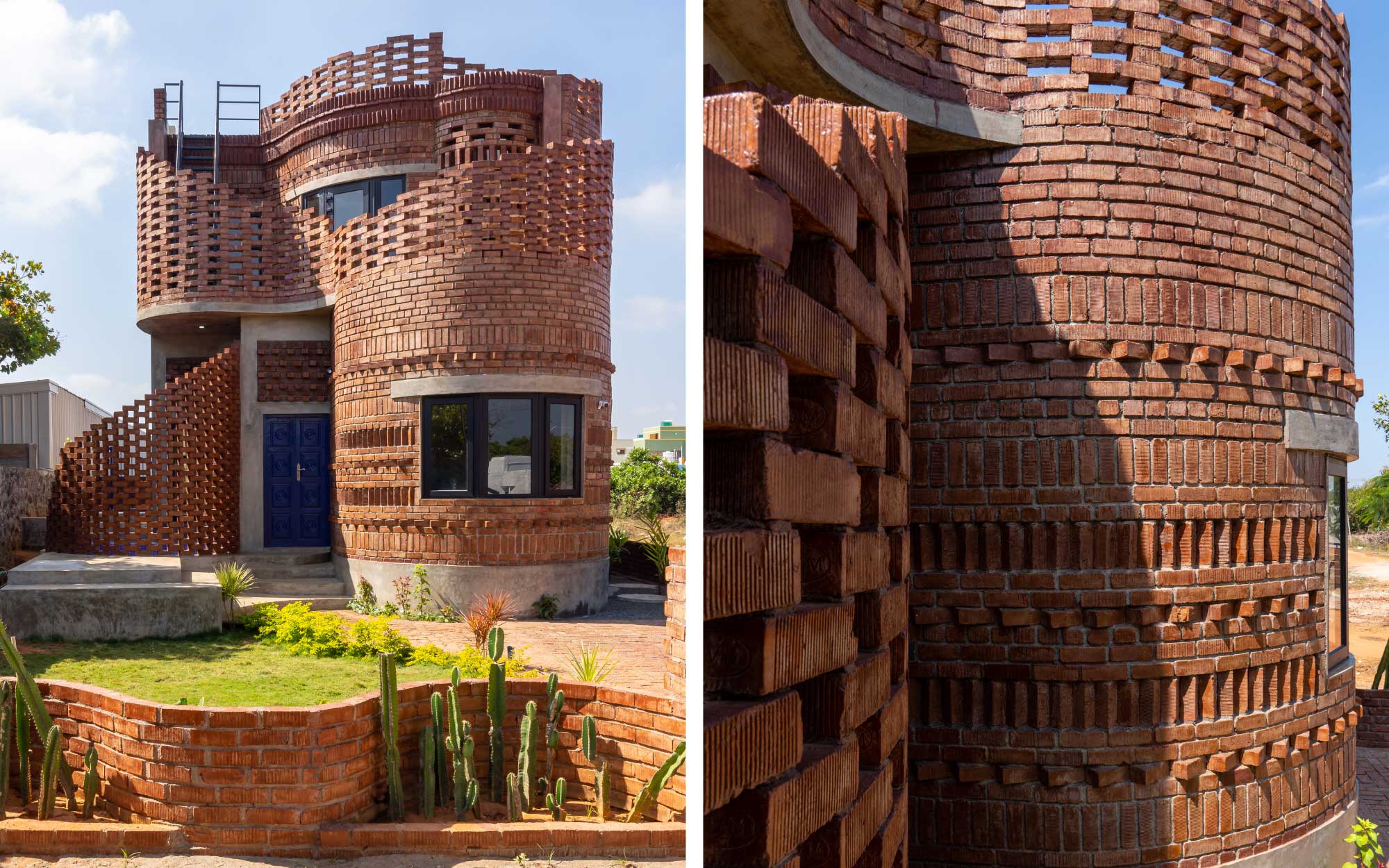
In Auroville, Pondicherry’s dry-humid coastal landscape, ‘House of the Dancing Cactus’ by Principal Architect Chamraj Suresh Babu of Art & Architecture offers a compelling argument for the rise of brick-led soft architecture, where curvature becomes both environmental response and visual identity. Conceived as a 1,200 sq. ft. weekend home and Airbnb, the home mirrors the movement of coastal waves through an undulating brick façade, with exposed brick patterns that break the conventional brick wall. “Since the site is located in a dry-humid region, we wanted to create a surface that reduces heat”, Chamraj reflects on the conceptual intent behind the curved façade. “The brick arrangement forms multiple shadows, thereby cooling the surface outside and keeping the indoors cool. We wanted the structure to stand out like a cactus that thrives in a harsh environment, hence the name and the conspicuous façade.” The project’s crinkle-crackle garden wall continues this exploration of curvature. Built in a snake-like configuration, it requires fewer bricks as the sinuous geometry provides its own structural strength, while niches planted with cactus reinforce the house’s playful identity.
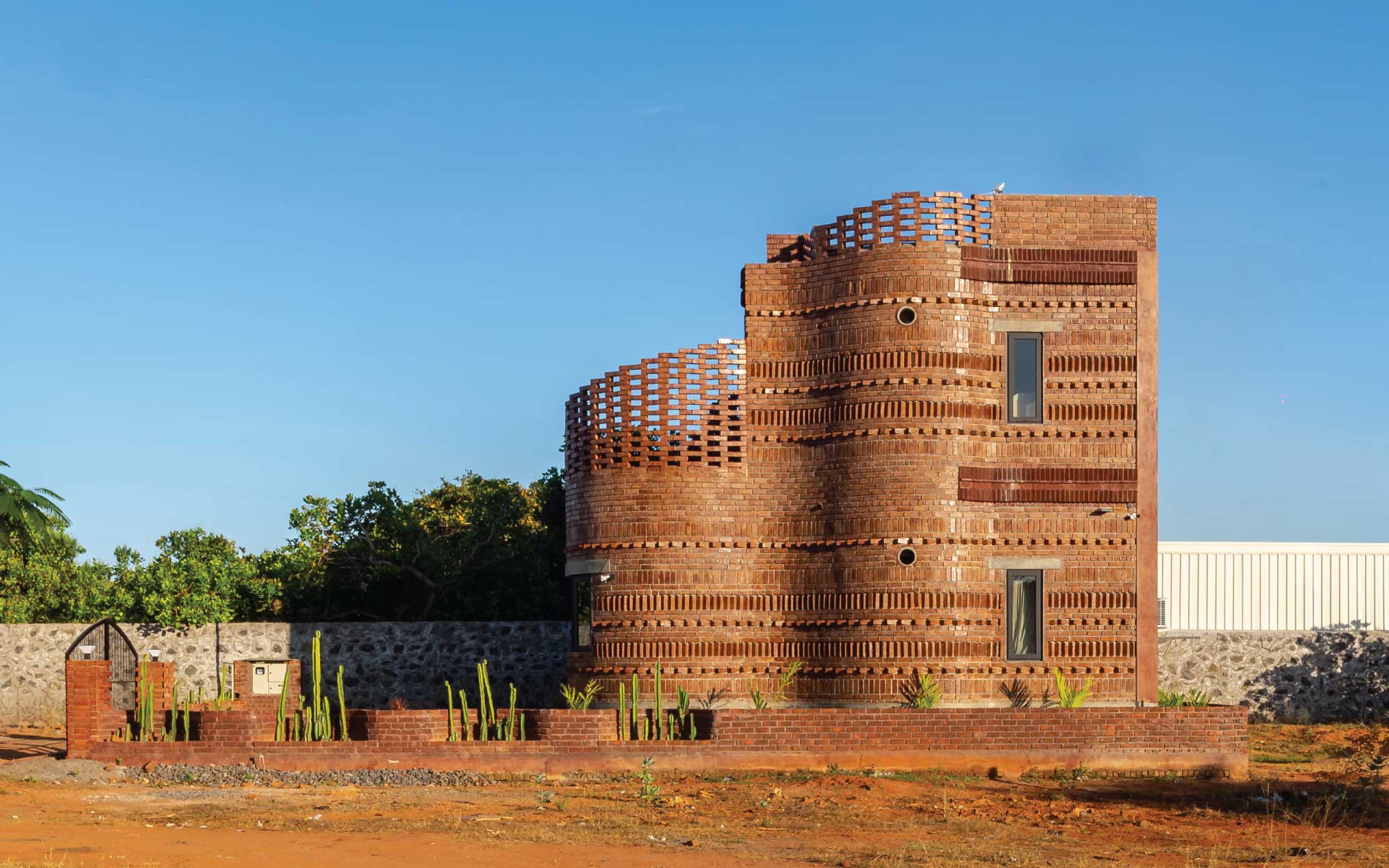
Built entirely with locally manufactured brick whose earthy palette echoes the surrounding terrain, the home feels grounded within its landscape while simultaneously standing out because of its curvaceous form. “I wish to see buildings that challenge conventional engineering and construction techniques,” Chamraj notes. Translating the expressive façade from drawing to construction proved equally challenging: “We had to create 3D and isometric drawings for the labourers to understand the brick-laying pattern,” shares the visionary architect. “Reinforcement rods, mesh inserts, and even tile adhesive were tested to stabilise the projections while ensuring beams remained concealed behind the brick skin.” For Chamraj, such fluid forms are not merely visual. “The first impression is definitely visual, and it’s a closely connected emotion. However, to influence it should be accepted for not just being visual, but functional and fervent for what it was created for,” he notes. In that sense, the home reveals how soft architecture, when rooted in climate and craft, can be both expressive and purposeful.