No Cubicles, Just Character: 3 Architect-Designed Offices That Reject The Corporate Mould
Step inside three offices that feel anything but corporate. These design studios bring together creativity and comfort and are infused with the soul of a home.
- 2 Apr '26
- 12:13 pm by Aditi Singla

|
Getting your Trinity Audio player ready...
|
When architects design their own studios, the brief is no longer bound by a client’s expectations. It becomes a spatial expression of their personal instincts and creativity, reflecting the values of their practice. The result often feels less like a formal workspace and more like a personal habitat, where there is a sense of warmth, ease, and the familiarity of a home. These are offices with the soul of a home where the settings dissolve into softer arrangements: communal tables replace boardrooms, sunlight and greenery become collaborators, and art-filled corners take the limelight. For practices like Design Ethics Studio, Alkove Design, and AD Studio 9, designing their own offices meant creating spaces that support both creative work and give them the comfort of home. Let’s take a tour through these studios that blur the line between an office and a home.
Also read: Honey, I Shrunk the City: 3 Designers Scale Down Indian Cities Into Statement Objects
- Akshara Vinyasa by AD Studio 9
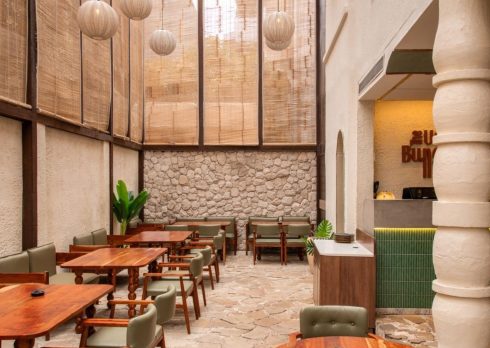
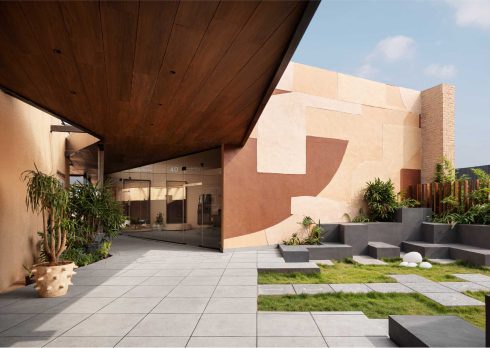
Akshara Vinyasa, a 2,500 sq ft studio in Bengaluru, feels less like an office and more like a lived-in sanctuary where architecture and nature cohabit. Helmed by designers Apoorva Lekha N and Sandesh Dhanaraj of AD Studio 9, the open-plan studio embraces a climate-responsive, biophilic environment where generous daylight pours through a lush canopy. The idea was to create an environment that is creative and closely connected to nature, while carrying the warmth and comfort of the home. Reclaimed wood accents, verdant plants, exposed brick facade, muted palette, and subtle flooring transform it into an energising sanctuary that sparks creativity and nurtures both mind and body. “We aimed to design a workspace with passive cooling techniques so that even during harsh sunlight, the space feels cooler”, says Apporva
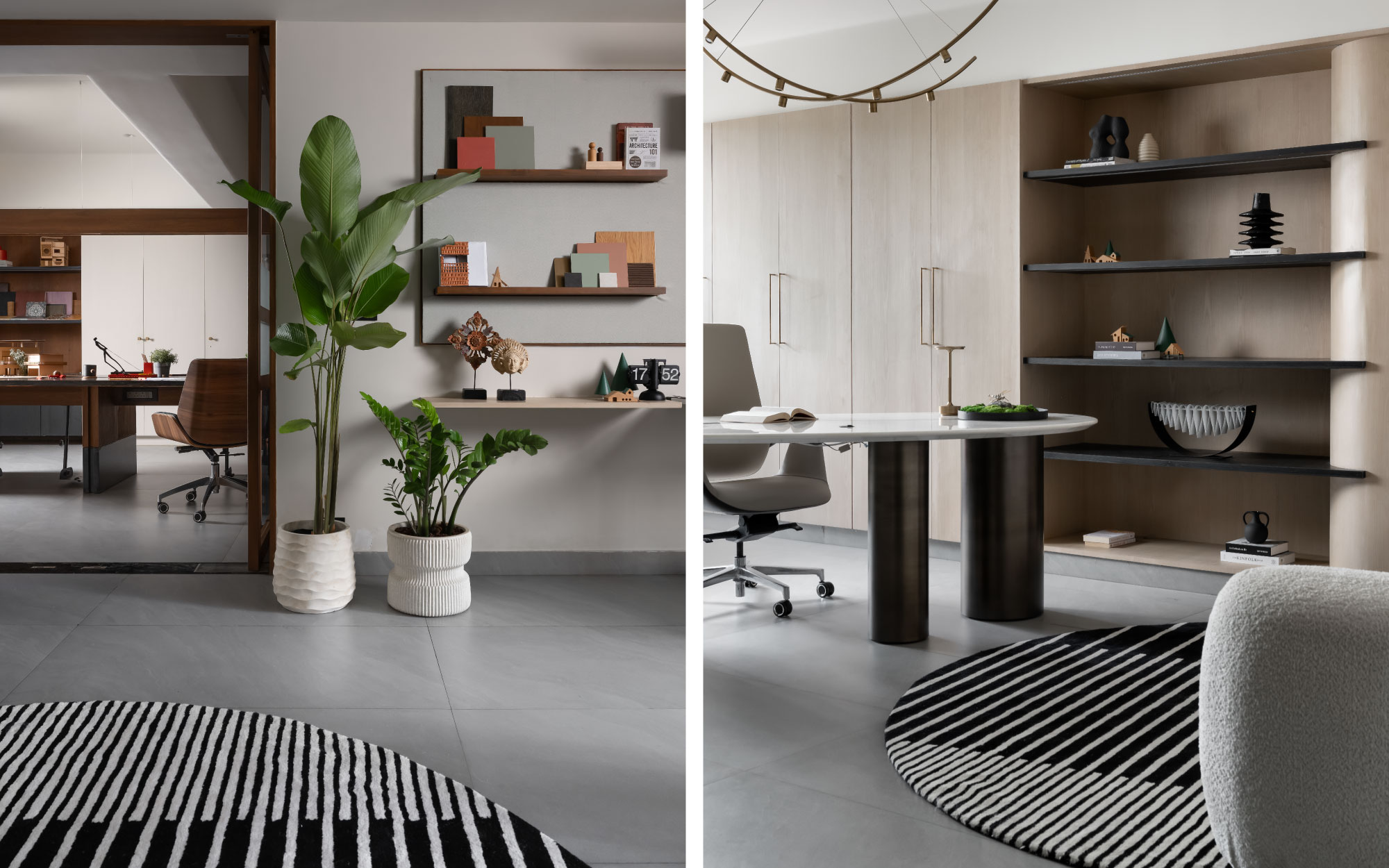
The studio unfolds like a sequence of intimate zones: a welcoming reception with organically shaped sofas, a sunlit meeting room brimming with greenery, and worktables that double as collaborative hubs. At the heart of the meeting room, a striking Paludarium merges art and nature, becoming the focal point that elevates the entire space. The workstation wall is highlighted by a vibrant artwork featuring intricate sketches and elevations that honour the firm’s design heritage. Further in, two partner cabins reflect distinct personalities: one is open and light-filled, extending to a balcony edged with Kota stone and plants; the other is cocooned in a monochromatic palette, punctuated with eclectic decor and red accents. Smart storage solutions ensure clear circulation paths, maintaining a clutter-free environment that enhances productivity.
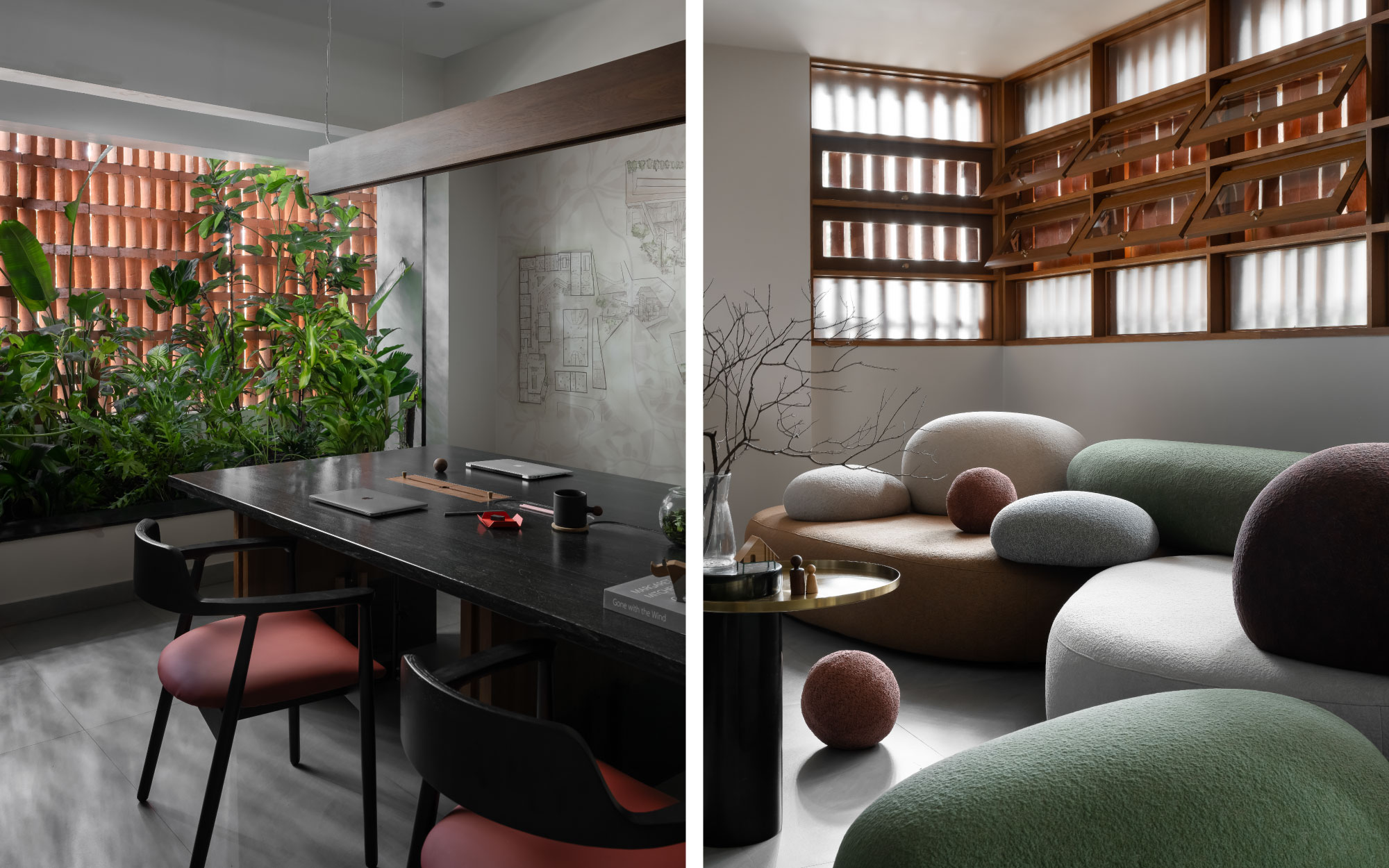
The entire project is a commitment to sustainability, comfort, and thoughtful resource use. “We believe that an office should have the most comfortable environment. When it feels calm and is ergonomically designed, it has a significant impact on productivity, especially in creative fields”, says Apoorva. “It helps the team feel more relaxed and connected”. Picking the corner that most vividly embodies the studio’s homely vibe,” she shares. The workstation area best captures the home-like spirit of the studio. Surrounded by greenery and natural materials, this office space encourages relaxed conversations, quiet breaks, and informal interactions much like a living space in a home. Ultimately, the studio redefines the contemporary workplace—not as a sealed container for productivity, but as an office with the soul of a home, where creativity unfolds within a calm, breathing landscape.
Also read: Lacoste Introduces High-Altitude Padel Courts At Courchevel
2. Design Ethics Studio
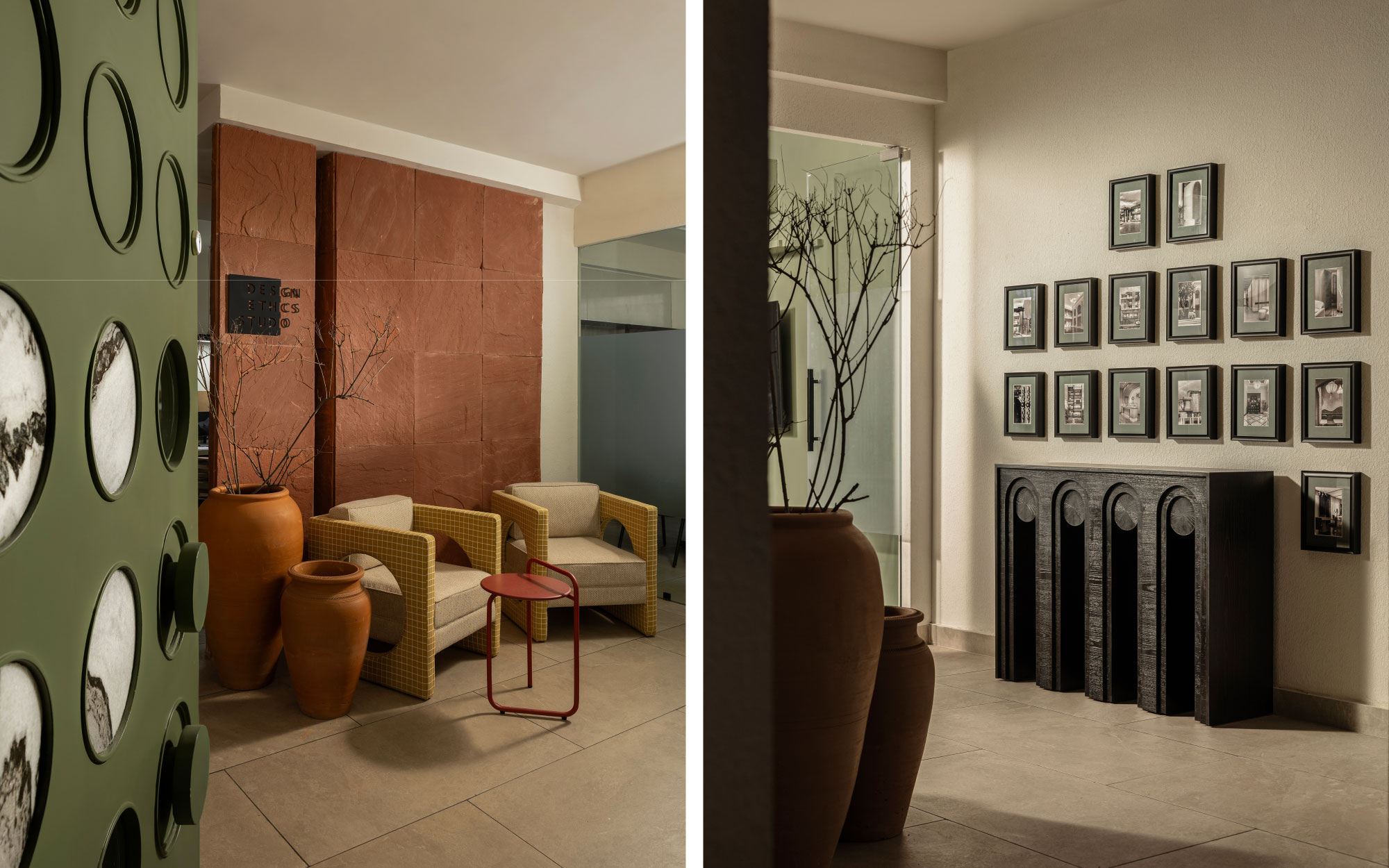
An office where morning light settles gently on red sandstone walls, artworks, and terracotta urns instead of rigid workstations and corporate cubicles. Design Ethics Studio in New Delhi is shaped around the feeling of a home. Designed by architects Poulomi Dhar and Jatin Gupta, the 1,200 sq. ft. workspace feels grounded, tactile, and contemplative. It unfolds not as a corporate office but as a series of carefully orchestrated rooms where tactile materials, statement lighting, and thoughtfully placed objects create a calm, personal, and welcoming setting. “The design approach for the studio was guided by the idea of blurring the boundary between work and domestic comfort,” says Jatin. “Instead of adopting the rigid and impersonal character often associated with offices, the space is curated to evoke the warmth, familiarity, and calmness of a home environment.”
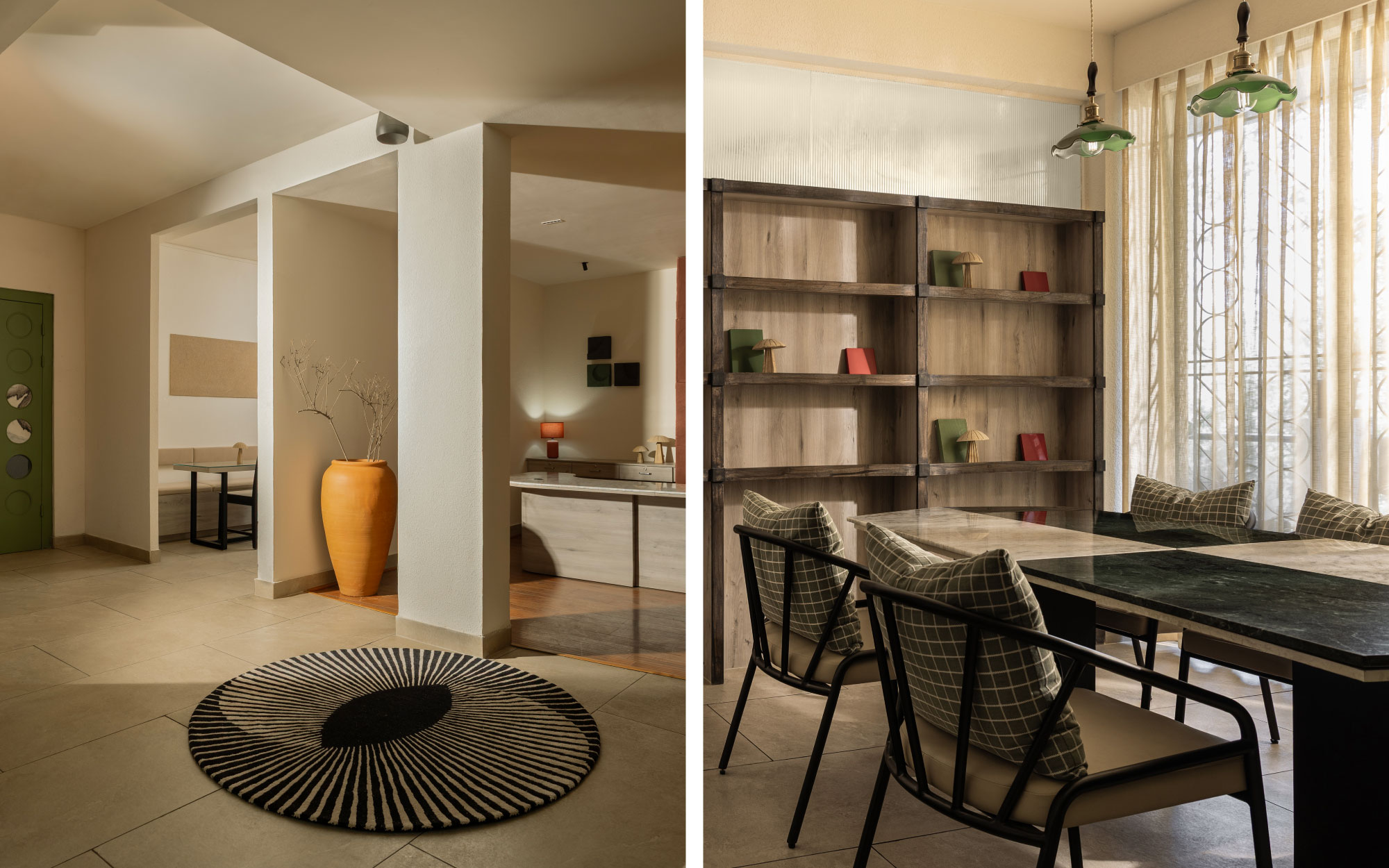
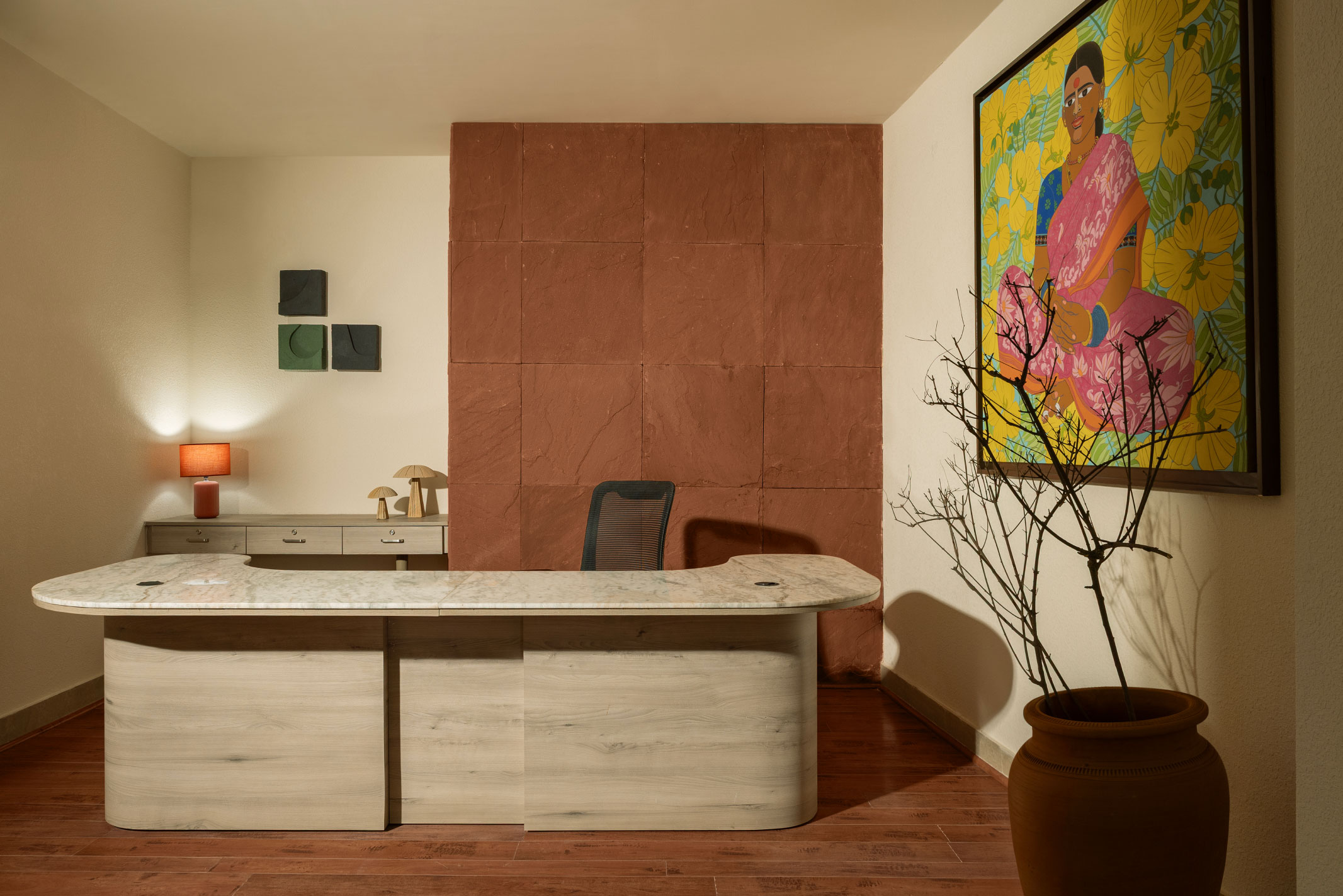
The entry sequence sets the tone, where terracotta urns hold bare branches, and sculptural chairs paired with a slender red table depict the quintessential design choices. Opposite, a gallery of framed photographs traces the practice’s journey, turning the waiting area into something closer to a living room. The same philosophy flows through the rest of the studio. In the principal cabin, a marble desk with curvaceous edges sits against a sandstone backdrop, its grounded presence balanced by a vivid artwork that brings colour and personality to the room. The meeting room has a chequered marble table, olive-toned accents, and scalloped green pendant lights reminiscent of a dining area at home. A partially filled wooden bookshelf with artefacts reinforces the idea that every object contributes to the atmosphere rather than merely decorating it.
“The relaxed and intimate environment promotes open communication, collaboration, and creative thinking,” Jatin explains. “Exposure to daylight and softer interior textures improves focus, mood, and overall work satisfaction, supporting longer periods of thoughtful engagement with design tasks”. For Poulomi, the project also holds an emotional resonance. “Design, for us, is an act of curation. Every texture, artwork, and object is chosen to shape not just how the space looks, but how it feels. This studio is a reminder to ourselves that restraint can hold as much poetry as expression.” The result is a workplace that feels deeply personal, layered, and reflective.
3. Alkove-Design Studio by Alkove-Design
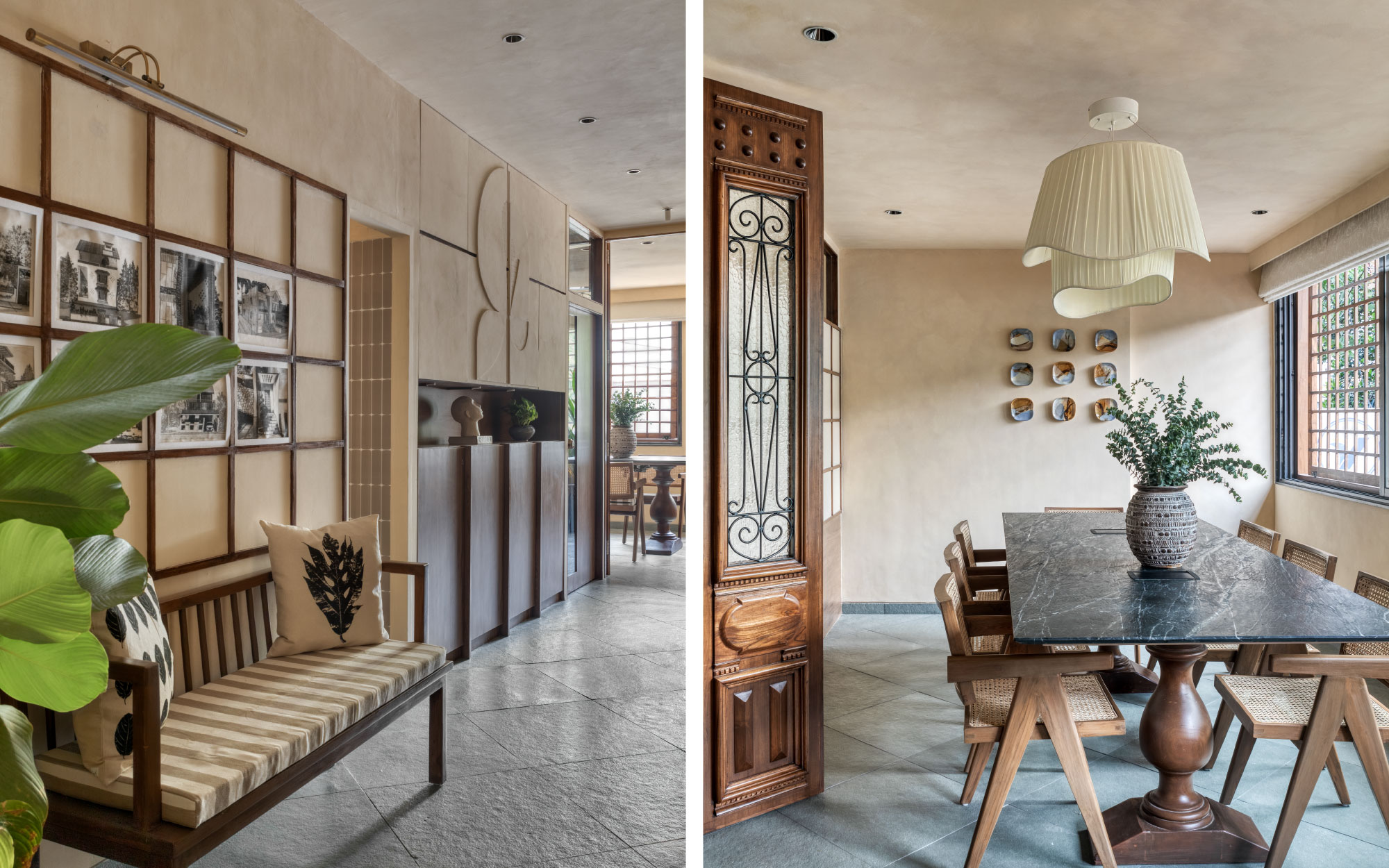
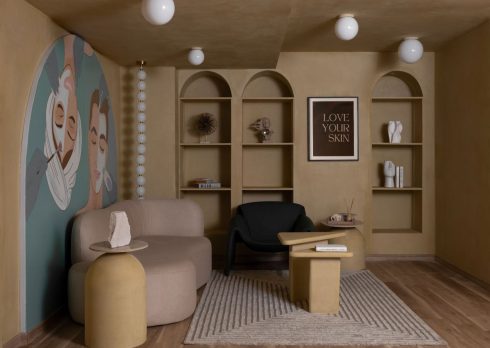
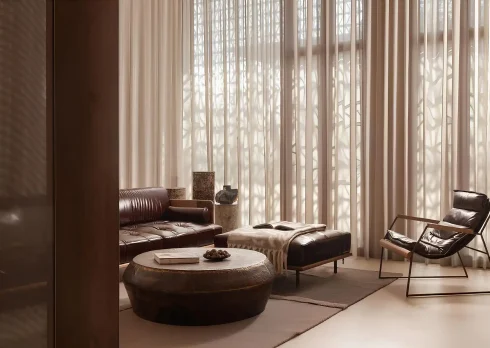
Some workspaces are designed for efficiency, while others are designed to be inhabited. At Alkove-Design Studio in Pune, the Principal Architects Komal Mittal and Ninada Kashyap craft their 660 sq. ft. studio as the latter—an office that carries the quiet familiarity of a home. The studio space carries an old-world charm with contemporary elegance to create a sanctuary for the team. Bathed in sandy lime-washed hues and anchored by the tactile coolness of river-washed kota underfoot, the space invites a slower rhythm. “We always imagined our workplace to feel like a home rather than a conventional office,” says Komal. “We focused on bringing that domestic essence into the space through natural materials, soft light, and a layout that encourages slower conversations, informal interactions, and a sense of belonging.” It’s an office where the boundaries between work and dwelling blur, and where the presence of natural textures, handcrafted elements, and filtered daylight creates an atmosphere that is at once grounded, immersive, and deeply human.
Also read: With The Artist: Debashish Paul’s Journey Through Queer Performance And Ritual
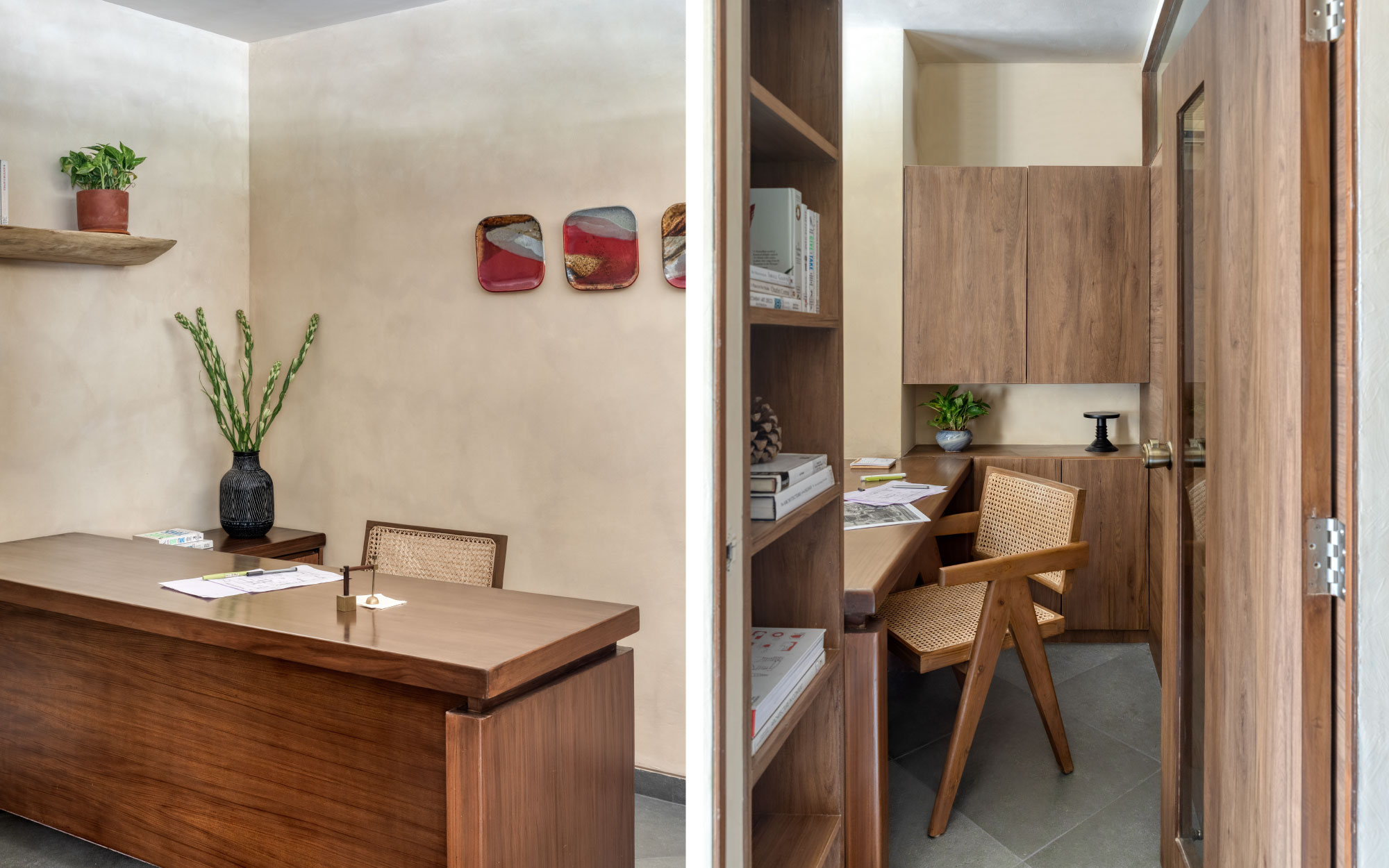
The moment you step inside, it feels like entering a serene, sepia-toned cocoon where time slows down. A wooden grid frames nostalgic vignettes, wood and rattan chairs soften the rigidity of workstations, and green plants spill gently from earthen planters—subtle gestures that root the studio in a biophilic sensibility. The reconfigured layout dissolves the stiffness of a conventional office, allowing light to filter through glazed partitions and lattice screens. Cabins balance intimacy with openness, while the conference room unfolds in honey-dipped hues. Divided into two zones, it features a ten-seater table and a cosy discussion nook by the window. “The conference room allows both formal meetings and relaxed conversations, much like a living room setting,” says Ninada. “Clients who walk through the doors no longer feel like visitors in a formal office, but rather guests in a thoughtfully curated space that reflects the ethos of the team.” By evening, all of it feels less like an office left behind and more like a place waiting to be returned to.