How Lily And Koi Ponds Become The Must-Have Feature In Modern Homes
Koi ponds transform these three contemporary homes into serene retreats, proving that water remains architecture's most timeless element for crafting restorative living experiences.
- 16 Jul '26
- 2:55 pm by Aditi Singla

Long associated with prosperity, harmony, and renewal across cultures, water has emerged as one of the most evocative elements in residential design. Today, architects and designers are harnessing its fluidity and symbolism to create spaces that feel restorative, immersive, and deeply connected to nature. We are seeing that serene Koi Ponds and Lily Ponds have found renewed relevance in contemporary homes. Whether in contemplative courtyards, dramatic entrance statements, or immersive landscape interventions, they offer far more than visual appeal. These water installations introduce a sense of tranquillity, enrich a home’s atmosphere, and animate a space with movement and sound.
For homeowners, the appeal lies in their ability to create moments of pause and reflection within increasingly fast-paced lifestyles. For designers, they offer an opportunity to blur the boundaries between architecture and landscape while introducing a dynamic element that evolves with time. Step inside three dream homes where water has been artfully woven into the architectural narrative.
Also read: Navigating Milan Design Week 2026: 3 Design Collabs You Can’t Scroll Past
1. House Of Memories by Studio Lagom
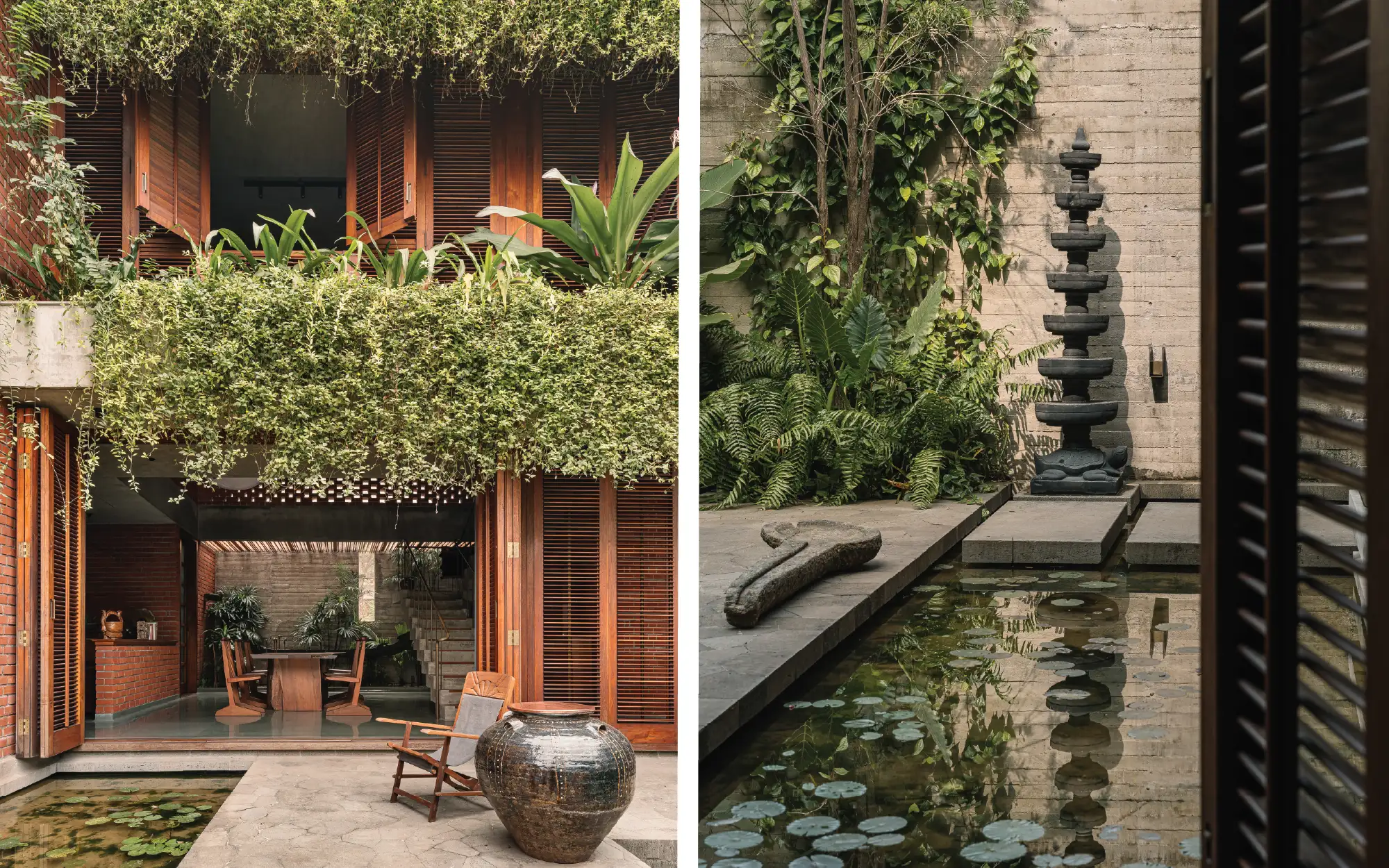
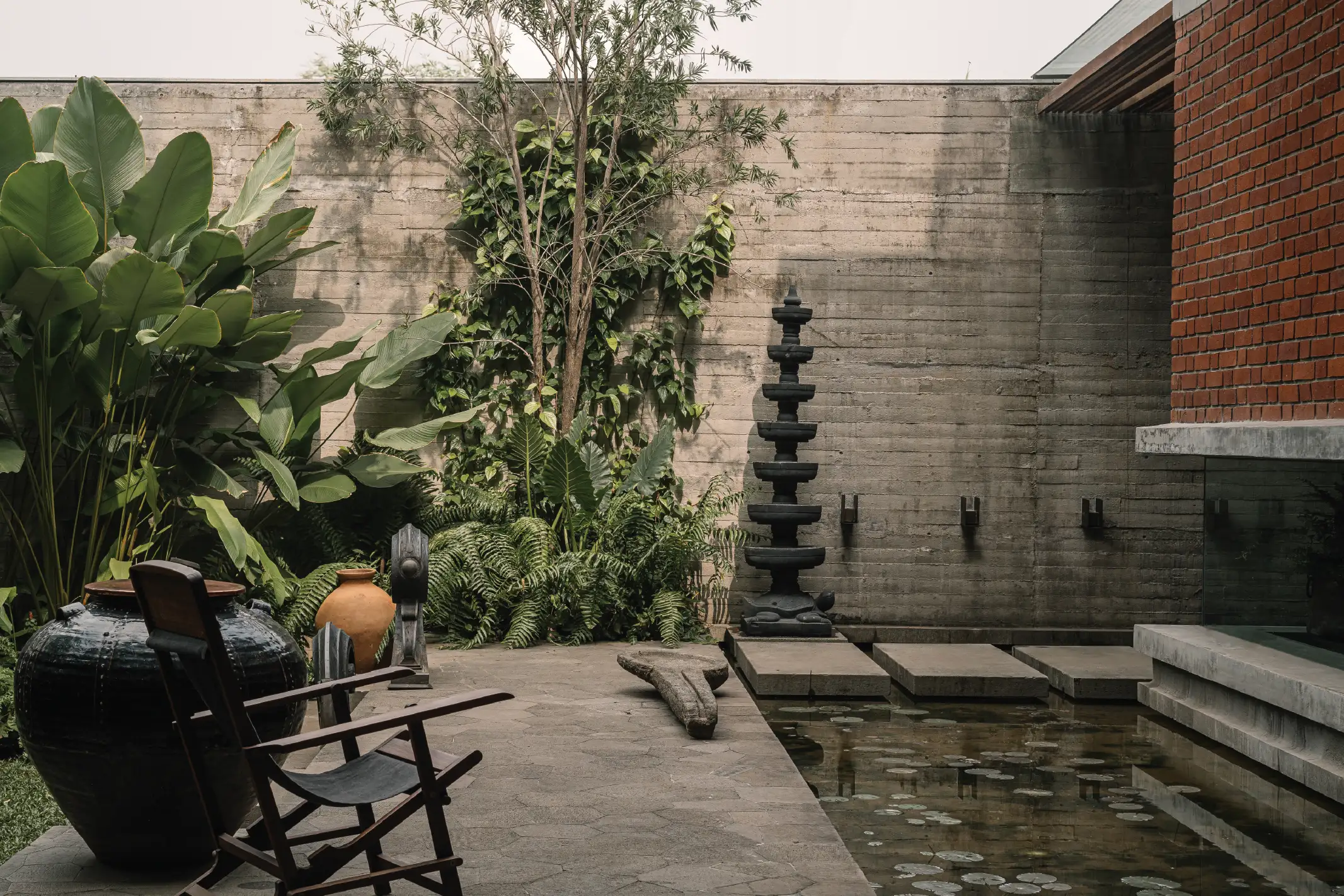
Designed by Hardik Shah, Krishna Kapadia, Madhavi Gumasana, and Sweta Doriwala of Studio Lagom, House of Memories in Valsad, Gujarat, is a multi-generational home conceived as a repository of continuity, nostalgia, and contemporary living. Central to this biophilic haven is water, an element that stitches together architecture, landscape, and memory. Think lily ponds, water courts, and reflective water bodies that are seamlessly woven throughout the residence, creating moments of pause and contemplation. “Whenever the site permits, we try to introduce some form of water into the project. It doesn’t necessarily have to be a koi pond. Depending on the scale and character of the house, it could be a lily pond, a small cascade, a reflective water body, or even a water court,” says Shah.
Water appears at different points across the home. At its heart is a stepped courtyard with a water body that introduces dappled light, gentle movement, and shifting reflections. The pooja space is positioned at the edge of the water, allowing it to become part of the daily rituals. “Beyond its sensory qualities, the water features contribute to a cooler microclimate around adjoining spaces, softening the perception of built form and fostering a stronger connection with nature,” Shah explains.
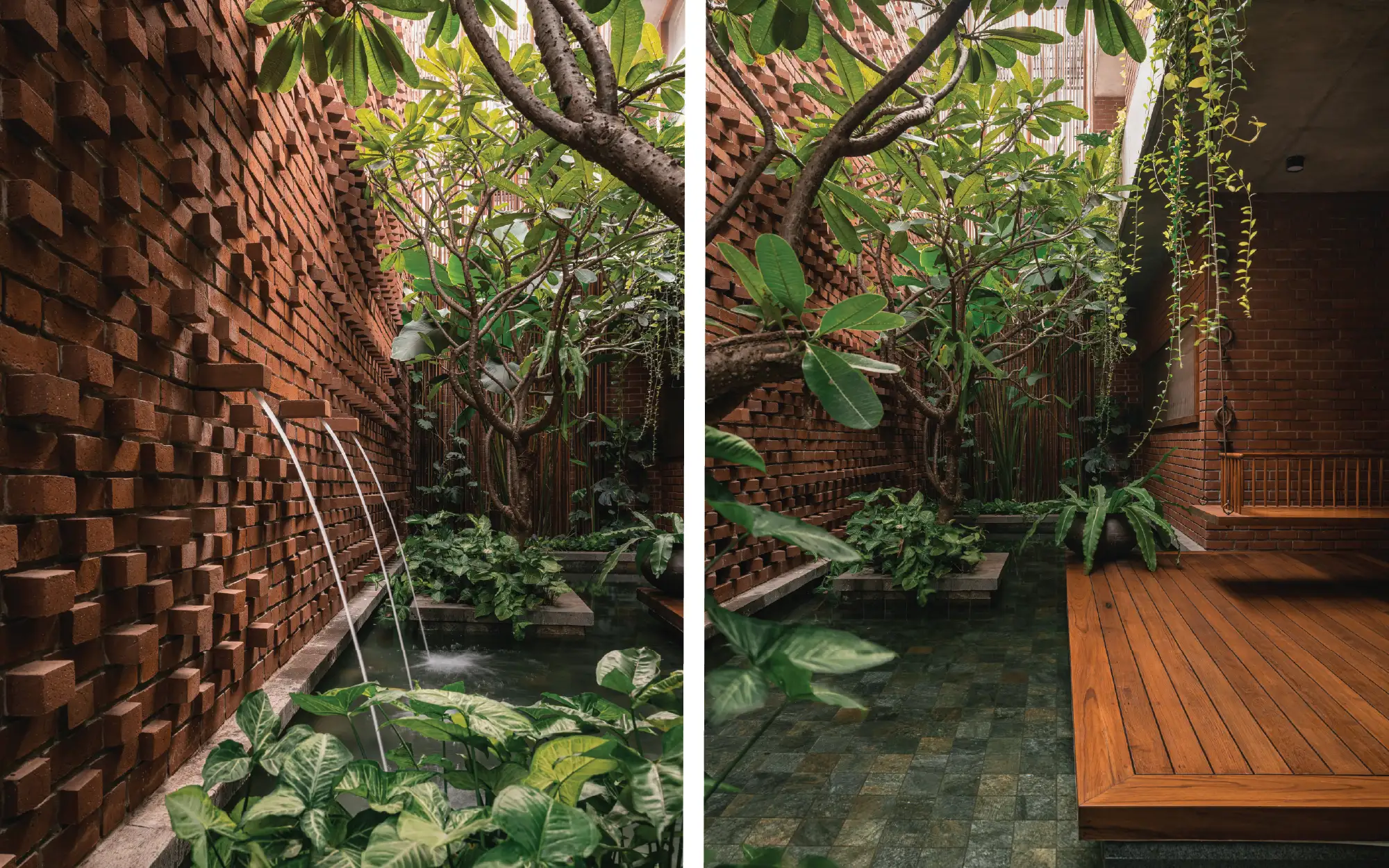
Water’s enduring presence in Indian culture is intrinsically linked to ideas of purification, renewal, and introspection, believe the architects. “What interests us is how these cultural associations align naturally with its architectural qualities. Even a modest water feature can make a home feel calmer and cooler.” For the homeowners, the inclusion of water was not rooted in any singular belief system but rather in a desire to create a home that offered moments of respite within daily life. “They wanted a home that felt connected to nature and offered moments of pause,” says Shah. “Different clients come with different motivations. Some are drawn to the visual and sensory qualities of water, while others associate it with prosperity, well-being, or spiritual beliefs. Often, it is a combination of these factors.” Shah explains and signs off.
DP Pro-Advice: Darker materials are particularly effective as they enhance reflections and visually emphasize the movement of water.
Also read: The Most Colourful Public Art Installations Perched At The Edge Of The World
2. Pranavam by The Pinewood Studio
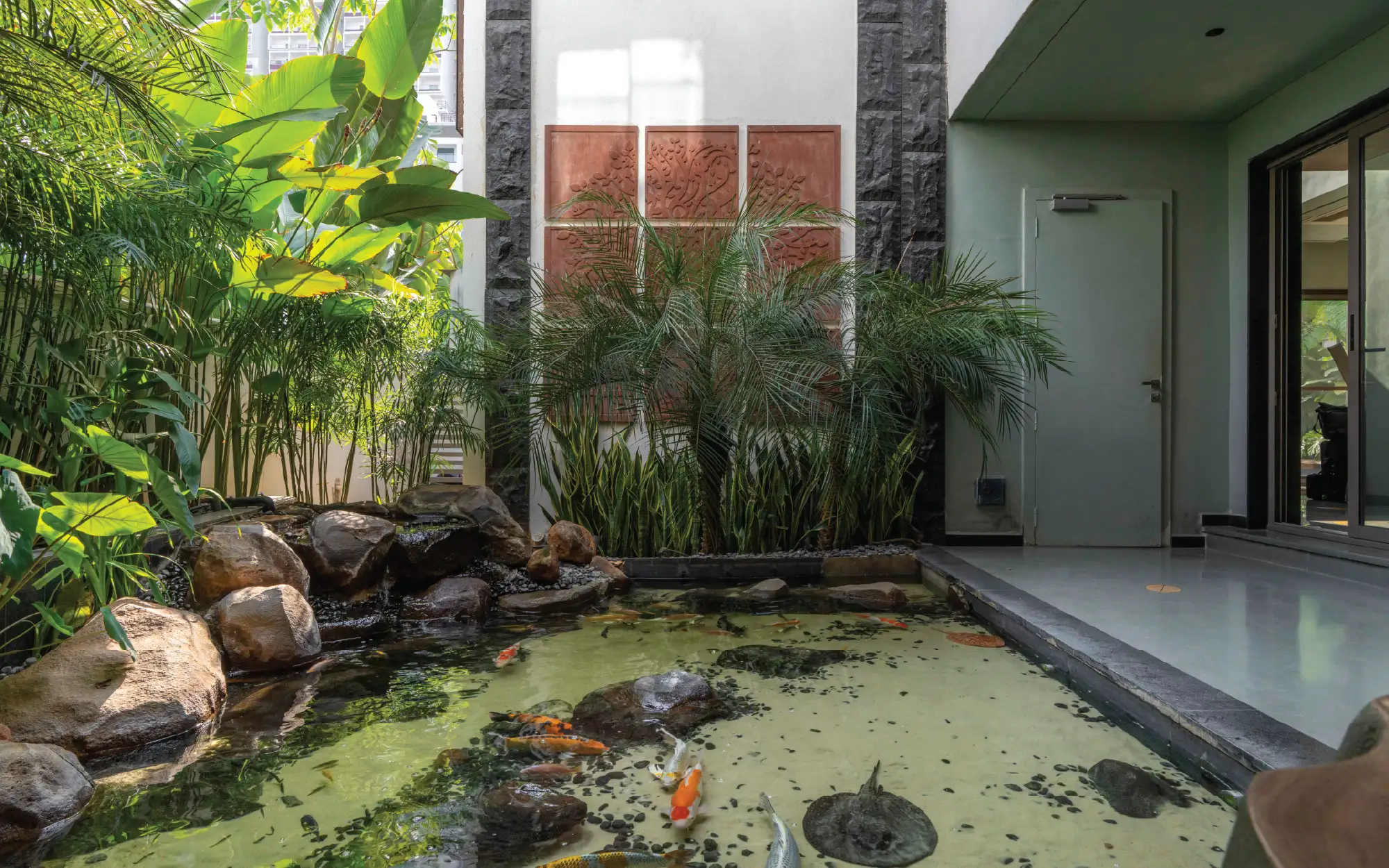
Doused in beauty, symbolism, and a sense of stillness, ‘Pranavam’ is a private residence in Kerala, designed by landscape architects Meghna Dulani and Shashwat Gehenwar of The Pinewood Studio in collaboration with Phylosophy Design Studio. Inside this home is a picturesque koi pond positioned in the entrance courtyard and executed by Aqua StudioX. Framed by natural boulders and shaded by a phoenix palm, the pond introduces a sense of calm while serving as a daily gathering point for the family. Home to the family’s koi fish and turtles, the pond remains visible from multiple rooms, ensuring that water is not experienced as a decorative afterthought but as a constant presence woven into daily life. Elaborating on its thoughtful location, Dulani says, “The pond is located right outside the client’s office on the ground floor, allowing it to become a part of his daily experience. Whether beginning the day by tending to the pond himself or taking short breaks to overlook it from his workspace, it offers a quiet connection to nature and creates opportunities for reflection amidst a busy schedule.”
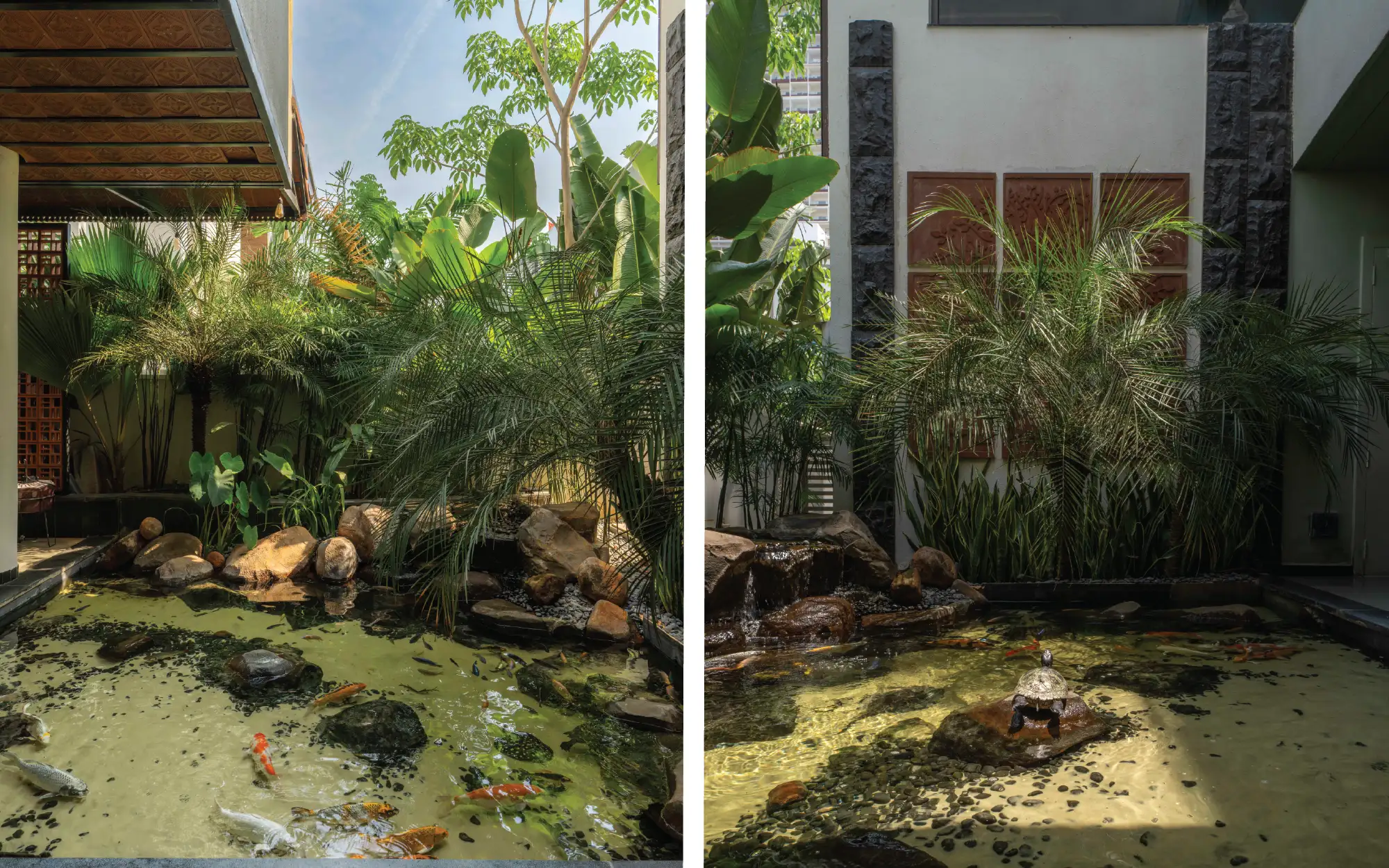
A well-designed koi pond introduces movement, changing reflections, gentle acoustics, and an ever-evolving natural element that softens the rigidity of built architecture. Its routine maintenance is essential to keep it healthy and visually appealing. At ‘Pranavam’, these qualities become particularly evident throughout the day. As sunlight filters into the east-facing courtyard, the water’s surface mirrors the architecture and surrounding greenery, creating a landscape that constantly changes with the light. The gentle ripples and the fish’s movement lend life to the otherwise quiet courtyard, making it a favourite spot for the family. “Some clients are drawn to the symbolic associations of koi ponds, such as prosperity, harmony, and good fortune, while others appreciate the sensory and experiential qualities that water brings to a space. Increasingly, we see clients looking for elements that encourage mindfulness and a slower pace of living,” explains Gehenwar. As luxury homes increasingly prioritise wellness and sensory design over visual spectacle alone, it’s clear that koi ponds will continue to emerge as one of the most enduring landscape features.
DP Pro-Advice: Prioritising materials that perform well in wet conditions and require minimal long-term maintenance is key.
Also read: #DPExclusive: Can A Staircase Have A Soul? This New Delhi Project Makes A Case For It
3. House of Quads by Thomas Parambil Architects
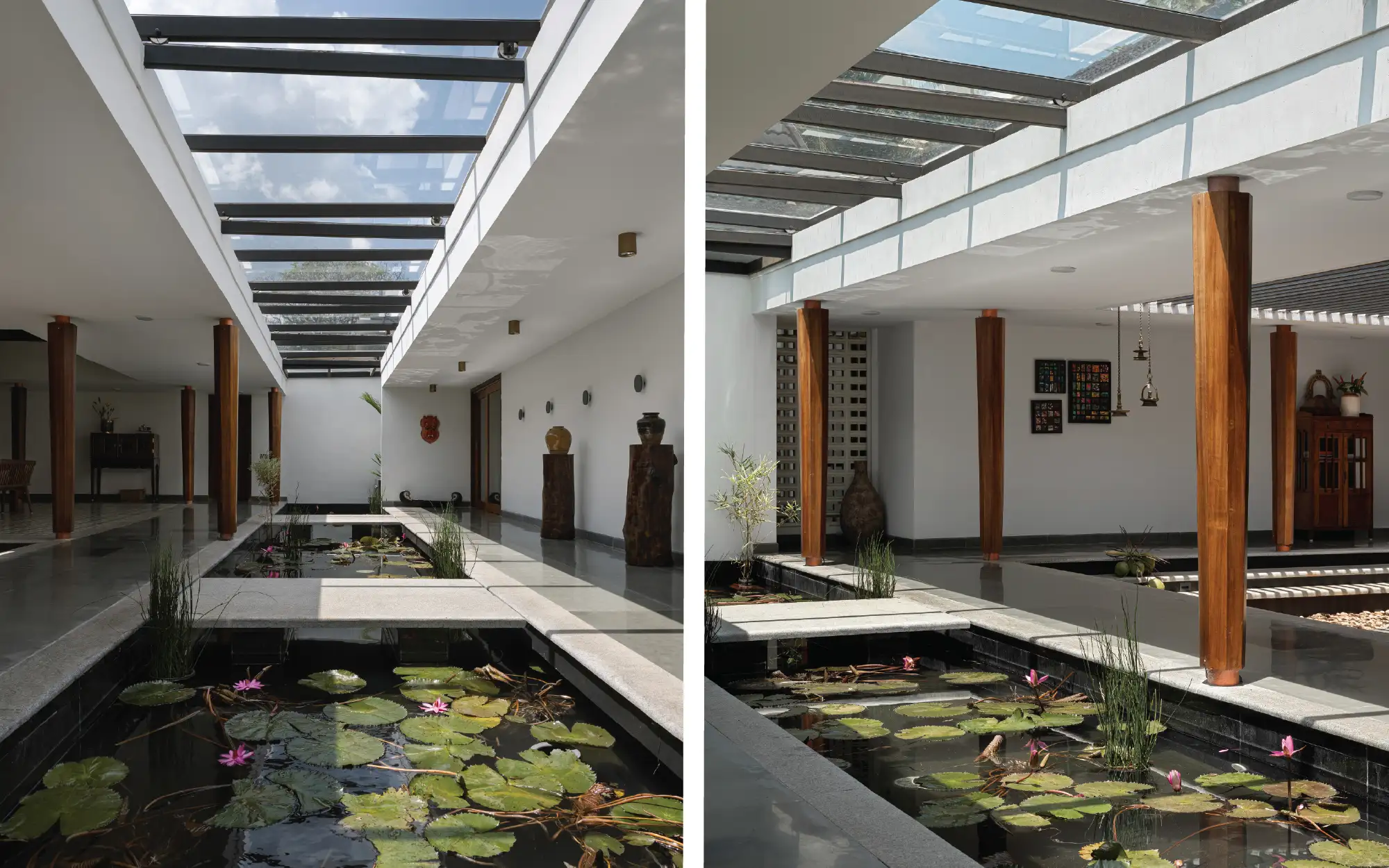
In some luxury homes, a water feature is embraced as an ornamental addition, as it influences how the space feels. A compelling example is House of Quad, a four-bedroom residence in Kottayam, Kerala, designed by Thomas Parambil, founder of Thomas Parambil Architects (TPA), in collaboration with Reuben. While the home is set amidst paddy fields, rubber plantations, and Kerala’s lush landscape, it is the 600-square-foot lily pond that is far more than a picturesque landscape intervention positioned adjacent to the central living spaces and courtyard. Speaking on its design, Parambil says, “Inspired by Kerala’s traditional architecture, the lily pond plays an active role in the home’s environmental performance. It enhances the visual connection between the interiors and the surrounding landscape while reflecting natural light into adjacent spaces.” The result is a calm, elegant focal point that adds depth and character to the overall environment.
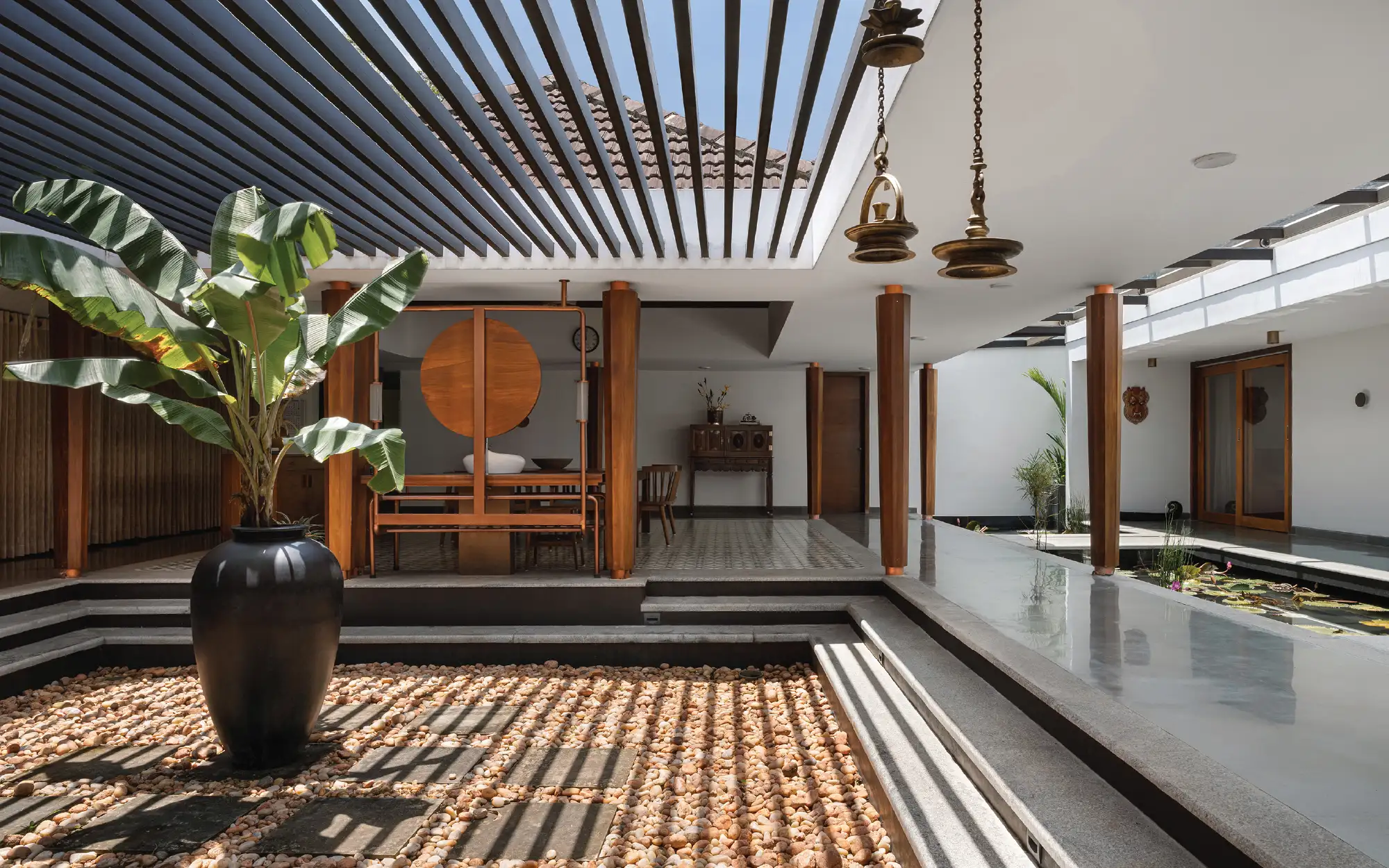
The essence of a well-designed lily pond lies in creating a timeless experience where materiality, craftsmanship, and performance are seamlessly integrated. Equally important are thoughtful detailing and consistent maintenance, ensuring the pond remains as functional and hygienic as it is visually captivating. “When designed and maintained correctly, a lily pond does not necessarily become a breeding ground for mosquitoes. Proper water circulation through pumps or fountains prevents the formation of stagnant water, which mosquitoes require for breeding. Aquatic plants should be balanced so they do not completely cover the water surface, and introducing natural predators such as fish can further help control mosquito larvae,” says Parambil. Homeowners should ensure continuous water circulation, regularly remove fallen leaves and debris, prune aquatic plants as required, and monitor water quality to maintain a healthy ecological balance. With consistent care, a lily pond remains a sustainable landscape feature that enhances both the home’s comfort and its connection to nature.
DP Pro-Advice: Periodic cleaning of pumps and filtration systems, along with checking water levels and controlling algae growth, helps preserve the pond’s hygiene and long-term performance.