Saunas, Matcha And Sensory Design: 3 Wellness Clubs To Lower Your Cortisol Levels
Responding to the physical and emotional demands of contemporary urban life, wellness spaces in India are moving beyond the conventional language of fitness studios to embrace wellness-led architecture.
- 5 Jun '26
- 5:49 pm by Beverly Pereira

Architecture is no longer a mere backdrop for wellness. Today, it actively participates in the journey, creating environments that encourage pause, introspection and reconnection with both the self and community. Across India, from Mumbai and Delhi to Hyderabad and beyond, wellness clubs are being shaped to prioritise fluid movement, mindfulness and holistic offerings. Mindful architecture, tactile materials, natural light and softened geometries become defining visual cues in these immersive spaces. From a wellness space designed around women’s rhythms, to clubs with intentional offerings rooted in sensory calm and community, India’s new wave of wellness spaces has arrived.
Also read: The Most Colourful Public Art Installations Perched At The Edge Of The World
1. Evolve Wellness Club | New Delhi
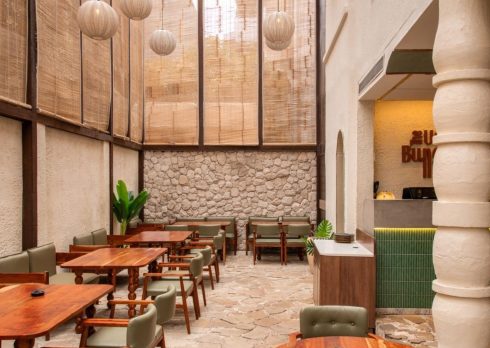
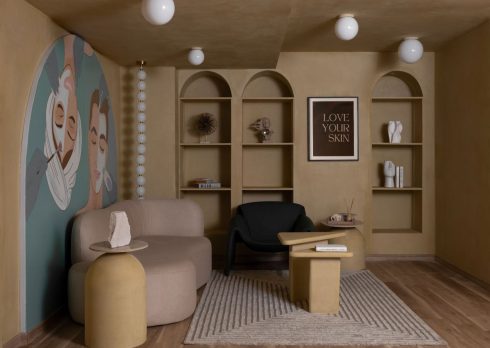
Wellness is envisioned through the lens of intentional femininity at Evolve Wellness Club, located at the Dhan Mill. The country’s first women-only wellness club introduces a nuanced approach to wellbeing that recognises women as individuals in need of restoration and a space to call their own. Founded by entrepreneur, wellness advocate and art curator Anu Bajaj and young entrepreneur Shivam Bajaj, this restorative urban sanctuary aims to address the emotional, physical and hormonal realities of womanhood—and it does so with a host of beneficial offerings activated at the club.
Spread across 6000 sq. ft., Evolve was designed by Studio LCD to create a seamless journey where every space intentionally flows into the next, akin to the experience of wellness itself. Amith Chhabra, founder of Studio LCD, says, “We approached the project as a layered spatial narrative that gradually transitions from energy to calm. There’s a strong emphasis on sensory wellness. Textures, acoustics, lighting and spatial transitions were carefully considered to ensure the experience feels immersive and restorative.” Arriving at the reception, the experience is warm, welcoming and far from clinical, thanks to soft curves, textured surfaces, muted earthy tones and diffused lighting. One is drawn into the movement-focused zones like the strength training-centric gym and Pilates, physiotherapy and yoga studios designed to feel open, breathable, and that use tactile finishes and warm woods.
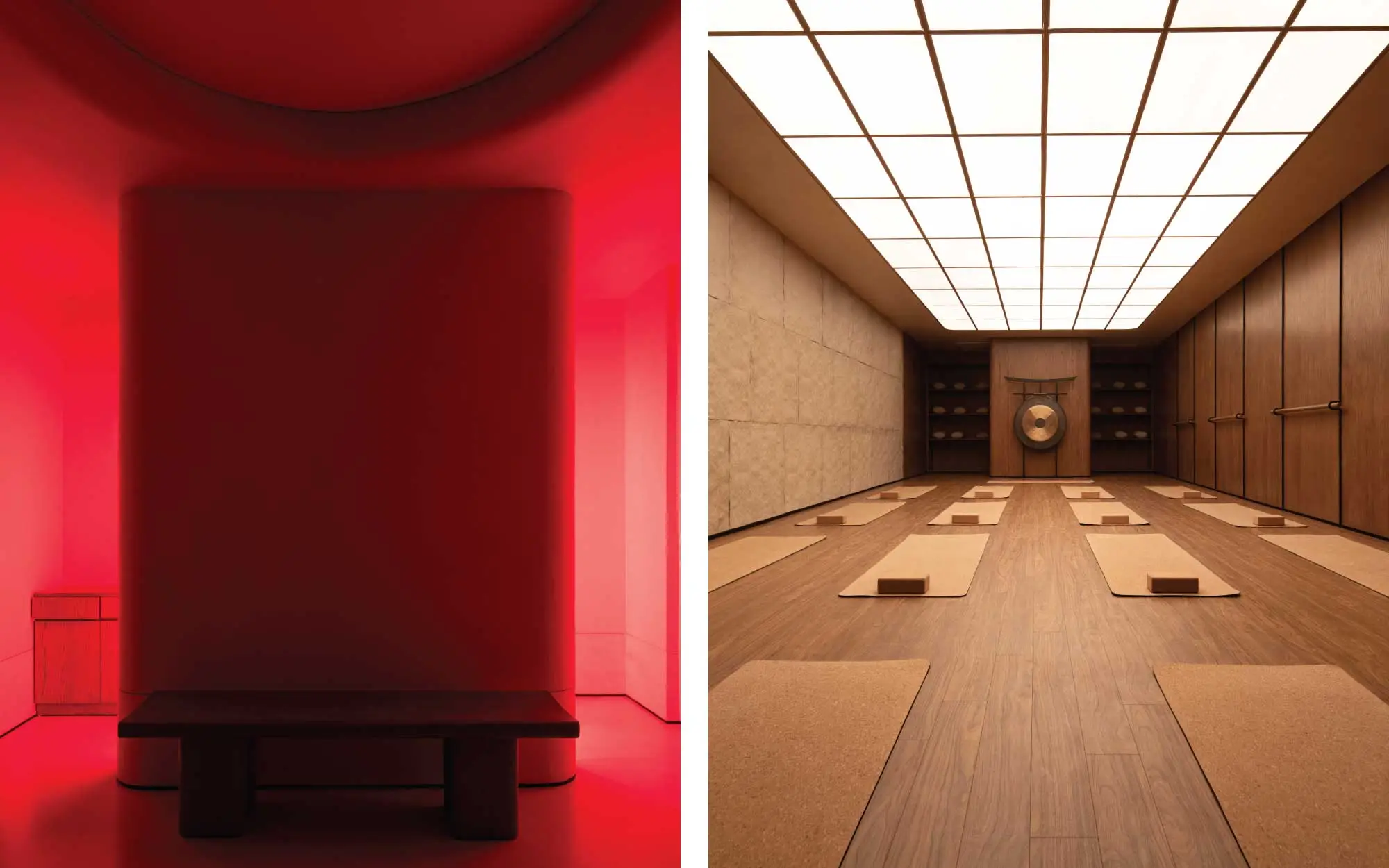
It’s easy to feel calm, revitalised and cocooned in the recovery and wellness zones that offer infrared sauna and steam rooms, red light therapy zones, recovery rooms for massages, and meditation nooks. Community workshops, sound healing, personalised nutrition plans and even a café led by Subko that dishes out functional blends and adaptogenic nutrition further reinforce the club’s holistic philosophy. In these zones, soft lighting and deeper tones create an ideal environment for restoration and self-care. “We also introduced transitional pauses throughout the layout—small moments where one can disconnect, sit quietly or simply slow down between activities,” Chhabra explains. One of the key highlights, he says, was the balance between luxury and restraint. “The design does not rely on overt opulence; instead, it creates a luxurious atmosphere through proportion, mood, materiality and sensory comfort. The lighting design played a very important role in achieving this. We used glare-free, ambient lighting to create a soft, immersive atmosphere throughout the club.”
Also read: 1,000 Artworks, One Address: Kit Kemp’s New NYC Hotel Becomes A Repository Of Colours And Patterns
2. AUM Life | Mumbai
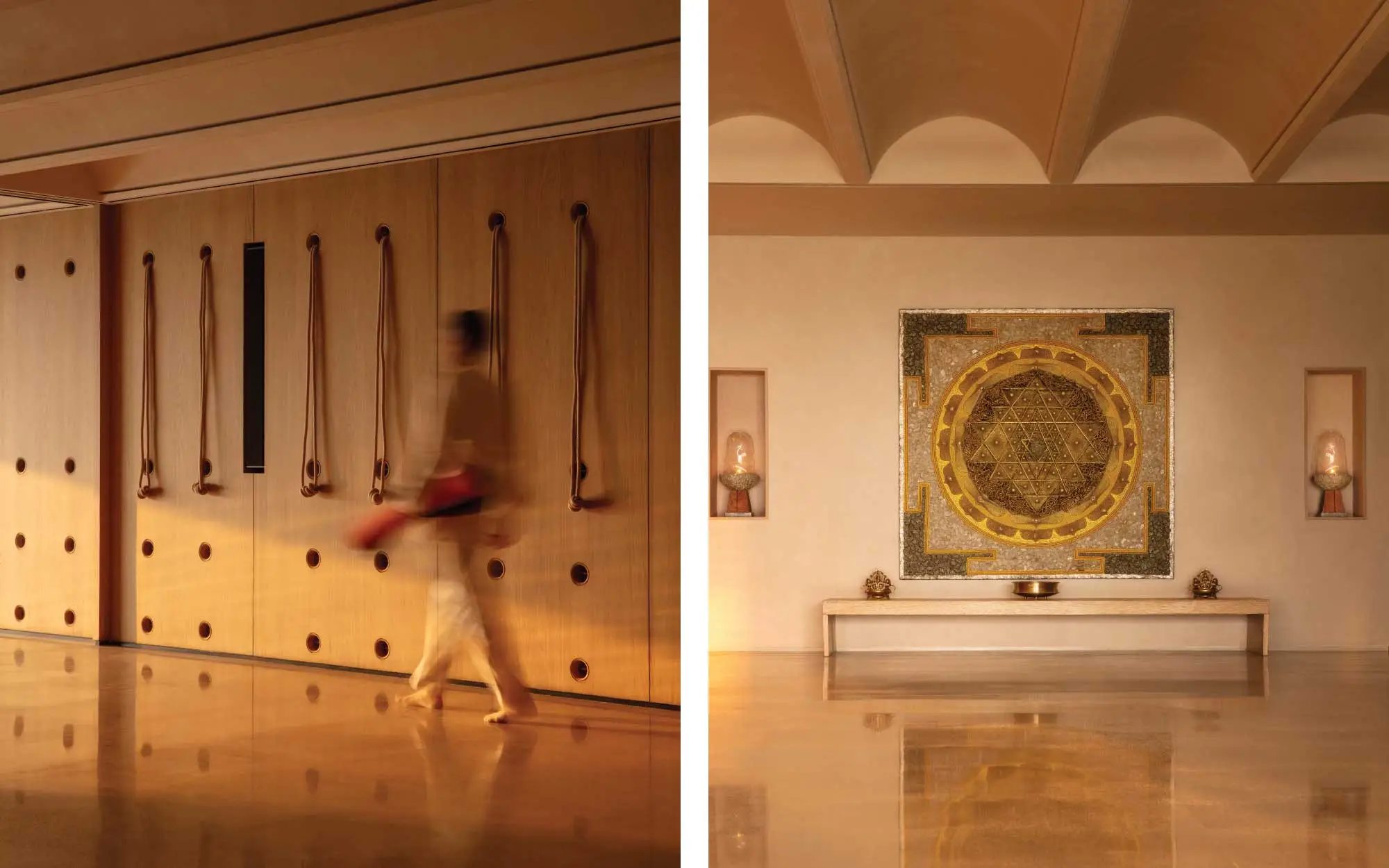
An antidote to Mumbai’s frenzied pace, AUM Life resists any form of hyper-visual language in lieu of textures born from restraint, quietude and sensory depth. This 7,800 sq. ft. space, founded by Richa Agrawal, sits above Tao Art Gallery in Worli. Designed in collaboration with Architecture BRIO, it reimagines the idea of the traditional ashram through a contemporary architectural lens shaped by tactility. Ranging from community sessions to individual therapies, practices at AUM Life integrate Iyengar yoga, Ayurveda, traditional Chinese medicine, sound baths, pranic healing, lunar rituals, guided meditation and transcendental knowledge, including tarot studies. The space is composed of seven treatment rooms, four consultation zones, a yoga and meditation hall, dining and kitchen space, and a dedicated sound healing room.
The design of AUM Life is rooted in materiality with a sensorially rich palette of hand-finished stucco, limestone, terrazzo and warm timber surfaces. “Floors, walls and joinery are thoughtfully detailed to invite touch and awareness, fostering a heightened sense of presence and quiet tactility throughout the space,” says Shefali Balwani, Principal Architect at Architecture BRIO. One gets a sense of the space at the reception where rough-hewn stone, suspended lighting and softened architectural curves induce an almost monastic calm. Light skims across stone shelves as muted surfaces absorb shadow, and vaulted forms quietly amplify a sense of stillness.
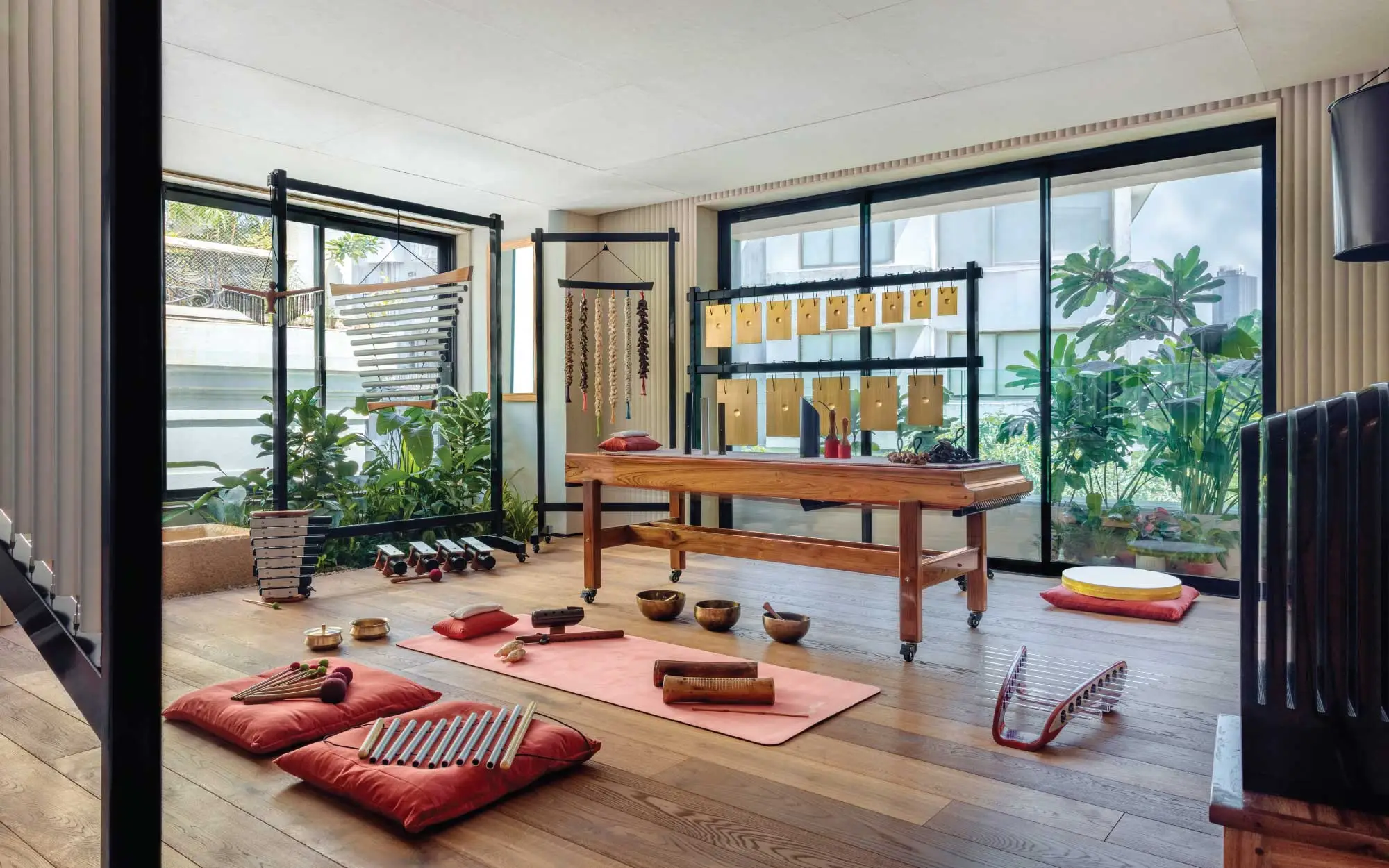
The interiors unfold more as a meditative sequence and less like a stodgy, conventional programme. Circular geometries, vaulted ceilings and porous transitions gently diffuse rigid spatial boundaries, encouraging movement and flow. Treatment rooms spill into contemplative corners, while communal spaces merge into areas of solitude. Low ceilings and existing structural constraints proved to be a constant challenge; rather than working against limitations, the design leans into intimacy using vaulting and concealed services to create spaces that feel expansive yet cocooned. “Vaulted ceilings lift the eye upward, creating a sense of expansiveness that parallels the act of breathing. These volumes are not merely formal gestures; they are spatial metaphors for openness, continuity and the boundless nature of inner life,” says Balwani.
Also read: With Craft At Their Core 3 Homes Where Fireplaces Are Too Hot To Handle
3. Kōr Klub | Hyderabad
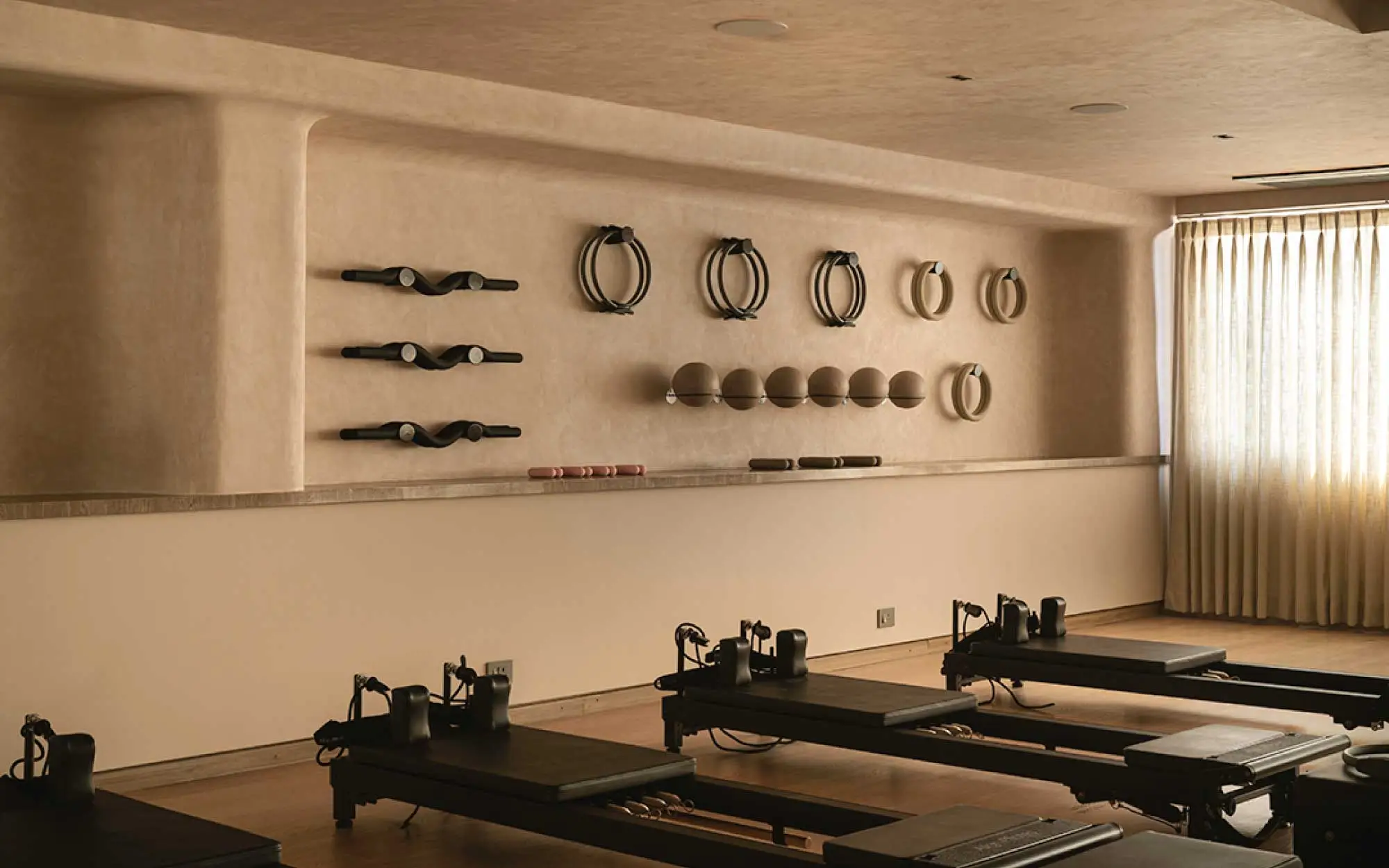
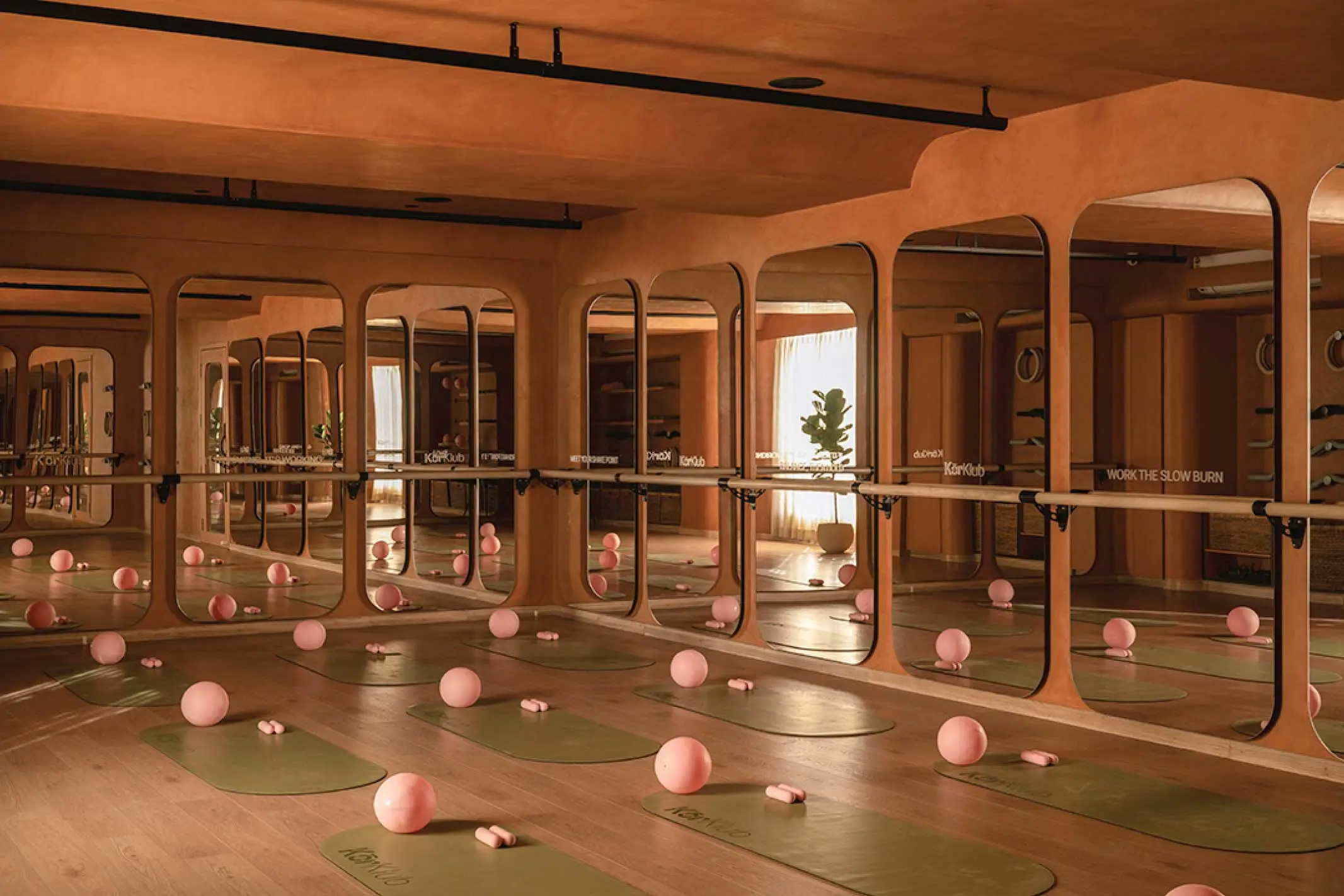
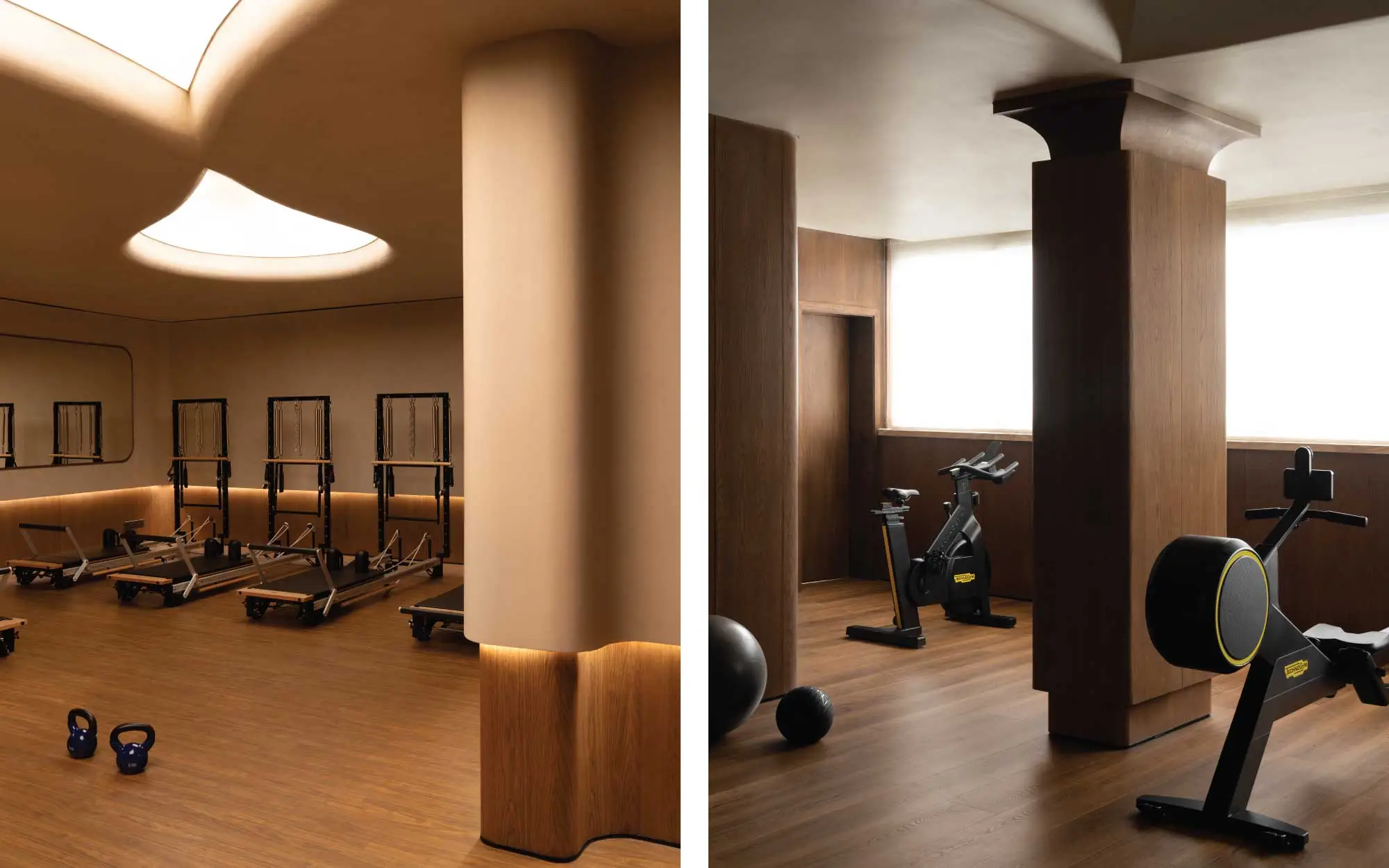
Perched atop a commercial building in Jubilee Hills, Hyderabad, Kōr Klub approaches wellness through the lens of community, movement and spatial emotion. Designed by House of Ruya as a boutique fitness and recovery club, its architecture flows as intuitively as the body itself. Across 4,500 sq. ft., the design rejects the rigidity often associated with gym interiors to embrace softness, sculptural fluidity and rhythm. Offerings at this social wellness club include Pilates, barre and recovery aids like cold plunges, infrared sauna and steam.
With curves sweeping across and rising organically from floor to wall to ceiling, the architecture itself appears almost kinetic, mirroring the body’s natural flow. The resulting environment feels both calming and revitalising. Rather than prioritising purely functional circulation, the layout draws from experiential movement, unfolding mindfully composed transitions as the guest is encouraged to pause, gather and move through the space at a slow pace. “When we first started developing the concept, the strongest idea that emerged was movement. Not just movement in a physical sense, but movement that feels graceful yet powerful at the same time,” says Aishwarya Govind, principal designer at House of Ruya. “Pilates and Barre are both forms of movement that appear fluid and effortless, but beneath that softness lies immense strength, control and precision. That contrast became the foundation for how we approached the space.”
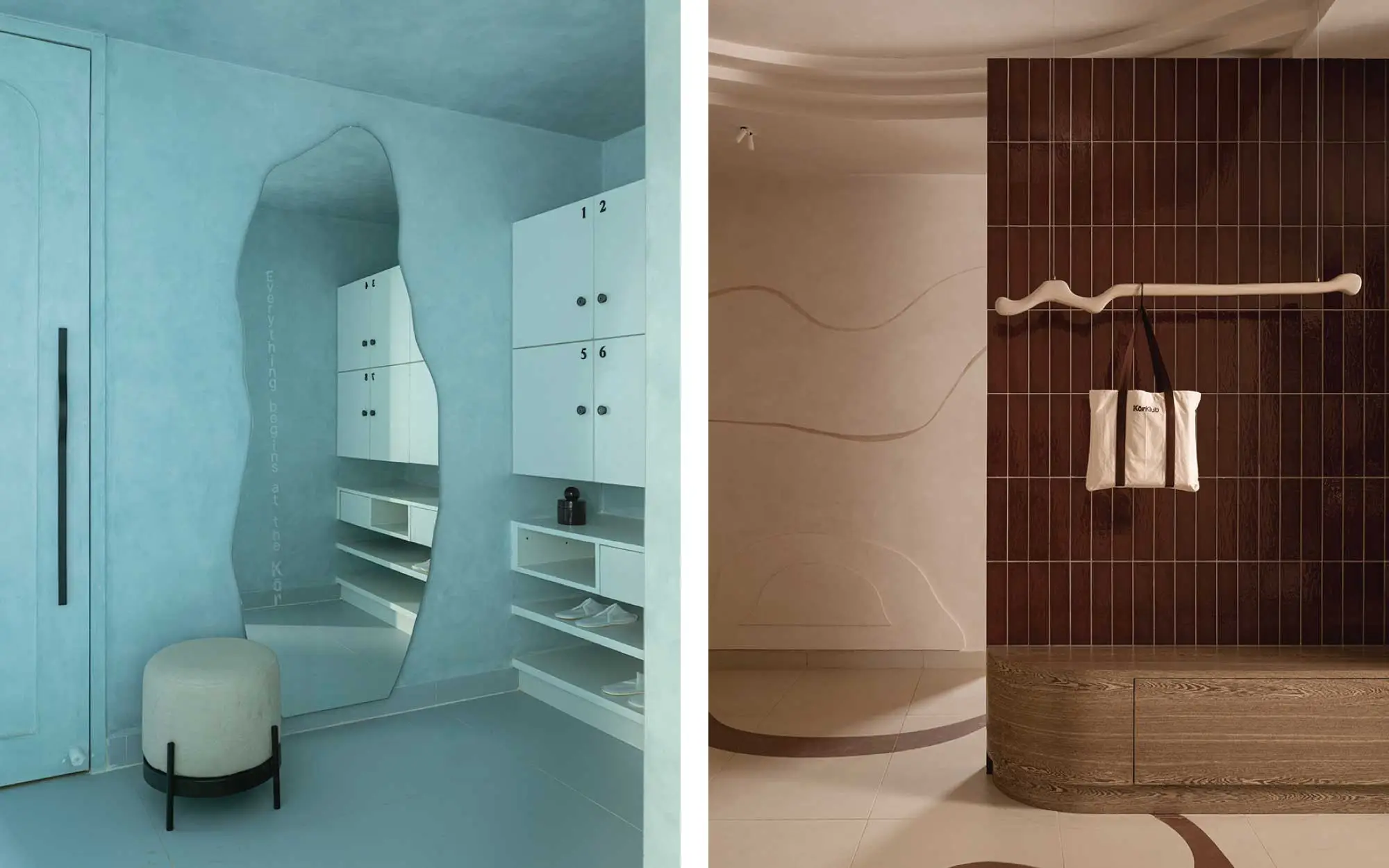
The palette at Kōr Klub is rooted in the club’s visual identity. Lime plaster finishes merge with hand-glazed tiles while glass brick partitions sit comfortably with rich, glossy maroons, establishing a chic visual language anchored in tactility. A clay-toned lobby, akin to a comforting cocoon, leads the way to a brighter communal zone that houses a reception, lounge and café. Further inside, workout studios exude an intentionally distinct aesthetic. While moody monochromes make up the barre room, abundant natural light shapes the atmosphere at the Pilates studio. Tucked behind social spaces, recovery zones introduce lower lighting, bespoke mists, quieter tones, plush linens and a more introspective energy. “Since the architecture itself relies heavily on curves and minimal interventions, the material palette had to bring depth, softness and character into the space without overpowering it. Limewash became one of the defining materials of the project, with almost the entire space, including walls and ceilings, enveloped in a muted beige limewash finish inspired by the brand identity and overall emotional tone we wanted the space to evoke,” says Govind.