#DPExclusive: Can A Staircase Have A Soul? This New Delhi Project Makes A Case For It
Overlooking a lush park, this 3,150 sq. ft. residence by Unbox Design unfolds through tactile materials, expansive glazing and spaces shaped around connection.
- 22 Jun '26
- 6:28 pm by Mehar Deep Kaur

As cities like New Delhi continue to densify, homes are constantly being asked to accommodate more within less. Space fragments, privacy is negotiated, and domestic lives begin prioritising efficiency over emotional connection. Nestled within the textured fabric of Defence Colony, a 3,150 sq. ft. abode approaches these tensions with striking sensitivity. Crafted by Aman Issar and Swarima Agarwal of Unbox Design for a multi-generational family, the four-storeyed structure transforms the familiar builder-floor format into a more fluid and connected environment—one where openness, introspection and shared living coexist with remarkable ease.
The family had lived on the site for years and shared a deep emotional connection with the adjoining park. Early conversations revolved around continuity—how to preserve familiarity while reshaping the rhythms of living for a new phase of life. “The intention was never to create another version of urban luxury,” reflects Issar. “It was to design a home that could hold a family together, spatially and emotionally, while upholding everyone’s individuality.”
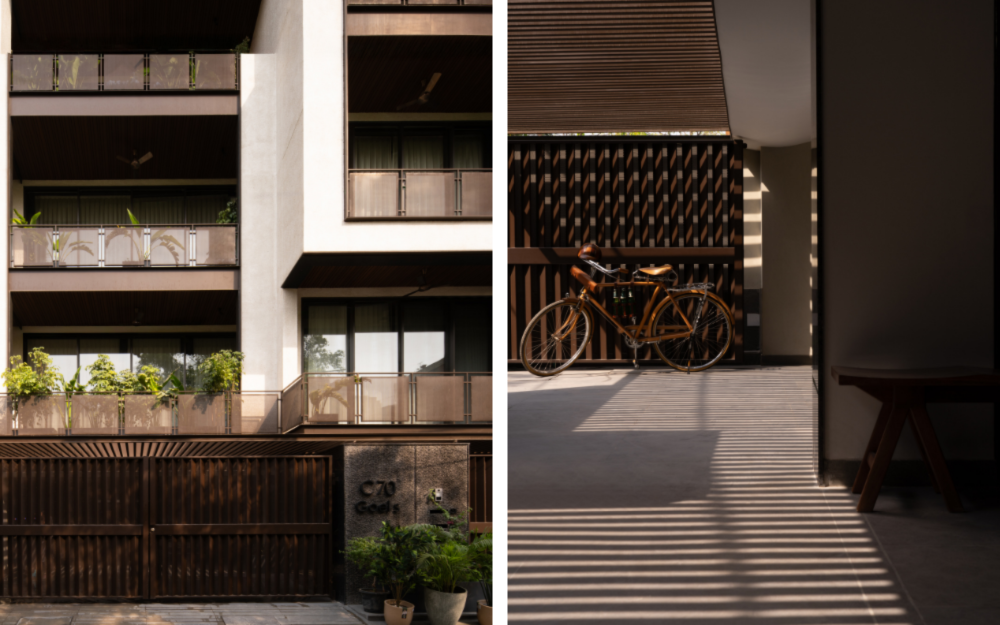
This ethos became the foundation of the spatial strategy. Rather than dividing the home into disconnected units, the architecture gathers itself vertically: two independent residences below, with a duplex above for a family of four. Rebuilt entirely from the ground up, the project allowed the studio to reshape it more cohesively. What could have been a purely pragmatic response instead turns into a calibrated exploration of relationships. Individual worlds intersect naturally, yet moments of withdrawal feel equally intuitive.
Also Read: This Luxe Apartment In Mumbai Is A Repository Of Collectible Design
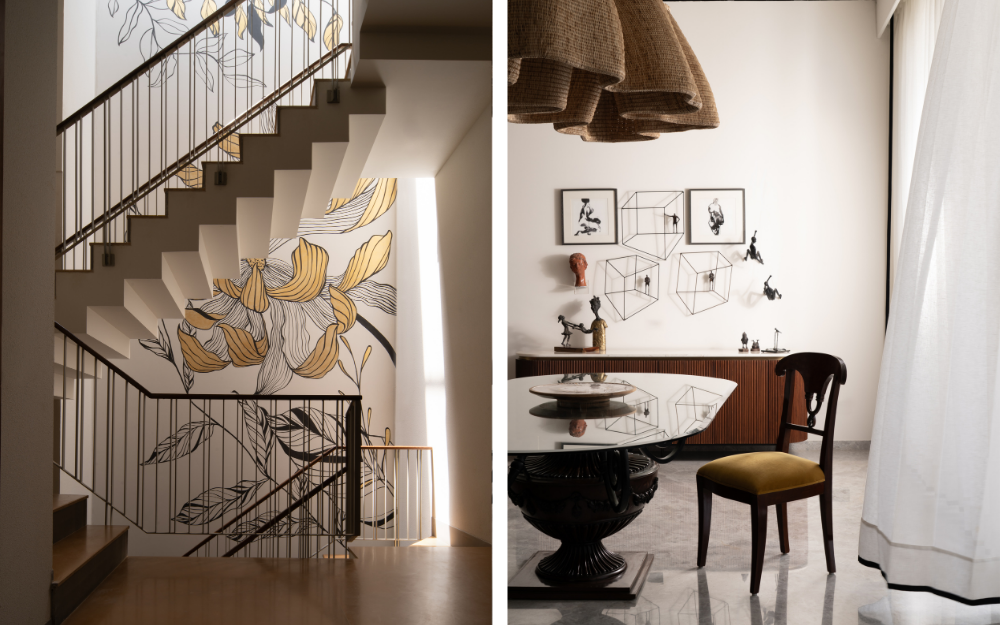
Despite its verticality, the home carries a surprising lightness. Much of this emerges through its relationship with the landscape. “We wanted the park to feel less like a view and more like a presence inside the home,” notes Agarwal, “something that changes the atmosphere through the day.”
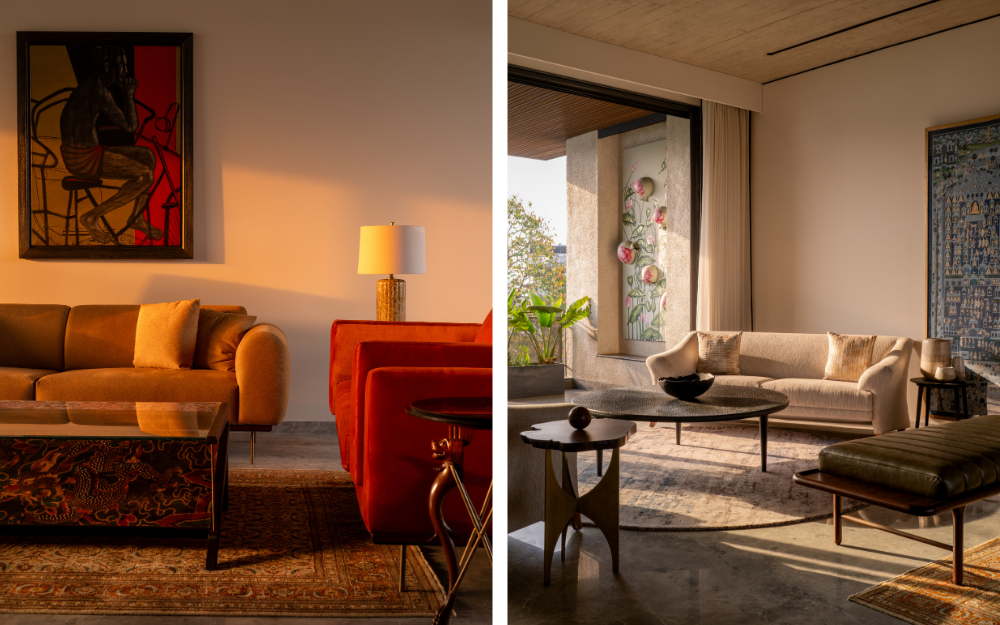
Movement through the house feels intuitive. From the contemplative arrival at the stilt level, you gradually transition into quieter, more introspective zones deeper within, then open out again into larger living and dining areas on the top floor. These spaces connect directly to expansive decks and the terrace overlooking the park at sunset. It’s a sequence that understands the rhythm of gathering, withdrawing, and coming together again. Detached from the enclosing walls, the staircase draws light from a skylight at the summit through the full vertical volume of the house, turning what is ordinarily the most functional element of a building into its emotional centre.
Also Read: A Minimalist Home In Ludhiana, Punjab That Encourages Introspection
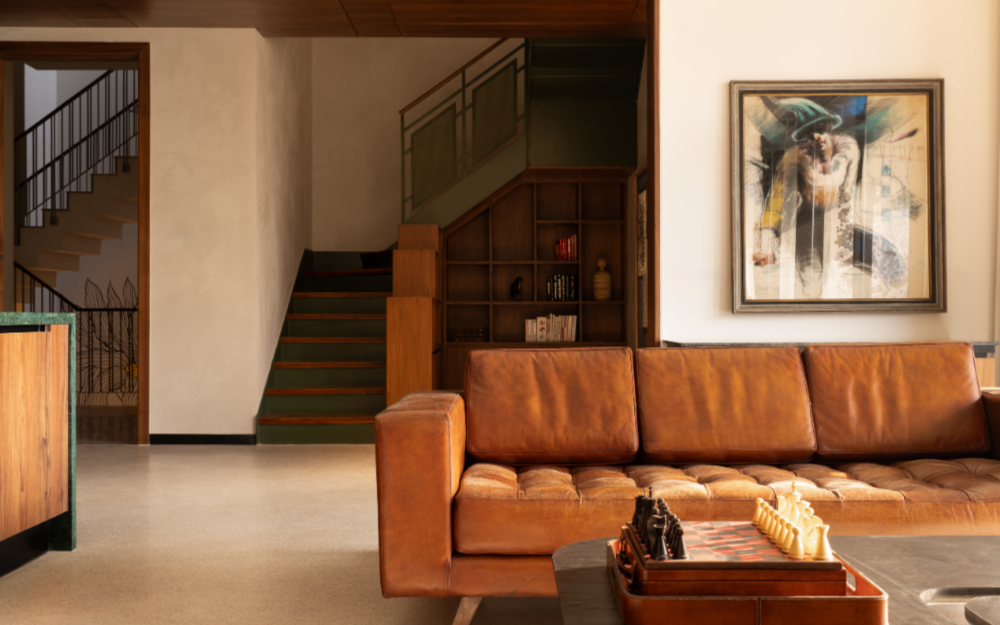
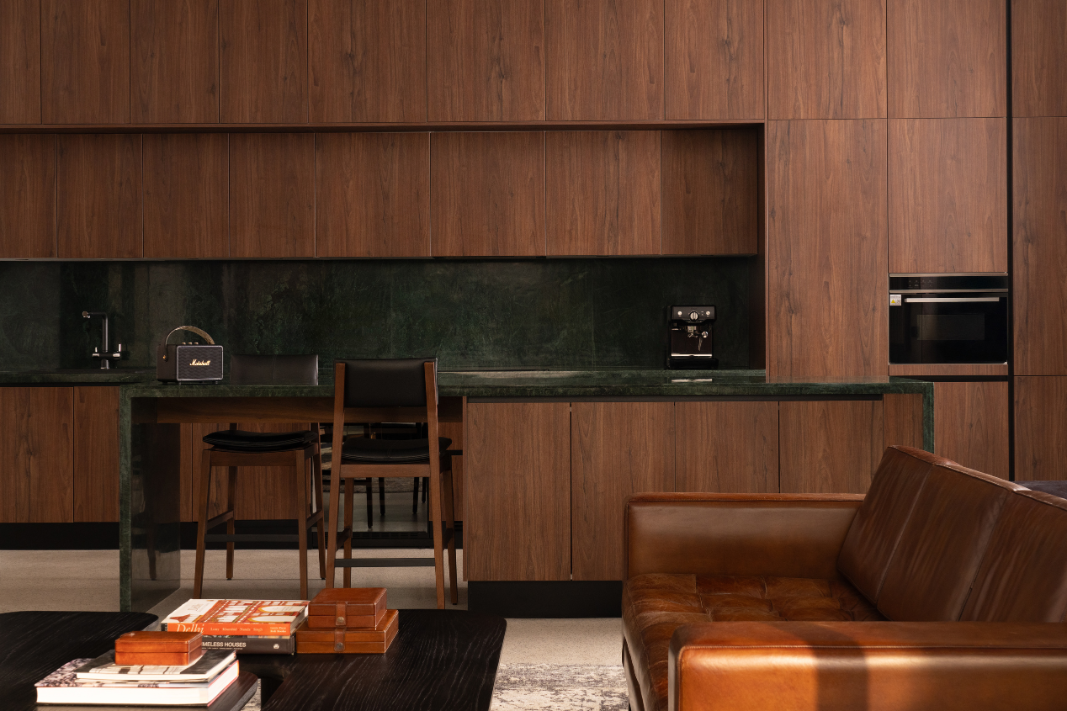
The studio composed a restrained palette chosen for endurance. Stonecrete walls lend tactility, and exposed concrete ceilings preserve the grain of wooden shuttering, retaining the imprint of their making. Underfoot, polished marble introduces softness, and Jaisalmer stone reflects daylight with a golden warmth, especially later in the day. Art becomes an extension of lived memory, with pieces amassed over decades woven seamlessly into the design language.
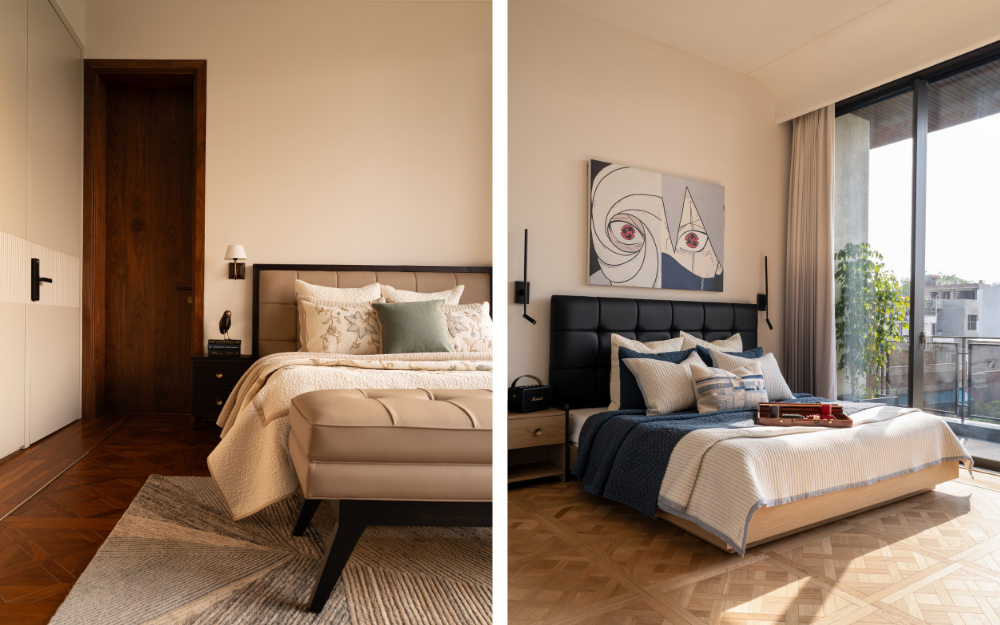
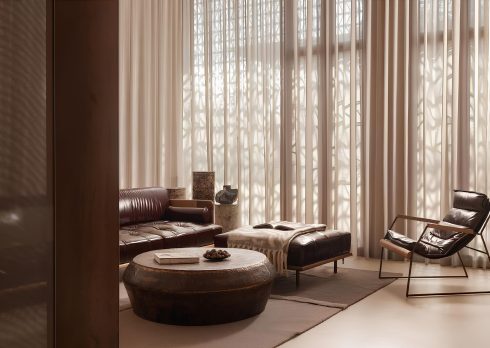
“The idea was to illustrate quiet permanence,” Issar describes it. “Materials that don’t demand attention immediately, but reveal themselves slowly, over time.” The balance comes from contrast: tactile, heavier materials are softened by daylight, greenery, and furniture. Across, the space steers away from spectacle. Luxury is expressed instead through proportion, natural light, and the feeling of spatial calm. Part of the home’s quieter second-floor spaces, the family lounge is furnished with pieces from Portside Cafe alongside a Jaipur Rugs carpet.
Also Read: DP Curates – Our Top 10 For The Ultimate Homegrown Rug Edit
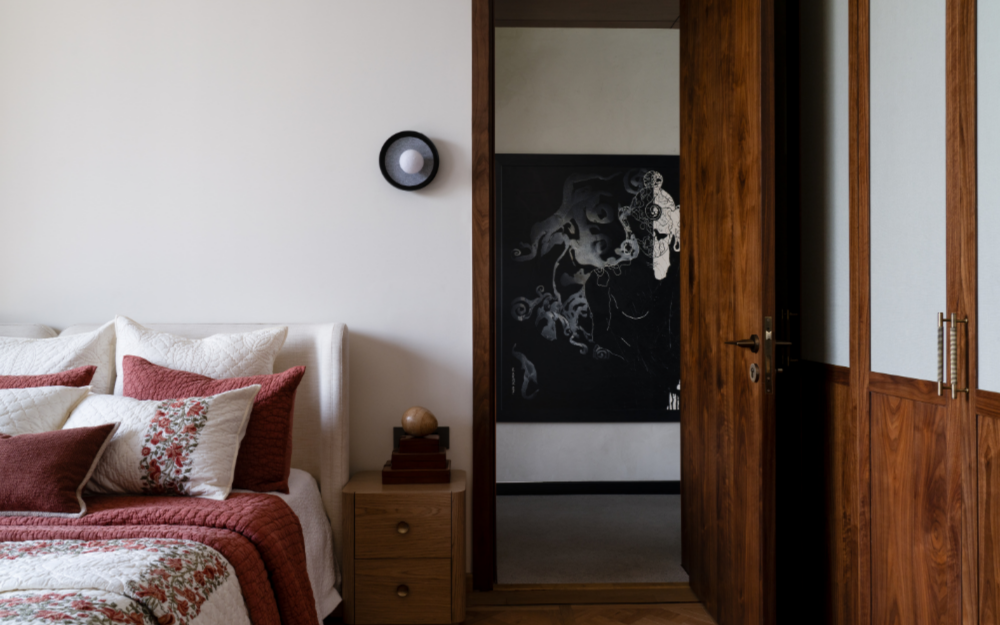
What makes House by the Park feel singular is its openness to becoming. Instead of prescribing a fixed aesthetic, the architecture recedes, allowing the life within to define its character. “A home should never feel complete on day one,” Issar notes. “It should have the capacity to evolve, absorb memory, and change with the people who inhabit it.” Here, this philosophy is unmistakably evident, with distinct spaces that hold both stillness and movement with equal grace.