We’ll Tell You What’s In A Name: 8 Celebrity-Led Restaurants In Mumbai That Cook Like They Mean It
Hero worship rarely guarantees culinary merit. Yet a few celebrity-backed restaurants rise above the gloss—succeeding not through fame alone, but through nerve, nuance, and authentic discipline.
- 30 Jun '26
- 5:00 pm by Sana Krishna

Mumbai eats the way it dreams: in overlapping scenes stitched together by appetite and ambition. A late-night biryani can feel as momentous as a film premiere. It is little surprise, then, that celebrities have sought to leave their signatures not only on screen but also on plates. Their involvement—whether as owner, co-owner or designer—often invites scepticism, with many restaurants dismissed as vanity projects. Mumbai diners, brutally honest and fiercely loyal, rarely return for a name alone. After sifting through the star-backed noise, what remains is a tightly edited list of restaurants that earn their reputation the old-fashioned way—through concept, design and cuisine.
Also read: 7 New Dining Spaces In Bengaluru That Are Serving Spaces, Not Just Plates
1. Bastian Beach Club, Juhu: Shilpa Shetty
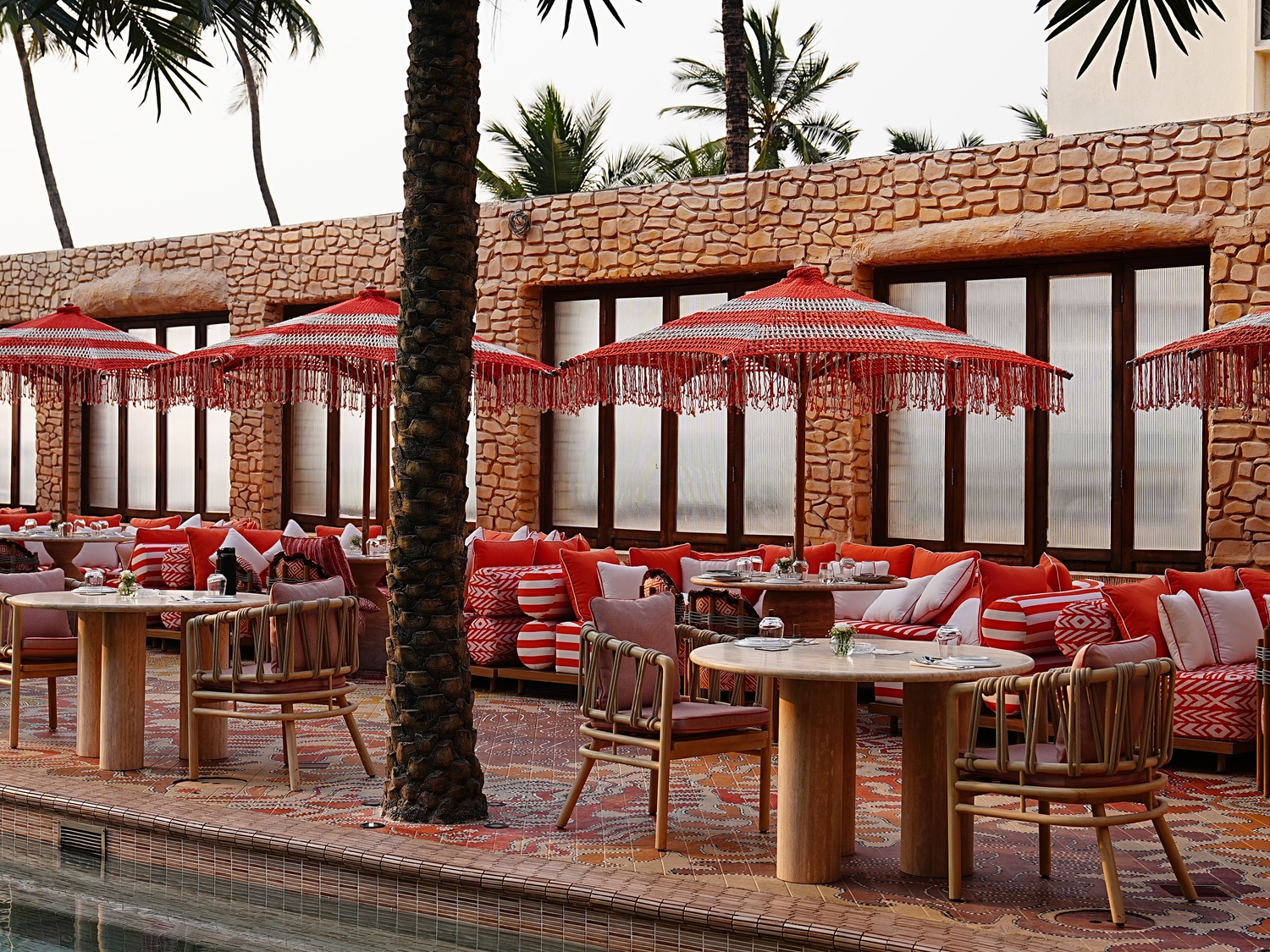
Almost anyone in Mumbai has some relationship with Juhu Beach—if not through memory, then through familiarity. It is where the city meets the Arabian Sea in its most public form. Along this long, well-worn stretch of sand, Bastian Beach Club introduces a new layer to the landscape.
For decades, the beach has been a place to watch the tide move in and out of the city’s daily routine. The founders—Shilpa Shetty, Ranjit Bindra and Kunal Jani—envisioned something more dreamy: a beach club where the shoreline can coexist with the tempo of urban leisure. Interior designer Minal Chopra translated that into a spatial language shaped by openness and light. Influences from Mediterranean beach destinations such as Ibiza, Mykonos and Saint-Tropez are visible, yet the result remains anchored in Mumbai.
Textured timber floors, and walls finished in muted sand and soft white tones create a palette that amplifies daylight. At the centre, a sea-facing pool holds the sky in reflection—golden at noon, inky by dusk. Wide decks shaded by wooden pergolas and cabanas create places for gathering, suited to long brunches, slow afternoons and conversations that extend into the evening.
The menu draws from Bastian’s well-loved signatures under the direction of Chef Kinyo—flavours that lean towards bright coastal flavours: citrus, heat and smokiness. As the day progresses, the atmosphere shifts. The calm of brunch yields to an upbeat rhythm; live DJs take their place as the horizon darkens.
Also read: These New Dining Spots In Hyderabad Whisk You Off Into a Cinematic Design Space
2. Sweeney, Khar: Malaika Arora
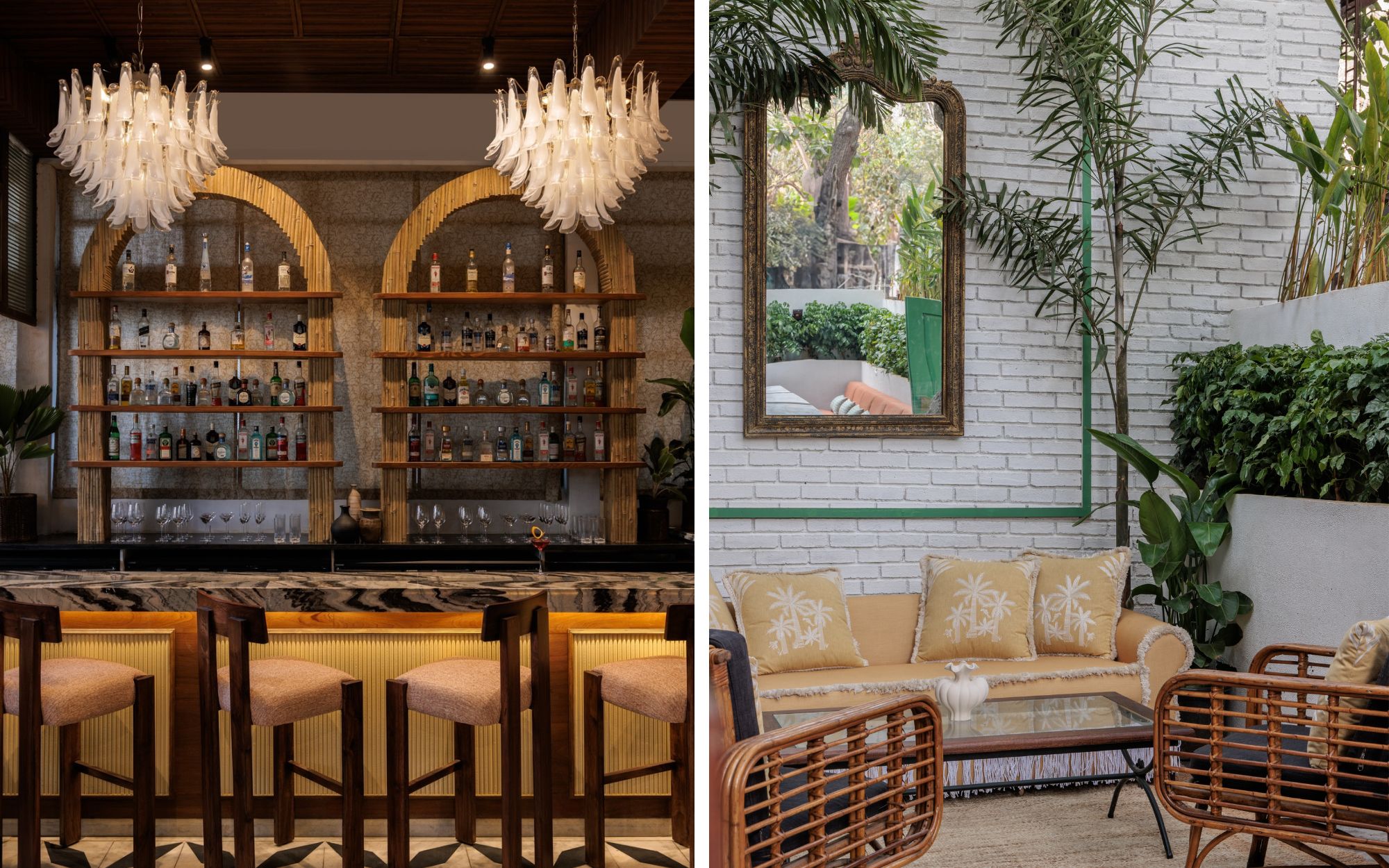
Khar winds into leafy lanes—a neighbourhood of celebrity bungalows and sun-drowsed apartments. Sweeney is a restaurant imagined by Malaika Arora and Dhaval Udeshi, with interiors by Nyishi Parekh. The name of the restaurant arrived like a half-recalled memory—warm, faintly old-world, and playful. A small coincidence sealed it: Arhaan Khan had long admired the actress Sydney Sweeney. Thai and European cuisines converse across tables—trading spice for silk, fire for fragrance.
A mint-green arched doorway welcomes visitors into a courtyard planned around a 140-year-old mango tree, whose generous canopy anchors the restaurant both physically and atmospherically. Pale stone and terracotta tiles laid in geometric patterns, rattan armchairs with black cushions, ochre sofas embroidered with palm motifs, and mirrors mounted on whitewashed brick extend the surrounding greenery into an “infinite garden”, blurring distinctions between built structure and landscape. Drawing on the permeability of Thai architecture, the layout avoids the traditional dining hall in favour of a constellation of smaller rooms and alcoves. The composition centres on a backlit bar and a veined black-and-white marble counter. Frosted glass chandeliers hover like translucent statement pieces above. Sage-green walls—repainted multiple times to achieve the precise shade—are punctuated with displays of white sun hats and artisanal ceramics.
Arora will soon launch the Sweeney Exchange programme, an initiative designed to send female bartenders from India to some of the world’s leading bars. The experience facilitates learning from global talent and brings that expertise back home, with the broader aim of nurturing world-class female bar professionals in India.
“Travel has always been my passion, and when I’m away, food becomes my comfort. Sweeney is the taste of that comfort—the flavours I return to wherever I am in the world. Thai and European cuisines have always felt familiar to me, grounding and reassuring in unfamiliar places”, shares Arora.
Also read: The Jet-Setting World Of Devil Wears Prada 2 Through The Eyes Of Production Designer Jess Gonchor
3. Alta Stella, Andheri West: Sanjay Dutt
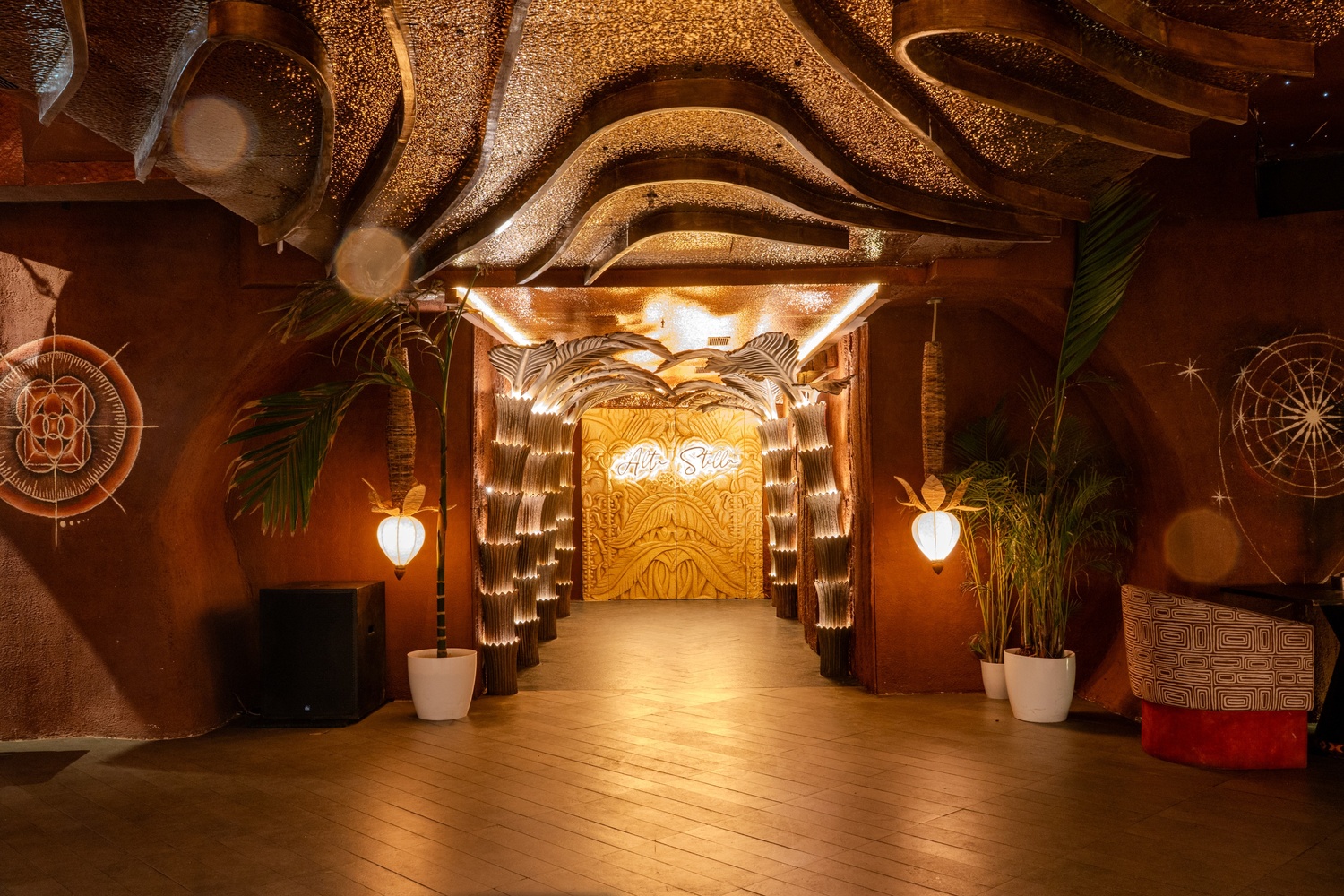
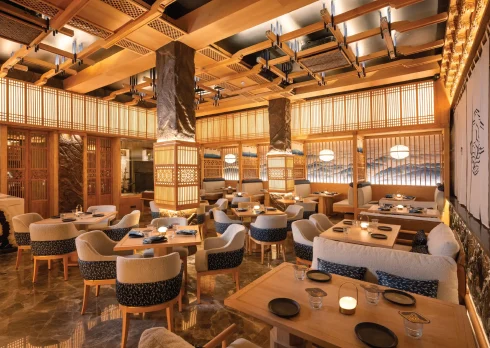
Thirty floors above Andheri West, Alta Stella—translating to ‘closest to the star’—introduces a rooftop bar shaped around the idea of constellations. Conceived by Sanjay Dutt and Abhimanyu Jakhar, with interiors by Danesh Bhambhani of Godai Arts, the 12,000-sq.-ft. rooftop accommodates up to 250 guests, organised to avoid a single open-plan floor. Seating clusters, shifts in level, and lighting interventions break the plan into smaller zones.
In the kitchen, Chef Manoranjan works with a mix of global formats and Indian references, avoiding strict regional categorisation. Small plates with beetroot and whipped feta croquettes, and Tangra-style chicken pops sit alongside dishes such as podi butter prawns and chicken thecha kulcha. Chicken Parmesan Milanese and a chenna poda cheesecake round out a menu that moves between familiar formats and regional cues. Behind the bar, mixologist Sidharth builds a zodiac-led cocktail list, with twelve drinks mapped to signs and temperaments. Standouts include Enki (Aquarius), a layered cocktail inspired by wisdom and water; Jasper (Aries), bold and fiery with smoked whiskey and ginger; Chimera (Leo), intense and holding spiced warmth; Themis (Libra), a balanced interplay of smoke and fruit; and Ebisu (Pisces), a softer, flowing creation that mirrors fate and fluidity.
“Being a celebrity comes with a lot of noise and chaos around you, so I’ve learned to appreciate spaces that feel calm and real. Alta Stella has that feeling. You’re up close to the sky, you see the stars above, and somehow everything slows down—aur phir bas dil karta hai thoda aur ruk jaayein”, shares Dutt.
Also read: A Fragrance-Led Hotel In Milano Lets You Choose The Suites From 68 Rare Essences
4. Kona Kona, Andheri East: Mona Singh
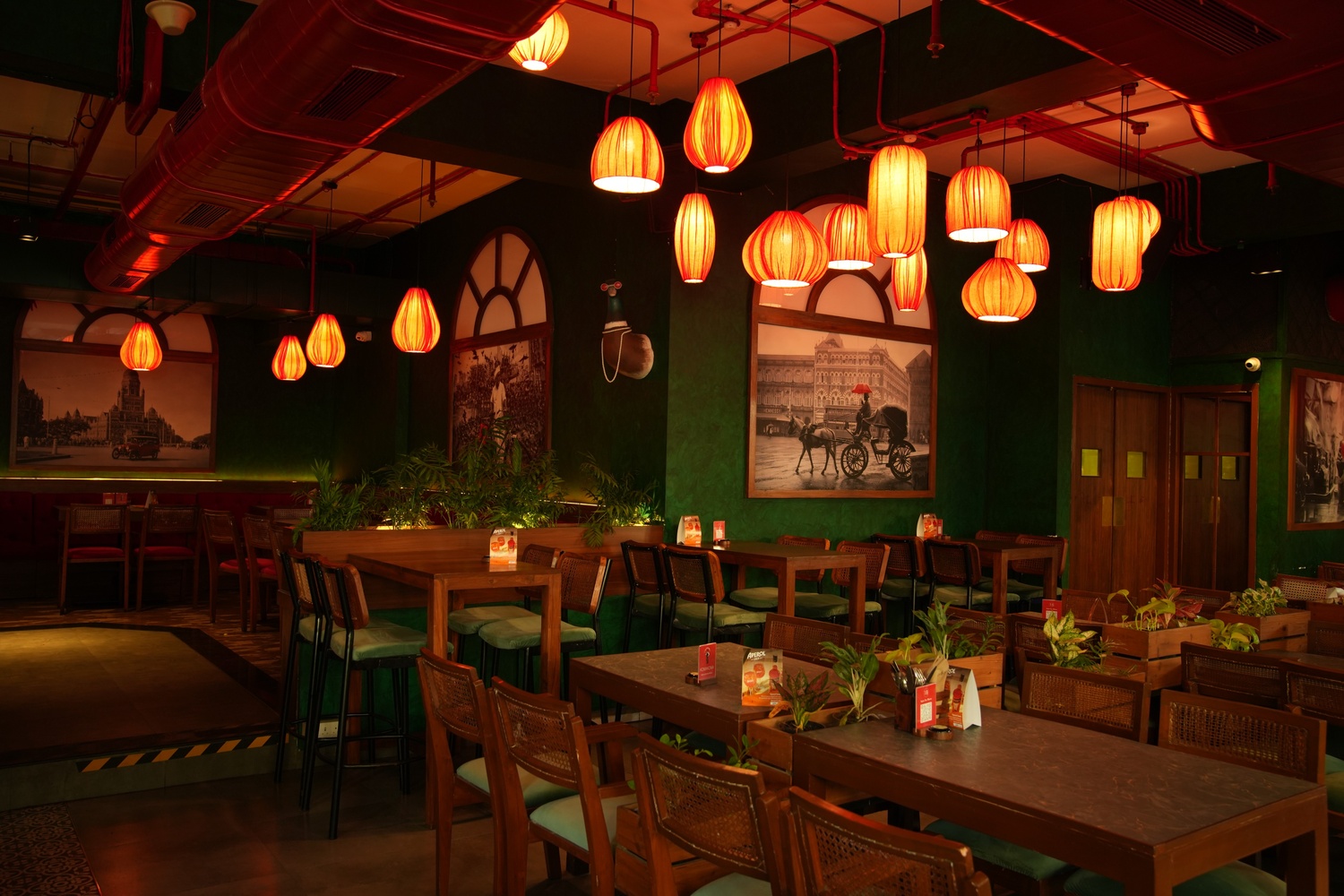
Kona Kona, a Hindi phrase meaning ‘every corner’, is conceived as a neighbourhood bar shaped by memory, travel, and everyday nostalgia. Founded by Mona Singh, the 2,000-sq.-ft. space accommodates approximately 100 guests across indoor and outdoor sections, including a pet-friendly terrace with a dedicated menu planned for four-legged visitors.
The interiors were designed entirely by the founding team, guided by Singh’s personal vision for an unhurried and lived-in setting rather than a styled destination, while branding was developed by Shubhojeet of The Collective. The space avoids fixed aesthetic labels, relying instead on instinctive choices and familiar cues intended to evoke recollections—a scent from decades ago, a sip reminiscent of Darjeeling, or flavours that recall school tiffin boxes and roadside stalls. A recurring presence throughout is The Duckman, part mascot and part mood, serving as a light-hearted reminder not to take life too seriously.
“Kona Kona isn’t about being fancy; it’s about feeling at home. As a first-time restaurateur, I wanted to create a space where people come for a drink and stay for the stories, laughter, and comfort. It’s a simple, heartfelt place that doesn’t try too hard—it just welcomes you as you are”, says Singh.
5. Fielia, Mahalaxmi: Gauri Khan
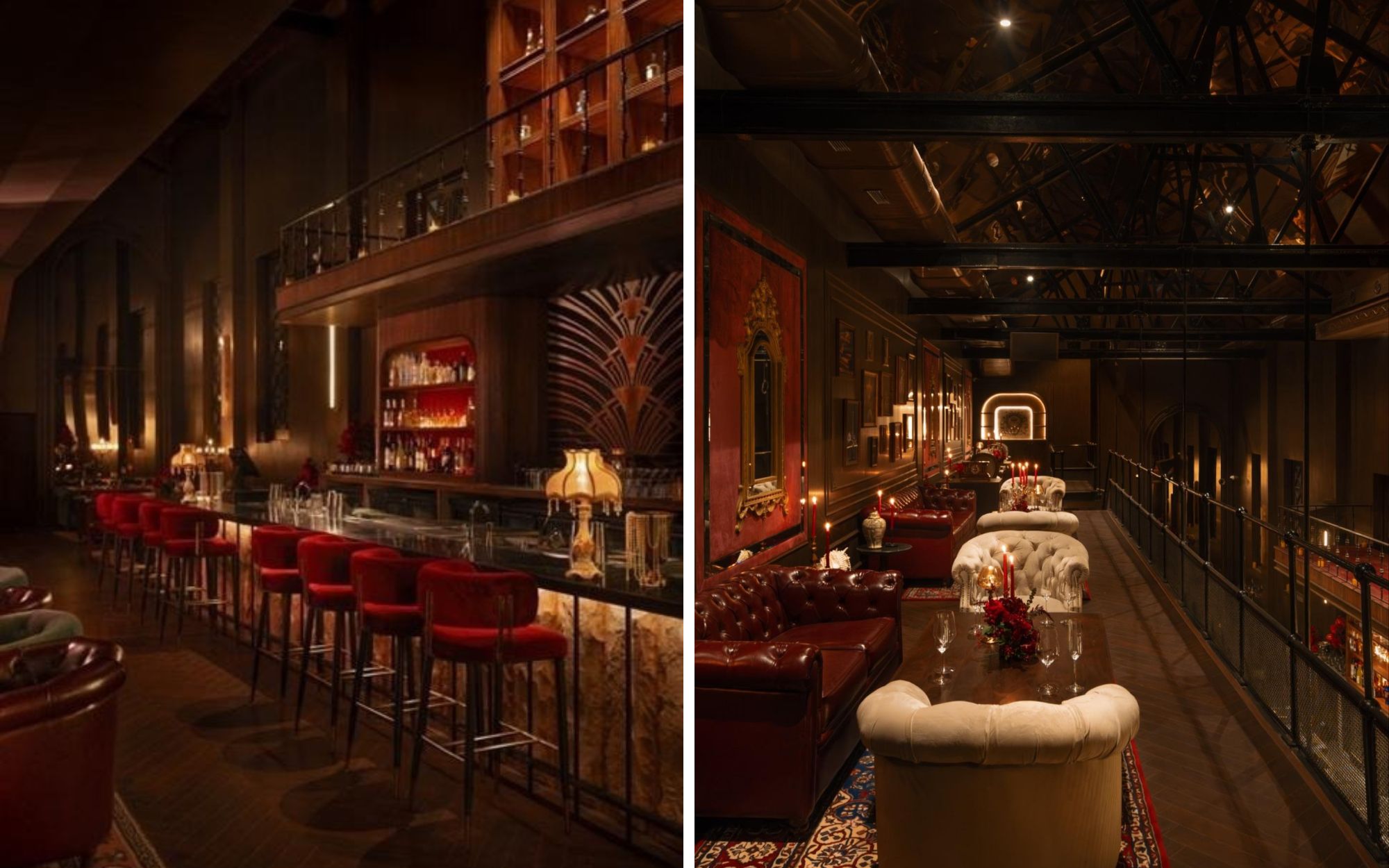
Within the grounds of Mahalaxmi Race Course, long associated with spectacle and wager, Fielia occupies a mill-era building whose industrial frame—exposed trusses, rooflines and generous volumes—remains intact, softened by curves, textures and lighting.
Founded by Afsana Verma, Amit Verma and Dhaval Udeshi, and realised under the aesthetic direction of Gauri Khan, the invitation-only aperitivo bar is anchored on the ground floor by a bar. Wrought-iron staircases coil upward to a mezzanine tracing the room’s perimeter, recalling the dress circles of early twentieth-century theatres. Above, guests occupy a liminal position between observer and participant, while the bar is framed through windows holding scenographic precision. Beverage director Fay Barretto approaches cocktails as compositional exercises in which both flavour and aroma are given equal importance. The drinks carry echoes of the world’s most notorious scandals—from secret affairs and stolen jewels, to political intrigue and cultural upheaval—revealed through gestures, props, illusions and subtle sensory cues that transform the cocktails into miniature performances.
Chef Hitesh Shanbhag complements the programme with aperitivo plates “inspired by the seven sins”: sage chèvre gnocchi for Sloth, tenderloin for Greed, burrata for Envy, gin-and-ginger shrimp for Wrath, pork belly for Gluttony, Peruvian chicken for Pride, and burnt Basque cheesecake with cacao for Lust. Fielia is built for mood, culture and conversation.
Also read: 1,000 Artworks, One Address: Kit Kemp’s New NYC Hotel Becomes A Repository Of Colours And Patterns
6. Neuma, Colaba: Karan Johar
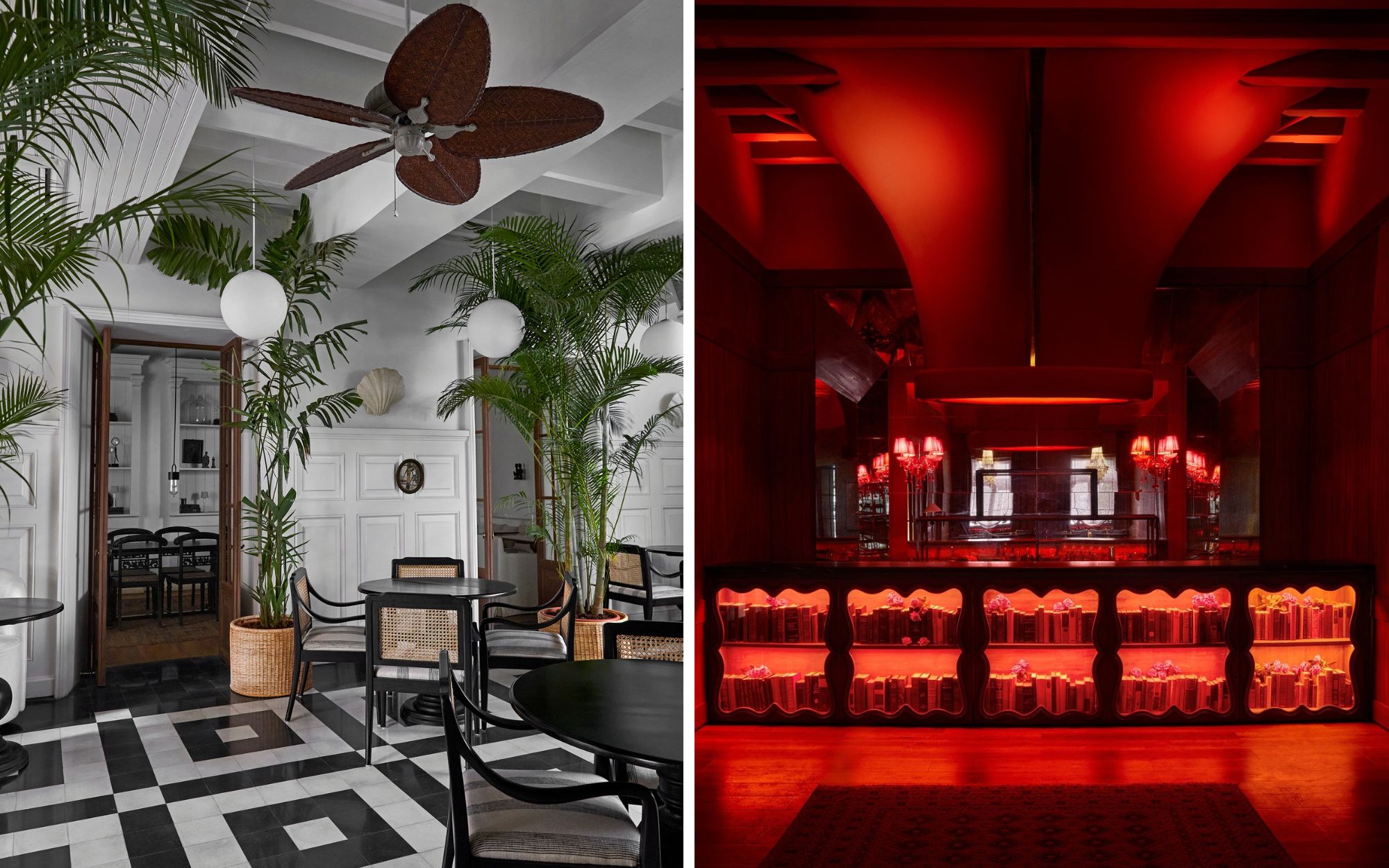
Colaba’s streets still trace the faint geometry of a former British cantonment. Beneath shades of grand trees, traffic lights flicker against crumbling facades and improvised shopfronts. In one such lane sits Neuma.
Neuma—derived from the Greek pneuma, meaning breath or vital spirit—moves from velvet to cane, shade to sunlight: an architecture of shifting moods. Founded by Karan Johar, True Palate Cafe Pvt Ltd and Bunty Sajdeh, and designed by Ashiesh Shah, the restaurant occupies a bungalow whose rooms can be discovered sequentially, much like a Bollywood film set. Shah preserves the grain of the original architecture, layering it with a collector’s eye through handcrafted furniture, objects and materials sourced from artisans across India.
The menu is modern European, drawing on French and Italian influences, and framed as “contemporary comfort food”. The main dining room opens into a bar before dividing into two distinct moods: one light-filled and sociable, the other dimmer and more intimate. A corridor of glass and timber leads outward, sunlight cutting diagonally across the floors. Outside, the Garden Café spreads across the shade of a tree, where stone pebbles and traces of old mouldings linger in the walls. Beyond lies a courtyard lined with black-and-white heritage tiles, furnished with cane-backed chairs and tall potted palms beneath a rhythm of pendant lights. The Rose Bar deepens the atmosphere: red walls, wood panelling and low velvet seating. The Corset Room tightens the geometry of panelled walls with tasselled strands of yellow Channapatna beads beneath a sculptural light by Atelier.
Also read: A Fragrance-Led Hotel In Milano Lets You Choose The Suites From 68 Rare Essences
7. Café Mommyjoon, Bandra: Priya Dutt
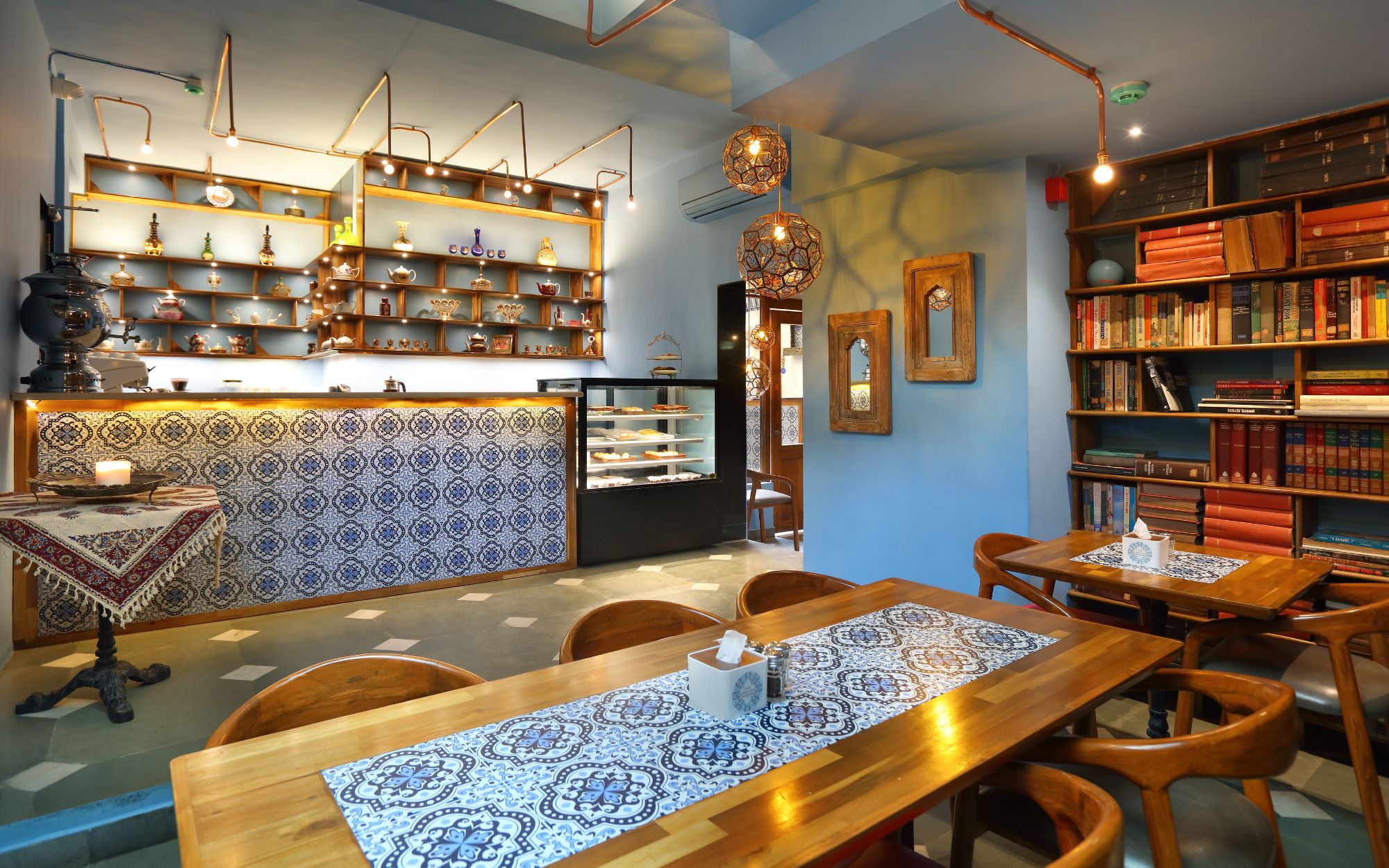
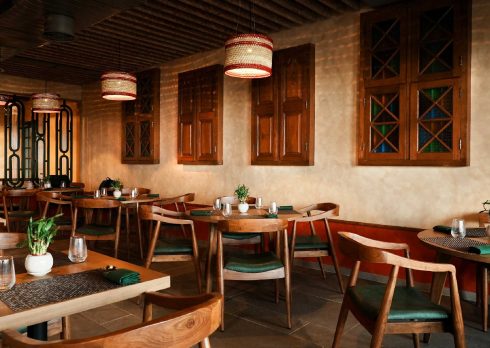
Bandra’s lanes hold colonial traces, old bungalows, and new interventions sitting almost shoulder to shoulder. At one such bend sits Café Mommyjoon. The restaurant was established by Priya Dutt, Seema Sadequian, Ali Asgar Sadequian and Mohd Hussain Sadequian, and designed by Sameep Padora and Associates. It began with something personal: recipes from their mothers’ kitchens, carried forward and reassembled in a shared space. The name Mommyjoon—Farsi for ‘dear mother’—is a direct cue to the kind of space it becomes: rooted in memory and domestic inheritance.
Persian blue anchors the interiors, softening edges, absorbing light. Samovars are placed like sculptural interludes, and carpets run across in intricate patterns. The overall effect is homely in an expanded sense, like stepping into an intellectual Persian friend’s house. The seating extends into a sufreh khuneh-inspired layout—low, grounded, and informal. The kitchen carries a similar sensibility, but expressed through material rather than form. Chef Seema Sadequian, who leads it and is self-taught, works with inherited Persian recipes that depend on restraint and layering. Ingredients—saffron (zaaferan), barberries (zereshk), spice blends (advieh), dried fruits, and herbs brought from Iran—are not used as decoration but as structural elements.
Along one wall, there’s a library of over 10,000 books from the personal collection of Sunil Dutt and Nargis Dutt. Shelves become another surface of memory, adding density without clutter. Everything here—colour, texture, seating, objects—seems less like individual design decisions and more like inheritances. It is not a reconstruction of the past, but a coexistence of many—left unmerged, unedited, in the same room.
Also read: A New Language of Dining: Mumbai’s 7-Best Forward-Thinking Restaurants for 2026
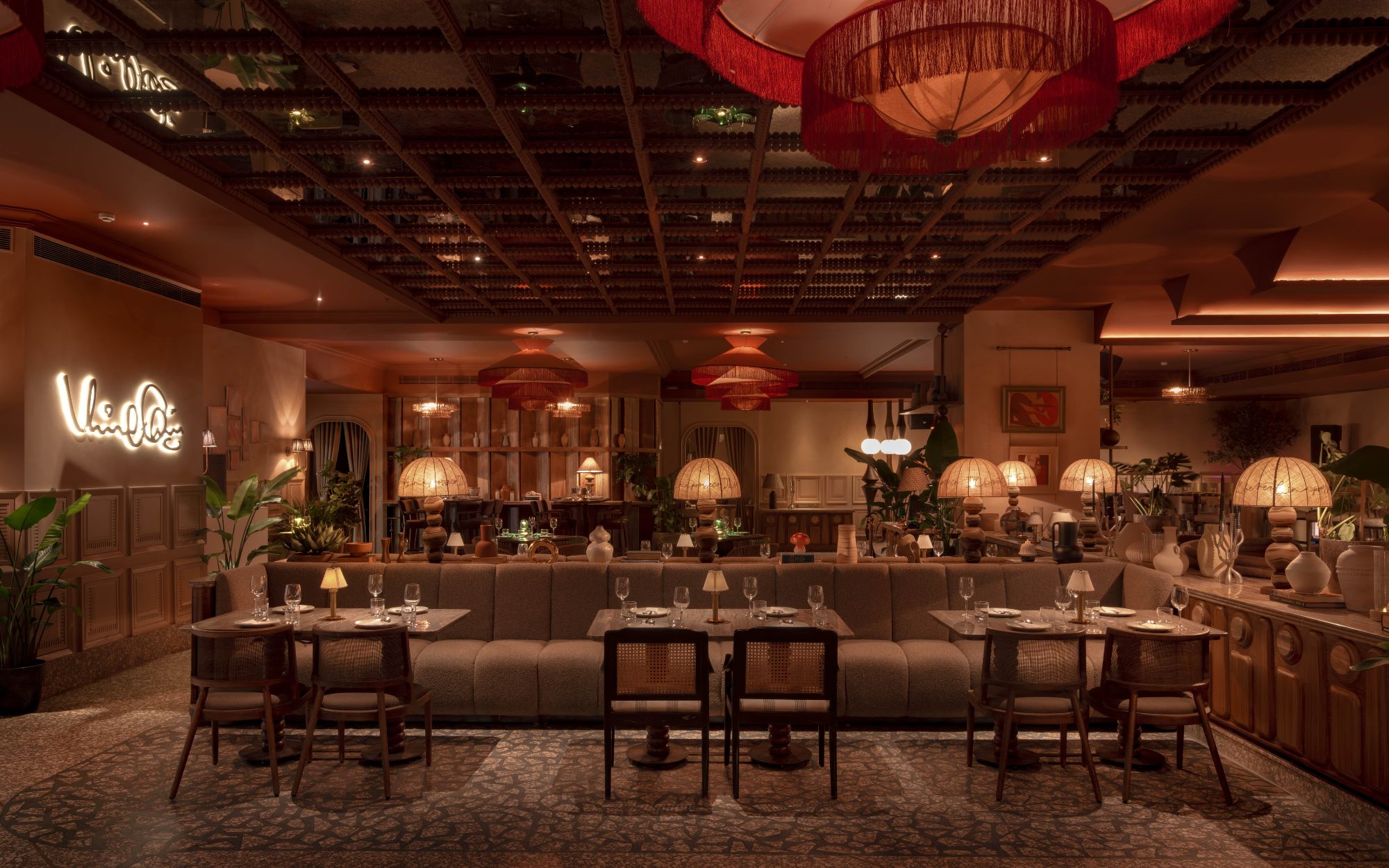
8. Rue Du Liban, Kala Ghoda: Juhi Chawla
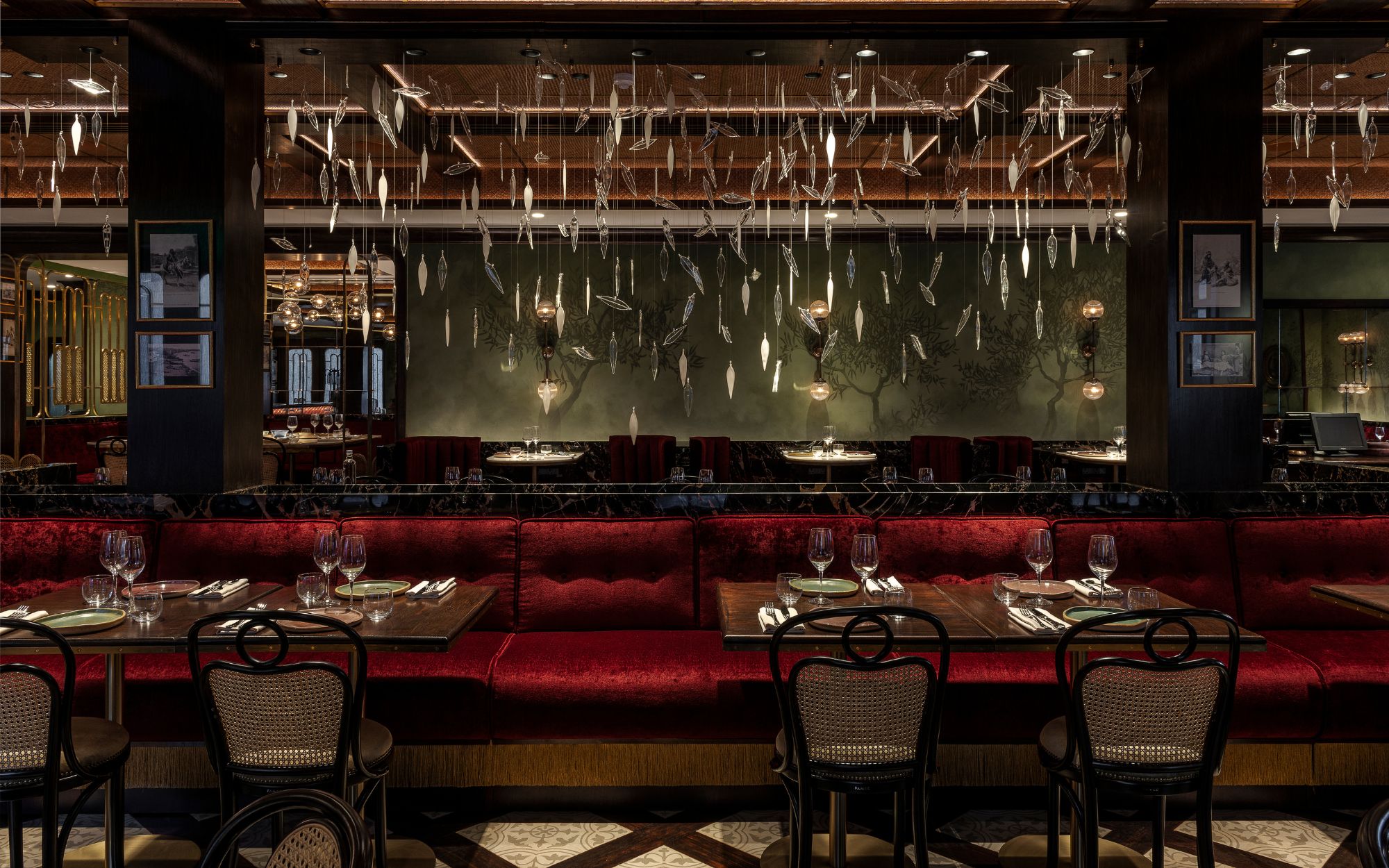
Kala Ghoda is a compact quarter known for its art galleries, designer boutiques and restaurants. Around one corner, a heritage building houses Rue du Liban. With a name that declares its intention, Rue du Liban—French for ‘street of Lebanon’—locates itself with admirable clarity: Beirut seen through a Parisian lens in the city of Mumbai. This 3,200-sq-ft space has earned the loyalty of its patrons who attest to the endurance of its premise.
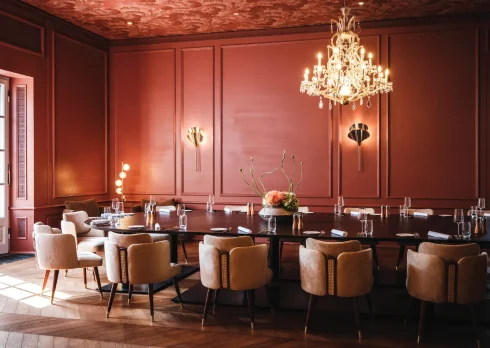
Rue du Liban was envisioned by Juhi Chawla, Jay Mehta, Arja Shridhar and Sam Malde in collaboration with the interior team at Rosendale Design. Their point of reference for design was 1960s Paris, when Beirut maintained a close cultural dialogue with France. The interiors borrow selectively from that era without drifting into nostalgia. Oxblood velvet sofas line olive-green walls. A glass chandelier in delicate leaves spreads light across tables, with clusters of globular pendants suspended elsewhere. Bentwood cafe chairs evoke the ease of mid-century European dining rooms, gathered around tables set with handmade ceramics and brass detailing.
In the kitchen, chef Athanasios Kargatzidis approaches the Levant as a cuisine shaped by successive encounters—Phoenician trade, Ottoman kitchens, French technique and contemporary Lebanese sensibility—where smoke, citrus and spice remain in balance, and clarity of flavour takes precedence over spectacle. The wine list moves largely between France and Lebanon, accompanied by a cocktail programme that mirrors the restraint of the food.