With The Designer: Udayshanth Fernando Is Comfortable Being Judged
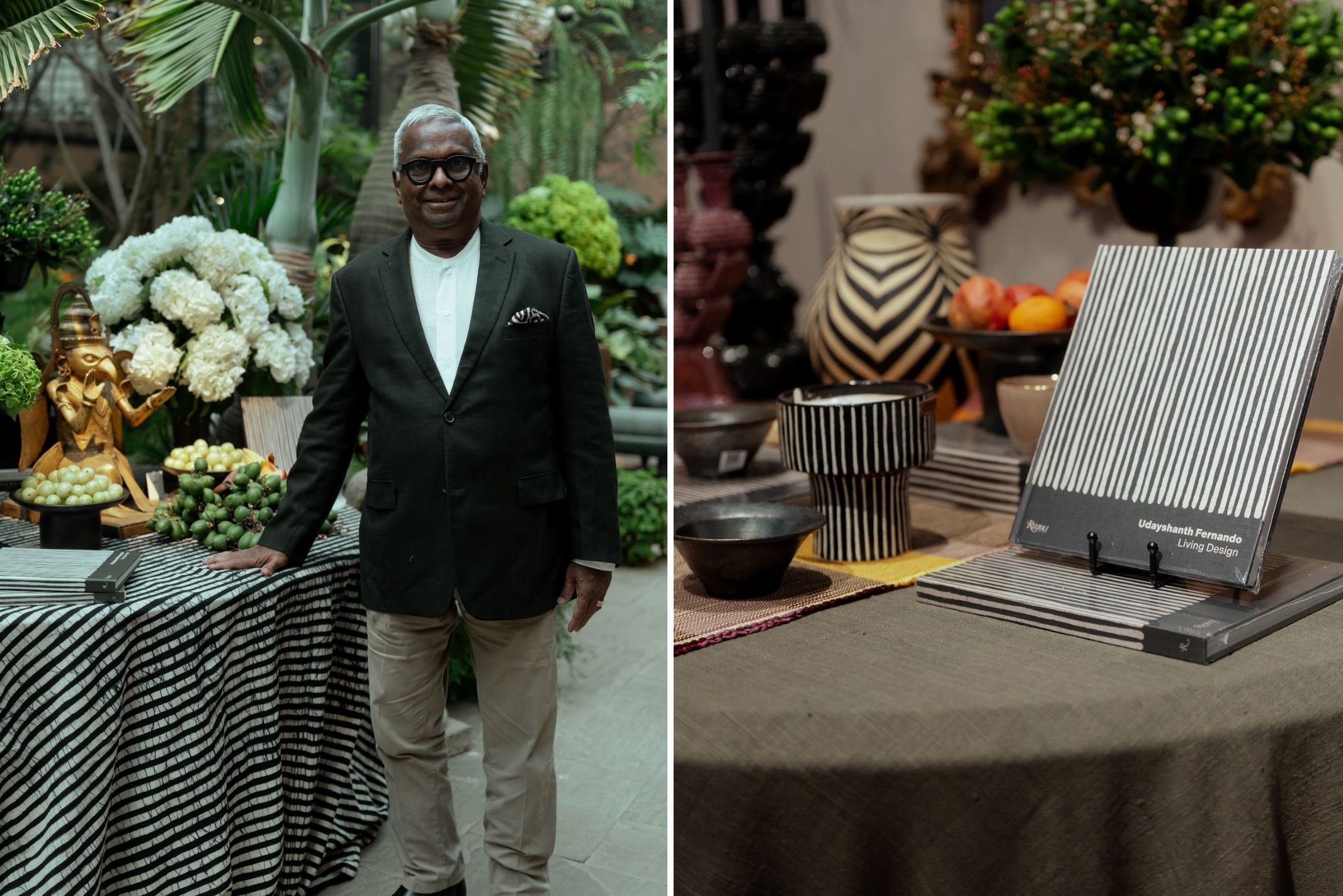
Udayshanth Fernando, a designer, curator, and, above all, a visionary, brought his new book, ‘Udayshanth Fernando: Living Design,’ published by Rizzoli New York, to India with Nilaya Anthology.
- 25 Jun '26
- 3:33 pm by Simran Almeida

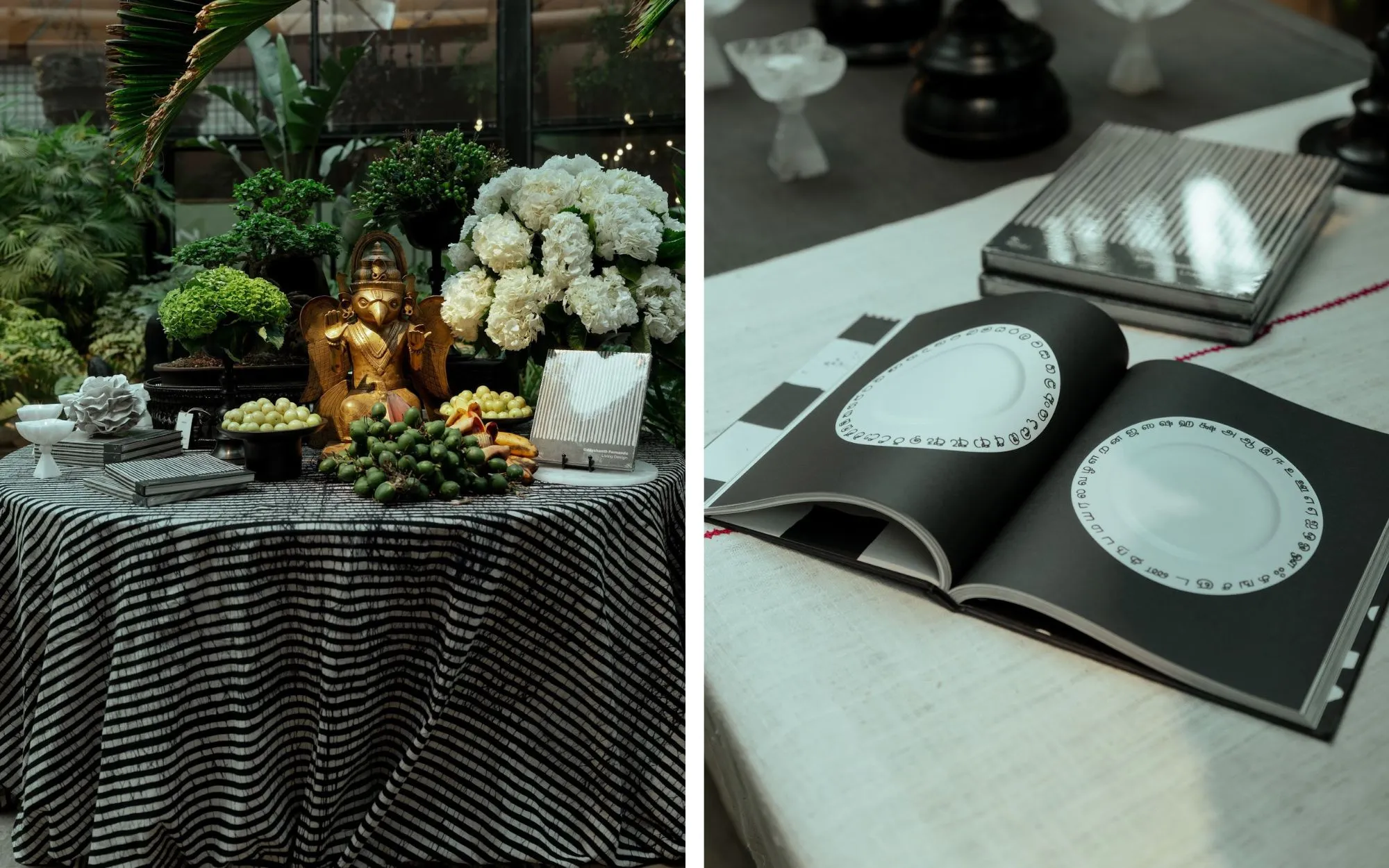
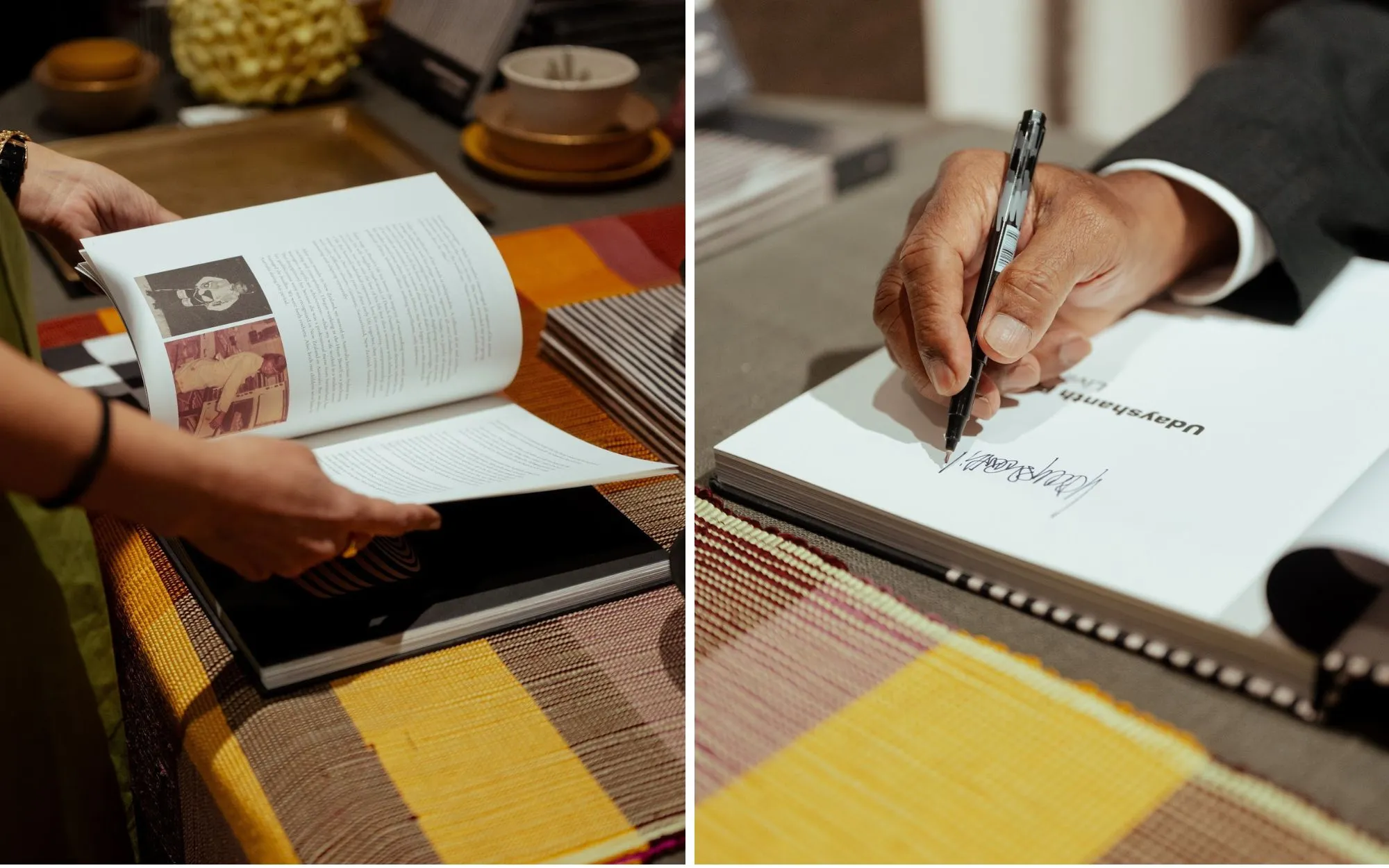
Geoffrey Bawa characterised the architecture of Sri Lanka, the island country. While he did that, there was another man within those colossal tropical modernist villas meticulously curating a distinct visual language that would echo for decades to come. Udayshanth Fernando, a designer, curator and, above all, a visionary who couldn’t stay away from his homeland. This yearning for home is conspicuous in his new book, ‘Udayshanth Fernando: Living Design,’ published by Rizzoli New York and launched in India at Nilaya Anthology. This book follows Fernando’s eccentric journey with essays, reflections, and photographs of his iconic projects, collectable objet d’art and hospitality spaces. From his brief stint in the Netherlands and Australia to his homecoming and the beginning of Paradise Road, a brand championing the designer’s multifarious interests. I first noticed the book at its launch, and something about its stripped-back cover felt so true to his sensibility.
Born in Colombo, Fernando’s creative prowess revealed itself early on; he was bestowed with the school’s art prize nearly every year. He then moved to the Netherlands to work in hospitality and Australia, where he established his venture, Art of Play—his first ever store, before he built an empire in Sri Lanka. In 1987, the designer finally found his calling with the flagship home store Paradise Road, which displays his sourcing, curation and commissions with clean lines, and regimented stripes and monochrome hues. His portfolio spans Paradise Road’s adjoining café; a gorgeous 10-suite hotel, ‘Tintagel, Geoffrey Bawa-designed The Gallery Café; and, further south of the city, another Bawa property, The Villa Bentota.
In this conversation with Design Pataki, we flip through the pages of Fernando’s larger-than-life journey. From his newest coffee table book and monochrome visual language to his long career and the influence of Paradise Road on contemporary collectors.
Also Read: Lalanne’s Iconic Hippo Bar Makes History At Sotheby’s For ₹284.5 Crore/ $31.4 Million
Design Pataki: What does the phrase ‘Living Design’ mean to you beyond aesthetics?
Udayshanth Fernando: ‘Living Design,’ to me, is about design in living. What the book reflects are statements about how I believe living should be designed, and how I have expressed those ideas on its pages.
DP: How have you protected a distinctly Sri Lankan design language with Paradise Road while working in an increasingly global design landscape?
UF: So, I left Australia and came back to Sri Lanka, and for the last 39 years, I’ve devoted my time to Paradise Road exclusively. I designed everything, purchased everything myself for Paradise Road, and I have continued doing so right until now. I have not deviated; everything has been about Paradise Road. I don’t get influenced even when I travel or live somewhere. Of course, I am inspired and transform and translate my ideas into pieces that can be created in Sri Lanka and are valuable for the manufacturer and for me.
DP: Across your long career of sourcing, curating and designing, are there specific moments that transformed your philosophy?
UF: Taste is something that keeps on evolving because it develops as you mature. For example, I started as a child artist who ended up taking over my life and making it into a canvas, and as time went on, according to demand, I became more versatile. I think that, with my children growing up, I matured as well. My daughter became a gallerist, and her influence on my taste for contemporary art has been tremendous. I’m also an art collector.
Also Read: The Business Of Antiques With The Golden Triangle’s Douglas Van Tress
DP: How has your monochromatic design philosophy informed the curation at Paradise Road, a sought-after destination for collectors?
UF: Everything, everything in Paradise Road is sourced by me instinctively! And then it has developed and matured over the years.
DP: Do you feel there are any preconceived notions about Sri Lankan or South Asian design that this book seeks to challenge?
UF: No, not at all. My style and what I live by and continue to live by is ‘eclectic.’ Bringing old and new together and juxtaposing contrasts because it can be very boring if everything were either contemporary, modern, or antique.
DP: With the book ‘Uday Shanth: Living Design,’ what feeling do you hope to evoke amongst the readers?
UF: They can judge me because every picture tells a story.
‘Udayshanth Fernando: Living Design’ features contributions from Sean Anderson, curator, scholar, and architect specialising in South Asian and African art and architecture; Sonal Singh, a leading specialist in modern and contemporary Indian art and Chairman of Christie’s India; and Bandana Tewari, culture journalist and sustainability advocate. While collecting has long been one of his passions, this book is far more than a catalogue of possessions. It is about his role as a patron, mentor, one who discovered Sri Lankan artisans and contemporary artists and much more. A rare glimpse into a life shaped by curiosity and beauty, drawn from Fernando’s private collection and featuring works by celebrated members of Sri Lanka’s renowned ‘43 Group, including George Keyt and Ivan Peries.
At the book launch, Fernando speaks with conviction, but there is also a palpable nostalgia—a softness that reveals his enduring affection for everything that inhabits the book’s pages. He reflects on an eccentric past, a vibrant present that continues to inspire him, and a future entrusted with carrying his legacy forward. A legacy that celebrates a life as eclectic and phenomenal as the treasures it holds.