
In Conversation With Maharaja Sawai Padmanabh Singh On The Unveiling Of The City Palace’s New Arms Gallery
In an exclusive conversation, Maharaja Sawai Padmanabh Singh takes DP through the challenges of reimagining the Sileh Khana as a gallery at The City Palace, Jaipur.
- 19 Dec '25
- 3:48 pm by Simran Almeida

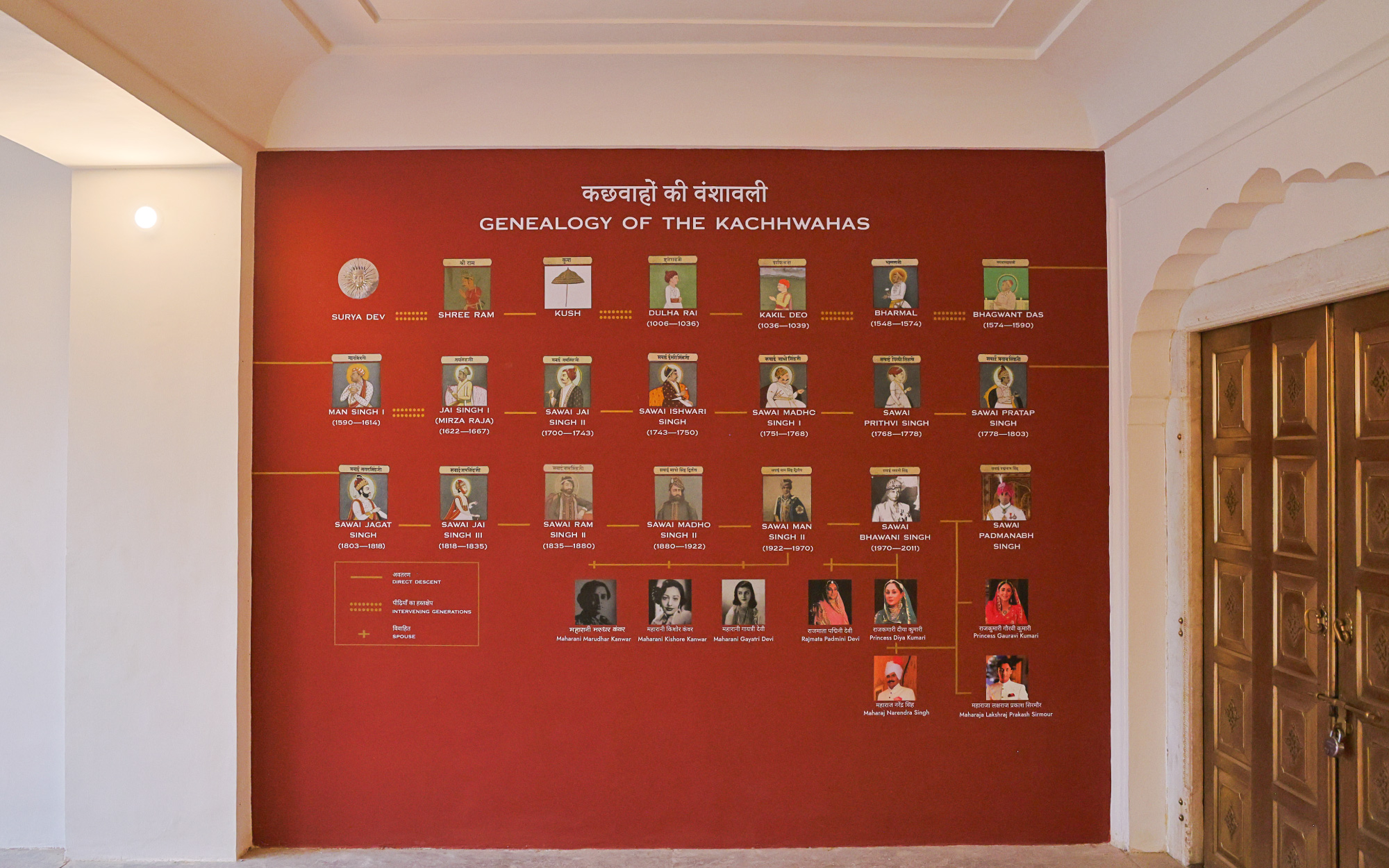
Few cities wear their past as vividly as Jaipur. With a 300-year-old legacy bequeathed by 13 Maharajas, all patrons of art, Jaipur’s craft culture is almost palpable. Be it etched into the time-worn patina of Jaigarh Fort’s walls, once the military depot of Maharaja Sawai Jai Singh II, or carried forward by women weaving treasure troves at the Badal Mahal, headquarters of the Princess Diya Kumari Foundation. In keeping with this storied legacy, the 14th Titular king H.H. Maharaja Sawai Padmanabh Singh—known to friends and family as ‘Pacho’—unveils a gallery that unravels the origins of Jaipur’s royalty and their taste in artillery. The newly reimagined gallery thus sits at the crossroads of Jaipur’s nativist conservation—evident in the restoration of the Sabha Niwas, Mubarak Mahal, and its frescoed passages and fountains, while extending the city’s legacy forward.
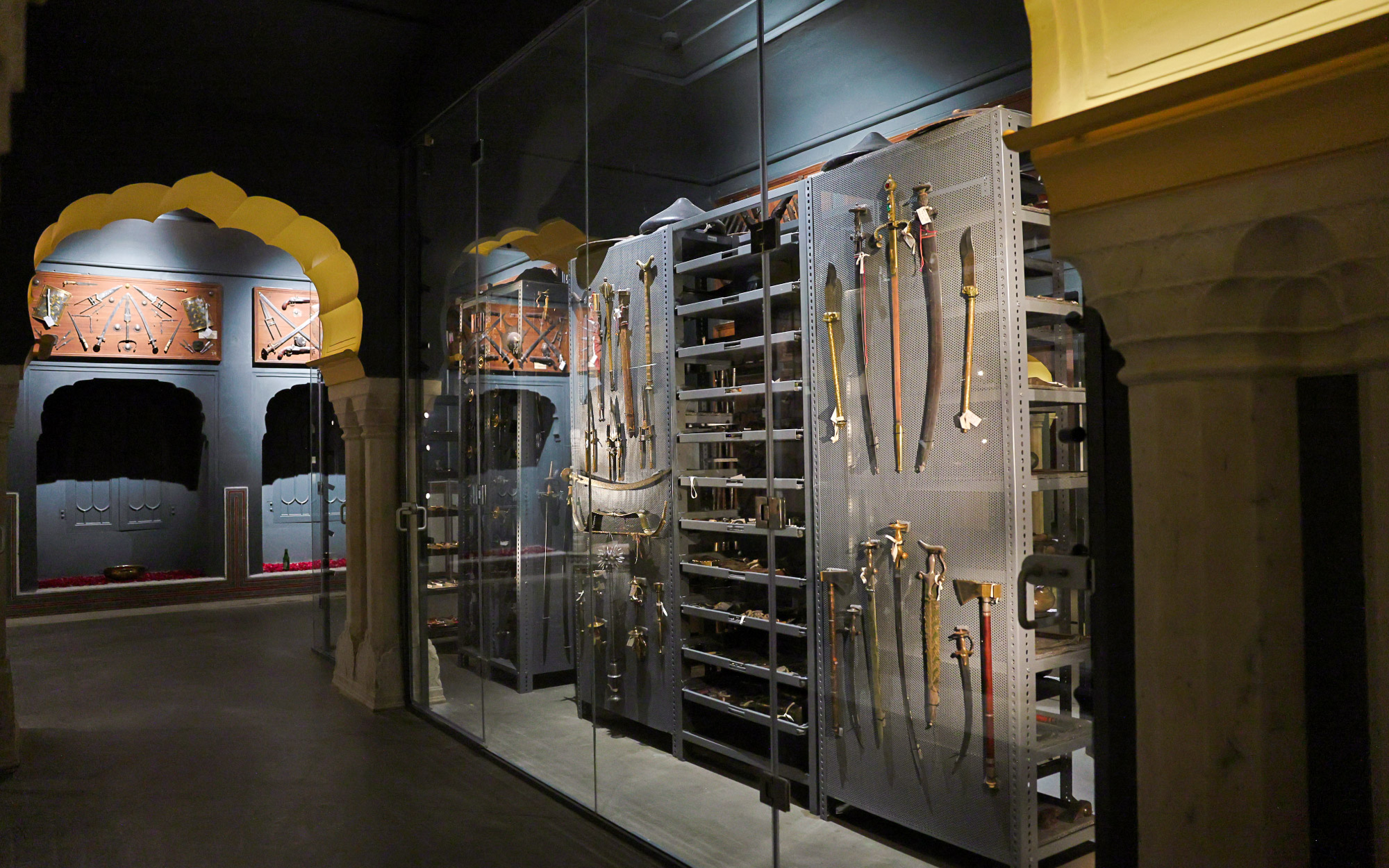
While the city sheds its Diwali embellishments, a courtyard in the City Palace glows with a constellation of diyas to hail its newly conserved gallery. As the crisp November air settles in this courtyard, framed by the Chandra Mahal complex and the Anand Mandir (Abode of Bliss), Maharaja Sawai Padmanabh Singh speaks of a new dawn through a permanent exhibition. Originally christened Anand Mandir, it was a private chamber where the erstwhile Maharajas conferred with their closest advisors on state matters. Perfectly sited for moments of siege, the chamber enabled the swift retrieval of arms while remaining a secure, controlled enclave and a vantage point from which to observe all entry and movement within the palace. Drawing on a 300-year-old legacy, he unveils Power & diplomacy at the newly reimagined Sileh Khana.
Inside The Trompe-l’œil Illusoriness
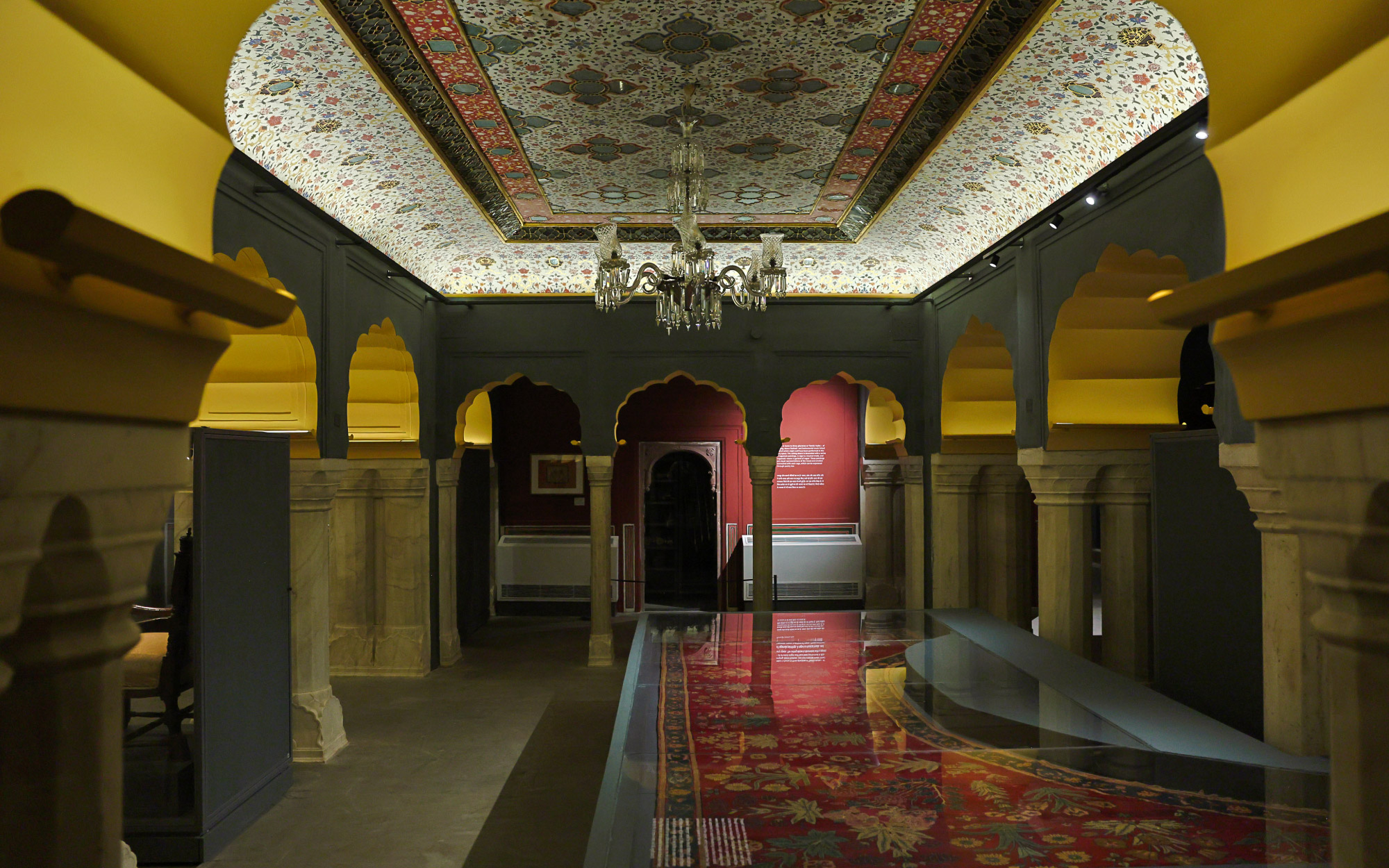
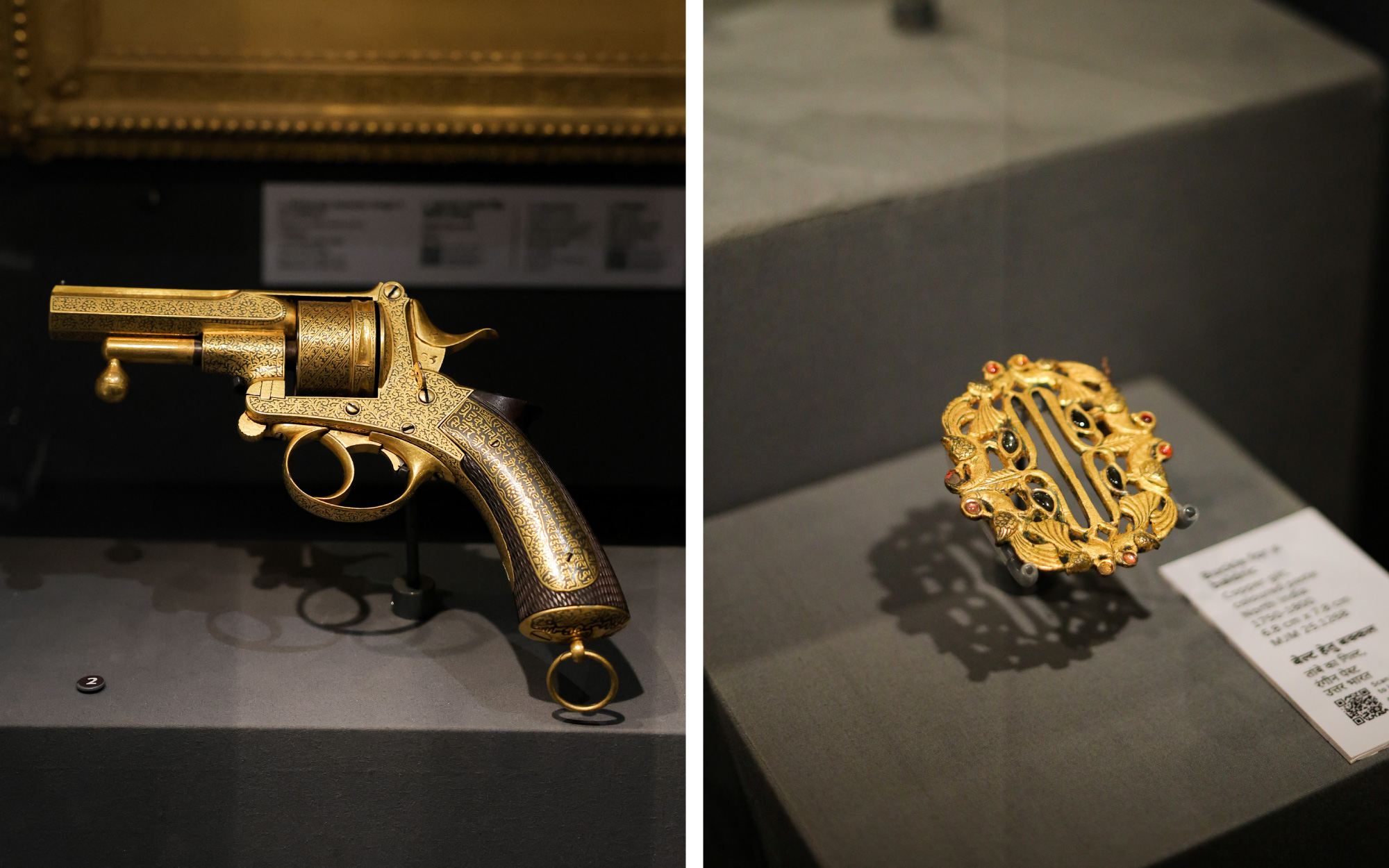
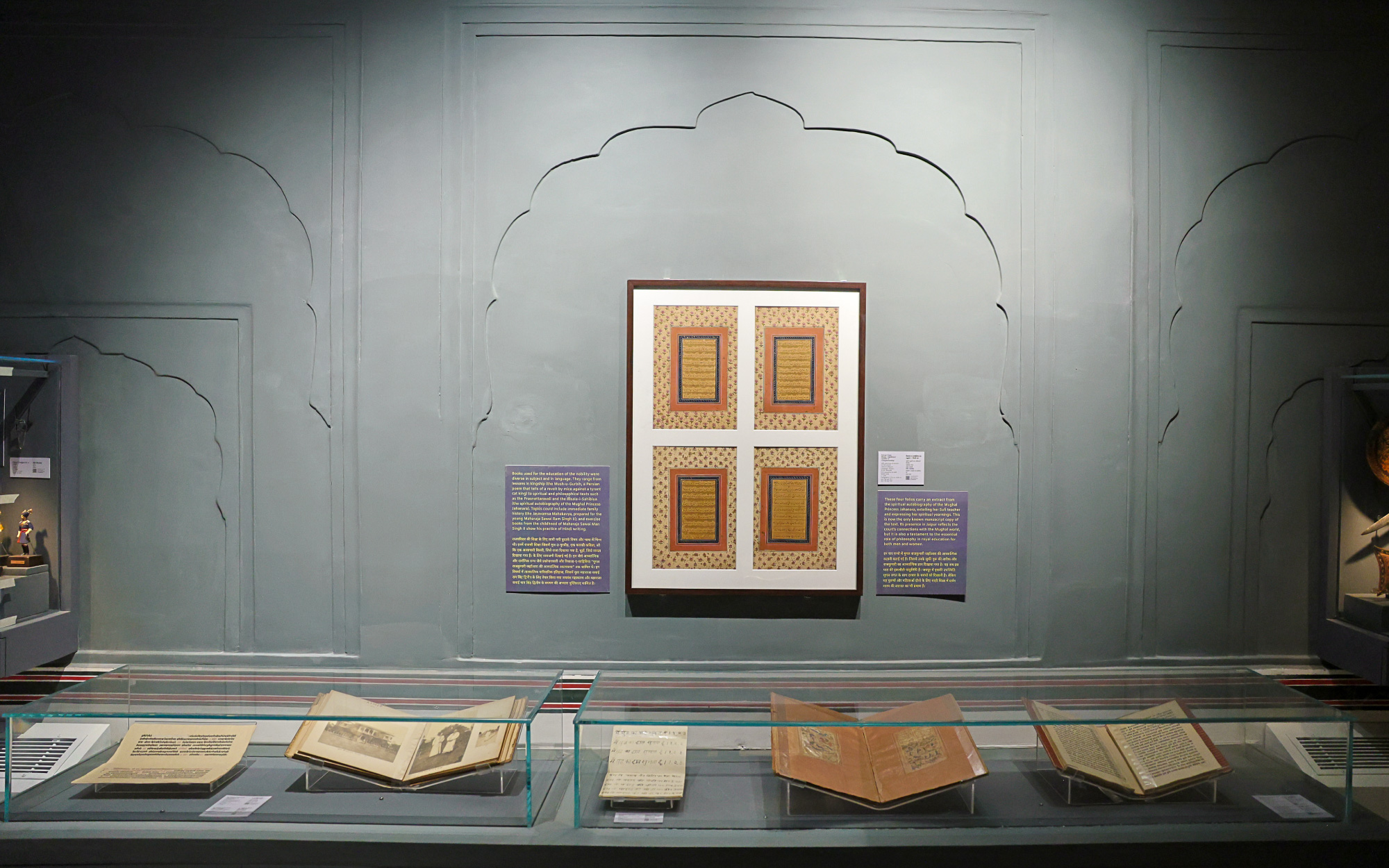
A dimly lit sequence of stone stairs leads into a charcoal-toned passage marked ‘Power & Diplomacy,’ where the exhibition unravels how Jaipur’s royalty came into being—interrogating kingship, sovereignty, and the symbolism of arms. Curated by Dr Mrinalini Venkateswaran, Deputy Director and Head of Collections at the City Palace Museum, Jaipur, the display spans objects from 1727 to the present, tracing histories of governance and negotiation. Highlights include the intricately inlaid Lohar Safa used to train royal children, a monumental map of Agra reflecting Jaipur’s imperial reach, finely incised arms, courtly textiles, a lacquered shield bearing the goddess Shila Mata, and a manuscript by Mughal princess Jahanara—together revealing centuries of cultural exchange.
Also Read: An Unforgettable Royal Experience At Jaipur’s Iconic City Palace In Collaboration With Airbnb
Design Pataki: What does this new space mean for the people of Jaipur and even for the contemporary audience like us?
H.H. Maharaja Sawai Padmanabh Singh: Well, a lot of things. For the people of Jaipur, this is an important space because it’s situated right in the centre of the City Palace, which is the heart of the city. This city was built around the City Palace, and the Anand Mandir, where the Sileh Khana gallery sits, is at the heart of the City Palace. But our objective with this gallery is to set the standards for what a museum experience in a palace context should look like. Whether it comes to the choice of objects, display techniques, or choice of cases, lighting, ventilation, the conservation efforts we’ve put into the objects, and the building.
(For the contemporary audience), We really tried to set the standards very high, and the idea is that we’re able to inspire other custodians of heritage properties and movable assets to come here and participate in this conversation around conservation, preservation and giving these things, objects or buildings a new lease of life.
DP: What was the core idea that guided you when you first conceived this space?
H.H.: The city was built 300 years ago, and there have been 13 Maharajas of Jaipur, who’ve all been visionaries and an incredible amount of art was commissioned in their periods. So they were great patrons of the arts, so there was a lot of creativity around the city. They were modernisers for their periods, whether you talk about Sawai Ram Singh II, who was a great photographer himself and one of the first people who brought the camera to India. He was an incredible moderniser who also brought electricity here, started various schools and also developed the railways. Each generation of our family served its people in different ways. That really was at the heart of my own inspiration of wanting to add to the story of Jaipur to ensure that the story of Jaipur doesn’t end here. The idea was always that the city continues to be relevant in the global context; it was at the heart of wanting to revive the City Palace as a complex institution for multiple uses. Making sure that this remains the heart of the city that continues to beat.
Also Read: 5 Of Bollywood’s Most Iconic Palace Stays
DP: What new emotion do you hope the space evokes, and what would you like visitors to carry with them after experiencing it?
H.H.: I’ve grown up here, and it has been such a joy to see this place transform over the last three or four years. The happiness, sense of satisfaction and fulfilment that I feel when I’m actually observing some of this transformation is immense, not only because I’m involved in the process, but also because I have a lot of respect for our history and legacy that our whole country is so blessed to have. I hope that every Indian who comes here feels the same sort of feeling, where one feels proud of what we have in our country, the wonders that our ancestors have left us with. For everybody visiting from abroad, I think the motto of our state, which is ‘Padharo Mare Des,’ sums it up perfectly. Hospitality across Rajasthan has always been something that people take back with them. But I think attention to excellence in art and craft is the foundation on which the city was built. And I think being able to revive these spaces, using these techniques, is really the message that we’re trying to kind of spread, as Rajasthan still is the hub for this excellence, and I want people around the world to kind of come and appreciate not only what was created, but also what we continue to create over here in our state.
DP: How do you balance safeguarding a 300-year-old palace with introducing contemporary interventions that challenge expectations?
H.H.: One thing that I always think about is that it’s never going to end, it’s a constant journey because this legacy is old and it needs constant attention and love and care. So when we talk about the conserved gallery, it’s a constantly evolving process. So, it’s going to take a lot of effort and something one spends a lot of time doing. But I do hope that our impact is not limited. We want to be the palace that encourages the rest of the country to appreciate and talk about our country’s culture. We have the balance here; Jaipur Centre for Arts, focusing on contemporary art, often in dialogue with some of the older forms of art that you find here. Our objective is to draw attention towards culture, and to bring people here so that they engage with certain bits that often provoke them. Jaigarh Fort is the oldest building over here in this region was built 1,000 years ago, and so people often come here to seek conventional experiences and are often met with different reactions from people. And that was our whole purpose of sparking the conversation around one form of culture. So that is at the centre of us wanting to do it. I feel incredibly grateful to have this opportunity, but also feel incredibly challenged to fulfil the dreams that I have for our city.
DP: If a visitor were to take away only one feeling from the whole space, what would that be?
H.H.: Gratitude! to our history, acknowledgement as well. Often, we are guilty of being blind to our history, and I think that it is a vehicle with which you move into the future. Without connecting with your roots and without getting to know about your roots, it’s not possible to move into the future. Then you’re moving into the future with one eye closed. So really, gratitude is what I feel when I’m here, not because I live here or because this is home, but I feel so lucky that we are from a country which is leading in terms of the richness of our culture. We’ve created some of the most beautiful things that humankind has ever seen in our country, particularly in our region, and that makes me feel incredibly proud.
Carrying the Past Forward
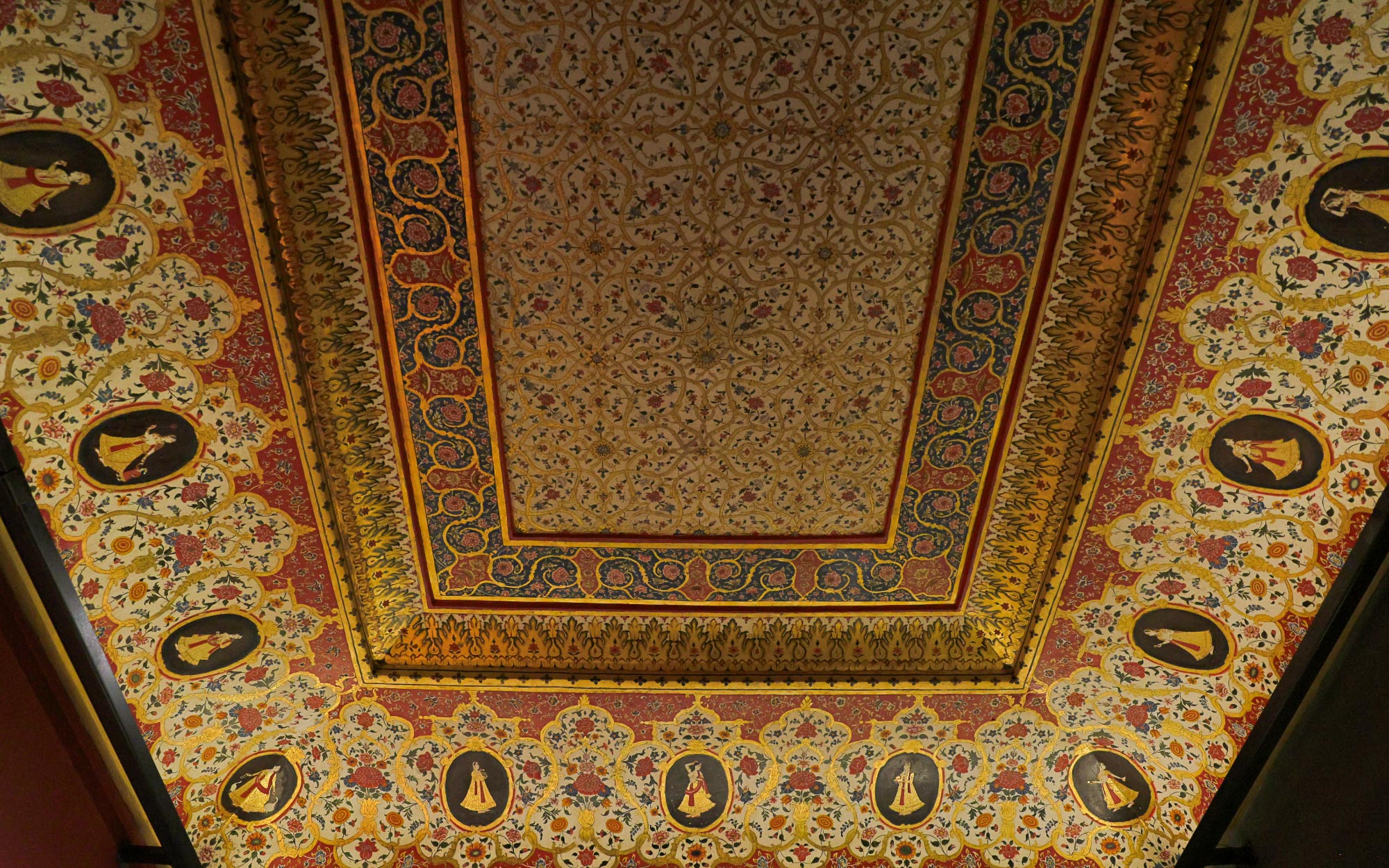
At just 27, the Maharaja and his family shoulder the responsibility of an entire city’s facelift, an undertaking far more complex than building anew, as it demands working with materials and techniques from another era altogether. One example is the conserved ceiling that draws the eye heavenward, a luminous canopy of time-worn motifs revived in gold leaf and natural pigments. Historically, the palace has served many purposes, and today it continues to do the same as a multifaceted institution encompassing a museum, culinary experiences, educational initiatives, and philanthropic work, ensuring it remains the vibrant heart of the city.