This Hyderabad Studio Treats Water Like Architecture, Not Decoration
At a Hyderabad holiday home, Aqua StudioX's philosophy of 'Pond Architecture' comes to life, treating water, landscape and architecture as one interconnected system.
- 18 Jul '26
- 4:35 pm by SHIVANI VK

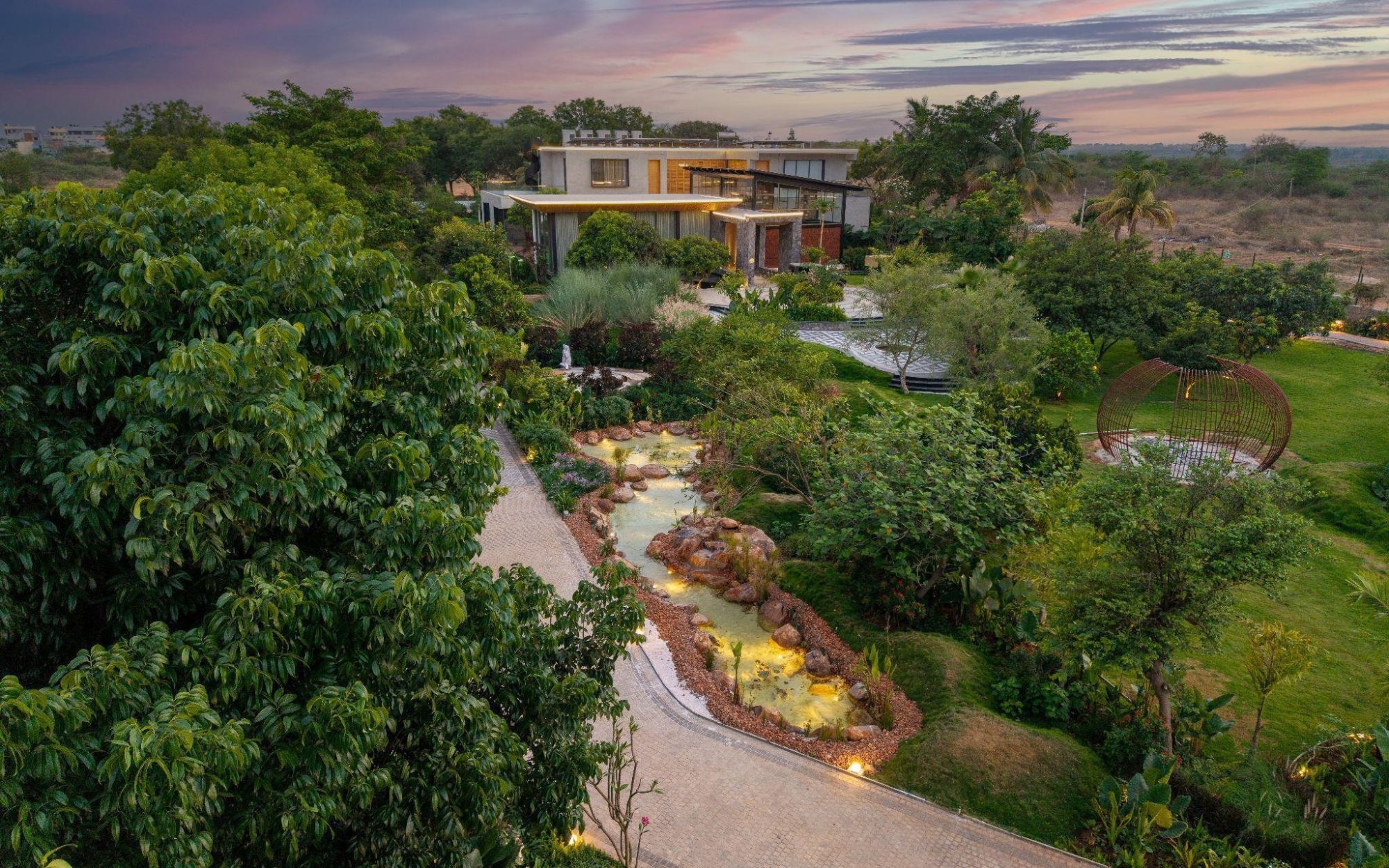
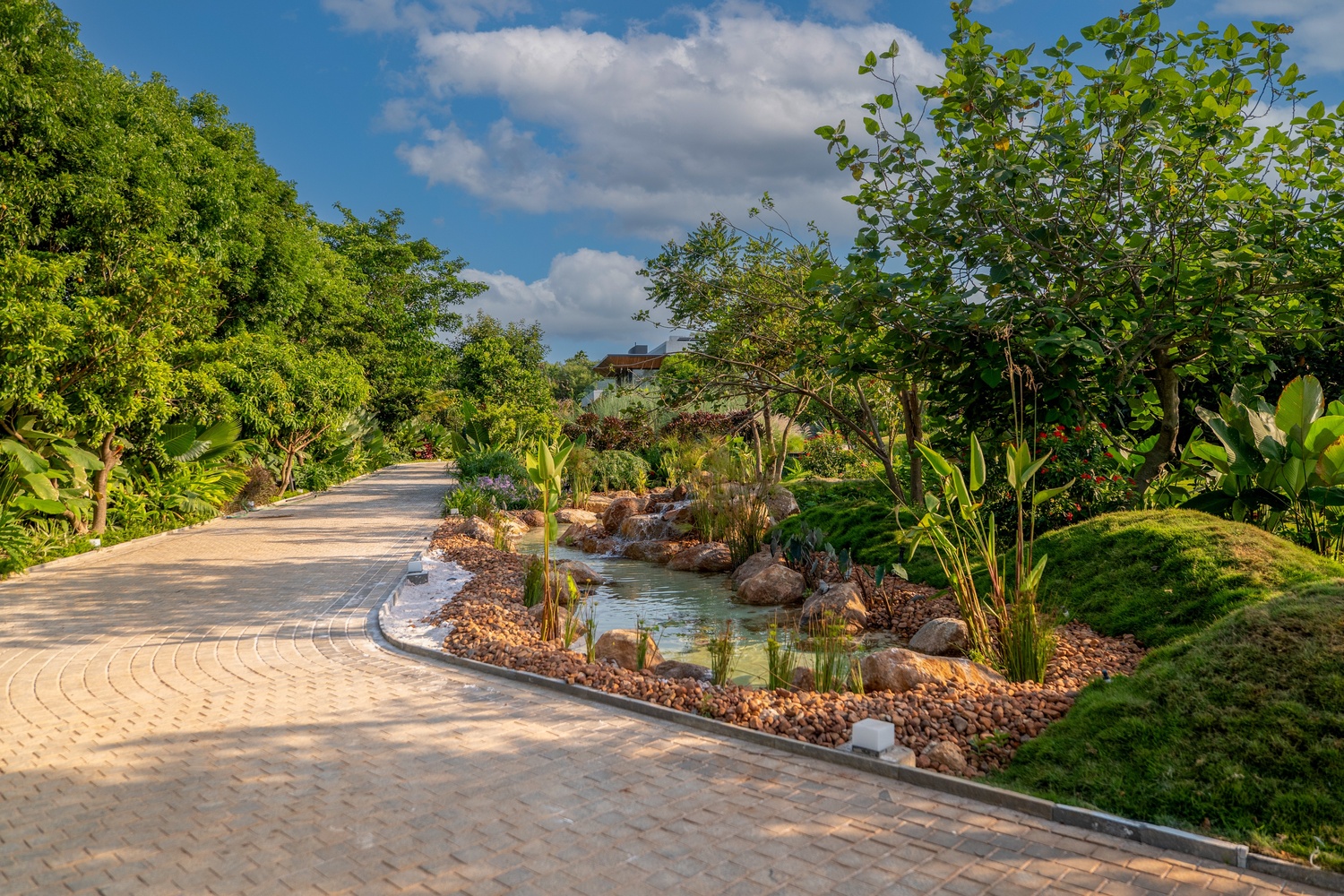
Long before this holiday home, set on an 85,000 sq. ft. property in Kothwalguda, Hyderabad, comes into view, you can hear it. Along the entryway, sound arrives first, the gentle ripple like a prelude, setting the tone before the architecture itself has said a word.
“We believe people don’t simply look at water; they instinctively respond to it,” says Syed Fahad, Founder of Aqua StudioX. “Before they notice the finer details of a landscape, they experience movement, reflection and sound.”
The project, aptly titled ‘The First Impression’, began when landscape architect Akash Srivastava collaborated with Aqua StudioX, with a brief focused on exactly this: making water the first encounter with the architecture. Working closely with the existing landscape plan, the team shaped a crystal-clear pond with a cascading waterfall, folding it so naturally into the landscape that it feels “as if it always belonged,” as Fahad puts it. The pond, its waterfall, and the landscaping, composed in varying heights, frame and reveal the architecture, creating dynamic vistas as one moves along the entryway and towards the home.
The ‘Pond Architecture’ Philosophy
Founded in 2018, Aqua StudioX was built on the belief that water deserves the same design thinking and technical rigour as architecture and landscape, an ethos that continues to guide their work today. Beautiful water bodies are easy to imagine on paper, but creating ones that remain healthy, functional, and visually enduring demands a high level of technical expertise. This integrated approach brings landscape design, ecology, and engineering into a single process, ensuring every water body not only looks beautiful, but thrives.
That technical rigour is matched by an equally important design conviction: a water feature only succeeds when conceived as part of the larger landscape. “Over time, we realised something fundamental,” Fahad says. “A pond designed without considering the surrounding landscape rarely feels convincing, regardless of how sophisticated the engineering behind it may be. Water cannot be introduced as an isolated feature.”
This thinking evolved into what the studio calls ‘Pond Architecture,’ an integrated approach where water, landscape, and architecture are conceived as a single interconnected system. Every proportion, planting choice, rock, material, level, and reflection is calibrated in relation to the others to read as one cohesive composition, with water adding sensory dimension, shaping how we move through space.
Also Read: Plunge Into The World’s Most Magical Waters Designed For Thermal Cure
The Philosophy in Practice
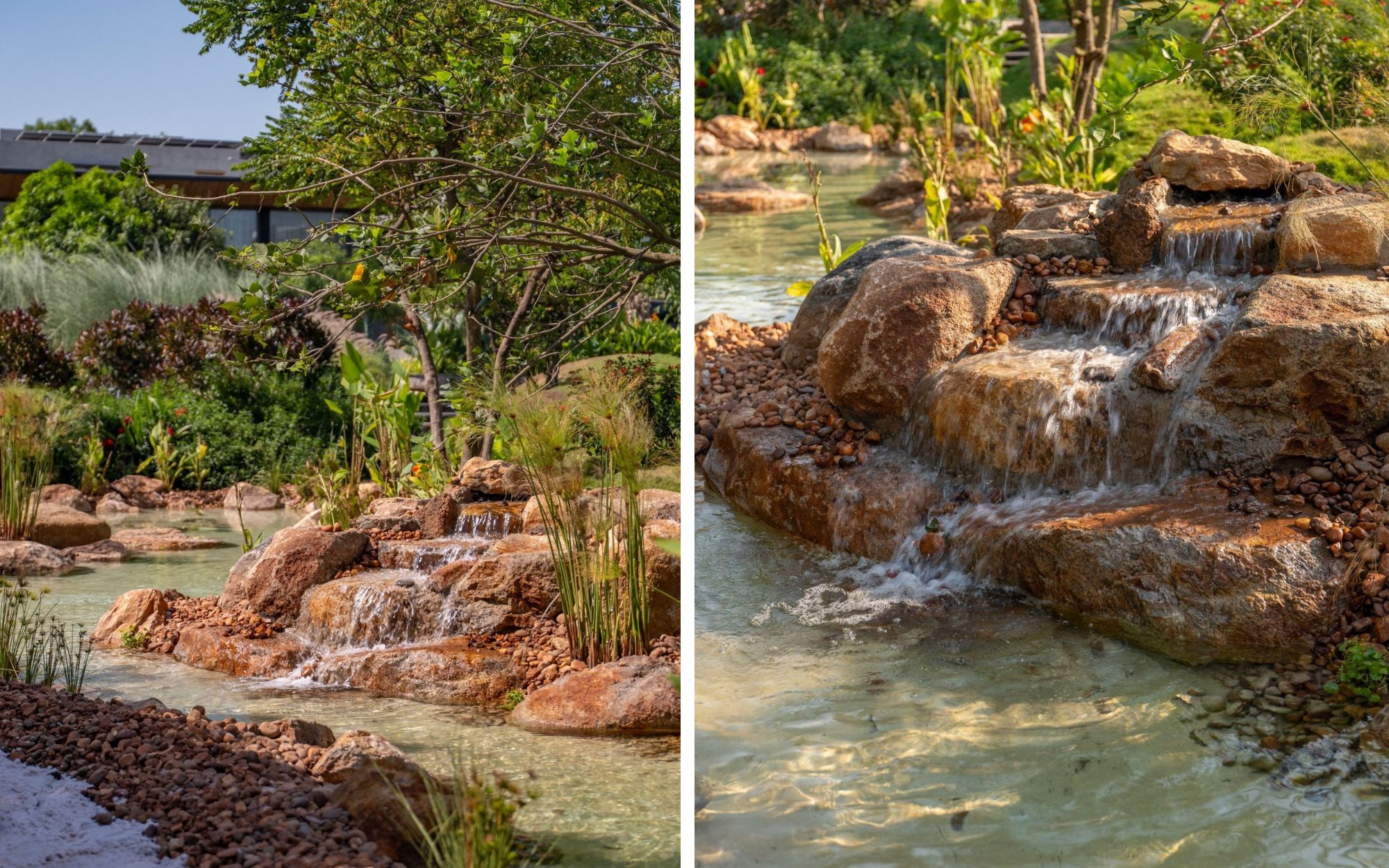
The philosophy of ‘Pond Architecture’ plays out differently in every project. At ‘The First Impression’, it began with the rocks. “We carefully considered the scale, texture, and character of each stone before composing them on site, so the waterfall appeared naturally formed instead of constructed.” The stonework spills past the water’s edge in places, blurring where land ends and the pond begins.
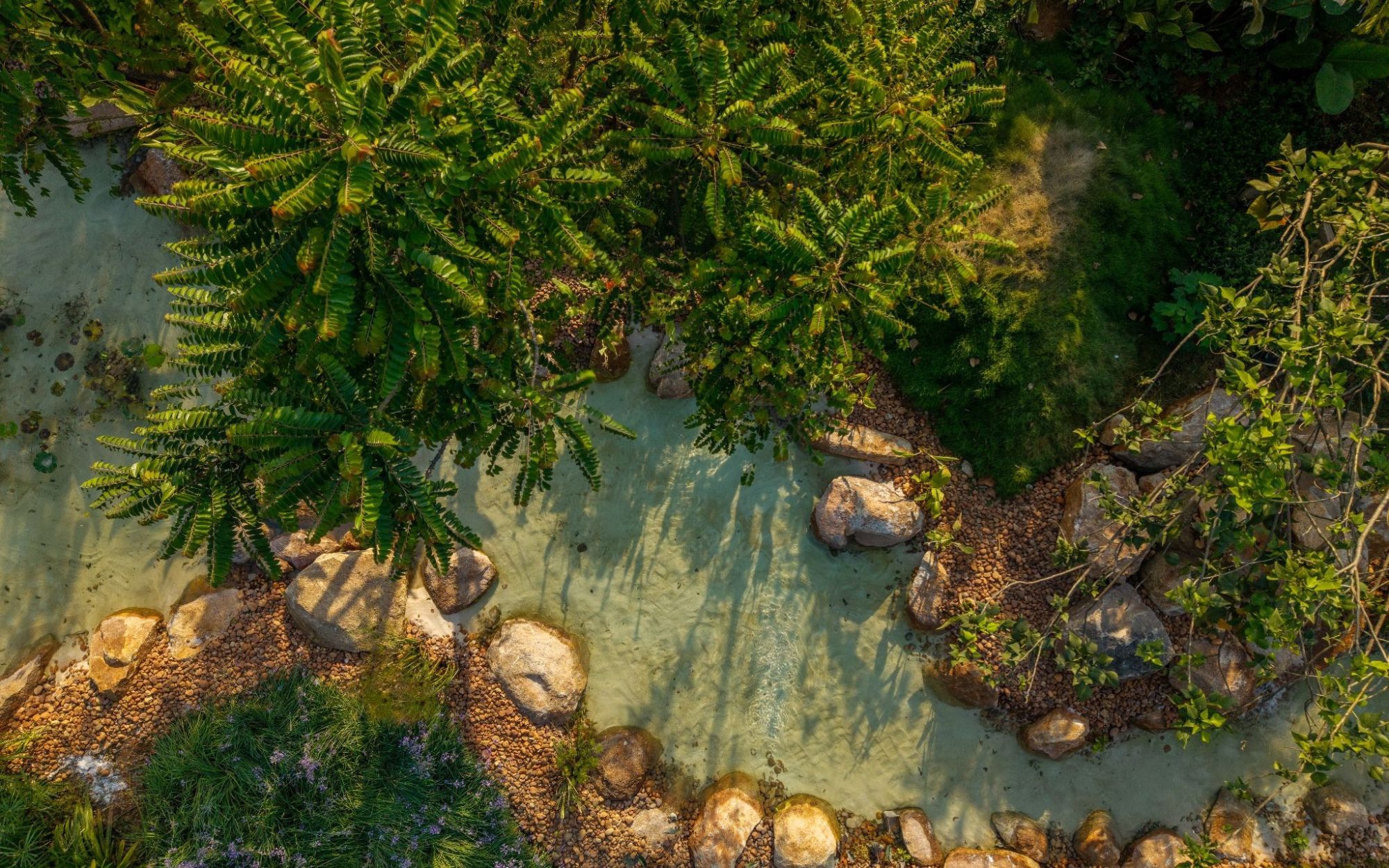
Planting carries the same logic. Aquatic species inside the pond were chosen alongside the terrestrial planting around it, so vegetation overlaps naturally at the edge. The pond’s own curves too are designed to unfold in such a way that the pond is not read as one focal object, but as a running thread through the landscape.
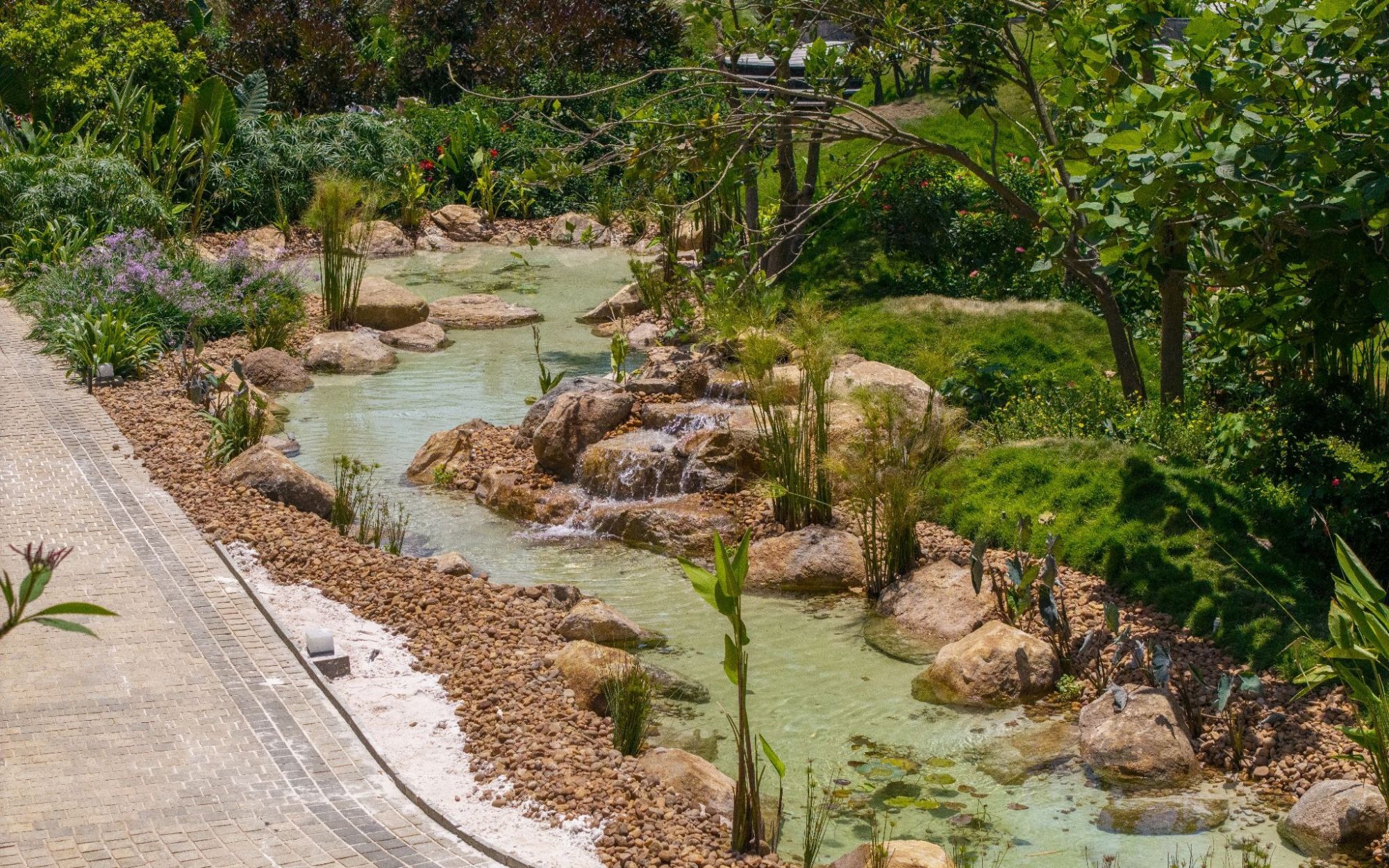
The site itself shaped several key design decisions. “One of the primary challenges was ensuring that all of the filtration infrastructure remained completely concealed within the landscape.” To preserve uninterrupted views, the filtration system was positioned away from the pond, while hidden water intake points kept the water circulating without disturbing its natural appearance. “This required careful hydraulic planning and precise pipe routing to ensure long-term performance and ease of maintenance without compromising the design intent.”
As the surrounding landscape evolved, the team also had to anticipate the impact of the monsoon. “We designed concealed drainage systems to intercept rainwater before it could carry soil and debris into the water body,” he explains. “This intervention remains virtually invisible while safeguarding the pond’s water quality and ecological balance.”
Also Read: How Lily And Koi Ponds Become The Must-Have Feature In Modern Homes
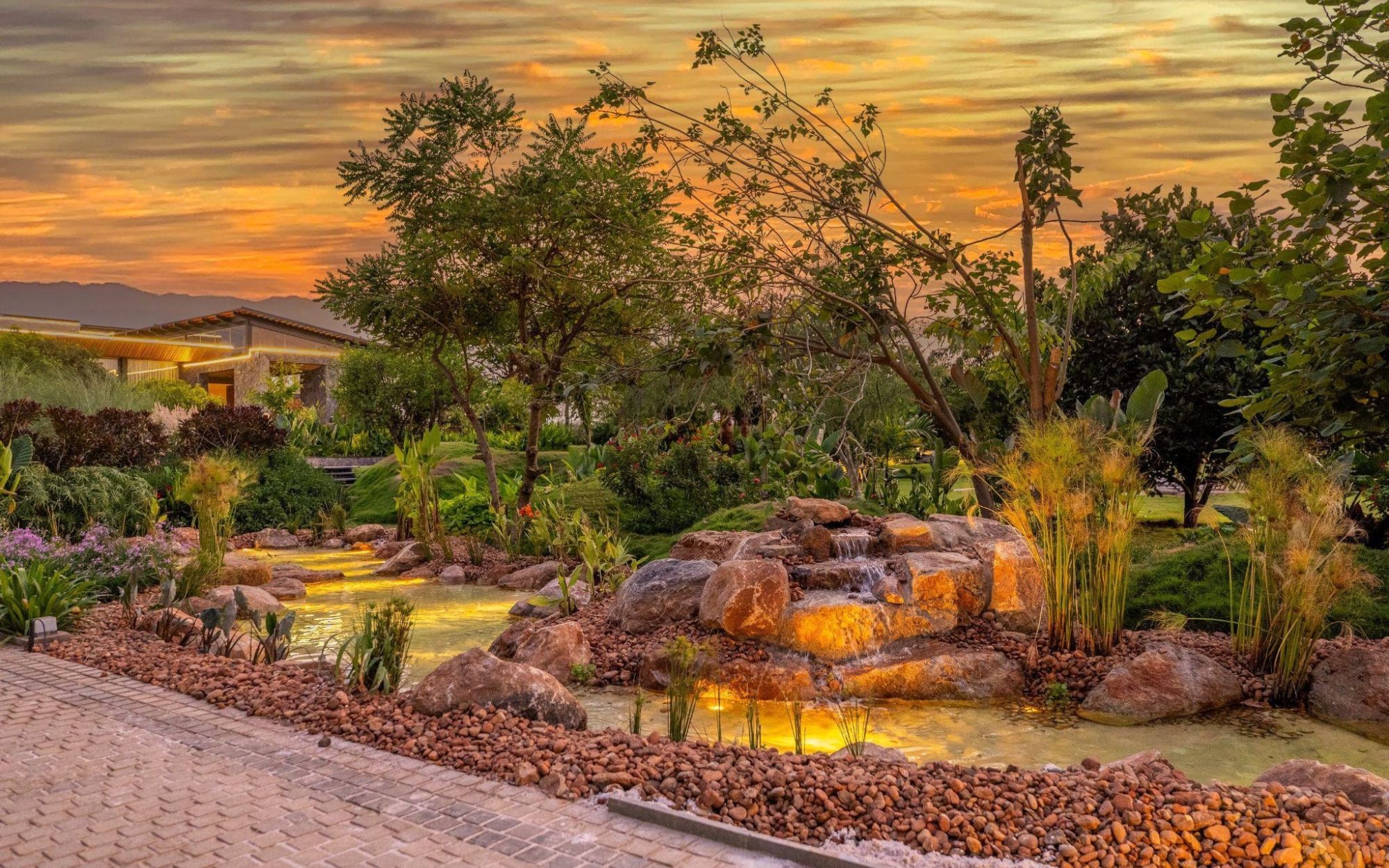
Engineering for Clarity, Year-Round
The biggest hesitation around water features is usually maintenance. Aqua StudioX’s answer is characteristically systemic: no universal filtration formula, since “every pond behaves differently.” Each system is calibrated to the site’s sunlight, climate, depth, planting strategy and bioload based on the pond’s inhabitants.
In practice, that means mechanical and biological filtration paired with UV sterilisation and carefully calculated water circulation, supported by aquatic plants that absorb excess nutrients, shaded zones that keep algae in check, and a balanced ecosystem that continuously regulates itself. Sludge collection chambers further simplify routine cleaning without disturbing the ecosystem, making maintenance both straightforward and infrequent. “Maintenance should never become a burden,” notes Fahad.
Water Beyond Ornament
Some of Aqua StudioX’s most rewarding collaborations are with architects and landscape designers who treat water as an environmental element rather than a decorative one, and the studio’s own work backs that framing. A well-designed pond can shift a site’s microclimate through evaporative cooling and added humidity; one ongoing project uses a network of ponds to help cool an entire industrial campus while shaping how visitors arrive. Living water also draws life to it, birds gathering at waterfalls, aquatic planting supporting biodiversity, native species chosen where possible for resilience.
But the deepest impact may be the least measurable one. “Water changes the way people experience a place,” Fahad says. “Its movement, reflections and sound engage multiple senses, creating spaces that feel calmer, more immersive and deeply connected to nature.” It encourages people to slow down, spend more time outdoors, and engage with their surroundings in ways they otherwise might not. In homes, it becomes part of everyday life across changing seasons. In hospitality projects, it creates a memorable sense of arrival. In public spaces, it shapes movement and gathering, giving people a reason to pause and making the landscape feel lived in rather than simply looked at.