#DP Talks: JOI-Design On How Taj Hessischer Hof Frankfurt Brings Together Indian Jewel Tones And European Glam
Legacy hotels have stories embedded in their walls. With JOI-Design bringing a refined new layer to the interiors, the design becomes a celebration of both Taj’s debut in Continental Europe and Frankfurt’s evolving identity as a city of culture and the arts.
- 2 Sep '26
- 4:31 pm by Satarupa Datta

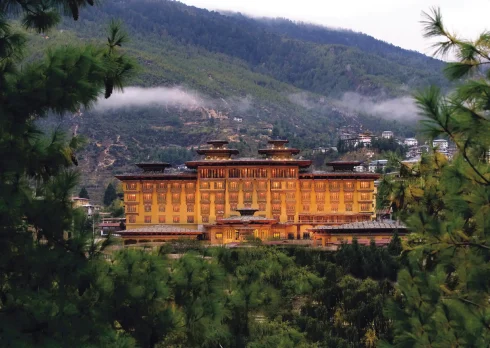
The story of Taj Hessischer Hof Frankfurt goes far beyond the revival of a historic hotel. Established in 1952 on the grounds of a former palace of the House of Hesse, the Grandhotel Hessischer Hof became one of Frankfurt’s most distinguished luxury hotels, welcoming an extraordinary list of dignitaries including the Dalai Lama, Nelson Mandela and The Rolling Stones. Now Taj Hessischer Hof Frankfurt enters a new chapter, bringing together the rich Frankfurt heritage, classical European elegance and the warmth of Indian hospitality. But Taj’s vision is not simply to reposition the property as another business hotel. The focus is on creating experiences that blend business with leisure, giving guests a reason to extend a one-night business trip into a longer stay, and experience the city, its culture and the distinctive character of the hotel.
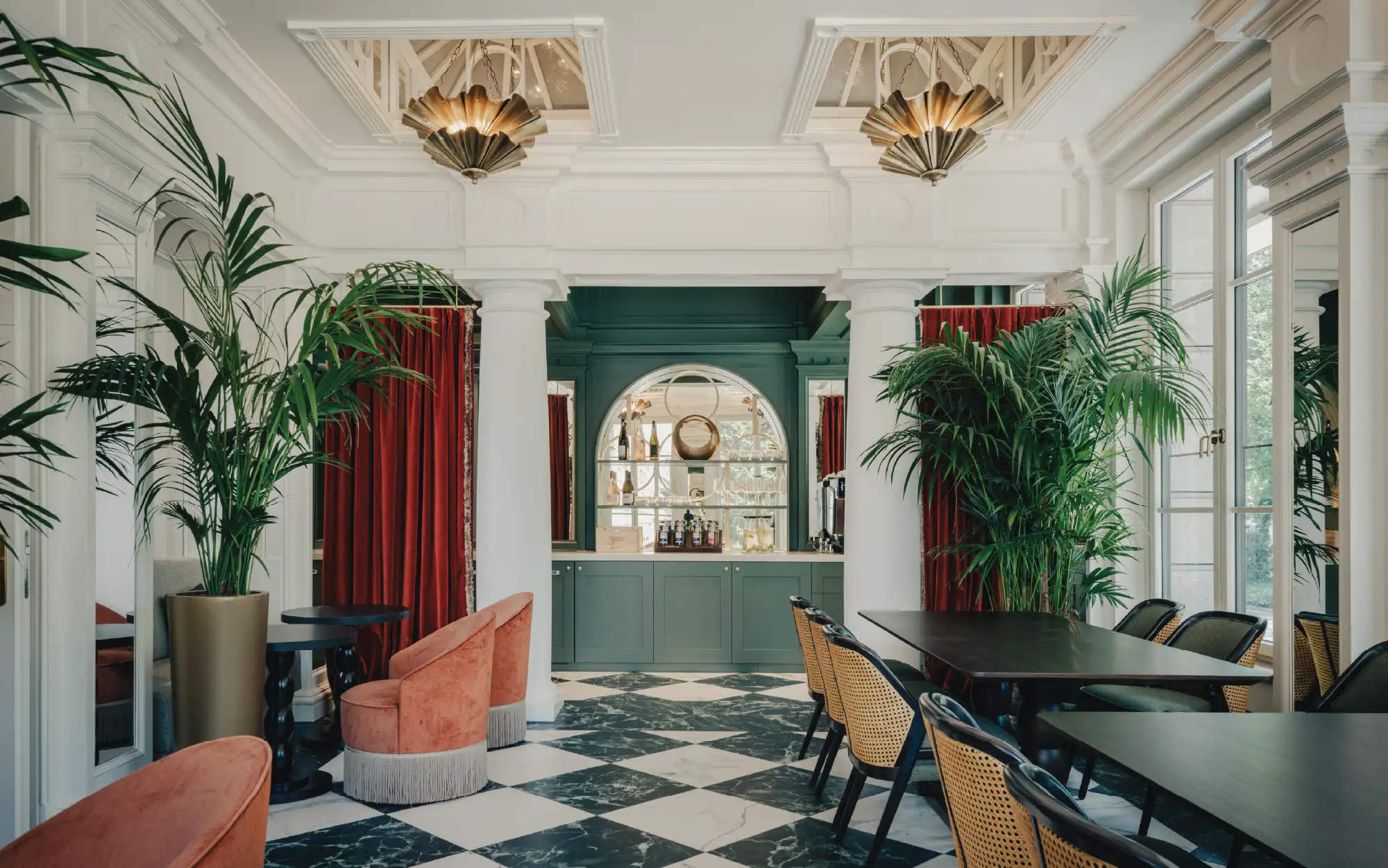
As design aficionados, we were immediately drawn to the design language of Taj Hessischer Hof. The aristocratic institution of yesteryear has been reimagined with a cosmopolitan lustre and a distinctly Indian flair, visible in details such as the doorman’s paisley-embroidered uniform, the rich emerald tones, and the Indian classical curves within the spaces.
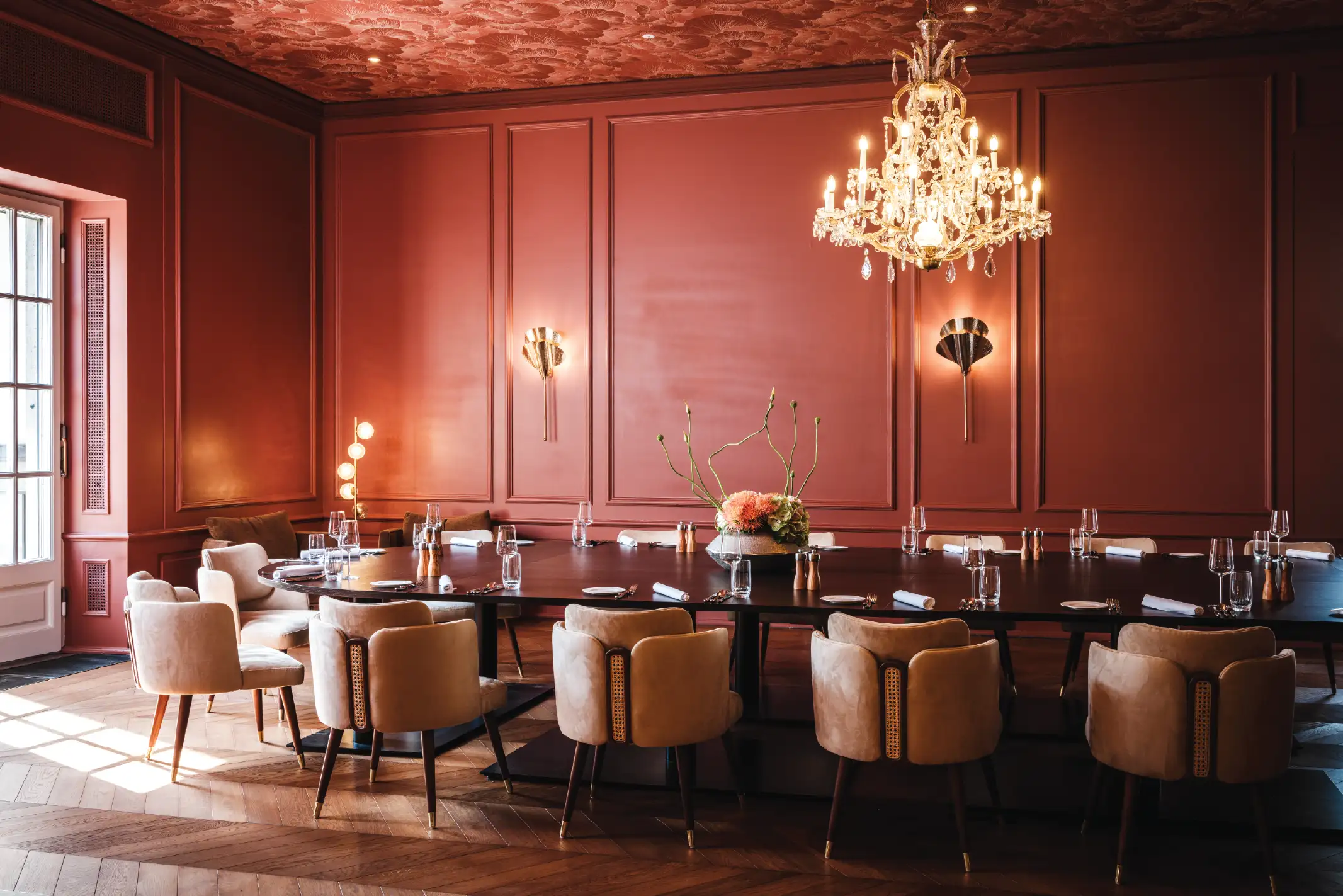
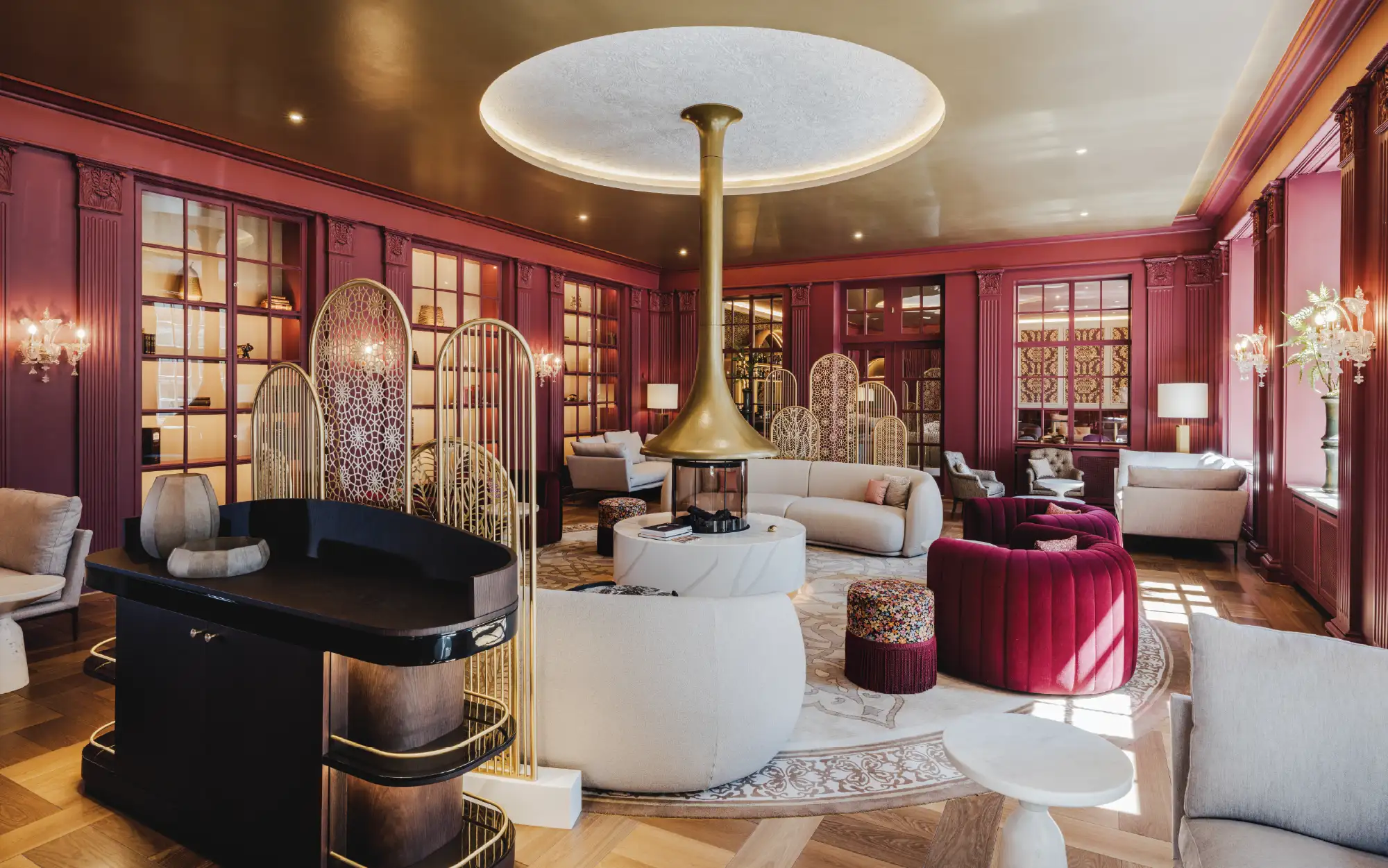
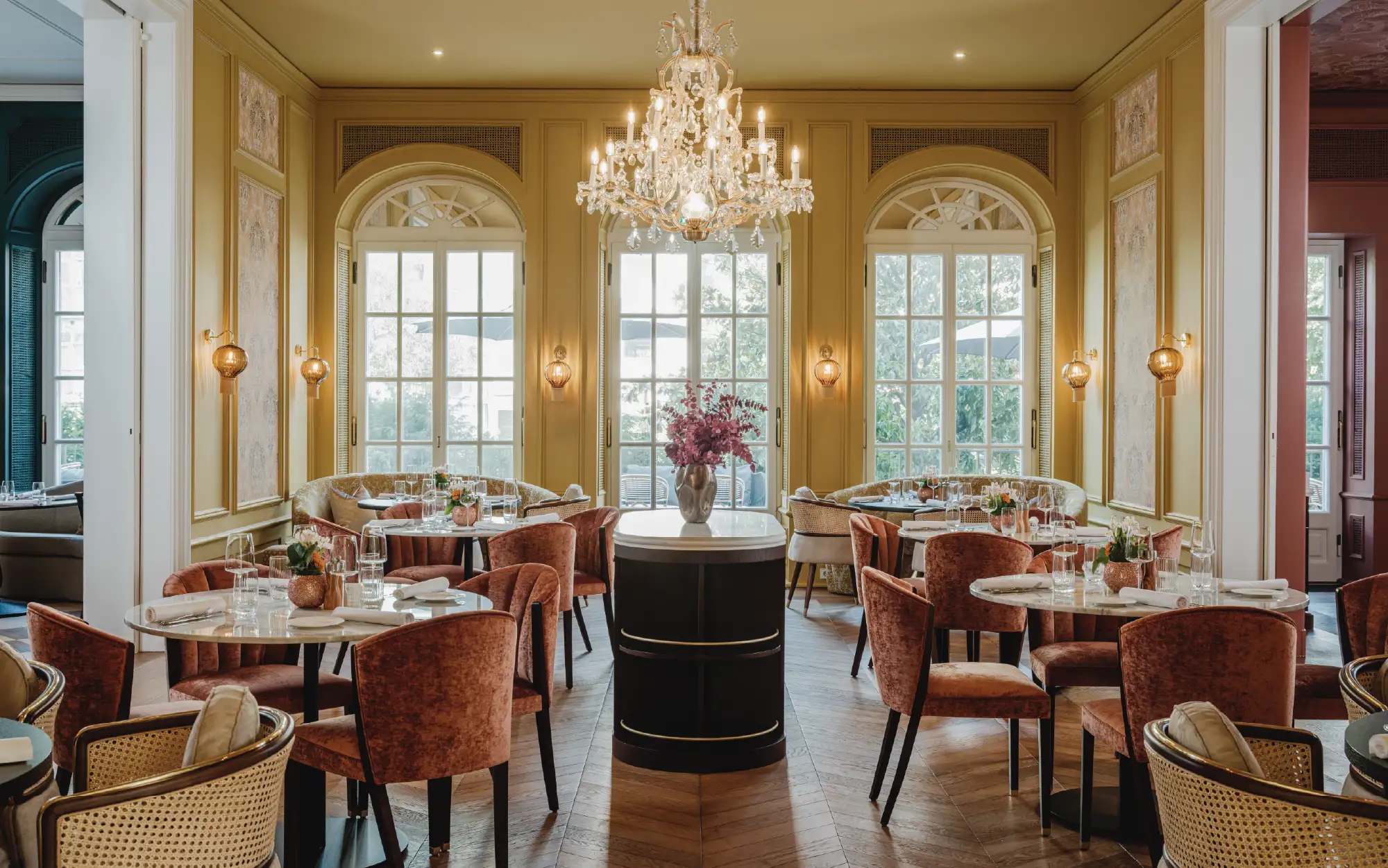
The emerald hues hint at India’s vibrant jewel tones while the intricate patterns and decor are a clear nod to Indian and classic European design. Yet the result never feels literal or overly thematic. Across the 126 rooms, dining spaces and Chambers Lounge, familiar design elements appear in unexpected ways, creating a sense of recognition without repetition. The design is, in essence, not a fusion but what we love to call the tale of two classics —not purely European, not labelled Indian, but a dialogue between the two design cultures. Colour became a cultural bridge between the European heritage of Hessischer Hof and the visual richness of India, with both design traditions finding common ground in India’s vibrant jewel tones. This is particularly evocative in common lounge areas, the third room, which is The Chambers’ private dining space and largely at Bombay Brasserie, the luxury dining space, where the palette draws on the intense, sensual hues of Indian spices. Above curved banquettes upholstered in aquamarine velvet and woven tapestry, constellations of delicate ceramic LED pendants appear to float, creating an almost ethereal counterpoint to the richness of the materials below. In the central dining room, citrine yellow and white bring a sense of luminosity and lightness, while refined patterns within the wall insets add another layer of texture and intricacy.
Rather than using colour simply as decoration, it is woven into the space rather than slapped on. At the heart of the design was a shared cultural sensibility. The commonalities ultimately came together around one clear directive: to create a hotel that felt composed rather than brash. At the same time, the design was deliberately not confined to a predefined architectural vocabulary—neither Indo-Saracenic nor Gothic nor Neoclassical. Nor, perhaps, is the word “fusion” adequate to describe what has been created. Which is why we sat down with the team at JOI-Design to take us through the design and restoration journey behind Taj Hessischer Hof Frankfurt—from preserving the character of an iconic institution to introducing a new visual language of Taj Hessischer Hof .
Design Pataki: Can you take us back to the beginning—how did Taj enter the story of the Grandhotel Hessischer Hof, and what made you feel that Taj was the right custodian to take this institution into its next chapter?
JOI-Design Team: JOI-Design was the leading architect for the project and cooperated with the contractor TKS, who submitted the building application. There’s a saying that it takes a village to raise a child. For us, it took our studio’s village to bring this design to life. The project began as JOI-Design was changing hands from the company’s founders, Corinna Kretschmar-Joehnk and Peter Joehnk, to its three new owners, Sabrina Voecks, Barbara Wiethoff and Thomas Scholz. Sabrina and Peter were part of the original planning meetings, and later, Barbara helmed the project. Corinna and Peter had toured many Taj hotels in India, so they shared their photos and observations to help guide the design direction in Frankfurt. Plus, of course, we were supported by so many JOI-Design team members who worked diligently to make the beautiful Taj Hessischer Hof Frankfurt a reality. Doubtless it was a team effort. “We didn’t set out to replicate Indian design – we’re not Indian, so we weren’t in a position to do so,” says Barbara Wiethoff. “ Days when people from India or Europe are enjoying the hotel, we want them to discover features that feel familiar, but not in the ways they’re used to seeing them. Our design is a hybrid; it’s not purely one style or the other. Artistic and hospitality traditions from both cultures provided wonderful inspiration.”
DP: How is the design language of Taj Hessischer Hof Frankfurt articulated through its spatial elements, and how does the dialogue between European heritage and Indian design create moments of surprise and discovery throughout the guest experience?
JOI-Design: The building’s existing structure, proportions and some of its decorative wall panelling provide a distinctly European foundation. Onto this, we introduced new layers of colour, pattern and ornamentation inspired by the richness of India’s design culture. What interested us the most was actually the opportunity to not create a completely seamless fusion. We wanted both cultures to remain recognisable and to create moments of deliberate contrast. European guests encounter familiar architectural proportions and materials, but also abundant decorative details that go beyond contemporary European conventions. Indian guests, in turn, recognise elements of their own visual culture and hospitality traditions, yet experience them with acres of personality that is wrapped in a restrained European architectural framework. This creates a certain productive tension. The design is conceived as a dialogue between two cultures, where familiarity and surprise exist side by side. European guests encounter elements rooted in their own architectural heritage, while Indian influences reveal themselves through vibrant palettes, patterns, materials and decorative gestures. This interplay creates a sense of discovery. From a European perspective, we were especially inspired by the courageous use of palettes and motifs in Indian aesthetics, while our client continuously encouraged us to stay away from muted tones. It was a pleasure for us to embrace this richness and allow both cultural identities to enhance one another without losing their individuality.
DP: Can you tell us about the art curations, some of the commissioned works and the lobby design that has always established an atmosphere of warmth, elegance, and belonging for Taj hospitality?
JOI-Design: JOI-Design wasn’t directly involved in the final art curation; the pieces were selected by Taj’s in-house team. Our approach was to ensure the interiors themselves carry strong decorative and artistic qualities. Elements such as room dividers, screens and bespoke details doubled as artworks in their own right, adding depth, rhythm and degrees of intimacy to the overall atmosphere.
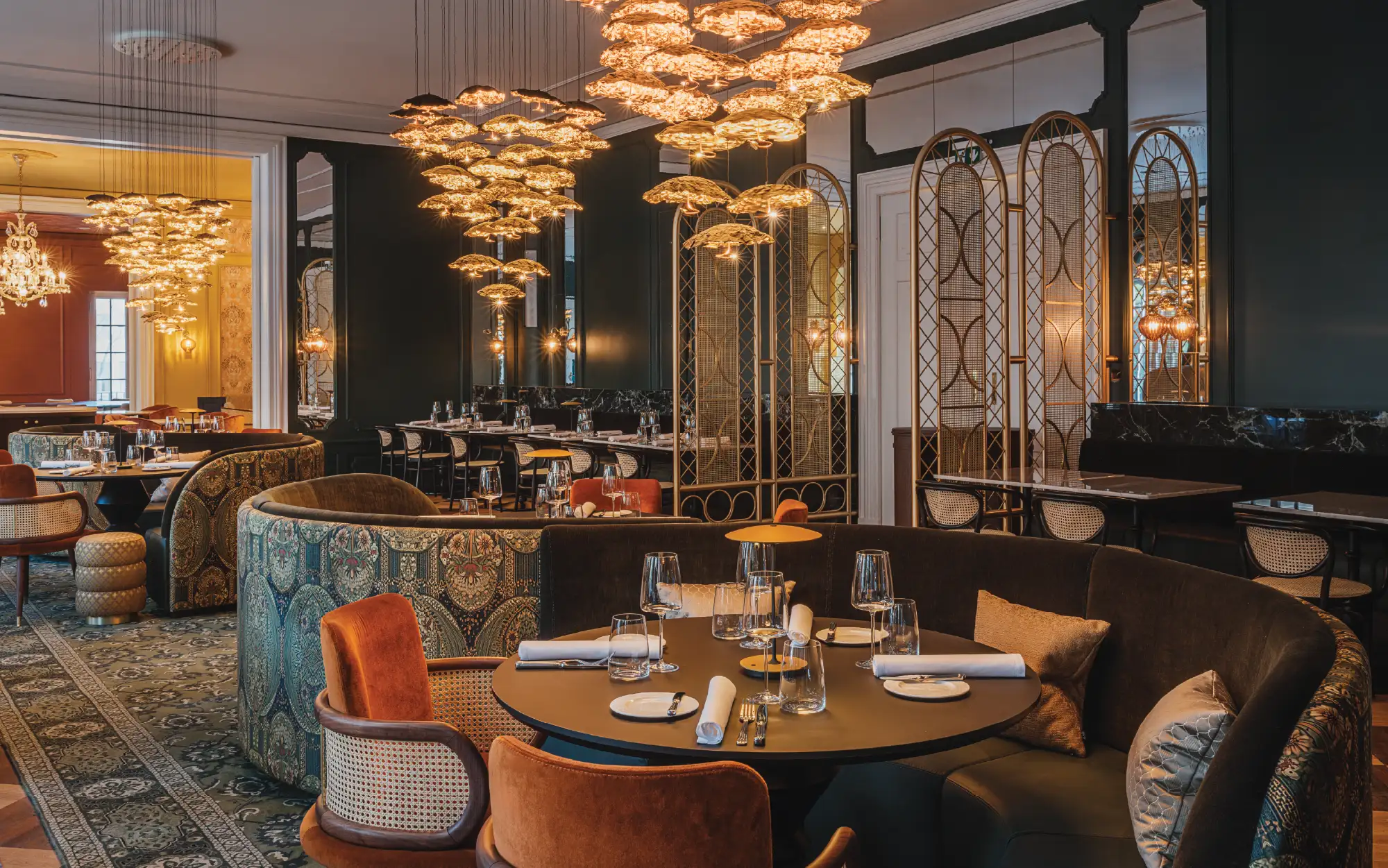
DP: How does Bombay Brasserie reinterpret Indian design within the historic European context of Hessischer Hof? The interplay between the dark timber, rich material palette and the traditional tiered chandeliers creates a striking balance between European restraint and Indian ornamentation. What was the design thinking behind this juxtaposition?
JOI-Design: Bombay Brasserie embraces the richness and expressive quality of Indian design while remaining rooted in the architectural order of a European Grandhotel. An intense emerald green anchor as the predominant backdrop, punctuated by gilded accents, dark woods and intricate tapestries, resulting in a carefully balanced opulence. Pattern, ornamentation and colour are used confidently, yet the underlying proportions and spatial structure remain distinctly European.
An important part of our design process was the careful curation of individual pieces. We’ve built an extensive repertoire of manufacturers, products and types of craftsmanship over many years, which lets us identify elements that will bring precisely the right character and presence for the personality of a particular space.
The tiered chandeliers by Catellani & Smith are a perfect example. Selected from the brand’s collection, their sculptural form and warm, almost ceremonial golden glow became an integral part of the composition. Their lustrous patina amplifies the kaleidoscopic interplay that defines Bombay Brasserie.
For us, design expertise is not only about creating bespoke elements; it is equally about recognising when an existing collection or object has the presence to become a defining focal point within a space.
DP: The Chambers represents the most exclusive expression of Taj hospitality. How does JOI-Design differentiate its spatial and interior language from the rest of the hotel to create a sense of exclusivity, discretion and retreat, while still maintaining the dialogue between European heritage and Indian hospitality?
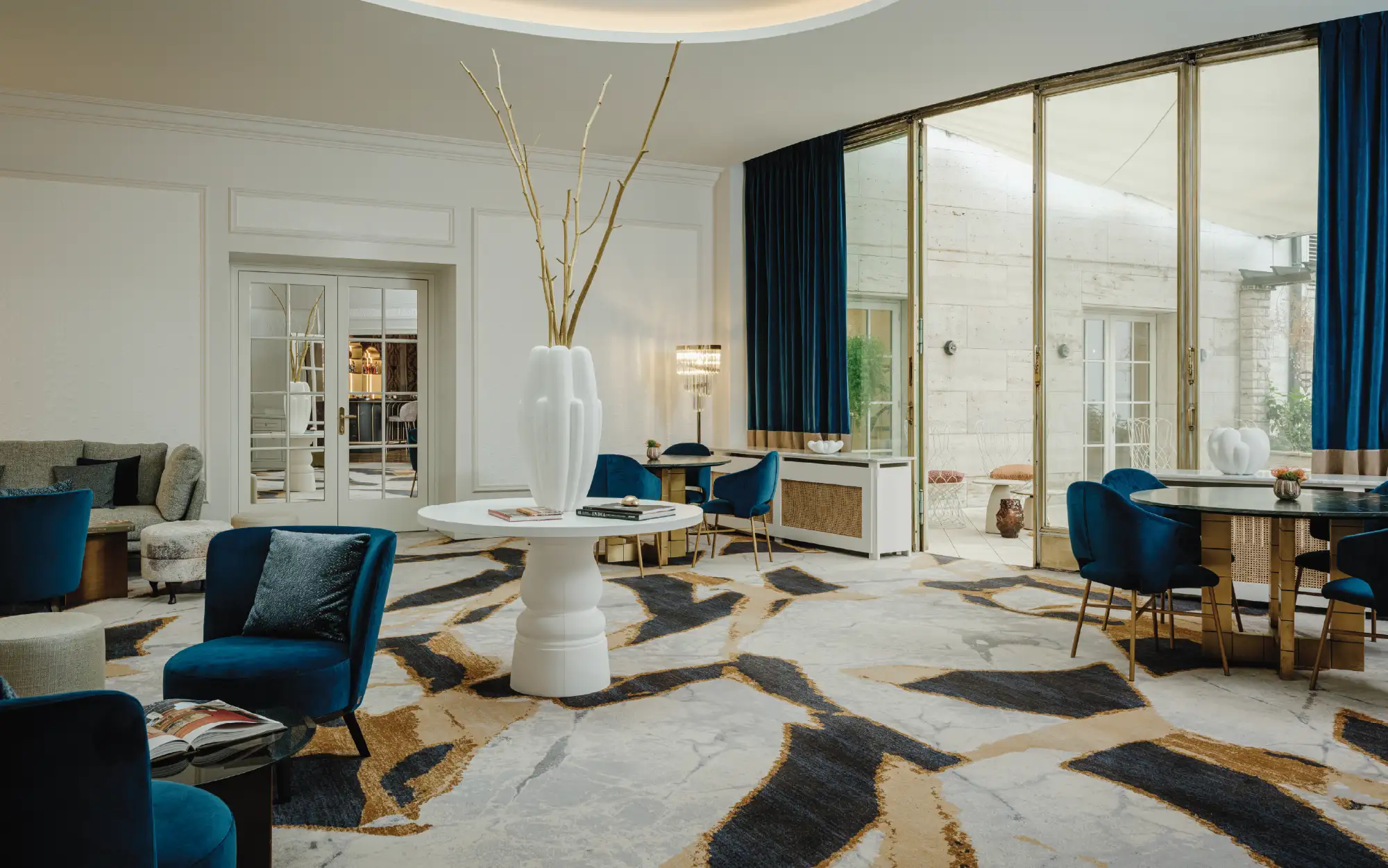
JOI-Design: Rather than introducing a completely separate design language, The Chambers follows the same overall design principles as the rest of the hotel. What distinguishes it is the way these principles are intensified to create a more intimate and private atmosphere. Think deeper tones, greater layering of materials, carefully framed views and cosier seating arrangements increase the sense of discretion and retreat.
At the same time, the sequenced flow between the Lounge, Bar and Living Room is a thoughtfully choreographed progression. The Lounge establishes intimacy around its sculptural fireplace, which guides members to the Bar with its more social energy. The Bar then opens onto the Living Room with its lighter, calmer ambience beneath the central Oculus. Just like the rest of the hotel, European architectural references remain present throughout, while the richness, warmth and generosity associated with Indian hospitality are expressed through colour, craftsmanship and mood. The Chambers feels exclusive luxury not through separation, but through a heightened sense of comfort, privacy and belonging.
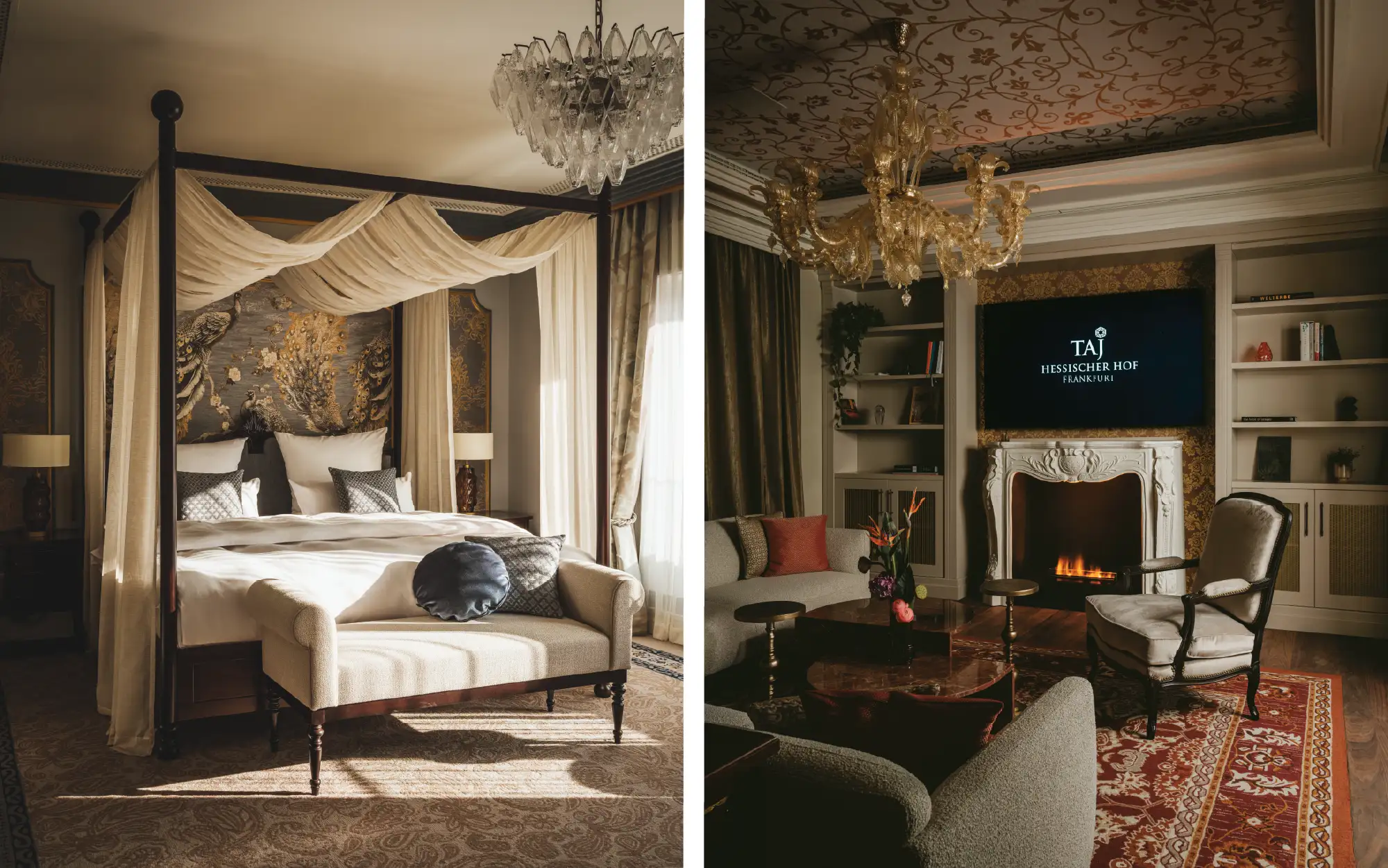
DP: How were the guest rooms and suites conceived to continue the cultural dialogue established throughout the hotel?
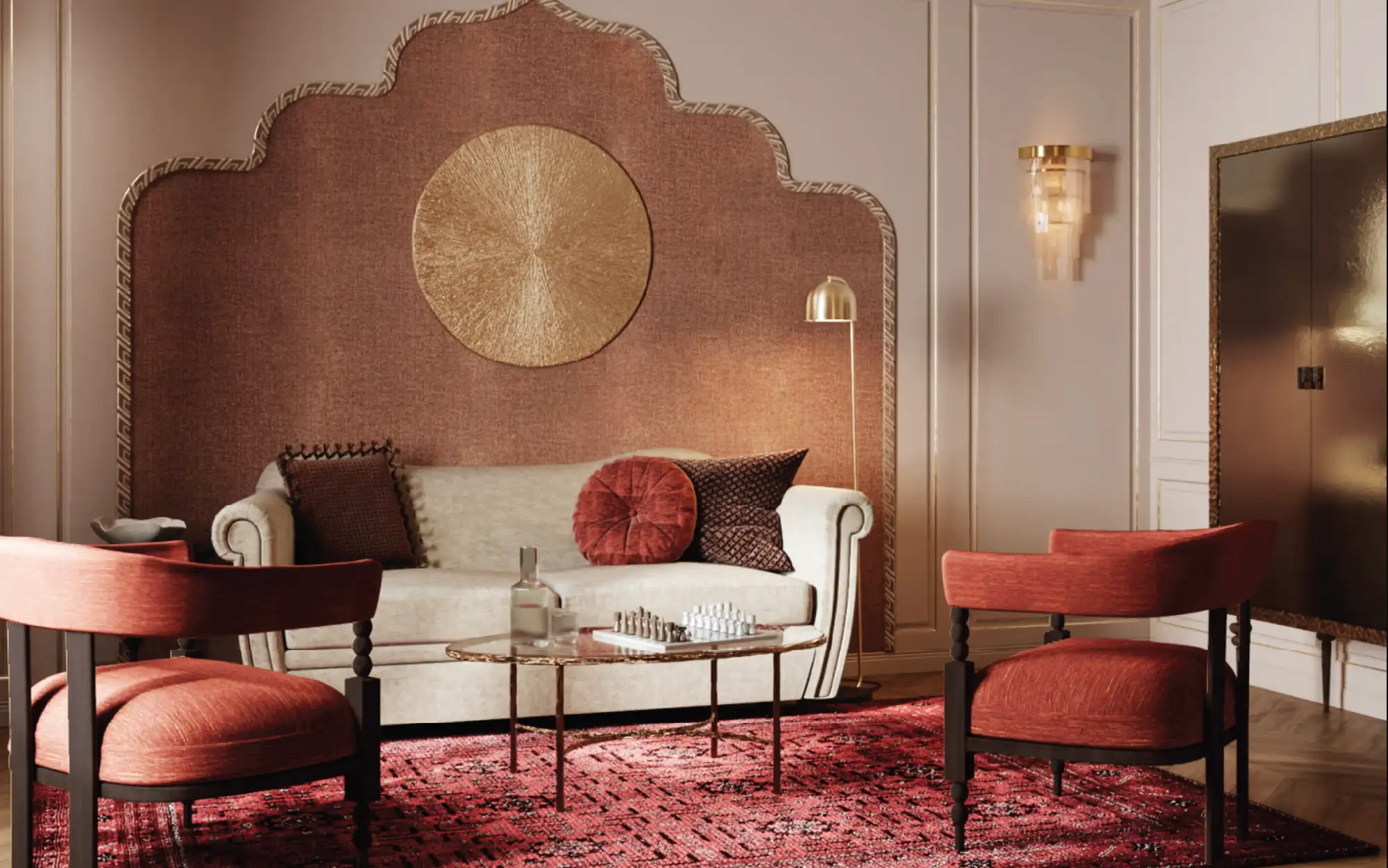
JOI-Design: Across all guestrooms and suites, dark timber and brass form a fundamental part of the design language, creating continuity throughout the hotel and establishing a shared material reference between European and Indian traditions. In the suites, this language becomes noticeably plusher and more expressive. We deliberately embraced a level of ornamentation and craftsmanship that goes beyond what we would typically use in contemporary European design. Decorative ceiling patterns, sculptural headboards, carved and routed furniture details and highly patterned carpets introduce a stronger sense of the decorative intricacy India is known for, while the architectural proportions and overall composition remain ordered and distinctly European.
The carpets in particular required many rounds of development until their design’s density, colour and complexity achieved the right balance for both the Indian client and the European Context. The Presidential Suite lives up to its description as a “sleeping chamber fit for royalty.” Rich wall panelling and herringbone parquet flooring establish a calm, elegant European foundation, while the interiors introduce a contemporary interpretation of European glamour infused with Indian patterns, forms and crafted details. Here, sumptuous patterns become a defining element of the interiors, expressed through elaborate surfaces, textiles and crafted details.
The Presidential Suite lives up to its description as a “sleeping chamber fit for royalty.” Rich wall panelling and herringbone parquet flooring establish a calm, elegant European foundation, while the interiors introduce a contemporary interpretation of European glamour, infused with Indian patterns, forms and crafted details. Yet the sense of luxury never feels overly formal. Thoughtful comforts and the warmth of Taj hospitality lend the suite an intimate, residential quality, making you feel at home, but in the most refined interpretation of what home can mean.
The suites therefore do not introduce a different design language, but intensify the one established throughout the guestrooms with greater depth, craftsmanship and materiality.