Spaces Of Rebellion: Indian Forts That Fought Alongside Freedom Fighters
From Vellore Fort to Red Fort and contemporary protest sites, DP visits every fort that served as a backdrop to India’s freedom struggle 79 years ago.
- 15 Aug '26
- 5:07 pm by Simran Almeida

Freedom is a concept far too complex and idiosyncratic. But freedom, as Freud puts it, comes with a certain restraint and accountability, a trade-off between individual freedom and social order. A few weeks ago, however, the need to revoke this powerfully flexible concept was walking the streets and lingering in public spaces with a sea of Gen Z yelling the most ingenious slogans and halting ‘business as usual.’ Amidst the cacophony was a sense of solidarity of being caught up together in a ‘heterotopia,’ as Michel Foucault calls it. The dissent (with a plethora of motives) at Jantar Mantar in the capital’s heart was a yearning, wrapped in nostalgia, for a pluralist and tolerant India committed to its citizens’ freedom. But protests have been gnawing at the country’s foundation for ages, stirring old instincts of questioning, resisting and reclaiming.
The demonstrations (I can corroborate having attended a couple) are not about the slogans or abstinence, but about something hiding in plain sight: the space itself, which lends a sense of power to its demonstrators and their act of dissent. And this relationship between space and struggle is hardly new; it stretches back centuries, even to India’s freedom struggle. These spaces “linked to slices in time”—heterochronias offer refuge to every identity. In times of concentrated cityscape, these sites are makeshift, fleeting even, usually claimed with canvas tents, umbrellas and an ad hoc pedestal. But it was not always like this. During the protest against the British Raj, there were impenetrable walls, bastions, watchtowers and guarded ‘darwazas’ (doors) that bore witness to protests and struggle.
Once the military strongholds of a city, these forts controlled trade, oversaw everyday life and served as the throne’s residence. Their colossal ramparts, bastions and barbicans made them imposing symbols of power. Yet, in a heterotopia, a space’s meaning can shift with time, taking on new functions as the realm around it changes. In keeping with this, DP steps back in time to trace how forts became silent witnesses to the trials, rebellions and resistance that shaped India’s freedom struggle 79 years ago.
Also read: At These 5 Glamping Sites In India You Can Rough It Out In Style
1. A Premature Uprising At Vellore Fort, Madras
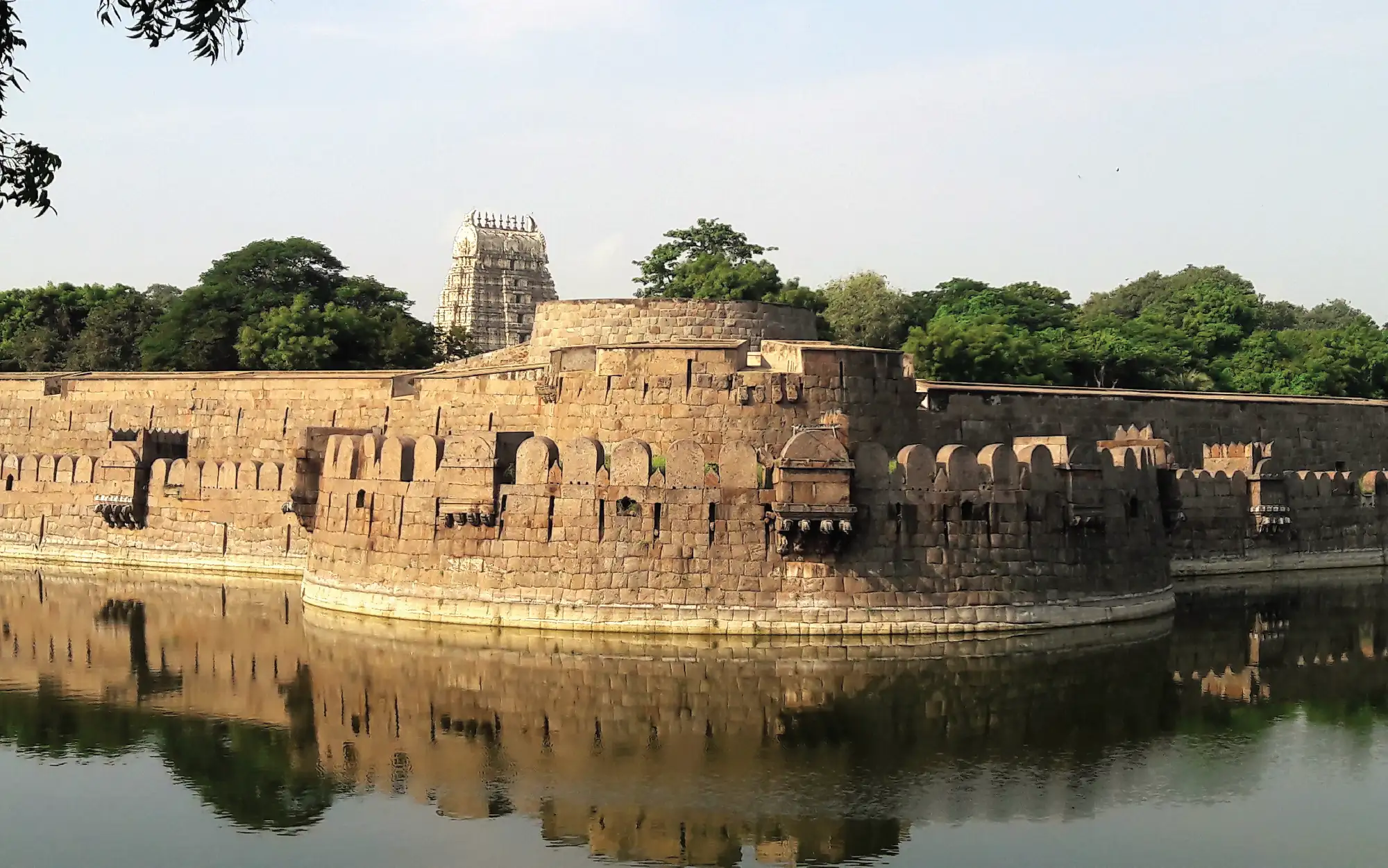
By the mid-18th century, the British East India Company had begun transforming its commercial foothold into territorial power. In 1806, Vellore Fort became the site of a sepoy mutiny, as Indian soldiers turned against the military regulations imposed upon them by the East India Company. Built in the 16th century, the fort sprawls across 133 acres in the heart of the city. It features a rectangular enclosure built almost entirely of massive granite blocks and surrounded by a moat. Within its walls stood palaces, barracks and places of worship—a temple, a mosque and, later, a church—making the fort a world of its own.
It then became a powerful site of the freedom struggle because a fortress built to embody military authority and colonial control was transformed, in 1806, into the very stage where Indian soldiers rose against that power. The rebellion was swiftly suppressed.
2. The Matriarch Fight At The Jhansi Fort, Jhansi
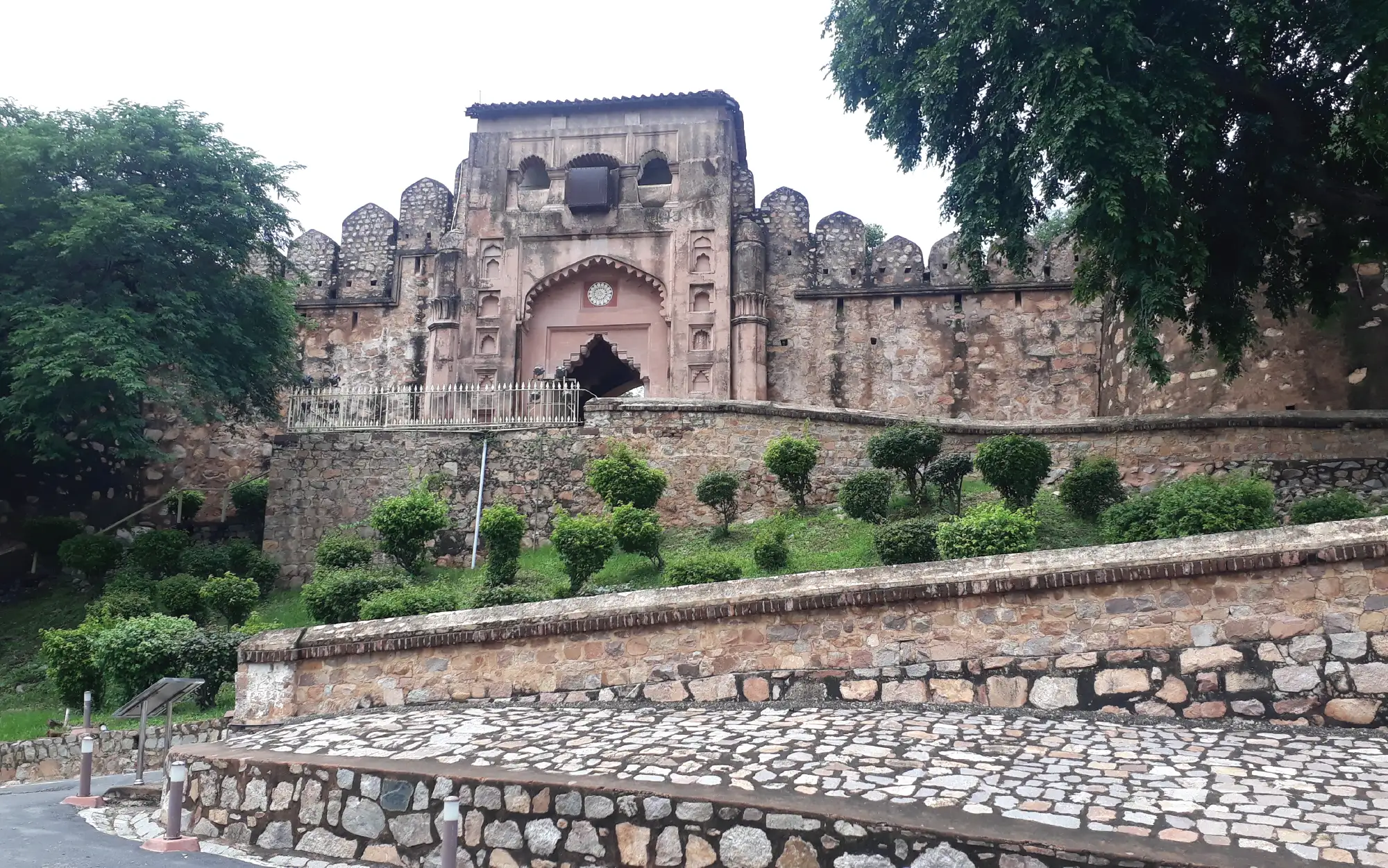
After the death of Raja Gangadhar Rao, the 5th Raja of Jhansi, Rani Lakshmibai became the matriarch tending to her kingdom—the fort of Jhansi. Perched atop Bangara Hill across 15 acres, it was built in the early 17th century and later expanded for its military importance. The fort served as a backdrop to the Revolt of 1857, which spread from Meerut to Delhi and across North India. Its elevated location, 10 guarded ‘darwazas,’ and cannons, including the famed Karak Bijli, made it a formidable stronghold when the British were steadily expanding their territories using policies such as the Doctrine of Lapse to annex Indian states and consolidate their power.
Its temples, gardens and royal quarters made it a self-contained seat of power, where military authority and everyday life existed within the same fortified enclosure. The later addition of Shankergarh further attested to the site’s strategic importance. Fighting like a true warrior, Lakshmibai eventually slipped out through the Bhanderi Gate, carrying the resistance beyond Jhansi to Kalpi, which was later defeated by the British troops. Then Lakshmibai, Rao Sahib and Tatya Tope moved towards Gwalior.
3. A Final Campaign At Gwalior Fort, Madhya Pradesh
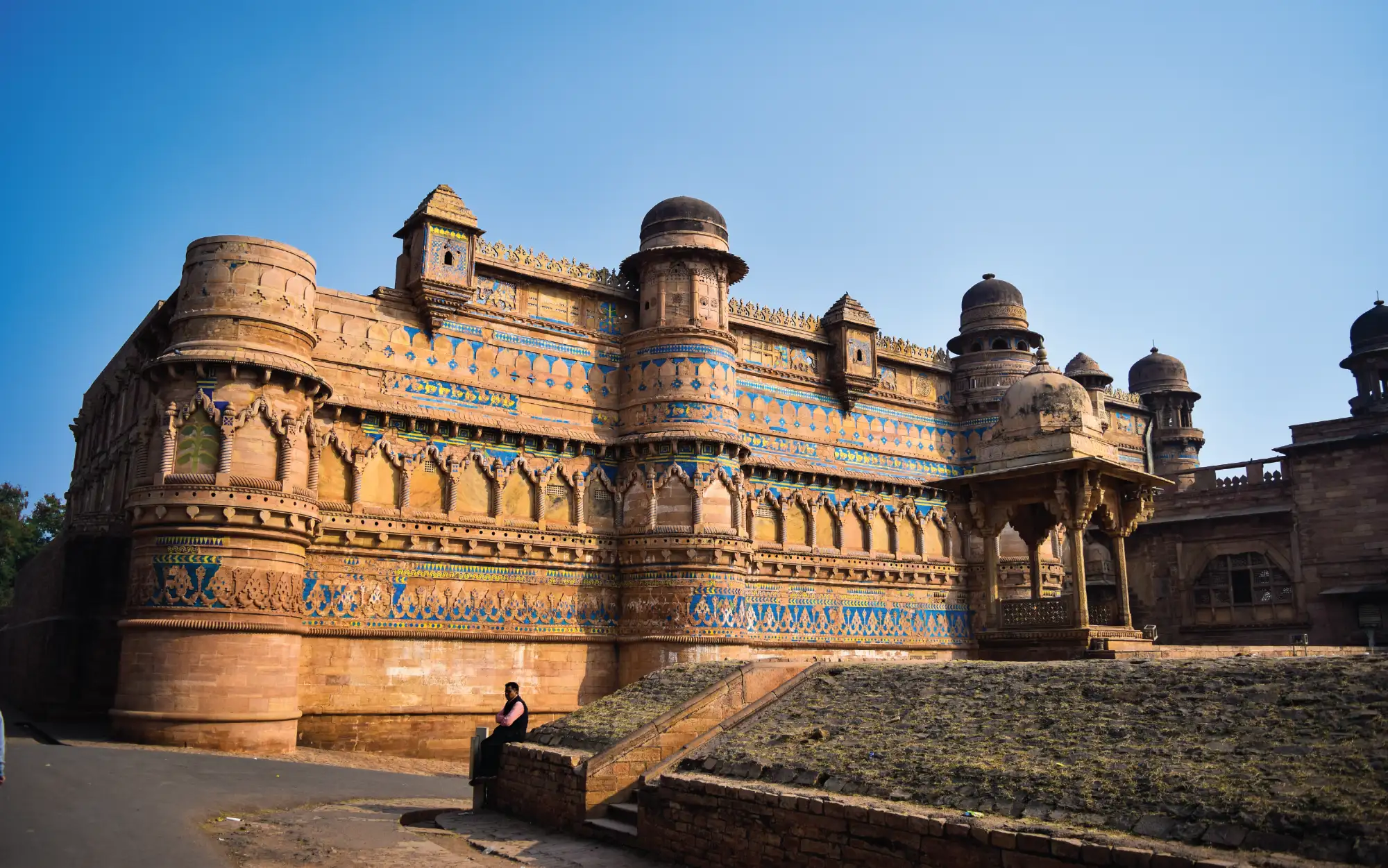
Perched upon the basaltic plateau, Gwalior Fort was the safe haven for the trio who escaped Kalpi after its fall in 1858. Built by Raja Man Singh Tomar, it is an architectural palimpsest of military might and royal grandeur. With carved brackets, domed turrets and towering ramparts with cobalt-glazed decorative tiles trace the contours of the rocky hill. The approach to the summit rises through six successive gateways, while bastions, ‘chhatris’ and fortified walls reinforce its character. Within its walls, palaces, temples, Jain sculptures and reservoirs such as Mansarovar Tal and Gangola Tal sustained an entire settlement. It was this combination of elevation, defence and self-sufficiency that made Gwalior such a potent backdrop for the freedom struggle.
Unlike an isolated military outpost, the fort was woven into the life of the city below. As British forces advanced to reclaim the city, Lakshmibai fought at Kotah-ki-Serai, near Gwalior, on 17 June 1858, where she was killed in battle. Two days later, the British recaptured Gwalior from the rebels who had seized it earlier that year.
4. At The Stroke Of Midnight At The Red Fort, Delhi
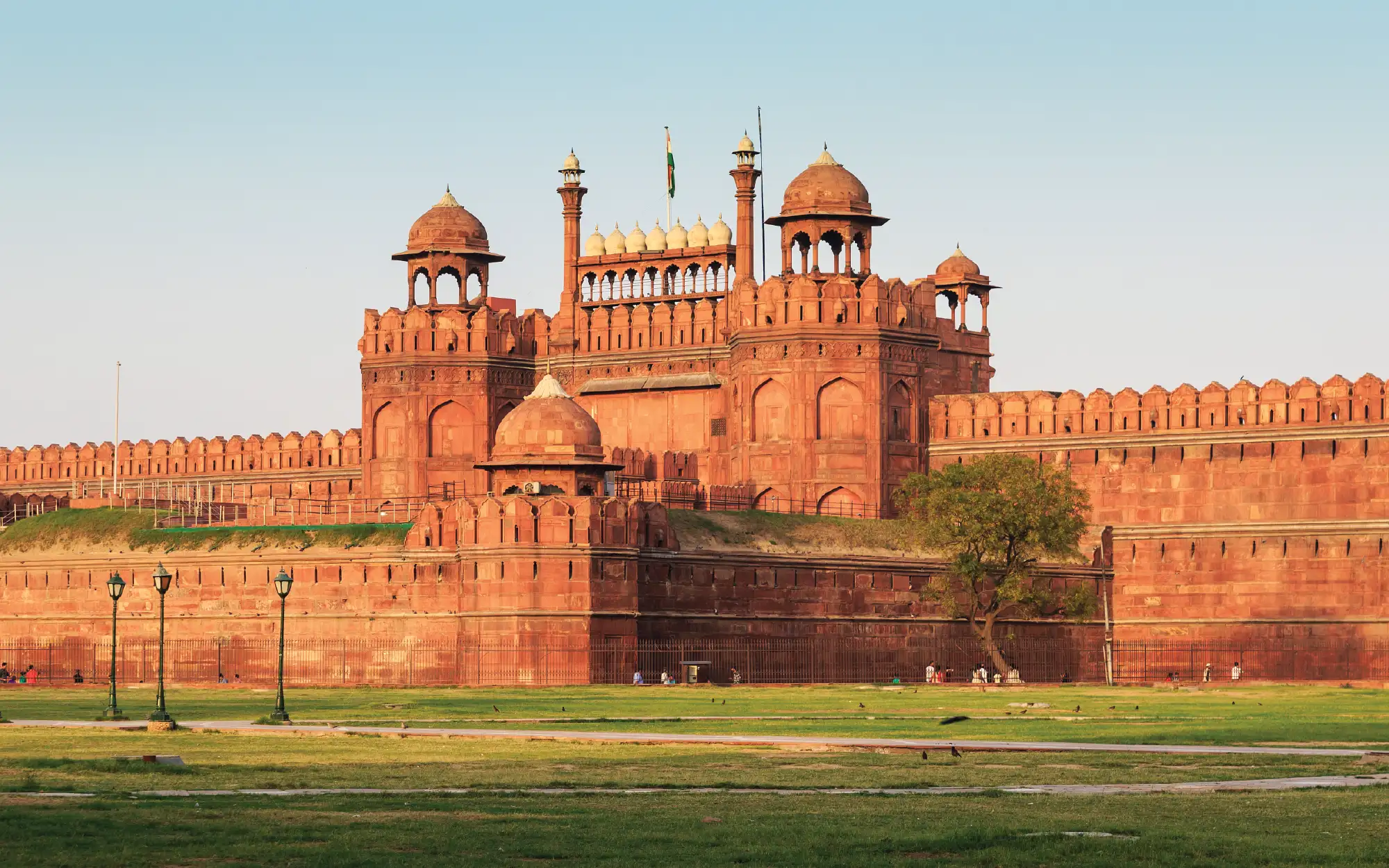
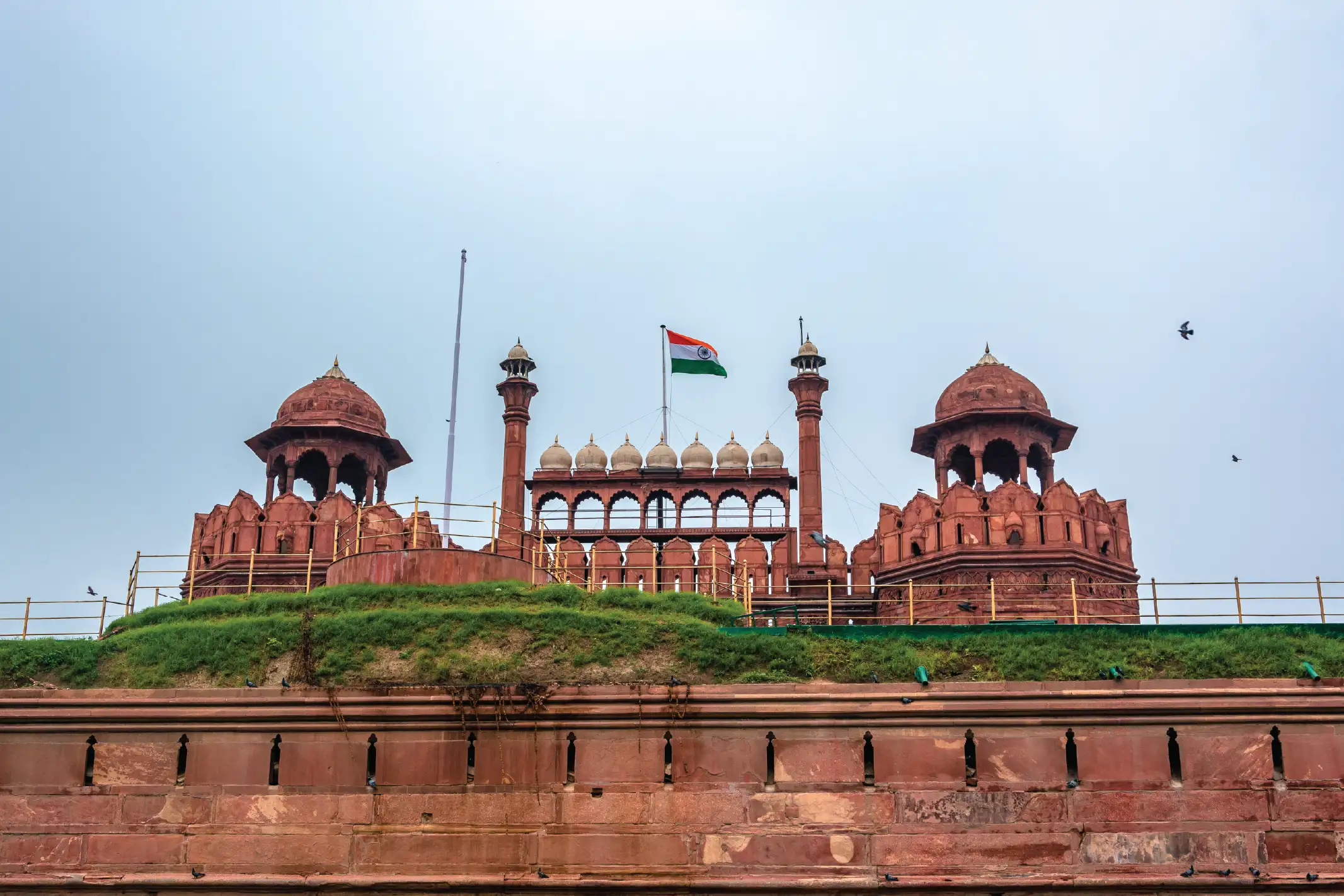
On the ramparts of the Red Fort, the arrival of Indian independence was announced to the nation on 15 August 1947. Built by Shah Jahan as the palace-fort of Shahjahanabad, the Red Fort is a monumental expression of Mughal power and a focal point of the uprising against British rule. It features gigantic red sandstone walls, verdant gardens and pavilions shaped by a synthesis of Islamic, Persian, Timurid and Hindu traditions. Its successive layers of occupation transformed its meaning: from the seat of Mughal power, to a British military establishment, to the setting of the INA (Indian National Army) trials in 1945–46.
The Red Fort was a monument built to proclaim imperial power and was repeatedly reinterpreted by those seeking to challenge that power; it eventually became one of the most enduring architectural symbols of India’s freedom.
Also read: 5 Hidden Home Bars That Are Furniture First, Happy Hour Second
5. A Tool To Measure Your Rights At Jantar Mantar, New Delhi
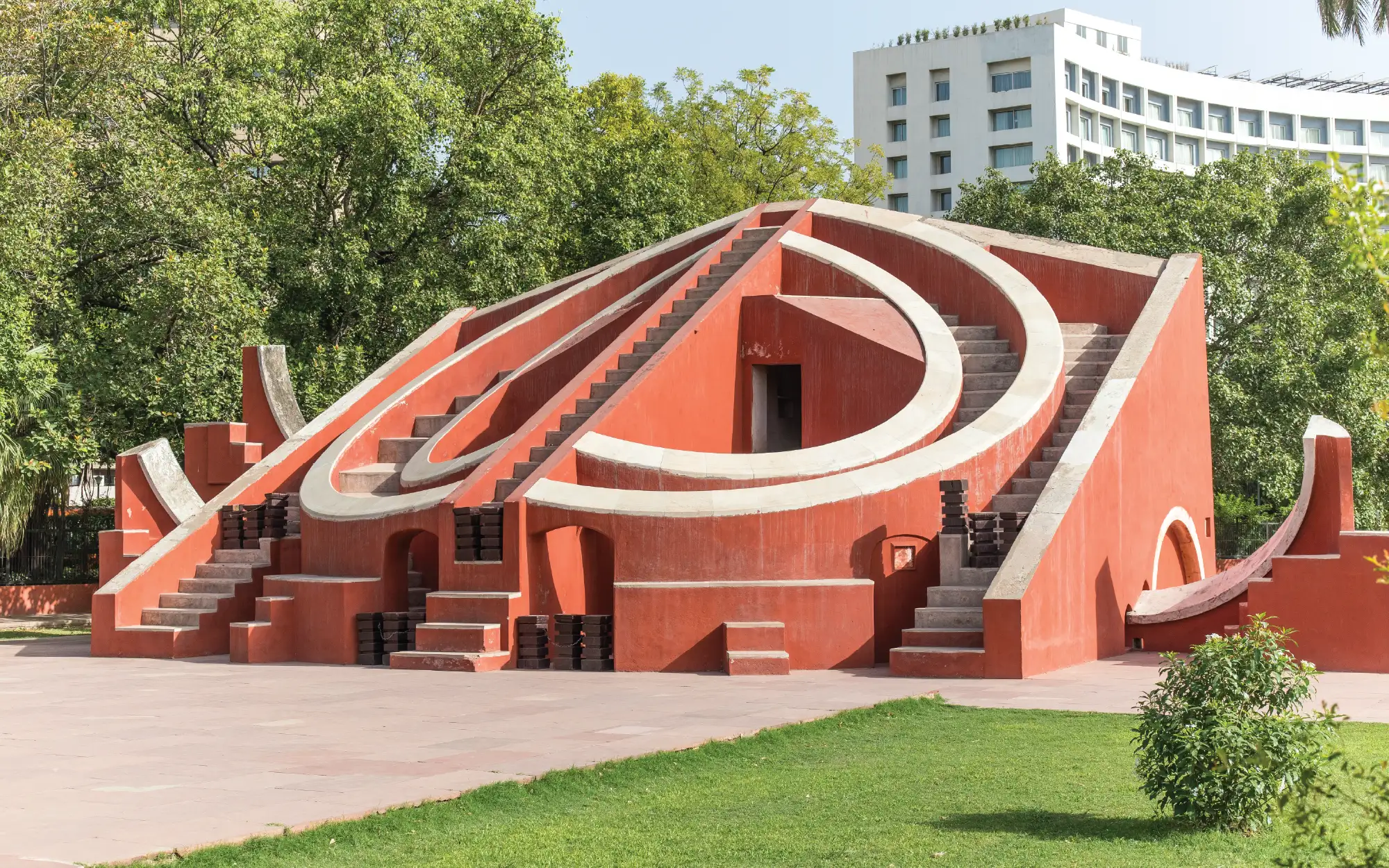
Unlike the forts that became stages for India’s freedom struggle, Jantar Mantar was never built for battle; it was built to measure. Yet the modern-day battles are fought here. Commissioned by Maharaja Sawai Jai Singh II in 1724, it was crafted as a monumental masonry instrument. The ramps, towering walls, graduated surfaces, arcs and carefully aligned openings were engineered to track the sun and other celestial happenings. The decision to build at such an enormous scale was deliberate: Jai Singh believed that fixed masonry structures could offer greater stability and accuracy than smaller instruments with moving parts.
Three centuries later, that idea of measurement has taken on another meaning. Situated close to Parliament and Delhi’s government offices, Jantar Mantar evolved into one of the city’s most recognisable sites for protest, particularly from the early 1990s onwards. The architecture has therefore remained remarkably true to its original purpose: Jantar Mantar was built to observe, calculate and measure.