In Conversation With Mira Kapoor And Annkur Khosla: A New Blueprint For Urban Wellbeing
With a second Delhi address on the horizon, Dhun Wellness by Mira Kapoor is shaping a new vision for urban wellness in India.
- 20 Jul '26
- 2:34 pm by Manisha AR

|
Getting your Trinity Audio player ready...
|
Wellness doesn’t begin and end with therapy or a quick retreat. It begins the moment you enter a space, and lingers long after you leave. At Dhun Wellness, located on Linking Road, wellness is approached as a spatial and sensory experience where traditional wisdom meets measurable systems of healing and restoration. The word ‘dhun’, meaning ‘melody’ or ‘tune,’ anchors founder Mira Kapoor’s philosophy of modern Indian wellness. Within the 6,000 sq ft space, everything echoes this idea of finding rhythm. Ahead of its expansion to Delhi, Design Pataki spoke to Kapoor and architect Annkur Khosla about the journey so far and what lies ahead.
In an era where marketing can easily feel gimmicky and wellness increasingly performative, distinction comes less from scale and more from intent. Kapoor’s footprint in the space reads less like a portfolio and more like a continuum of aligned sensibilities. Her work with Akind, a skincare brand shaped around the idea of listening to the skin, sits alongside her early backing of Zama Organics, a farm-to-fork platform for organic produce, and her investment in Wellbeing Nutrition. At Dhun Wellness, these associations subtly extend into the retail curation, where the selection feels less like an assortment of brands and more like an echo of a shared philosophy.
“For me, the art of slowing down is ultimately about returning to yourself. When a space allows you to listen inward, that is where true restoration begins,” she says. The next chapter of wellness is increasingly about personal reflection, moving towards individual needs rather than one-size-fits-all prescriptions.
At Dhun Wellness, the treatments are a balance of traditional Individual rituals, from Ayurveda to modern massage therapies, energy realignment, and sound healing, alongside technological interventions such as a red light collagen bed, infrared sauna, and cryotherapy. The goal is longevity and addressing root causes rather than symptomatic healing, a philosophy that extends into the menu, where treatments are often designed with considered pairings. She also notes that Dhun Wellness hosts specialised healing sessions led by practitioners from across the world.
Also read: Plunge Into The World’s Most Magical Waters Designed For Thermal Cure
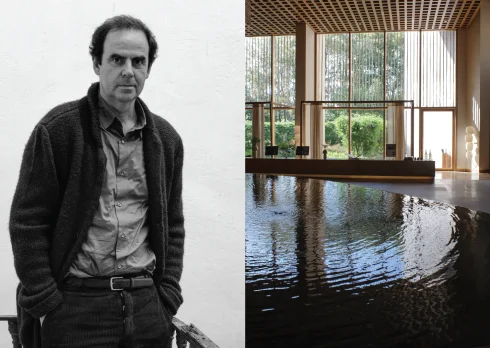
“The intention was to design an environment where people could soften, recalibrate, and feel held,” she adds. “Design has a profound ability to influence how we feel and how we move through a space.” Kapoor worked with Mumbai-based architect Annkur Khosla to bring the vision to life. Khosla, who also designed the Mumbai duplex of Mira and Shahid Kapoor, has imagined a wellness destination where architecture actively participates in healing. Both founder and designer agree that wellness architecture is not about the performance of health but about creating spaces that bring people into harmony with themselves through their surroundings. This philosophy defines Dhun Wellness.
“Slowing down is no longer a luxury; it is a necessity,” says Kapoor. Traditionally, we retreat only when overwhelmed. With Dhun Wellness, she imagines a different relationship with wellness, one where restoration becomes part of everyday life. By placing Dhun Wellness within the city, the intention is to make wellness a daily ritual rather than an occasional escape.
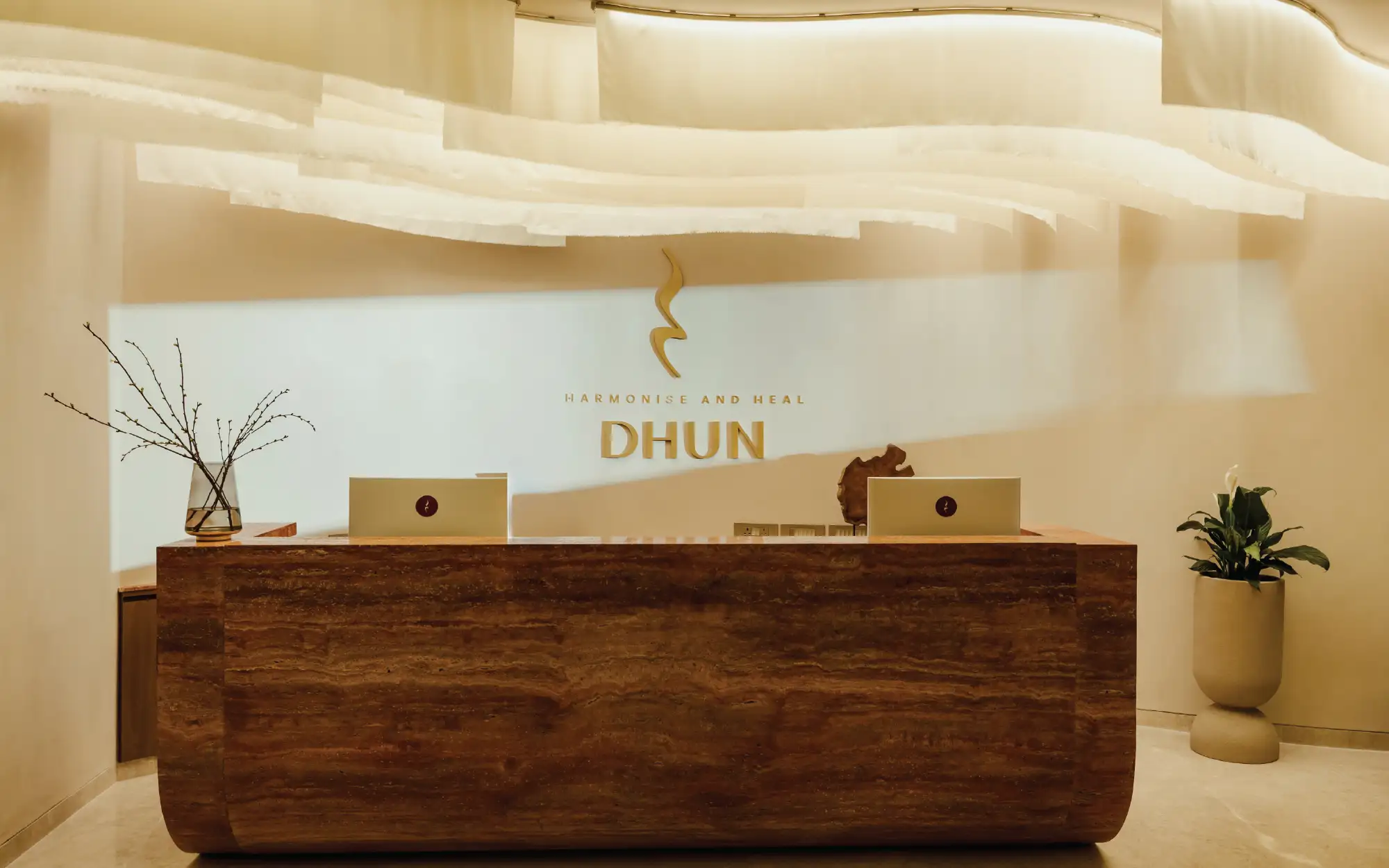
Can Design Heal Before Treatment Begins?
“We’ve reduced wellness architecture to two visual clichés,” explains Khosla, “they are either sterile, clinical environments or heavily rustic Ayurvedic aesthetics. I wasn’t interested in either.”
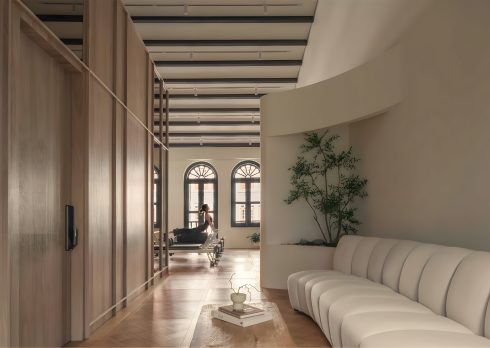
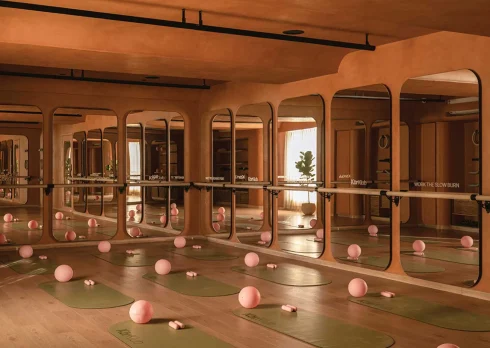
Dhun Wellness breaks these misnomers and instead stands for a more resonant, rhythmically tuned design with a lyrical flow, like music. That philosophy becomes apparent the moment you step inside. The interiors unfold in warm neutral hues, a masterclass in monochromatic restraint where subtlety is used to create depth rather than austerity.
From the outset, the design resists stillness in the conventional sense. “The ceilings are game changers because they do more than you think,” says Khosla. From the moment you enter, the gaze is drawn upwards. Instead of static surfaces, there is movement above, even over the reception. The effect is reminiscent of waves or clouds drifting across a muted sky. Designed around an elliptical plan, the space encourages curiosity and drift. As one moves through the 13 treatment rooms and three consultation suites, looping corridors create an almost continuous sense of circulation, dissolving directional hierarchy and reinforcing a feeling of infinity.
Khosla notes that the planning mirrors cyclical patterns found in life, allowing the body to move through space without the interruption of linear navigation. Rather than aiming for visual calm, the architecture is designed to produce emotional ease. Curves soften transitions between spaces, while material restraint ensures the environment remains grounded rather than ornamental.
Also read: Saunas, Matcha And Sensory Design: 3 Wellness Clubs To Lower Your Cortisol Levels
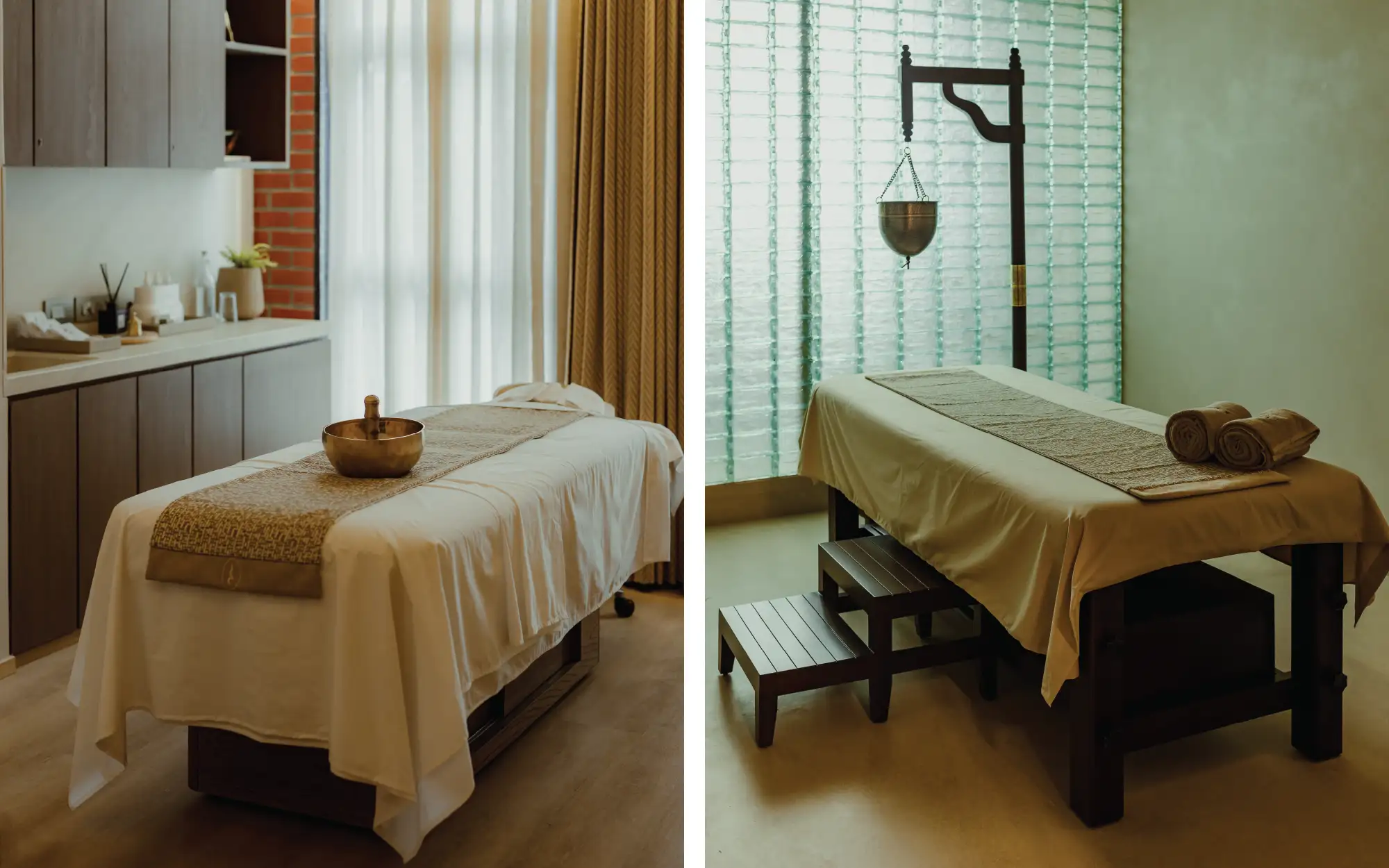
Each treatment room is designed with a window, allowing natural light to filter in alongside adjustable lighting tailored to therapies. The result is an openness rarely expected in wellness environments. The spaces unfold organically, creating a womb-like sense of enclosure that encourages introspection. Materially, Khosla works with an earthy palette inspired by terracotta, sand, and organic landscapes. In Ayurvedic treatment rooms, sage-tinted glass separates treatment areas from adjoining wet zones used for post-treatment rituals.
The absence of sharp corners, the controlled movement of architecture, and the integration of sound, scent, and light all work together to create a sense of ease. Healing here is shaped as much by environment as by treatment. A layered lighting system, developed through multiple iterations, ensures seamless transitions across spaces. The acoustics are carefully resolved without relying on visible technical interventions. The result is a space that understands wellness as atmospheric as much as clinical. As Khosla puts it, “The future of wellness lies in creating environments that support emotional restoration as much as physical wellbeing.”
Also read: Escape To Bhutan With The Ultimate Winter Guide To Wellness, Adventure, And Cultural Immersion
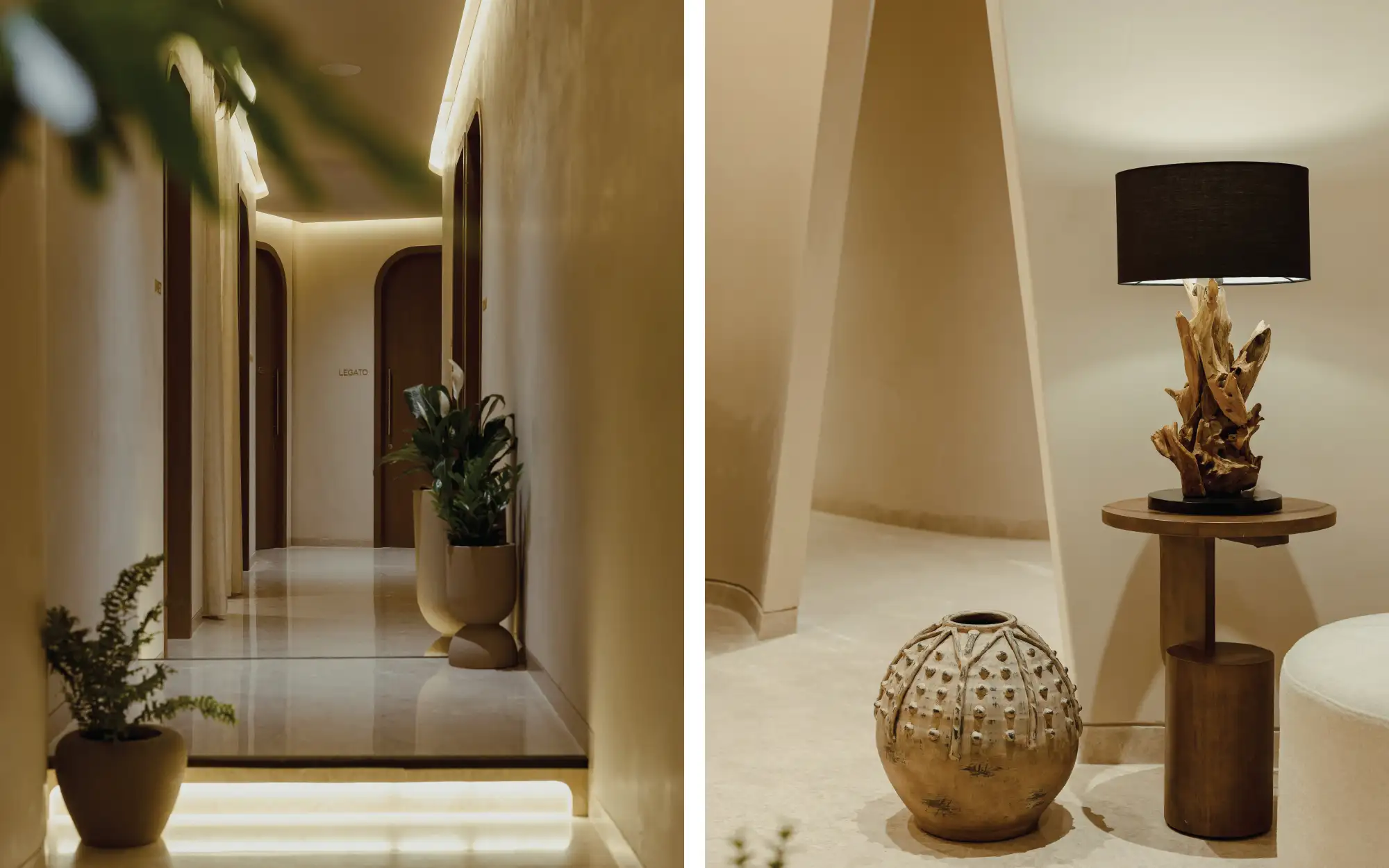
A Network of Urban Sanctuaries
For a long time, wellness was measured through external markers—skin, fitness, productivity. Kapoor observes a shift toward inward metrics: how we feel, how we rest, how we connect with ourselves. With Dhun Wellness, the aim is to acknowledge the emotional weight of urban life. The city offers energy but removes stillness. “The intention was to design an environment where people could soften, recalibrate, and feel held,” she says.
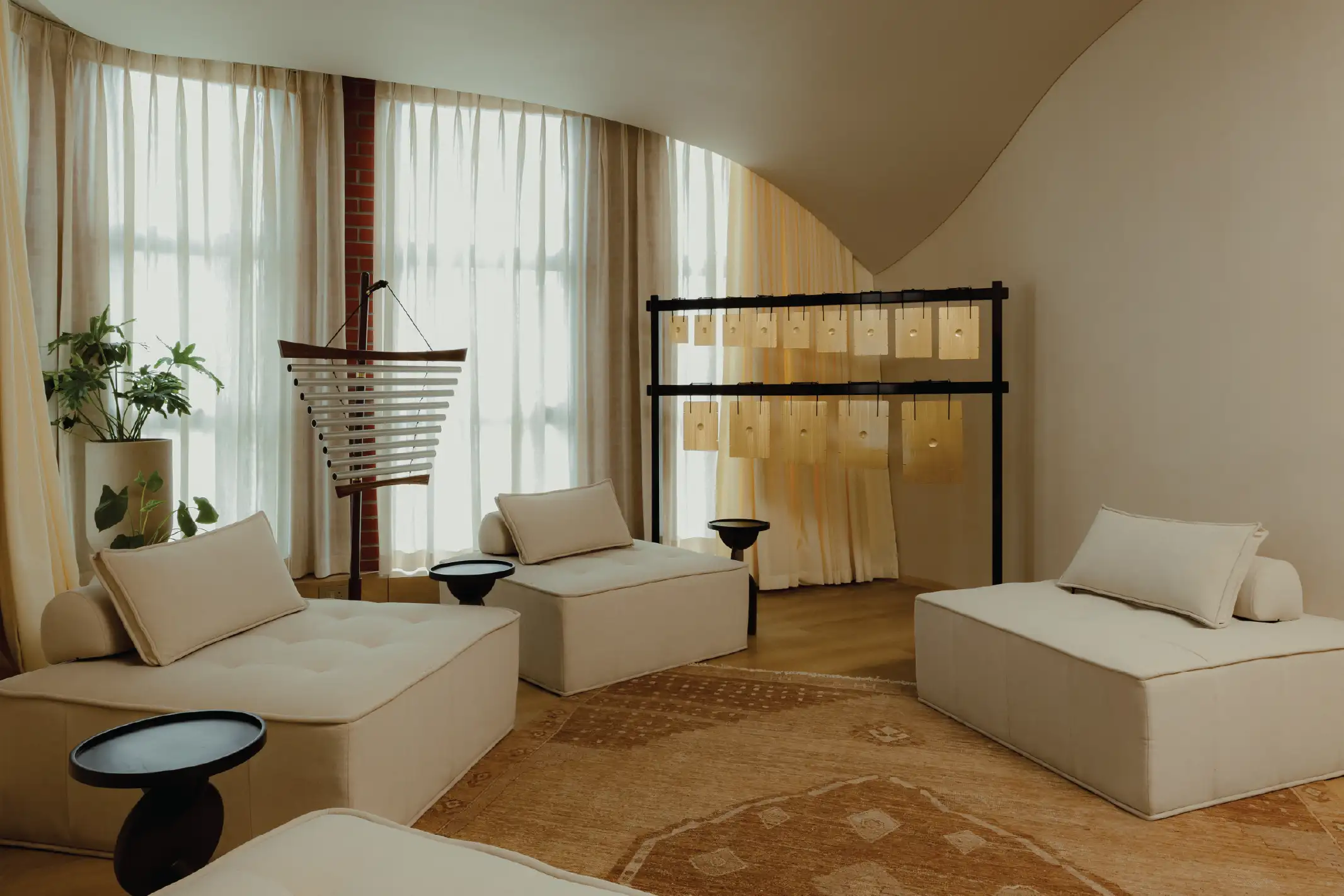
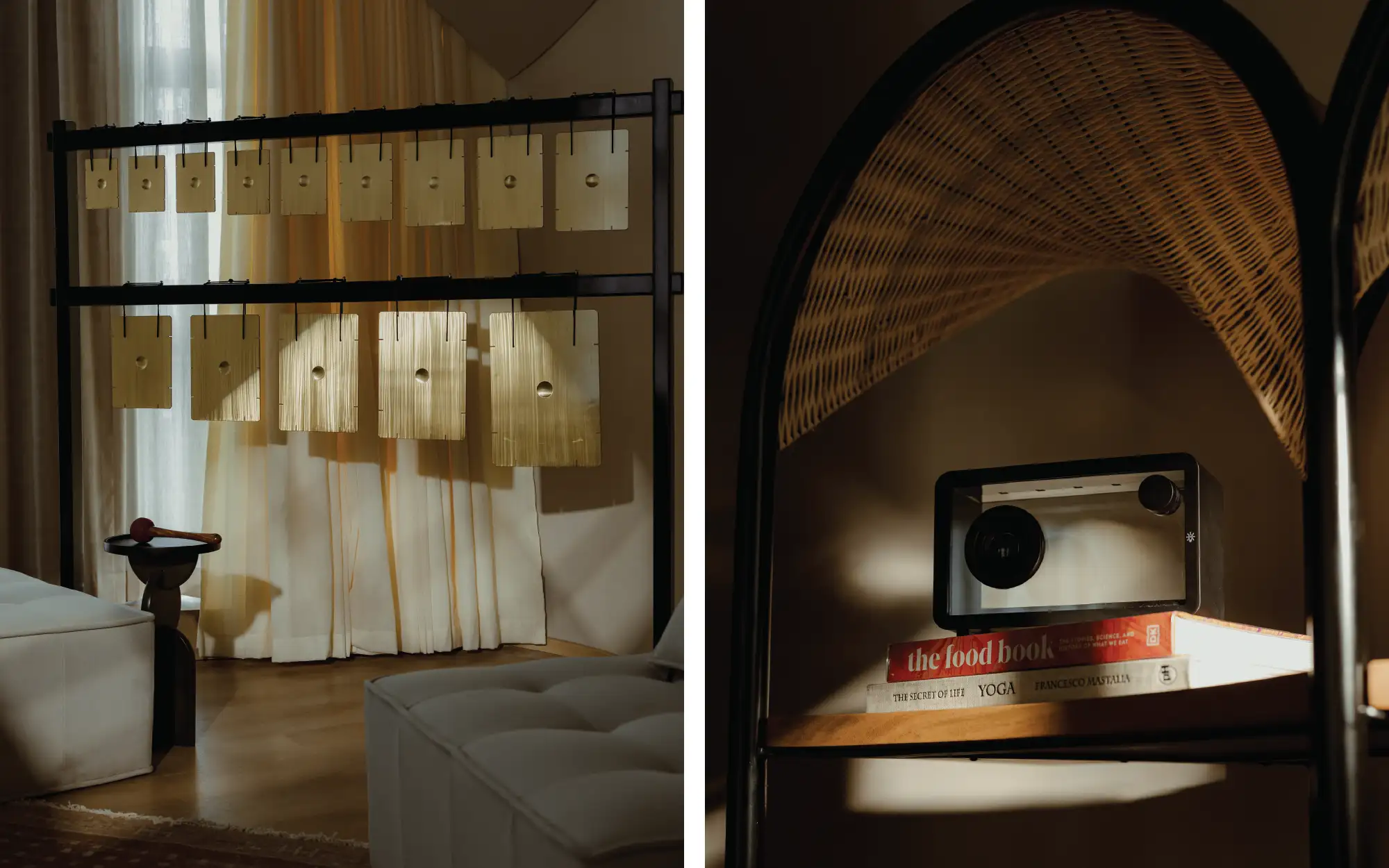
The Resonance Room has become a quiet focal point, where guests decompress with herbal tea, organic snacks, and musical instruments, or simply sit in silence. Kapoor’s attention to detail is evident throughout. From custom guest attire designed in collaboration with Calling June to the signature scent by Seva Home, and soft furnishings woven by Bandhini Home, every element reinforces a sense of place. Each decision builds towards a cohesive sensory language rather than isolated design gestures.
Also read: Take A Journey Through 5 Of South India’s Finest Ayurvedic Retreats
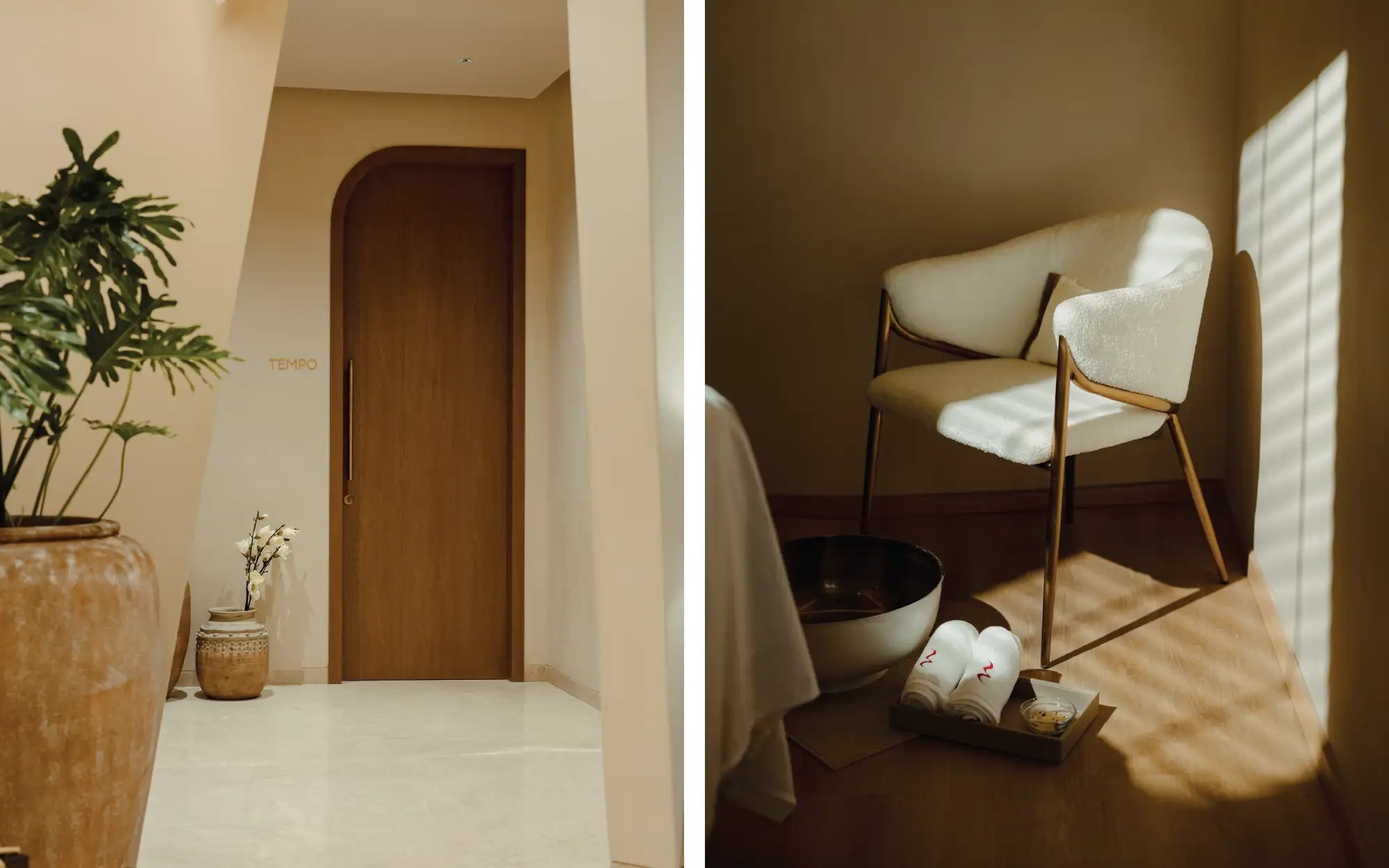
For Kapoor, the strongest response is when guests forget they are in the middle of a bustling city. After a few hours inside, a perceptible shift emerges. “In many ways, Dhun Wellness is not just a place to visit; it is an invitation to return to your own rhythm,” Kapoor adds. For Khosla, the challenge lay in translating a relatively new ideology into built form within an urban context. “Dhun Wellness is an experience, an emotion, and an artistic expression intended to heal through design,” she says.
As the brand expands, the intention is not replication but translation, each space responding to its city while remaining anchored in a shared philosophy of intentional living. In Delhi, this will mean a larger footprint with expanded treatment possibilities.
“I see Dhun Wellness becoming a network of urban sanctuaries,” says Kapoor. “Our goal is not just expansion, but a new way of experiencing wellness in cities where restoration and longevity become part of everyday life rather than something we escape to occasionally.”