From Pranayam To Panch Karma: 40 Indian Wellness Words You Need To Know
Deepen your wellness journey through discovering these forty Sanskrit words rooted in ancient Indian tradition that have become the cornerstone of today’s wellness movement.
- 22 Jul '26
- 4:05 pm by Rishma Gill

|
Getting your Trinity Audio player ready...
|
The Indian subcontinent has served as a cradle for the genesis of various disciplines that continue to contribute invaluably towards holistic wellness and living. Long before wellness became a global movement, the foundation for holistic health had been laid in this part of the world through time-honoured practices rooted in balance and prevention. Today, wellness enthusiasts around the world are embracing therapeutic massages, plant-based remedies and mindful detox rituals, inspired by ancient Indian traditions.
Time-tested philosophies, refined over millennia, are re-emerging in the modern context, with the age-old language of Sanskrit finding its way into the current wellness lexicon. Here are 40 essential Indian words from timeless Ayurveda staples to core yogic principles, curated to help you find your inner stillness, revive physical vitality and nurture a deeper connection with yourself.

1. Abhayanga
Abhayanga is an Ayurvedic practice that promotes self-care through massaging one’s body from head to toe with herb-infused oils. It relieves stress, improves skin health and ensures lymphatic drainage while alleviating muscle stiffness.
2. Agni
In Ayurveda, agni denotes the digestive fire that is vital to strong gut health. It breaks down and assimilates nutrients, thus supporting vitality, immunity and resilience to illness.
3. Ananda
The Sanskrit term ananda translates to bliss. It is the cultivation of a steady sense of joy, no matter what circumstances arise. In this sense, it is different and more lasting than moments of ecstatic happiness or the high induced by external achievements.
4. Asana
Asanas are yogic postures and poses, performed sequentially to help strengthen the body and mind, specifically preparing the senses to remain in a state of equanimity required for deep meditation.
5. Ashtanga
This ancient eight-limb philosophy of classical yoga combines a dynamic sequence of asanas with synchronised breathing, specific gazing points and internal energy locks. It is considered to be one of the most demanding and rigorous forms of yoga.
6. Ashwagandha
Known as the king of herbs in Ayurveda, Ashwagandha is used to relieve anxiety, improve mental clarity and increase energy levels.

7. Ayurveda
A 5,000-year-old holistic medicine system, Ayurveda originated in the Indian subcontinent. It amalgamates practices rooted in traditional sciences to bring about physical, emotional and mental balance. It encompasses plant-based medicines, yogic practice and herbal oil-based massages amongst other therapies
8. Bhakti
Bhakti is a sense of deep devotion and selfless love directed towards that which is far greater than oneself – the divine.
9. Brahma Muhurta
Brahma Muhurta translates to ‘the creator’s time’. It is considered an auspicious, pre-dawn window of time lasting about an hour and a half before sunrise. Considered ideal for practising meditation, yoga and breathwork, it establishes a strong connection with oneself.
10. Chakras
Chakras are subtle energy centres that run along the length of the spine, starting from its base and culminating at the crown of the head. When in a state of balance, they allow energy to move freely, leading to physical, emotional and spiritual well-being.
11. Chitta
Chitta refers to one’s mind-field; all of one’s thoughts, emotions, sensations and impulses. It is the ever-mutating state of inner consciousness.

12. Dhyana
Deep meditation and contemplation constitute Dhyana, whose goal is to train the mind to remain in a state of equanimity, deepening mindfulness while engaging in the art of observing without attachment.
13. Doshas
A dosha is a unique blend of the five elements in nature that determine how an individual’s body functions physically, emotionally and mentally. Vata, Pitta and Kapha are considered the three fundamental energy types an individual may embody. Inculcating foods and yogic practices in tandem with one’s dosha promotes balance and well-being.
14. Kavala
This ancient Ayurvedic practice of oil pulling using either sesame or coconut oil promotes oral hygiene by preventing plaque build-up and strengthens gut health, improving digestion.
15. Karmayogi
A karmayogi is an individual who follows the philosophy of performing all worldly duties without any attachment to outcomes or accolades. Their actions are driven by a sense of what is righteous and not by ego or desire, freeing them of anxiety and expectations.
16. Kundalini Shakti
Kundalini Shakti translates as ‘Serpent Power’, represented symbolically as a serpent lying coiled at the base of the spine. The aim of Kundalini Yoga, through meditation, breathwork and sequential yogic postures, is to empower this dormant energy to rise through activating one’s chakras, leading to a state of self-actualisation.
17. Mantra
Mantras are sacred sounds and syllables arranged in a specific cadence, which, when chanted with devotion and focus, bring about the release of negativity and a connection to the divine. They are also used to invoke certain gods and deities.
18. Moksha
Moksha is considered the ultimate objective of human life in most Indian religions and philosophies, including Hinduism, Buddhism and Sikhism. Moksha means to free or release oneself from the continuous cycle of death, rebirth and worldly suffering and unite with the one divine power.
Also Read: With The Designer: Udayshanth Fernando Is Comfortable Being Judged
19. Mudra
In ancient Indian tradition, each of our five fingers is said to represent the energy of the five elements of nature. Mudras are hand gestures formed through connecting fingers in specific ways to complete energetic circuits and help the flow of prana.
20. Nabhi Chikitsa
This ancient practice revolves around introducing a few drops of oil into the belly button, gently massaging in a circular motion or simply resting while the oil is absorbed into the skin. Different oils can be selected based upon the dominant dosha of the individual’s body. It is said to activate the ‘rest-and-digest’ state and improve abdominal health.
21. Nada Yoga
Nada Yoga, or the ‘yoga of sound’, is a meditative practice that relies on the premise that the cosmos is created through vibrations. Mantra chanting and traditional instrumental resonance help with focus and inner stillness.
22. Nadi Shodhan
In Ayurveda, Nadi is considered to be the sum total of the channels through which life force or life energy travels within the body. Nadi literally translates to flow. Nadi Shodhan is the practice of yogic breath control that helps clear these subtle energy channels, enhancing the smooth flow of consciousness through the body.
23. Nasya
Nasya is an Ayurvedic therapeutic treatment where oils are applied to the inside of the nostrils. The nose is considered a gateway to the brain. Nasya techniques help with respiratory and sinus health and improve mental clarity.
24. Om
Om is considered to be the primordial sound of the universe, the original vibrational energy through which all creation comes into existence. Chanting Om aligns one’s frequency to the all-permeating universal frequency, promoting a deep sense of connection and peace.
25. Oshadhi
Oshadhi is Sanskrit for ‘medicinal plant’. Ayurveda relies heavily on these traditionally classified herbs as medicine used in tonics, ointments and oils as traditional remedies for various ailments.
26. Panchkarma
This is an Ayurvedic detoxification and rejuvenation treatment based on the unique doshas that determine one’s constitution. Panchkarma translates to ‘five treatments’ which focus on cleansing through oil massages, therapeutic sweating, herbal enemas and induced purgation to remove toxin build-up within the body and clear energetic channels.
27. Prana
Prana is the life-force energy that runs through us as well as within the cosmos at large. It permeates reality on all levels, including inanimate objects and holds within itself the power for creation.
28. Pranayam
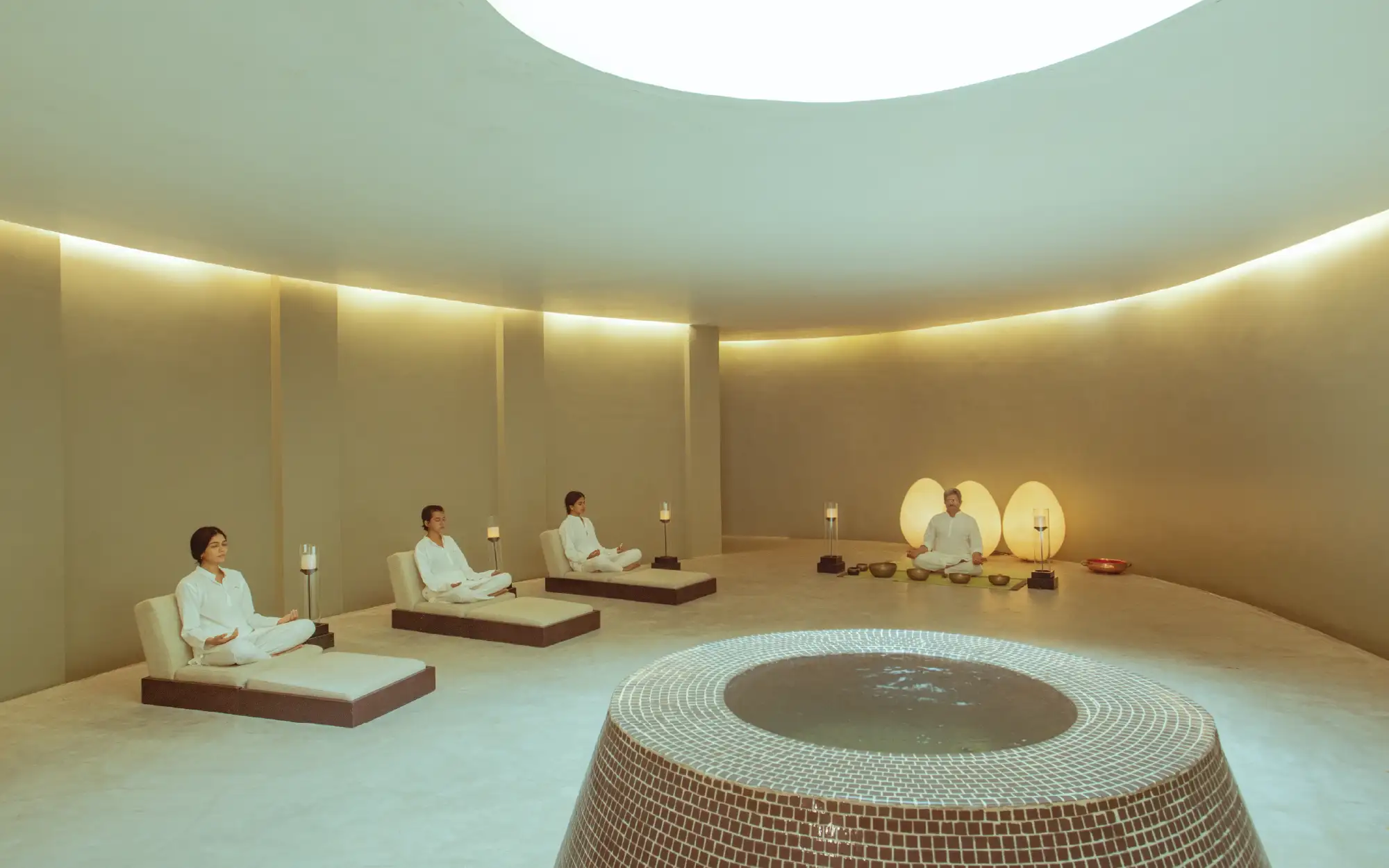
These breathwork sequences help regulate the nervous system. Performed either by themselves or while engaging in meditation or yogic postures, they help ease stress, improve sleep and are key to increasing mindfulness.
29. Sankalpa
A Sankalpa is a heartfelt intention or a sacred vow one makes to oneself in an effort to plant the seed of transformation in the subconscious mind. It is usually invoked during non-sleep deep relaxation states of meditation.
30. Seva
Seva constitutes acts of selfless and purposeful service aimed at others and society at large without the expectation of external validation and rewards. It intends to deepen one’s sense of gratitude and cultivate connection beyond oneself.
31. Shatavari
Shatavari is an antioxidant-rich root medicine used in Ayurvedic tradition to support female reproductive health, balance hormones, regulate menstrual cycles and strengthen the body’s immune system.
Also Read: Navigating Milan Design Week 2026: 3 Design Collabs You Can’t Scroll Past
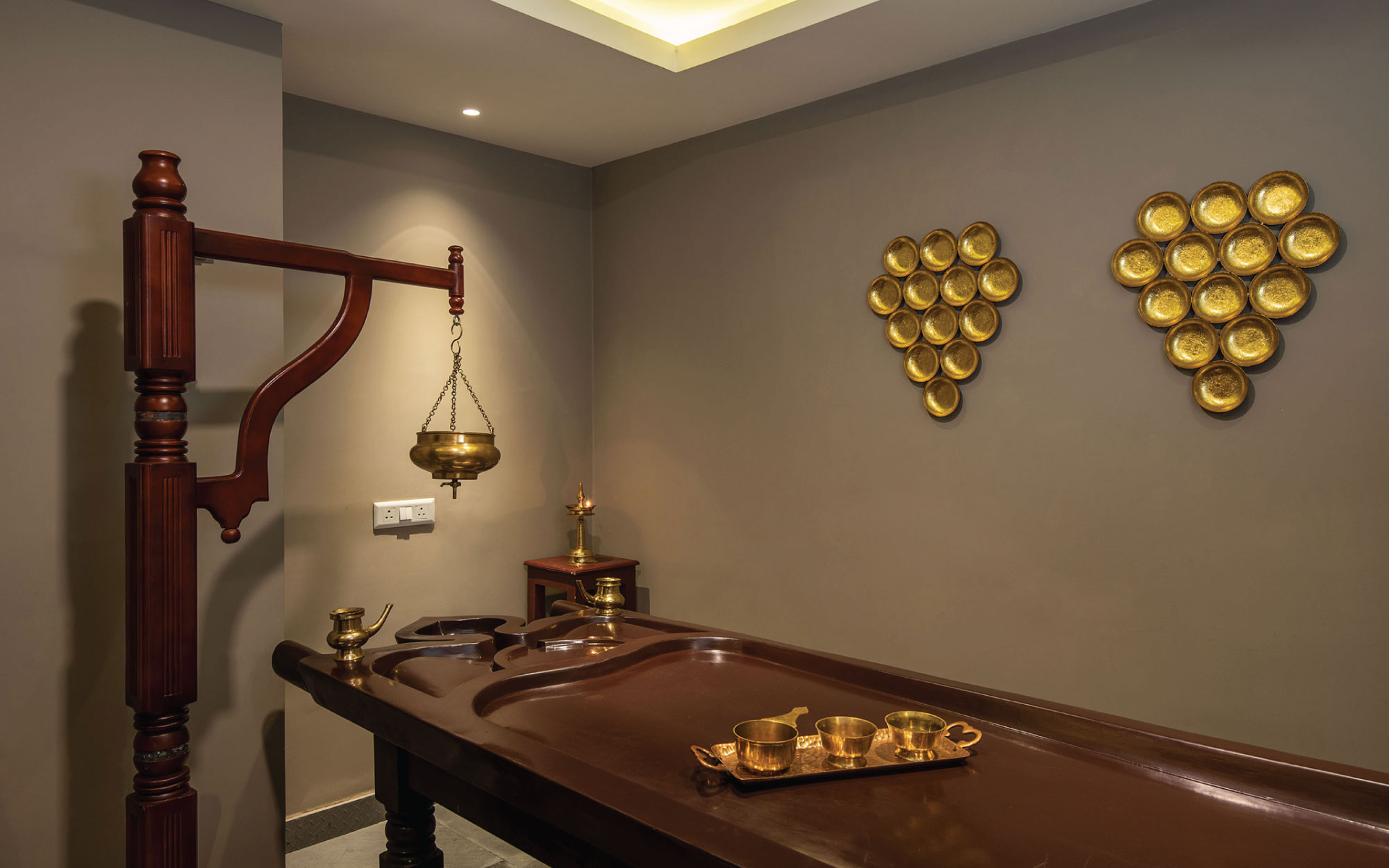
32. Shirodhara
This is an Ayurvedic therapy where medicated oils are poured onto the forehead, upon the point where the third eye is said to reside. It is designed to soothe the nervous system, calm the mind and reduce insomnia.
33. Sukha
Sukha refers to the cultivation of a sense of joy, fulfilment, and contentment, regardless of the transient nature of the pleasures that surround us. It is viewed as an enduring and authentic state of well-being.
34. Surya Snan
Surya Snan translates to sunbathing, specifically during the early hours of the morning. It helps balance hormonal health and sets the circadian rhythm for the day.
35. Svadhayaya
Beyond one’s physical form, emotional states, mind and personality lies one’s true nature. Svadhayaya translates to ‘the study of the self’; a deep contemplation through yoga and meditation to find answers to the essential question ‘Who am I?’
36. Trataka
Trataka or yogic gazing involves fixing one’s gaze on a candle flame without blinking till one’s eyes start to water. It improves concentration, relieves anxiety and helps combat insomnia.
37. Upvasa
Upvasa is the ancient Ayurvedic practice of voluntary fasting from food and observing restraint from sensory indulgences like anger, greed, expectations and worldly distractions. Coupled with prayer and introspection, Upvasa preserves one’s pranic energy.
38. Vairagya
Vairagya refers to a state of dispassion, detachment and non-clinging. It is not the rejection or renunciation of life, but the achievement of a centeredness focusing on effort rather than outcome. Through various practices, one consciously creates space between stimulus and reaction, reducing dependence on external validation and approval.
39. Vedanta
A prominent school of Indian philosophy, Vedanta’s core teachings affirm the existence of the divine within every individual and one’s connection to the subtle energy that connects all of life. Its goal is to manifest this ultimate truth and achieve liberation from worldly suffering.
40. Vipassana
Vipassana is a practical discipline conducted in the form of an intensive 10-day residential retreat which involves taking a vow of complete silence while abstaining completely from reading, writing, or using electronics. Practitioners are required to observe their mental states and physical sensations without judgement or reaction. This process aims to break the mind’s automatic reactive habit patterns in an attempt to realise the impermanence of all experience.
41. Yoga Nidra
This practice moves the mind and body into a profound sense of relaxation through guided meditation prompts that induce non-sleep deep-rest states. It engages the parasympathetic nervous system, moving one from a fight-or-flight response to calm by lowering cortisol levels.