At These 5 Glamping Sites In India You Can Rough It Out In Style
From canvas suites immersed in tiger reserves to design-led wilderness retreats rooted in local craft, discover five glamping escapes where architecture, luxury and the wild exist in harmony.
- 29 Jul '26
- 5:44 pm by Simran Almeida

|
Getting your Trinity Audio player ready...
|
What makes a perfect backdrop for the striped sovereigns to reign? The answer is simple and multifarious—diversity in terrain. Whether it is stalking the prey in the dry-deciduous forests of Rajasthan, the dense Sal Forests of Madhya Pradesh or strutting the lush Tropical Rainforests of Maharashtra, India’s sundry landscapes are home to almost 75% of the world’s wild tigers. However, this remarkable number is the legacy of Project Tiger, launched in 1973 in response to mounting threats such as habitat loss, degradation, rampant poaching, and escalating human–wildlife conflict. As Project Tiger prowled across India’s forests, it kept human-wildlife interactions in the wild, happening within their territories and at their own time. This fleeting stint, fondly known as the Big Cat season, unfolds from March to June and again from October to February.
To truly earn a glimpse of these majestic creatures is to trade the city’s cacophony for the rumble of a jeep, the comfort of concrete for a canvas tent, and surrender to the rhythm of the jungle. DP goes glamping at some of the most off-the-beaten-path for setting up tents and tiger tracking.
SUJÁN Sher Bagh At Ranthambore National Park
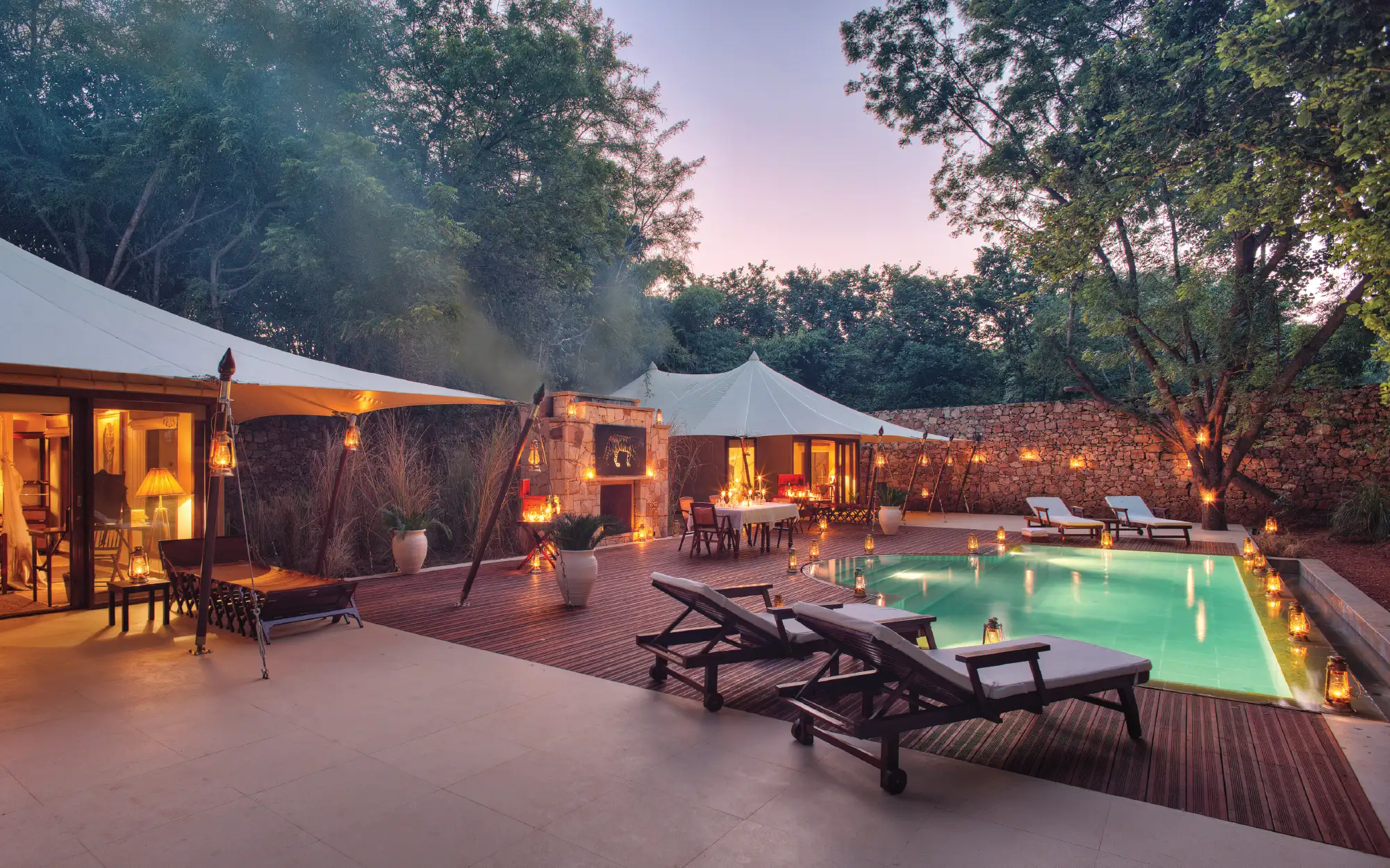
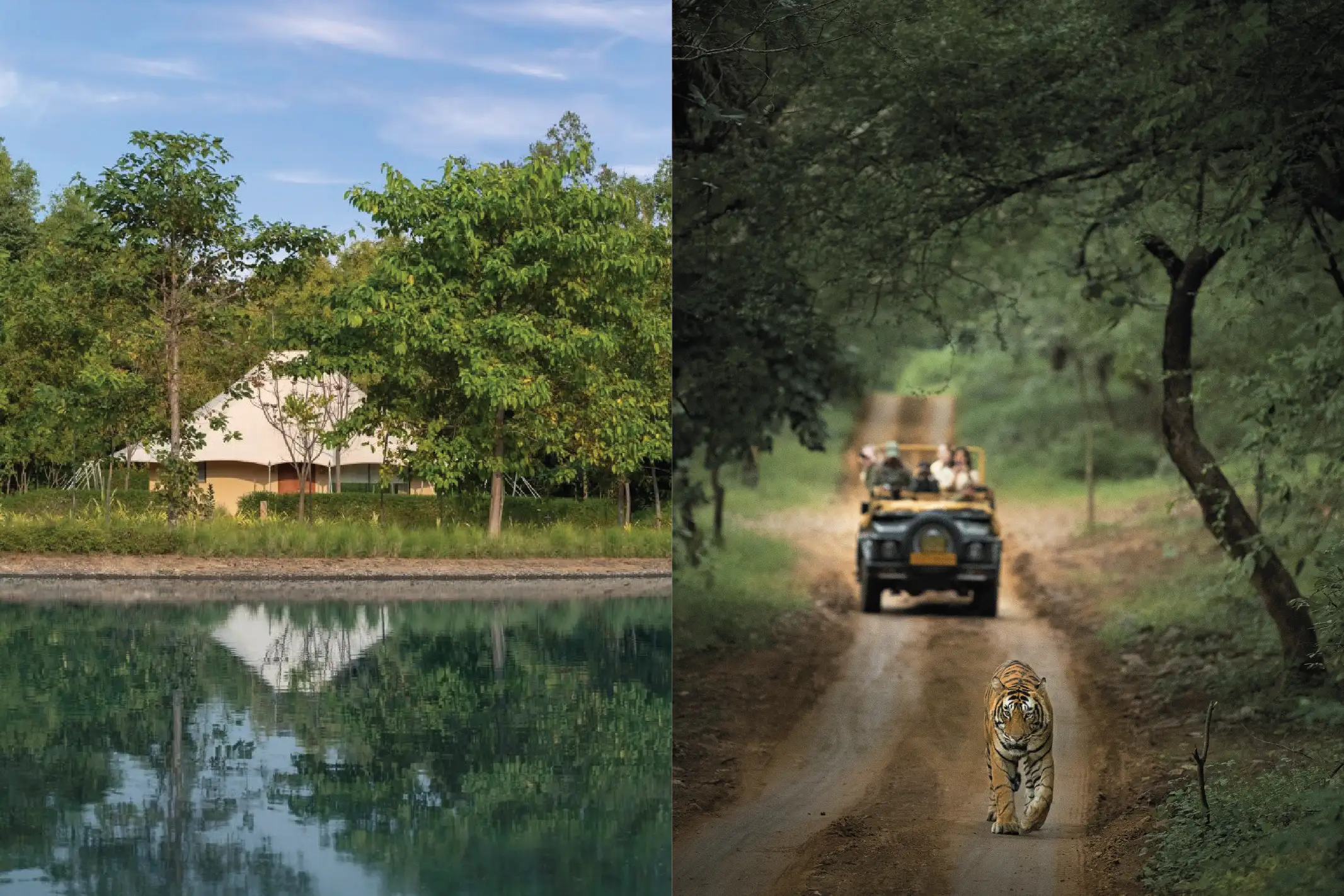
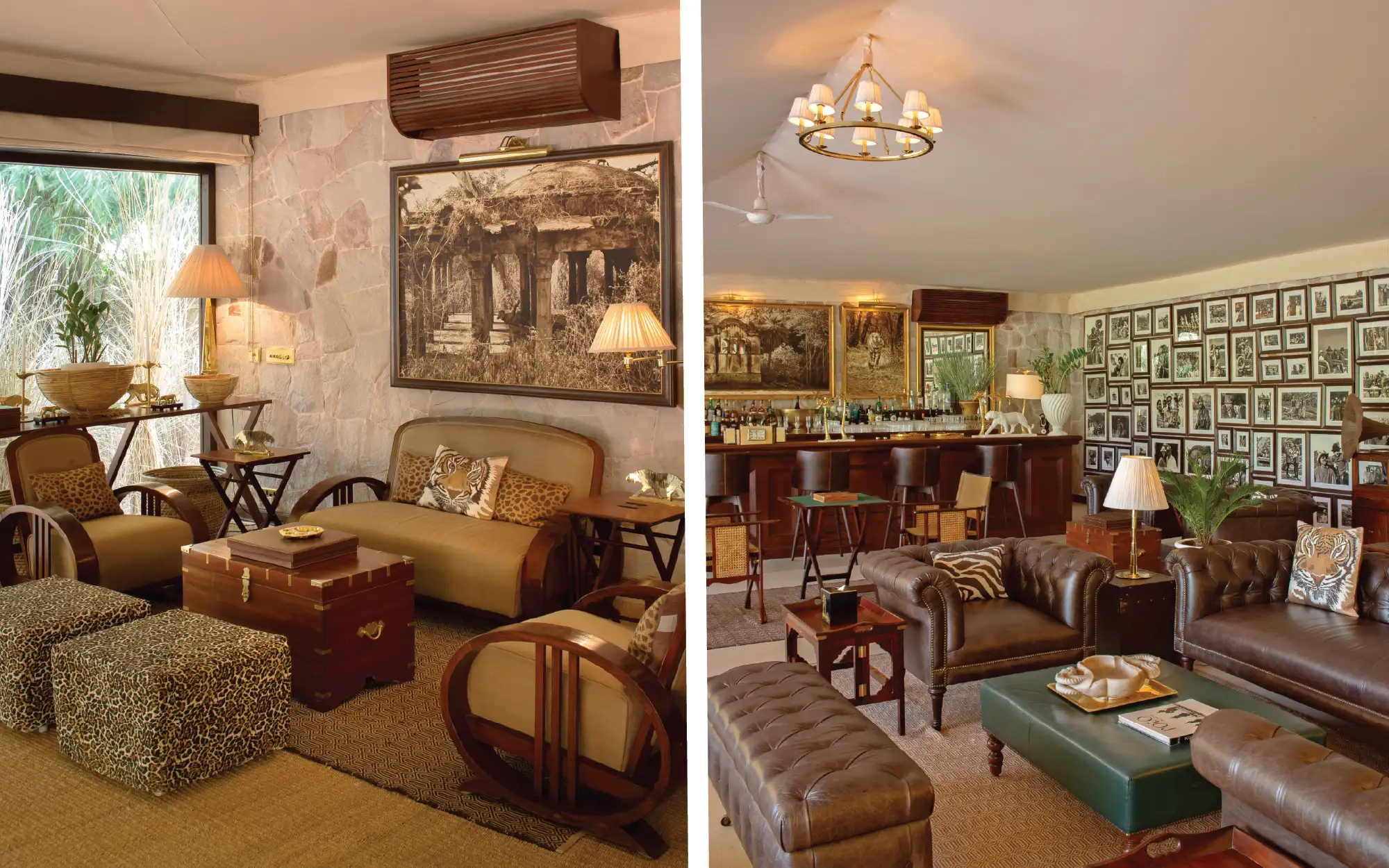
Nestled in close proximity to the ruins of the Ranthambore Fort in Rajasthan is a dry-deciduous reserve monikered Ranthambore National Park, home to the Royal Bengal Tiger. Camping on the outskirts of the reserve is a 16-acre encampment, SUJÁN Sher Bagh, a part of the Relais & Châteaux worldwide and vision of Anjali and Jaisal Singh, scions of the Sujan family who believed comfort to be the primordial foundation. Inspired by the safari camps of the 1920s, the 12 cream-tented suites with private verandas blend the boundaries between the wild and the human. From an open stone shower of the Tented ‘Jungle’ Suite to a secluded heated dip pool and fireplace at The Royal ‘Sher’ Suite, these tents are a nod to the hedonism of the British Raj. The interiors are embellished with a chic repository of interiors inspired by East African safari camps while blending with Indian craftsmanship and a treasure trove of family heirlooms
Also Read: Glimpse Into Six Senses Fort Barwara – A Luxury Spa Resort Housed In A 14th Century Rajasthani Fort
A safari vehicle tracks the big cats in two phases at the National Park, and as the last of daylight disappears, SUJÁN Sher Bagh glows under the blazing lanterns, while the forest beyond pulls an obsidian blanket. Between the phases, one can either visit the 8th-century Ranthambhore Fort Ramble or the Dastakar NGO, or wind down at the SUJÁN Spa. At the cocktail hour, the tents with Manchester Chesterfield–style lounge restaurants featuring hand-tufted leather sofas and campfires come alive for sharing crafted cocktails and piquant hors d’oeuvres. A traditional Indian dinner cooked in earthen ovens, using produce from the garden, is the perfect way to end the day.
#DP Loves: The curated layering of Africana décor, vintage family heirlooms, and handcrafted safari furnishings transforming each tent into a collector’s retreat.
Jamtara Wilderness Camp At Pench National Park
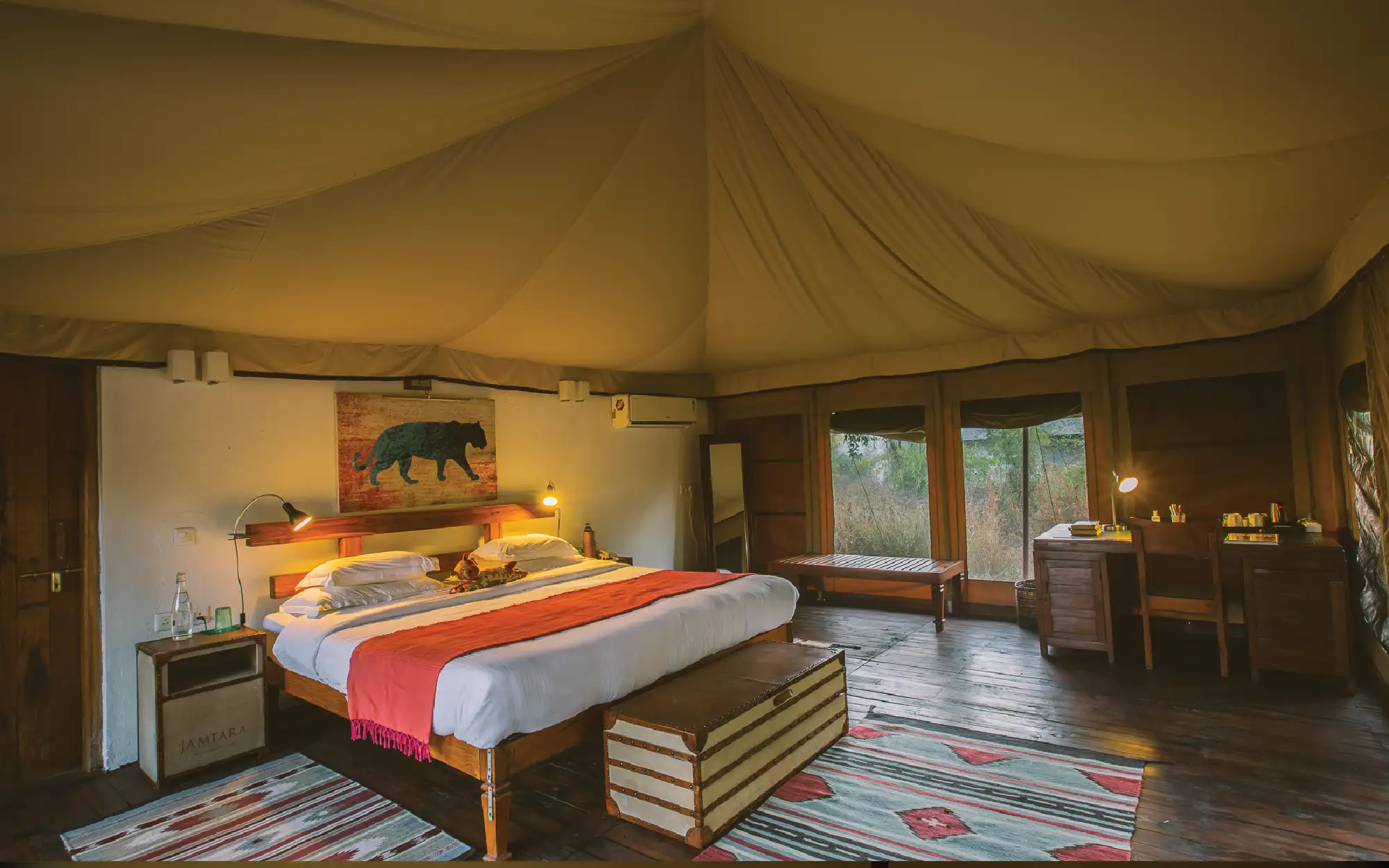
Within the bucolic region of Jamtara in Madhya Pradesh, a rich botanical landscape of Kanha-Pench, with its dense forests and rolling meadows, inspires the ancient folklore. With its manifold flora and fauna, this national park is the 19th Project Tiger Reserve, with an ancient banyan tree guarding its boundaries. Cradled beneath a canopy of towering Arjuna trees lies Jamtara Wilderness Camp, a 10-acre camp founded by Pradeep Sankhala and now led by his son, Amit Sankhala, and rooted in custodianship of the wild. Here, the existing trees guide the placement of the ten tents with rolling front panels that peek at a dry river bed and the sprawling expanse of forest. The interiors, with reclaimed wooden accents and 70s Art Deco furniture, are infused with a sense of respect for the forest beyond while paying an ode to Kailash Sankhala.
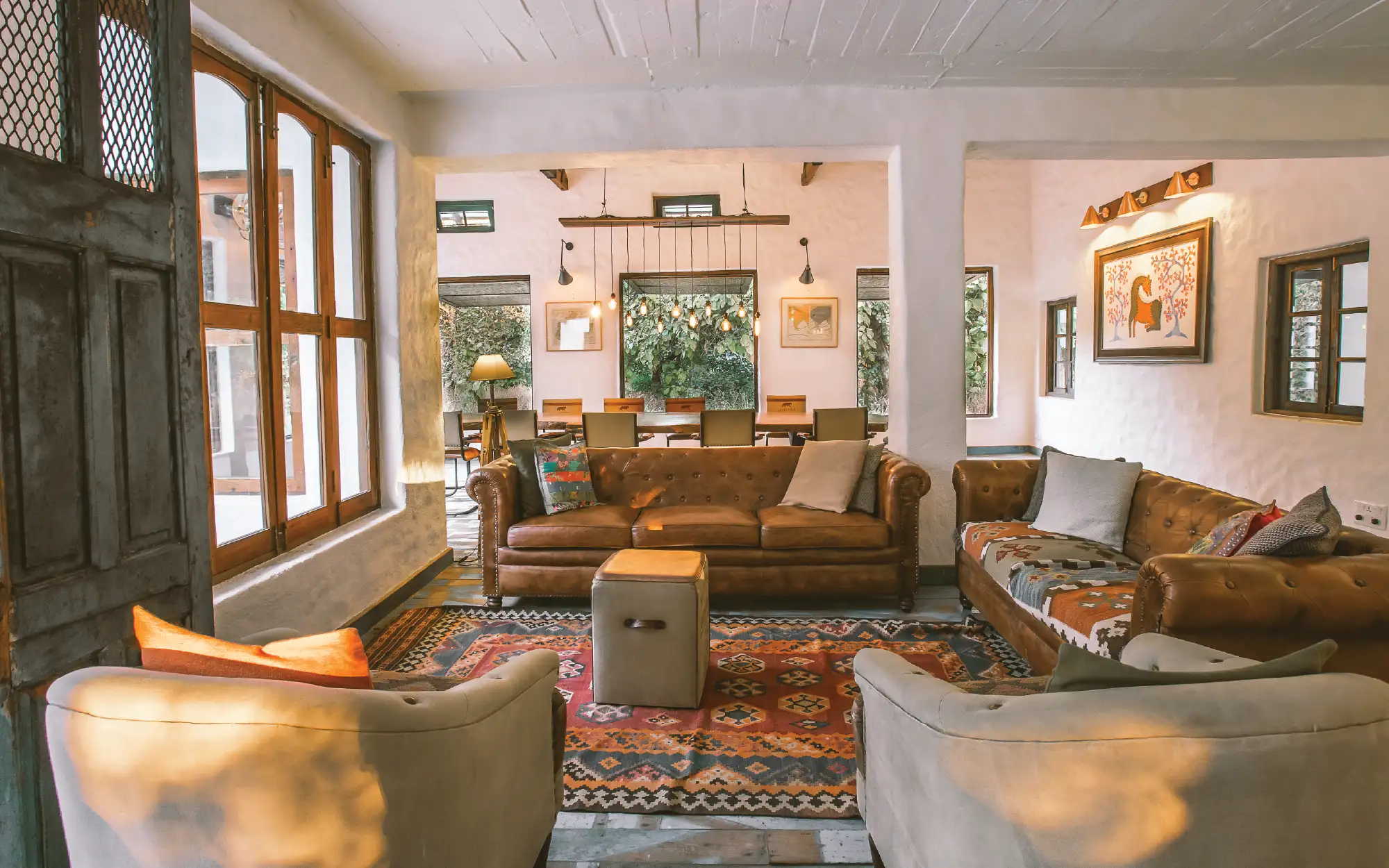
At this camp, the big cats inhabit the forest beyond and walk among the guests on occasion, or they meet you on a cycle or bike trail accompanied by the naturalists. The highlight is the Star Bed—a four-poster elevated on stilts in homage to the machans traditionally used by local communities during long field nights. Under the night sky, it offers an immersive wilderness experience, where the chorus of fauna replaces the city’s noise. The menu draws from local cuisine with ingredients sourced from villagers’ farms, an ode to a sustainable, slow way of life. Guests can also dine amidst the bushes, and the cocktail hour is around a glowing bonfire.
#DP Loves: The Star Bed—a four-poster perched atop stilts in homage to the region’s traditional machans—reimagines vernacular architecture as an unforgettable night beneath the stars.
Utsav Camp At Sariska Tiger Reserve
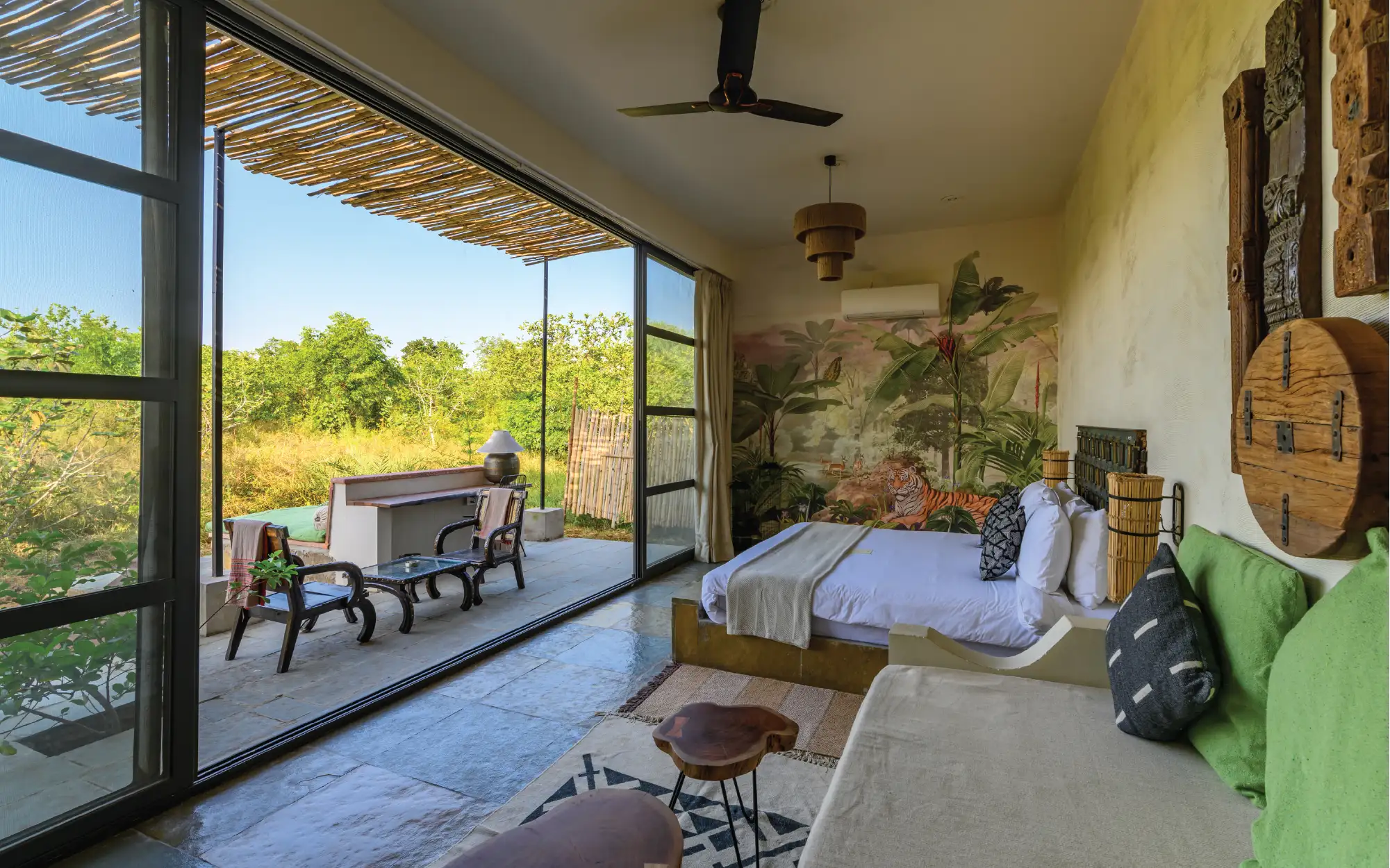
At the arid foot of the Aravalli range is Tehla in Rajasthan, a dry deciduous Sariska Tiger Reserve that contains a mix of mountains and grasslands. Demarcating the reserve’s fringes is the Utsav Camp, a labour of love by naturalist Luv Shekhawat, whose alliance with nature started with his grandfather’s fairytales about the neighbouring Tiger Reserve and its varied wildlife characters. With nine stone cabins and 10 tents punctuated across seven hectares of verdant foliage, the layout allows guests to be as close to nature as possible while scarcely leaving a trace on the forest. The rustic interiors are designed by architect Akshaya Mestry of Studio Mestry, and feature local black stone, kota flooring, acacia and rosewood furniture and bamboo canopies. As the last vestiges of urban life begin to fade, the camp encourages guests to drift through its courtyards, forest lounge, library, café, bar and restaurant, where a quiet kinship begins to take root.
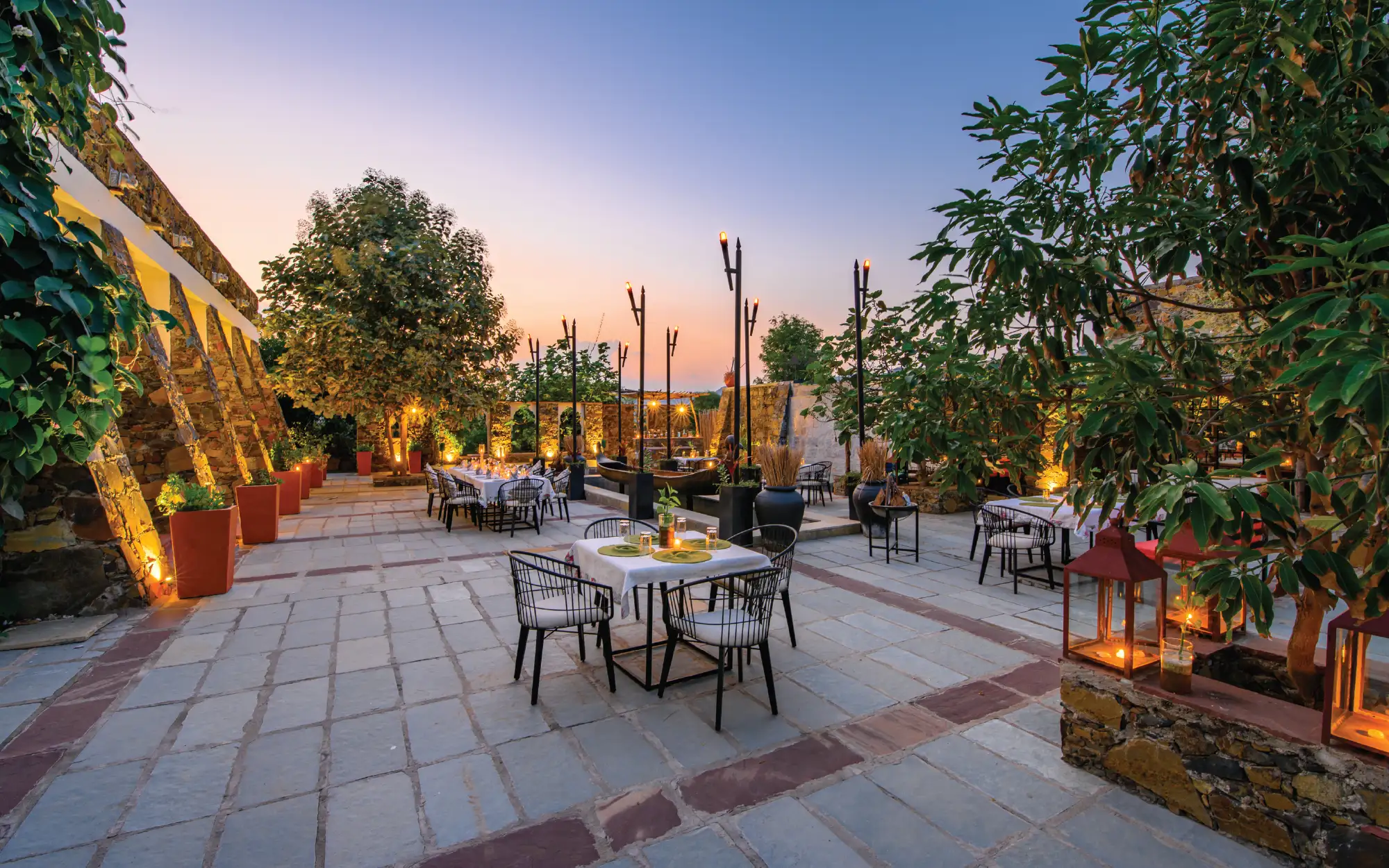
Timed with the golden hours of dawn and dusk, safari drives set out in pursuit of the tiger and the diverse species of fauna at the Sariska Tiger Reserve. From restoring spa and treks at Neelkanth to sundowners amidst the boulders and to starlit camping, Utsav Camp offers experiences allowing guests to get in touch with their surroundings. Echoing Rajasthan’s timeless culture of hospitality, long, unhurried meals celebrate the bounty of the camp’s organic garden, where each ingredient is harvested at its seasonal best.
#DP Loves: The sundowners amid Sariska’s ancient boulders, where the golden hour unfolds against the dramatic backdrop of the Aravalli landscape.
The Oberoi Vindhyavilas Wildlife Resort At Bandhavgarh National Park
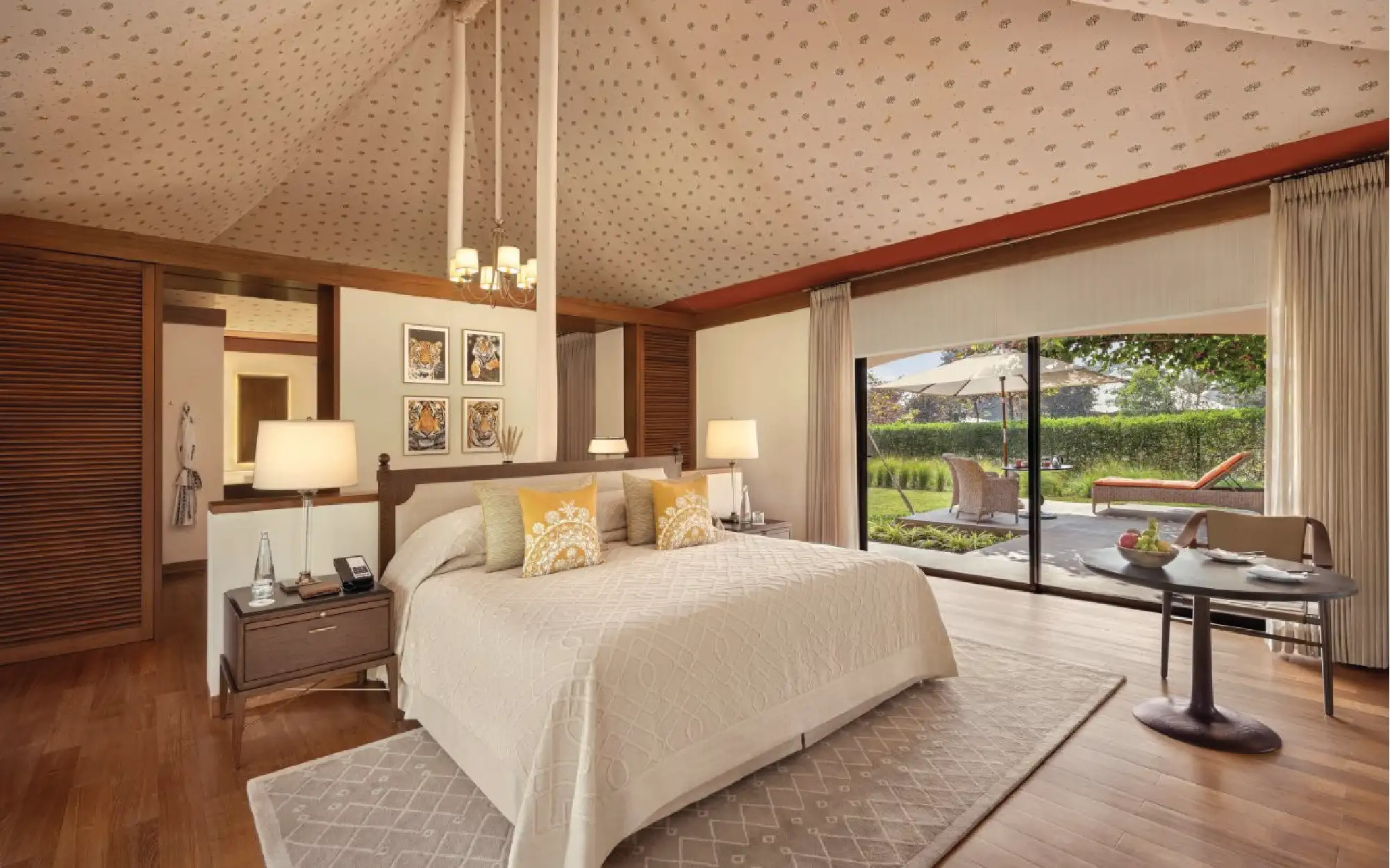
Across the 32 rolling hills of the Vindhya Range in Madhya Pradesh is Bandhavgarh National Park—former hunting grounds of the Maharaja of Rewa—home to the largest population of Tigers in India, courtesy of its undulating terrain. At its fringes stands The Oberoi Vindhyavilas Wildlife Resort with 19 grand tents and 2 colossal private pool villas sprawling across 21 acres and seamlessly uniting with the wilderness. Part of the Oberoi Group’s legacy of thoughtful hospitality, the camp takes its cues from the Gond and Baiga tribal communities, allowing their traditional responsiveness, artistry, and deep relationship with the forest to inform every detail. Every tent blurs the boundaries between the outdoors and the indoors with private gardens, a pool and floating decks. From hand-carved wooden doors and vivid Gond artwork to local Katni stone and hand-painted wildlife artwork by renowned local artist Rakesh Prajapati, the interiors become a living canvas of central India’s age-old craft traditions.
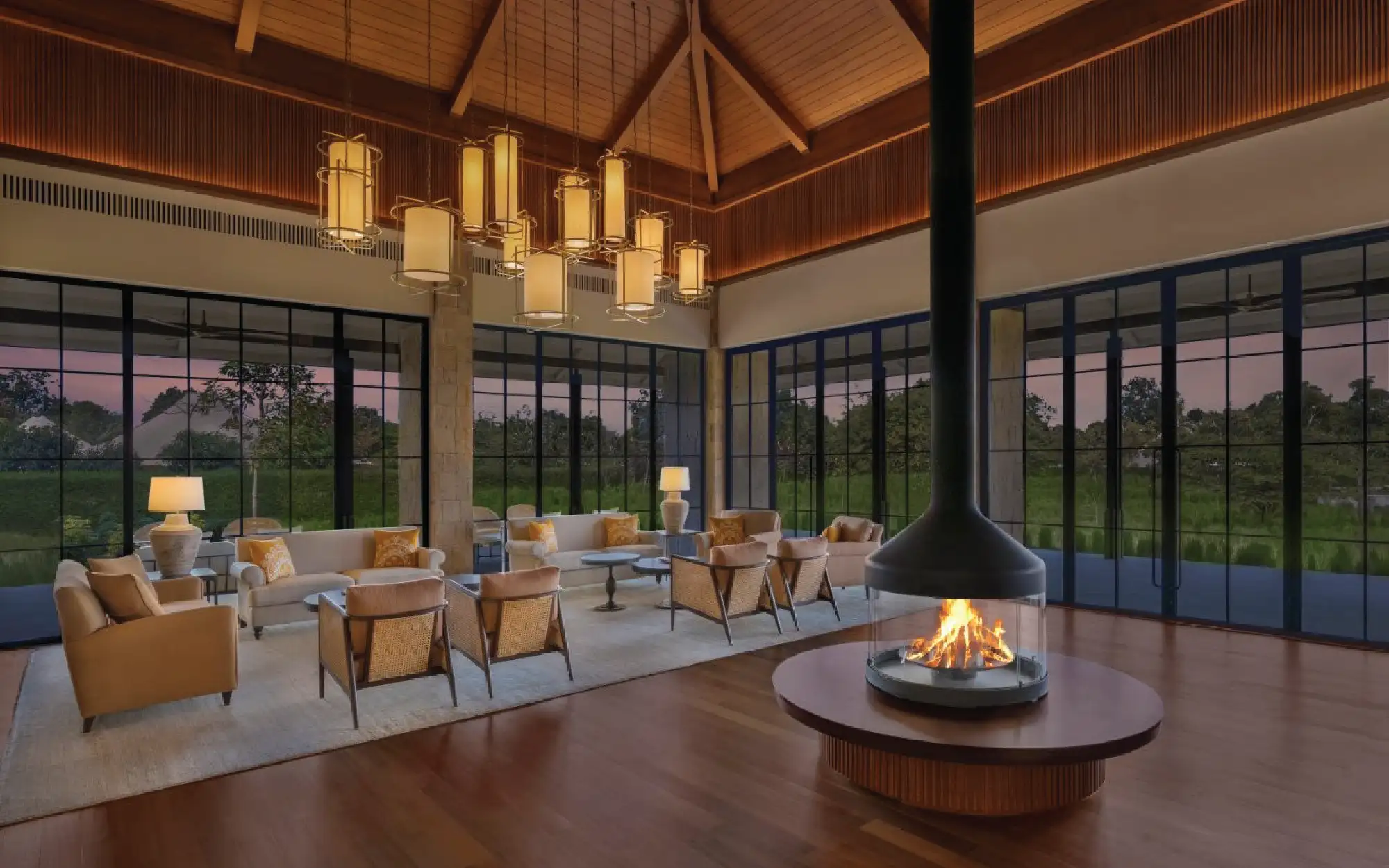
The private safari tracks the Royal Bengal tigers and other wildlife in Bandhavgarh National Park. While the forest remains the protagonist, the camp’s experiences are equally compelling—from guided game drives with expert naturalists and immersive folk performances to sunrise yoga and holistic wellness programmes by Asmi by Oberoi. The culinary experience celebrates the local cuisine and regional ingredients that the guests can pick out and cook for themselves through the cookout at the lakeside cooking pavilion. A highlight is the Royal Baghelkhand dinner that mirrors the culinary traditions of the erstwhile Baghel kingdom.
#DP Loves: The Royal Baghelkhand dinner revives the culinary legacy of the erstwhile kingdom, pairing regional recipes with a regal wilderness setting.
Banjaar Tola, A Taj Safari At Kanha National Park
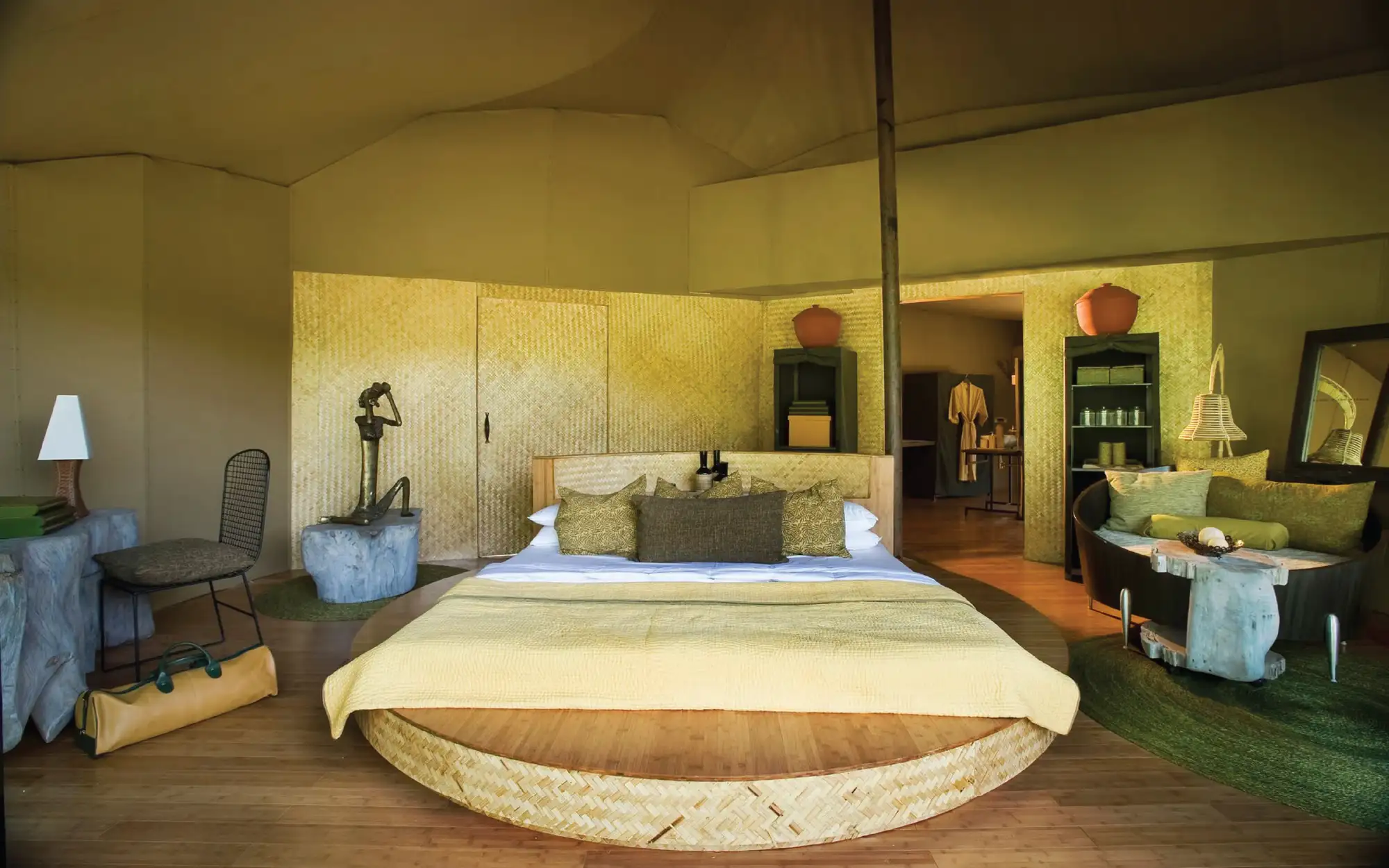
Against the susurrus of the Banjaar River that flows through the emerald meadows and grasslands of Kanha National Park in Madhya Pradesh is a lodging site that champions the art of roughing it out. Shaded by the sal and bamboo trees are a series of 18 jaunty canvas havens spread across 90 acres, setting the premise for Banjaar Tola, A Taj Safari. Blending vernacular craftsmanship with contemporary sensibilities, the tented suites are split into two enclaves of nine tents each, with terraced lounges and pools. Embellished with Gond murals and Bastar bell-metal artefacts, they feature bamboo wall panels, handcrafted local furniture, and floor-to-ceiling glass doors that spill out onto the private decks overlooking a vast expanse of greens. In an ode to the artisans, the interiors hold block-printed cottons and silks, while the art pieces from Bastar and Dogra artists sourced from nearby Chhattisgarh represent a glimpse into the traditions of the tribal communities.
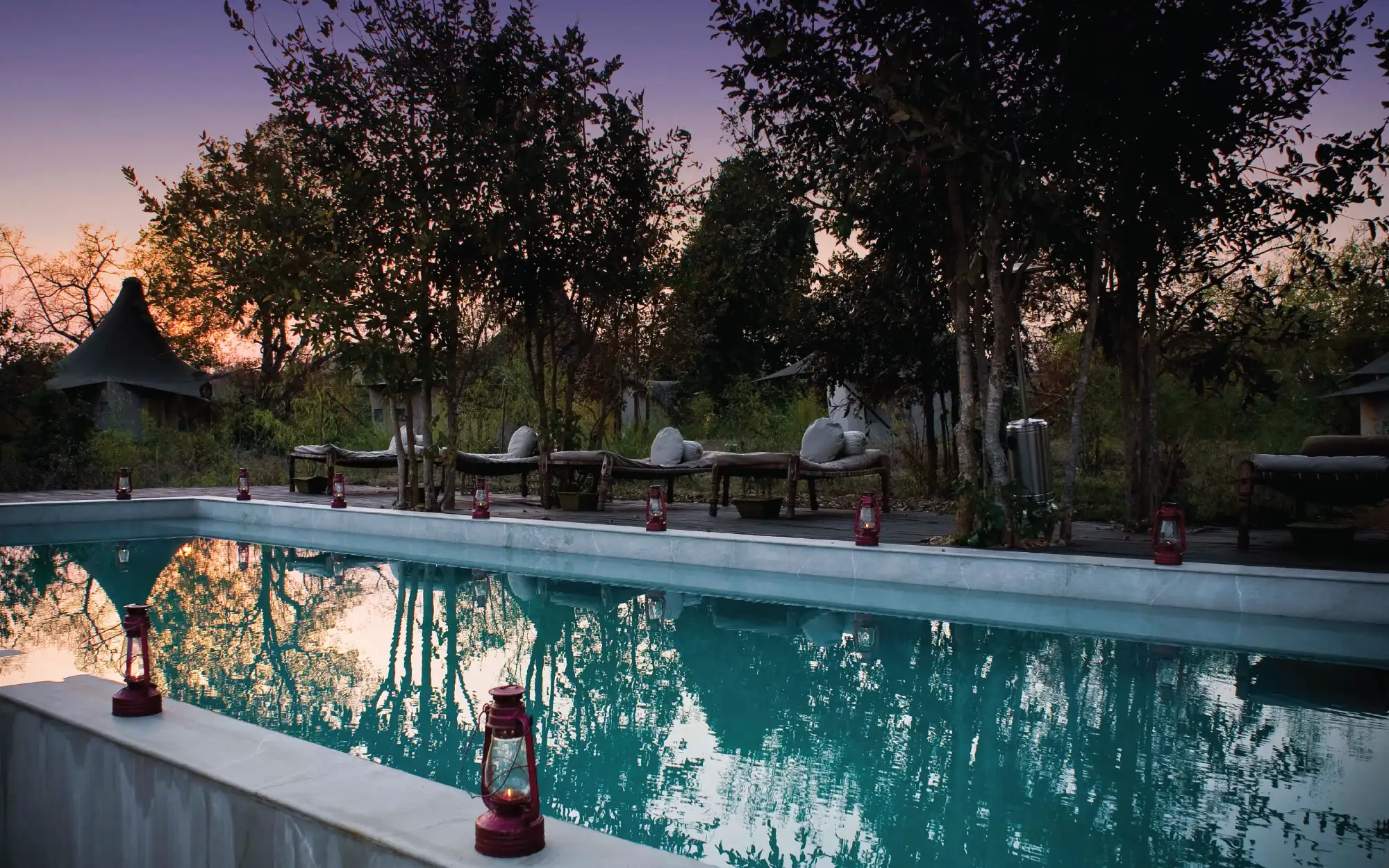
The safaris escort guests deep into the park’s diverse ecosystem to track the elusive Bengal tiger at the Kanha National Park. Beyond expert-led game drives, the experience extends to immersive visits to neighbouring Gond and Baiga villages, while the Wild Kids@Taj programme kindles a love for the wilderness in younger explorers. Dining at Banjaar Tola follows an ‘anywhere, anytime’ philosophy, where every meal is shaped around the wilderness; from breakfast atop a safari vehicle and leisurely poolside lunches to lantern-lit bush dinners and fireside feasts beneath the stars. With a motley crew of experiences and a dedicated butler, it has thoughtfully curated programmes to celebrate the untamed beauty of Kanha.
#DP Loves: The ‘anywhere, anytime’ dining philosophy, where breakfast is served atop a safari vehicle and bush dinners unfold beneath a canopy of stars.