With The Artist: Debashish Paul’s Journey Through Queer Performance And Ritual
Multi-disciplinary artist Debashish Paul uses film, sculptural costume, and performance to create metaphysical worlds where landscape and body converge in celebration of queer futures.
- 23 Mar '26
- 3:30 pm by Manisha AR

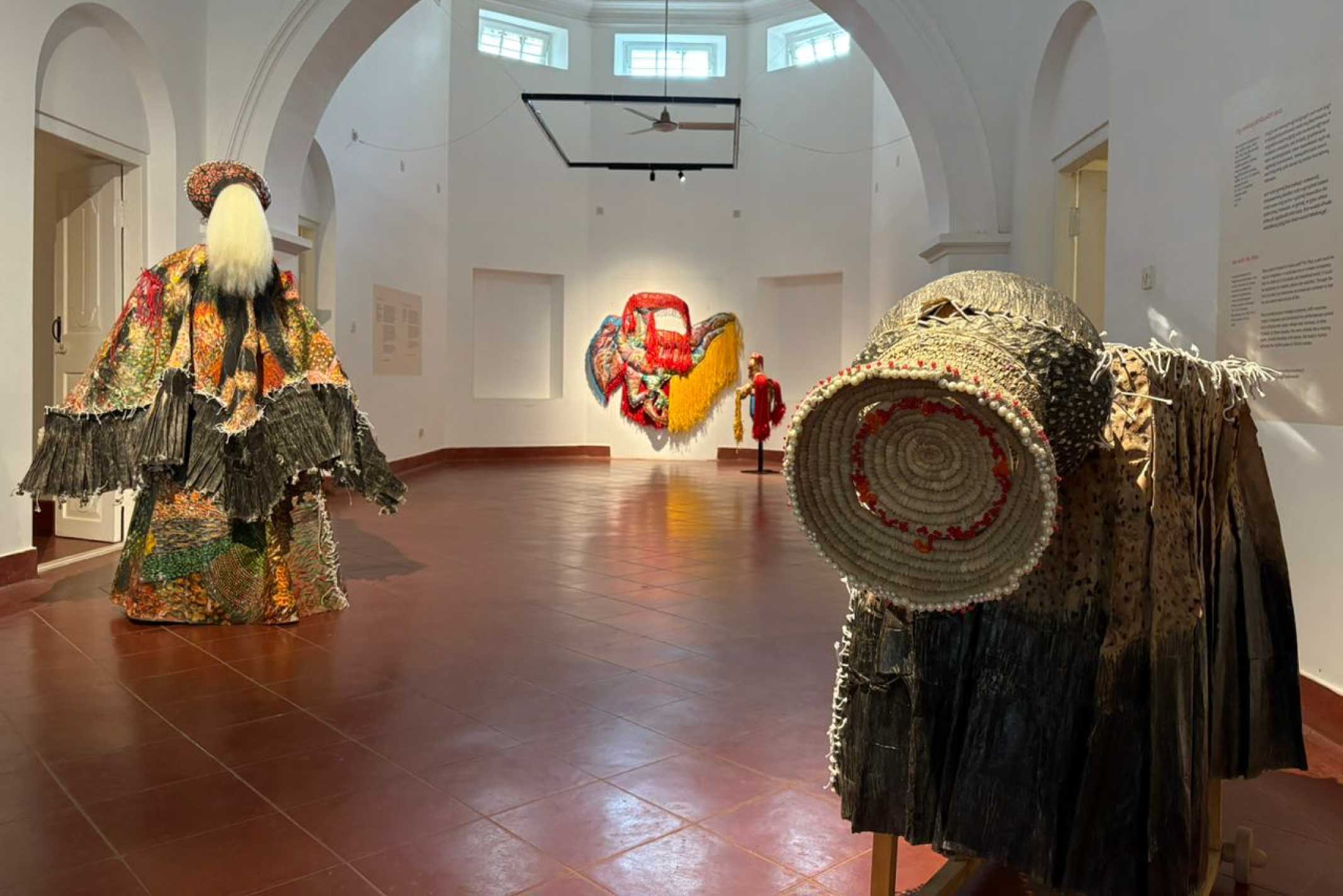
I first encountered Debashish Paul’s work at KALA HUBBA, inside Panchavati, a historic bungalow belonging to the late Indian physicist CV Raman. On a warm, sunlit day, I crossed the threshold into the octagon-shaped hall. Across the wall hung a soft sculptural costume, hand-stitched with cowrie shells, beads, and tassels. Titled ‘Nastanirh (The Broken Nest)’, it offers a striking contrast of red, yellow, and blue, with beads shaped like eyes that seem to follow you as you take it in. Commissioned for the 2026 edition of BLR HUBBA, the piece was part of Paul’s durational performance when the exhibition opened in January. The show offered an introduction to Paul’s multi-disciplinary practice, bringing together his explorations of film, textile, gender, performance, and the body.
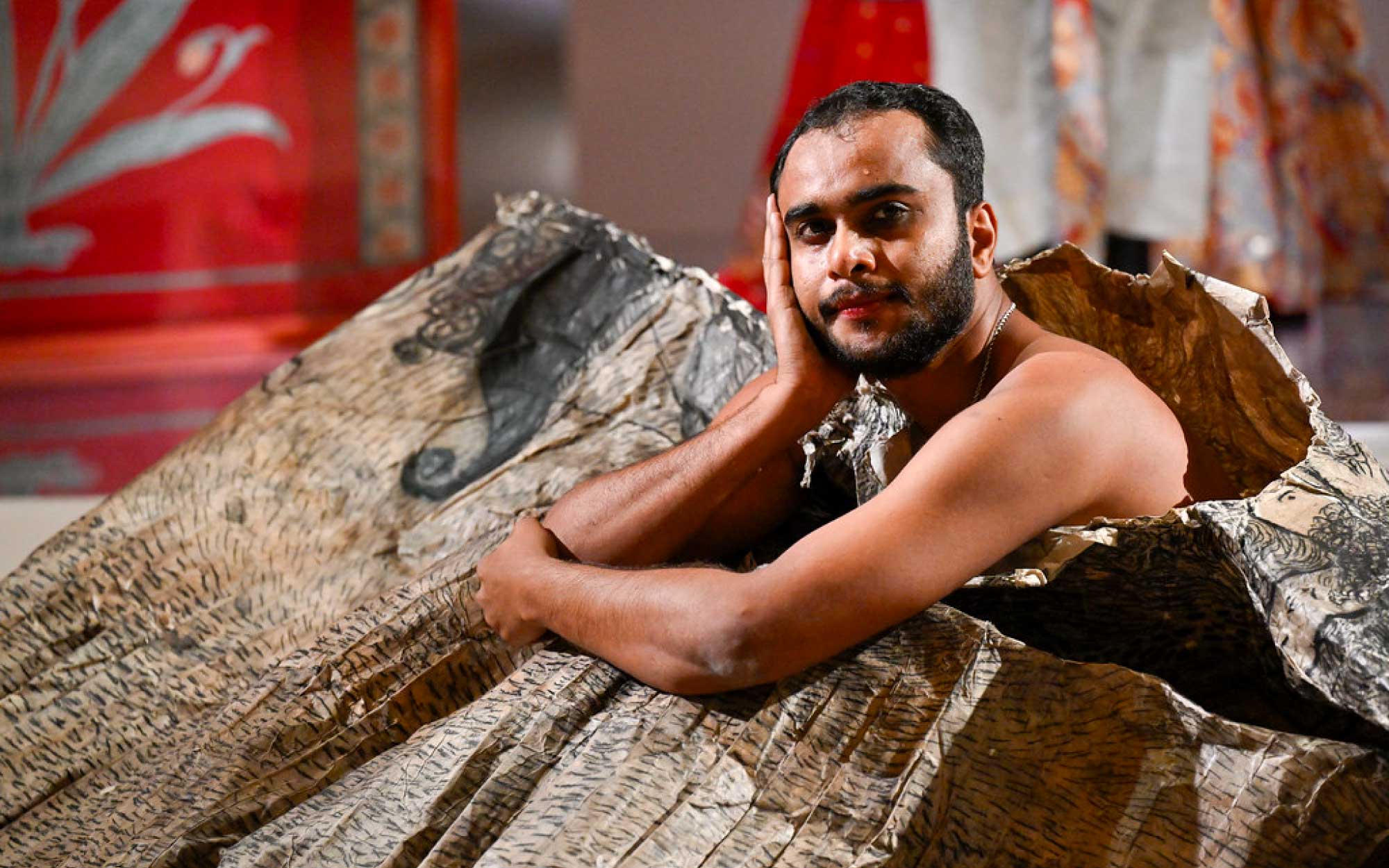
Inspired by the light that surrounds the home, Paul’s piece, ‘Nastanirh (The Broken Nest)’ reinterprets writer and composer Rabindranath Tagore’s novella of the same name using the language of light and the spectrum Panchavati offers. The hall breaks away into smaller rooms — inside each sits a piece by the multi-disciplinary artist from West Bengal. Included in the show is the film ‘Body As a Landscape; Body in a Landscape, 2022’ where Paul explores the landscapes that surround the Jargo river in Uttar Pradesh while in costume. Through deliberate movements and ritual, Paul builds a world within the film where a genderless body activates the landscapes. Spinning in a costume made from handmade paper and collected natural materials like flowers, leaves, roots and grass, the figure treads dry grass, forms shadows, lays down and eventually sinks into the sand. Interspersed with the movements are ambient sounds from the landscape that draw the viewer further into Paul’s dreamlike world.
Also read: 1 Million Square Feet Of Modernism: Manuel Rabaté To Helm Adjaye-Designed KNMA
Exploring Queer Presence in Paul’s Films
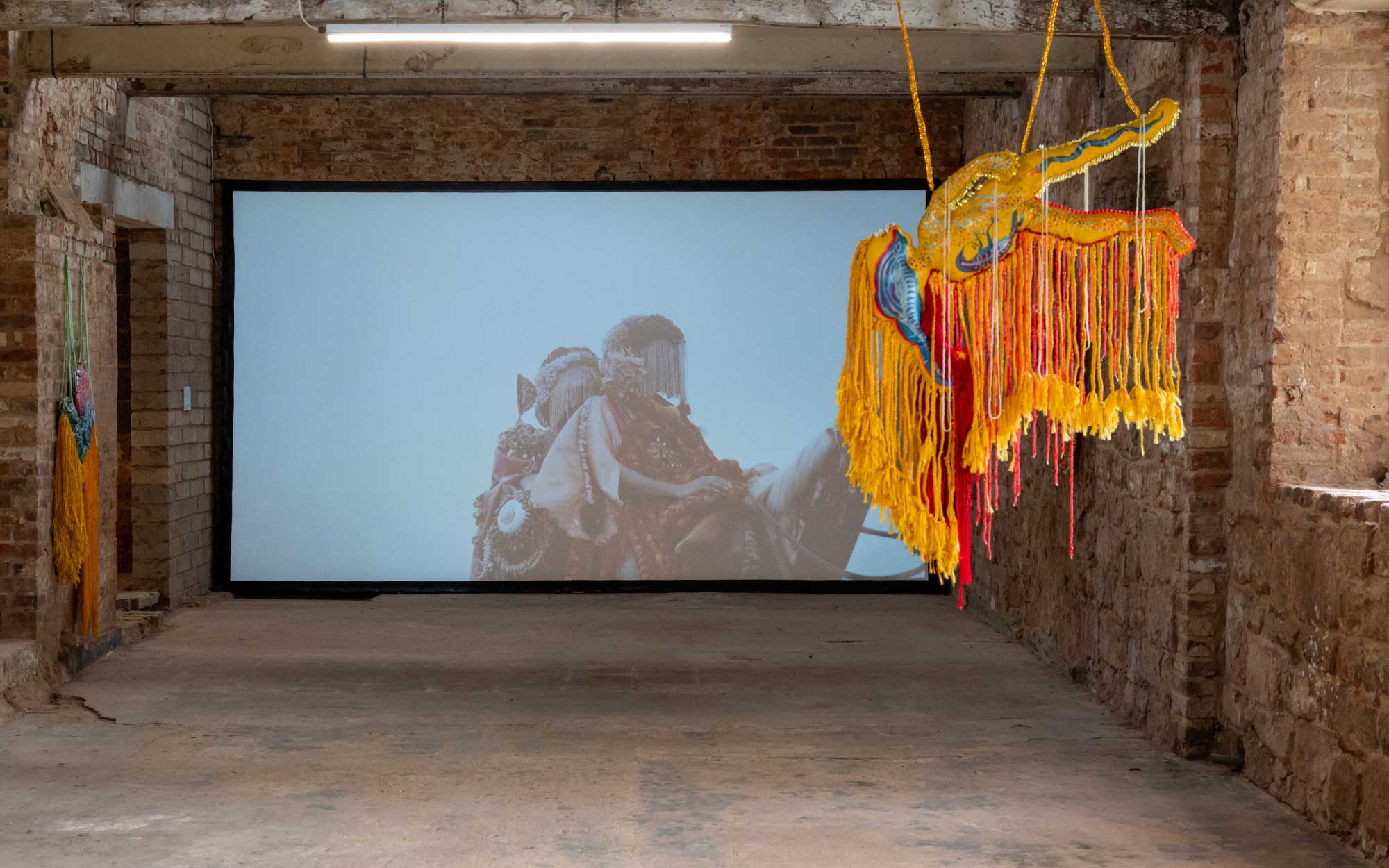
In a virtual interview from his studio at the Rijksakademie van Beeldende Kunsten in Amsterdam, where he will be in residence until 2028, Paul tells me: “My body becomes you; ‘you’ means the sky, the river, the trees. It’s a metaphysical space where body and space are connected.”
When I ask about the improvisations he makes on the film, he explains, “There is no script. Once the camera runs, I respond to the space. Ideas emerge through movement, and I follow them.”
During performances, the presence of others in the landscape does not always disrupt him. “Sometimes I’m deep in my world; other times I notice what’s around me. Mostly, I belong to the body I’m inhabiting,” he adds. This interplay between self-awareness and immersion is central to his performance work.
In ‘A Thousand Years of Dreaming’ (2024), Paul shifts from solo performance to a collaborative ritual. Two figures draped in flowers and fabric enact a wedding and life after. With added elements like a horse, musicians, and another body—his boyfriend—the film intensifies relational and emotional dynamics. The opening scene, with Paul lying in a hollowed section of sand draped in red, recalls the earth-body works of Ana Mendieta. Costumes serve as symbols of societal burdens; together, the figures transform that weight into a celebration of queer existence and unity. In creating alternate realities through textile, performance and film, Paul builds surreal worlds that are filled with metaphysical truths and an alternative reality of liberation and shared queer journey.
“So the process of the ritual to make a pure body, this concept also helped me with the idea of purifying the self,” he explains. “As you can see in my videos, there is always rebirth or death toward the end, as a way of purifying yourself.” For Paul, identity has been a constant negotiation between spiritual purity and self-acceptance of his queer identity. A deeply spiritual person, he often adapts the purification rituals he witnessed in Varanasi into his performances.
Also read: Sajan Mani On The Politics Of Body And Its Implication In Public Spaces
Landscape As Inspiration
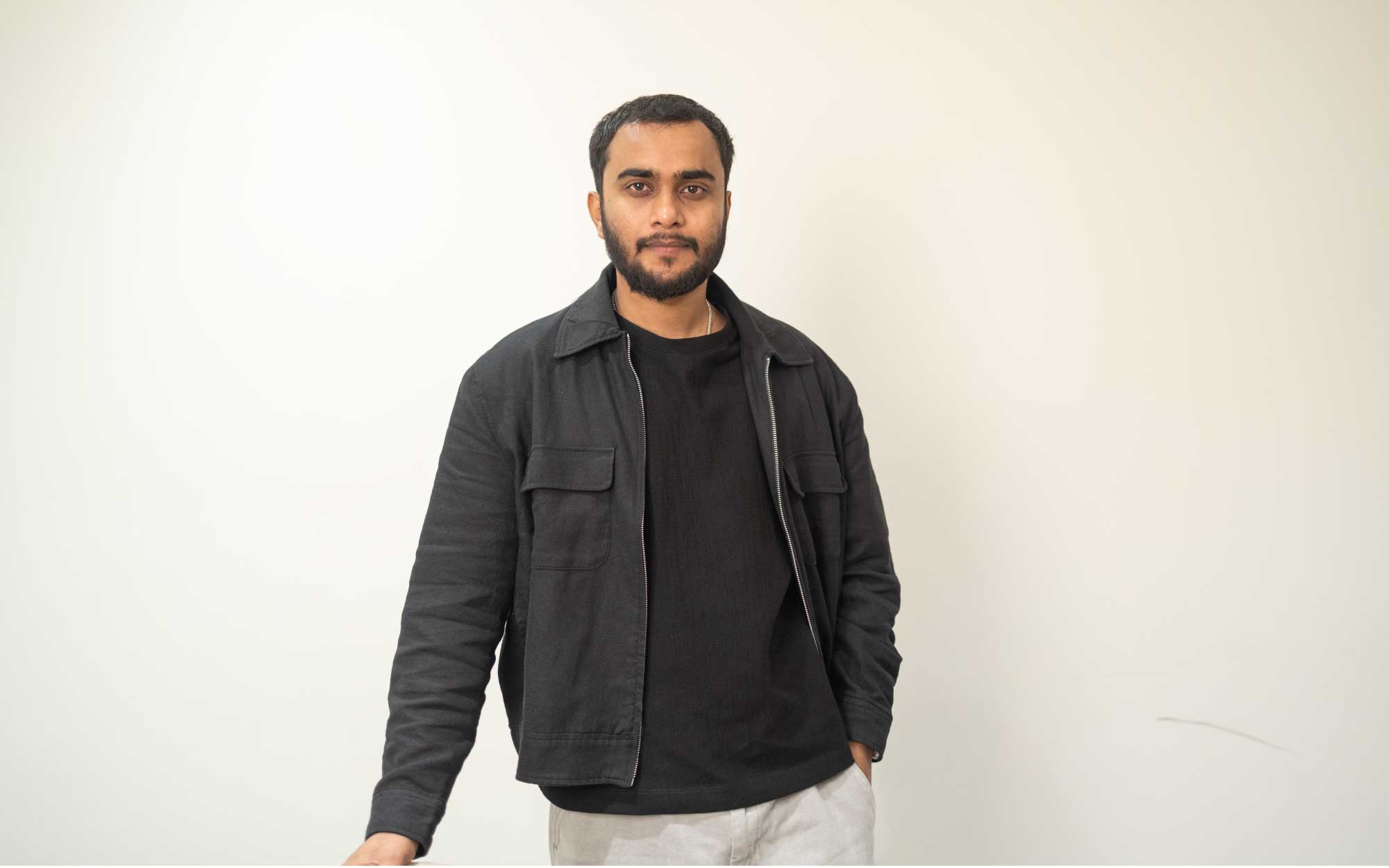
Paul grew up in a Kumhar (potter) family in Bengal, learning to make clay toys from his father. After 10th grade, he convinced his parents to let him pursue art, eventually earning an MFA in Sculpture from Banaras Hindu University, Varanasi. In 2021, during the mostly virtual Kochi Student’s Biennale, he turned to film and costume to communicate his work more effectively. Varanasi’s layered landscapes and vibrant yet conservative society shaped his artistic sensibility. “From birth to death, you can experience everything here,” he reflects. Observing men in a langot (a traditional Indian loincloth) in wrestling akharas, bathing, or training freely, he developed a fascination with bodies in space, pain, joy, and ritual—elements that recur in his work.
He cites a range of inspirations: “Nick Cave, for his costumes, mythological storytelling for these elaborate costumes and storylines, and childhood Jatra performances in Bengal—especially in Nadia, where ritual, the Bhakti movement, and Radha-Krishna stories shaped me. Boys often dressed as girls in these performances, and all of it has been a major influence.”
Also read: With The Artist: After 16 Years, Princess Pea Finally Reveals The Face Behind The Peahead
Lived Experience As Active Research
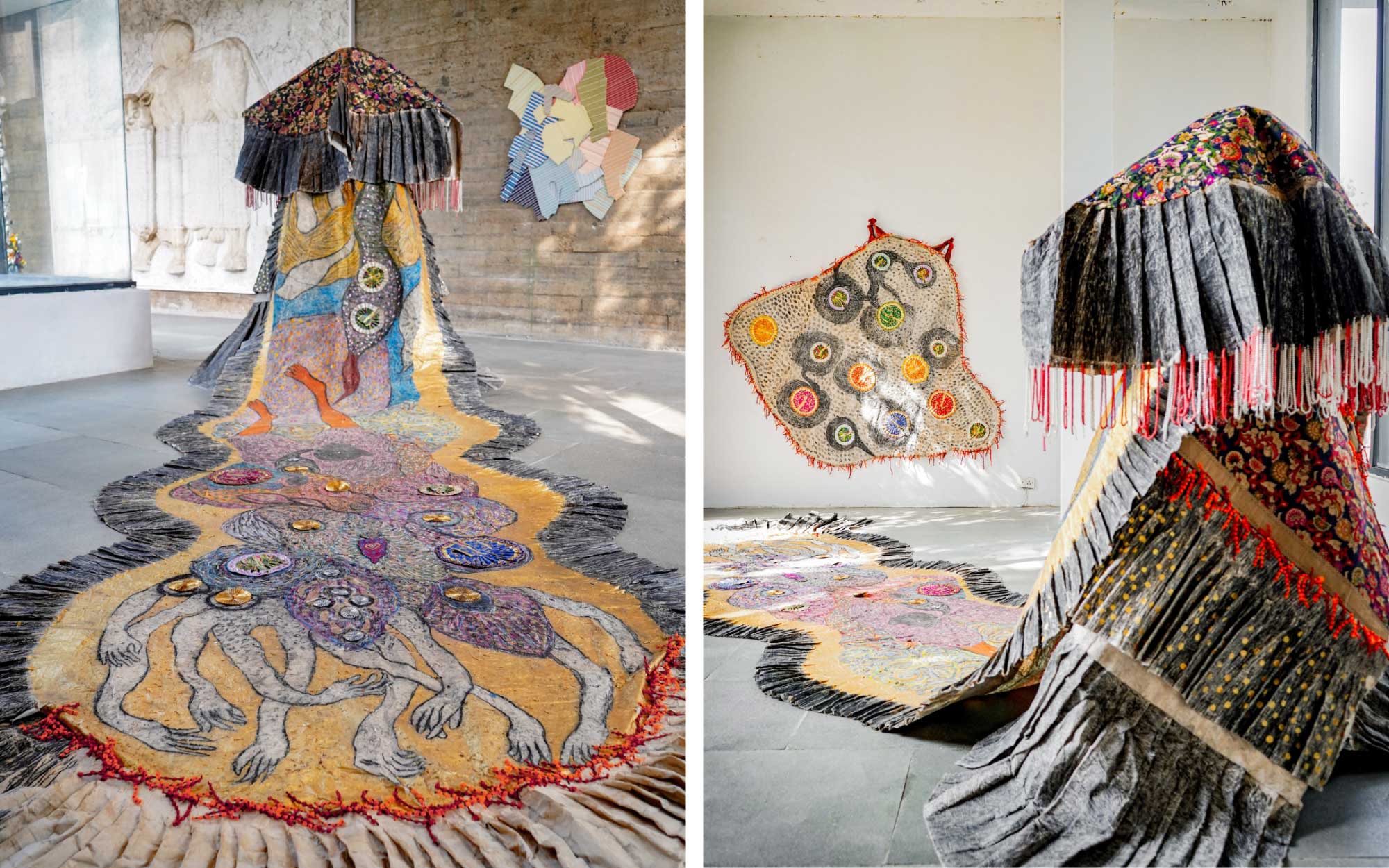
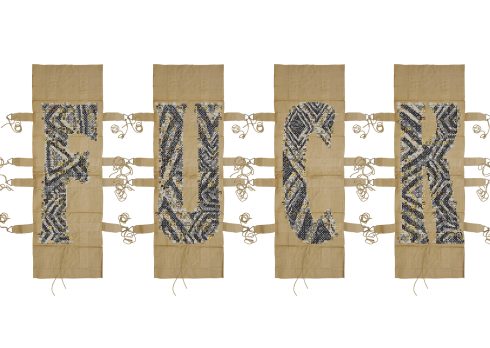
Paul’s recent exhibition, ‘Disobedient Objects: The Biography of Clothes’ at STIRworld, brought together artists exploring textiles and personal politics. His piece ‘Scent of the Celestial Garden’ uses rice paper, cloth, and embroidery to explore identity as malleable and sacred. Quoting Kabir Das—“Bago mein na ja, teri kaya mein gulzar / Do not go into the garden, for within your body lies a garden of flowers”—he positions the inner body as a celestial space.
Returning to Varanasi last year for an artist talk, Paul observed the audience’s fascination with his queerness. While some students were initially amused at mentions of his boyfriend, many asked questions about his identity, reflecting both curiosity and the lingering taboos around queer lives in India. “I stayed after my talk for hours, answering questions,” he recalls. “Maybe they were looking for answers as well. It was good to meet students from all fields—not just visual art.”
He has been in Amsterdam for less than a month when we speak, so I ask him what the experience has been like. “When I make a costume, I don’t start with a finished idea in mind; the process drives me, and I decide as I go,” he begins. “I’ve started understanding a space by documenting the city through photographs, because I’m curious to see how the body adapts to a new environment.”
He goes on to discuss using “survival of the fittest” as a kind of measuring stick, because to survive, you have to change. He acknowledges that leaving India and its memories behind is no easy task, but in Amsterdam, by making friends and creating new experiences, he can move toward transformation, often one of the larger takeaways from his installations and films.
Also read: Ai Weiwei Reimagines Pichwai Through Lego Bricks For His First Solo Exhibition In India
On Navigating New Spaces
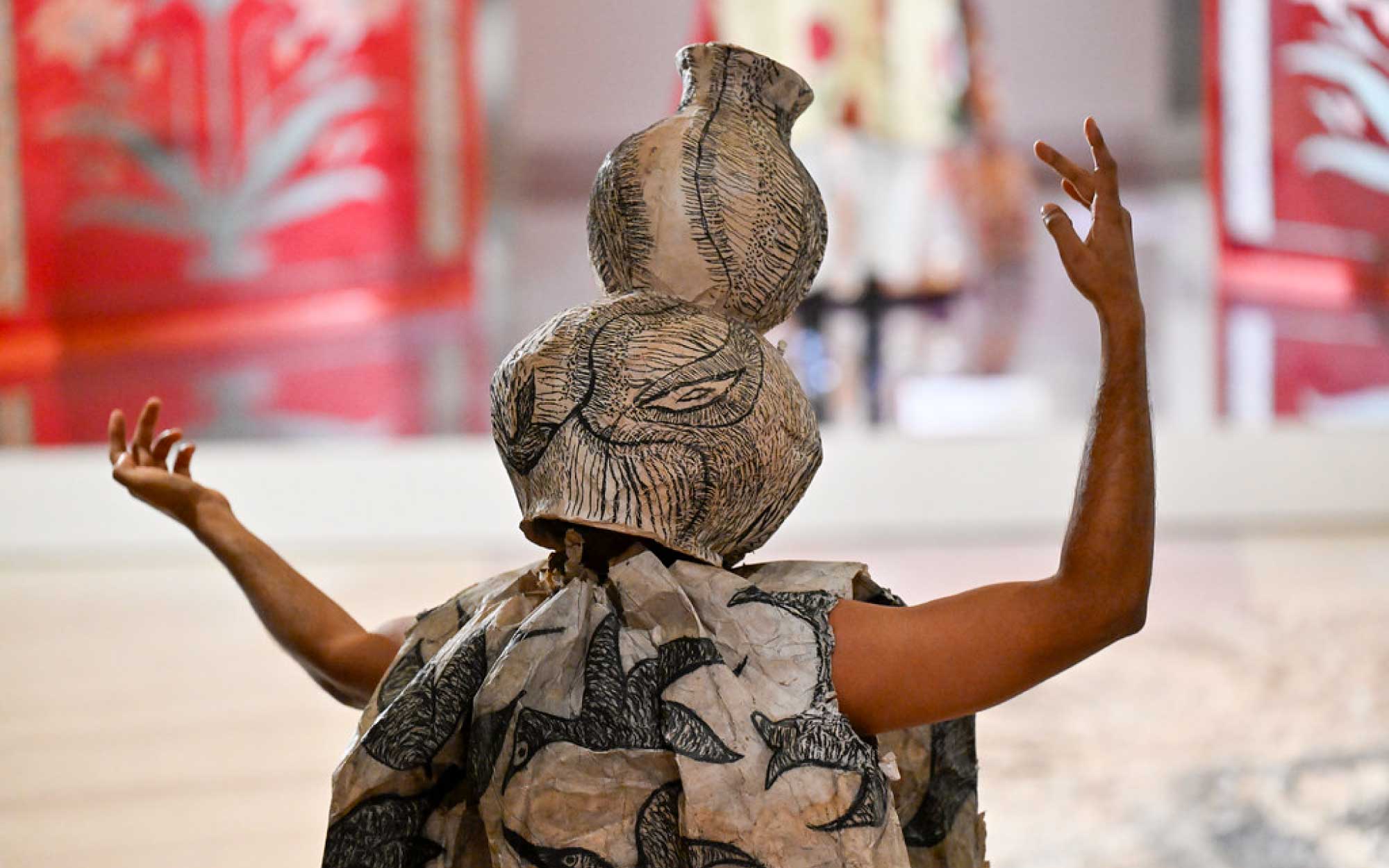
In India, where audiences and the environment were often conservative, Paul’s costumes served as a way to conceal himself. In Amsterdam, however, he finds acceptance more easily. “Before, I used to feel shy admitting that I am a gay man, but now I feel joy when I make the declaration,” he shares.
“Since Amsterdam is much more open, I have to ask myself: how does my body move in this society? What roles will costumes play here, and what meanings will they take on?” These are some of the questions he is exploring during his residency.
Sharing sketches from his studio, Paul’s process reveals itself as intuitive and deeply responsive to place. Asked about his goals for the residency, he laughs:
“I don’t think about the future too much. I trust the process.”
From Panchavati’s spectral light to Amsterdam’s architectural lines, Paul continues to explore spaces where the body dissolves into landscape. His work maintains a poetic tension between reverence for roots and cultural identity, and the careful navigation of an intersectional self. Through costume, film, and performance, he creates access to these layered journeys, allowing audiences to experience the worlds he constructs.