Mazahir Hussain On Kashmiri Identity, Brown Bodies And Rewriting Orientalism
Kashmiri-Pakistani illustrator Mazahir Hussain weaves together queer identity, cultural reclamation and Mughal-inspired visuals to reimagine the past through a contemporary lens.
- 6 May '25
- 1:23 pm by Virender Singh

|
Getting your Trinity Audio player ready...
|
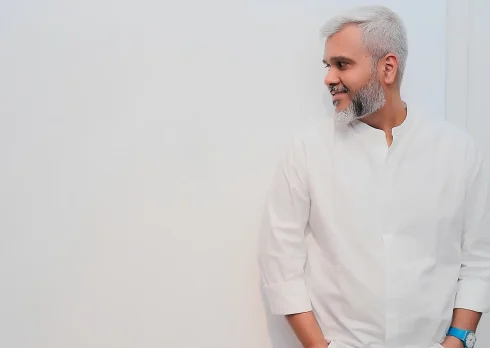
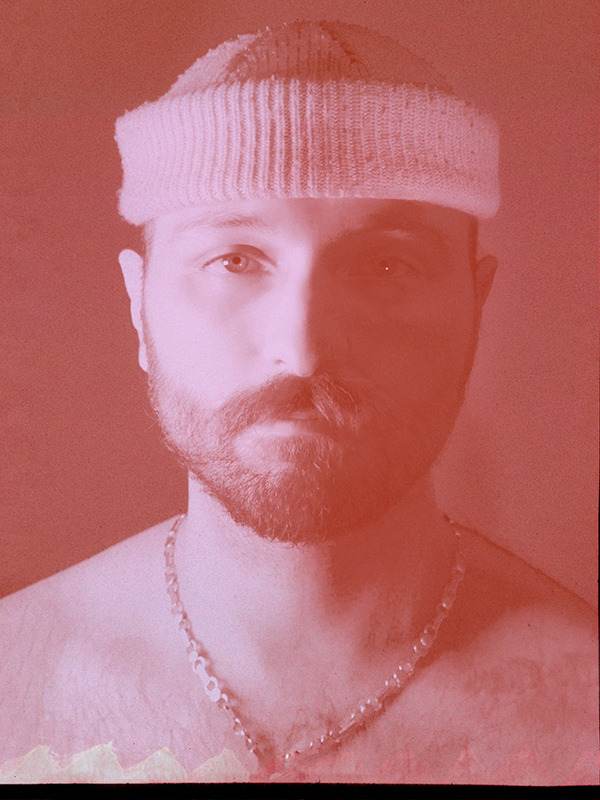
Mazahir Hussain is an illustrator and digital artist who has emerged recently as a titillating and gently risqué voice in the diasporic landscape of the Kashmiri-Pakistani imaginary. The queer, astonishingly self-taught illustrator crafts boudoir scenes that blur the line between speculative fiction and a tender yearning—for people like himself to find belonging in the body politics of romance and representation. “Personally, the disconnect with my culture was something I actively chose,” Maz pauses, searching for the right words that will capture his anguish with clarity. “It was self-protection as a child—growing up as a teenager, a queer teenager as well. There was more of that, because, you know, being South Asian wasn’t considered sexy back in the mid-90s.” In the decades following World War II, Birmingham’s ethnic composition had fermented dramatically, exposed to a windfall of immigration from the Commonwealth, alive with the untold stories of South Asian workers helping rebuild a weary Britain. “The Pakistani side of my family in England considers blood purity to be quite important, so I wasn’t treated particularly well by cousins or older relatives,” Maz shares, capturing the quiet ache of self-rejection and the fluid identity experienced by many who came of age in the West Midlands.
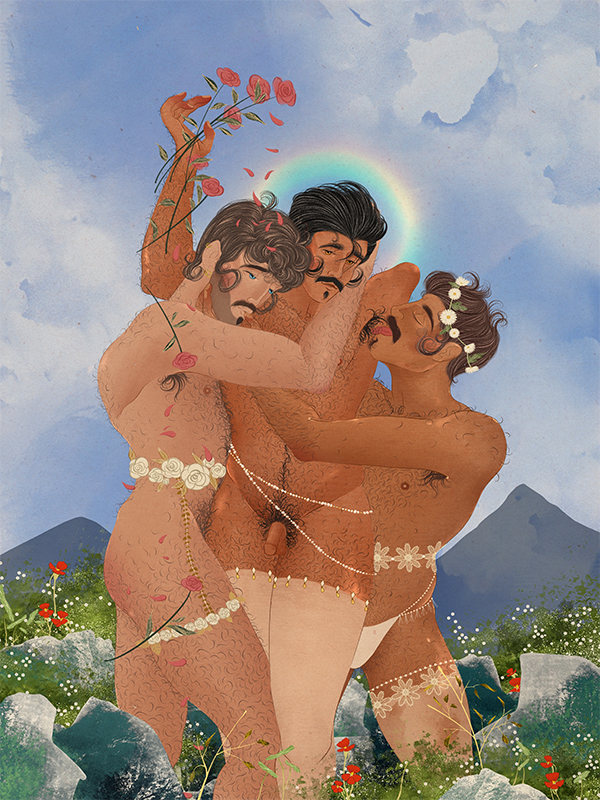
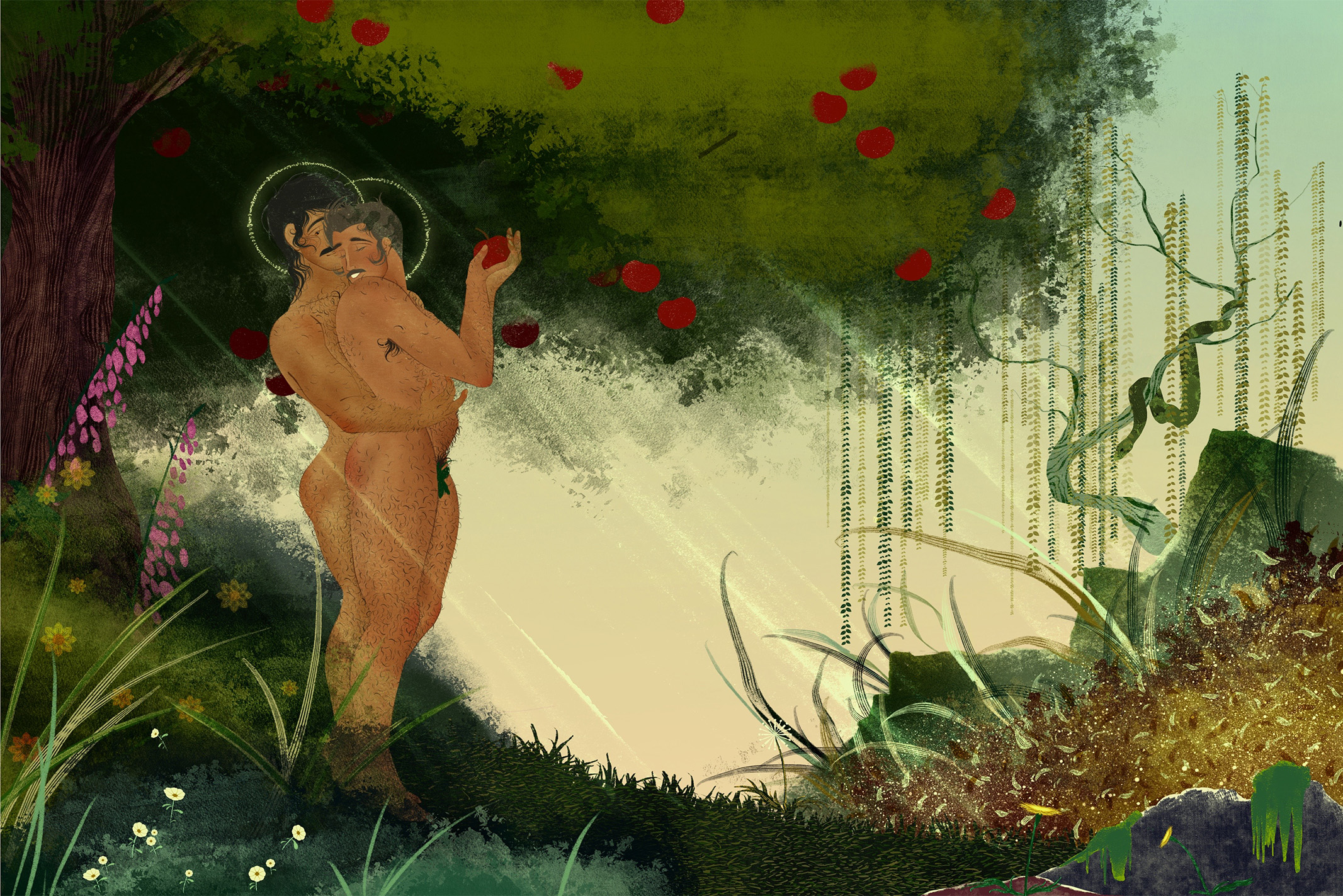
Drawing lifeforce from his mother’s whispered bedtime tales, the glistening, perfume-laced illustrations by Art Deco master Erté, and a soul-rending urge to reclaim his cultural inheritance, Maz describes his digital art as “mixed race, just like me.” With a curious penchant for salacious, often queer reimaginings of Arabian Nights fables, his pieces echo the eerie beauty of 19th-century fairy tale monographs by Franco-British illustrator Edmund Dulac. Add a tincture of Greek mythology, hours of people-watching in the rain, and a slavish adoration of “bombastic feminist writers” like Jeanette Winterson and Angela Carter, and you begin to glimpse the beguiling, bleary inner world of this diasporic artist. Recurring motifs in his work include the unabashed portrayal of body hair, the glorification of brown bodies and a playful flouting of gender tropes.
Read More: Digital Bodies: An Insight Into Samyukta Madhu’s Indo-Futuristic Metaverse
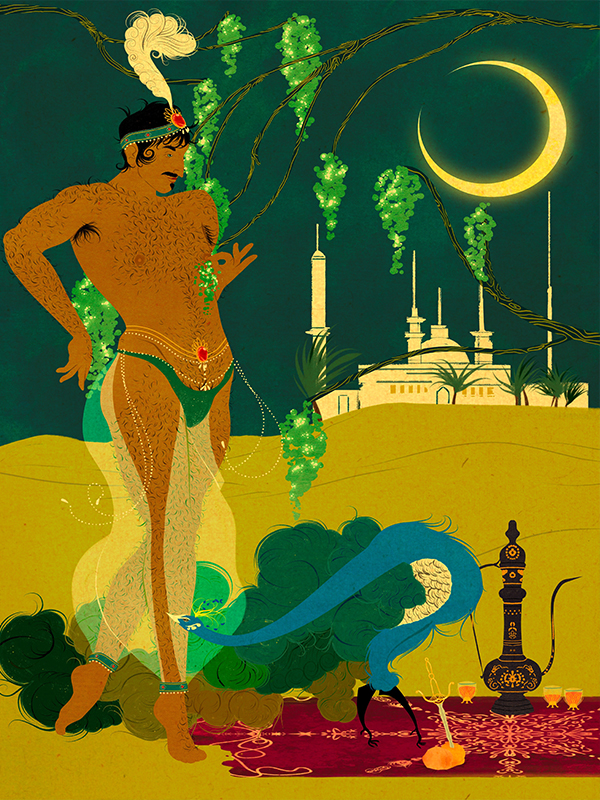
Design Pataki: Could you tell me a little more about your roots in Kashmir?
Maz: I grew up very, very British, but the food was inherently Kashmiri—so I’ve pretty much had the legacy in me, in my stomach if nothing else, throughout my entire life. In terms of where exactly we’re from, we’re kind of spread around quite a bit. We’re from the mountain areas predominantly, and also along the Jhelum River. That’s where we emigrated from—Kashmir as farmers, back down to Pakistan. And in terms of lineage, I believe we’re descended from the Mughals.
Design Pataki: Before you began illustrating, what were some of the earliest creative influences that shaped your formative years?
Mazahir Hussain: The biggest one has been the fairy tales that my mum read to me as a child. As I got older, it became more about deep diving and understanding those legends from a much more academic standpoint. And then once I started illustration, I started to explore my origins. But there was still a bit of a disconnect that I felt in regards to my upbringing, so my art feels like I’m reclaiming my culture on my terms. I was also a very romantic child, probably more so than most boys at five years old. Those three intersections—fairy tales, romanticism and queer identity—define my artwork now.
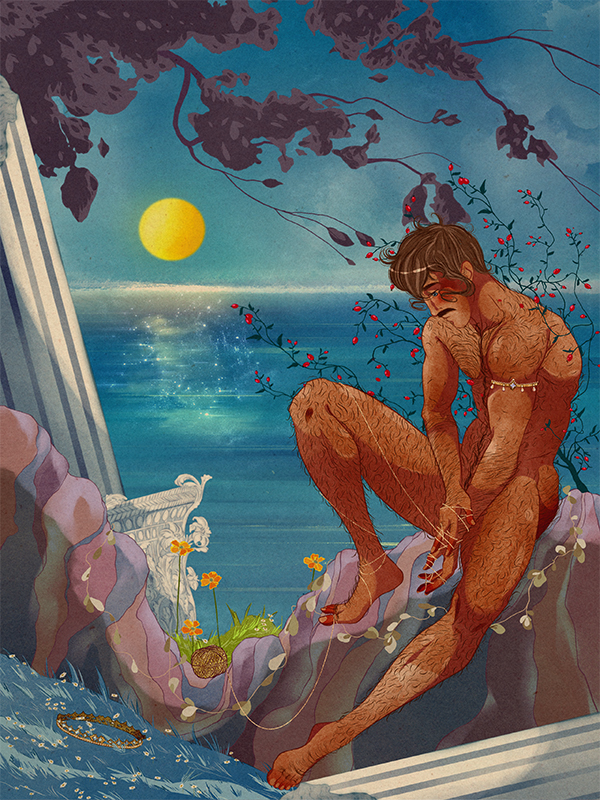
Design Pataki: How do you arrive at that first impression of an image—where do your ideas come from?
Maz: I think it’s actually interesting that you say that, because the way I get my inspiration is kind of like how a writer would. That’s how I started as well. It’s not like one week I see a painting and think, “Oh, I like that, I’m going to recreate it as an artwork.” It doesn’t work like that for me. I find my inspiration through words—I think in words, not pictures. That’s how it tends to flow. So, kind of like translating, if I see a quote in a book that I think is particularly striking, at the moment, I’m obsessed with one that describes Aphrodite as a lovely but terrible maiden. To me, the image for that comes easily. It’s like the beginning of a sketch.
Design Pataki: As a diasporic artist, how do you perceive your relationship with Kashmir?
Maz: I think if I had grown up in Kashmir, maybe the work would have been a more direct or ‘pure’ representation of Kashmiri identity—less fragmented, more whole. Much of the Kashmiri influence in my work comes from nature, its flora and fauna. The jasmine from there, the musk deer, even the countryside itself. I once saw a tile from this mosque—just in a picture—and it inspired a piece I created. The colours there are something else: either soft, pearly pastels or these vivid oranges and purples.
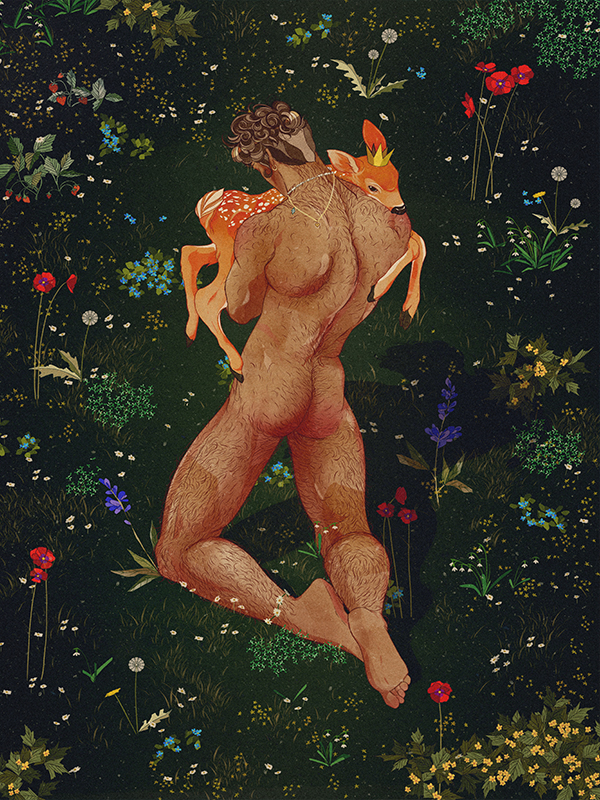
Design Pataki: Your work often features brown bodies, body hair, and tender intimacy. What are you hoping to express through these recurring themes?
Maz: If there is a story, it’s simply that Kashmiri men can be tender, they can be soft. There’s such a deeply negative racial stereotype, especially around queer South Asian men, and it’s kind of a hangover from the colonial era. It’s always the same words: creepy, perverted, debased. I want to depict them from a place of sweetness, which is far truer to who we are. I take a lot of visual inspiration from Orientalism, but I also hate Orientalism, because of how it’s historically depicted people from our cultures. It’s not just about Sharia law or forced arranged marriages, here’s real romance in our stories—and in the way we exist. What I’m trying to do is take some of those motifs and give them new life.
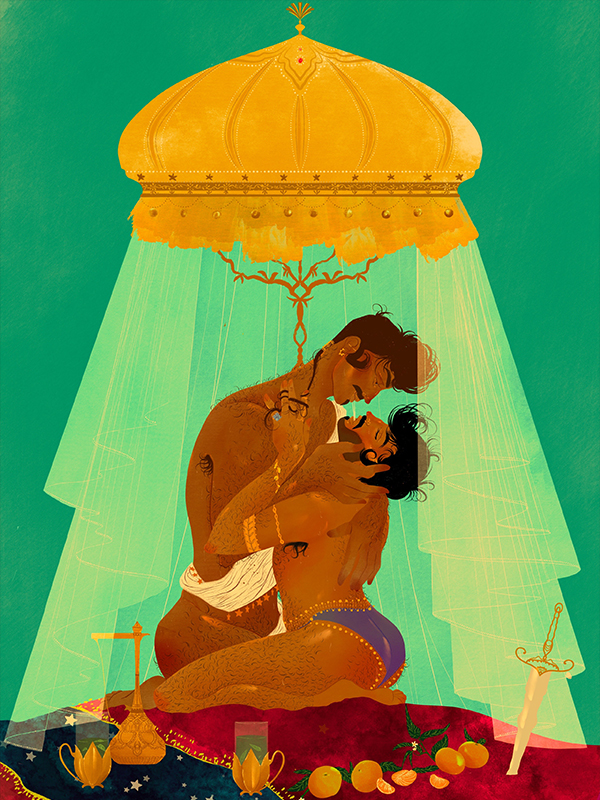
Design Pataki: In your day-to-day life, what are some real-world moments or details that you mentally bookmark and think could become a piece of art?
Maz: Actually, perfume has become a big one for me lately. I’m passionate about fragrance, so I buy samples regularly. Each time I try one, I give myself a mental image, like an environment or a mood that matches the scent. It’s become a fun, creative exercise, a way of blending two passions. I also think it’s important to be aware of your surroundings. Those small moments are easy to miss, but they can be powerful. The other day, I saw this guy standing outside a clothing shop in the pouring rain, wearing a three-piece suit and holding the biggest bouquet of roses. It was such a striking image. I instantly thought, that’s going to be an illustration one day.
Design Pataki: What does your creative process look like?
Maz: As for my process, originally, I worked from scratch. Most of the figures I drew on my iPad on Pro Tools were based on imagination. But this year, I’ve been challenging myself to expand my skill set, so I’ve been drawing more from reference, along with painting. However, if I’m working on something that has a specific cultural context, I’ll always reference settings, buildings or plant life, and make sure to double-check things through books or articles. I’ve used a lot of architectural websites in the past for that.
Design Pataki: Your work often exists at the intersection of very contemporary themes and vintage imagery. How do you strike that balance?
Maz: When I first started illustrating, one of the exercises I gave myself was to dissect Mughal miniatures—to understand the motifs, the detailing, the symbolism. The timeless poppy, for example, shows up frequently in my work. I pair that with references from classical Western illustrators I’ve always admired—Erté, Edmund Dulac, Jehan Georges Vibert. From Kashmiri art, especially the pieces I saw growing up, I take the environments—the lushness, the textures, the softness. I’m always combining things, borrowing from different sources for different reasons. That’s what my work is: it’s mixed race, just like me. Honestly, I think it happens quite naturally. Most art, for as long as it has existed, has drawn on the past to interpret the present. That’s what fairy tales do, too—ancient stories retold for a modern audience. I don’t believe in ‘new ideas’ as such; it’s more about how you reframe old ones.
Design Pataki: What’s been keeping you creatively engaged lately?
Maz: I’m currently pushing myself out of my comfort zone. It’s been all digital the last few years, and you get a bit bored doing the same thing on repeat. So I’ve started playing around with gouache paints. It’s a slower process, but I’m reminding myself I wasn’t great at digital art right away either. I’m trying to let the learning curve be what it is.