These New Dining Spots In Hyderabad Whisk You Off Into a Cinematic Design Space
Some spaces are conceived as intimate enclaves, others as verdant sanctuaries—these dining destinations signal a new vanguard, shaping the future of Hyderabad’s evolving culinary landscape.
- 18 May '26
- 1:48 pm by Satarupa Datta

|
Getting your Trinity Audio player ready...
|
The war that spiked the fuel crises in West Asia has raised our eyebrows with a lingering question—is it the right time to dine out? The ripple effects of the West Asia crisis, particularly fuel shortages, have prompted some of India’s leading restaurateurs to rethink operations—tweaking menus, streamlining supply chains, and even shifting toward hybrid kitchen models to stay resilient.
And yet, the momentum hasn’t slowed. Across India, new restaurant openings continue to punctuate the dining landscape, none more noticeably than in Hyderabad, a city on the cusp of a culinary reinvention. Long defined by its rich Hyderabadi and Telugu culinary traditions, the city is now witnessing a shift. A new generation of restaurants is moving beyond cuisine as the sole focus, reimagining dining as a multi-sensory experience—where food, design, and atmosphere are in constant dialogue. Spaces are being conceived as immersive canvases, where interiors are thought of as the menu. Designers like Sidhartha Kerkar are bringing a distinctly artistic lens to these environments, crafting spaces that feel more like a gallery lounge and less like a usual run-of-the-mill city dining.
DP is always on the hunt for such spaces and comes back with a curated list of new restaurants in the city of pearls. Hyderabad isn’t just serving food, it’s staging an experience.
1. Lili, Jubilee Hills – Cantonese Cuisine Meets a Bold Maximalist Design Oomph
( Image Credit: Lili Hyd)
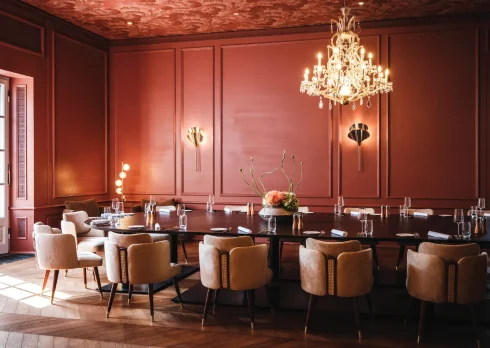
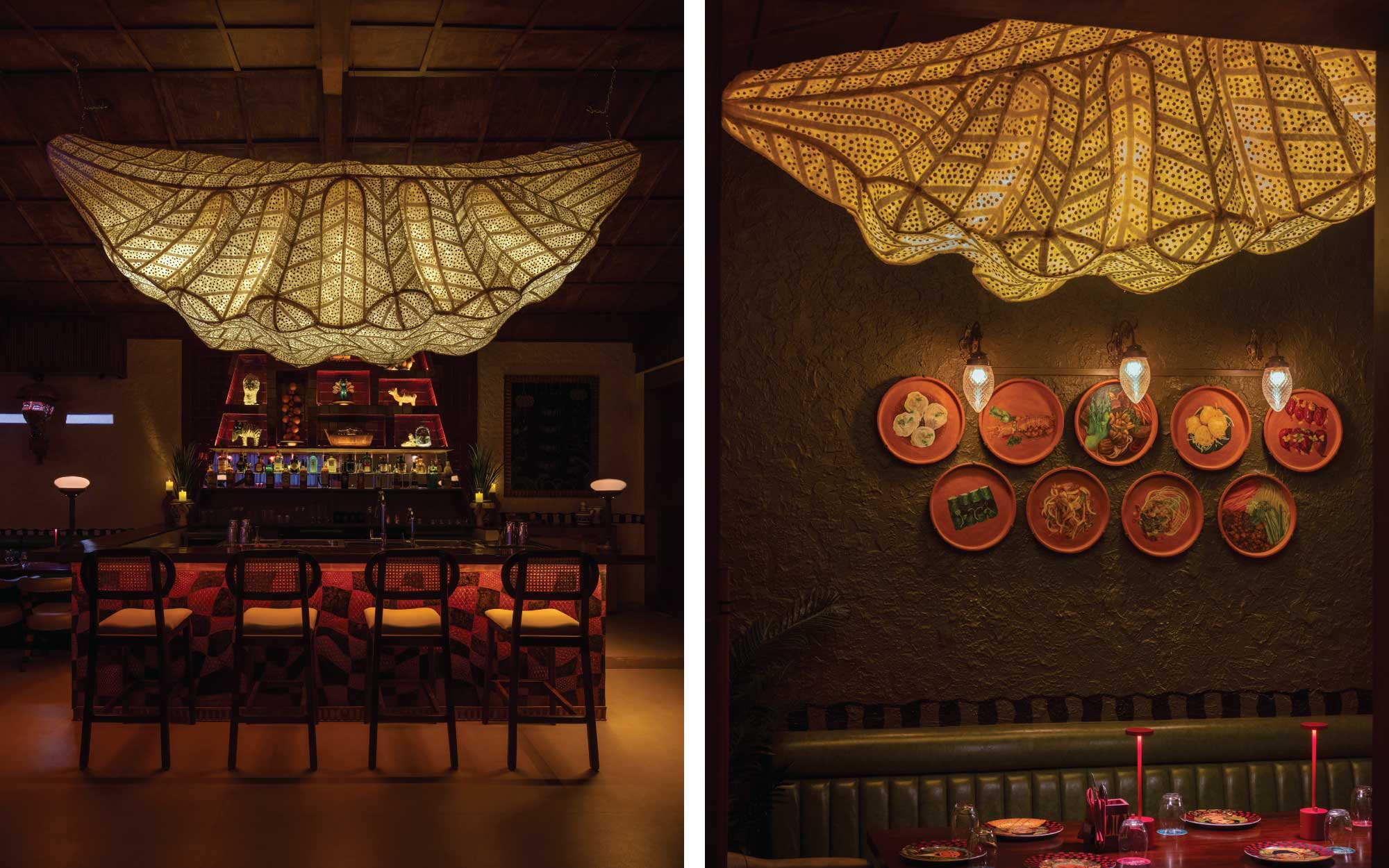
In a quiet corner of Road No. 45 in Jubilee Hills, Lili unfolds as a 45-seater resto-bar with a distinctly lively, almost cinematic energy. A 1,000 sq. ft. space by Siddharth Kerkar, defined by his signature materiality and narrative. For those familiar with House of Paloma—Mumbai’s tequila-forward bar—the space echoes its bold maximalist spirit, with recurring agave motifs lending continuity and character. At Lili, however, Kerkar leans more deeply into material honesty: hand-beaten copper, wood, ceramic, metal, and fabric come together to create a tactile, artisanal vocabulary.
Hand-painted sculptures, curated exclusively for the restaurant, anchor the room—ensuring that art is not merely decorative, but integral to the spatial experience. A palette of crimson red, olive green, and soft beige lends warmth without overwhelming, striking a balance between restraint and expression. The bar, positioned beneath a dramatic light installation, becomes a focal point—its kinetic energy mirrored in the movements of the mixologist crafting each round of libations. Indoor seating continues the narrative with earthy tones and a mix of leather and rattan, while the recurring “agave heads” motif punctuates the space, drawing the eye back with each raised glass. Lili was imagined as a sensory canvas,” says Kerkar. “The materials are honest, and the art is in dialogue with the space. It reflects a quiet confidence—much like the cuisine itself.”
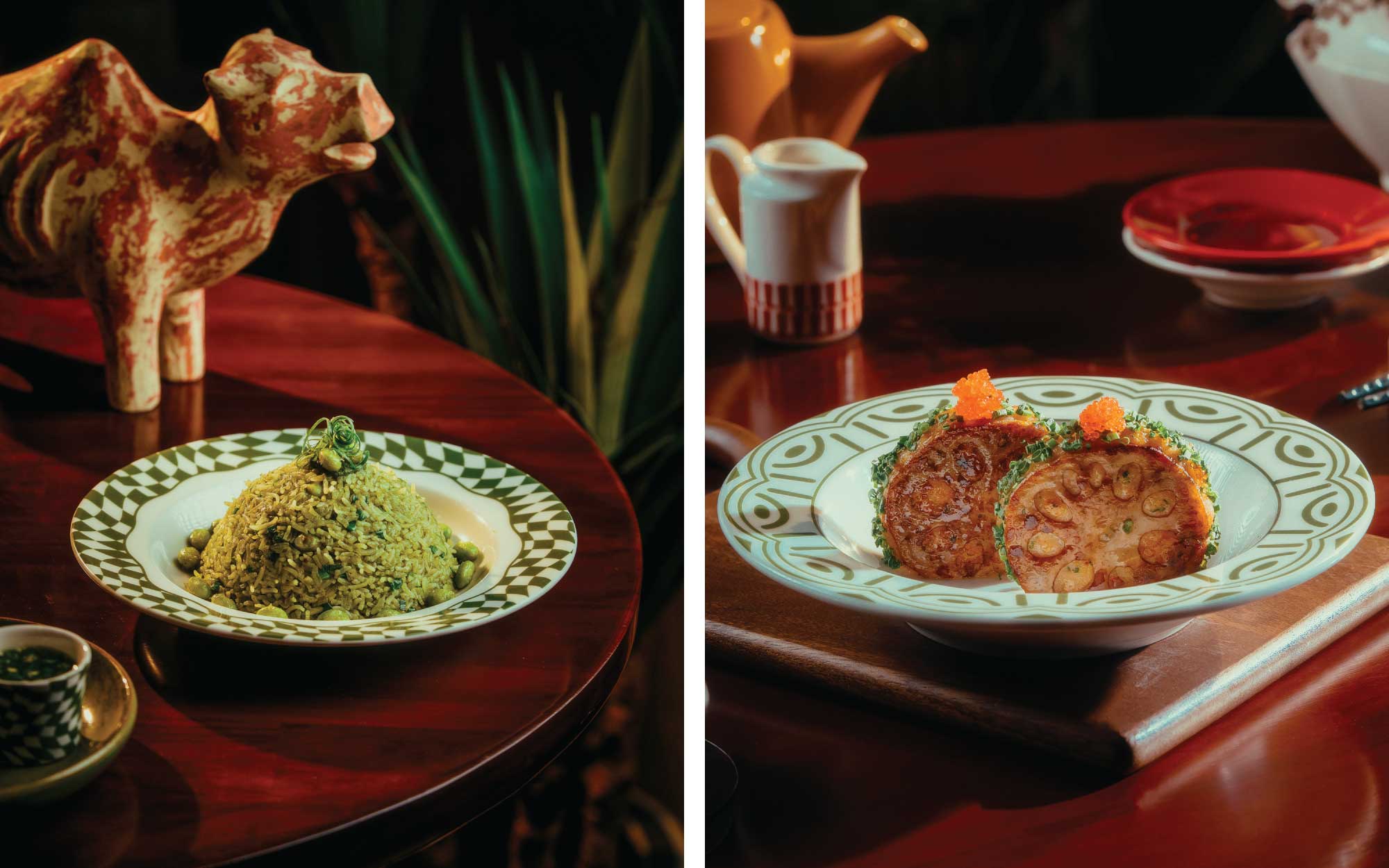
The idea for Lili began with a shared love for Chinese cuisine among co-founders Abhilasha Oruganti, Naveen Krishna, and Navyatha Reddy—alongside a keen sense that Hyderabad was ready for a more focused, nuanced expression of Cantonese dining.
At the helm of the kitchen, chef Tarun Bhatia brings the discipline of fine dining and Michelin-starred kitchens, crafting dishes that balance deep umami with a measured, deliberate heat. The menu reflects precision—standouts include ‘Dashi Sichuan,’ ‘Hoisin Plum Glazed Glass Noodles,’ ‘Peking Duck Sticky Rice Cake,’ ‘Picante Lobster Royale,’ and a ‘Yuzu Chilli Chocolate Wedge’ that closes the experience on a bold, contemporary note. The cocktail programme, curated by Gaurav Dhyani, draws from Cantonese philosophy and Chinese folklore, translating them into a distinctly modern mixology language. Long Live Martini, for instance, is crafted with the precision of a culinary composition—where sesame oil infusion and clarified tomato water are calibrated down to the last drop.
2. Theta Theta Telugu, Jubilee Hills – Elevates The Versatility Of A Regional Cuisine With A Modern Twist
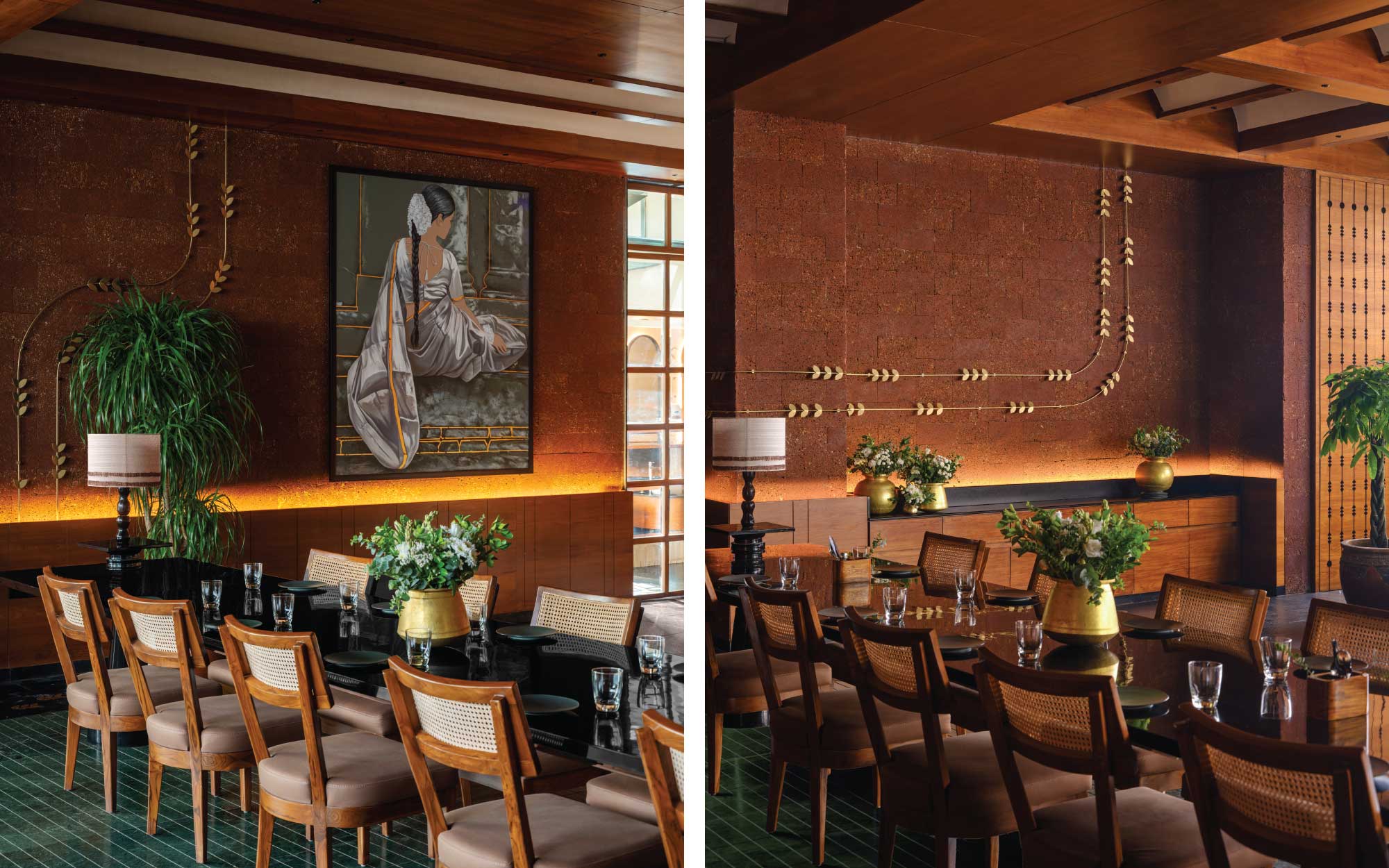
There is a growing reverence for regional and even hyper-regional cuisine among today’s discerning gourmands. Consider the Kobbari Rasmalai, where coconut is expressed in delicate layers—as tender jelly, fresh flesh, and silken milk. Even the beloved Mysore Pak finds new life as a crumble, its signature richness balanced with the nostalgic comfort of fruit custard. This thoughtful revival is exemplified by the newly opened Theta Theta Telugu, affectionately known as T3, in Hyderabad.
Spanning 4,500 sq. ft. and designed by AR Swetha, the principal architect of Studio Vriksh, this is an elegant 96-seater dining space. T3 is anchored in a singular, compelling belief: that Telugu cuisine deserves to be experienced on its own terms, articulated in its own voice. The name itself—“Theta Theta Telugu”—resonates deeply. It is a familiar expression to any native of the region, signifying something that is distinctly, unmistakably Telugu. And that is precisely what the restaurant embodies.
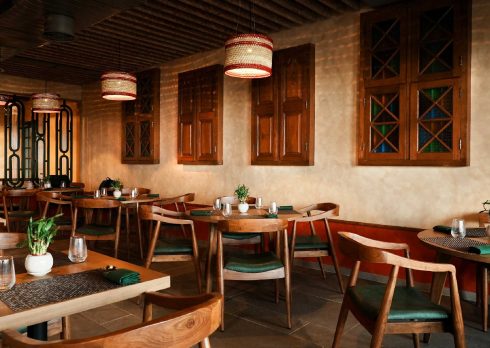
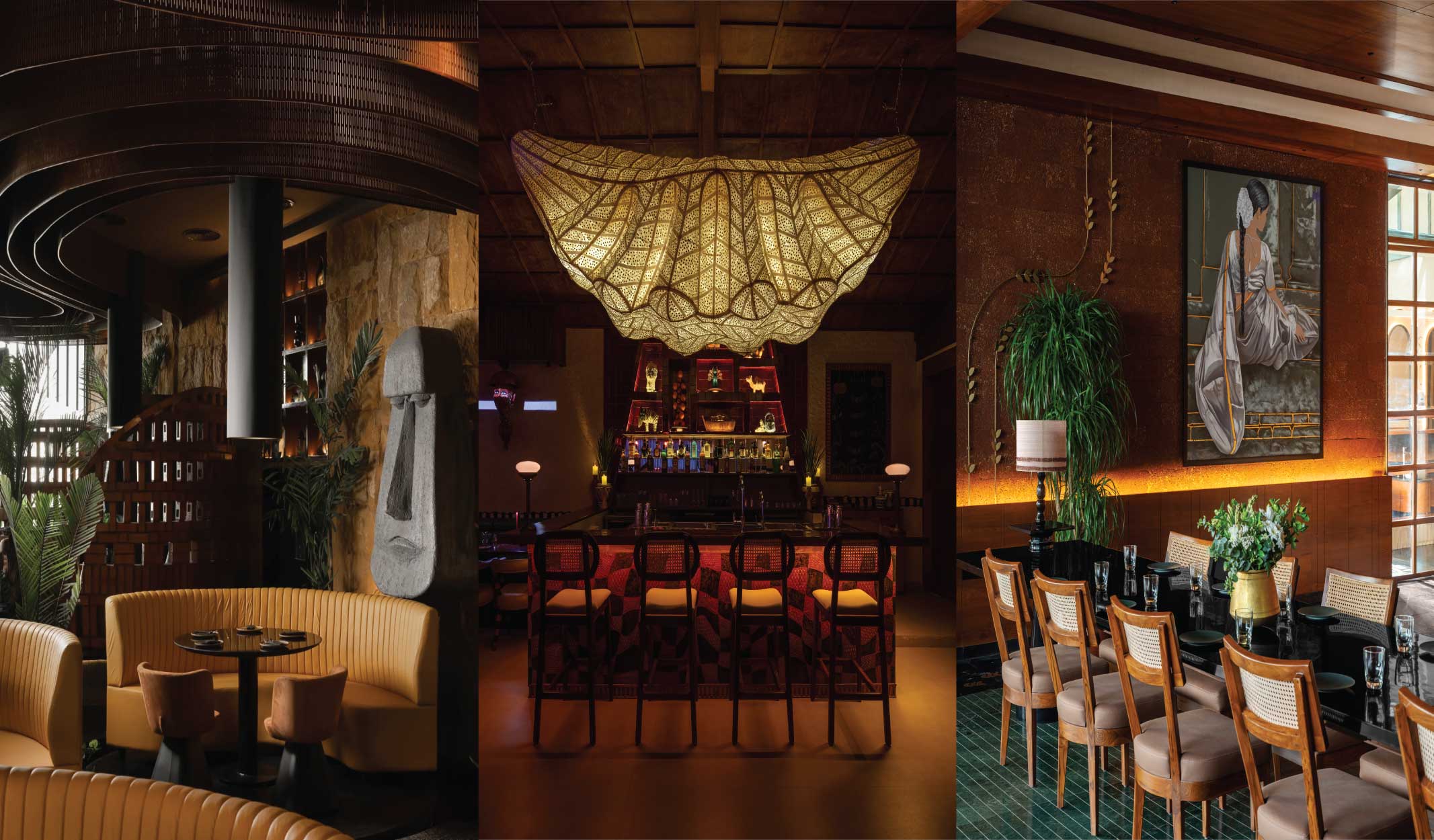
The space is conceived with the same thoughtful precision as the cuisine it houses. Natural laterite stone walls, locally sourced Cudapah flooring, and an earthy palette inspired by temple architecture come together to create an aesthetic that feels warm and deeply grounded. Inside, a striking painting of a Telugu woman in a sari lends quiet grace to one wall, encircled by Kala Gajjalu (ankle bells) that form a distinctive focal point within the space.
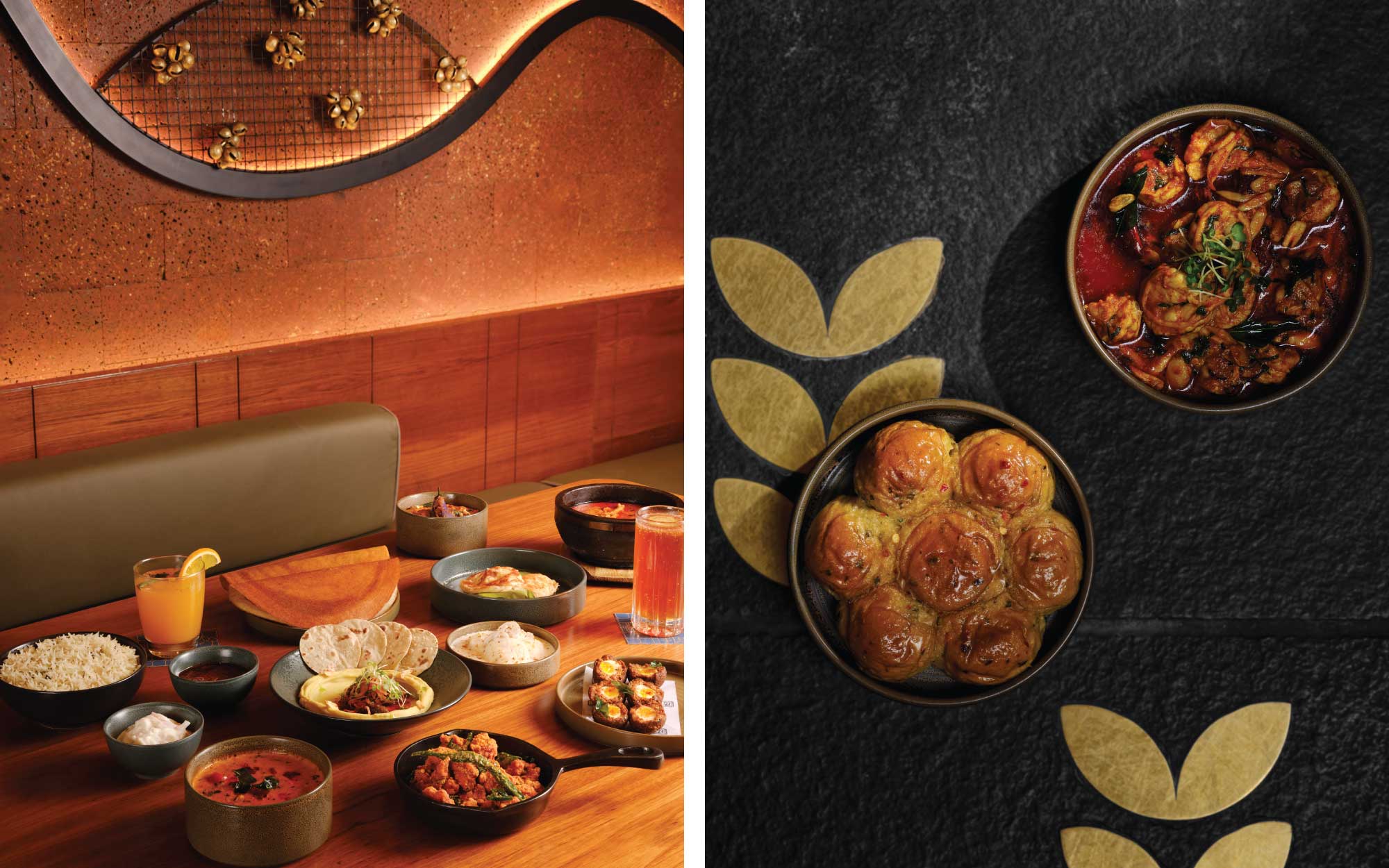
At the helm is Chef Vignesh Ramachandran, whose contemporary, ingredient-forward approach brings renewed clarity to regional cooking. The menu is guided as much by geography as it is by seasonality, drawing on produce that speaks to its place of origin—Pennada brinjal from Bhimavaram, murrel from the Krishna backwaters, prawns from the Godavari, Teja chilli from Guntur, and Sona Masoori rice from Kurnool. Even the Pottla sheep, used across the mutton preparations, is carefully sourced from Telangana, reinforcing a commitment to authenticity at every level. Elevating the offering further is the inclusion of premium, thoughtfully sourced ingredients—soft shell crab from Kakinada, locally sourced quail eggs, and the delicate salinity of flying fish roe—this ingredient-forward menu that honours tradition while embracing a refined, modern sensibility.
3. Moai Kitchen, Financial District – Distils The Essence Of An Island Retreat
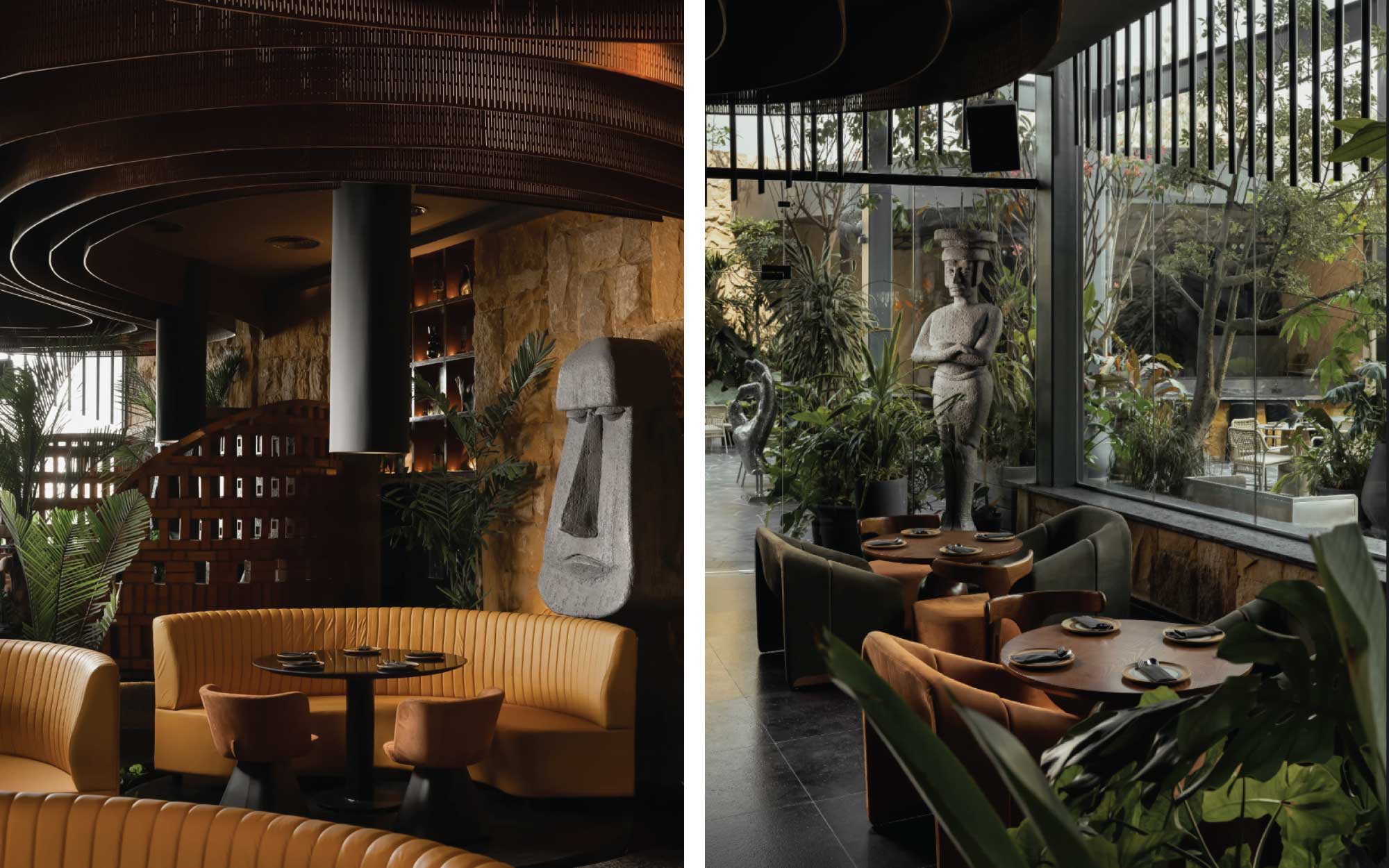
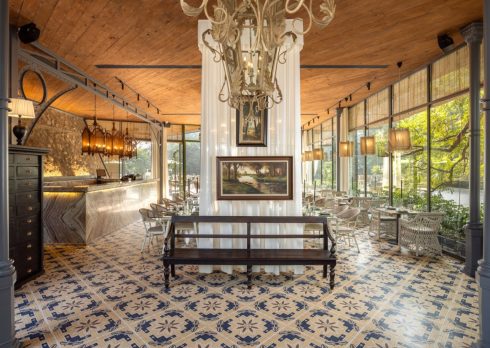
Imagine a restaurant that unfolds like an island retreat—an expansive 24,000 sq. ft. sanctuary where indoor and outdoor spaces dissolve into one another, enveloped in lush biophilic design. It is more an immersive escape, where the rhythm of the city softens into something altogether more tranquil. The vision is sharpened by Arjun Nair and Mohit Agarwal of Good Leaf Hospitality—the force behind Hyderabad’s high-energy nightlife destinations, including Prism and Quake Arena—who step in here as brand consultants, bringing both scale and sensibility to the experience. In the kitchen, Mohib Farooqui leads with quiet authority, drawing from his Michelin-starred tenure at Inddee and the cult acclaim of Accentuate Food Lab. Alongside him, Parampreet Luthra, a hospitality consultant and chef, who brings a repertoire shaped by global comfort. At the bar, the narrative takes on a spirited edge. Saurav Samanta collaborates with Barcelona-based Claudio Caprio to craft a cocktail program that is bold, ingredient-driven, and unapologetically expressive. Anchoring it all is the architectural vision of Vikram Singh Minas, who conjures an oasis of organic, breezy calm—no small feat in the heart of Hyderabad’s Financial District. The result is a space that feels at once expansive and intimate, where design, cuisine, and atmosphere coalesce into a singular, transportive experience.
Also Read: Eat, Stay, Explore: Art, Culture, And Coastal Charm In Kochi
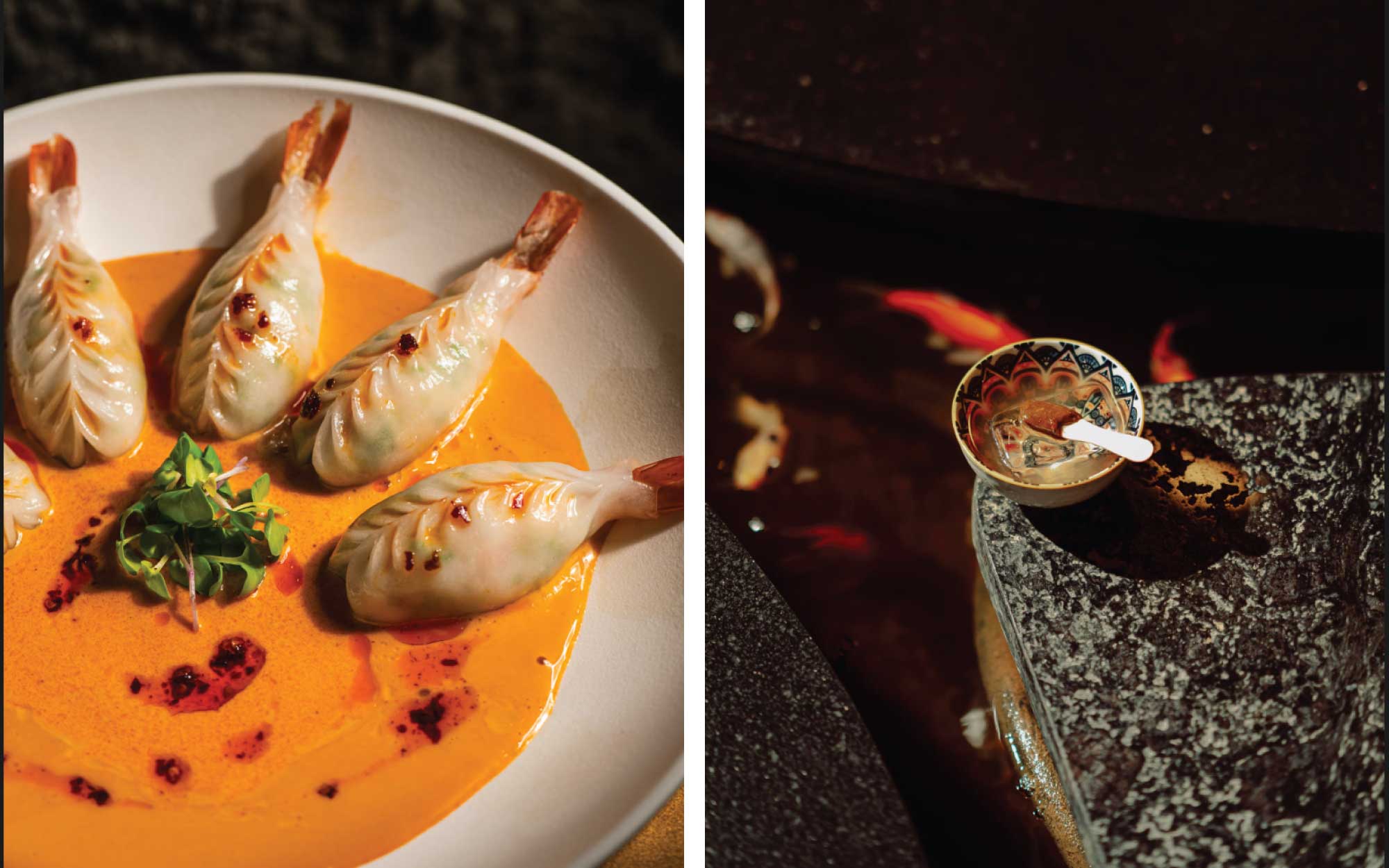
Step through custom-carved wooden doors, studded with sacred Moai motifs, and the transition is immediate. Underfoot, pebble-shaped granite pathways guide you past tranquil koi ponds—home to nearly 4,000 gliding fish—while bursts of tropical foliage soften the edges of the space. Towering Easter Island heads stand sentinel, lending the setting a sense of quiet drama and otherworldly calm.
The menu mirrors this sense of discovery. Daalcha 2.0 reimagines the familiar with pulled goat meat and lentil risotto, delicately paired with bottle gourd. Succulent prawns arrive immersed in a velvety yellow curry, while New Zealand lamb is plated with a silken avocado purée and a sharp, garlicky toum that cuts through with precision. Desserts are equally on the top list, layering indulgence with a guilt-free touch. Pistachio jam meets raspberry and crisp kataifi. Then, a delicate crêpe dentelle is paired with gianduja milk chocolate, banana custard, and toasted hazelnuts—these may feel this is my comfort food but elevated through texture and technique.