Bookmark These 5 Design-Led Stays During sā Ladakh Biennale Along The Leh-Kargil Route
The world’s highest art biennale isn’t something you attend for art alone. It is a journey across a landscape — and these design-led stays help you experience the route
- 16 Jul '26
- 2:51 pm by Tanvee Abhyankar

|
Getting your Trinity Audio player ready...
|
Luxury in Ladakh is not something we usually experience in our everyday understanding of the word. Here, luxury means eating food grown around you, staying in spaces built with respect for the terrain, understanding customs that have shaped generations, and experiencing hospitality that comes deeply rooted in the landscape. Taking place in such rich terrain is the sā Ladakh Biennale—the world’s highest regenerative art biennale—unfolding across eight spots on the scenic, 230-kilometre Leh-Kargil stretch. Open to all from 1–10 August, the non-ticketed event brings together art, culture and Ladakh’s landscapes under this year’s theme, Signals From Another Star. Visitors can explore the route at their own pace while experiencing the region’s villages, landscapes, and Silk Route histories. But between high-altitude conditions, long drives, and changing landscapes, choosing where you stay becomes an important part of experiencing the Biennale itself. DP curates boutique stays in Ladakh that introduce you to Ladakhi architecture, food, craft, and traditions along the way.
Also Read: Check Into Pemako Thimphu, Check Into Bhutan’s Timeless Architecture
1. Check Into Regenerative Stays At Dolkhar
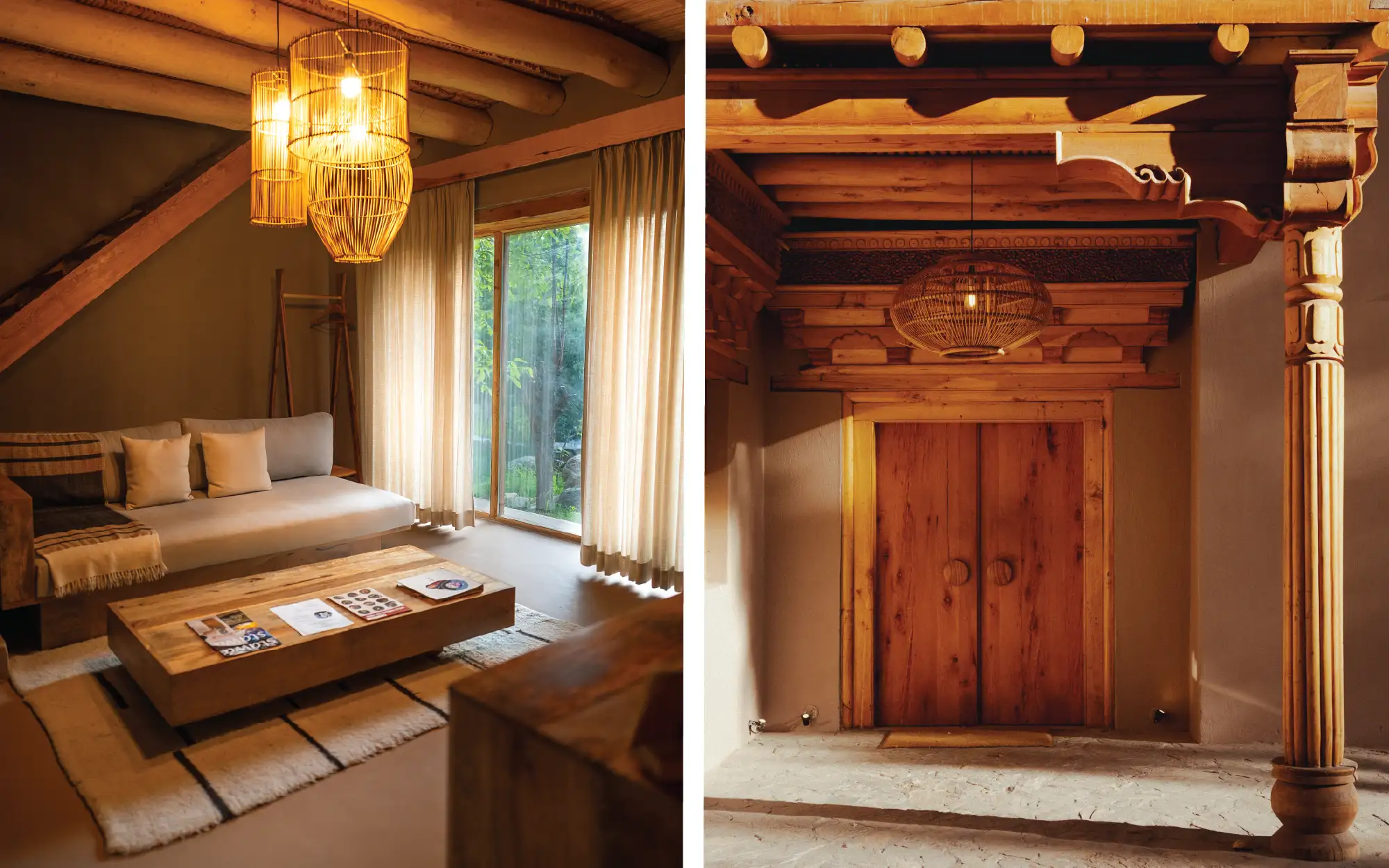
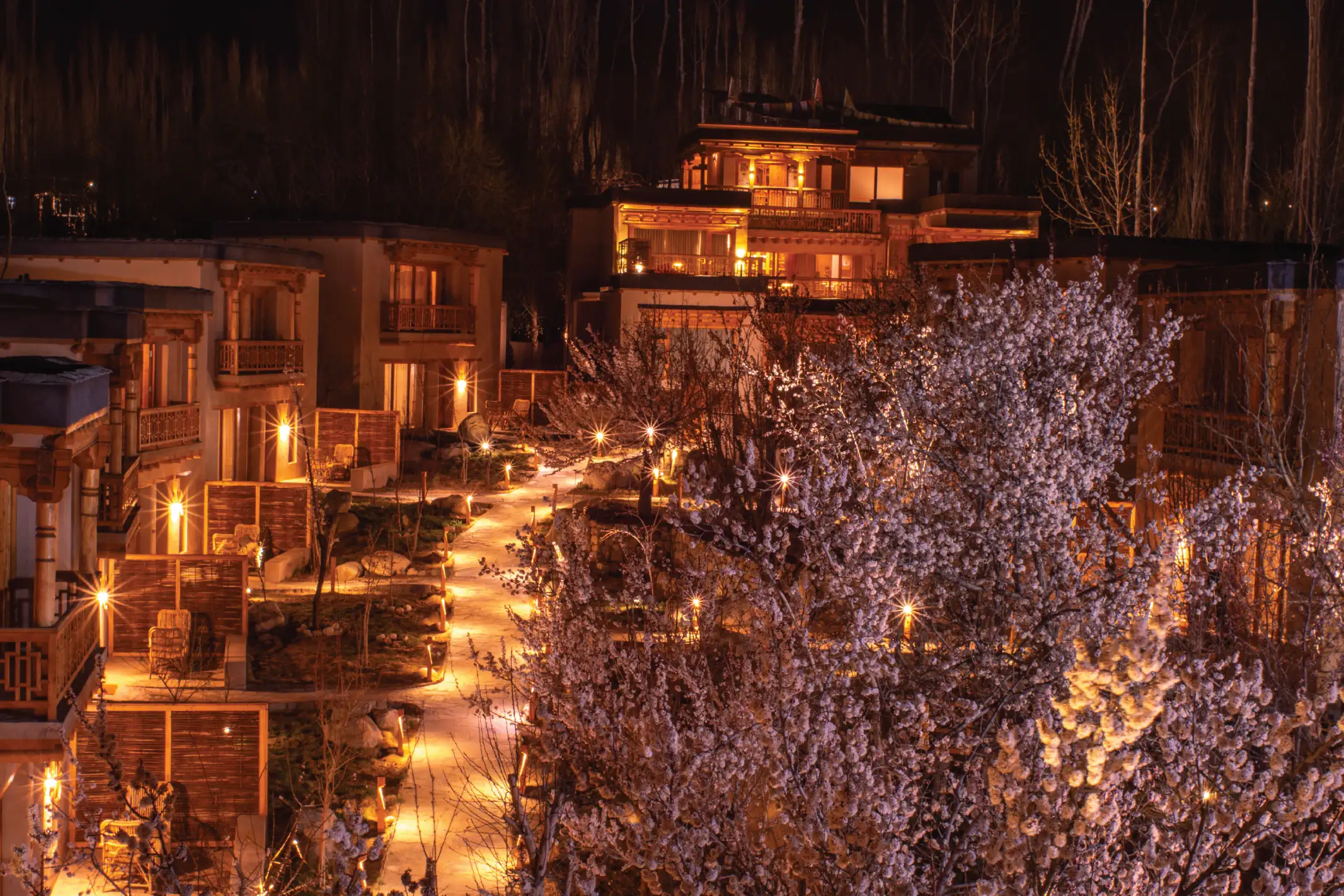
Landing at Leh’s Kushok Bakula Rimpochee Airport, Dolkhar is only a 10-minute drive away—making it a convenient first stop for acclimatisation before beginning the Biennale trail. Built on founder Rigzin Wangmo Lachic’s family land, the seven-key property feels almost like your grandmother’s backyard (but make it uber luxury). Stone pathways, sunflowers accompanying your way, apricot trees offering quiet corners to rest, and traditional Ladakhi architecture brought to life by over 40 local craftspeople make Dolkhar a contextual, slow-living retreat. Inside every villa is a layout that mirrors the local houses, made with poplar and willow beams, mud and straw plastered walls, and fabrics that echo the land’s traditions. Outside, a spa and a bar invite you to unwind and recharge in the stillness of Ladakh.
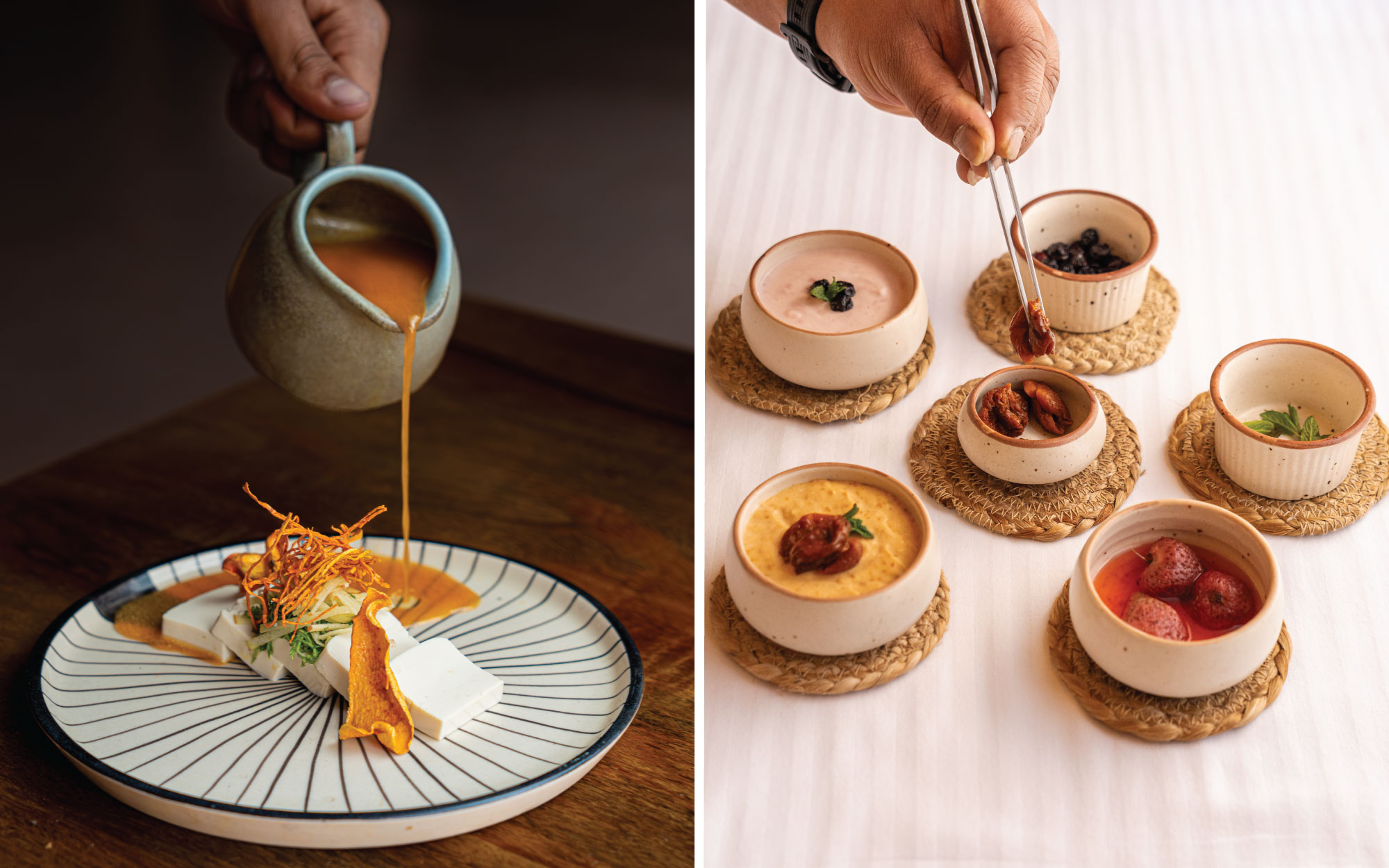
At Tsas, its in-house restaurant, the chef’s tasting menu celebrates ingredients harvested from the property’s own garden, while their a-la-cartes don’t let you be homesick even for a minute. Think the best baked pizzas, the healthiest ramen bowl, and an organic mezze platter.
DP Loves: The hyper-local vigilant details engraved in every detail of the property: traditional Tibetan locks, bow joineries in furniture details, and much more to explore.
2. Stay In A Ladakhi Noble House At Nimmu House
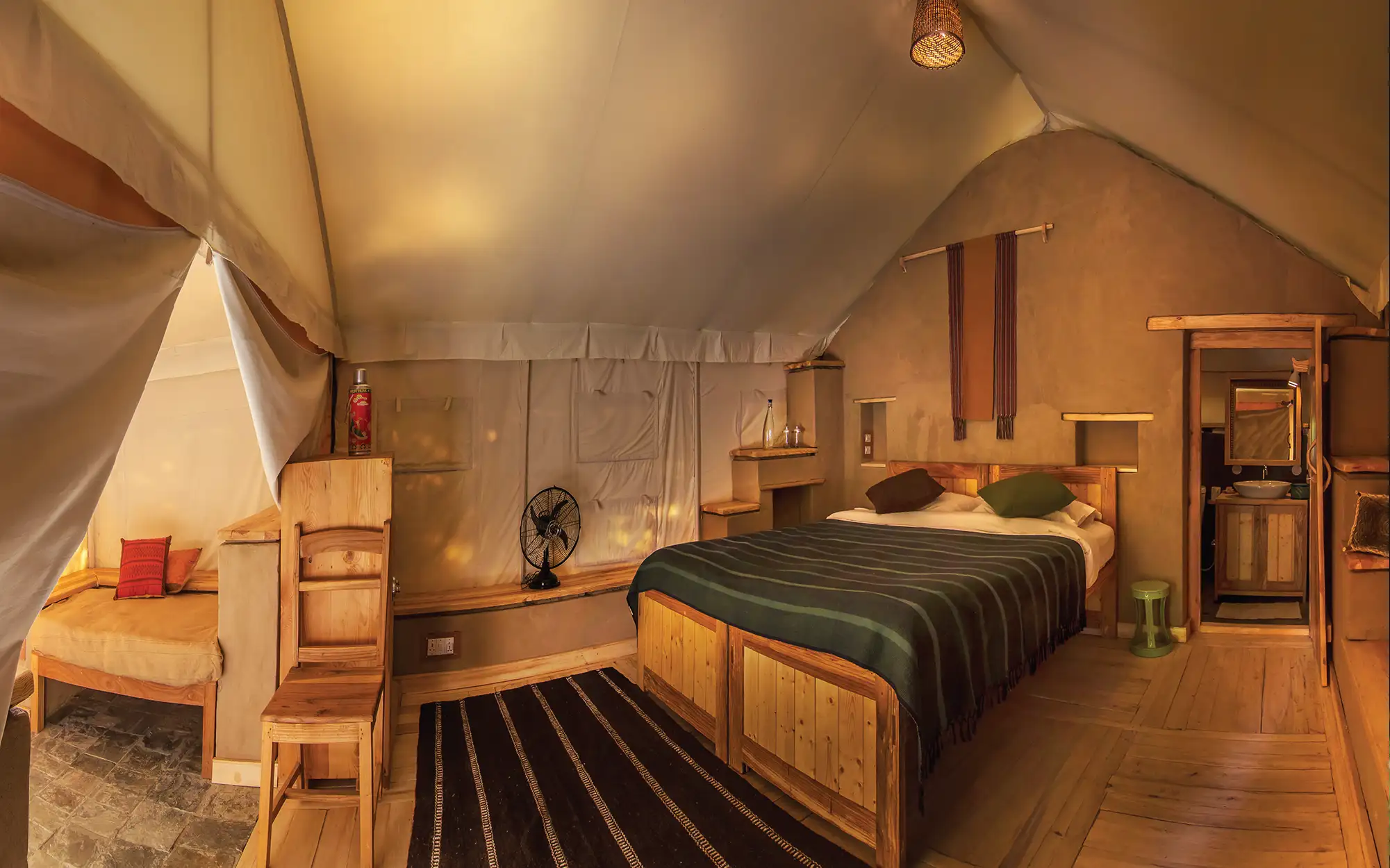
Around 30 kilometres from Leh, Nimmu House in the village of Nimmu is an eco-friendly heritage boutique and glamping retreat near Phey—perfectly placed to cover the Biennale locations of Basgo and Likir. Built over a century ago for the cousin of the King of Ladakh, the traditional Ladakhi noble house offers five heritage rooms and seven deluxe orchard tents. Its whitewashed exterior, tilted walls, and traditional Ladakhi windows open into a preserved Buddhist temple and a backyard lined with apricot blossoms. On the inside, architecture done in local stone and mud-plastered walls keeps the cold away, while interiors dominated by Ladakhi weaves as bed linen, rugs, and even decor make the stay memorable.
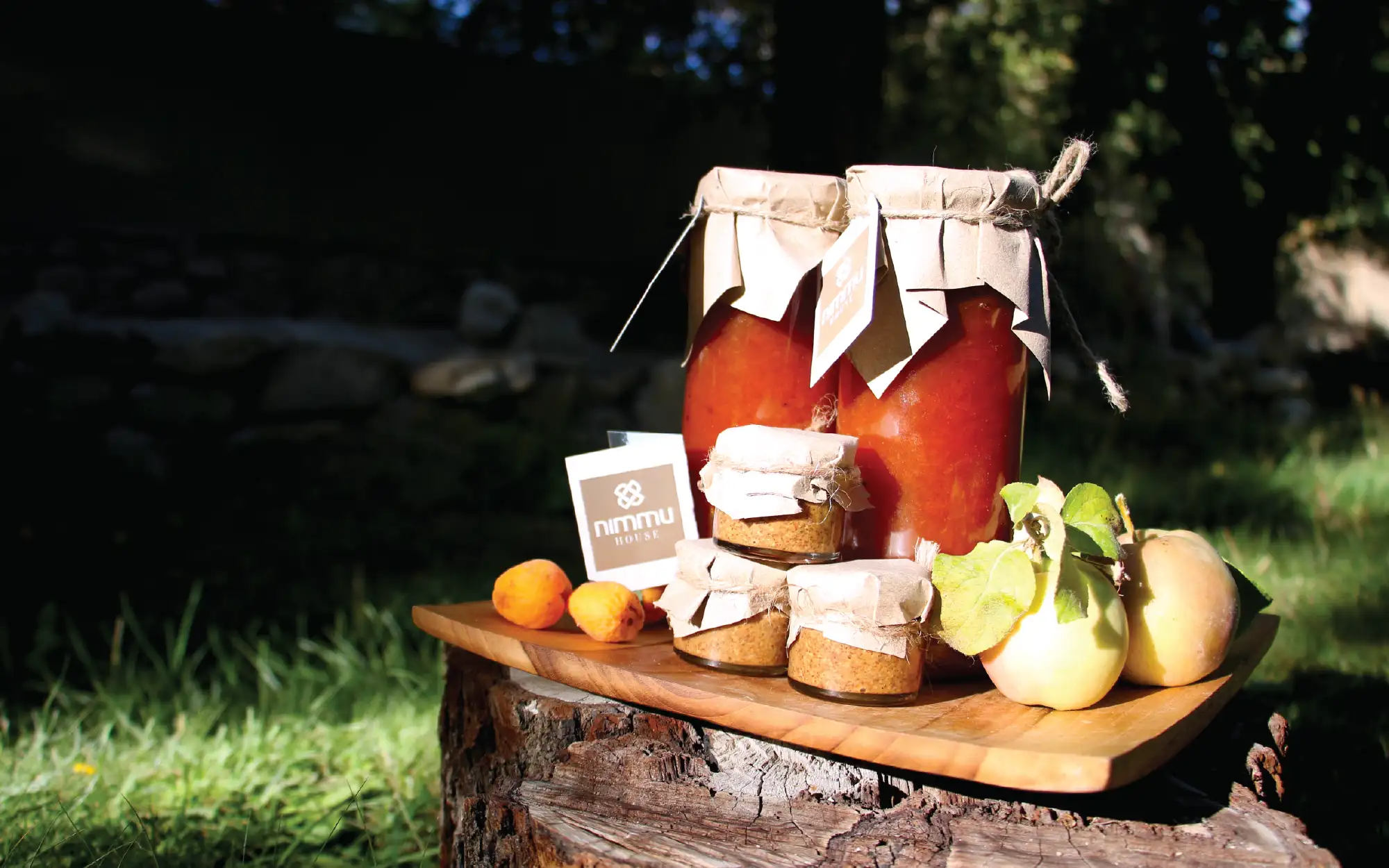
The open-air dining space under the trees feels like an Italian villa’s backyard where everyone gathers for a meal—think Call Me By Your Name—but in Ladakh. The handpicked fruit juices paired with French, Indian, Italian, and even Thai cuisine served here further the scene, keeping it dynamic and glocal for every visit. Fresh ingredients, Ladakhi specialities, cooking ateliers, village trails, Tibetan healing, pottery, and yoga against the Himalayas make Nimmu House the perfect cultural pause before the road ahead.
DP Loves: The unique heritage stay provision in the lap of mountains, restored by a team of Tibetologists and curated for a global taste.
3. The Apricot Tree, A Stay Perched On Indus
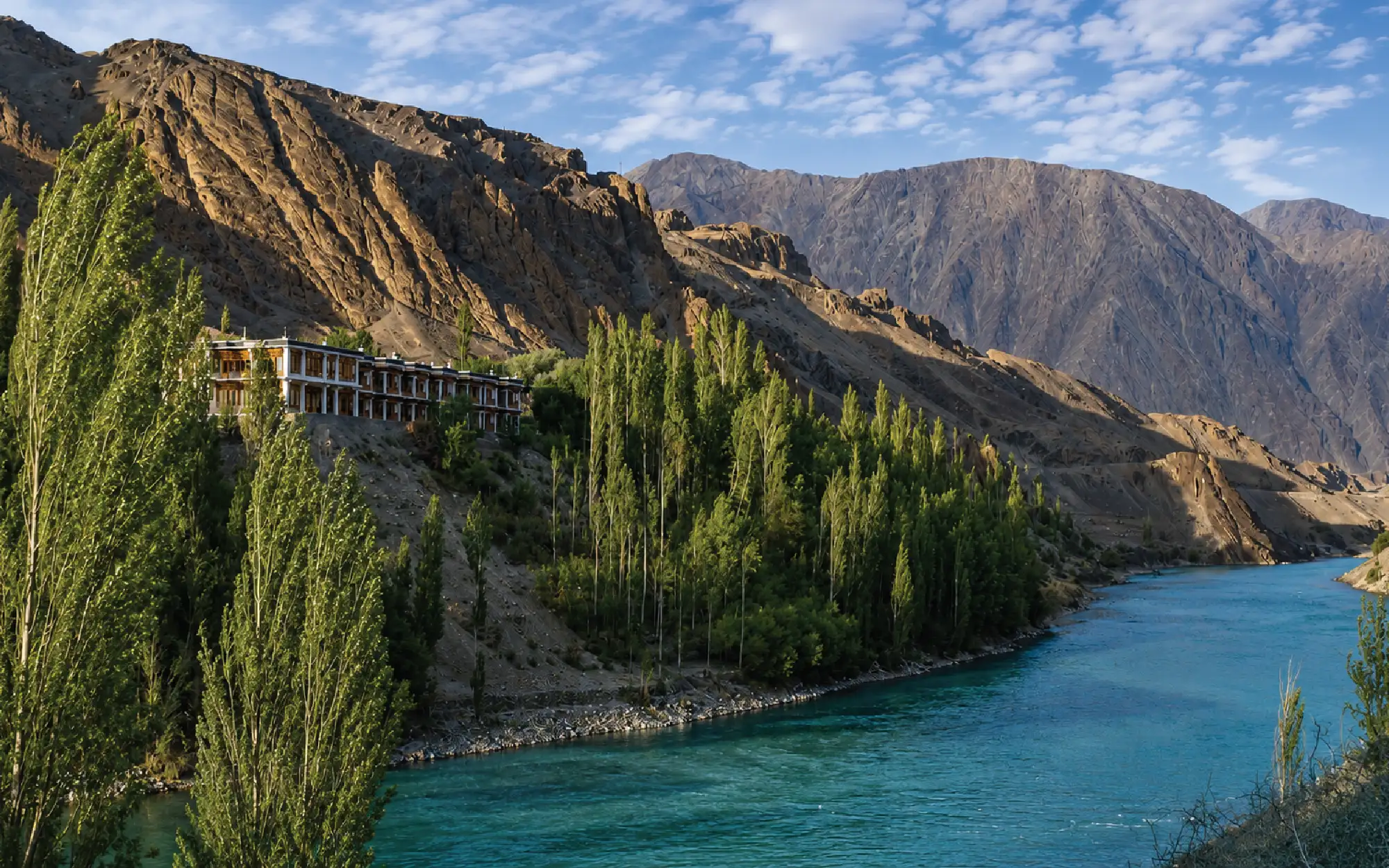
Nestled amongst apricot and apple trees and perched on the edge of a cliff overlooking the Indus River, the 20-key The Apricot Tree at Nurla is an ideal base sitting roughly midway along the Leh–Kargil route. A stay here allows you to cover Nurla, Lamayuru, Henasku, Mulbekh and the final Biennale location at Kargil before returning for the night. The 21-key property has rooms spread over two floors; each room on the first floor has a balcony while the ground level rooms open into a sit-out. The artistic experience indoors is elevated by works of emerging Ladakhi artists featured across the premises, and outdoors is the pebbled courtyard flanked by an intricate hand-carved choktse (low table) for organic meals to be served. The Indus flowing right below offers picnic spots, short hikes and uninterrupted views from the rooms. And with the Biennale happening in August, fresh apricots straight from the trees are a must-have in all forms—fresh, stewed, and in desserts—along with freshly made Chinese, Indian, and Ladakhi dishes at the in-house, river-facing restaurant.
DP Loves: A night ride to the neighbouring Moonland, a terrain famous among photographers for its stunning moon surface-like visuals.
4. Relax In An Apricot Orchard At Chulli Bagh
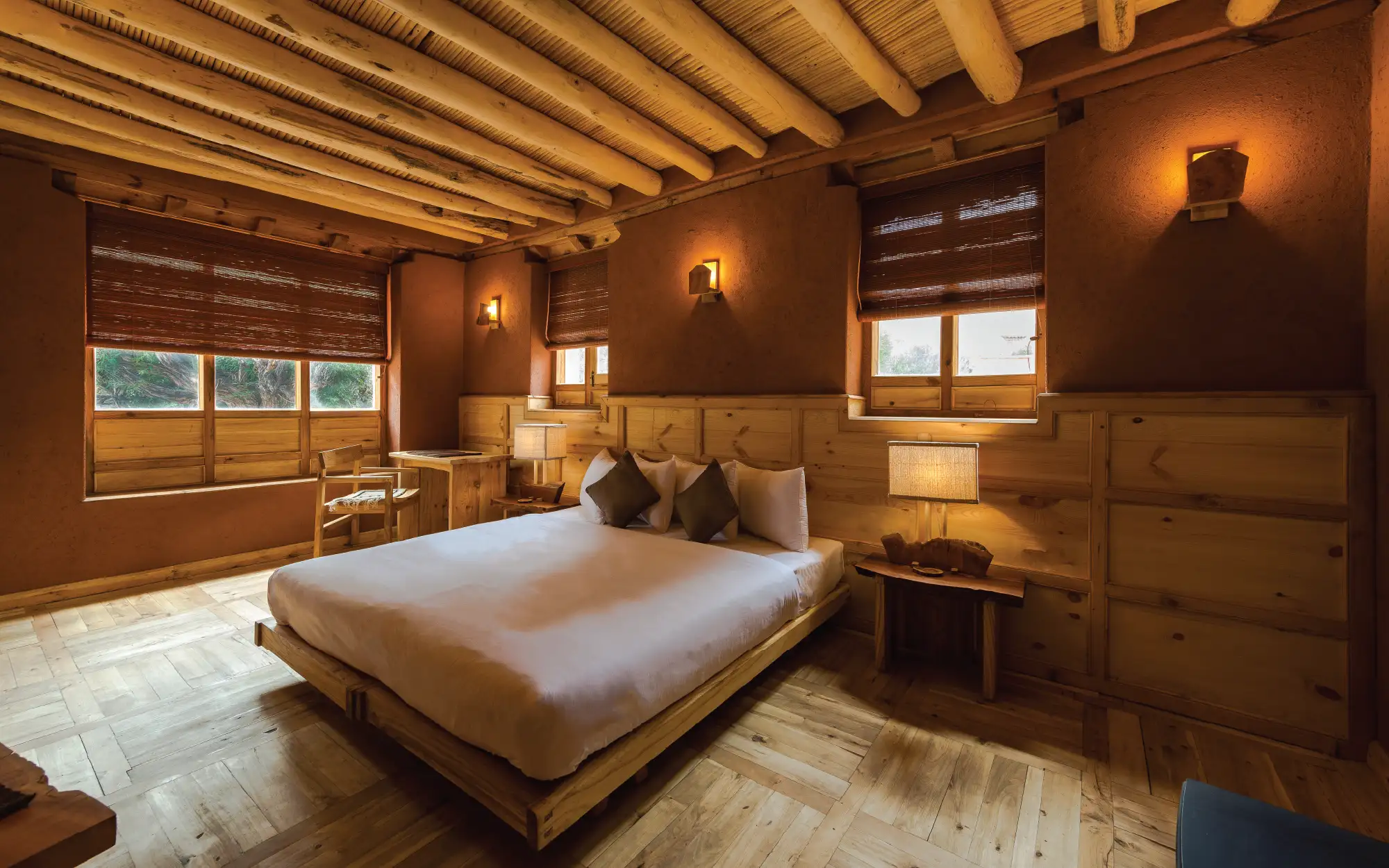
After completing the long Biennale trail, skip the usual Leh stayover and drive 17 kilometres ahead to Stok—a village that is home to Ladakh’s Namgyal dynasty, the royal family that has shaped the region for over a thousand years. A short walk from their palace sits Chulli Bagh, an intimate orchard retreat surrounded by apricot, walnut and willow trees. Named after the Ladakhi word for apricot, the property transforms into a landscape of gold and amber during August and features just three exclusively handcrafted villas; each with two private bedrooms that open into a shared open-plan lounge, a small kitchenette, and large windows framing the Stok mountain range. Evident Ladakhi architecture engulfs the experience in shades of brown, with traditional materials, local craftsmanship, unique wooden panelling, locally made light fixtures, and window coverings keeping the room naturally insulated.
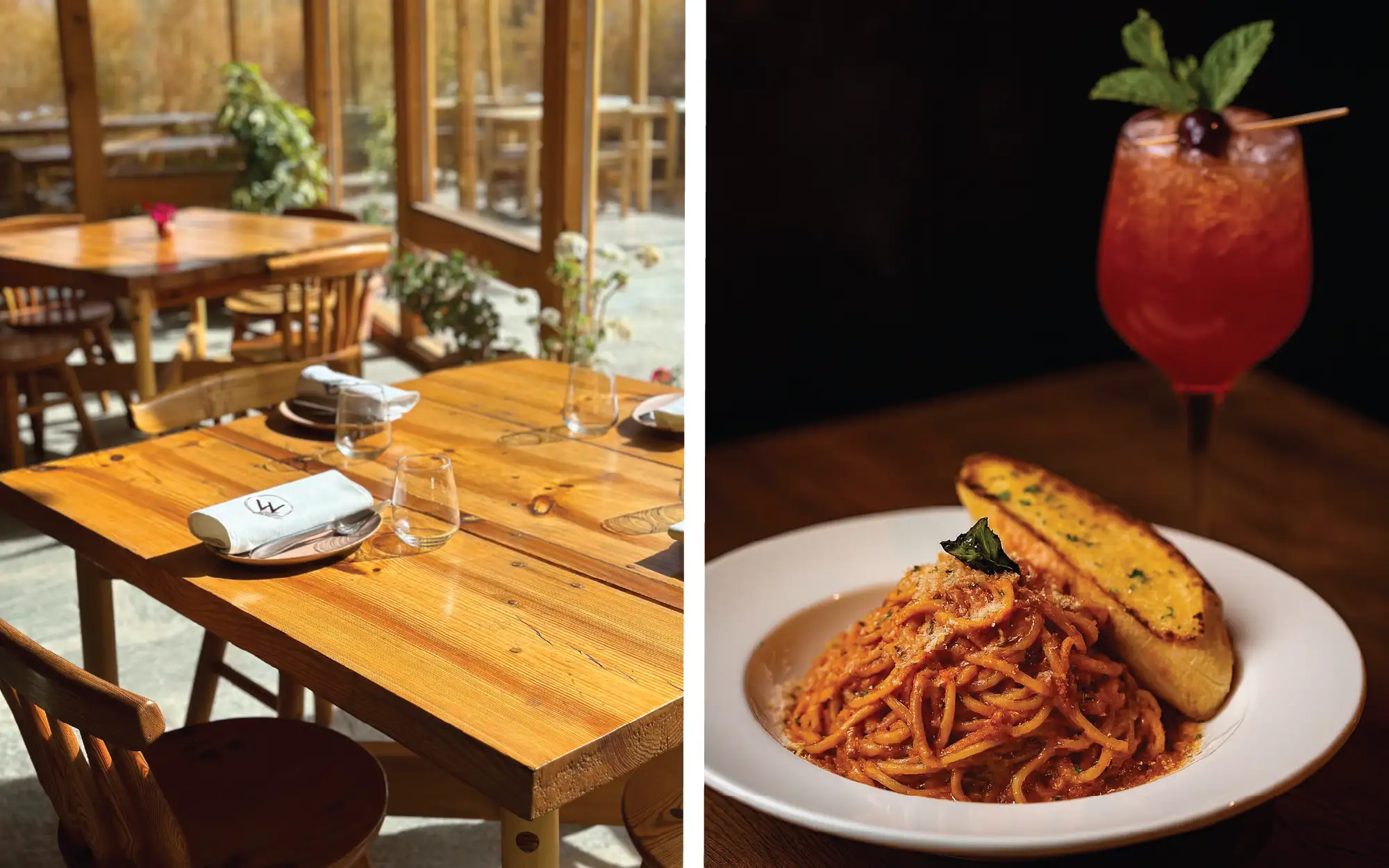
Chulli Bagh lets you settle into Ladakh’s rhythm through small but meaningful experiences—harvesting fruit, preserving seasonal produce and sharing meals beneath trees at Willow Kitchen and Bar, the in-house restaurant. Guests can experience a traditional prayer ceremony at the private temple, guided heritage walks, and artisan workshops including pottery, thangka painting, and basket weaving as a part of their cultural immersion experiences. The Artisanal Alchemy experience, hosted inside a traditional Ladakhi kitchen, explores the region’s culinary heritage through ingredients, recipes and stories shaped by climate, geography, trade and culture.
DP Loves: The ultra-private property premise with a routine that enables relaxation and a niche cultural immersion experience.
5. Live Royally At Stok Palace Heritage Hotel
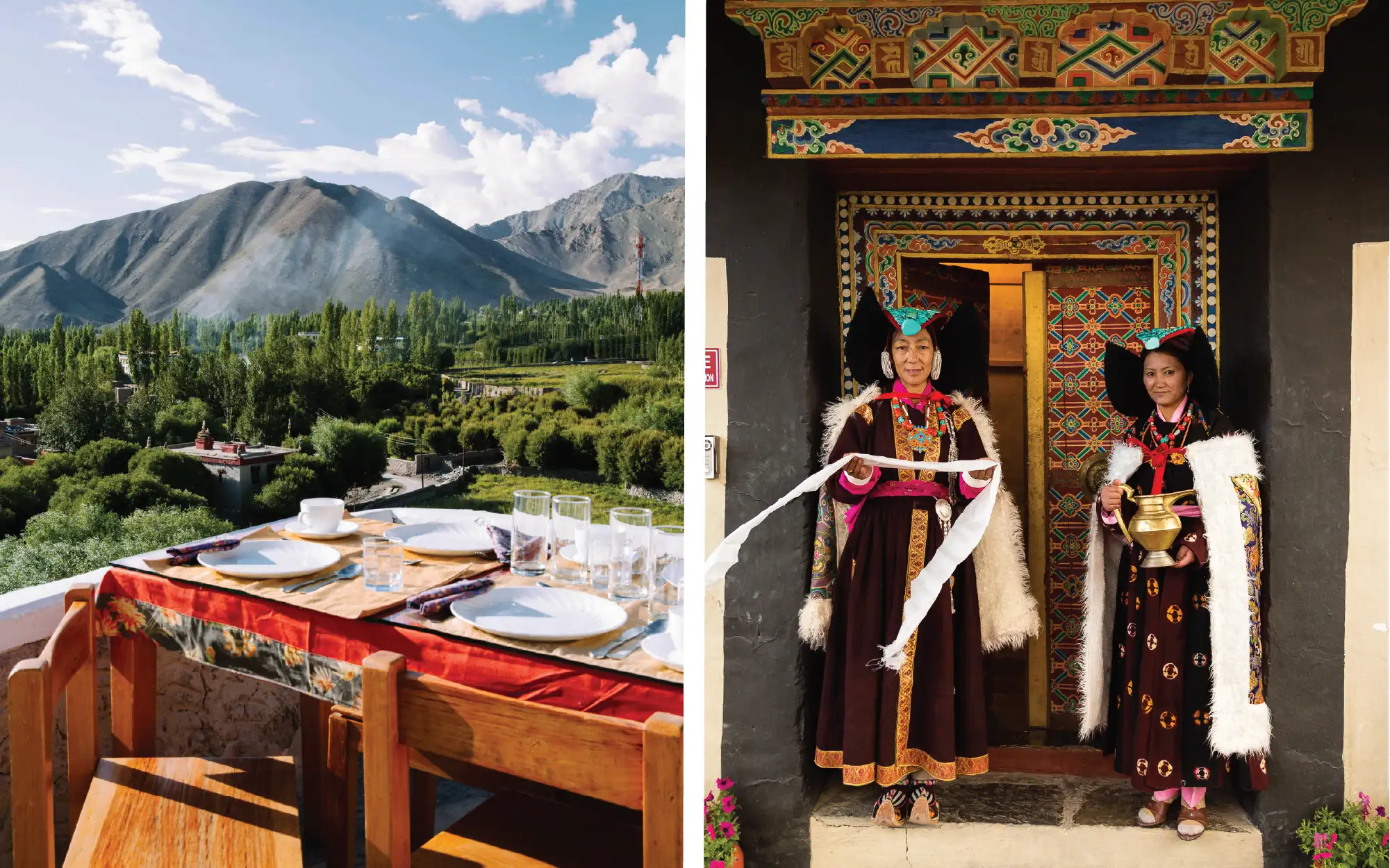
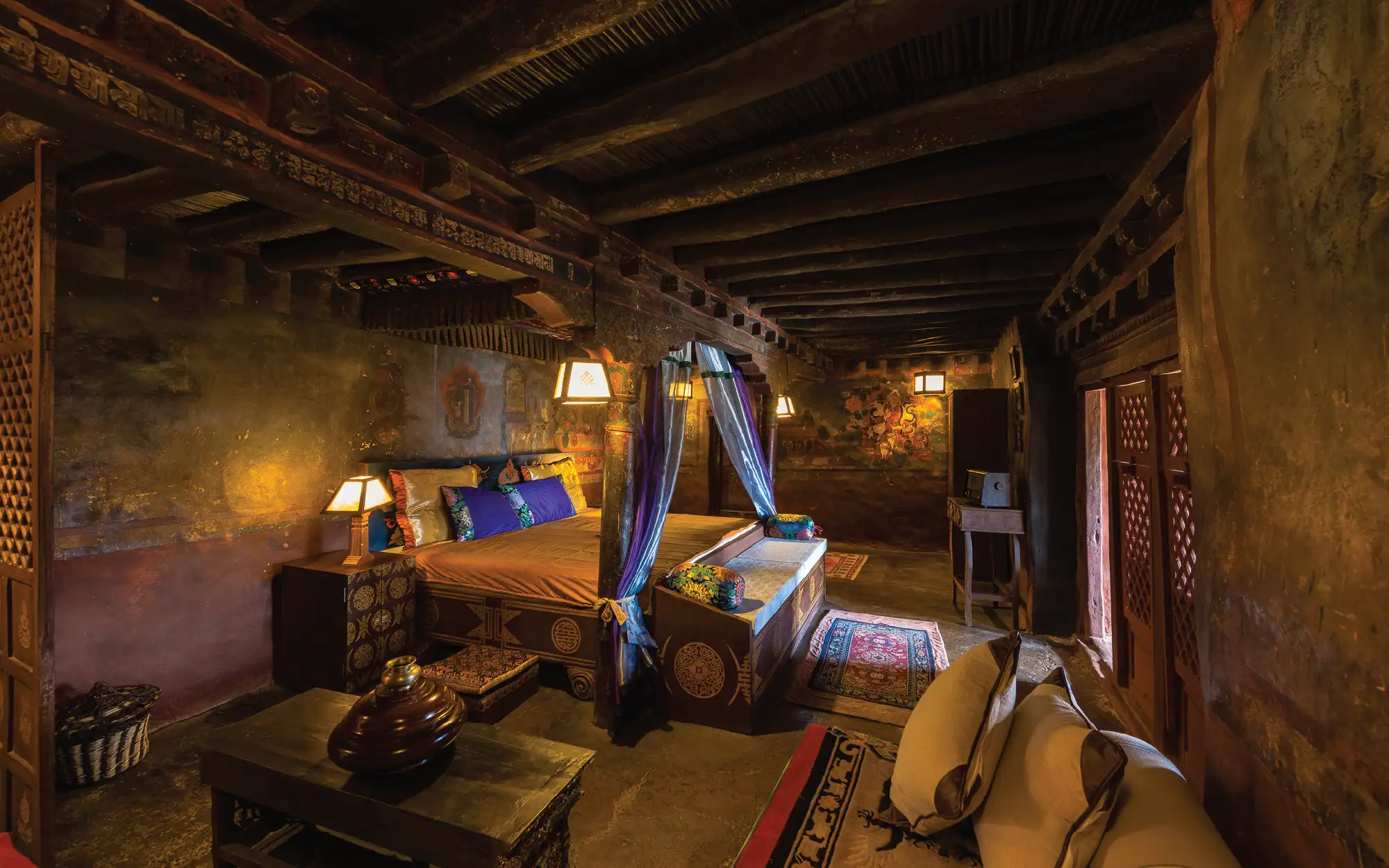
Not far from Chulli Bagh, Stok Palace Heritage Hotel makes for the ideal final stop to experience Ladakh’s living history. Built in 1820 and still inhabited by descendants of the royal household, the palace remains one of the last living royal residences in the Himalayas. Now a four-storied, 5-key living heritage stay with colourful corridors and picturesque courtyards, it offers one standard suite, two heritage suits, one royal suite, and one queen suite to choose from. Interiors are typical to the land, with low windows on dated plaster walls, Thangka paintings and colourful tapestries, and modern amenities provided with a touch of royalty.
Culturally, the royal tea ceremony introduces visitors to Ladakh’s traditional butter tea, while the palace and museum tour offers a deeper look into its history. Guests can also try archery on the palace grounds, a sport deeply woven into Ladakh’s social and cultural fabric, creating a playful yet meaningful connection with one of the region’s oldest customs.
DP Loves: A Ladakhi dinner inside the royal kitchen—once reserved for family gatherings and honoured guests of the Namgyal household—now served to patrons with stories of royal customs, local ingredients, and culinary traditions.