In The Lap Of The Forest, A Different Side Of Kyoto Unfolds At The Aman
Set within an 80-acre forest in northern Kyoto, Aman Kyoto by Kerry Hill Architects reimagines the ryokan, or Japanese inn, through garden pavilions, tea rituals and onsen bathing.
- 11 Nov '26
- 5:55 pm by SHIVANI VK

Few cities offer as intimate a glimpse into Japan’s architectural and cultural heritage as Kyoto, the country’s ancient imperial capital. From centuries-old temples and traditional wooden buildings to gardens shaped by generations of careful tending, the city reveals a longstanding relationship between the built environment and nature. Moss-covered stones, pruned trees, and gravel raked into intricate patterns reflect a considered approach to landscape that changes with the seasons. This sensibility extends to the traditional Japanese inn, or ryokan, where natural materials, tatami-matted rooms, sliding screens and views of the garden shape an experience of hospitality rooted in simplicity and seasonality.
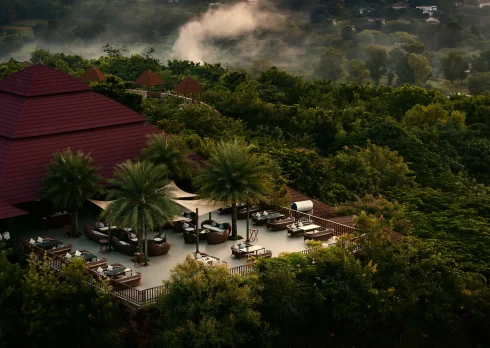
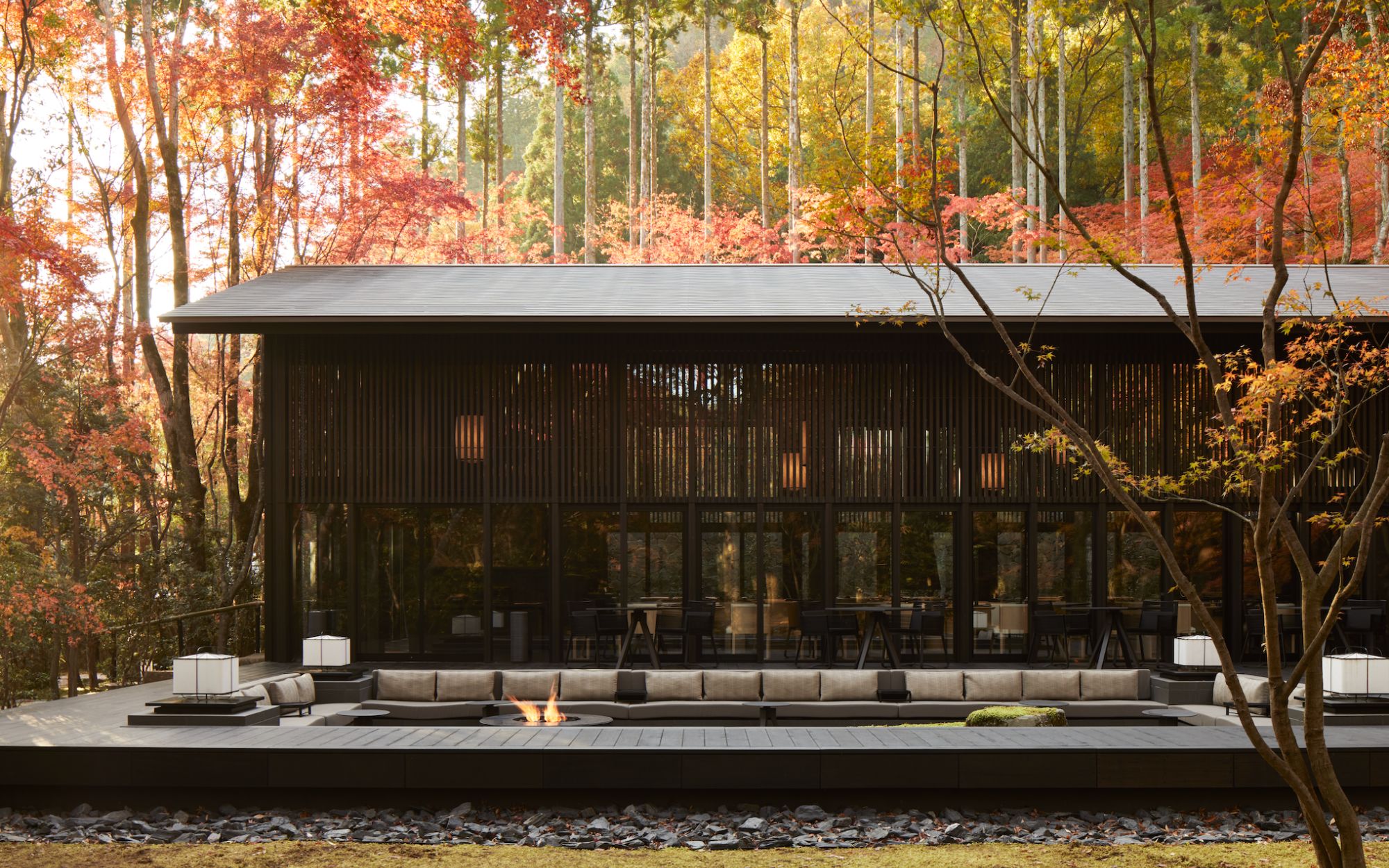
Away from central Kyoto, in the northern district of Takagamine, Aman Kyoto brings these enduring aspects of Japanese culture into contemporary hospitality. Designed by the late Kerry Hill and his team at Kerry Hill Architects, the resort unfolds across a sprawling 80-acre estate, where mature trees and garden paths lead to a collection of pavilions peppered through the woodland.
Getting There
Located in Takagamine, Aman Kyoto is approximately an hour’s drive from Osaka International Airport and 30 minutes by car from Kyoto Station. The property is within walking distance of Kinkaku-ji, the famed Golden Pavilion, whose gold-leaf-covered upper storeys shimmer in the pond below, drawing visitors to one of the city’s most recognisable landmarks. The resort offers a convenient starting point for exploring the city’s historic temples and cultural sites, while its wooded environment provides the perfect setting to wind down after a day of exploration.
A Reimagining Of The Traditional Ryokan
The story of Aman Kyoto begins with its garden. The eight-acre grounds were cultivated and tended over several decades by a former owner, a collector of kimono sashes, or obi, reflecting an ethos in which the care and stewardship of land is passed down through generations. Though the museum never materialised, the garden endured, its manicured terraces, mature trees and stone pathways becoming the foundation for the property.
These manicured terraces informed Kerry Hill’s decision to arrange the resort as a series of standalone pavilions rather than a single large structure. This approach allows the placement of its pavilions to follow its contours and pathways. A bonsai marks the entrance, offering a subtle introduction to the Japanese appreciation of nature and its cultivation.
The pavilions themselves draw on the ryokan’s emphasis on natural materials, understated detailing and a gradual transition between interior and exterior spaces. The arrival, dining and spa facilities, along with the 24 guest rooms and two two-bedroom villas, are housed in separate structures. This arrangement echoes the traditional ryokan’s sequence of spaces, offering guests a sense of privacy as they move through the property.
Also Read: Check Into Pemako Thimphu, Check Into Bhutan’s Timeless Architecture
The Forest, Framed From Within
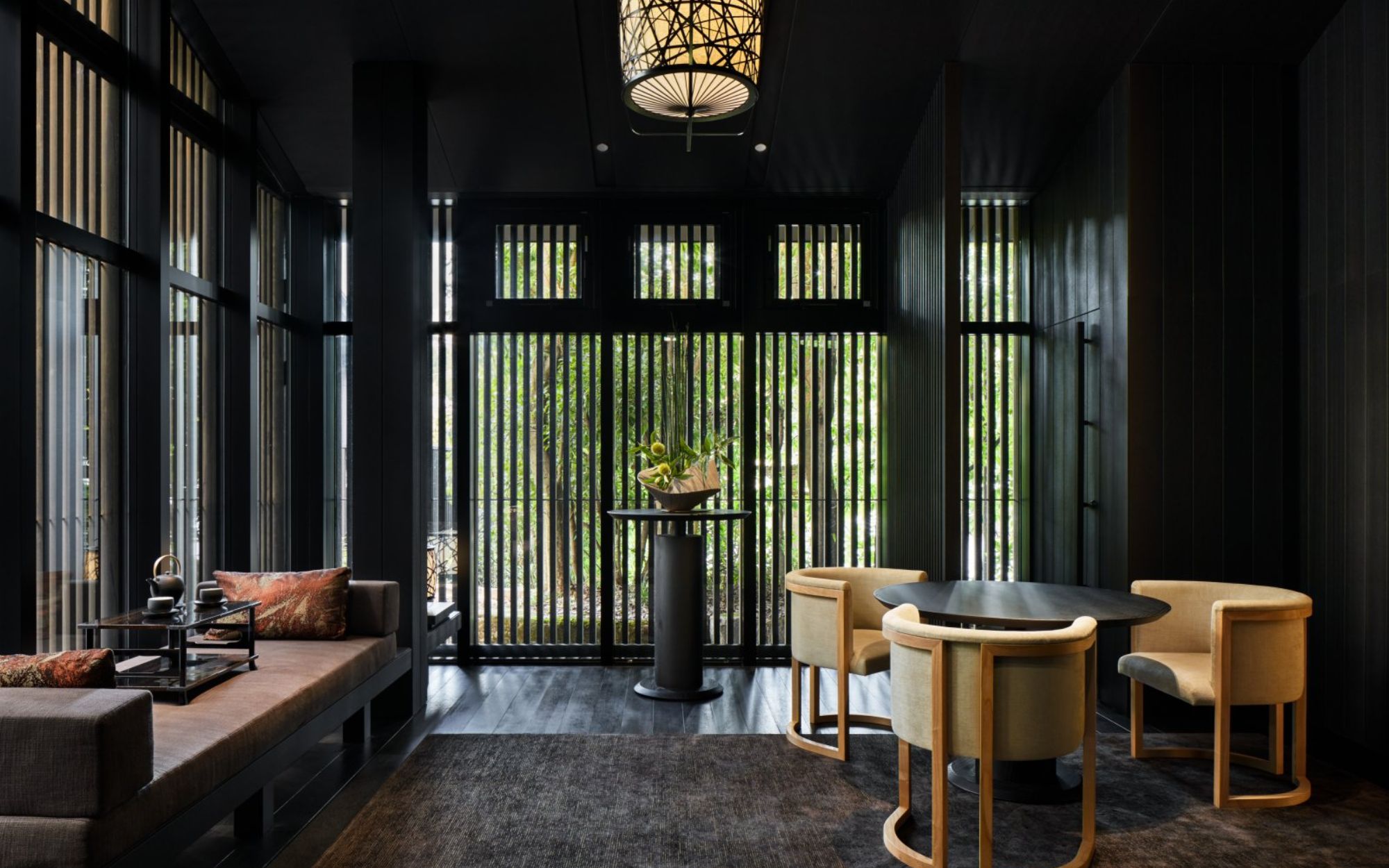
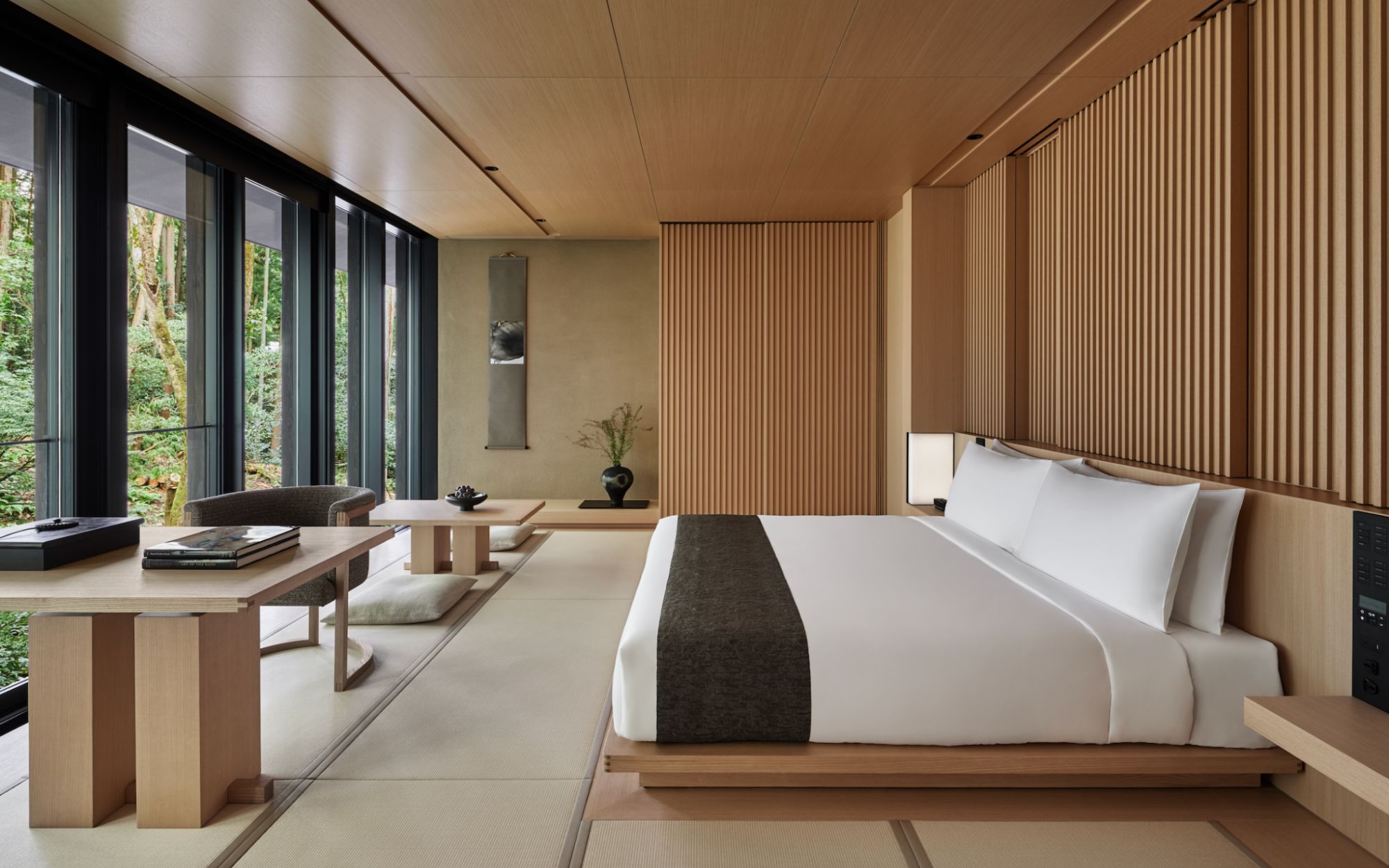
The interiors are designed as an extension of the landscape, their boundaries dissolving. Floor-to-ceiling windows frame the theatre of changing seasons beyond. Tatami flooring and traditional tokonoma, recessed alcoves used to display hanging scrolls and seasonal floral arrangements, bring moments of Japanese domestic architecture into the rooms.
Handmade raku panels, custom ceramic tiles, bespoke furnishings and carefully selected art and antiques furnish the rooms. Custom-designed furniture and Japanese lanterns give the rooms a consistent visual language, while wardrobes, television units and switch panels are integrated into the joinery, tactically weaving them into the larger scheme.
The bathrooms feature deep soaking tubs crafted from hinoki cypress, a Japanese wood valued for its characteristic fragrance. Even the smaller details, from surippa or Japanese indoor slippers, to hand lanterns for navigating the grounds after dark, reflect everyday rituals of Japanese domestic life.
Experiencing Kyoto Through Its Rituals
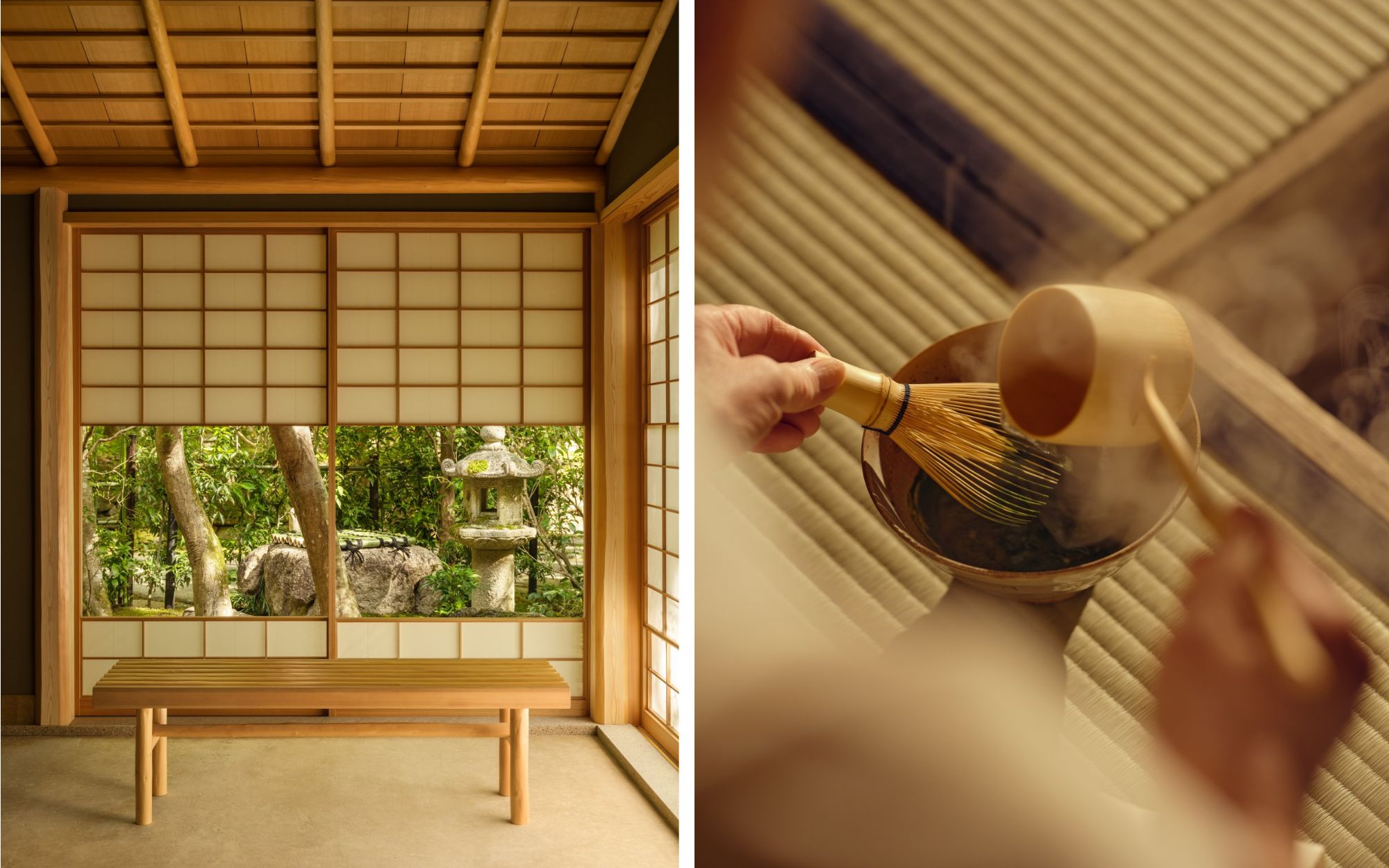
The Japanese tea ceremony into the resort’s cultural programme. Unveiled in December 2025, Tea House Senkutsu is nestled within the gardens adjoining the guest pavilions, bringing. Designed by Kyoto-based SEN ART STUDIO and built by traditional sukiya carpenters Nakamura Sotoji Komuten, the tea house uses locally sourced Kitayama cedar and earthen walls made with soil from Takagamine.
Inside, natural light, timber and earthen surfaces set the scene for chanoyu, the Japanese Way of Tea, in which the preparation and serving of matcha follow a considered sequence of gestures. An adjoining preparation room, or mizuya, also accommodates cultural activities such as calligraphy, ikebana and katagami, the Japanese art of stencil-making.
The property provides a wide programme of cultural experiences, which includes activities such as Zen meditation with Buddhist monks at a local temple. The resort’s dining spaces extend this engagement with Kyoto through Taka-An, which serves Japanese haute cuisine, and the Living Pavilion, where all-day dining draws on the region’s culinary traditions. The Aman also offers a wide range of activities that introduce guests to local traditions.
Wellness Rooted In Japanese Traditions
The surrounding woodland shapes the resort’s wellness offerings, with yoga and mindfulness sessions in the garden complemented by shinrin-yoku, the Japanese practice of forest bathing. Here, time spent among the trees becomes part of the experience of slowing down.
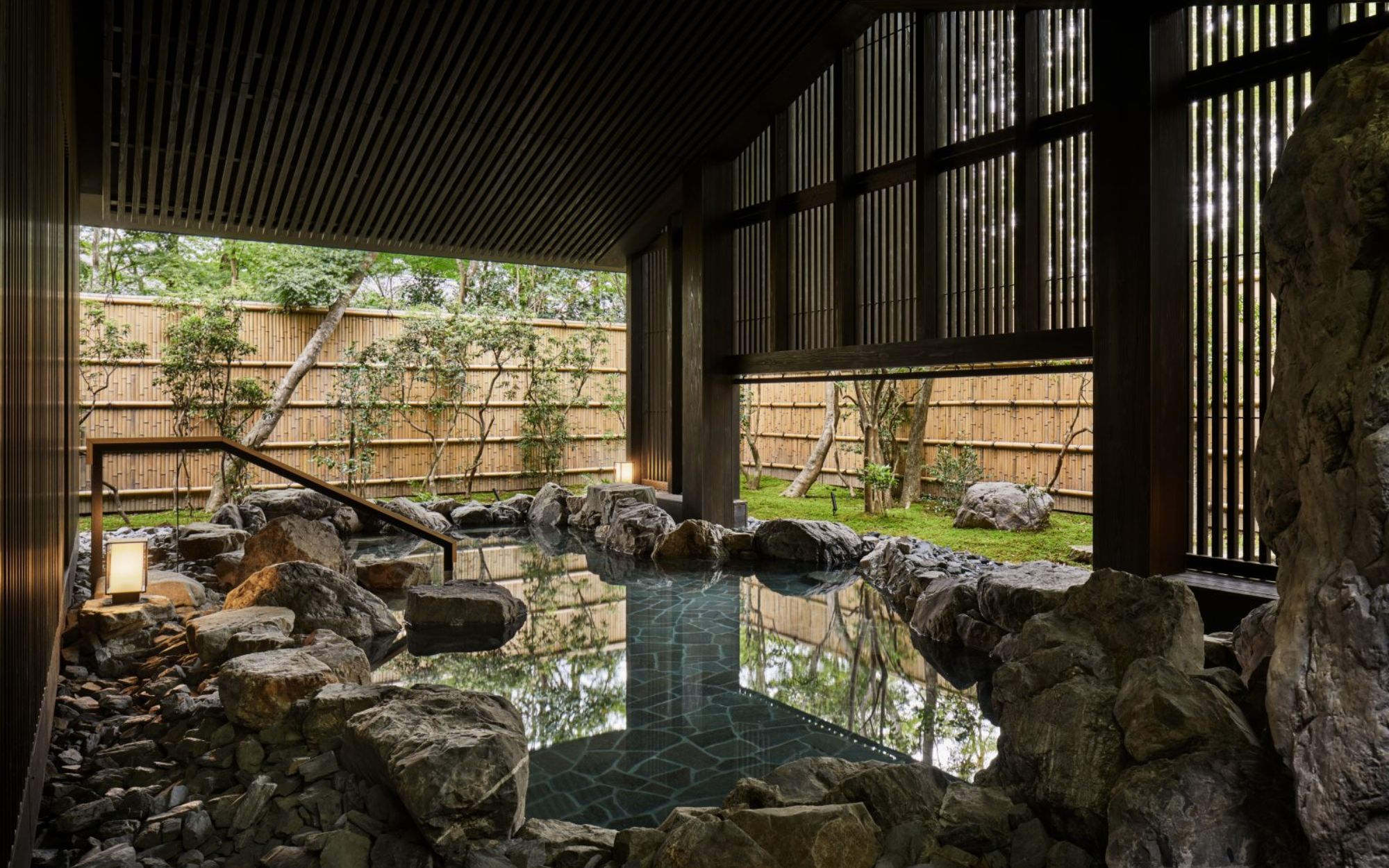
A natural spring near the property, a rarity in the region, supplies traditional onsen baths at the Aman Spa. Framed by carefully composed landscaping, the outdoor bath evokes the experience of bathing in the forest. The spa’s treatments draw on regional ingredients, including Kyoto green tea, Tamba kuromame black beans, local sake and cold-pressed tsubaki, or camellia, oil. These feature in a range of therapies, from signature facials and shiatsu massages to traditional acupuncture and moxibustion, alongside restorative body treatments.
Also Read: Plunge Into The World’s Most Magical Waters Designed For Thermal Cure
Final Thoughts
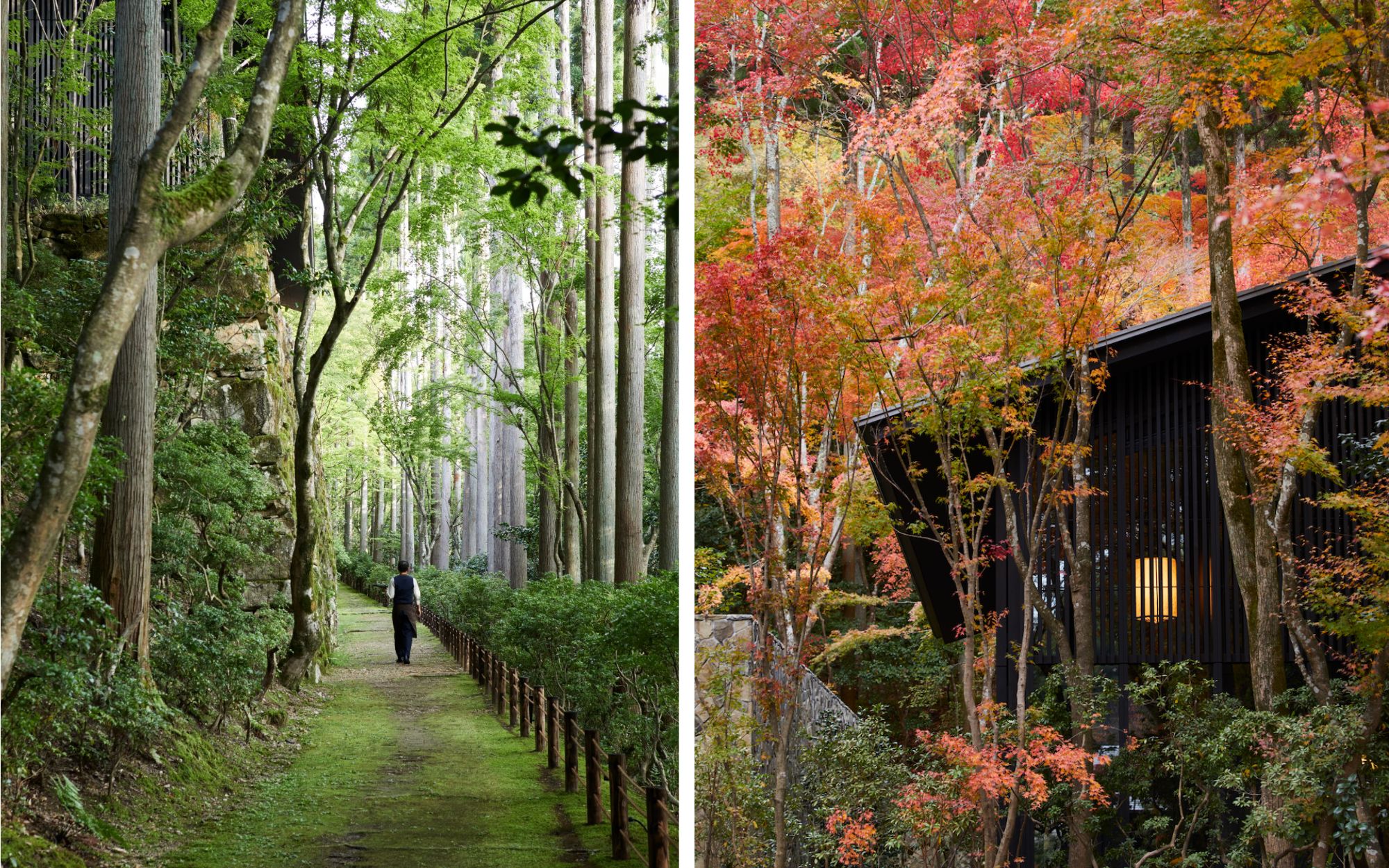
Beyond Kyoto’s temples, gardens, and cultural landmarks lies a quieter side of the city, tucked into its wooded hillsides. The towering cedars, rustling leaves and lush greenery surround Aman Kyoto, which stands within a world of its own, inviting guests to leave the city at the threshold and slow down. With winding cobbled paths and moss-covered boulders, every space appears almost as though it has always belonged. After dark, a walk through the lush forest with a glowing lantern seems almost ethereal.
The elaborate bathing rituals, the warmth of an onsen and the lingering scent of hinoki cypress come together to create an almost intoxicating experience, leaving guests with a simple yet striking realisation: that slowing down is perhaps the rarest form of luxury.
DP Loves:
#1 Set away from the bustle of central Kyoto, Aman Kyoto’s forested setting, with its moss-covered stones, towering cedars and winding garden paths, is a welcome change of pace.
#2 The understated architecture by Kerry Hill Architects is a highlight, with the pavilions tucked so discreetly into the landscape that they seem to emerge gradually as you make your way through the gardens.
#3 The Living Pavilion’s views of the surrounding forest make dining particularly memorable, with the changing greens and browns of the woodland creating a setting that transports guests into another time.
#4 The outdoor onsen is a standout, with its carefully composed landscape creating the sensation of bathing in the mountains, surrounded by greenery.
#5 The hinoki cypress soaking tubs in the guest rooms brings the Japanese bathing ritual into the everyday experience of the room, with the wood’s natural fragrance adding to the sensory appeal.