Between Places, Beyond Home: A New Show Opens At Rukshaan Art Gallery In Mumbai
Twenty-one artists take on a deceptively simple question: what does it mean to call a place home when life, memory and experience refuse to keep us in just one?
- 16 Nov '26
- 6:29 pm by Urvi Kothari

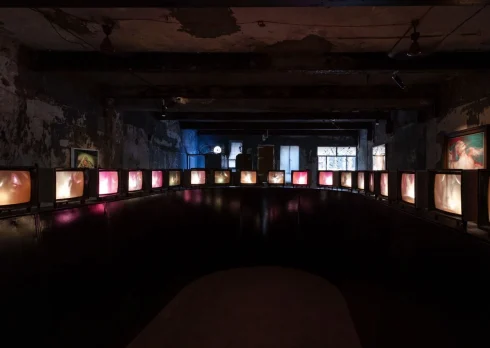
A location can be shared in seconds. A sense of place takes considerably longer to acquire. Between the two lies a whole world of memory, displacement, familiarity and lived experience. It is this distance between geographical coordinates and the more elusive idea of home that Send Me Your Location sets out to explore. Presented at Rukshaan Art as a parallel exhibition to Art Mumbai 2026, the exhibition borrows its title from the shorthand of everyday digital communication, where a pin dropped on a map is expected to say everything. But geography is rarely so obliging. A place may tell us where someone is; it cannot, by itself, account for the histories, attachments and journeys that brought them there.
Baroda gives this enquiry its particular character. For decades, the city has drawn artists from across India, its Faculty of Fine Arts and wider artistic culture offering fertile ground for experimentation, exchange and the development of individual practices. For many, arriving in Baroda has meant entering a new artistic and social landscape, one that gradually becomes part of their own history. The city is therefore more than a shared address for the 21 artists in this exhibition; it is the common ground from which their different geographies can be considered. Having come from elsewhere and made lives here, they occupy an interesting space between origins and arrivals, between the places that shaped them and the one they now inhabit. ‘What does it mean to have more than one place to call home? And how much of the place we leave continues to travel with us?’
The Remembered Home
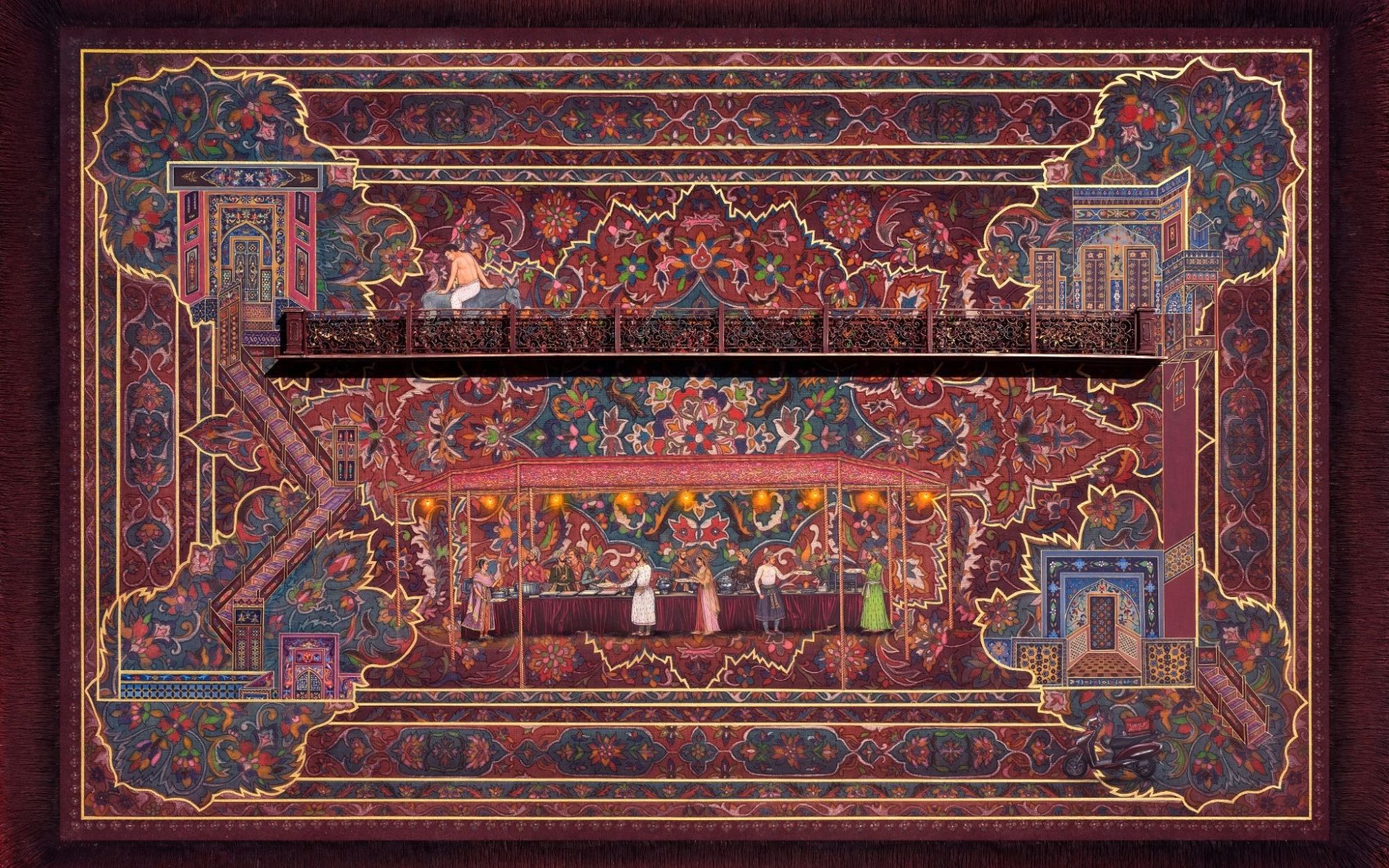
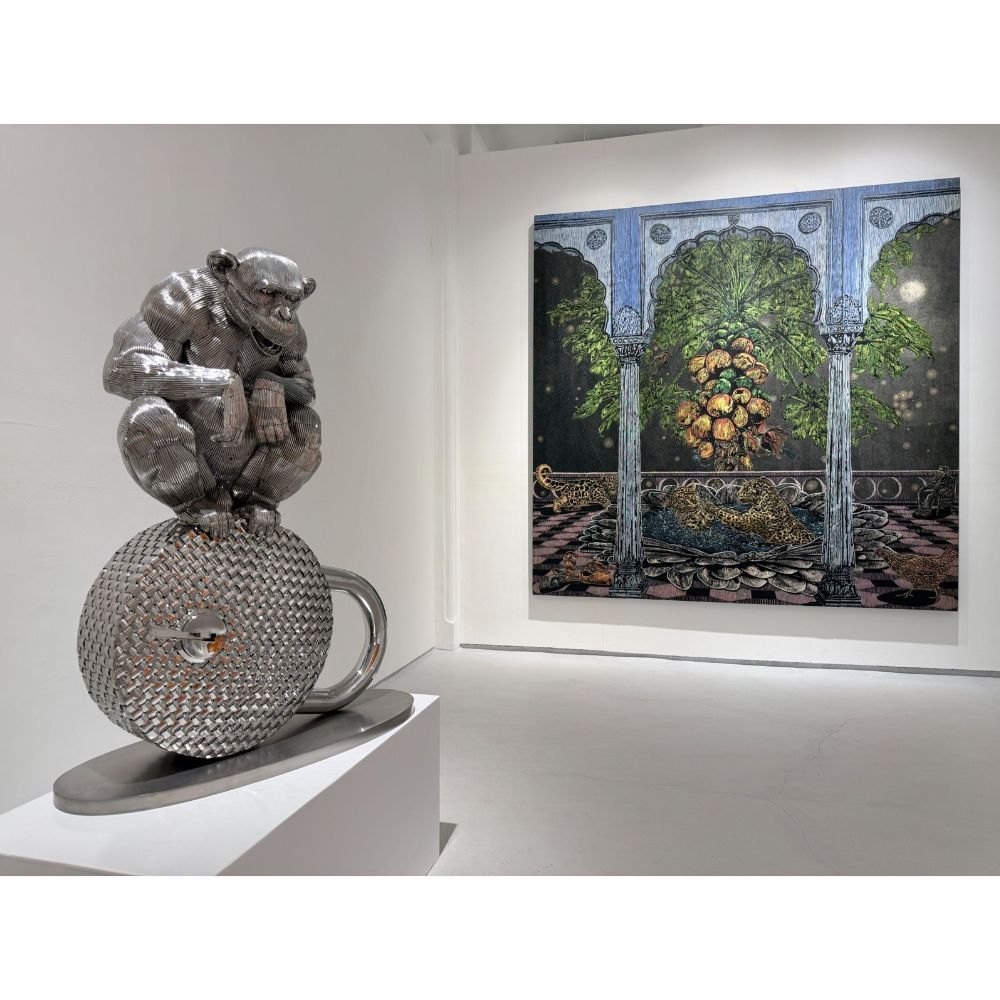
For Ajay Dhapa, belonging is rooted in the social memory that shaped his formative years in a multi-religious community of coexistence and interdependence. With ‘Navivasi,’ he traces the scents of memory and lived experiences. Drawing upon Mughal-style miniature painting, his works revisit an ethos of shared histories and relationships. In his intricate tapestry-like paintings, Dhapa introduces a more personal dimension, using the recollection of his love marriage to examine the tension between individual choice and familial expectations with a hint of humour.
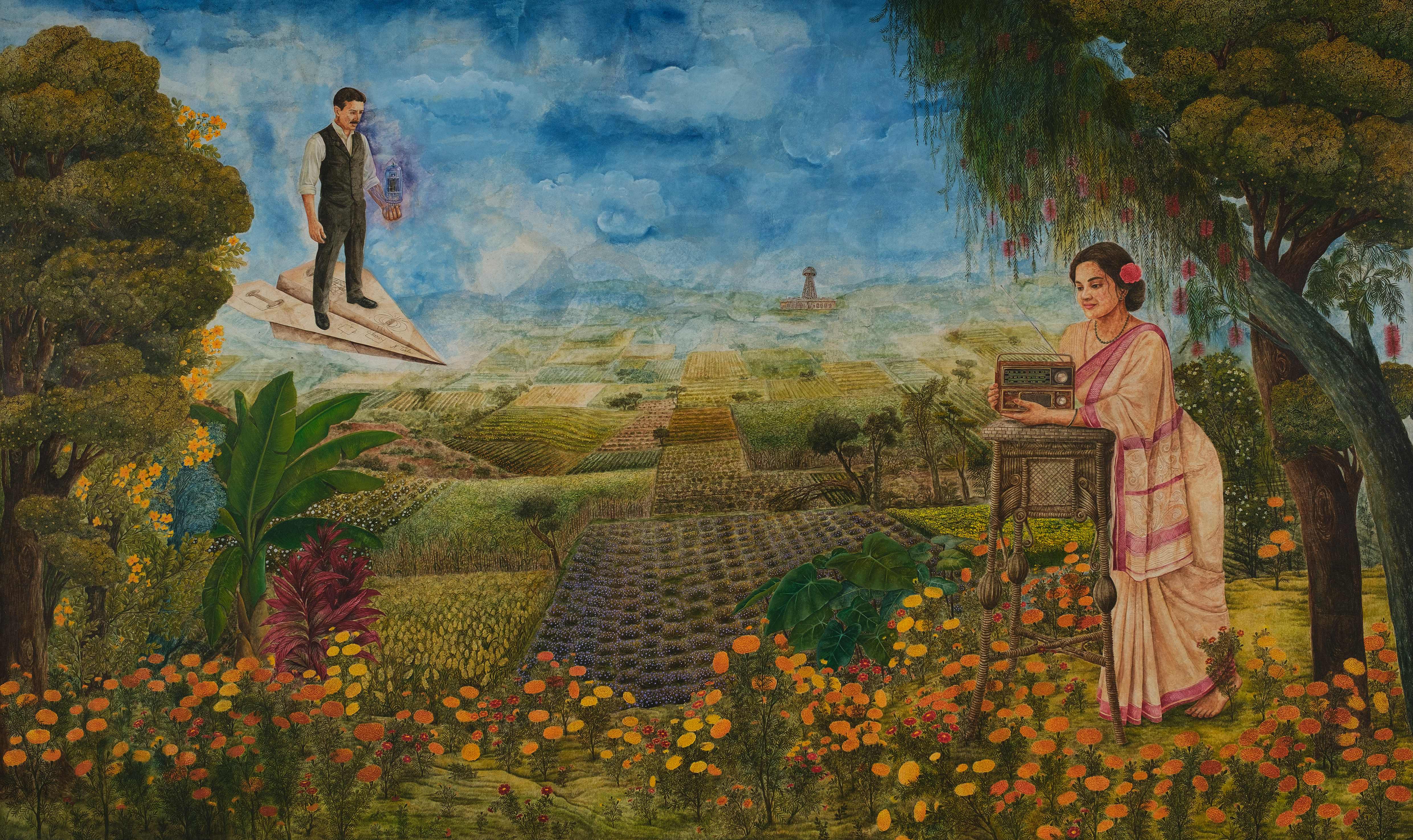
While Dhapa recalls the social fabric of a community, Khandgonkar considers the emotional and sensory familiarity of home. Pradnya Khandgonkar approaches belonging through a more intimate relationship with her village. Her painting captures a village woman immersed in her own quiet world, with flowers all around and the radio for company, evoking the simplicity and restorative power of nature. Beneath this tranquil imagery lies a reflection on technology and accessibility. Connecting it to Nikola Tesla’s vision of freely available electricity with her father’s anxieties over rising electricity bills, Khandgonkar transforms this intimate experience into a wider social commentary on the cost of progress.
The Inhabited Home:
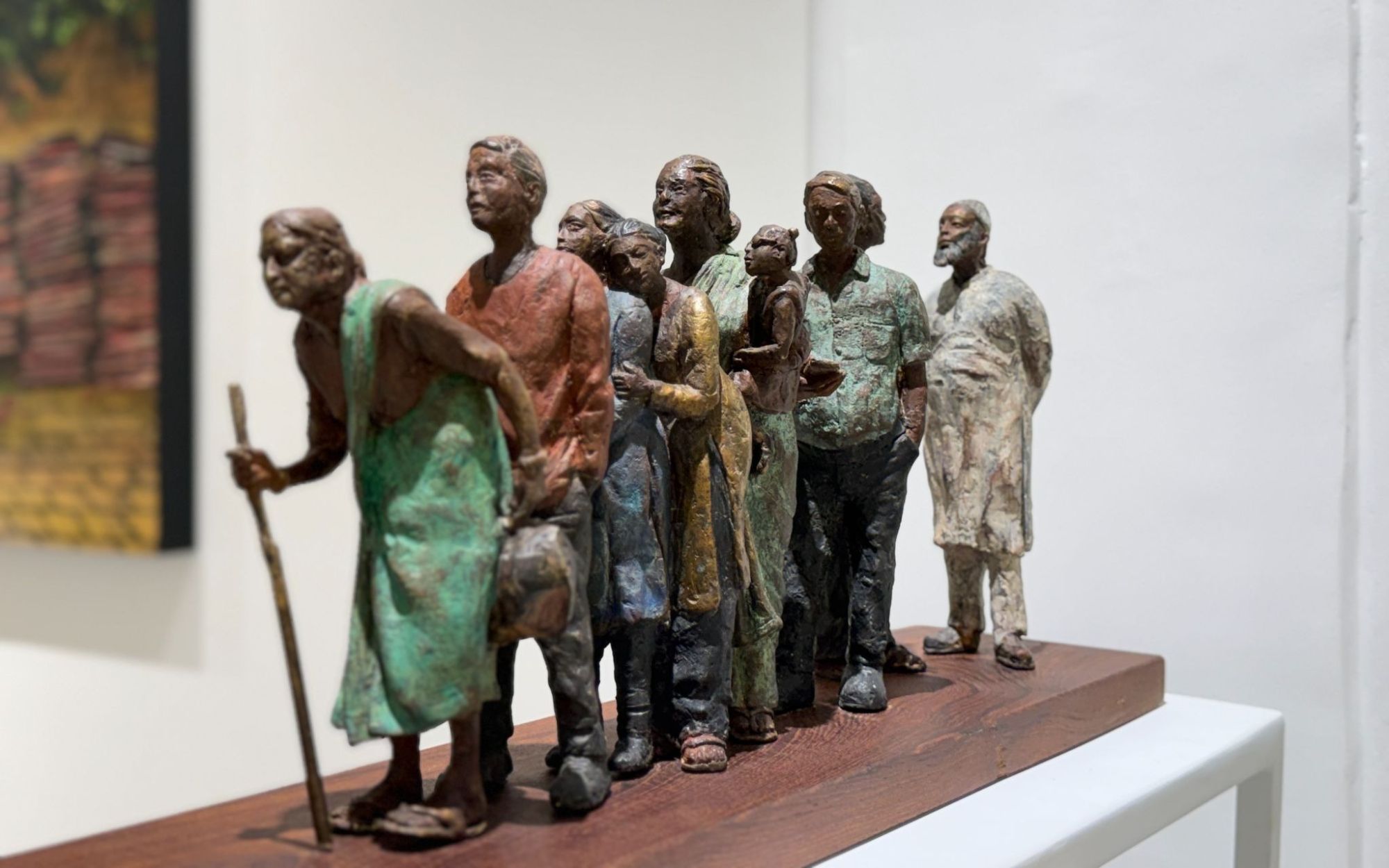
Moving from personal memory to the social life of a place, Gulab Kapadiya and Chalapaka Chakravarthy turn to the people and livelihoods that shape their surroundings. Kapadiya’s intricate watercolour paintings have shifted from people-centric compositions to wider views of the environments they inhabit. Taking cues from vegetable sellers, bangle sellers, cobblers, barbers, key makers, grocers, florists and labourers he explores how labour, routine and human presence imbue character to a particular place. The surroundings, thus, become a reflection of their lives and livelihoods.
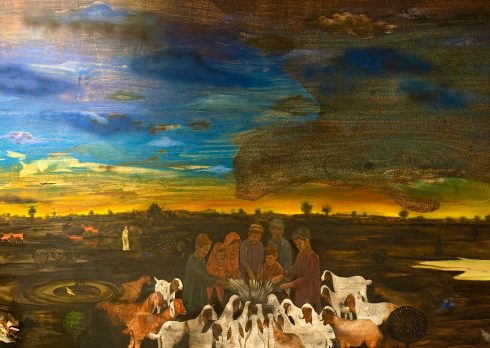
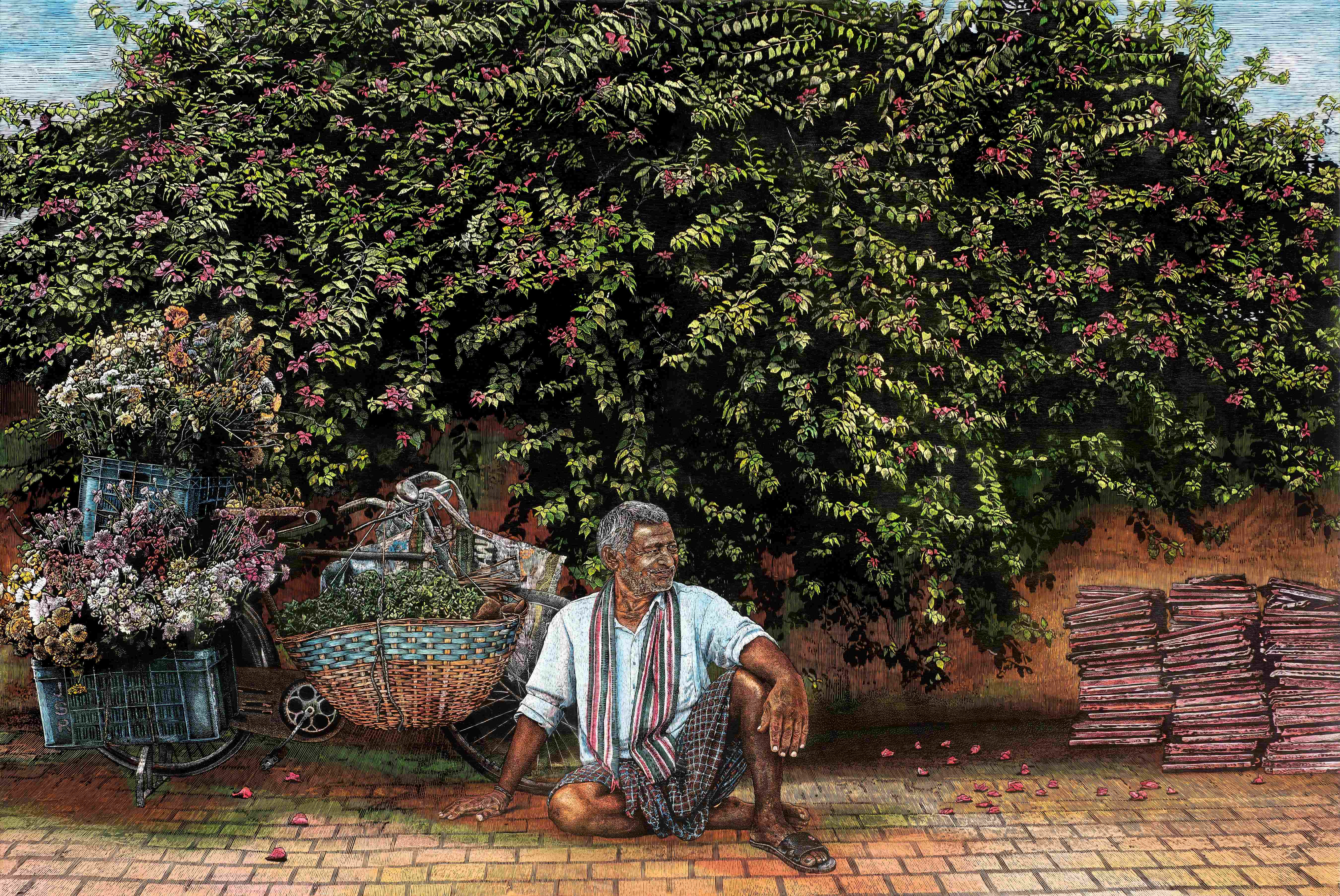
On the other hand, Chakravarthy, through his representations of farmers, vendors and working communities, foregrounds the resilience and dignity of ordinary lives. He explores the nuances of rural experience through the routines, gestures and physical details of his subjects. Both artists challenge the idea of landscape as merely a geographical setting, recognising instead the human presence that gives it meaning.
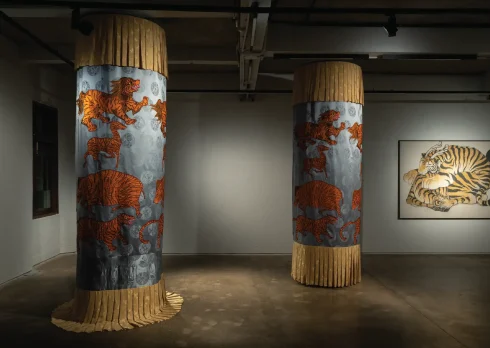
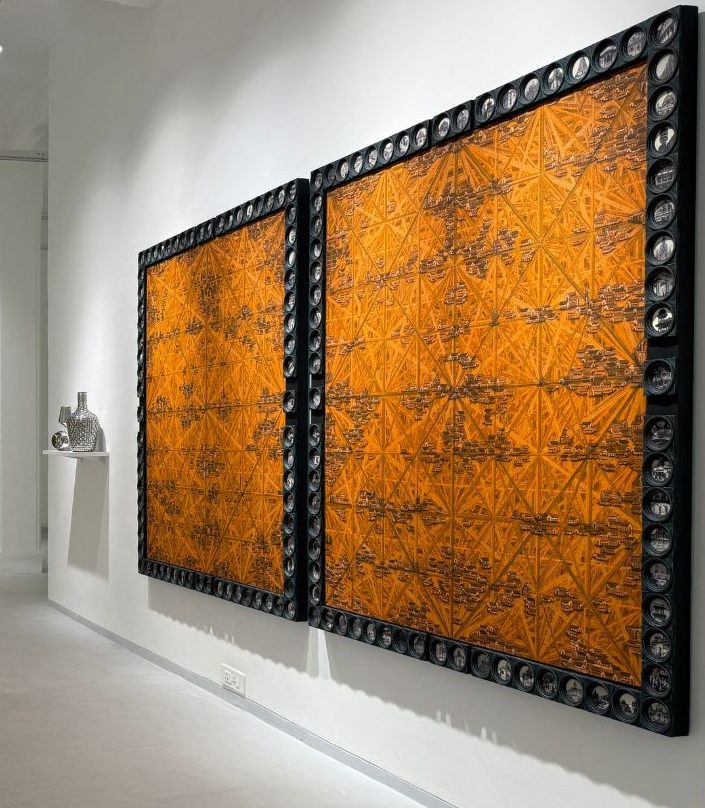
Sanjay Barot’s colossal canvases extend the inquiry of belonging towards structures, which shape collective and individual identities. Drawing from the visual and architectural memory of his hometown, Kapadvanj, his illusory canvases with distinct frames explore the accumulation of time, images and social experiences. In Barot’s practice, place becomes an active force, influencing how identities are formed and negotiated.
The Inherited Home:
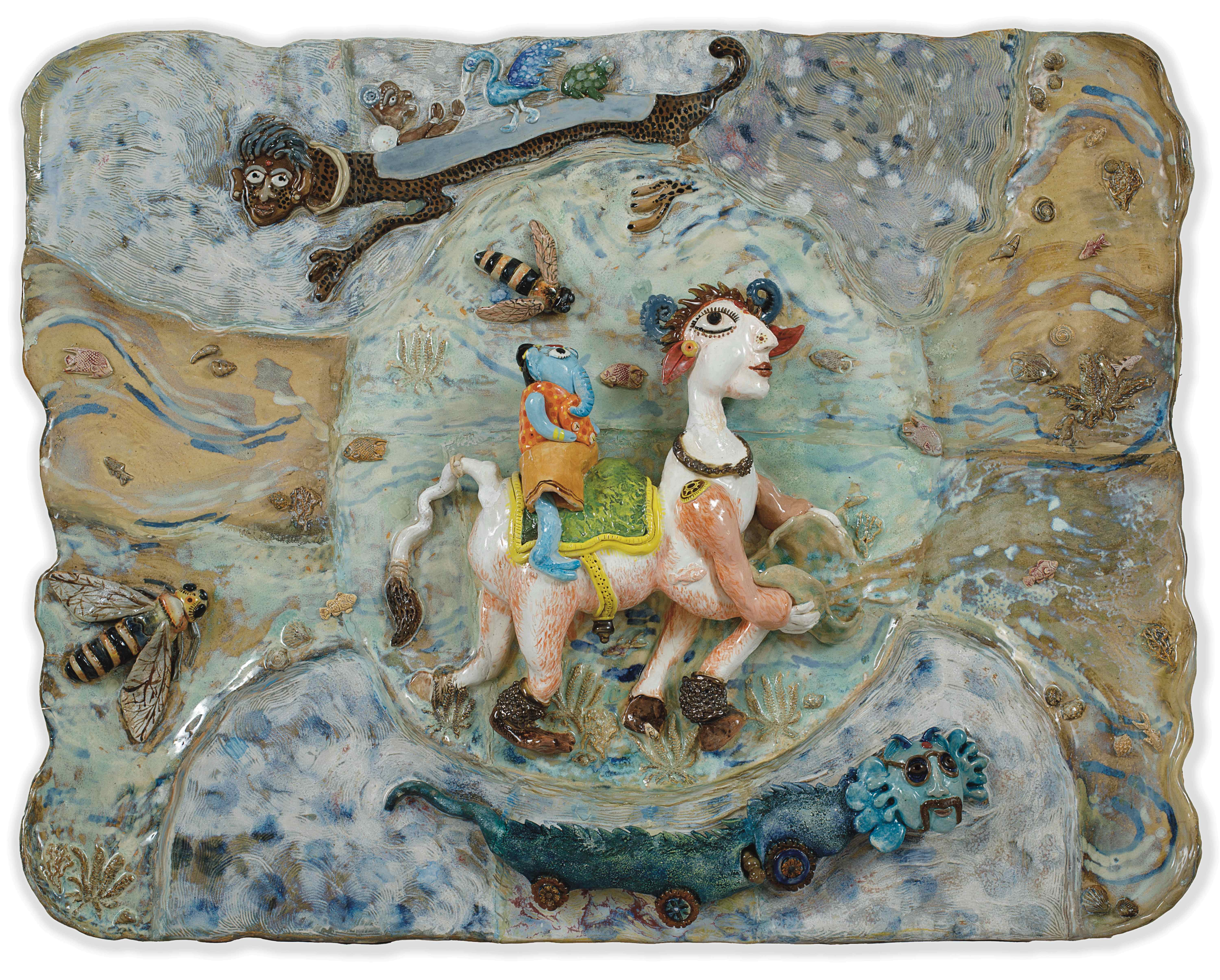
The notion of location finds expression through cultural memory, mythology and inherited belief systems in Vibhuti Kakdiya’s ceramic relief work. With an earthy palette and indigenous folk forms bringing together Lord Ganesha and Kamdhenu. The installation draws upon their associations with auspicious beginnings, prosperity and wish-fulfilment. Through this mythological convergence, she reflects on the enduring place of faith and traditions of worship and devotion that we carry within us.
Ketan Amin, meanwhile, draws upon mythology, folk traditions and popular imagery to develop a sculptural language that moves between humour and cultural symbolism. His hand-bent stainless-steel sculpted monkey with a contemplative demeanour captures a sense of intelligence, humour, and perhaps even defiance. His work evokes the ways inherited visual languages and cultural references travel across places and generations, continually acquiring new meanings. Both artists draw from inherited visual languages, albeit through very different approaches, demonstrating how cultural memory can be continually reinterpreted.
Ultimately, ‘Send Me Your Location’ invites a reconsideration of what it means to belong. A digital pin may establish where someone is, but it cannot account for the memories they carry, the communities that shape them or the cultural histories through which they understand themselves. Perhaps, the more meaningful response to the exhibition’s titular request is not a set of coordinates, but an understanding of the many ways in which we come to belong.
The exhibition will be on display till January 17, 2027