MOI Weaves Identity And Memory Through Beads During Kochi Muziris Biennale 2025
During Kochi Muziris Biennale, 2025, MOI’s Unbound by Beads traces trade, memory, and women-led craft through archival artefacts, contemporary jewellery, and artist collaborations.
- 26 Dec '25
- 5:58 pm by Simran Almeida

In South Asia, jewellery is an innate part of existence, regardless of how it comes into possession. Recognising this inherent fact, Moi Fine Jewellery unfurls a showcase titled ‘Unbound by Beads’ alongside the sixth edition of Kochi Muziris Biennale 2025. Nestled in the House of Vandy at Fort Kochi, the Ahmedabad-based label established by the husband-wife duo of Kunal and Puja Shah, traces the trail of Beads, from their arrival. This preview questions the conformist role of jewellery featuring historical artefacts crafted by native women from Gujarat and Rajasthan alongside Moi’s contemporary collectables designed by lead designer Puja Shah.
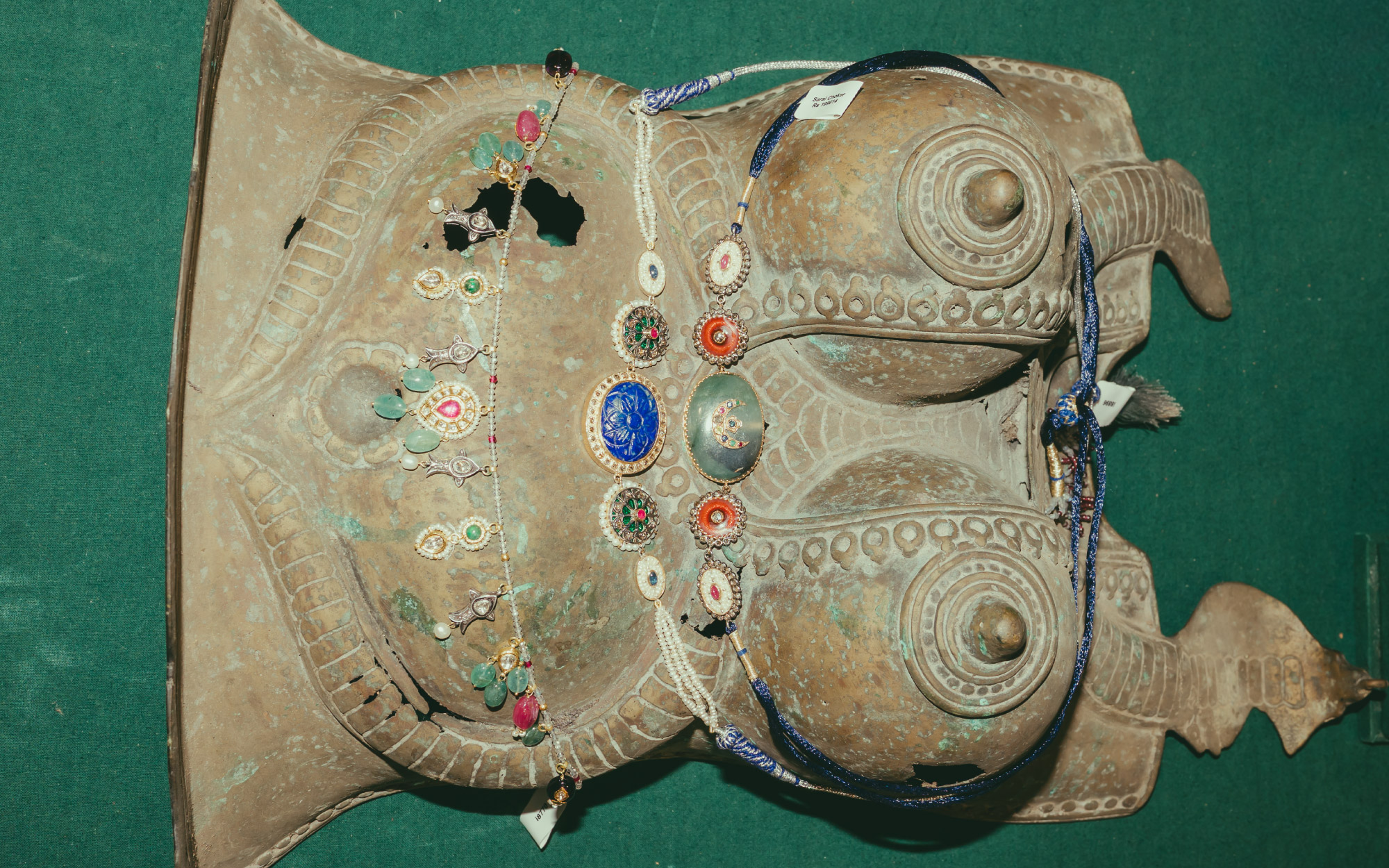
Drawing from a lineage of pursuit of identity and belonging, this showcase studies maps, archaeological findings, terracotta beads, and early trade references encountered during field research in Gujarat. “At MOI, design begins with research and listening; this showcase reflects that approach by placing process, context, and people at the centre rather than focusing only on finished objects,” avers Puja Shah, Co-founder and Creative Head of MOI. It thus responds to re-contextualisation, featuring collaborations with Indian artists Emmanuel Tausing (of the Zachuong label) and Thian Hoi while underscoring the women who sustained the craft across generations.
Also Read: A Closer Look At The 6th Kochi-Muziris Biennale 2025 ThroughThe Eyes Of Its Curator, Nikhil Chopra
Tracing The Legacy
Jewellery has long served as a woman’s armour, shifting between symbols of affluence and culture, while carrying a sense of craft traditions. However, as the role of jewellery evolves in contemporary lifestyles, it slips effortlessly into the rhythms of the everyday with practicality at heart, becoming a subtle reflection of the wearer’s character. For Puja Shah, this rendezvous with identity, art and jewellery began with AURUS—a fine jewellery studio she founded in 2003. Trained at the Fashion Institute of Technology, New York, her design sensibility reveals traces of the artisanal legacy of her hometown. Over time, a yearning to build a distinct voice, philosophy, and design led Puja and her husband, Kunal Shah, to conceive MOI in 2019.
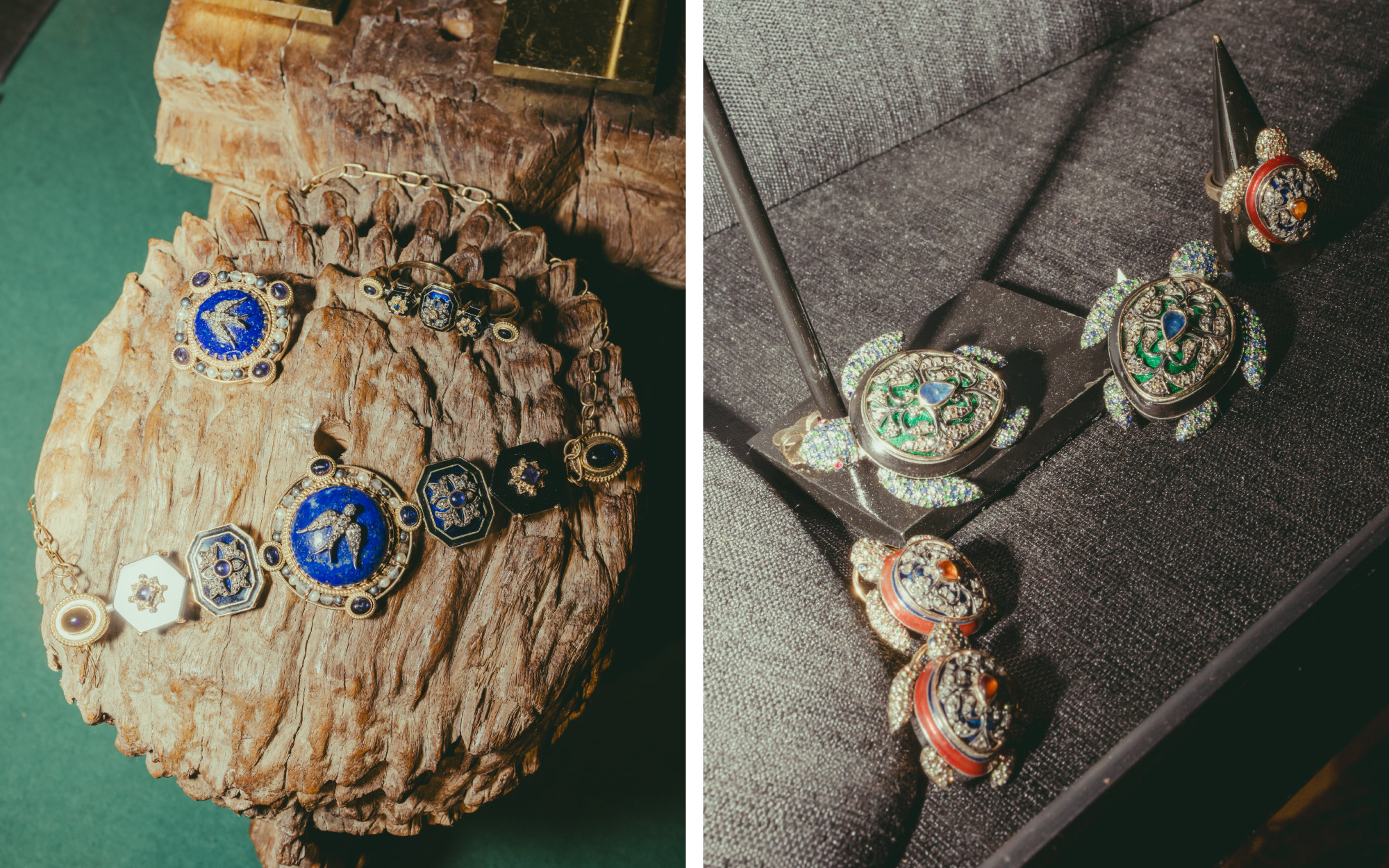
Borrowing from India’s vast artisanal heritage, MOI weaves a sense of practicality into every handcrafted objets d’art, celebrating flamboyance and tradition. “For us, contemporary design is about allowing traditions to evolve without disconnecting them from their roots,” shares Shah. Subsequently, at its core, MOI challenges the conventions, allowing handcrafted jewellery to effortlessly inhabit everyday routine. This idea of everyday jewellery paired with the designs of the ‘jewellery geeks’ is the brand’s defining ethos. Here, every piece is crafted by a dedicated team of artisans rooted in exploration, discovery, and the celebration of diverse techniques.
Beading The Cultural Currency
The 2025 biennale foregrounds process, gathering, and shared experience, situating art within lived contexts, trans-oceanic histories, and local-global entanglements. “This project enters that conversation by tracing how a material like glass moved across continents long before global exchange became a modern idea,” shares Kunal Shah, co-founder of Moi Jewellery. MOI brought this ethos to ‘Unbound by Beads,’ weaving together history, craft, and contemporary design. “The starting point was a year of research in Kutch and Kathiawar, and a growing discomfort with how easily craft traditions are reduced to surface aesthetics,” he explains.
Also Read: This Kochi Home Is A Tribute To Family Legacy And Modern Design
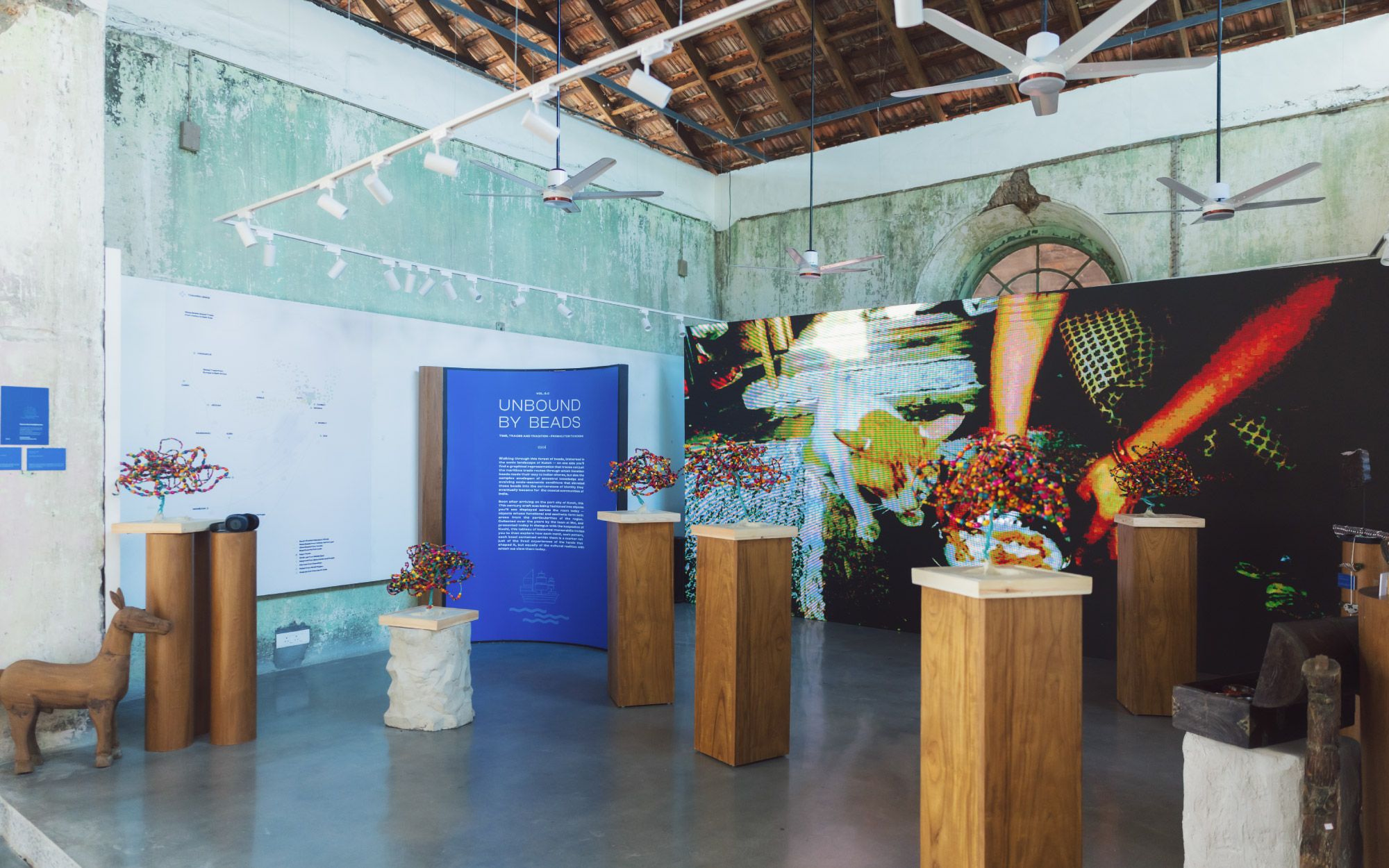
“The key theme is time. How materials travel across geographies, how traditions take shape through exchange, and how women have used beadwork to hold identity, memory, and continuity,” shares Shah. It begins with tracing the maritime routes that carried glass beads from 17th-century Venice into India, moving to the archival beadwork by Kutchhi women. “That relationship between global movement and local meaning sits at the core of this showcase, and reflects how cultures absorb influence thoughtfully without losing their own voice,” he reflects. This ancient mastery then transpires as a nuanced counterpoint in MOI’s limited-edition Collectables, where time-honoured beadwork is translated into contemporary fine jewellery. “The intent is to carry techniques, proportions, and philosophies forward in a way that remains honest to their origins,” explains Shah. The wearable pieces become bridges between past and present.
A Contemporary Response
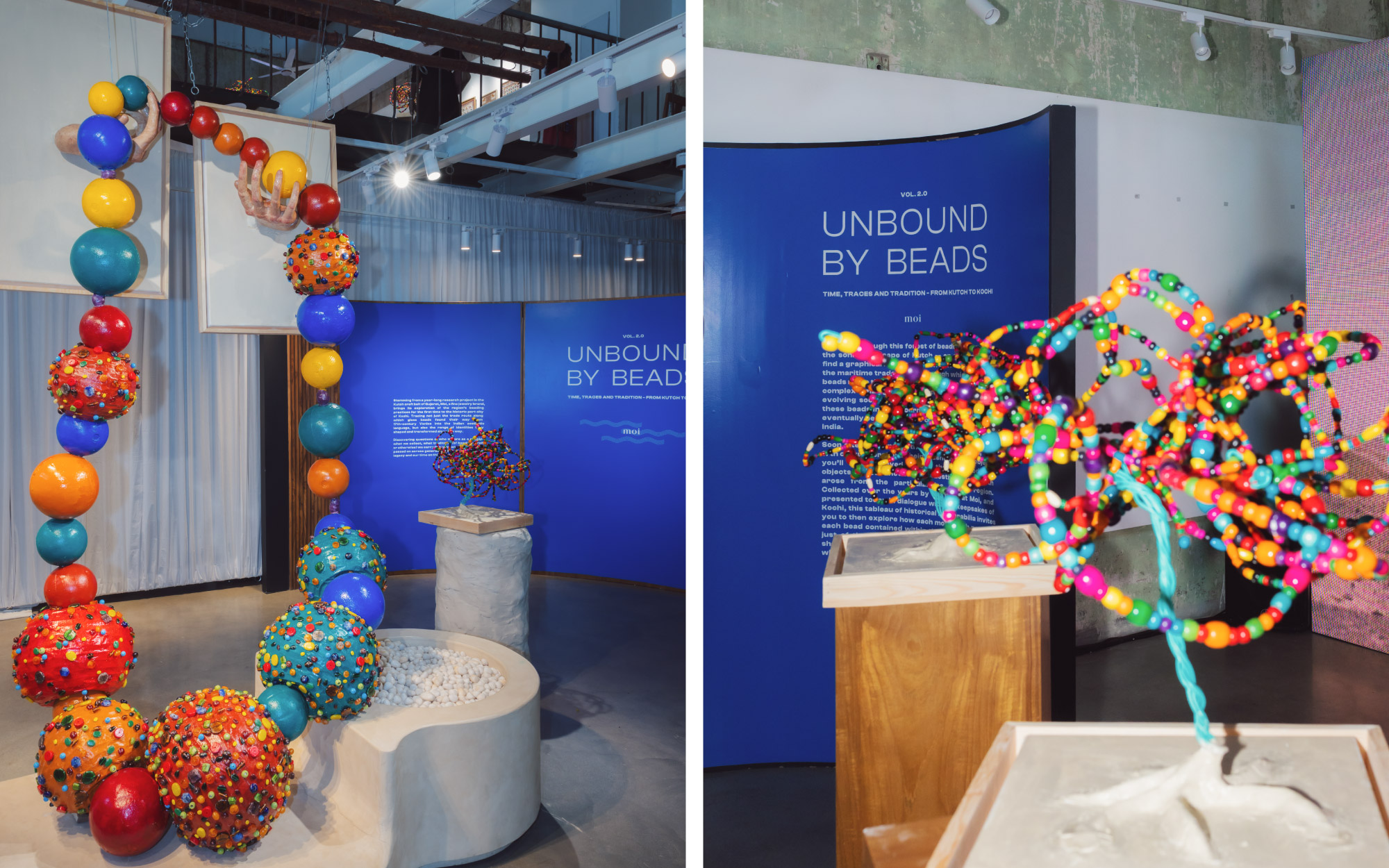
With the beadwork’s legacy firmly anchored, its contemporary resonance is articulated through the sculptures by a duo of contemporary artists. Central to the showcase is a colossal sculpture by artists Emmanuel Tausing and Thian Hoi, which transforms a sundry of collected beads into immersive forms. “Emmanuel and Thian both have an existing relationship with beads in their own practices, which made the collaboration feel natural rather than imposed,” Shah tells us. He adds, “Their cultural contexts also carry strong beadwork traditions, particularly within Manipuri culture, where beads function as markers of identity, ritual, and memory.” Subsequently, drawing on beads collected by MOI over the years, the artists shaped a piece that underscores the material, altering it into an accumulation of history and memory.
Also Read: ‘Tropical Brutalism’ Comes To Life In This Architect’s Studio in Kochi
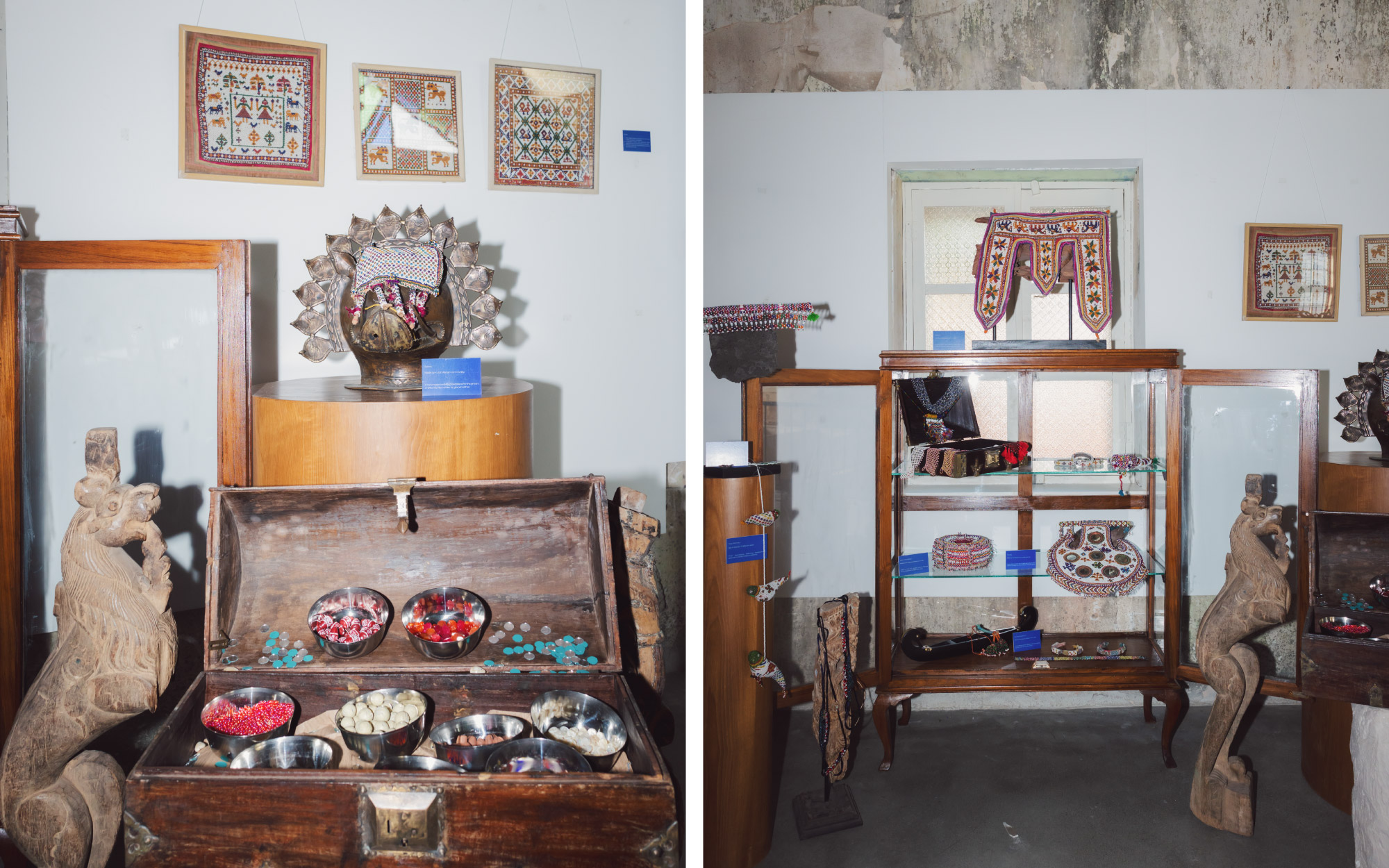
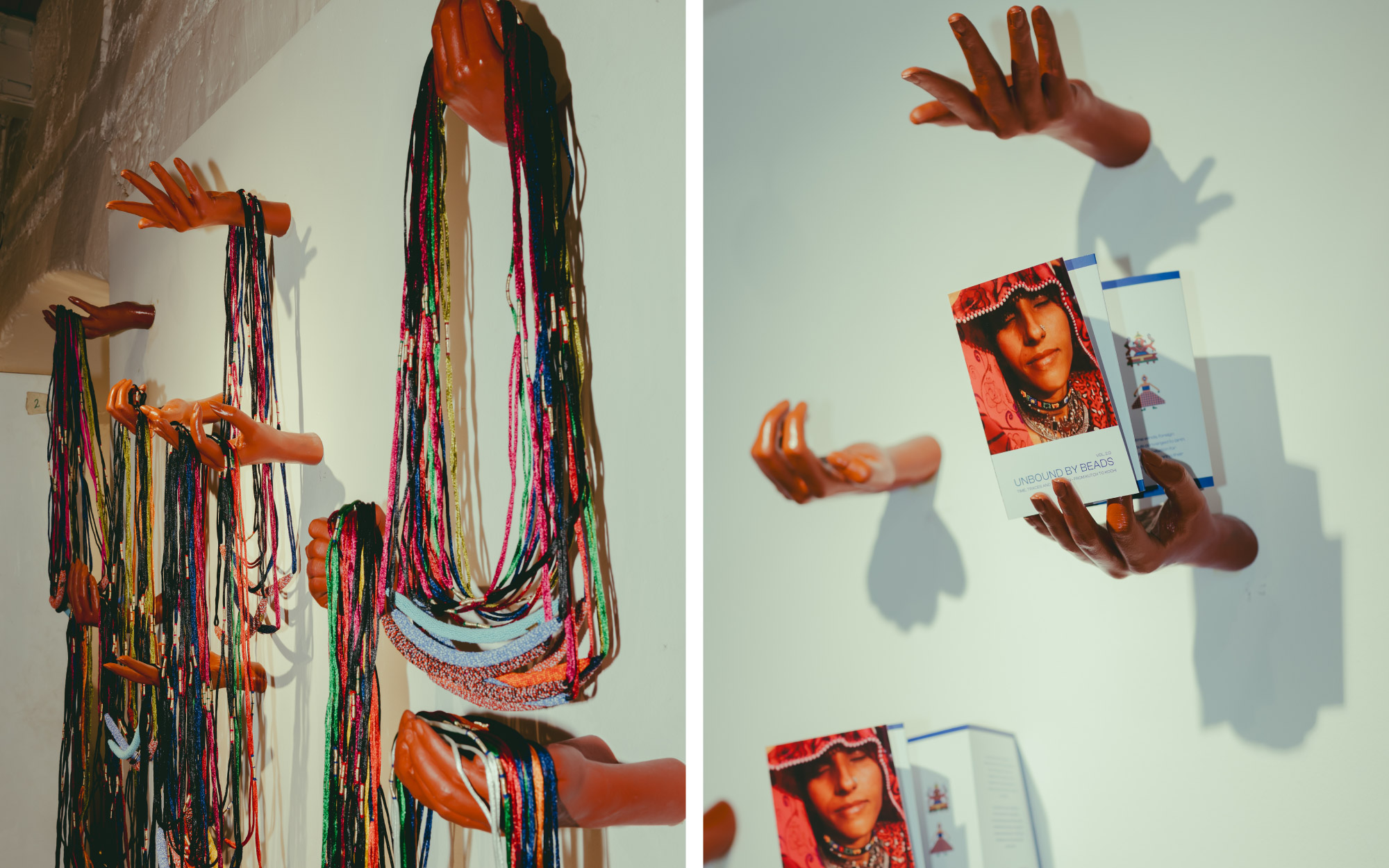
Through interviews and conversations with practitioners like Sitaben and Rabari women, it foregrounds women as active agents, rather than anonymous makers. It highlights beadwork as a gendered craft which is taught within homes, shared communally, and embedded in rites of passage. The terracotta-hued hands and portraits of Kutchhi women reinforced that these objects belong to everyday life.
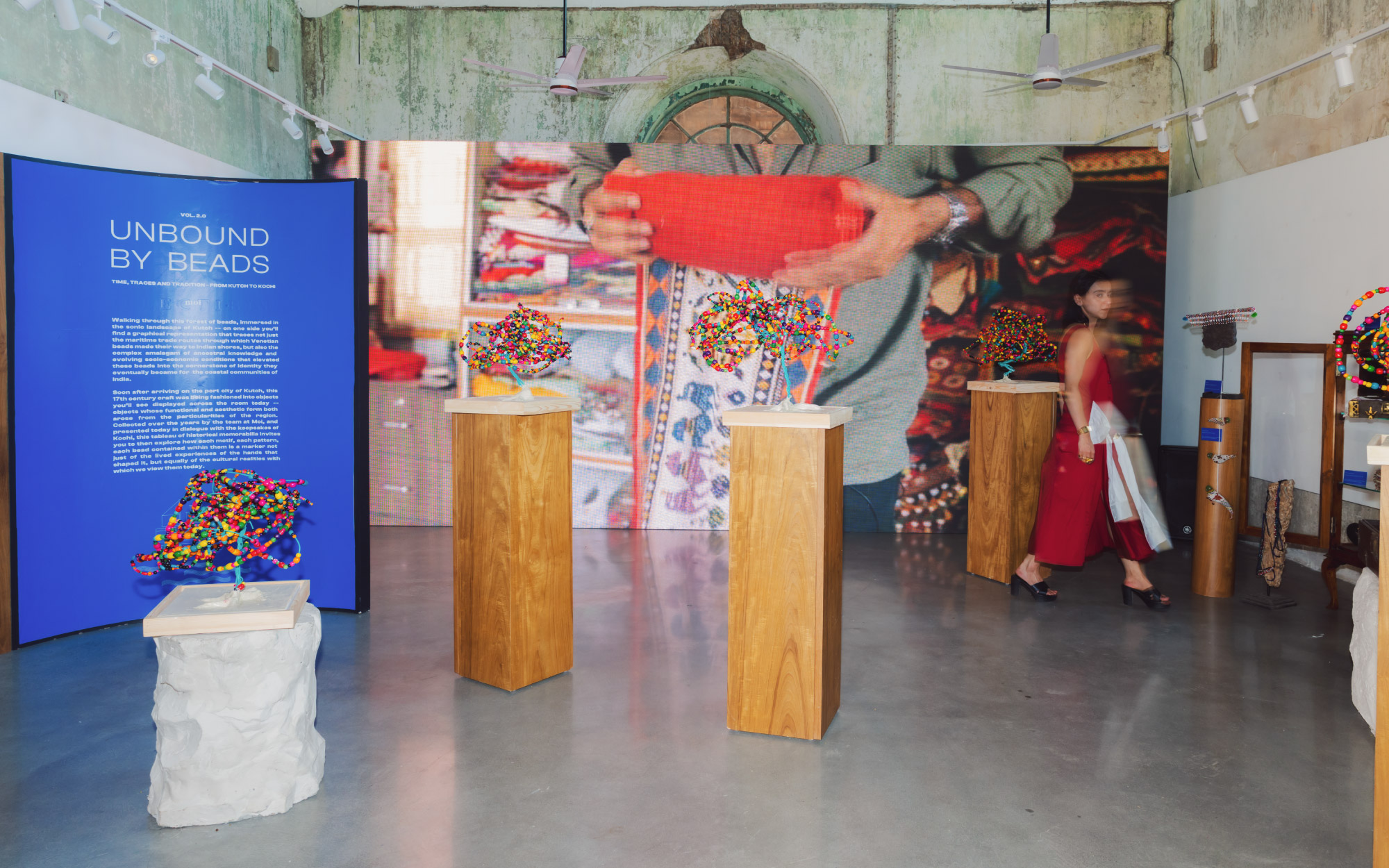
The exhibition subtly revealed moments of decline and transformation, placing venerable dowry pieces, heirlooms, and domestic adornments in dialogue with contemporary, commercially driven works. It is set against a video installation by Howareyoufeeling.studio, who documented the lives and practices of beadwork artisans.
“The archival beadwork objects made by Kutch women are the most moving for me,” Shah shares about one of his favourite pieces of the exhibition. For him, they embody the intelligence of hands that worked with intention, memory, and care, long before craft became aesthetic or commodity. ‘Unbound by Beads’ ultimately gathers these histories and ties the loose ends of a modern urgency: the erosion of cultural precision under global homogenisation.alongside the sixth edition of Kochi Muziris Biennale 2025.