This 4,500 Sq. Ft. Weekend Home In Karjat Floats On A Gorge
A 4,500 sq. ft. house sculpted by architect Vinu Daniel of Wallmakers suspends between two parcels of land while illustrating an illusion of rising from the ground.
- 9 Jan '26
- 11:55 am by Simran Almeida

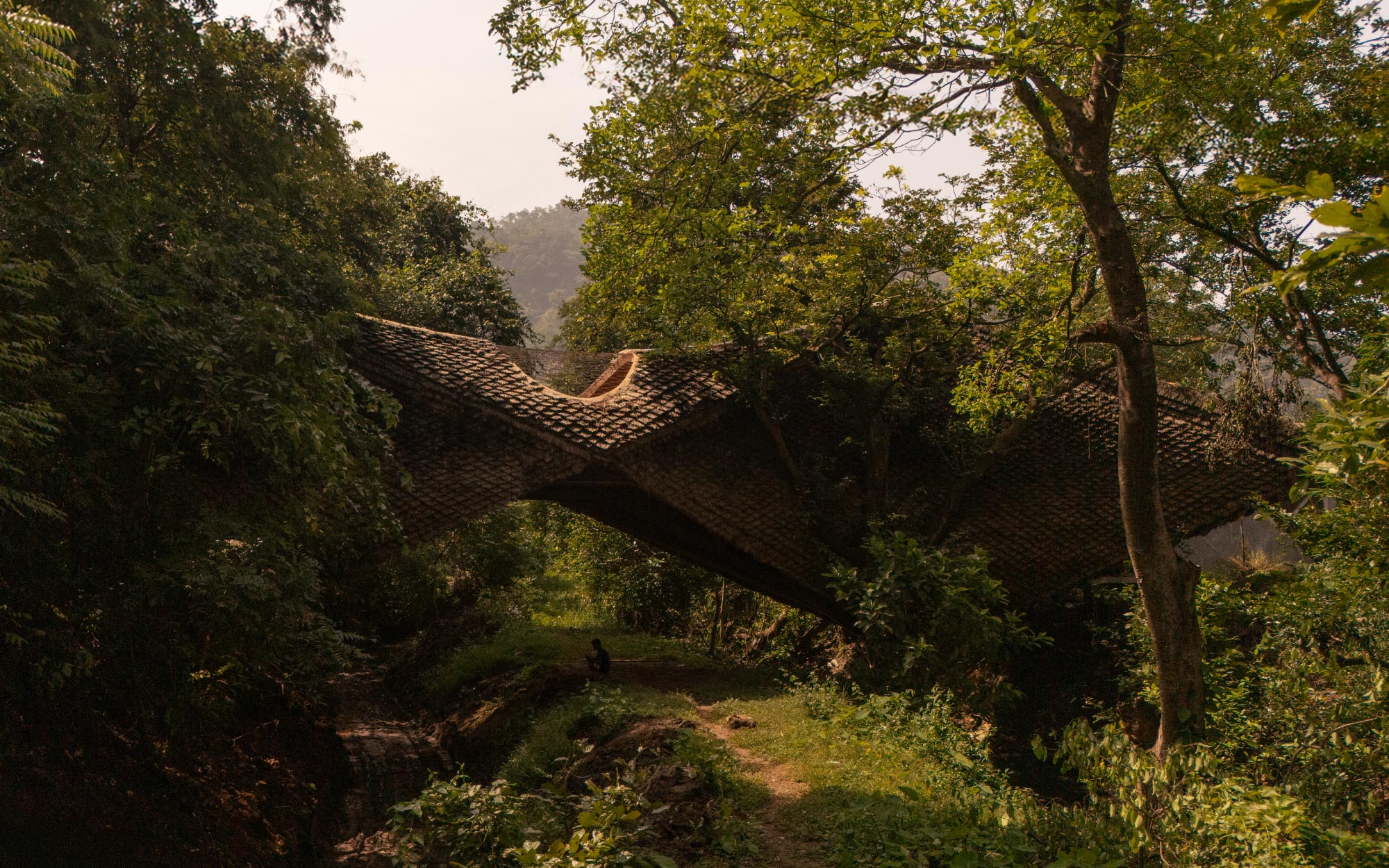
Nature nurtures, alters and at times plays muse. So, when a spillway stream in the bucolic landscape of Karjat, Maharashtra, conscientiously split a parcel of land, etching a 7-meter-deep gorge, Wallmakers—a studio led by architect Vinu Daniel—crafted a home in between. It is a response to the family’s pursuit to connect with nature in their second home. These parcels are linked by a 100-foot bridge, bolstered on four footings, which the family actually inhabits. “The inspiration was derived from the constraints to connect the two pieces of land, which were cut off by the stream,” avers Vinu Daniel, Principal architect of Wallmakers.
Crossing The Canyon
At Bhivpuri–Karjat, Tata Power’s hydroelectric and pumped-storage operations (PSP) balance energy supply by moving water between upper and lower reservoirs. As part of this PSP, dams, intake structures, tunnels and water-conducting systems were constructed to manage and control water flow around the site; the spillway stream is a result of managing excess water from these renewable energy projects. The stream naturally carves out a deep gorge in the terrain as the project’s hydraulics guided water through it. Set amidst the silhouettes of greenery, this gorge is a pause inflicted by nature on the two land parcels.
Also Read: The Return of Natural Wood Designs: Three Emerging Decor Studios with a Fresh Take
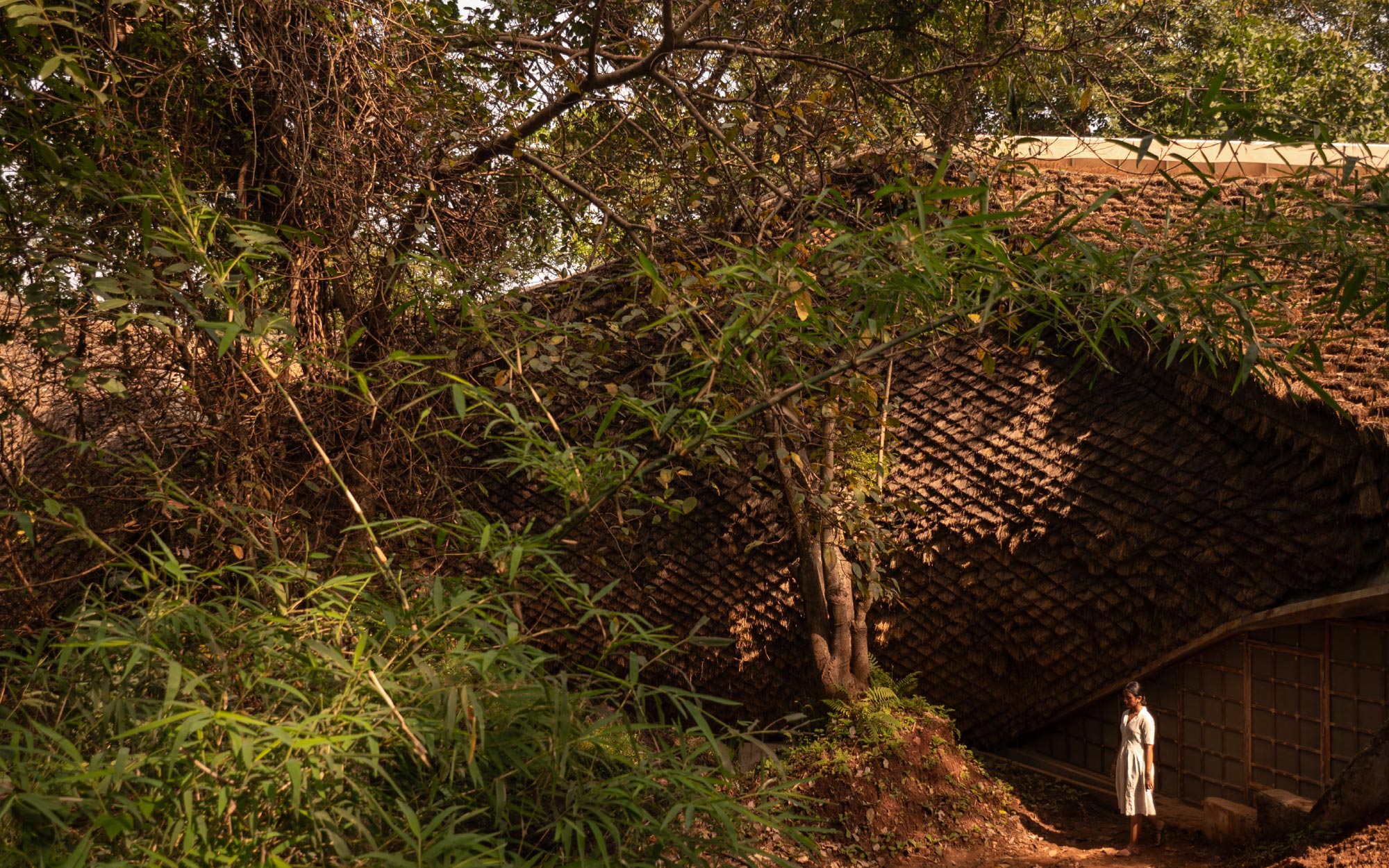
As a consequence of its depth, the gorge poses numerous challenges, such as connecting the land without the foundations intruding on the spillway and the bridge hovering high enough for maintenance below. With these limitations, Daniel notes, “The site itself is an ecosystem that we decided not to bludgeon with, but have a symbiotic relationship with.” In keeping with the reciprocity, the design team chose not to erase the land’s contours but to traverse them by occupying the space in between. This approach led to the nominal usage of steel while embracing the conventional building techniques—a signature style of the studio.
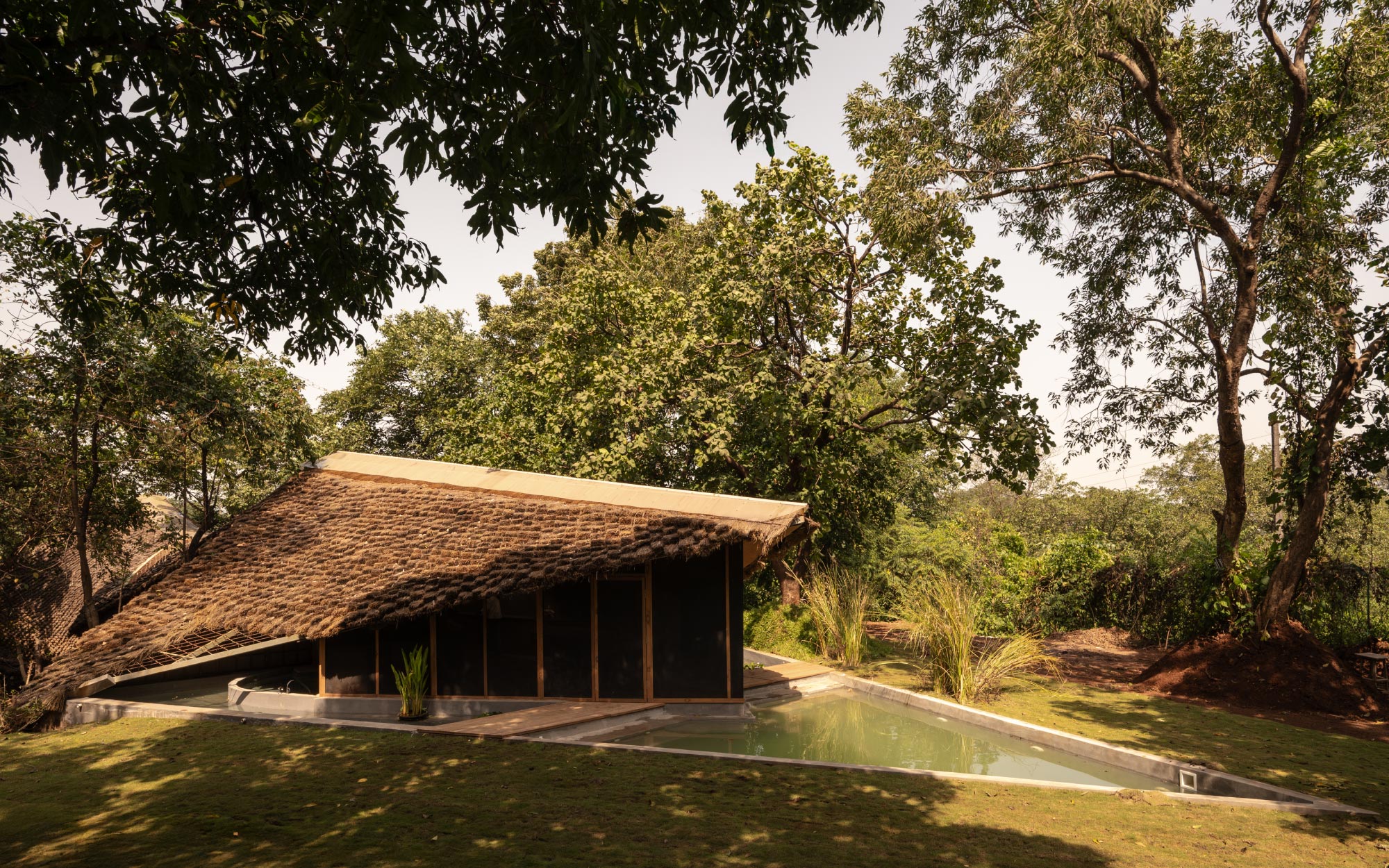
Within The Liminal
While the brief was straightforward: a four-bedroom home with interconnected spaces, its fabrication proved far from simple. “So, we needed to make a long span lightweight structure,” shares Daniel. In keeping with the terrain’s form and to ensure minimal intrusion, the abode is perched on just four footings, eschewing the main load-transferring central column, which would have obstructed the connectivity inside. Subsequently, the habitable edifice of the bridge is cast with steel beams and arches. “The bridge could float over the gorge and allow the natural vegetation, the trees, and the stream to flow below unhindered, without being affected by the life on the bridge and vice versa,” shares Daniel.
Also Read: The Guardians Of Natural Design: Landscape Architects You Must Know About
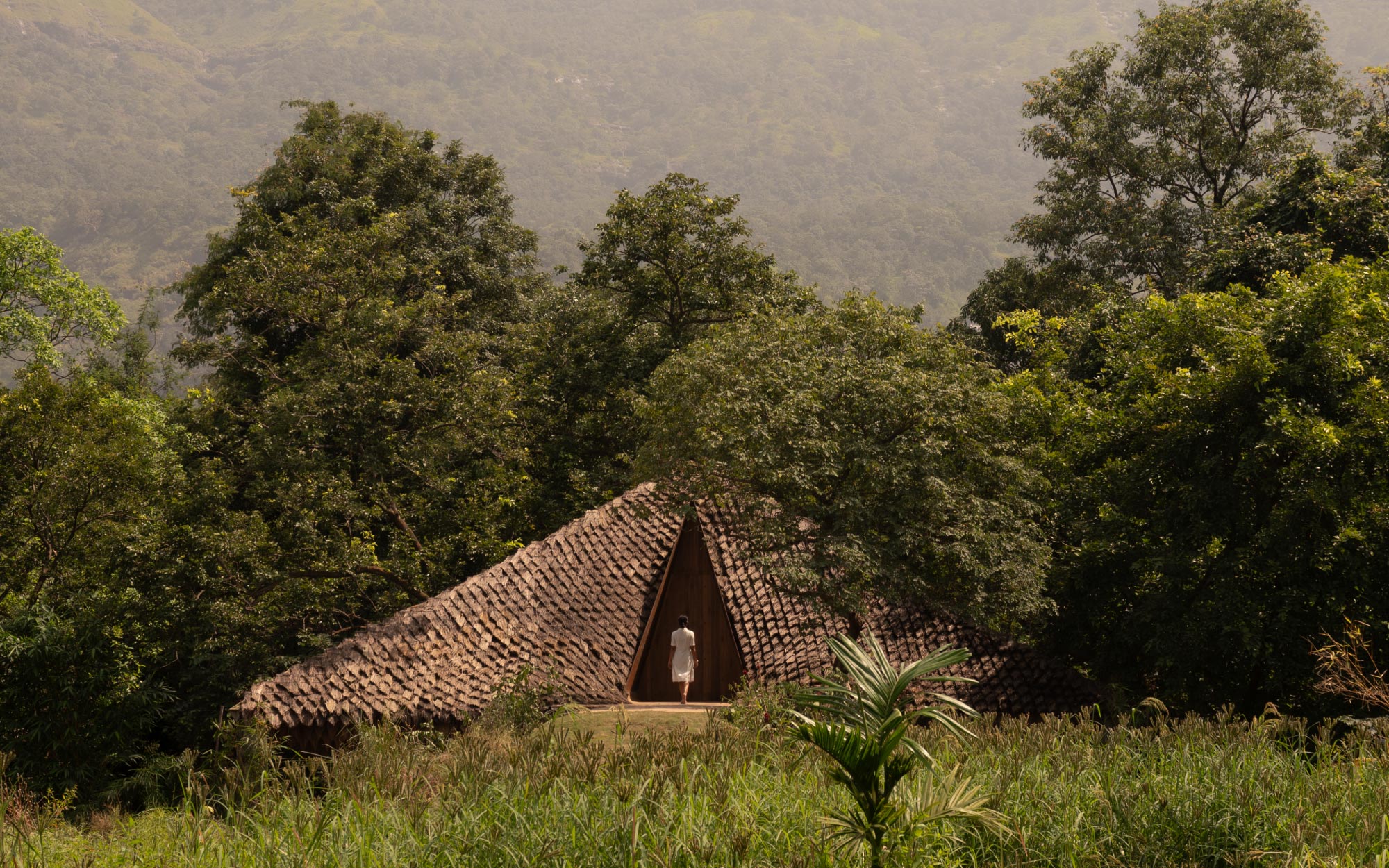
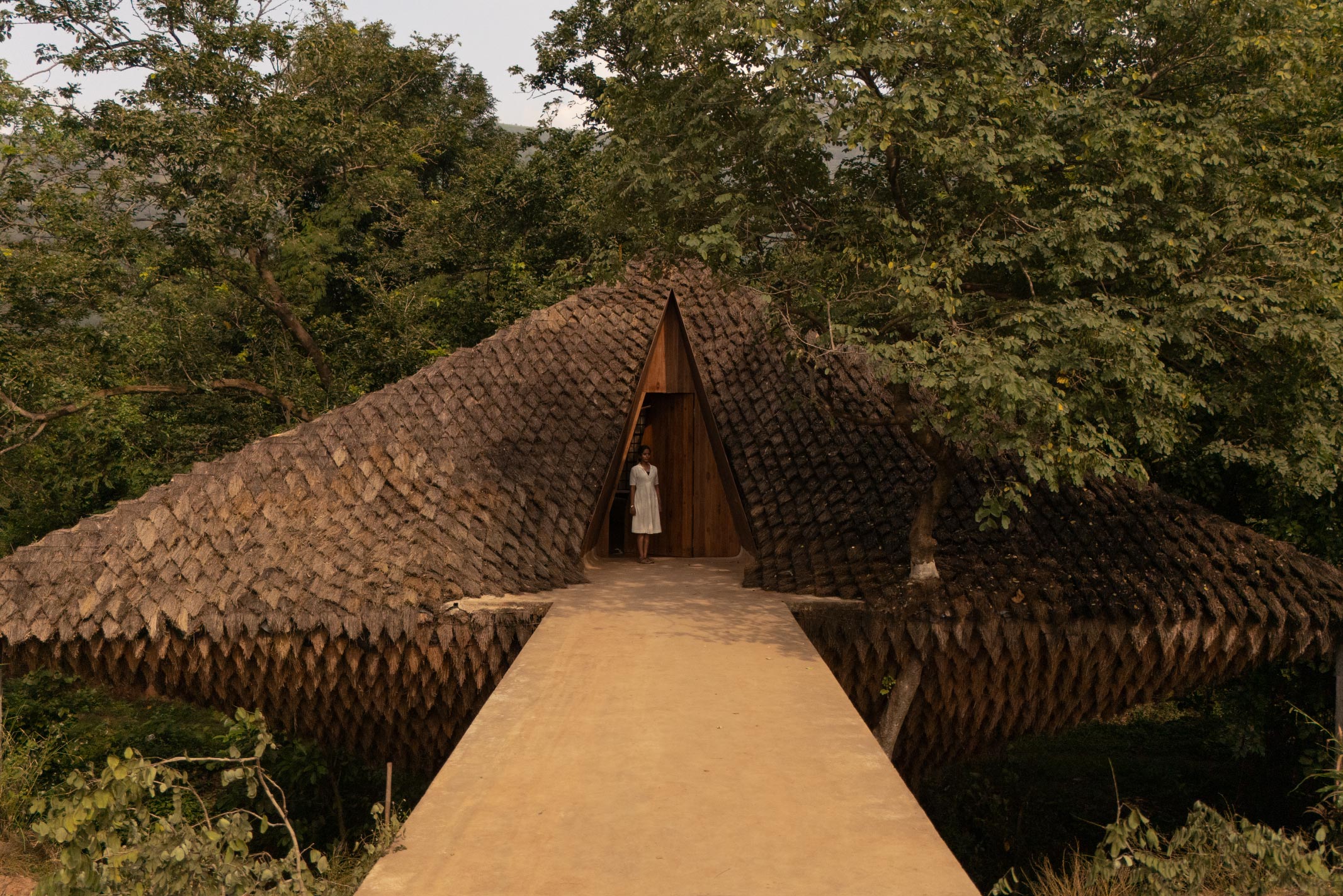
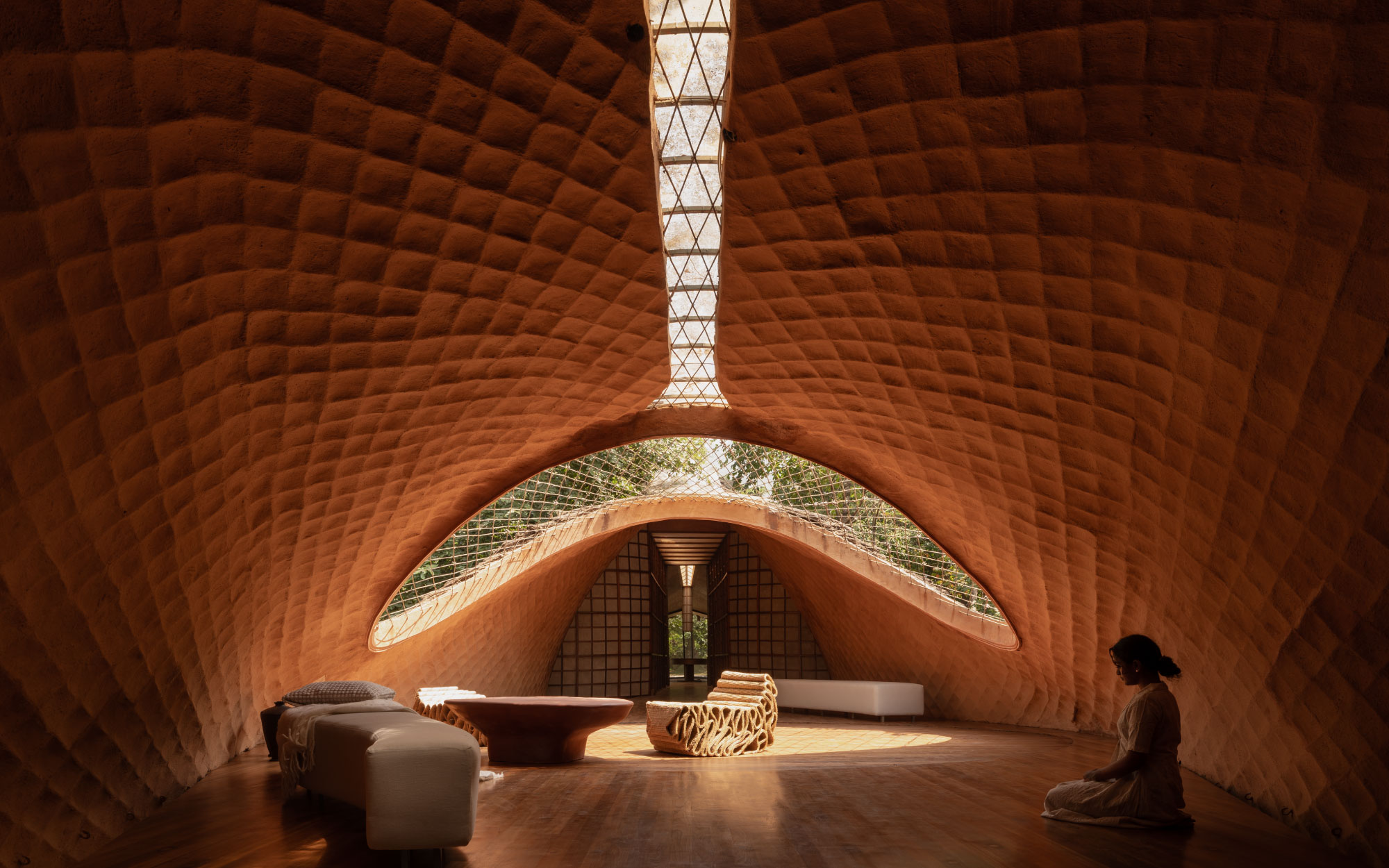
The giant cocoon spans across two levels. Its entrance unfurls with a series of steps—a natural reaction to the contours—followed by a long ramp that negotiates with the terrain. In between the natural and the mud-thatch realm lies a triangular opening, a cosy passage courtesy of the hyperbolic roof. Inside, a foyer cradles a set of hammocks on either side, while maintaining a visual connection with the floor below.
Also Read: DESIGN PATAKA # 22 -The Machan – Paradise by Shabbir Unwala
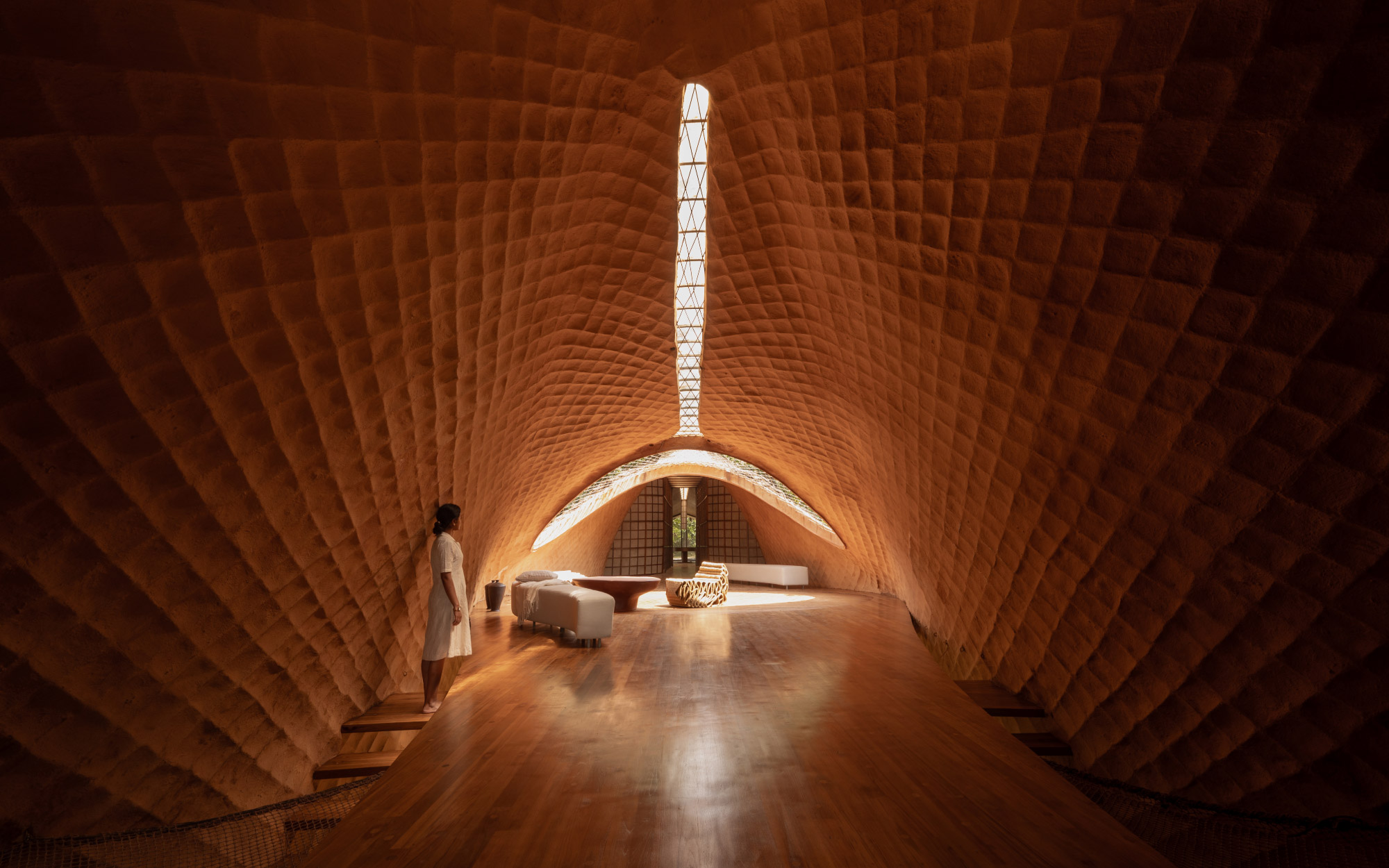
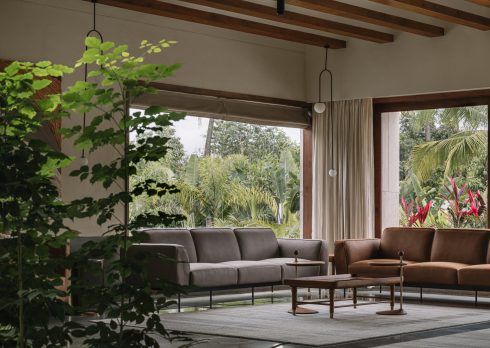
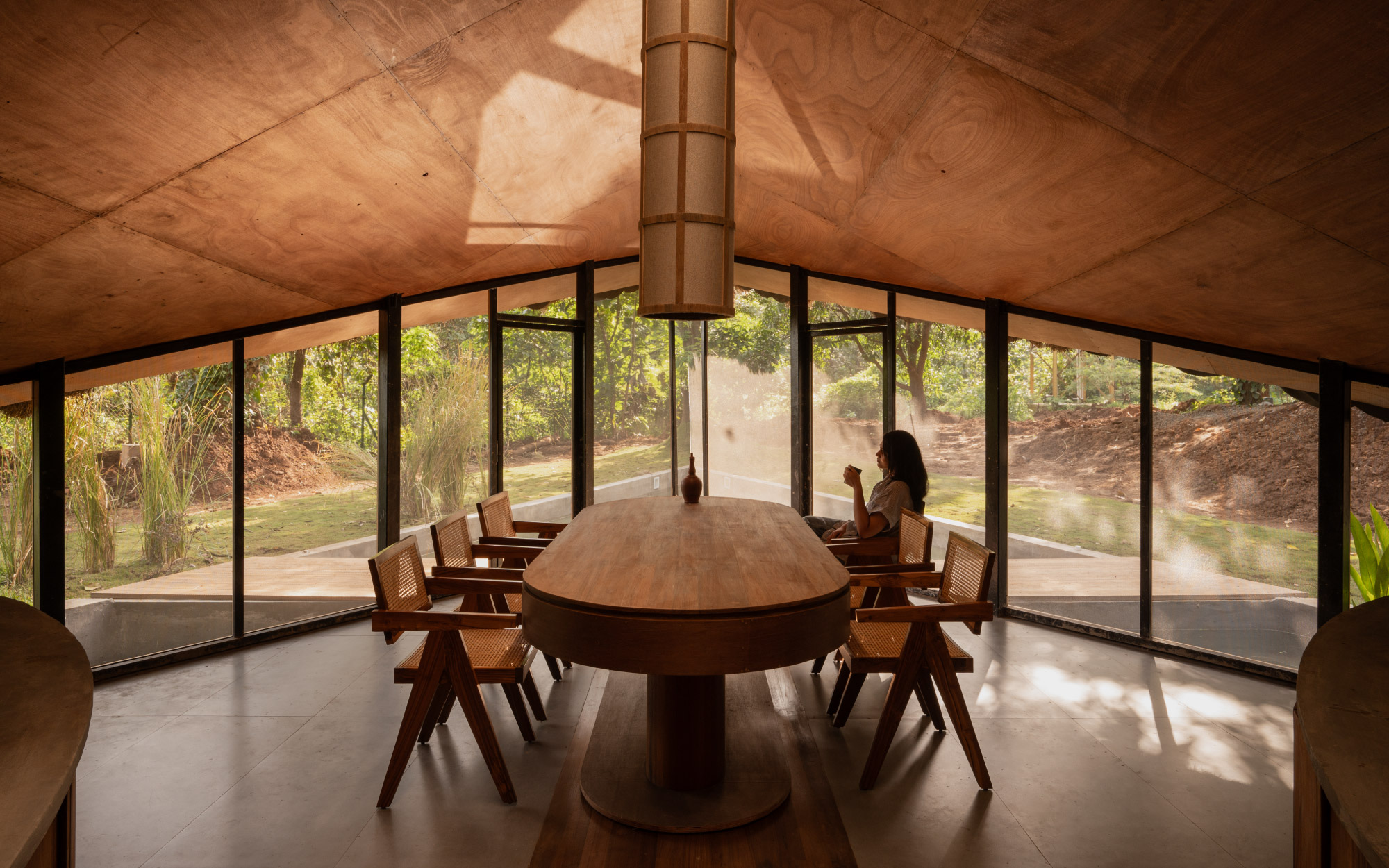
Swinging between whimsy and function, these hammocks serve as a perfect seating space for the capacious living area, drenched in honey-dew warmth. While a cosy dining area with wooden accents, corralled in a glass façade, keeps one eye on the landscape and the other on the triangular pool mirroring the roof’s cantilever.
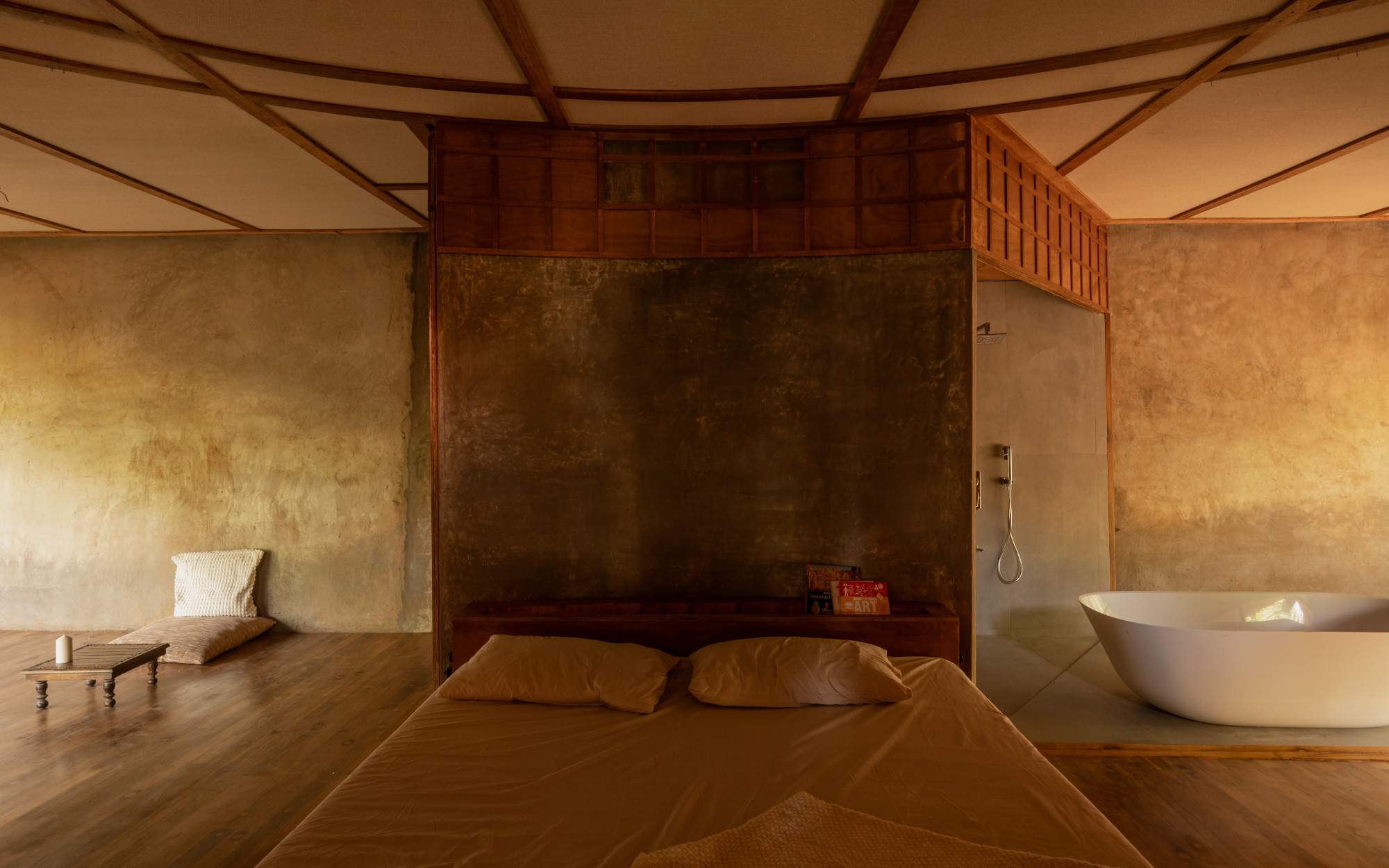
Flanking the bridge—disguised as a living area—a flight of steps slips downward into the private chambers, recalling an ant’s anthill which is introverted, structured and deliberately withdrawn. “Two separate staircases lead down to two bedrooms at the lower level of the bridge,” shares Daniel. These bedrooms with colossal openings frame glimpses of the forest, accompanied by the gentle susurrus of the stream far below.
Also Read: Tucked Between Forest And River: This Resort Breathes With The Wild
Disguised As Part Terrain
Adapting biophilia as a way of life, the structure is sheltered by a roof that fades into the background, a phenomenon born of the natural materials used. To conjure a column-free expanse, the central support was deliberately abandoned. “Hence, the idea of using four hyperbolic parabolas came into the picture,” avers the architect. Crafted from a network of steel cables and glazed with a layer of mud and thatch, the roof transforms into a sheath around the bridge. “Thatch was the only easily available local material, which could be used along with a layer of mud plaster to ward off rodents from cutting in through the thatch,” shares Daniel. He adds, “Combined with the mud plaster layer from within, stabilises and protects from rodents burrowing their way into the structure, the thatch-mud composite layer facilitates thermal cooling.”
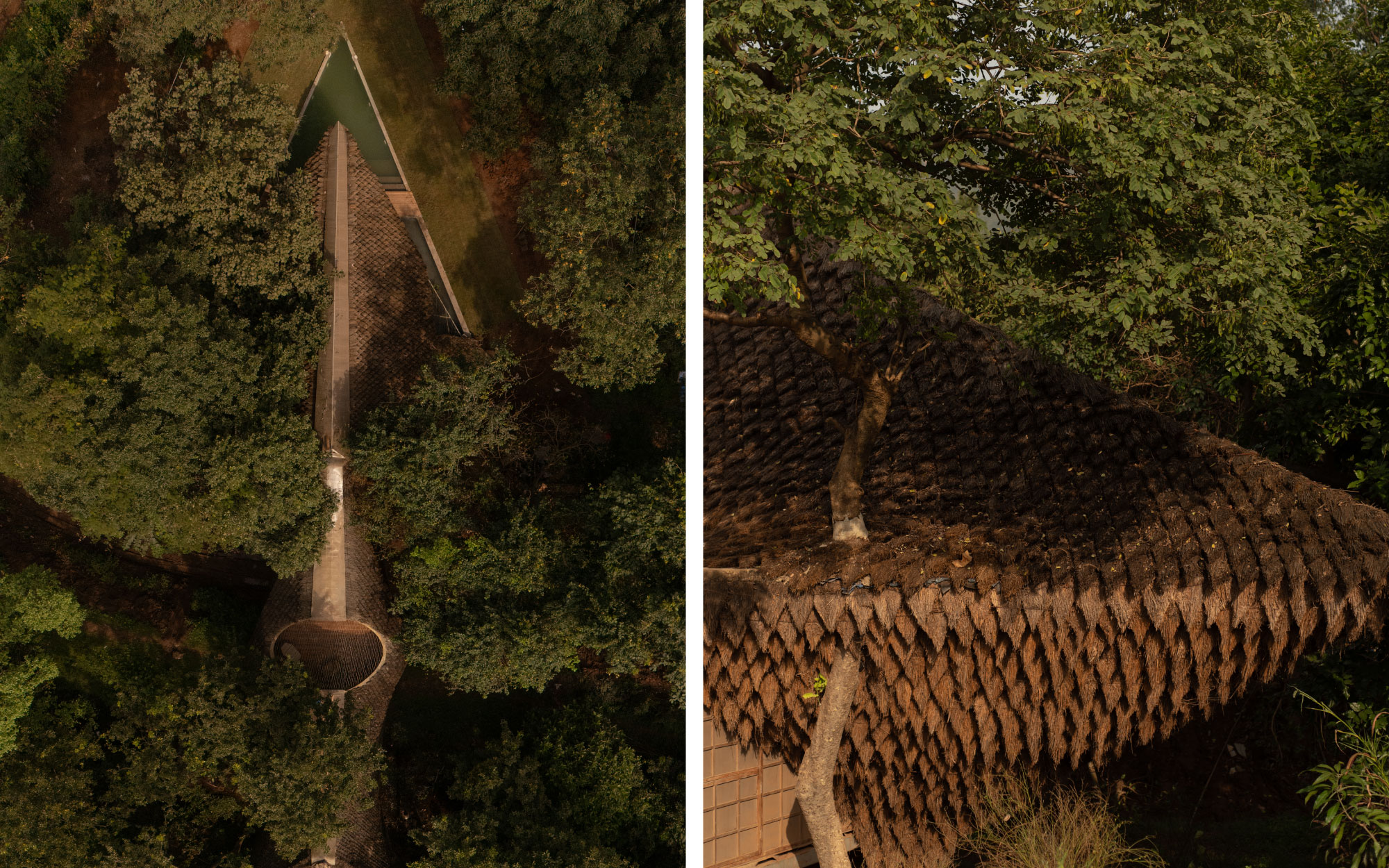
However, the roof’s unruly shape and eccentric material pose a challenge for water to sneak in from the corners. In pursuit of impermeability, the adobe roof adorns a 40-centimetre shingled surface informed by the pangolins. Its overlapping anatomy resists water, guiding it smoothly along its surface. Daniel adds, “The inspiration from the pangolin scales was to understand how it can be waterproofed with the diamond-spaced overlapped profile.”
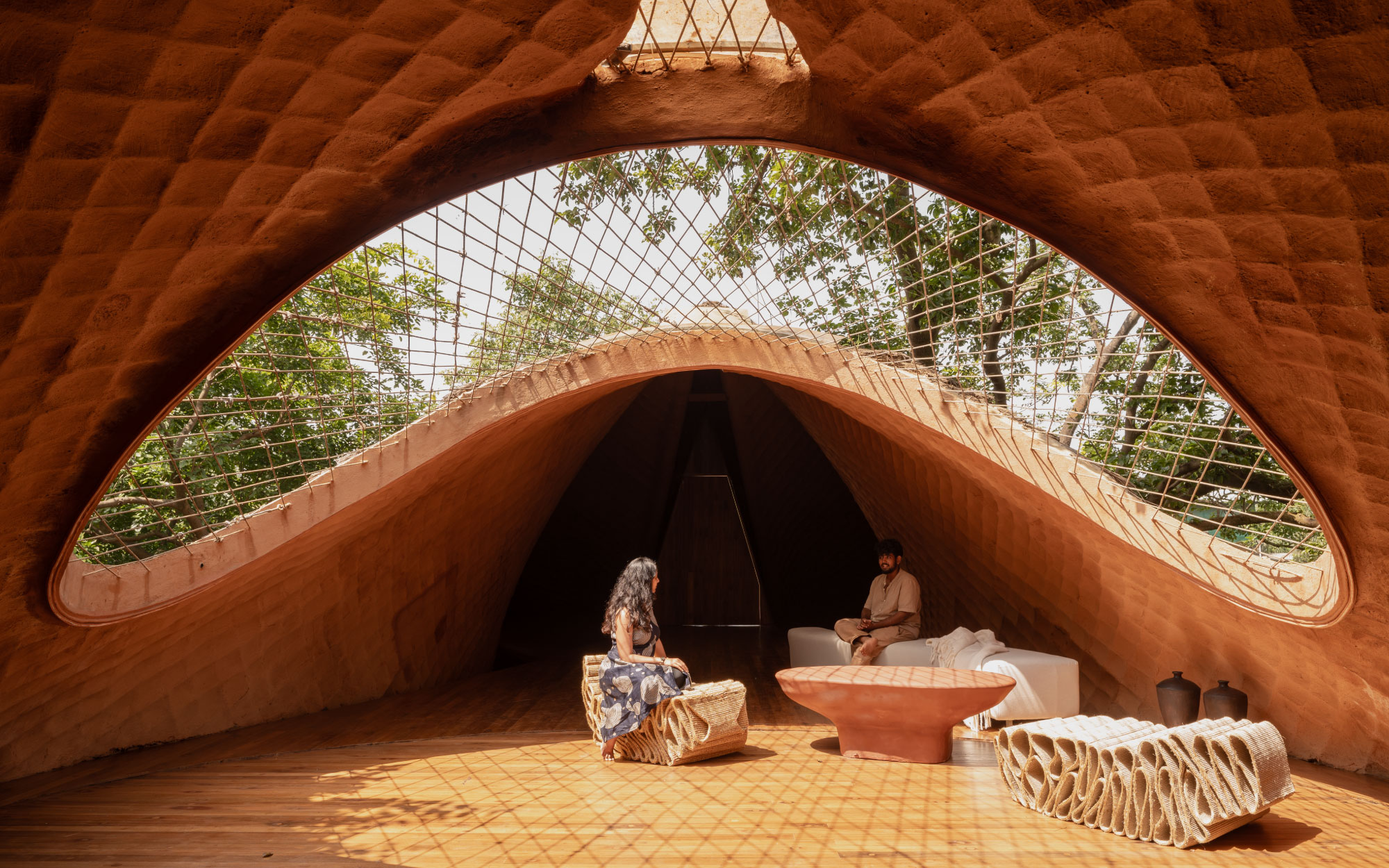
In concurrence with the location’s climatic strategy, the living area with a stripped opening in the roof opens to a courtyard that coaxes hot air skyward. An oculus punctuates the roof, allowing rainwater to traverse the home’s interior, descending through floor perforations and dispersing back into the stream below.
Drafting With Nature
The home is suspended on the ethic of reuse. From chairs shaped by folded carpets woven with fibres spun from PET bottles and discarded fishing nets, to ship-deck timber grounding the flooring, the home sits rooted in adaptive reuse. Jute and mesh screens soften light and airflow, while Shoji-inspired translucent partitions choreograph movement and privacy throughout the farmstead’s open layout. “While the end product eventually becomes a better product than what we had envisioned, the journey is very unpredictable with a lot of interventions coming from the site and from the nature of materials we use,” remarks Daniel.
Also Read: Inside A Pune Home That Ditches Neutrals For Bold Hues
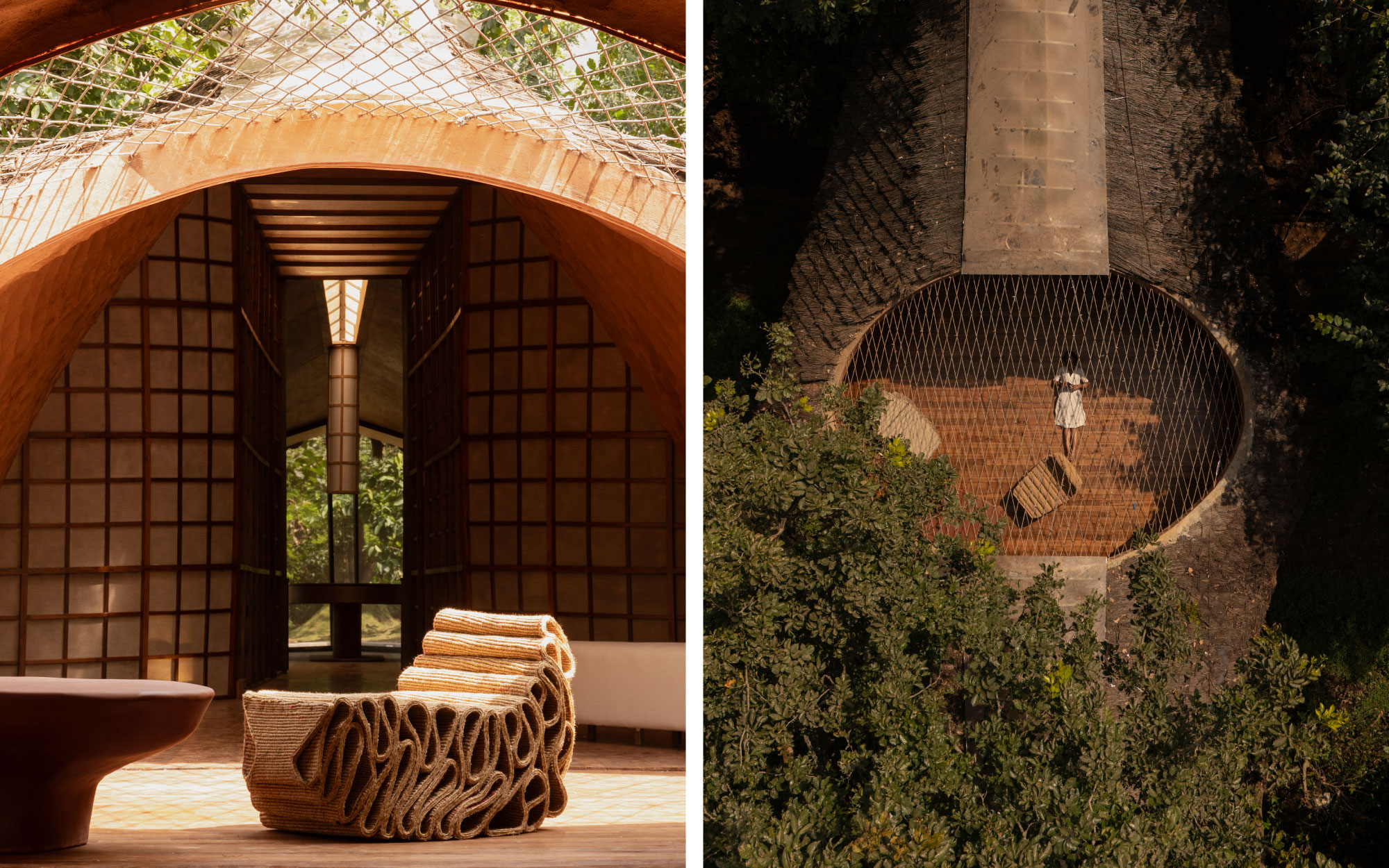
With deforestation at its peak in this era, the house demonstrates how architecture can negotiate with the land instead of overpowering it. By borrowing from natural systems and allowing the surroundings to design its form, ‘Bridge House’ reframes sustainability. In doing so, it stands as a stark reminder that erasing terrain and flora is not the path to development; rather, it lies in between the lessons of dwelling within them.