From Vadodara To The World Of Design: Marboocrete Is Reinventing Galicha Tiles & Exterior Blocks
Blending heritage craftsmanship with contemporary design, the cement galicha tiles from Marboocrete are redefining conventional flooring in more ways than one.
- 6 Aug '26
- 1:05 pm by Rashmi Gopal Rao

There is little doubt that flooring—although most often planned as an afterthought—plays a key role in setting the mood of the space. It anchors the aesthetics and ties all other décor elements together, and with handcrafted tiles that combine artisanal craftsmanship with sustainability and heritage, you can never go wrong. Well, the tiles from Marboocrete fall perfectly into this category! Marboocrete, incidentally, is the manufacturing and design-centric arm of Shree Saibaba Marble Co. Based in the culturally rich city of Vadodara in Gujarat, Shree Saibaba Marble Co. builds on three decades of rich experience in the natural stone and building materials industry, and its key products include handcrafted cement (galicha) tiles and designer exterior block.
Today, Marboocrete is a brand rooted in design, storytelling and contemporary architectural thinking; a bridge between heritage craftsmanship and modern design sensibilities. At its heart, Marboocrete is a story of two generations united by a common vision: preserving Indian craftsmanship while reimagining how architectural spaces are experienced. Combining decades of material expertise with a design-led approach, this father-daughter duo is working to create surfaces that are not merely functional, but meaningful, memorable, and deeply connected to India’s rich craft heritage.
Early Pursuit of Excellence
The inspiring story of Shree Saibaba Marble Co. dates back to 1990 when Mr. Pritesh Agrawal founded the organisation at the age of 17. “Learning the trade entirely through hands-on experience, he immersed himself in every aspect of the stone industry—from quarrying and processing to understanding the nuances of materials and craftsmanship. His constant pursuit of innovation and perfection led to one of the company’s early breakthroughs,” says Hariti Agrawal, Managing Partner, Shree Saibaba Marble Co. and daughter of Pritesh Agrawal. She further adds that her father was instrumental in pioneering the supply of premium Green Kota Stone in large-format slabs (6 feet * 3 feet) replete with uniform shade, high density and top-notch quality; something that was virtually unheard of at the time. By working closely with miners, training the workforce at the source, and understanding the material deeply, Pritesh Agrawal developed a product that not only gained acceptance but was also highly sought after by leading architects across India.
Ethereal Appeal
The idea for Marboocrete emerged during the COVID-19 pandemic, when there was a growing desire for more personalised and expressive spaces. Having spent decades working closely with architects, Mr Agrawal recognised that design was increasingly moving towards individuality, craftsmanship, and customisation. In his search for a material that embodied these values, he rediscovered Galicha tiles—a craft that had once adorned traditional Indian homes but was slowly fading away. For the uninitiated, Galicha tiles are decorative floor tiles adorned with intricate, carpet-style patterns, floral motifs etc. Galicha tiles had an enduring appeal that was timeless and offered limitless design possibilities. “It could be customised to suit individual spaces, last for generations, and repolished and restored over time. Thus, these tiles combine artistry, sustainability, and longevity in a way few contemporary materials can,” says Hariti.
Heritage Craftsmanship with Contemporary Appeal
Marboocrete evolved by bringing together skilled artisans from Rajasthan while simultaneously training and upskilling local craftsmen, including women, thereby creating a new generation of makers known as the ‘Marboocrete Kalakaars.’ For the first four to five years, the focus remained entirely on experimentation, research, and mastering the craft—understanding materials, refining processes, and developing designs rather than commercial expansion. In the process, they have developed new patterns with unconventional colours and designer exterior blocks with colour customisation.
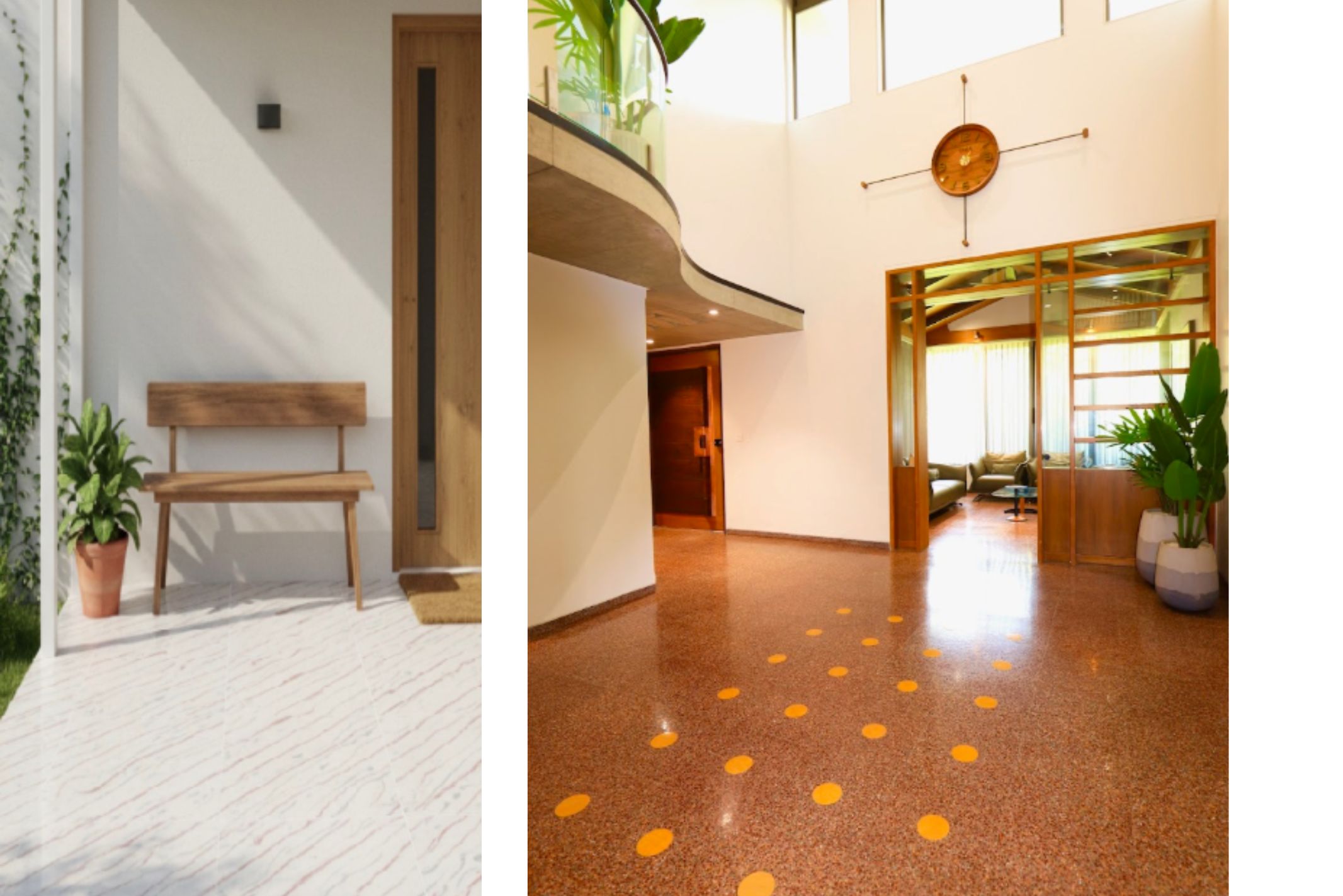
Marboocrete’s portfolio includes handcrafted cement or galicha tiles, designer exterior blocks and terrazzo tiles. The cement galicha tiles are meticulously hand poured, hydraulically pressed, air dried, cured in water for 15-20 days, grinded, coated and then polished. “Having worked closely with the design community for decades, our collections are shaped not only by tradition but also by continuous conversations with clients, architects, and interior designers who are seeking more personalised and https://www.designpataki.com/the-rise-of-brick-led-soft-architecture-in-indias-residential-design-landscape/. Our patterns and motifs are inspired by heritage architecture, intricate galicha patterns, and timeless geometric designs that can be adapted to both contemporary and classical settings. Many of these designs draw from Indian craftsmanship and architectural motifs but are reinterpreted through a modern lens,” adds Hariti.
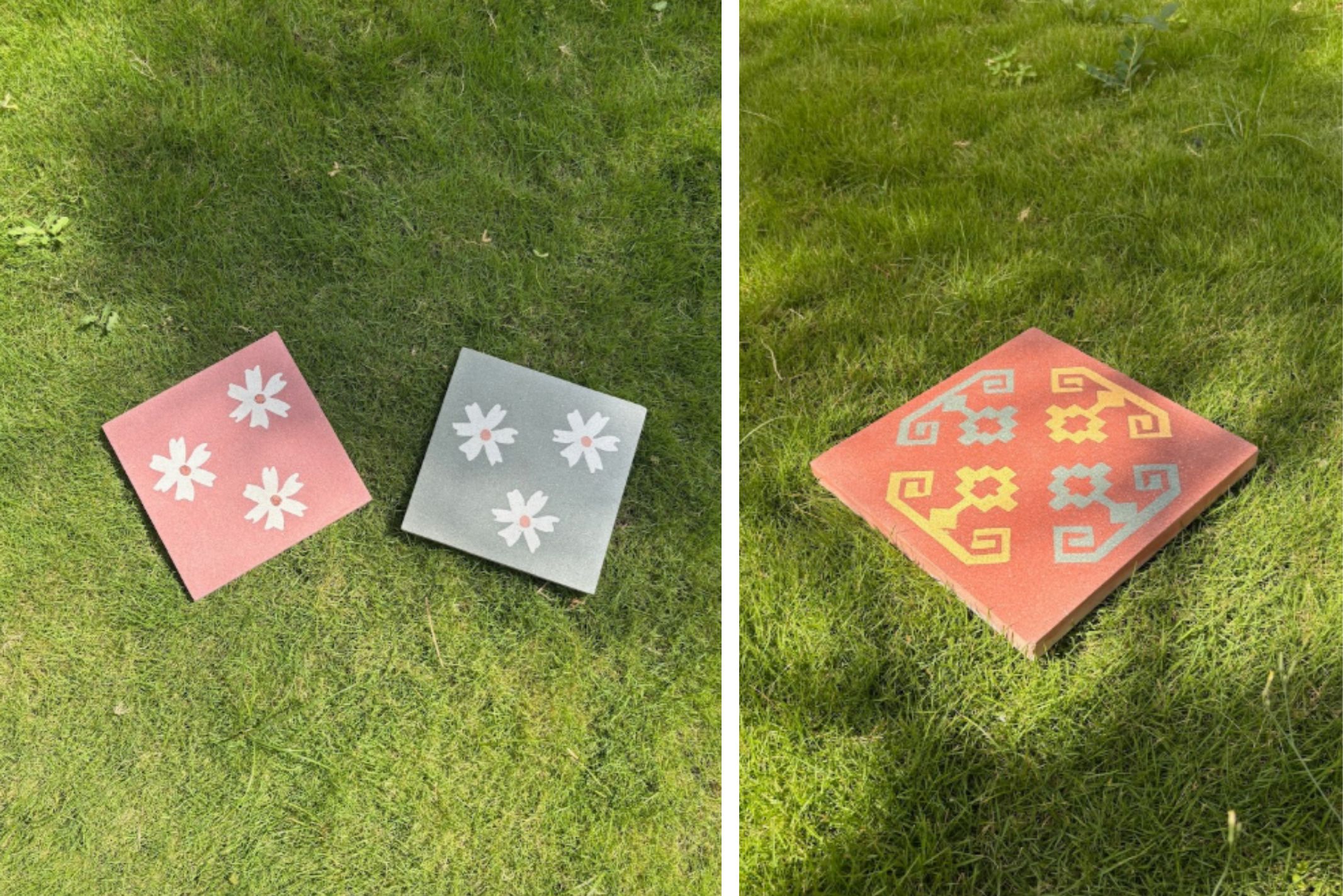
Colour plays a key role in the entire design process. “From earthy neutrals and stone-inspired tones to dramatic monochromes and custom colour palettes, we work closely with designers to create surfaces that complement the character of each project,” quips Hariti.
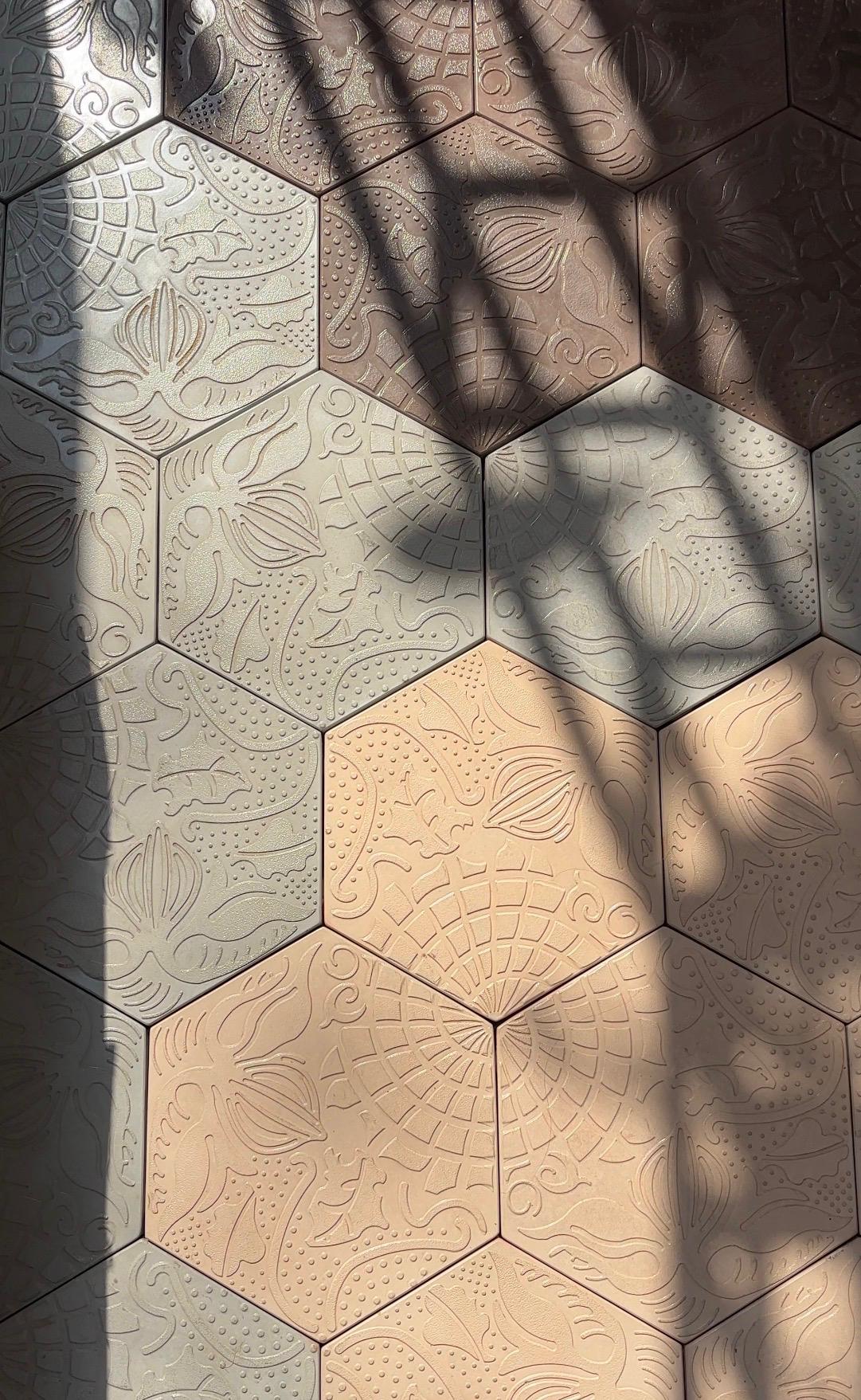
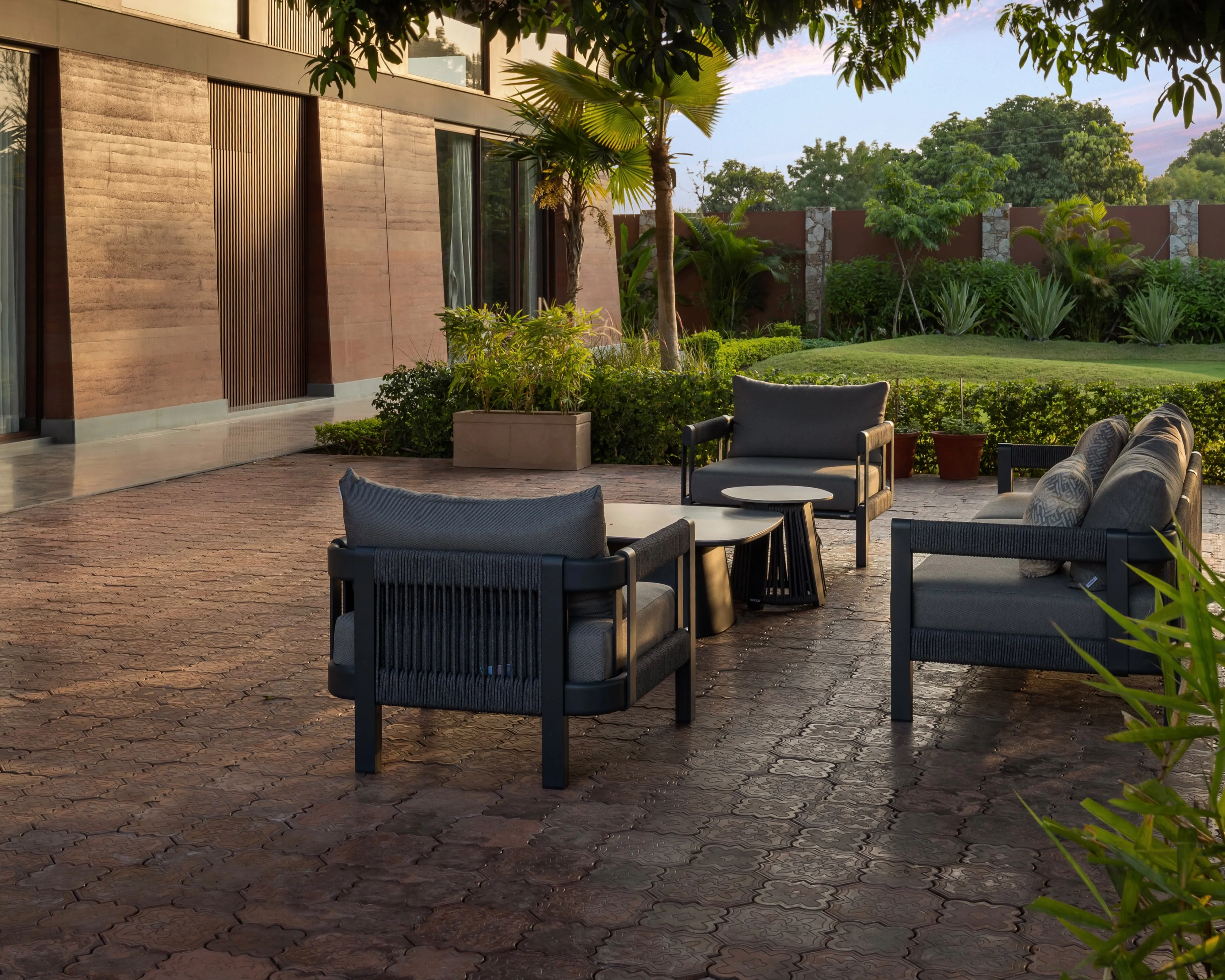
Their design innovation extends beyond interiors and into exterior paving solutions. Rather than treating blocks as purely functional products, they approach them as design elements capable of transforming public and private spaces. A good example is Hexaforest, where the beauty lies not only in the individual block but also in the way the blocks interact with one another. Every intersection of the hexagonal units generates a secondary pattern; the result is a surface that becomes richer and more visually engaging as it expands across a space.
One of their most exciting recent developments has been the creation of marble-like cement tiles—a significant breakthrough in the hand-pouring process. “Traditionally, achieving natural marble-like movement and fluidity within cement tiles has been extremely challenging. Through years of experimentation, we have developed a technique that allows us to create flowing, organic patterns within the tile itself,” adds Hariti.
Relentless Pursuit of Innovation
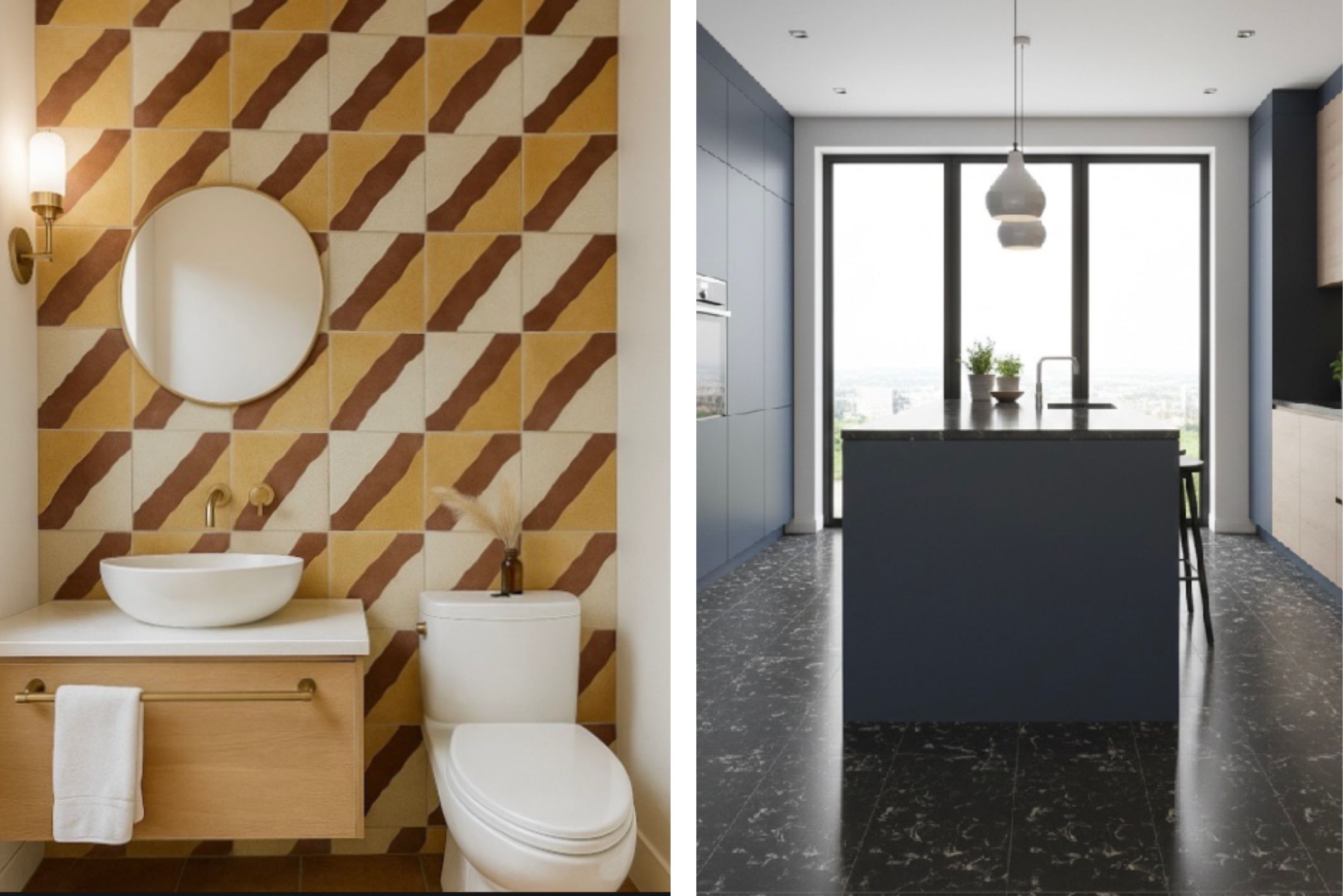
Right: Marbo Niro is yet another product from the marble collection (Image Courtesy: Marboocrete by Shree Saibaba Marble Co.)
Marboocrete’s USP lies at the intersection of durability, limitless customisation, and enduring longevity. It is this combination that enables them to create surfaces that are timeless in spirit, contemporary in expression, and unique to every project they become a part of. “Perhaps most importantly, our products have been shaped by decades of direct engagement with architects, designers, and end users. Every collection emerges from real conversations, practical challenges, and evolving design aspirations. This allows us to create products that are not only beautiful but also meaningful, relevant, and adaptable to contemporary architecture,” concludes Hariti.
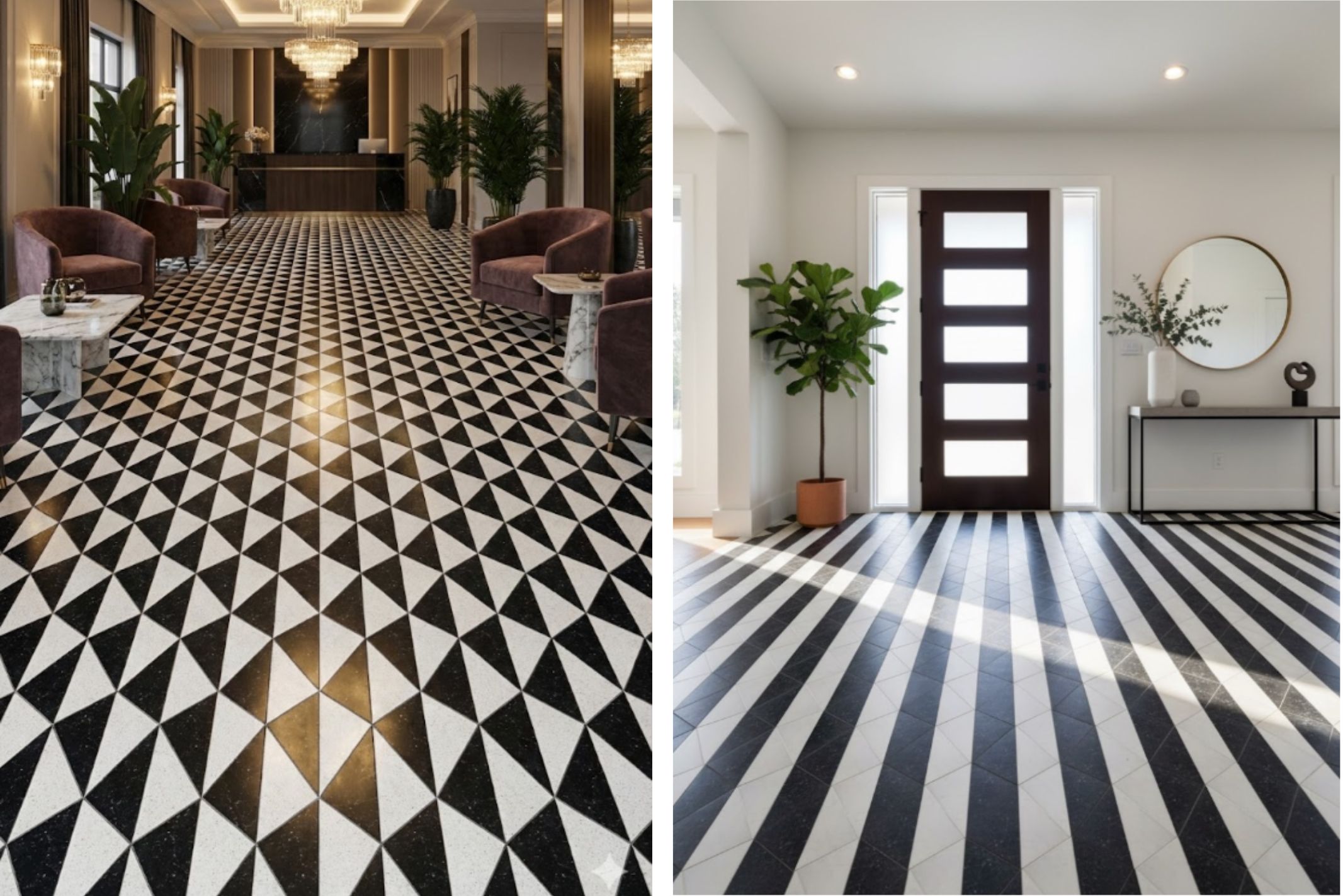
In line with this philosophy, the company has also been exploring new formats and shapes beyond the conventional square tile. Case in point is ‘Shyam Savera,’ a kite-shaped tile that showcases the possibilities of both form and material. Designed in contrasting black and white, the tile features a deep black base with delicate white marbling. When installed together, the tiles create a bold checkered composition that feels graphic, contemporary, and highly architectural while retaining the warmth of a handmade product.