The Things That Hold Us Together: Remembering Arpita Singh
Arpita Singh’s paintings, friendships, and solidarities reveal how art, community, and a long road to institutional recognition shaped a generation of artists in Indian modernism.
- 18 Nov '26
- 1:50 pm by Manisha AR

“In all my works, from earlier and now. I think I’m looking for or following a system where they find support in each other; everything is connected to the other. Nothing is lost alone,” shares Indian painter Arpita Singh in conversation with Deepak Talwar. The conversation posted on Talwar Gallery’s Instagram account is juxtaposed with clips of her works in her upcoming show, ‘Unfolding’ in New York.
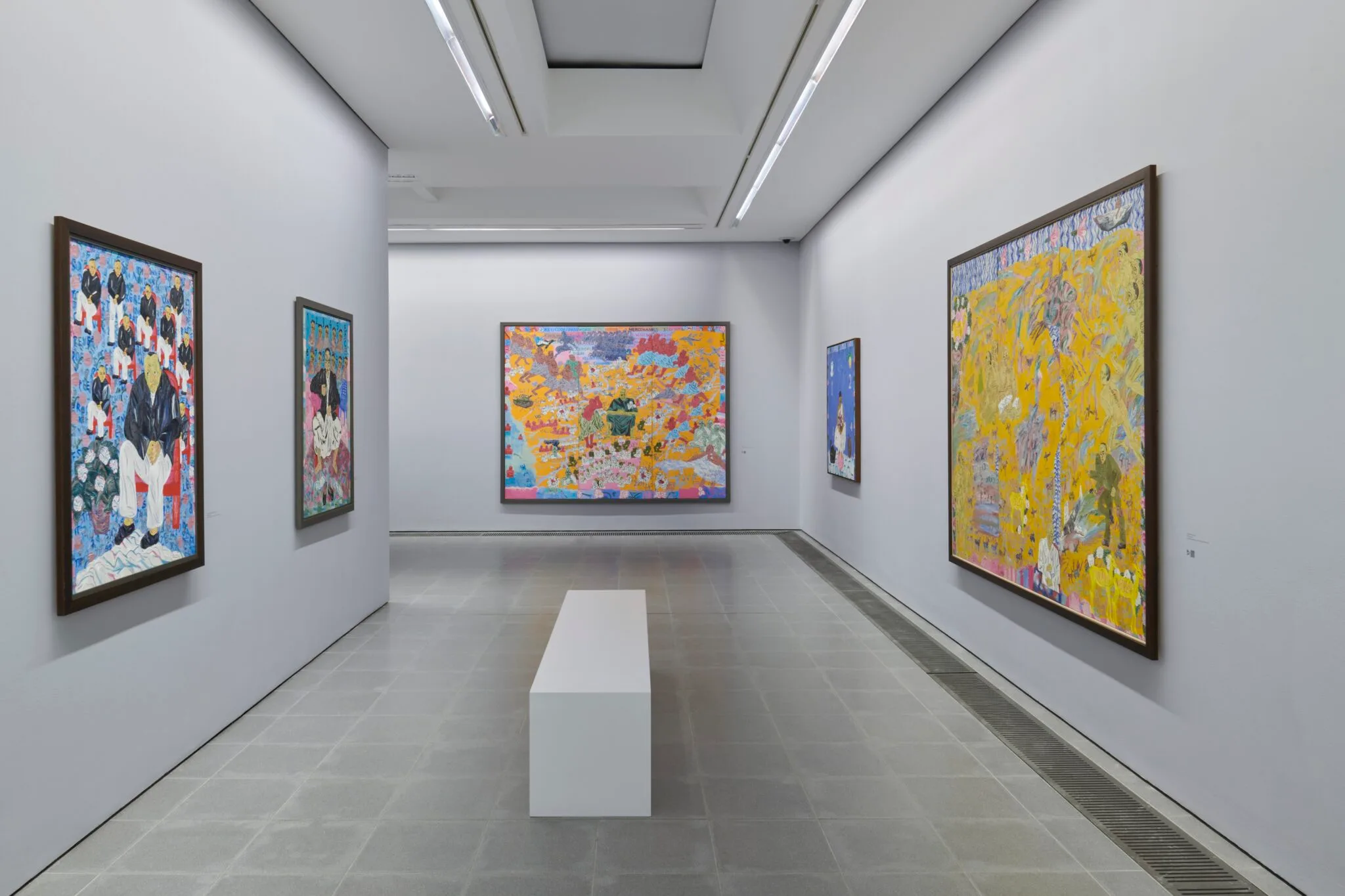
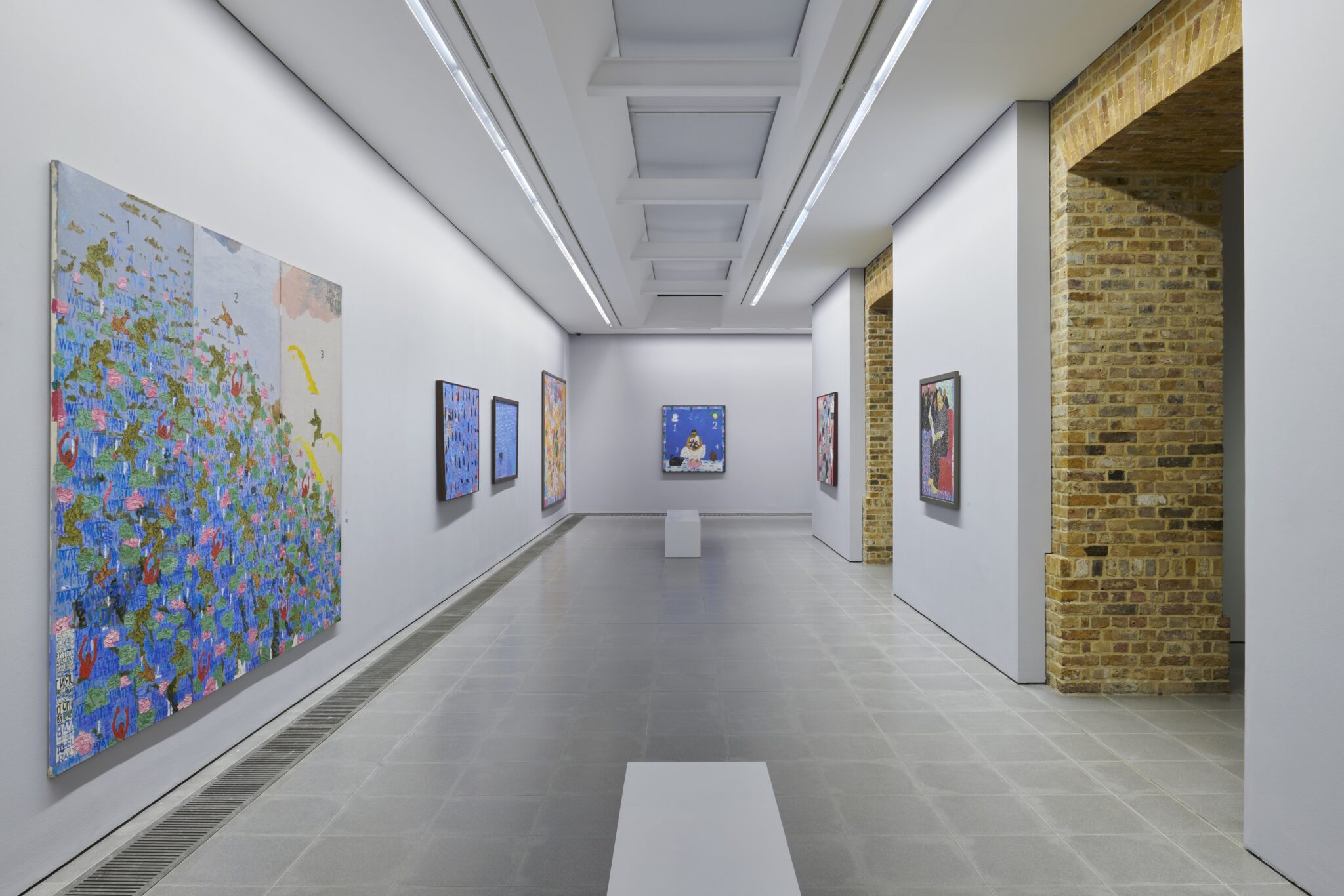
The Padma Shri and Parishad Samman Awardee’s words offer a glimpse into the visual philosophy that runs through her practice: an understanding of the world as a network of interconnected lives, memories, figures, and experiences. In ‘Until You Can Build A Home Inside’ (2025), a sea of black-and-white marks stretches across the canvas, with the title repeatedly inscribed in black ink. Slightly off-centre, two hands reach towards each other.
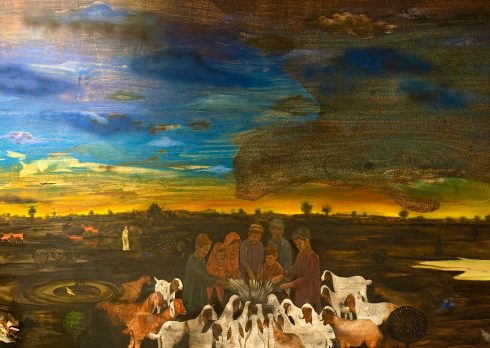
In another work, ‘Women Sitting,’ several women draped in brown sit within a sea of pink, with a sliver of blue above them bearing the words ‘Arabian Sea’. On closer inspection, Singh’s canvases begin to resemble seas of their own, where movement emerges through lines and dots, while bright colours animate the composition. Each vignette builds towards a larger narrative, holding multiple figures and points of view without resolving into a singular observation. Her paintings are not merely collections of images, symbols, and figures; each element exists in relation to another, forming an interconnected visual world. Some ideas remain visible, while others continue to elude the viewer. This approach to image-making draws, in part, from traditional Indian art forms, particularly miniature painting, where flattened perspectives allow multiple viewpoints to coexist rather than privileging a singular point of view.
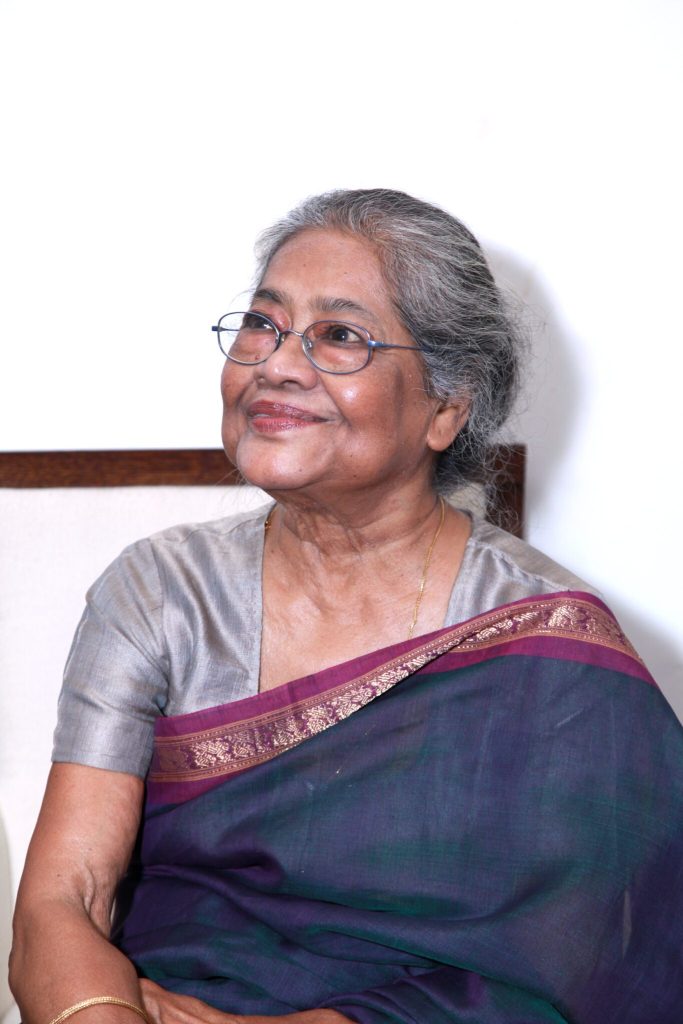
Born in 1937 in Baranagar, Singh later moved to New Delhi, where she studied at Delhi Polytechnic. In 1962, she married fellow artist Paramjit Singh, whom she had met during her studies. Singh’s engagement with traditional visual forms and modernist experimentation allowed her paintings to unfold as layered narratives, inviting viewers to look, interpret, and discover rather than simply observe. Perhaps this understanding of interconnectedness extends beyond Singh’s canvases. It also offers a way of looking at the relationships and shared histories between women artists of her generation.
Also read: 1 Million Square Feet Of Modernism: Manuel Rabaté To Helm Adjaye-Designed KNMA
Things You Probably Didn’t Know About Arpita Singh
- A decade after graduating, she, along with her husband, co-founded ‘The Unknown’, an artists’ collective that sought to move away from traditional academic conventions and experiment with new modernist forms. The collective also included artists such as Eric Bowen and Rajendra Dhawan.
- While Singh’s paintings have been widely discussed, she remained a relatively private figure who rarely gave interviews. In The Guardian, Cleo Roberts-Komireddi attributes this reluctance to her desire to remain focused on her work. Yet, some of the experiences that shaped her artistic vocabulary can be traced beyond the canvas.
- Before becoming known for her figurative and modernist paintings, Singh worked with the Ministry of Textiles and later with the Cottage Industries Restoration Program. Her work involved mapping, documenting, and helping revive traditional crafts, bringing her into close contact with artisans and weavers. These encounters exposed her to material histories, cultural traditions, and forms of knowledge that often sit outside conventional narratives of modernism.
- This engagement with traditional crafts offers another way of understanding Singh’s paintings. The multiple vantage points, layered narratives, and absence of concrete conclusions in her compositions are not simply aesthetic choices; they also reflect an understanding of artistic traditions in which different forms of knowledge and visual expressions coexist. Rather than treating modernism and traditional art as opposing categories, Singh brought them into conversation through her works. Her practice consequently complicates the distinction between the two, challenging conventional understandings of what modern Indian art could look like.
- Art was also a part of Singh’s family life. She and Paramjit Singh had a daughter, Anjum Singh, born in 1967, who went on to become an artist herself. Her practice focused on urban ecology and the environment. The family lost Anjum to cancer in 2020.
The Collective Histories of Women Artists
Earlier this year, at India Art Fair, I remember being drawn to a photograph of four artists seated cosily on the floor in the intimate manner of friends gathered in someone’s living room. On closer inspection, I learnt that the four women were Nalini Malani, Nilima Sheikh, Madhvi Parekh, and Arpita Singh, all of whom came of age as artists in the 1970s and are now among the most significant figures in Indian modern art.
Their early exhibition trajectories took different paths: Madhvi Parekh and Arpita Singh held their first solo exhibitions at Chemould Art Gallery, Nilima Sheikh at Triveni Gallery, and Malani at Pundole’s in Mumbai. Yet their shared history extends beyond these individual milestones. Between 1987 and 1989, the four artists came together for Through the Looking Glass, a travelling exhibition initiated by Malani. Originally envisioned as a larger gathering of 17–18 women artists, the exhibition eventually brought these four together, creating a space for artistic exchange, friendship and mutual critique at a time when the art world remained overwhelmingly male-dominated.
Decades later, their practices are receiving renewed international institutional attention. Singh presented her first institutional solo exhibition, ‘Remembering,’ outside India at the Serpentine in London in 2025; Malani presented ‘Of Woman Born,’ a collateral event of the 2026 Venice Biennale; and Sheikh is currently showing ‘Fractured Skies,’ her first solo exhibition in New York, at MoMA. While their artistic trajectories have unfolded differently, the timing and nature of this recognition raise questions about how long women artists often have to sustain their practices before receiving wider institutional visibility. Malani has spoken about the friendships, discussions, and critical exchanges that emerged through ‘Through the Looking Glass’ (1987-1989), suggesting that the exhibition was as much about building a community as it was about presenting artwork. What began as a shared effort to make space for women artists became an important moment in their collective artistic history
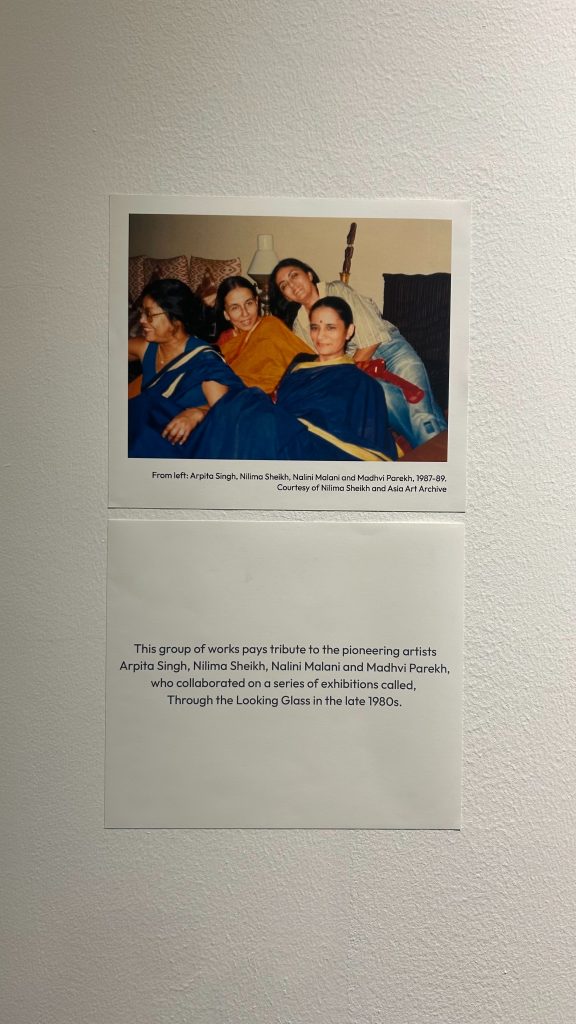
Looking at the photograph again, I find myself thinking about Singh’s description of her paintings as a system in which everything supports something else. The four artists, seated together, offer another image of this interconnectedness. Though their careers have taken distinct directions, they came of age in an art world where women had to make space for themselves and, often, for one another. Their trajectories also point to the subtle barriers women continue to encounter, particularly with institutional recognition. While hardly exclusive to the arts, this invites us to consider the role that friendships, solidarities and collective networks play in sustaining women’s careers.
Singh’s passing is a tremendous loss for modern Indian art, but it also draws attention to the women artists of her generation, whose practices have taken decades to receive the institutional recognition they deserve, and to those who continue to negotiate similar barriers.