Who Owns The Goddess? Indian Art And Fashion’s Originality Problem Isn’t What You Think
Rahul Mishra's latest couture show reveals why India's cultural symbols belong to everyone—and no one.
- 15 Jul '26
- 3:30 pm by Manisha AR

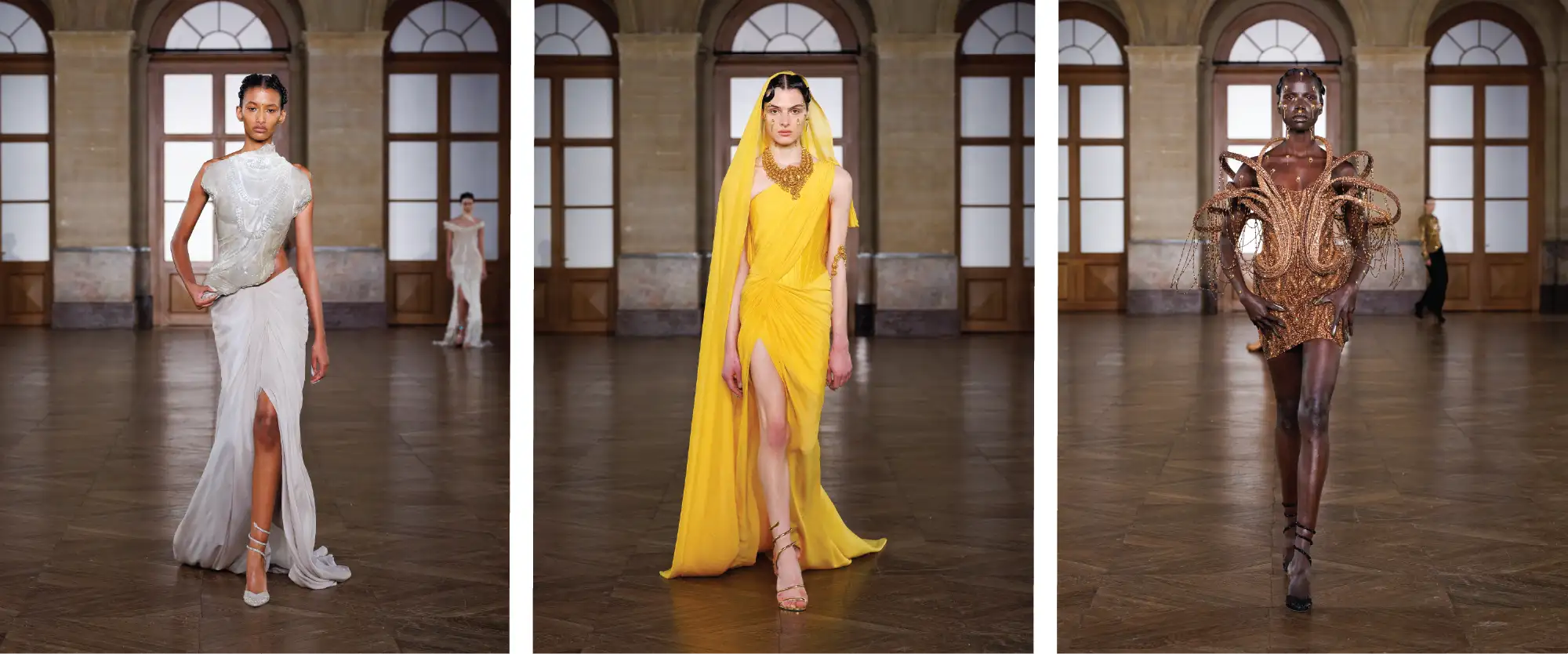
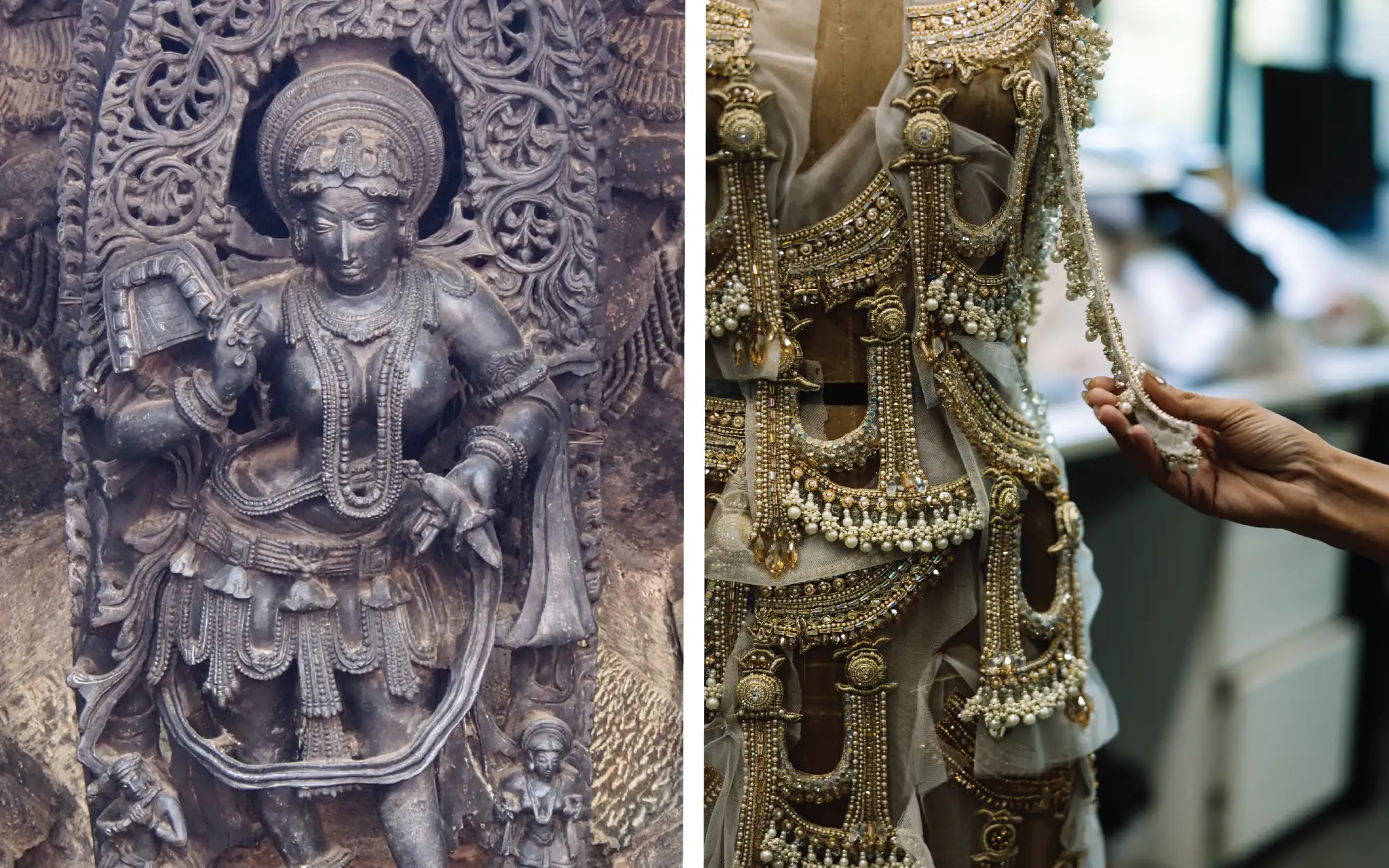
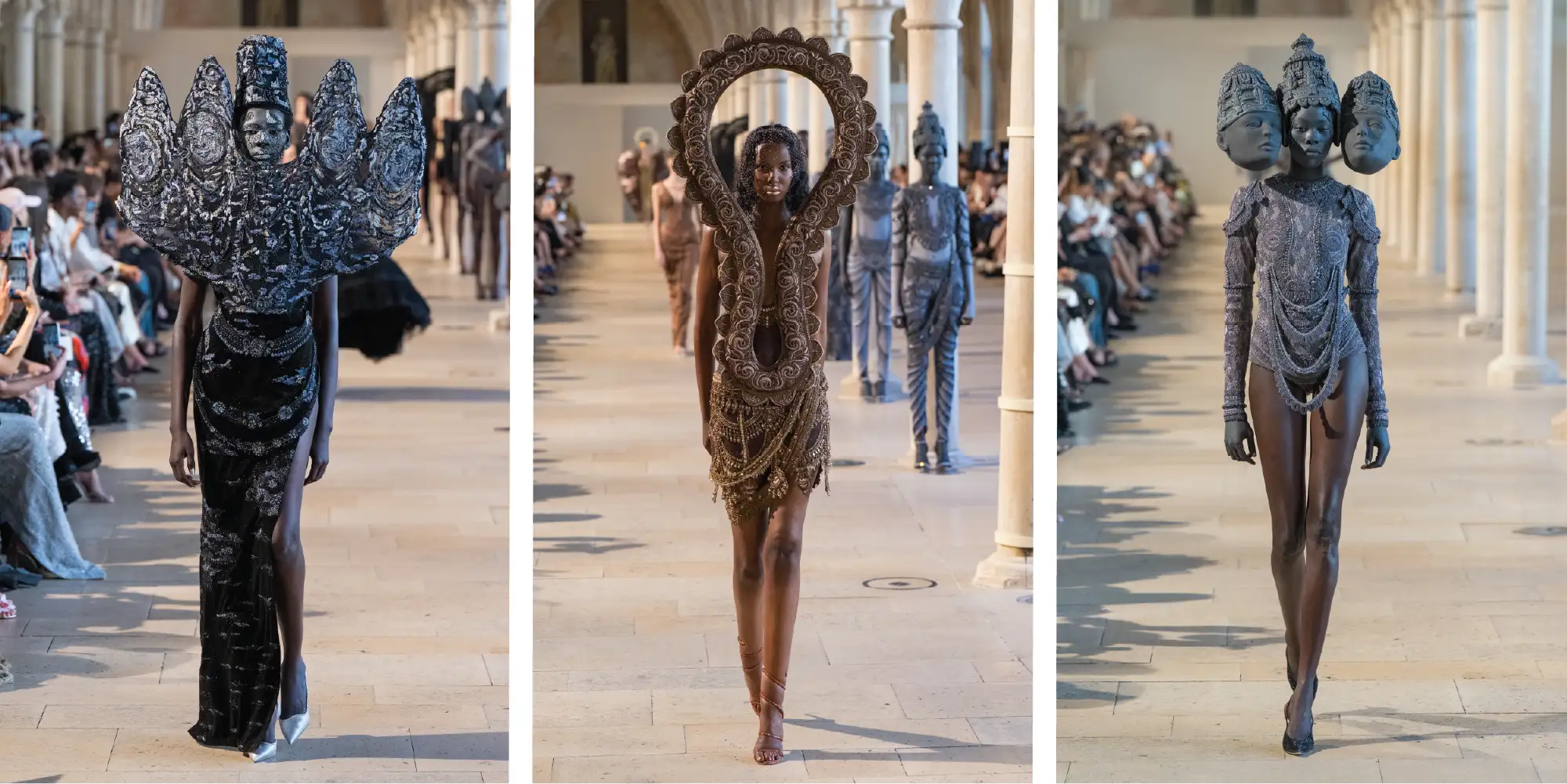
Rahul Mishra’s latest couture presentation, ‘Devi: The Eternal Muse’ at Paris Couture Week, Fall/Winter 2026, reveals an uncomfortable truth about Indian fashion: international success often demands that designers become ambassadors for an entire culture, while at home they’re expected to prove originality above all else. Mishra shares, “DEVI reflects on the eternal muse as an idea that has travelled across centuries, continually returning to the artist’s imagination,” affirming his understanding that the Indian Goddess is a symbol that belongs to no single person. Over the years, countless designers and creatives have found inspiration in the way these sculptures hold themselves.
International media outlets have praised Mishra’s collection this season for bringing together the best of two worlds: Indian heritage and craftsmanship with European couture sensibilities, paired with an extraordinary collaboration of homegrown talent. His team worked with traditional clay artisan Sumant Kumar to create the headpieces worn on the runway, while the show music featured an original score composed by Indian sound designer Jayanth Luthra using instruments such as the mridangam, ghatam, temple drums, singing bowls, and thavil—all recorded inside the famed Ajanta Caves. He also collaborated with the Indian jewellery brand Tanishq to co-design a selection of jewellery.
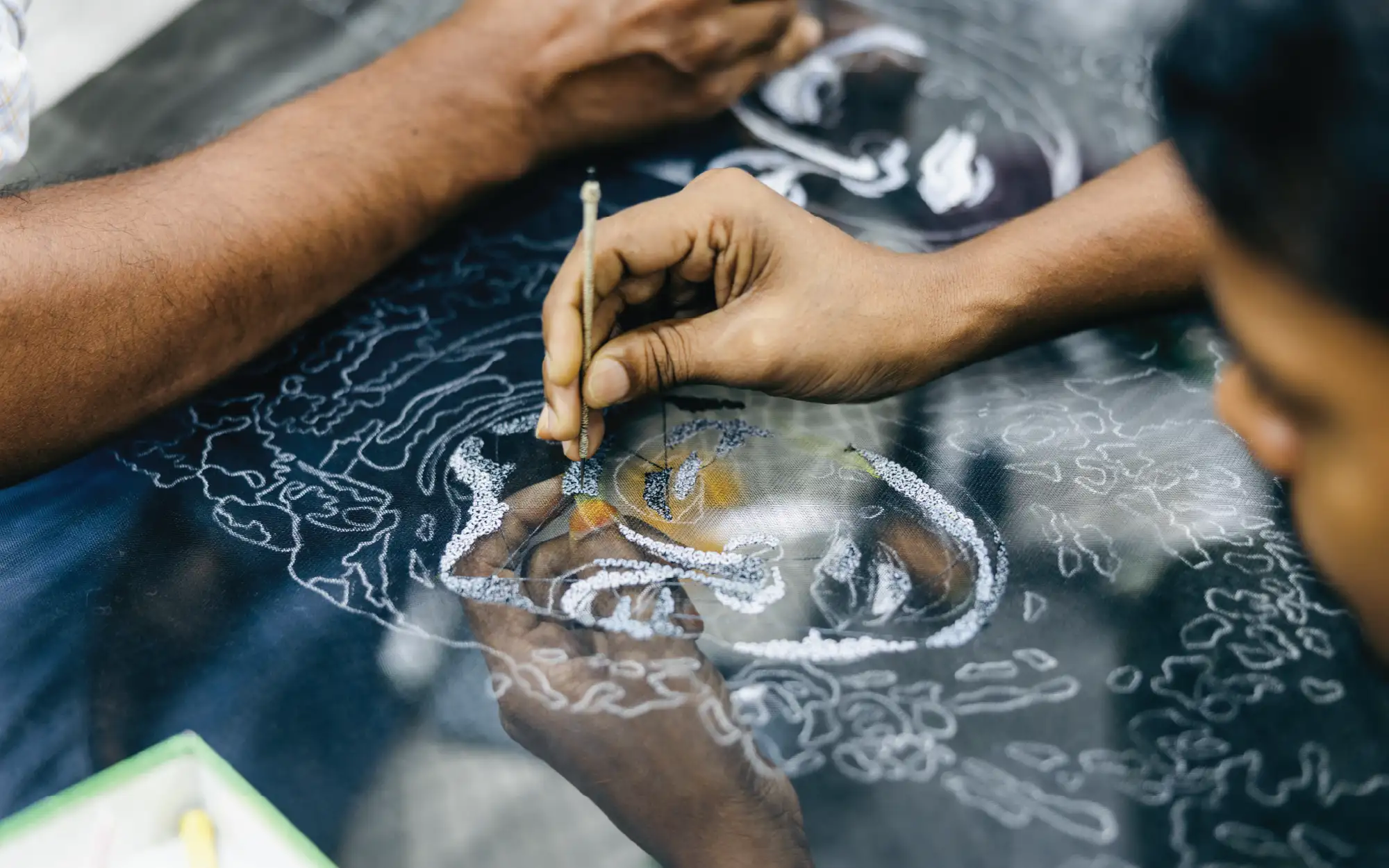
Designers who bring Indian craft and culture to global audiences often shoulder the burden of representing far more than their own work. For Rahul Mishra, who became the first Indian designer invited to Paris Couture Week in 2020 and has never missed a single season since, this rings truer than ever. By drawing parallels between the slow and skilful craft of chiselling ancient sculptures and the accumulation of meaning through handiwork in couture, Mishra makes a compelling case for slow fashion. Using zardozi and dabka, Mishra created trompe-l’œil effects that transformed embroidery into sculptural illusion. Every garment that appeared sculptural on the runway was, in fact, the result of embroidery that pushed the limits of fabric. His invitation into the official schedule marks a monumental shift for Indian craftsmanship, placing it alongside historic fashion houses like Dior, Chanel, Balenciaga, while sharing space with fellow Indian designers Manish Malhotra, Vaishali. S and Gaurav Gupta.
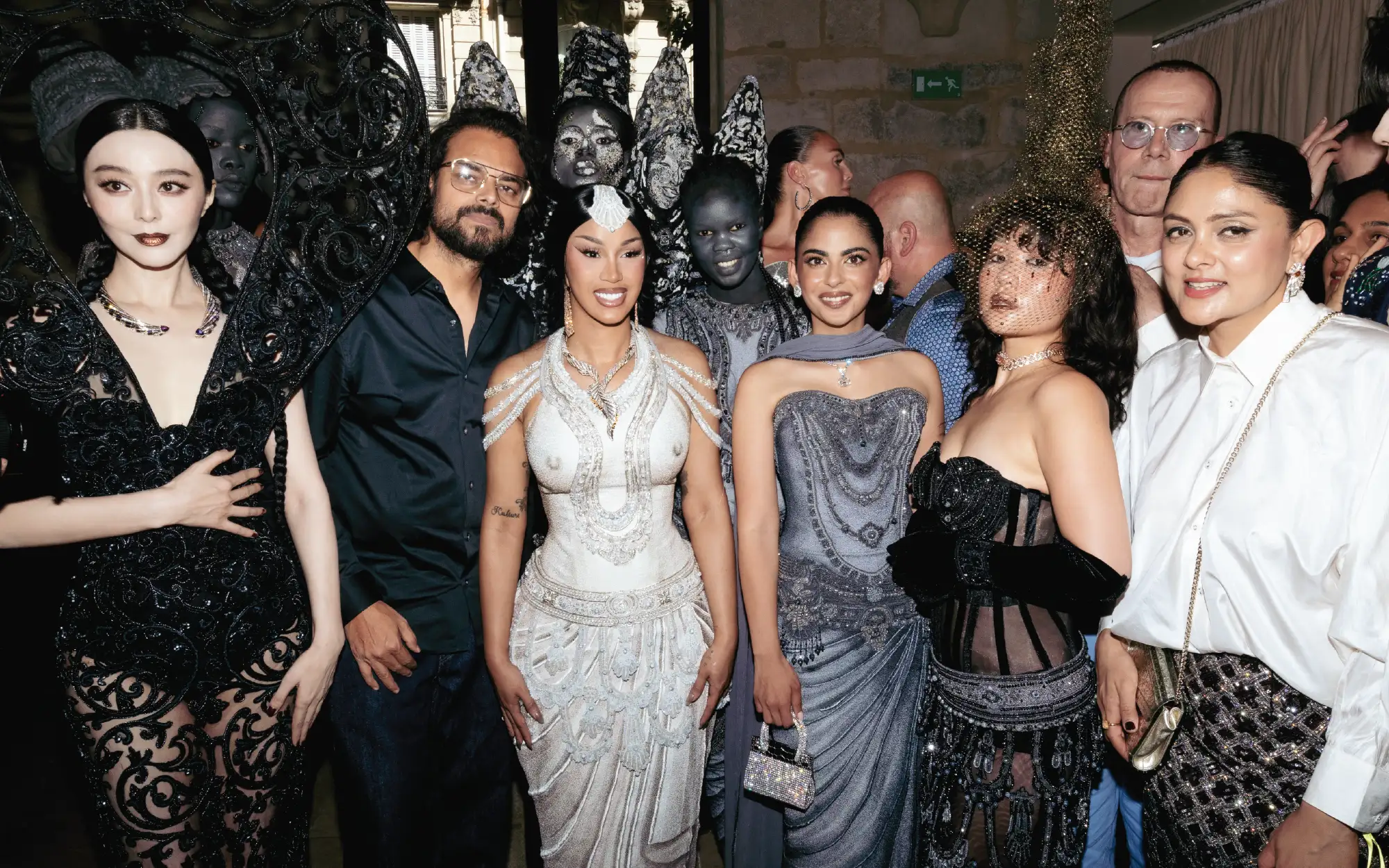
Whether by strategic design or serendipity, Rahul Mishra’s creations on Cardi B and Isha Ambani became the catalyst for one of the week’s defining fashion moments. The impeccably timed posts from Gaurav Gupta and Tarun Tahiliani featuring their own temple-inspired design completed the picture. Suddenly, India’s temple architecture wasn’t merely a reference. It has become the defining visual language of the moment.
The Myth of Originality
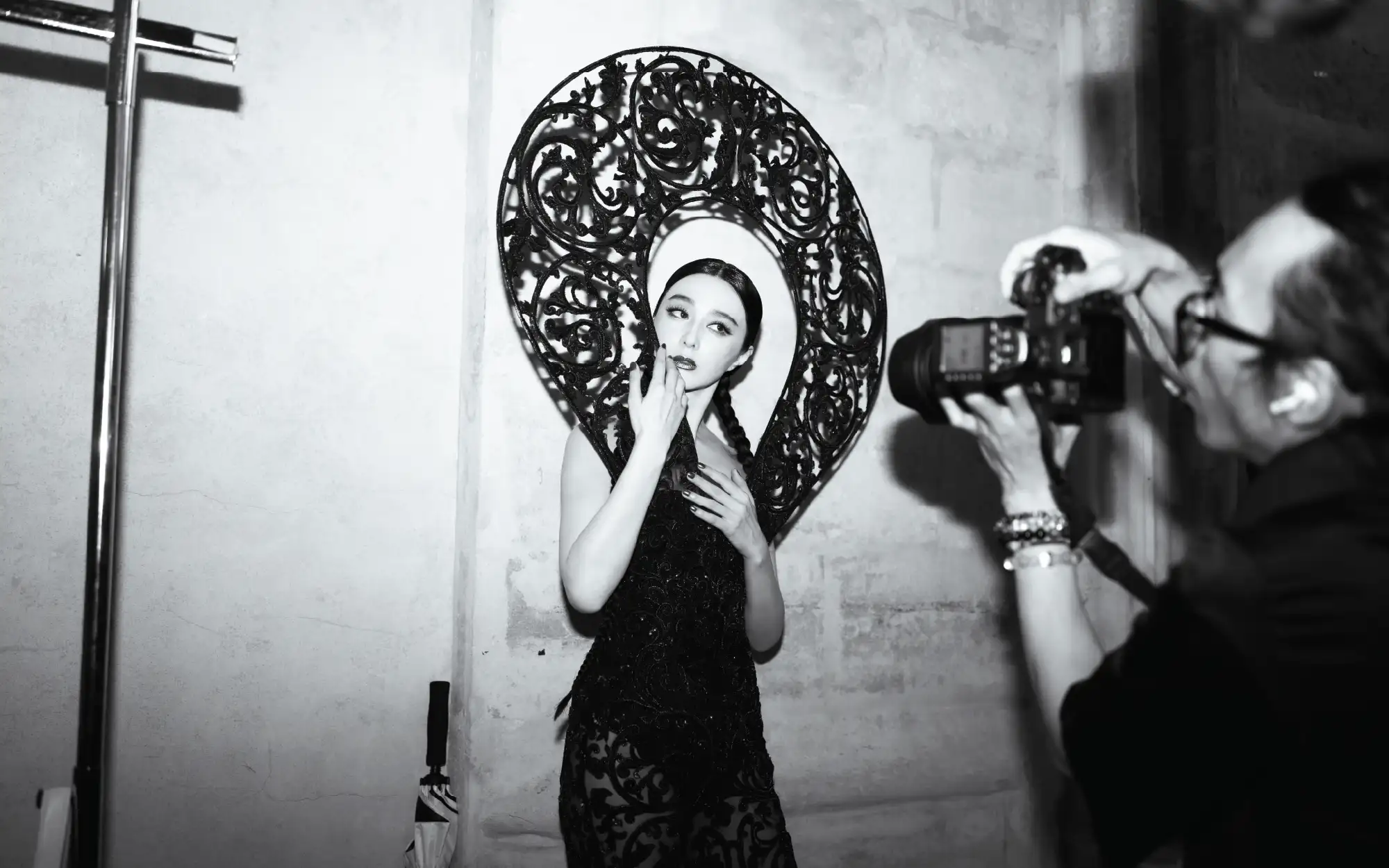
Before Rahul Mishra’s ‘DEVI,’ Indian designers had returned repeatedly to the visual language of temple sculpture through distinctly different design vocabularies. Since at least 2014, Gaurav Gupta has drawn from Indian mythology, cosmology, and temple sculpture to create sculptural couture defined by moulded breastplates, architectural silhouettes, and luminous embroidery, culminating in collections such as ‘Hiranyagarbha (2023),’ which explored Vedic creation myths and celestial femininity as well the ‘Divine Androgyne (2026)’ explores the body as a site for balancing form and sharp silhouettes. While the breastplate itself is hardly unique to Indian fashion—having appeared in the work of other fashion houses such as Schiaparelli—Gupta’s interpretation is rooted in Indian cultural references, using sculpted forms and jewellery to reimagine the body as a monumental silhouette.
View this post on Instagram
Tarun Tahiliani, by contrast, approaches the same lineage through movement rather than structure. His references to Indian sculpture emerge through fluid draping, refined tailoring, and intricate embroidery, translating the posture, grace, and proportions of classical statuary into garments that evoke, rather than replicate, sculptural form. Together, their work demonstrates that Indian sculpture has long functioned as a shared cultural vocabulary, interpreted through radically different aesthetic languages rather than claimed as a singular visual invention.
Yet the conversation in India unfolded rather differently. In the days following Rahul Mishra’s DEVI presentation, both Gupta and Tahiliani shared their own interpretations of the Goddess, igniting the debate over who had explored the imagery first. For many commentators, Mishra’s collection quickly became secondary to a familiar question: who did it first?
Also read: 24 Tanjore Paintings Anchor A 15,000 sq. ft. Home Built Around Art, Memory And Collecting
Can Anyone Own the Goddess?
In a viral reel – with Mishra responding with a laugh emoji – fashion influencer Ishita Mangal jokingly suggested that the sculpture in question “has more brand collaborations than any influencer,” adding that if anyone else dares to be inspired by it, perhaps the sculpture should hire a manager. While this is a light-hearted take on the growing reaction by netizens who are eager to establish a chronology on who did it first, it touches on one of the central questions of this debate. Can any one person claim ownership over the visual and narrative traditions that have shaped Indian art for centuries? Unlike copyrighted designs, these historical sources offer a glimpse into a shared past. Keeping these symbols culturally relevant also reinforces the case for investing in the conservation, protection, and preservation of India’s artistic heritage.
Couture has rarely rewarded absolute originality. Yves Saint Laurent revisited Dutch painter Piet Mondrian, Alexander McQueen repeatedly returned to the Victorian dress, and Schiaparelli continually mined Surrealism. Designers build languages through recurring references. The question is less whether inspiration exists than what a designer contributes through technique, construction, and interpretation. In the same spirit, each designer brings a different oeuvre to the runway when reinterpreting the feminine divine and temple sculptures across the Indian subcontinent.
Also read: Why The Mark Hotel In NYC Has Become The Met Gala’s Go-To Dressing Room
A Shared Visual Archive
It’s worth reflecting that the simultaneous presence of Gupta, Vaishali S, Malhotra and Mishra on the Paris couture calendar demonstrates that visibility is not a zero-sum game. Each expands international awareness of Indian couture while advancing a distinct design vocabulary. While international critics celebrated Mishra’s ability to translate Indian craft into a global couture language, the conversation at home quickly shifted elsewhere, not to the collection’s craftsmanship, but to questions of authorship.
Yet the question itself may be misplaced. Indian sculpture has never belonged to a single designer. It is part of a shared visual archive that generations of artists have returned to, each interpreting it through a different medium and aesthetic language. Fashion is no exception.
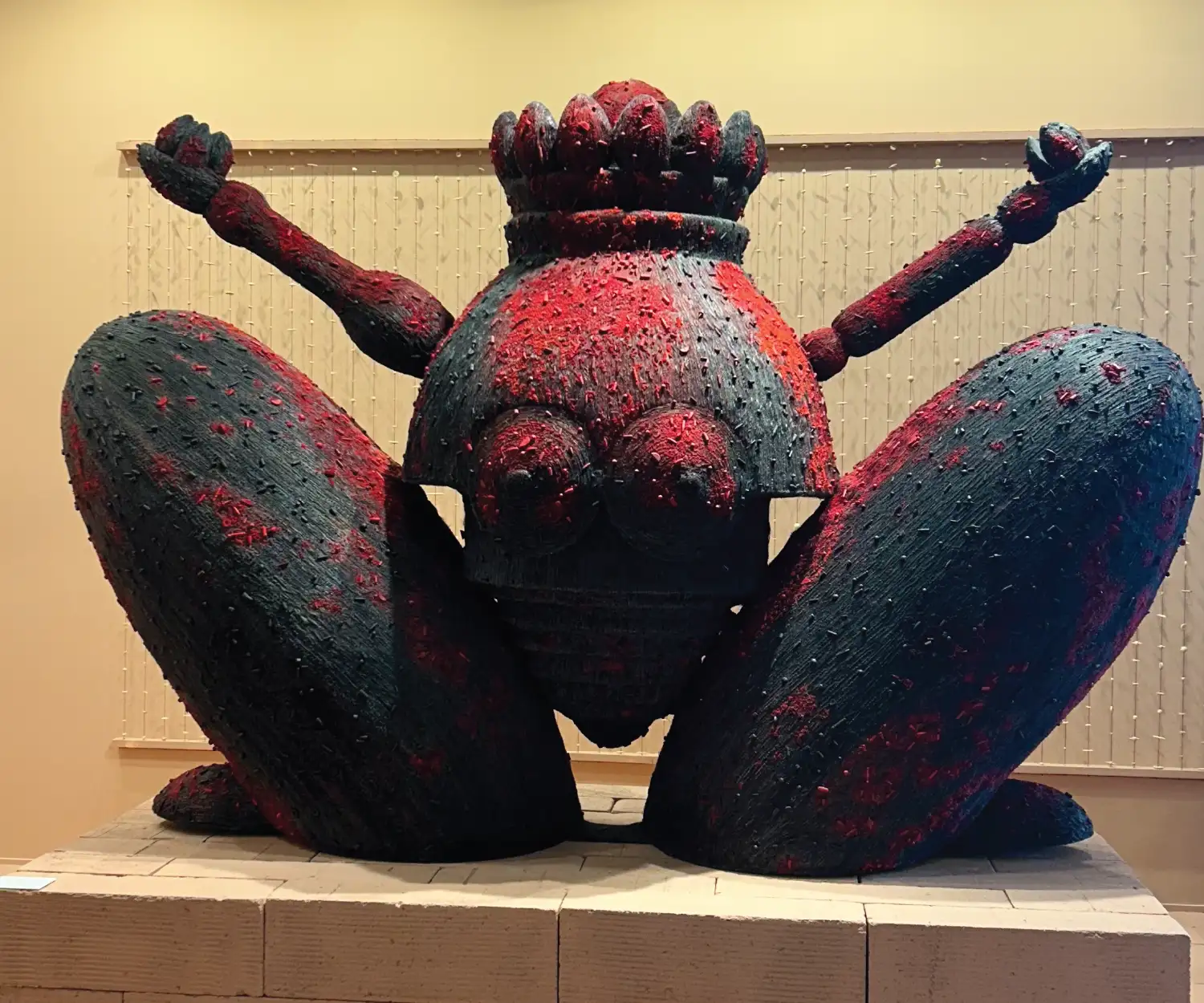
Nor is fashion unique in revisiting India’s artistic past inside temples, caves and ancient houses of worship. At this year’s India Art Fair, Indian multidisciplinary artist Natasha Preenja’ also known as Princess Pea, ‘The Lotus Headed,’ 2026 reimagined an historic goddess, ‘Lajja Gauri’ through monumental sculpture, while at the Kochi-Muziris Biennale, Indian choreographer and dancer Mandeep Raikhy’s new media installation and performance, ‘Hallucinations of an Artefact,’ 2023, drew from the iconic Dancing Girl of Mohenjo-daro. Across disciplines, Indian artists continue to reinterpret the same cultural inheritance not to claim ownership over it, but to keep it alive.
Also read: Where To Go During Def Col Gallery Nights, Delhi’s New Art Walk
A New Chapter for Indian Fashion
That may be the real significance of ‘DEVI.’ Rather than presenting himself as an isolated genius, Mishra acknowledged the goddess as an “eternal muse” that travelled across centuries. In doing so, he rejected the myth that contemporary fashion must invent itself from scratch. The collection suggested something more confident: that Indian fashion has reached a point where it can openly converse with its own history and trust that global audiences are capable of understanding the conversation. The measure of originality, then, is not whether a designer is the first to reference a cultural symbol, but what they add to its continuing life.
It shows that Indian fashion no longer needs to explain itself to the world or erase its own histories to appear contemporary. That may be the clearest sign yet that Indian fashion has entered a new chapter, not one built on singular genius, but on a shared cultural confidence.
Also read: With The Designer: Udayshanth Fernando Is Comfortable Being Judged