
Yayoi Kusama Is More Complicated Than Her Polka Dots
Yayoi Kusama transformed obsession into infinity, turning mirrors, dots and repetition into immersive worlds. Across seven decades, she challenged conventions, transcended marginalisation and reshaped contemporary art.
- 5 Sep '26
- 11:46 am by Manisha AR

Renowned Japanese visual artist Yayoi Kusama passed away on August 14, 2026, at the age of 97. After more than seven decades of making art—through the Second World War, the upheavals of the post-war avant-garde, periods of intense psychological distress and decades of rejection—Kusama became one of the world’s most recognisable and commercially successful artists. In 2023, she was the world’s best-selling contemporary artist at an auction, with works generating $80.9 million in sales.
“Even after I finish my life, I’d like to keep telling posterity about my way of art,” she said in an interview with Tate, speaking about her lifelong search for the truth of art with characteristic determination and relentless ambition. “I want younger people, or everyone, to talk about my enthusiasm (for) reaching space and also my art as a token of my life even after my death,” she added. Art became both a means of coping with the hallucinations and psychological distress she experienced throughout her life and a way of challenging the conventions around her.
The spectacle of Kusama’s persona can sometimes disperse the radicality of her practice. Rather than allowing her story to be reduced to that of a misunderstood artist living with severe psychological distress, she turned her experiences into an expansive artistic language. She helped move art away from the passive experience of looking at an object towards participation, immersion, and experience—forms that now occupy an increasingly prominent place in contemporary art.
Her resurgence in the 1990s was therefore more than a successful comeback. It was also a re-evaluation of an artist whose ideas had often been overlooked, misunderstood or absorbed into the work of better-known male contemporaries. By the time she returned to Venice in 1993, Kusama was no longer simply a peripheral figure from the New York avant-garde. She was reclaiming her place within post-war art history.
Also read: The Princess Of Polka Dots, Yayoi Kusama’s Artistic Debut In India
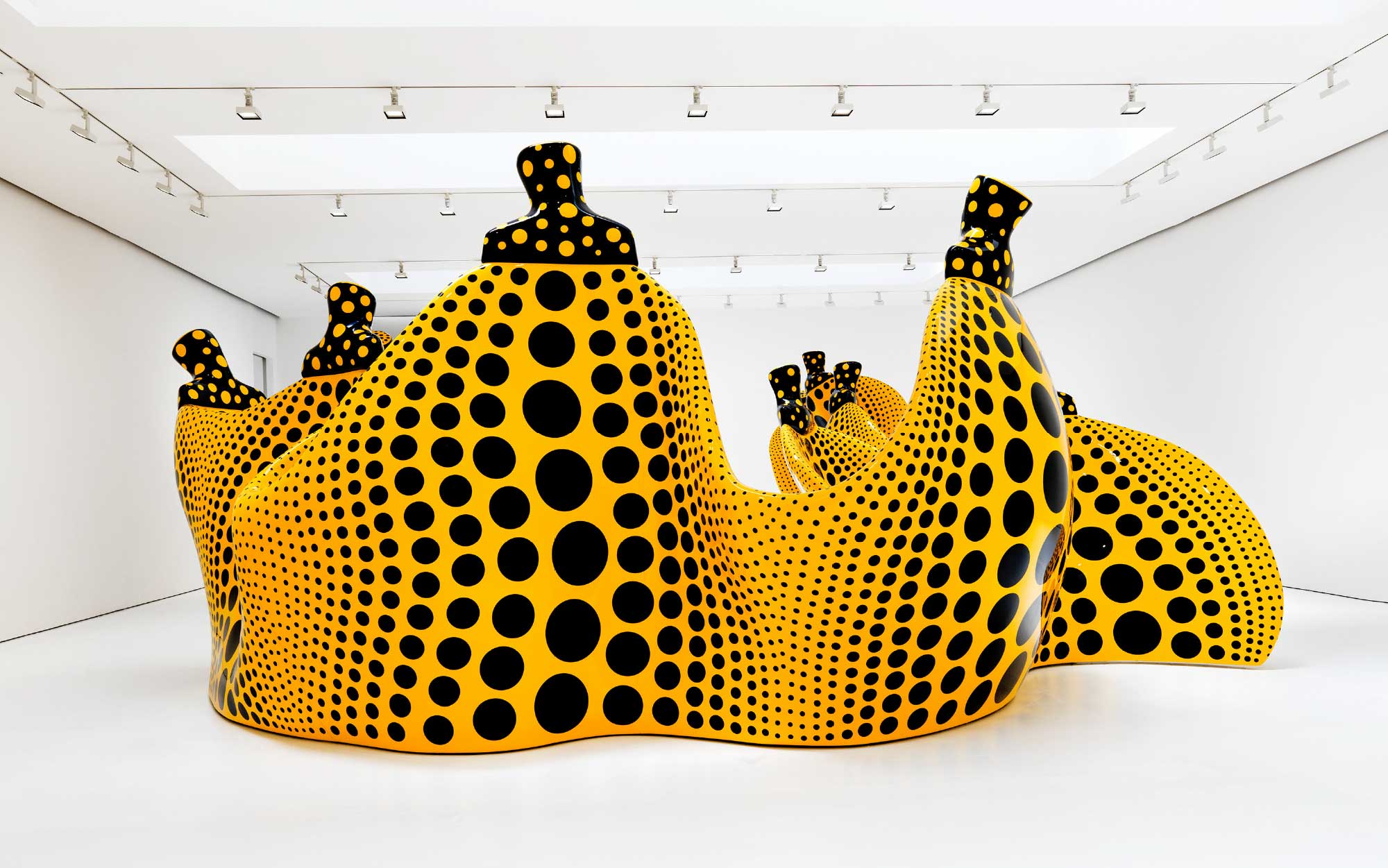
Things You Probably Didn’t Know About Kusama
- When Kusama moved to New York in 1957, she was a financially struggling artist. Before leaving Japan, she wrote to modernist American painter Georgia O’Keeffe, whose reply encouraged her to pursue an art career in the US.
- Her auction record belongs to ‘Untitled (Nets),’ 1959, one of her early Infinity Net paintings. It sold for $10.5 million at Phillips, New York, in May 2022.
- In 1966, at the Venice Biennale, Kusama staged a guerrilla intervention wearing a gold kimono, covering the grounds with 1500 mirrored spheres, titled ‘Narcissus Garden,’ that she offered to visitors for $2 each. Festival officials eventually stopped the event. Nearly three decades later, in 1993, she returned to Venice as Japan’s official representative, this time with ‘Mirror Room (Pumpkin)’ made in 1991. The presentation helped cement her renewed international recognition. This also transformed the experience of sculpture: a mirrored cube filled with yellow, polka-dotted pumpkins appeared to multiply indefinitely, dissolving the boundaries between object, space, and viewer.
- Kusama’s position in the art world was shaped not only by her artistic differences but also by her identity as a Japanese woman working in the predominantly white, male American art establishment. Despite early recognition, she faced prejudice and periods of relative obscurity.
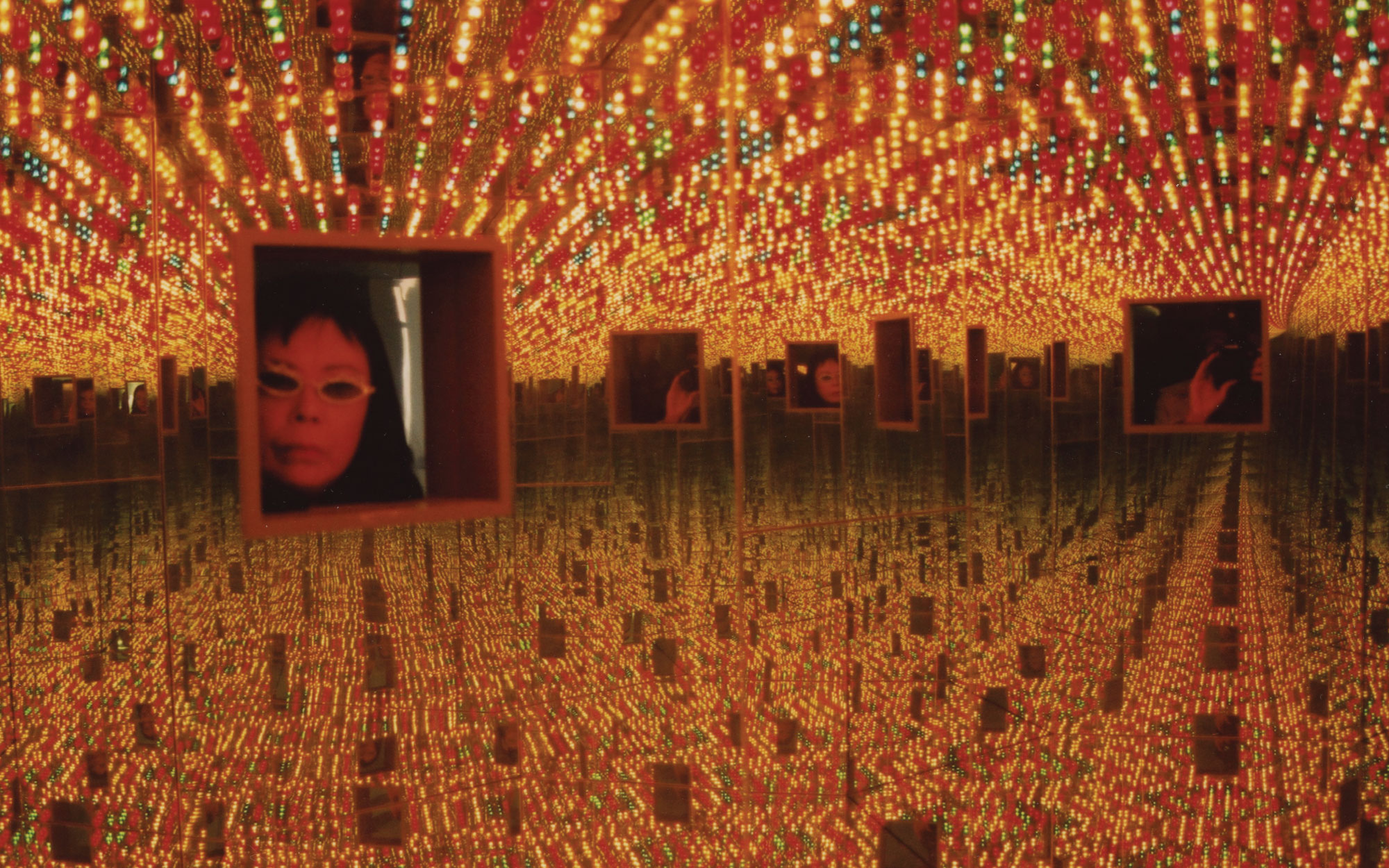
- It is well known that Kusama has spoken about experiencing hallucinations since childhood. Less widely known is how directly these experiences informed her use of polka dots. She has described the dots as a way of dissolving the individual into the universe, a concept she calls “self-obliteration.”
- In the 1960s, these challenges became increasingly public. In New York, Kusama staged provocative performances and happenings in response to the Vietnam War and the politics of her time. ‘Anatomic Explosion,’ featuring nude dancers, was staged opposite the New York Stock Exchange, using the charged location to connect the body, capitalism, and war.
- Kusama’s work emerged alongside some of the defining artists and movements of post-war American art, but it never sat comfortably within any one of them. Donald Judd was an early supporter of her work, and her repeated forms, soft sculptures, and accumulations intersected with ideas that would become central to Minimalism. Yet her practice also complicated the movement’s emphasis on industrial form and objecthood.
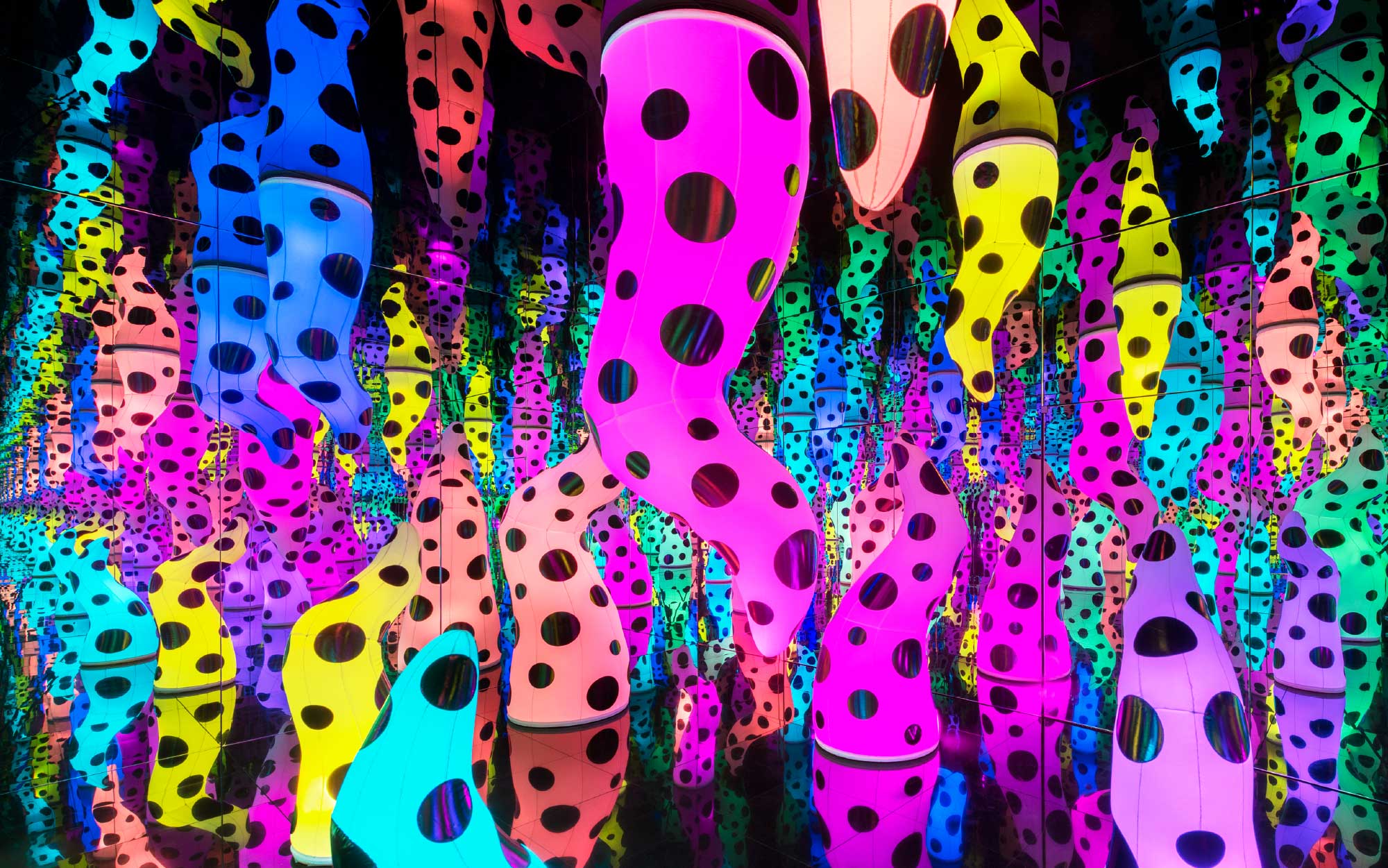
- She exhibited alongside Andy Warhol and she later accused him of appropriating ideas from her work, particularly her use of repetition and serial imagery. Their proximity highlights one of the more complicated aspects of Kusama’s early career: she was developing ideas that would become central to Pop and Minimalism while simultaneously being marginalised within New York’s predominantly white, male art establishment.
- In 1973, Kusama returned to Japan and voluntarily entered a psychiatric hospital in 1977, where she has continued to live and work. Alongside visual art, she has also published novels and poetry. Her first novel, ‘Manhattan Suicide Addict,’ was published in 1978. A first-edition copy was listed by Sotheby’s for $4,500.
- Kusama was also involved in the creation of the Yayoi Kusama Museum, which opened in Shinjuku, Tokyo, in 2017. Located near the psychiatric hospital and studio where she has worked, the museum provides a dedicated space for her work to be curated, produced, and presented on her own terms. The architectural design was by Japanese firm Kume Sekkei.
- Kusama has faced criticism for racist and anti-Black descriptions in her autobiography ‘Infinity Net’ and some of her other fictional works. After Hyperallergic brought renewed attention to the passages in 2023, she issued a public apology in October, shortly before her SFMOMA exhibition.
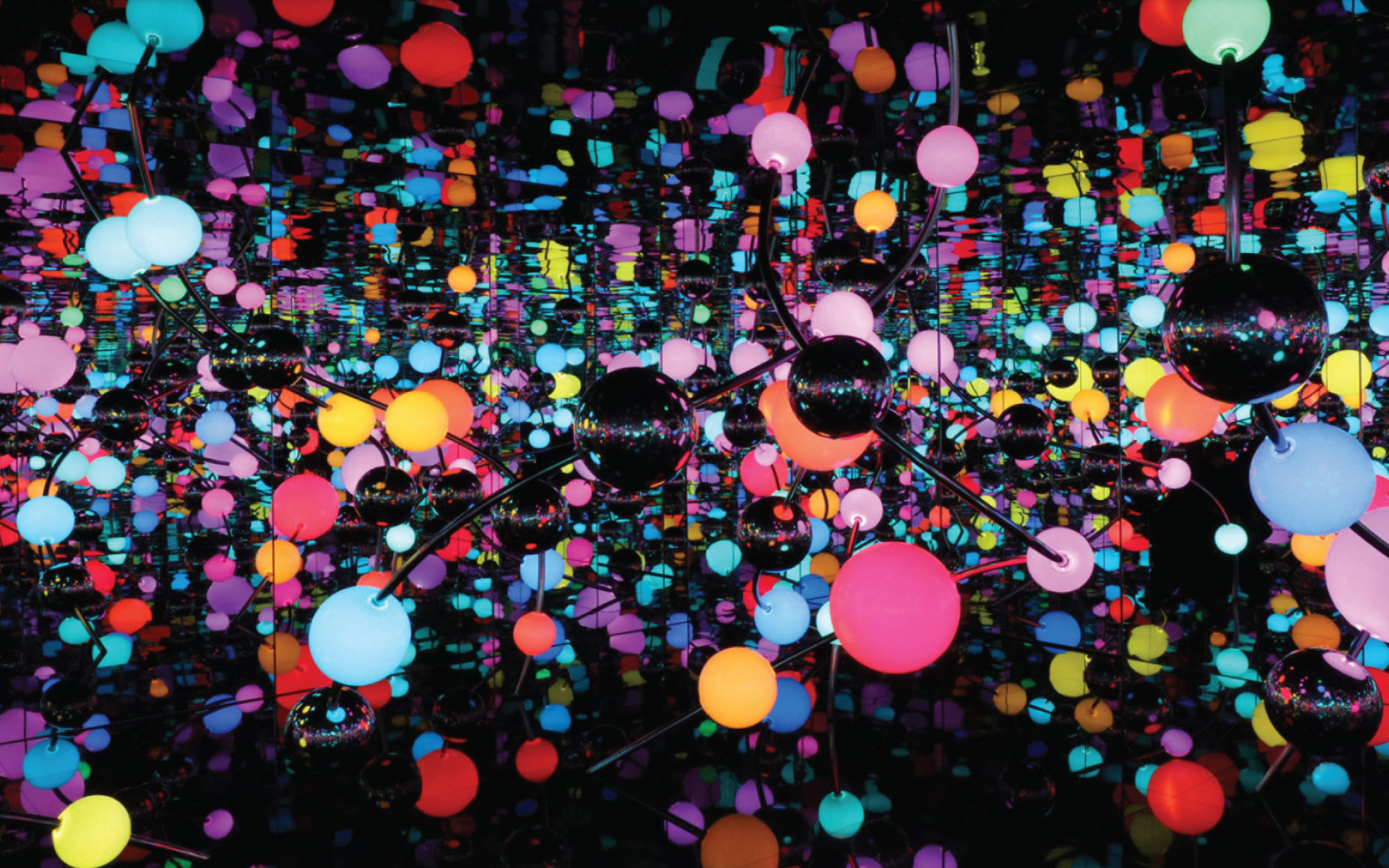
Last but not least, Kusama was exploring immersive and participatory art decades before such experiences became mainstream and commercially viable. From her mirrored environments to the happenings and installations of the 1960s, she shifted the focus from the artwork as an isolated object toward the viewer’s experience within an entire environment. That approach continues to influence contemporary installation art—and, arguably, the immersive visual culture that now permeates social media.
Also read: Yayoi Kusama Unveils Her Largest-Ever Exhibit At New York’s David Zwirner Gallery
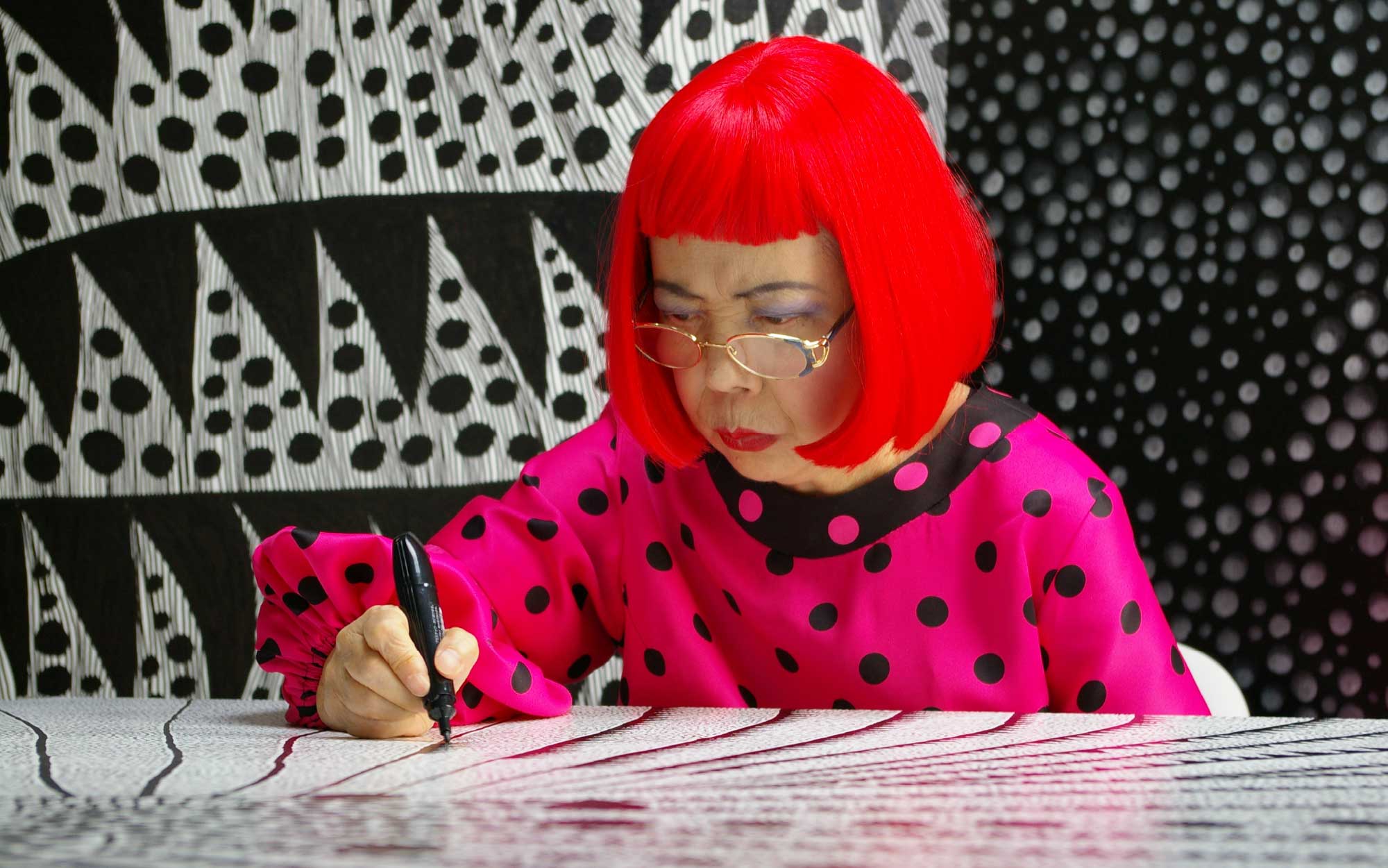
In the end, she did more than leave behind an archive of paintings, pumpkins, mirrors, and dots. She created an artistic language that could outlive her, one in which an artwork was no longer simply something to look at, but an environment to enter, inhabit, and carry with you.