Pavitra Rajaram’s New Collection For Asian Paints Is A Love Letter To The Silk Route
Introducing Caravane, a wallcovering collection by Asian Paints, designed by Pavitra Rajaram for Nilaya that borrows from the ancient Silk Route and its resulting craft traditions.
- 3 Aug '26
- 3:46 pm by Simran Almeida

India possesses a rich repository of textiles. Its position at the crossroads of the historic Silk Route wove together Persian brocades, Chinese silks and Central Asian embroideries with indigenous weaving and block-printing traditions. In an ode to the caravans that became conduits of cultural exchange, designer Pavitra Rajaram introduces ‘Caravane,’ a
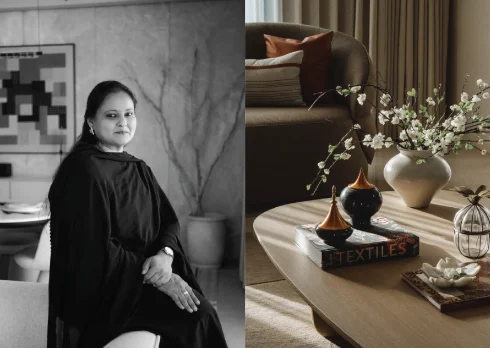
collection that joins the roster of wallcoverings by Nilaya by Asian Paints. Borrowing from the textiles, motifs and craft traditions, these wallcoverings sit effortlessly within contemporary interiors while carrying the richness of centuries-old craftsmanship. “I’ve always been drawn to textiles because they are among the most intimate expressions of a culture,” explains Pavitra Rajaram, Creative Director at Nilaya Anthology, who conceptualised the series.
The Art Of Cultural Storytelling
Nilaya by Asian Paints has redefined luxury wallcoverings by transforming walls into canvases for artistic expression. Renowned for its exclusive collections, designer collaborations and finishes, the brand brings together contemporary aesthetics with exceptional craftsmanship. From richly textured surfaces to patterns inspired by art, culture and heritage, each collection reflects a commitment to elevating interior spaces beyond decoration.
This collection is yet another compelling chapter. “With Caravane, I wanted to capture the romance of that journey. Rather than looking at a single textile tradition, I was interested in the invisible threads that connect them all,” explains Rajaram. Inspired by one of history’s greatest networks of cultural exchange, the collection explores how textiles became vessels of storytelling as they travelled from Persia and Central Asia through India to China. “I’ve always been drawn to textiles because they are among the most intimate expressions of a culture,” remarks Rajaram. “We looked closely at embroideries, woven fabrics, block prints, brocades and ikats from different regions, not with the intention of reproducing them, but to understand the visual language they shared.”
Tracing The Craft
The collection unfolds almost like an atlas of craft, tracing the movement of motifs across continents. As the collection journeys along the Silk Route, nature emerges as a recurring source of inspiration. ‘Persia Songbird,’ for instance, borrows from Persian textiles layered with chinoiserie influences that emerged through trade with China. It depicts nightingales nestled within flourishing gardens in lyrical compositions that celebrate nature and cultural exchange in equal measure. “In many ways, Caravane is a celebration of the enduring dialogue between cultures, and of the belief that the most beautiful ideas are often those that have travelled the farthest,” Rajaram shares with us.
Also Read: From Heritage Murals To Modern Vaults, 5 Ceiling Design Trends You Can’t-Miss
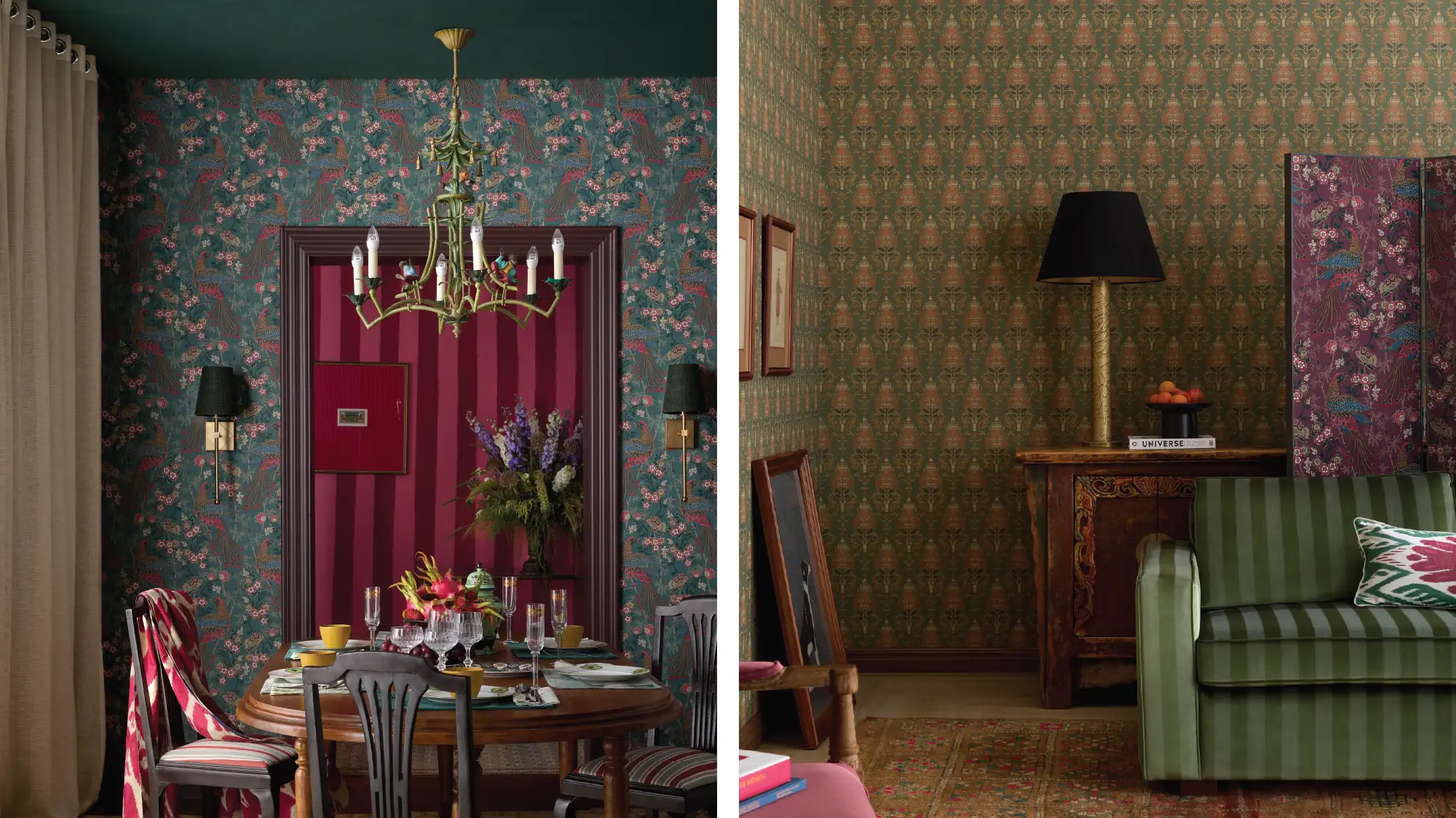
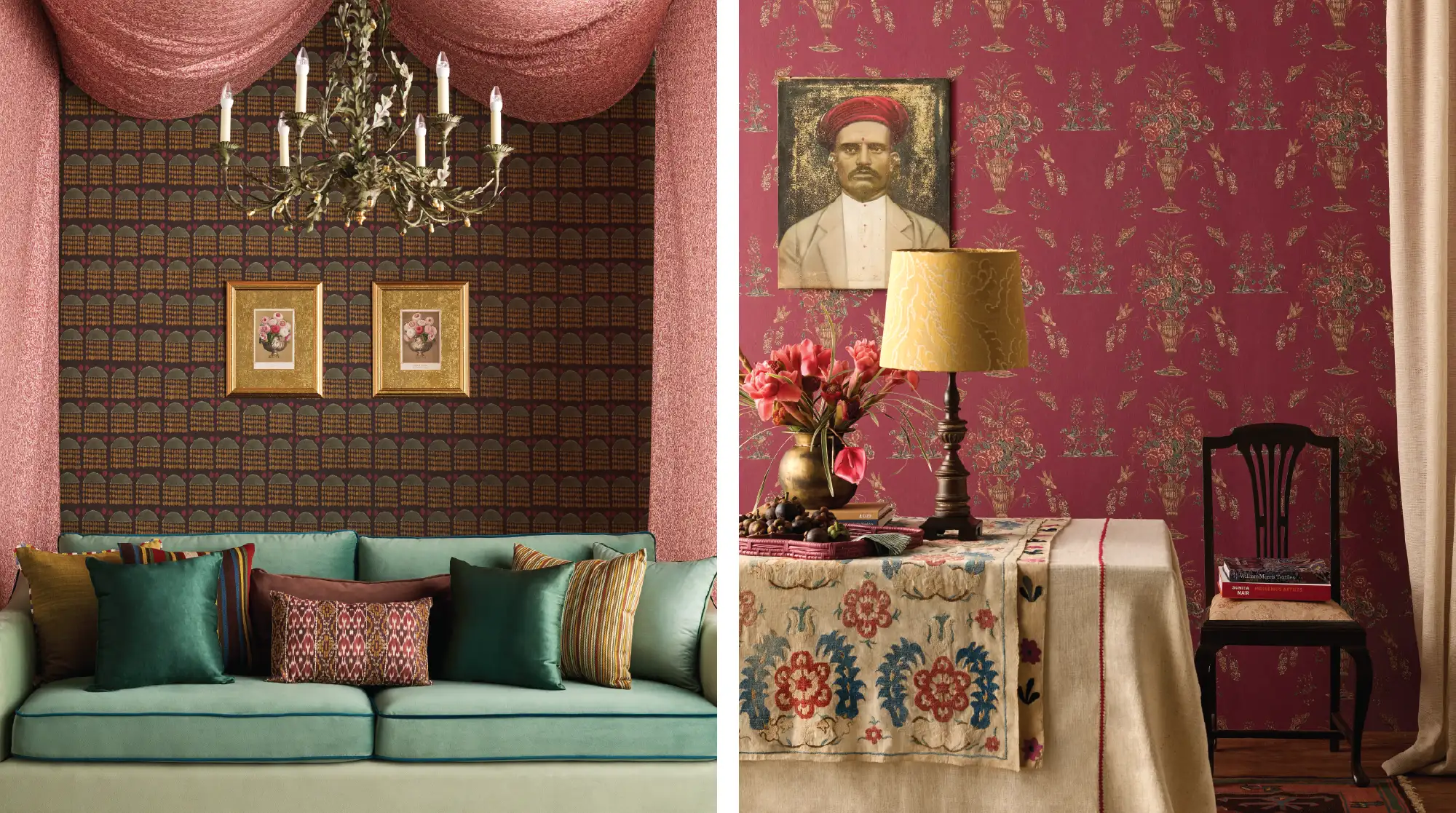
While ‘Gyasar Brocade’ pays homage to the opulent brocades of Banaras, Ladakh and Tibet, translating their intricate motifs and regal palettes into plush wallcoverings, ‘Khiva Raindrop’ turns its eye towards Ikat traditions that travelled across Central Asia. Reimagining the iconic warp-dyed textile through a whimsical raindrop motif, the design demonstrates how centuries-old craft can be transformed for contemporary interiors. The revered Chintz fabric that journeyed from Indian ports to aristocratic homes across Europe manifests in the ‘Coromandel Garden,’ where flora and fauna recreate the romance of botanical textiles. In keeping with the floral motifs, ‘Fergana Poppy’ and ‘Agra Iris’ reimagine Mughal block-printing traditions and their iconic floral motif.
The Stories That Travel
What unites Caravane is its belief that craft evolves through exchange. The Silk Route was never merely a corridor for commerce but a living network where ideas, techniques and artistic languages travelled alongside merchants. ‘Bukhara Suzani’ embraces the joyful exuberance of Central Asian embroidered textiles, flamboyant colours and folk-inspired florals. “As textiles travelled, they absorbed the spirit of the places they passed through,” Rajaram shares. The final stop on Caravane’s journey echoes the northern reaches of the Silk Route. Inspired by Ladakh’s stark cold desert, Zanskar Trail captures the region’s pastoral embroideries and intricate block-printed motifs, celebrating a landscape where nature, culture and craftsmanship have long existed in harmony.
Also Read: A Charcoal Rhapsody: This 7,500 Sq. Ft. Gurgaon Home Reads Like An Eliot Play
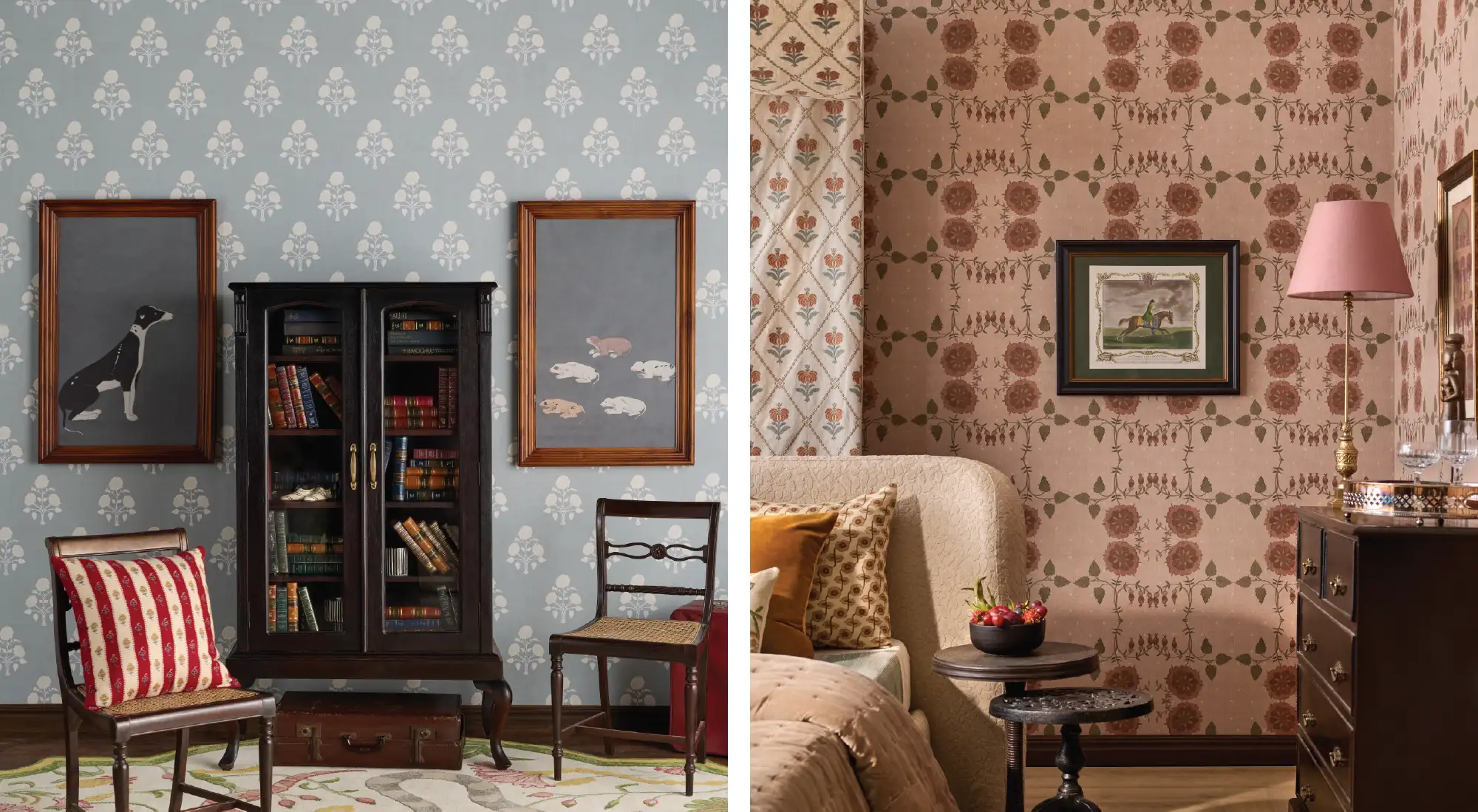
Through Caravane, Asian Paints continues to champion its vision of design as a dialogue between heritage and innovation. “Every collection begins with a story,” Rajaram notes. In doing so, Nilaya by Asian Paints positions itself not simply as a curator of luxury wallcoverings, but as a custodian of stories translated into contemporary living.