The Knighthood David Hockney Rejected And The Rebel Spirit That Defined Him
Painter and set designer David Hockney, who altered the public perception of contemporary art, took his last puff on the 12th of June, 2026, at 88.
- 22 Jun '26
- 9:42 am by Simran Almeida

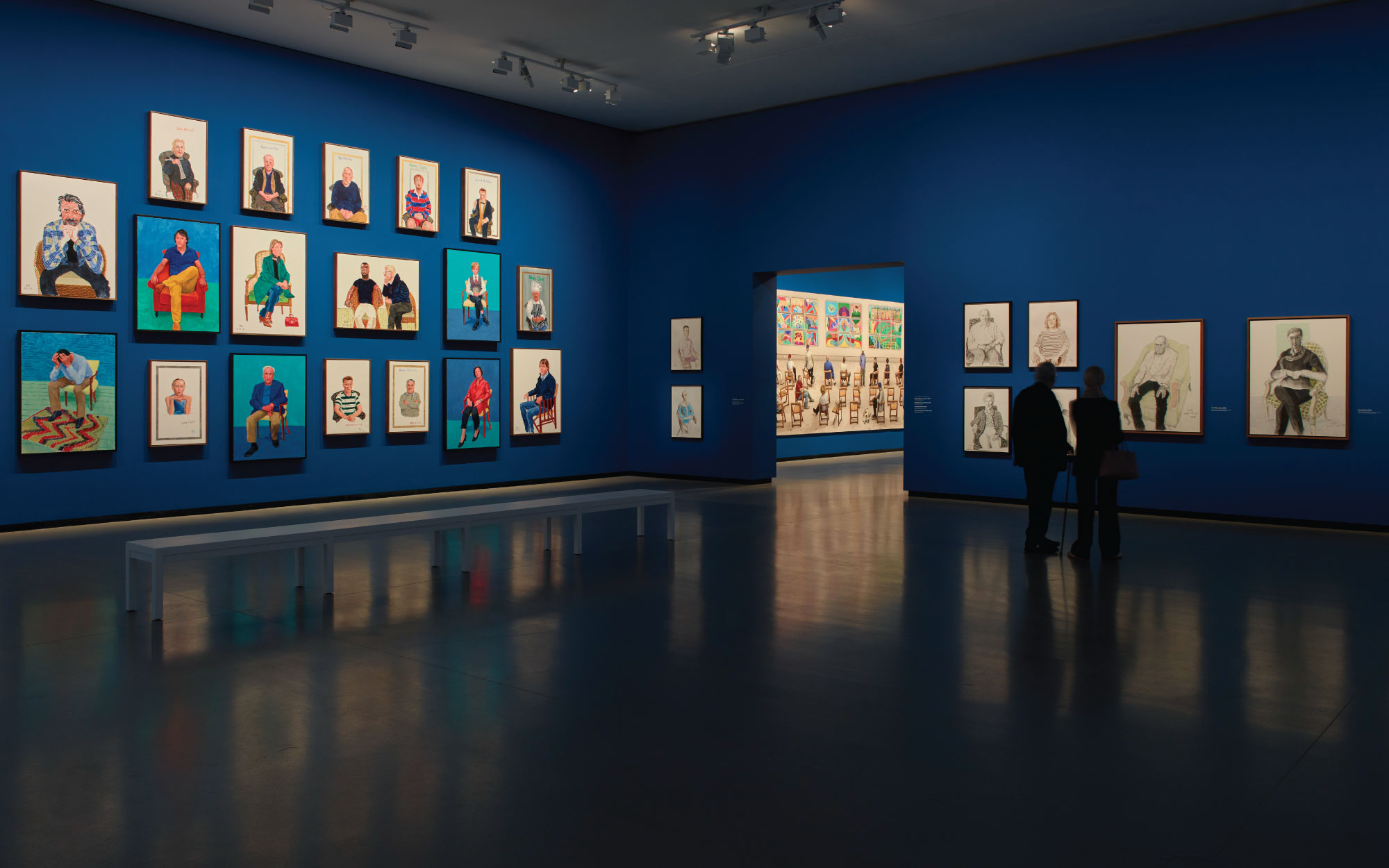
As spring runs its course in his homeland, the world bids farewell to a phenomenal artist who steadfastly believed, “They can’t cancel spring.” Painter and stage designer David Hockney painted flamboyant sun-drenched landscapes, segueing seasons and portraits of his favourite people sitting at a table. Leading a ruthless rebellion against orthodoxy and conquering every medium from canvas and digital art to photographs, etchings and lithographs for over seven decades, he breathed his last on the 12th of June. His flamboyantly working-class, almost punk refusal to British art crowned him an icon of contemporary art.
A radical artist, he embraced his sexuality through his artworks at a time when such expressions remained largely tacit. For instance, in one portrait, he depicts himself in an act of love with the American poet Walt Whitman, while his swimming pool landscapes hinted at homoerotic undercurrents in the 1960s. His iridescent backgrounds and vivacious personality painted a distinct body of work, one that redefined contemporary pop art. In his honour, we revisit the defining strokes that coloured his enduring legacy.
Also Read: With 400 Works On Display, David Hockney 25 At Fondation Louis Vuitton Takes Paris By Storm
A Yorkshire Man Through And Through
Born in one of the wealthiest cities of Britain in 1937, Hockney was the fourth of five children to Laura and Kenneth Hockney. Diagnosed with Synesthesia—a condition in which musical stimuli generate colours—the phenomenon never found its way into his artworks. Still, it informed his paintings’ eccentric use of colours and larger-than-life stage design vignettes. With a staunchly Methodist mother and amid post-war austerity, Hockney’s early works could be found in church hymn books. In the shadow of the Second World War, when Britain grappled with post-war obligatory National Service conscription, young Hockney remained steadfast in his pacifist convictions. Refusing military service, he spent his years at St Luke’s Hospital in Bradford instead.
His Revolutionary Uprising
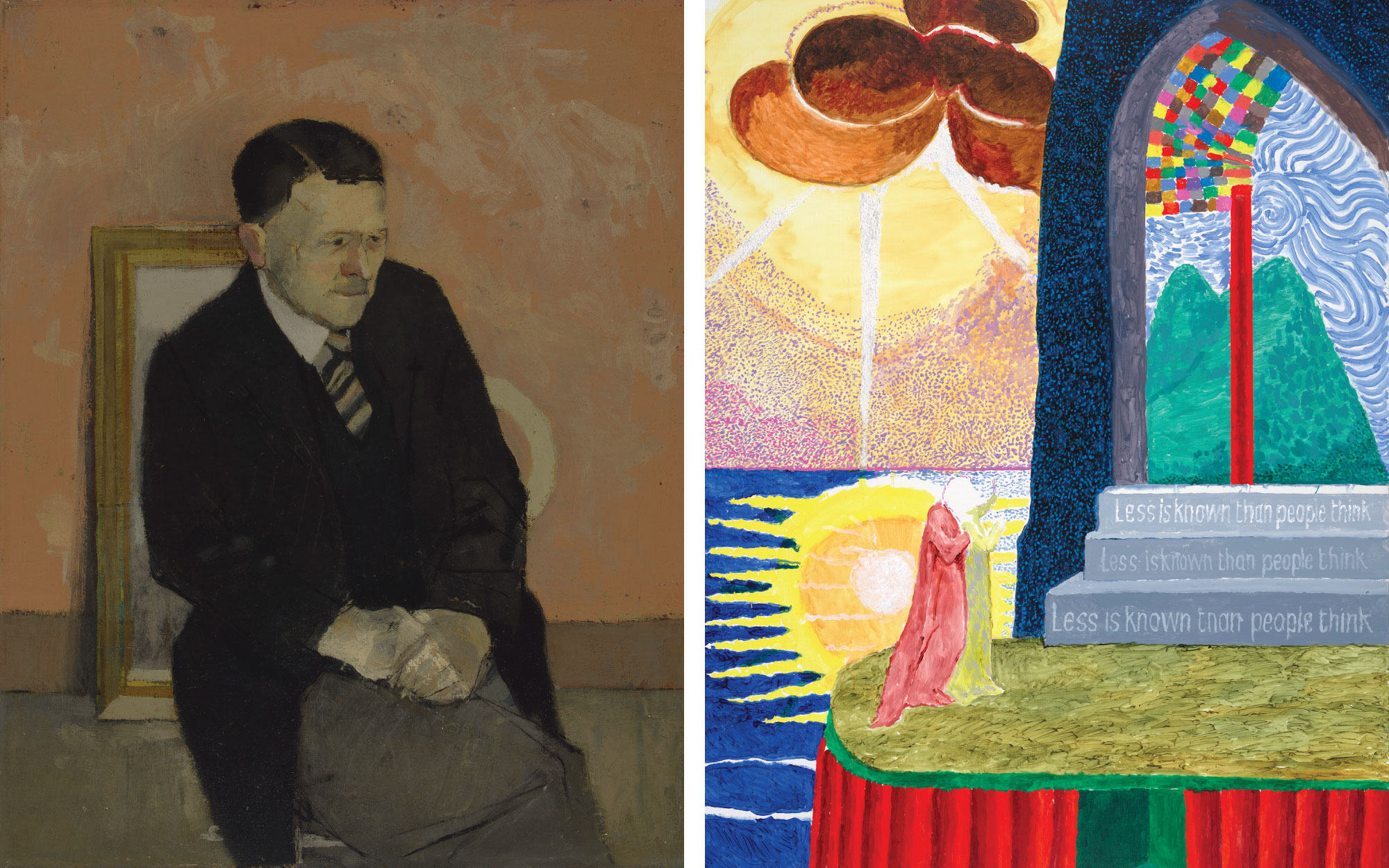
He studied at Bradford School of Art, where he sold his foremost painting—a portrait of his father—for £10 at the Yorkshire Artists’ Exhibition in 1957 and never stopped painting. With his distinct fashion, bleached blonde hair, round glasses and a flat northern accent, he went on to study at the Royal College of Arts in London in 1959, where he refused to write an essay; he instead drew a satirical sketch of the diploma. This radicalism led the college to rewrite its rules and pass him.
Also Read: The New Geography of Craft From India To New York, Paris and London
He Created Landscapes Of Leisure
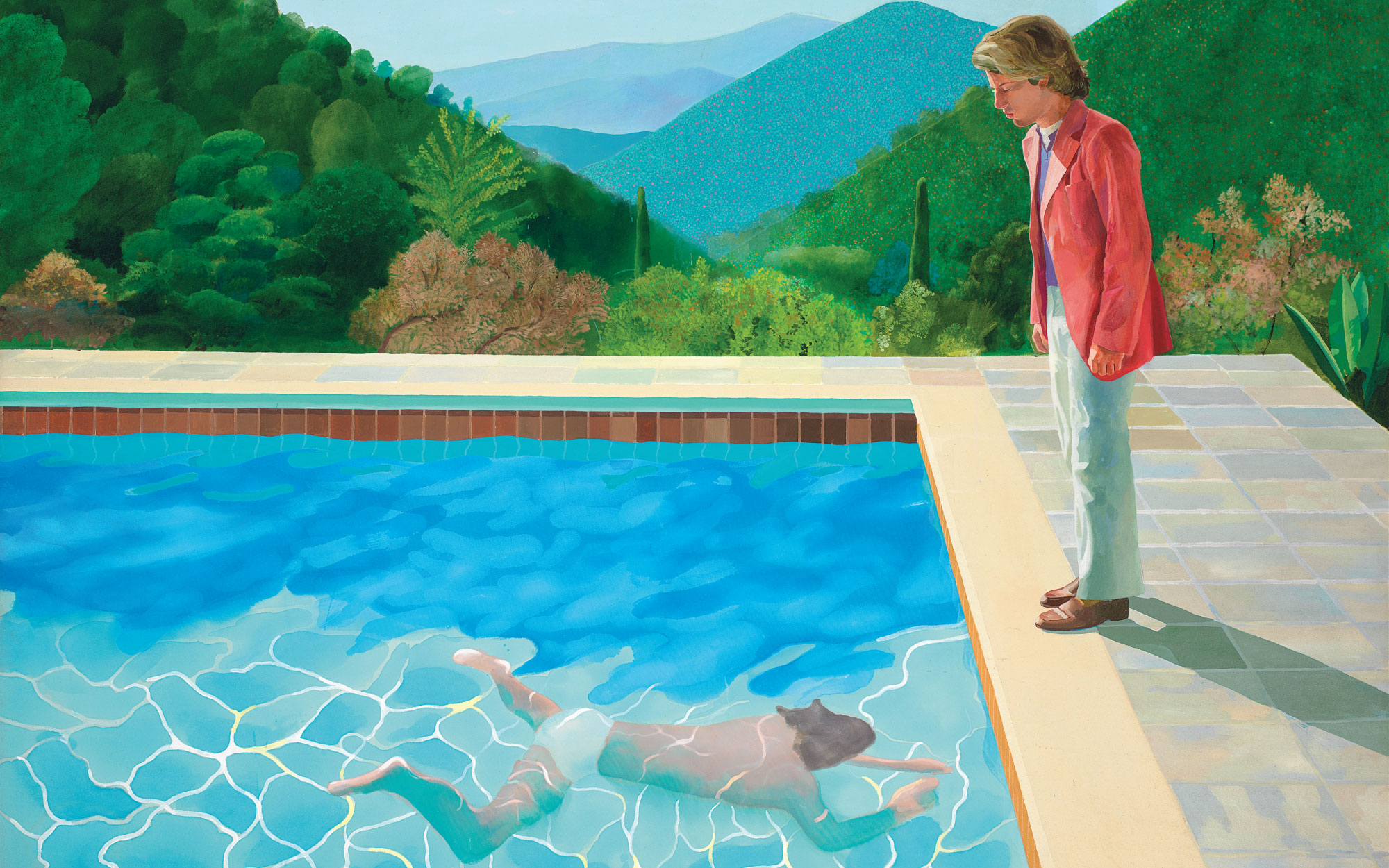
The painter broke the bar in 2018 when his painting ‘Portrait of an Artist (Pool with Two Figures)’ (1972) sold for $90.3 million at Christie’s New York nine minutes after bidding. It is an ode to the sun-soaked languor of Los Angeles, through which Hockney immortalised the city’s leisurely rhythms. Like every other outsider, Hockney, too, had an American dream, one where he could manifest his admiration for Walt Disney and openly be gay under the Californian Sun. It was here that he devised a theme of capturing California and its slower rhythms. This obsession began when he flew to Los Angeles for the first time in 1963 and peered out only to find turquoise expanses of water streaked with flashes of light.
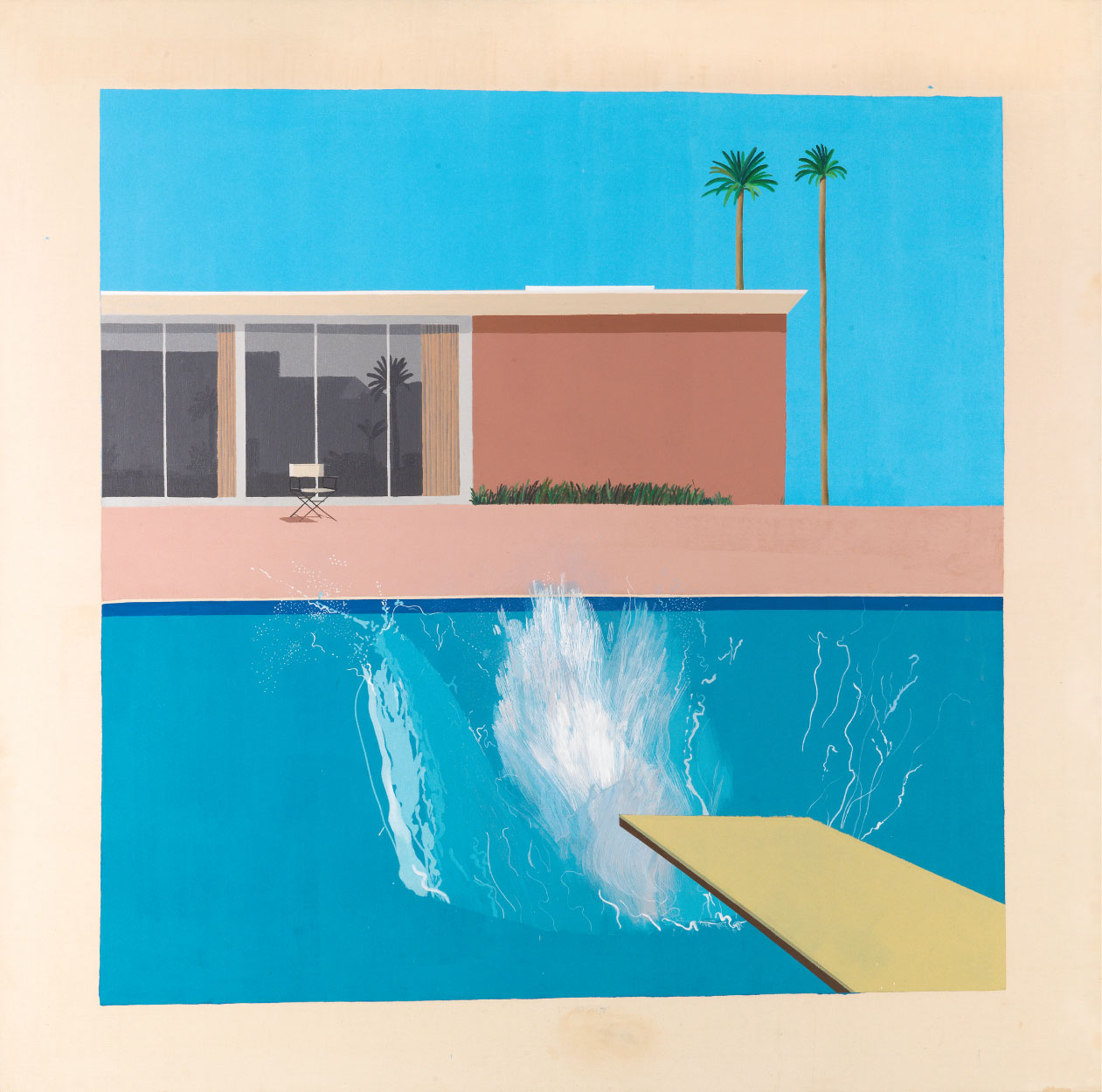
It was against this backdrop that ‘Picture of a Hollywood Swimming Pool’ (1964), ‘Peter Getting Out of Nick’s Pool’ (1966), ‘The Splash and A Little Splash’ (both 1966), and then ‘A Bigger Splash’ (1967) were materialised. Featuring crystalline azure pools, a mid-century home, and slender palm trees, the painting distilled the joie de vivre of Los Angeles, with Hockney rendering water at times with photographic precision and at others through a few luminous strokes of blue that captured its shimmering essence. It was also during his time here that he met his lover and greatest muse, Peter Schlesinger—a student 11 years his junior—who also inspired the homoerotic undertones.
Also Read: DP’s Immersive Experiences Guide To London 2024: Science Tea, Wes Anderson’s Legacy & More!
Inside His Synaesthetic World
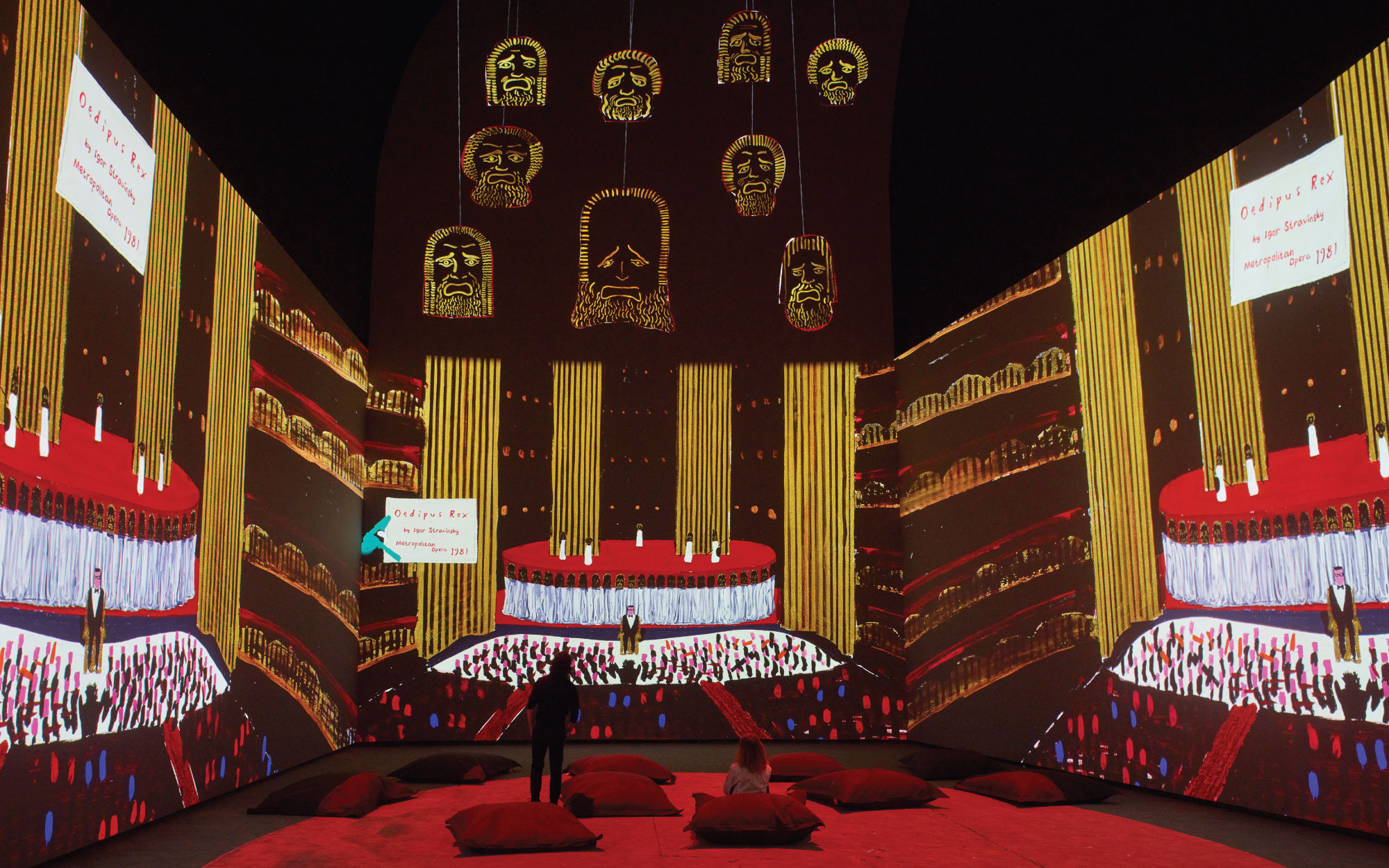
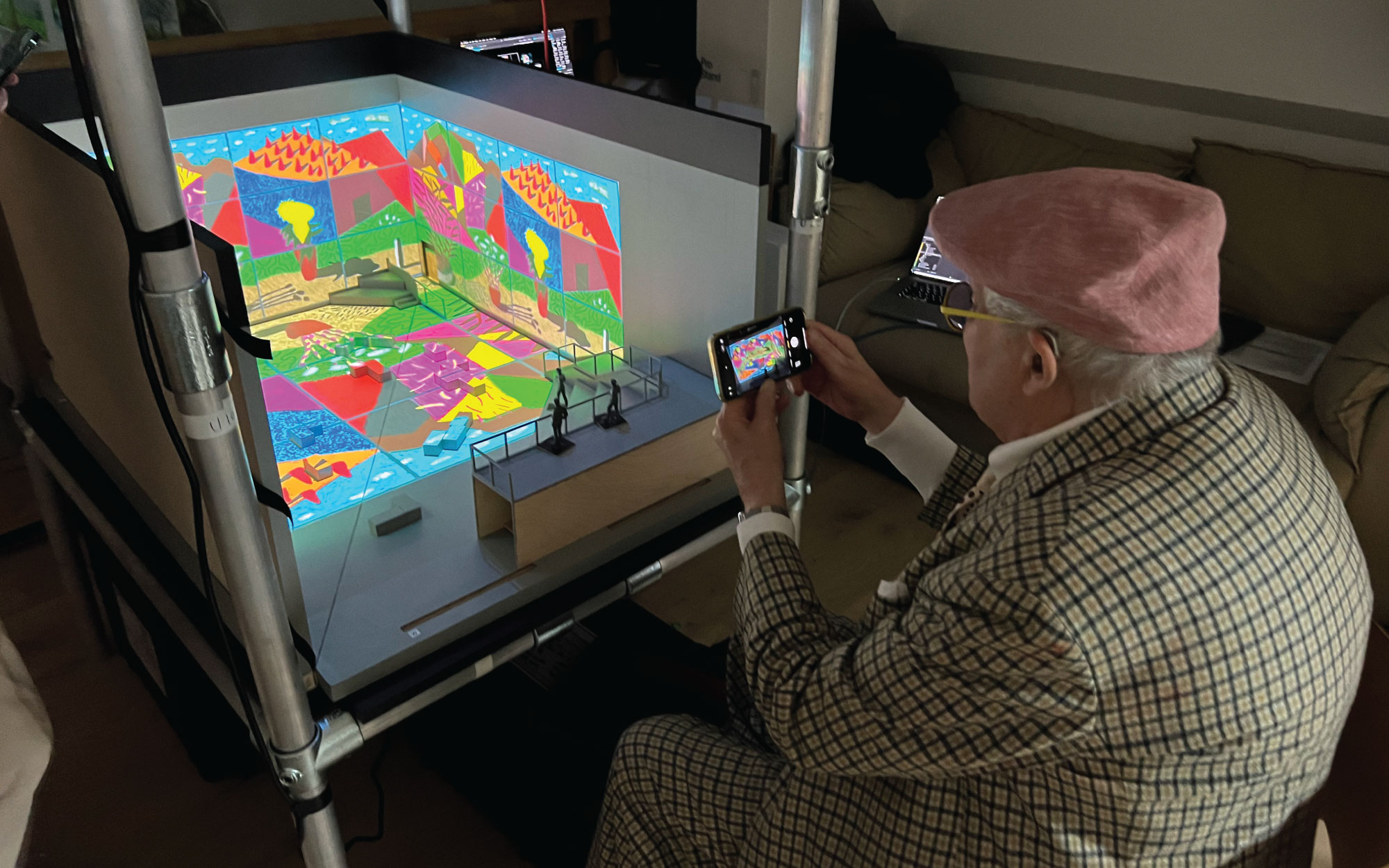
In 1972, he staged his first opera set for Stravinsky’s ‘A Rake’s Progress’ at Glyndebourne Festival Opera. With a flamboyant palette, cross-hatching and geometry, the set conjured an illusion of spikiness while also maintaining a ubiquitous tenderness of true love. He then went to work on multifarious sets, including a 1992 version of Puccini’s ‘Turandot’ for Chicago Lyric and San Francisco Opera.
His Animosity With Accolades
With a ‘no fuss’ statute over titles and recognition, these accolades fit in his lowest drawers. Hence, in 1990, when he was offered the Knighthood, he notoriously declined it by saying, “I don’t value prizes of any sort. I value my friends.” However, in 1997, he was appointed as a Companion of Honour—an honour above knighthood—and accepted it by accident. Hockney later quipped he had accepted it only because the letter notifying him was opened by someone else, denying him his customary refusal, as he “never claimed to be a respectable person, I smoke dope.”
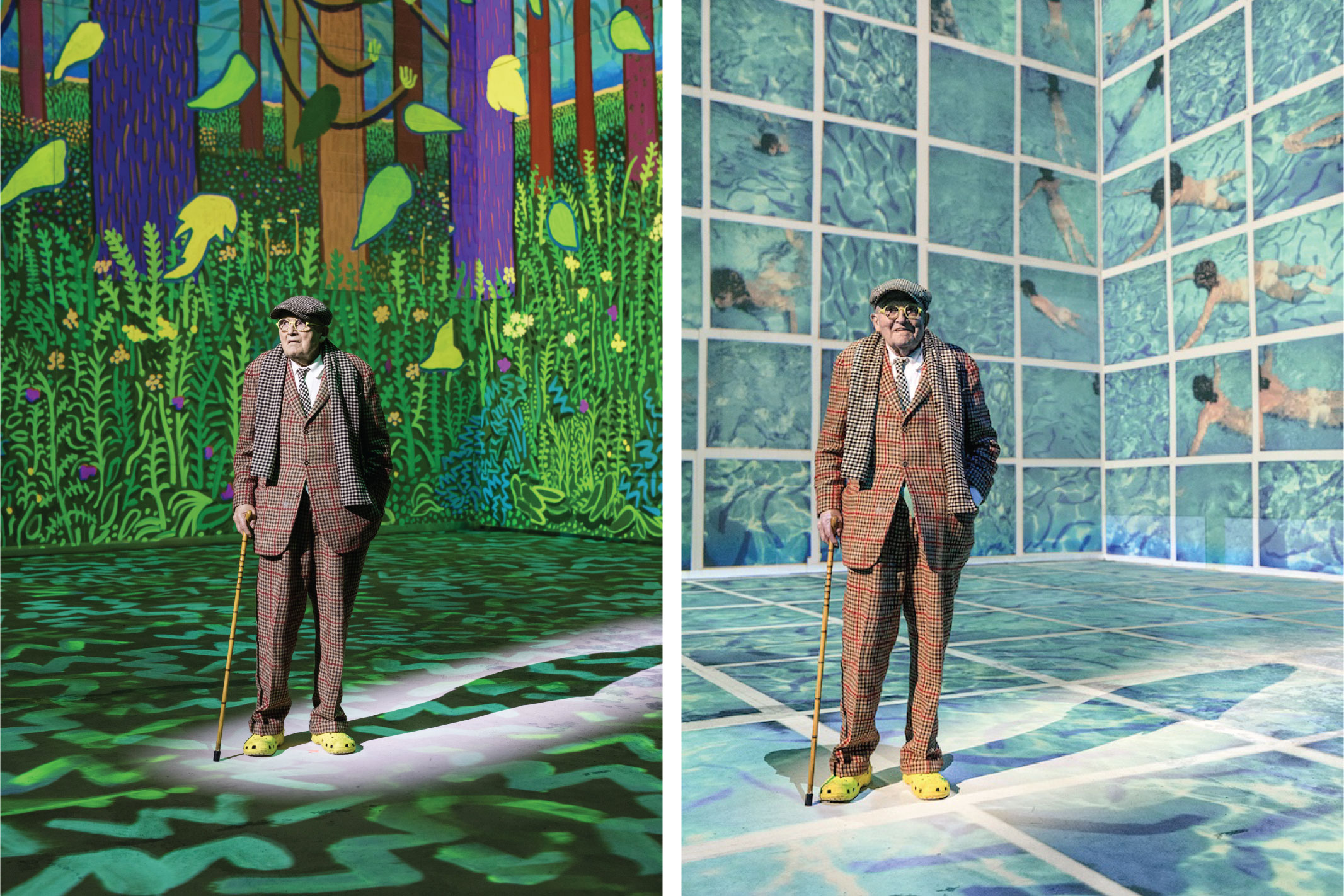
However, in 2011, following the death of his dear friend Lucian Freud, he was bestowed with the Order of Merit for being one of the most visionary British painters of his day, and accepted it graciously. Restricted to just 24 members since its establishment by King Edward VII in 1902, the Order of Merit never tempered Hockney’s eccentricity. He famously attended a Buckingham Palace luncheon in bright yellow Crocs paired with a Savile Row plaid suit.
The Velocity Of The Digital Era
Hockney began his artistic escapades with painting, printmaking and then moved to photography. In the 1980s, he began experimenting with analogue computers, generating images, a trailblazing technique at the time. He did not stop there; he then moved on to the Quantel Paintbox. In 1986, he created a series of Home-Made Prints with a Xerox machine, which were found everywhere in his office. In 2008, he finally shifted to an iPhone before catching on to the iPad. In this medium, Hockney discovered a way to make technology feel as instinctive and personal as the stroke of a brush.
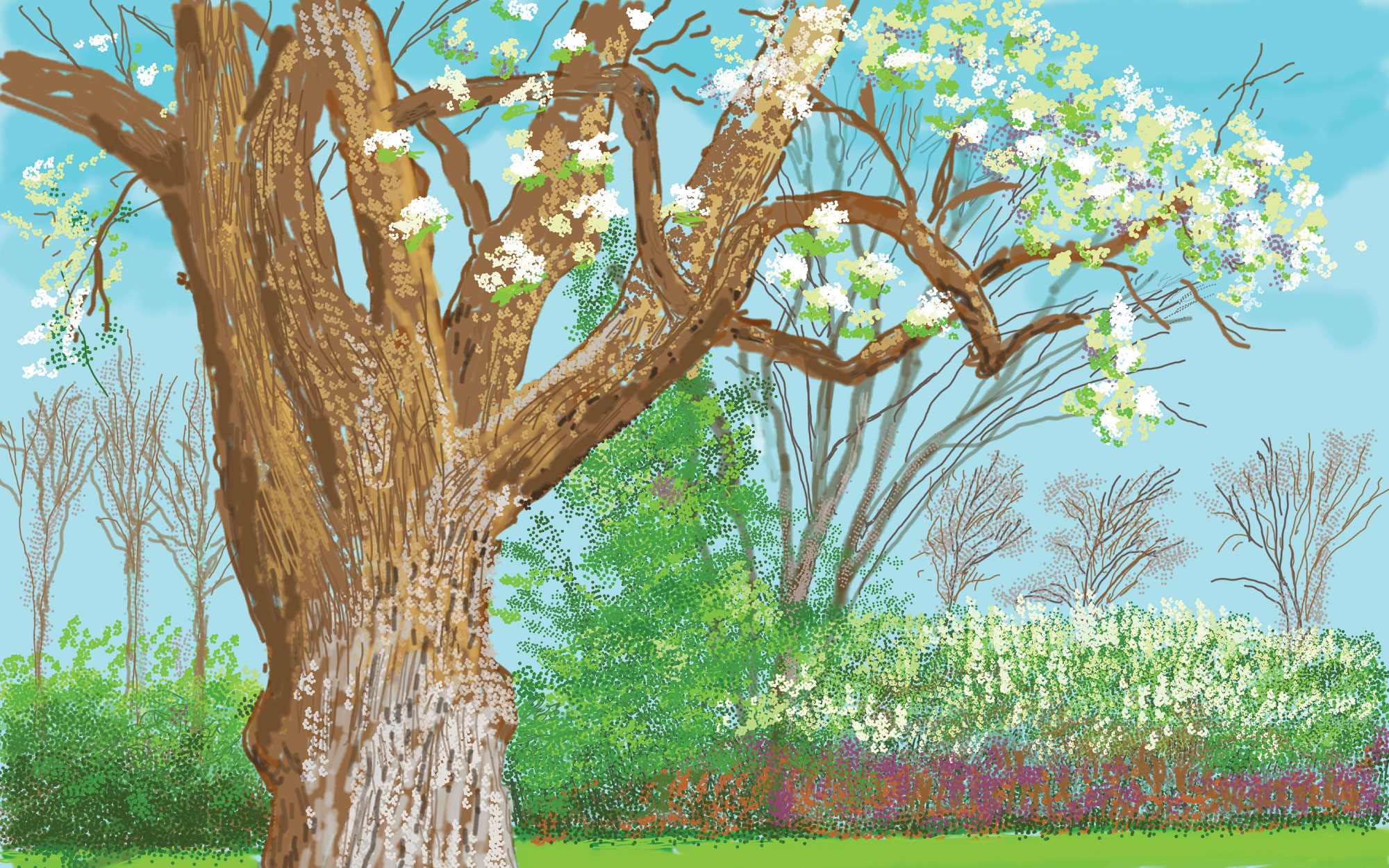
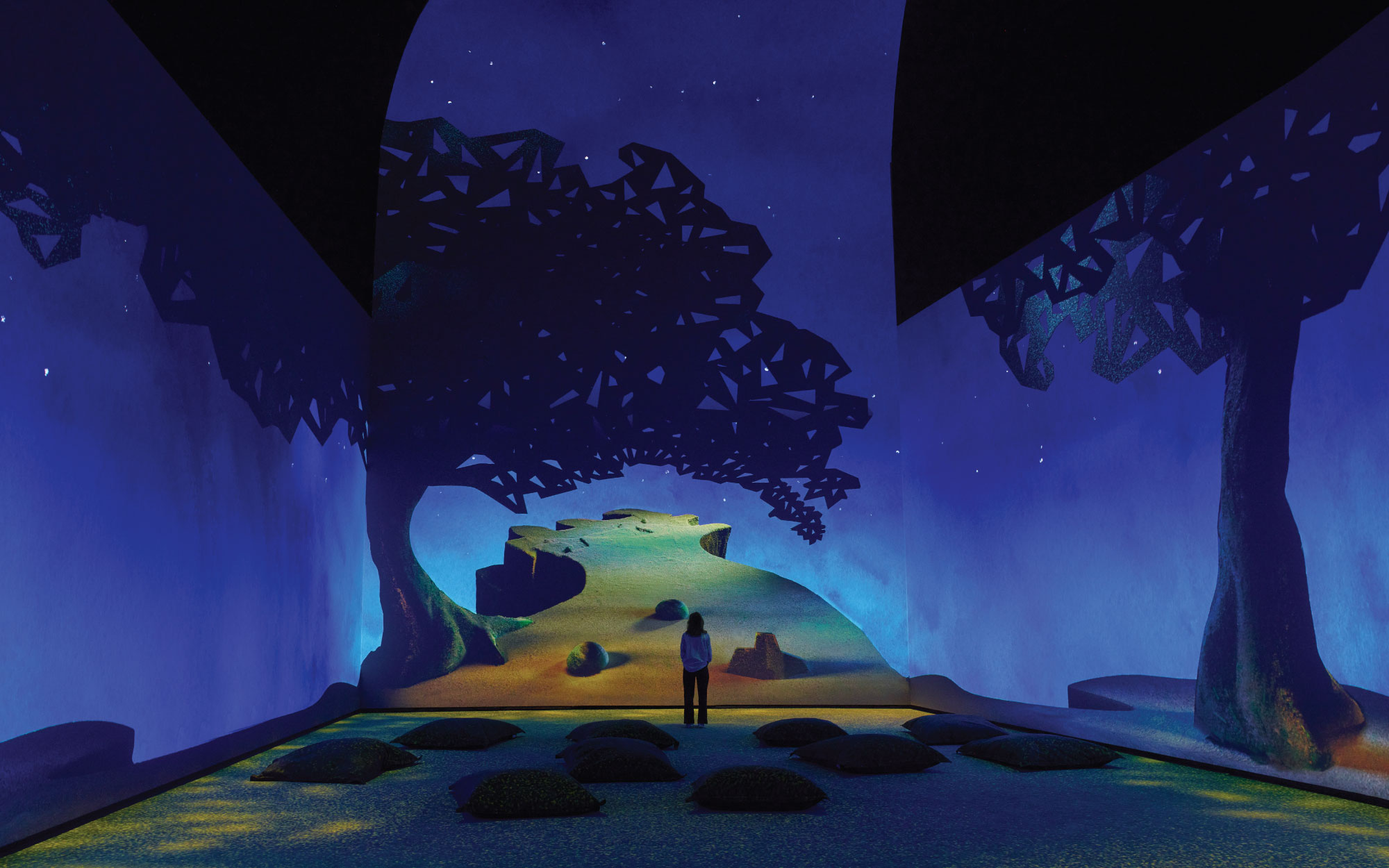
With his iPad, he showcased at major exhibitions, like the 2010 exhibition in Paris titled ‘Fleurs Fraiches, or Fresh Flowers,’ the Royal Academy’s 2012 exhibition, ‘A Bigger Picture’ and Fondation Louis Vuitton’s current exhibition, ‘David Hockney 25,’ among others. These immersive digital panoramas occupied the entirety of the exhibition space, creating a mise-en-scène that allowed viewers to inhabit Hockney’s pictorial universe. In 2018, when he was commissioned to revamp The Queen’s Window at Westminster Abbey to commemorate Queen Elizabeth II’s reign, he drew it on his iPad. Responding to neighbouring windows by Henri Matisse and Marc Chagall, he transformed the backlit surface into a study of luminosity and chromatic interplay.
His Enduring Love Affair With Vogue
Hockney nurtured a lifelong dialogue with literature, fashion, and publishing. His literary interests sprawled into fashion magazines when he guest-edited the Christmas 1985 issue of Vogue Paris, contributing his vibrant drawings that infused the magazine with his rare visual language. At 83, when he was an elderly statesman revered in the art world, he embellished the cover of British Vogue. Hockney produced a series of etchings inspired by C.P. Cavafy’s poetry and later illustrated fourteen poems by the Greek poet in Illustrations for Fourteen Poems from C.P. Cavafy (1967), widely considered one of the most personal projects of his career. His early canvases often contained handwritten fragments, quotations, and graffiti-like text, revealing the influence of Beat literature and contemporary poetry.
David Hockey taught the world how to actually see the electrifying colours of nature. A victim of class prejudice, regional snobbery, homophobia and Synesthesia, the painter leaves behind a journey that was anything but facile. In an art world often shadowed by elitism, he remained steadfastly himself—bringing digital art into the mainstream without ever abandoning the exuberant visual language that made him unmistakably Hockney. His larger-than-life paintings, portraits and set design will forever remind us to truly notice and find joy in all its tints and shades. Most of all, David Hockney reminds us that it is okay to be rebellious, fashionable and unapologetically yourself.