Art Confidential with Amit Kumar Jain: The Art of Building Artists
Art Confidential explores contemporary art through Indian collectors and patrons, uncovering emerging buying trends, artist stories, must-see exhibitions, and the evolving world of art collecting in India
- 18 Sep '26
- 11:09 am by Manisha AR

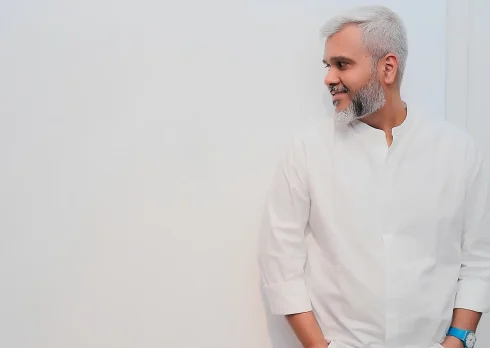
Amit Kumar Jain’s relationship with art has taken many forms: artist, collector, curator, advisor, and increasingly, mentor to a younger generation of artists. A graduate of Delhi College of Art, Delhi, with a Master’s in Museum Management from University College London, Jain has spent decades working across India’s art infrastructure, from the Devi Art Foundation and Savara Foundation for the Arts to Saffronart and the Museum of Art & Photography. Along the way, his interest in making art expanded into a deeper engagement with the people, collections, and institutions that shape its ecosystem. This eventually led him to co-found Interspace, an art advisory and incubation lab for artists, with Kanika Goyal.
Today, through Interspace, Jain works with galleries, collectors, and artists, particularly in the space between art school and the gallery. “We like working with artists. Let’s see if we can bridge the gap between the art school and the gallery,” he says. The work is anything but simple. From pricing conversations and developing bodies of work to writing wall texts and preparing artists for their first exhibitions and collectors, Jain helps young artists navigate the early stages of building a sustainable practice.
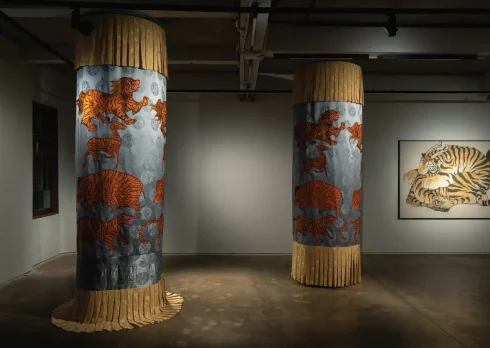
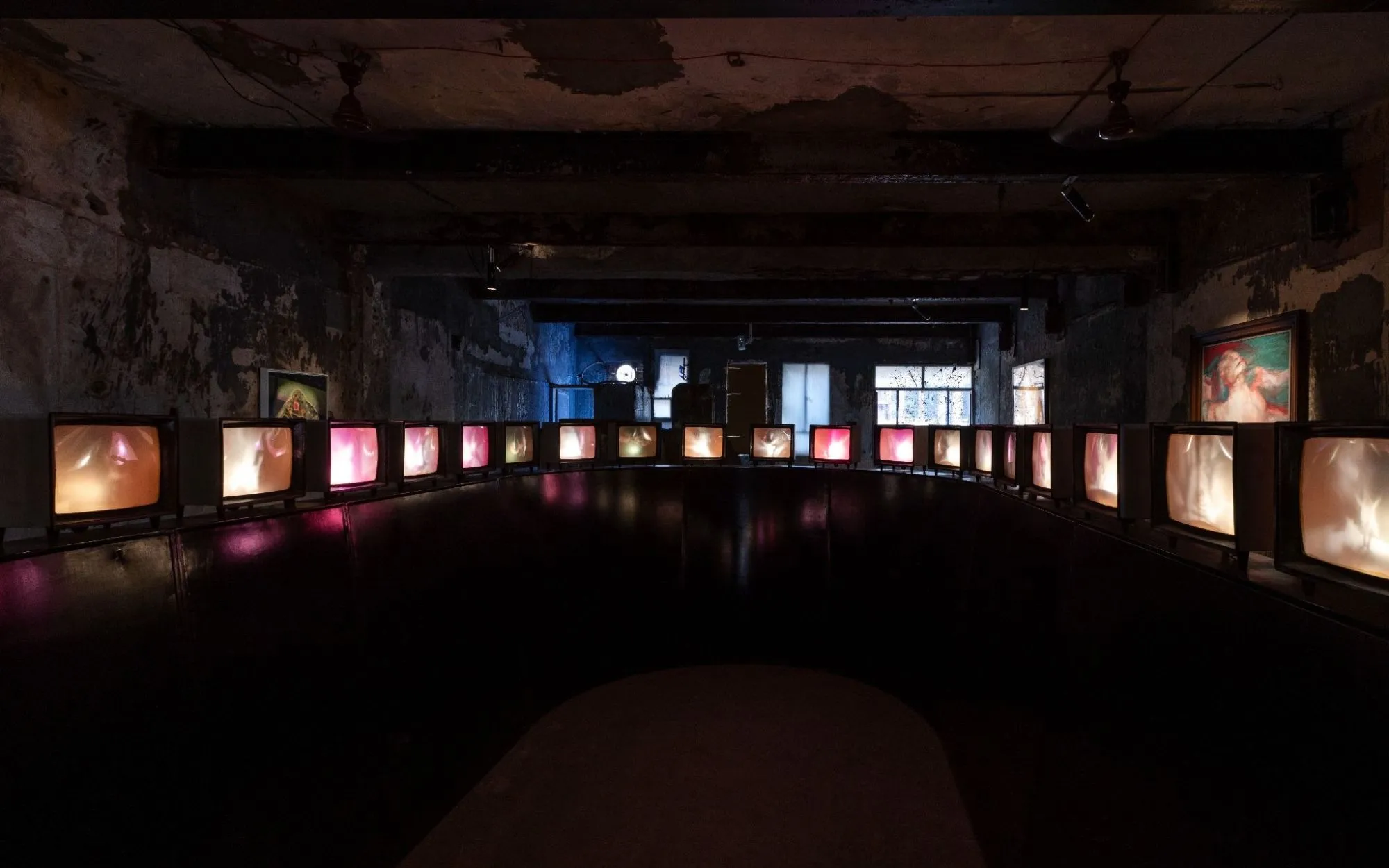
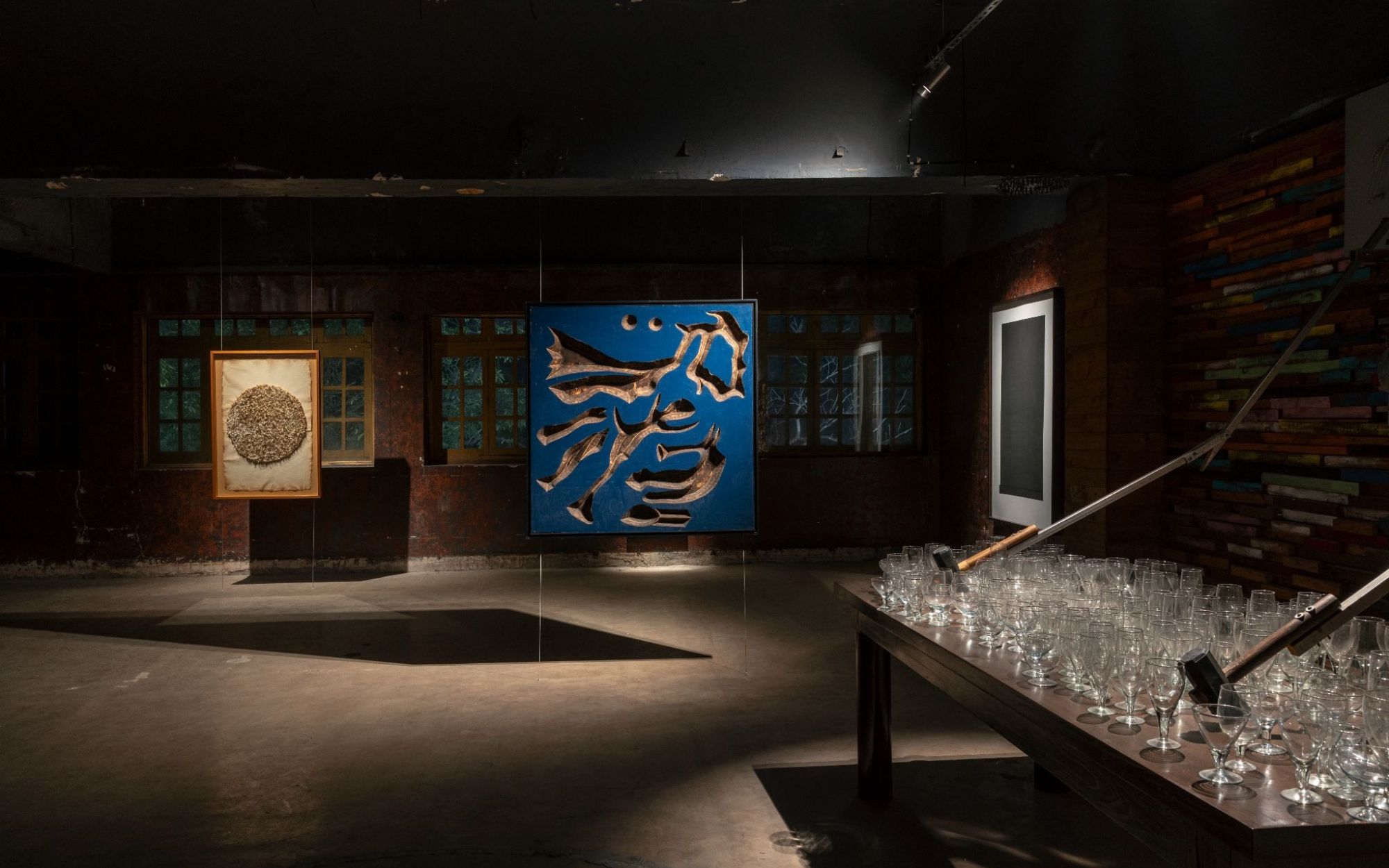
Most recently, he co-curated ‘The Party is Elsewhere’ with Reha Sodhi at an abandoned nightclub, The Radial, in Cannaught Place, Delhi. Visible in the feature image are glimpses from the exhibition featuring ‘The Mermaid’s Mirror (2005)’ by Sheba Chhachhi (2007). In this conversation, we discuss what he has observed across decades in the art world, the changing relationship between artists and collectors, and whether the Indian art market or the Indian collector has changed more.
Also read: Art Confidential: Siddharth Somaiya On Building A Future For Indian Art
Design Pataki: You’ve described yourself as the “Middle Class Collector.” Where did that identity come from, and what did the term mean to you when you first adopted it?
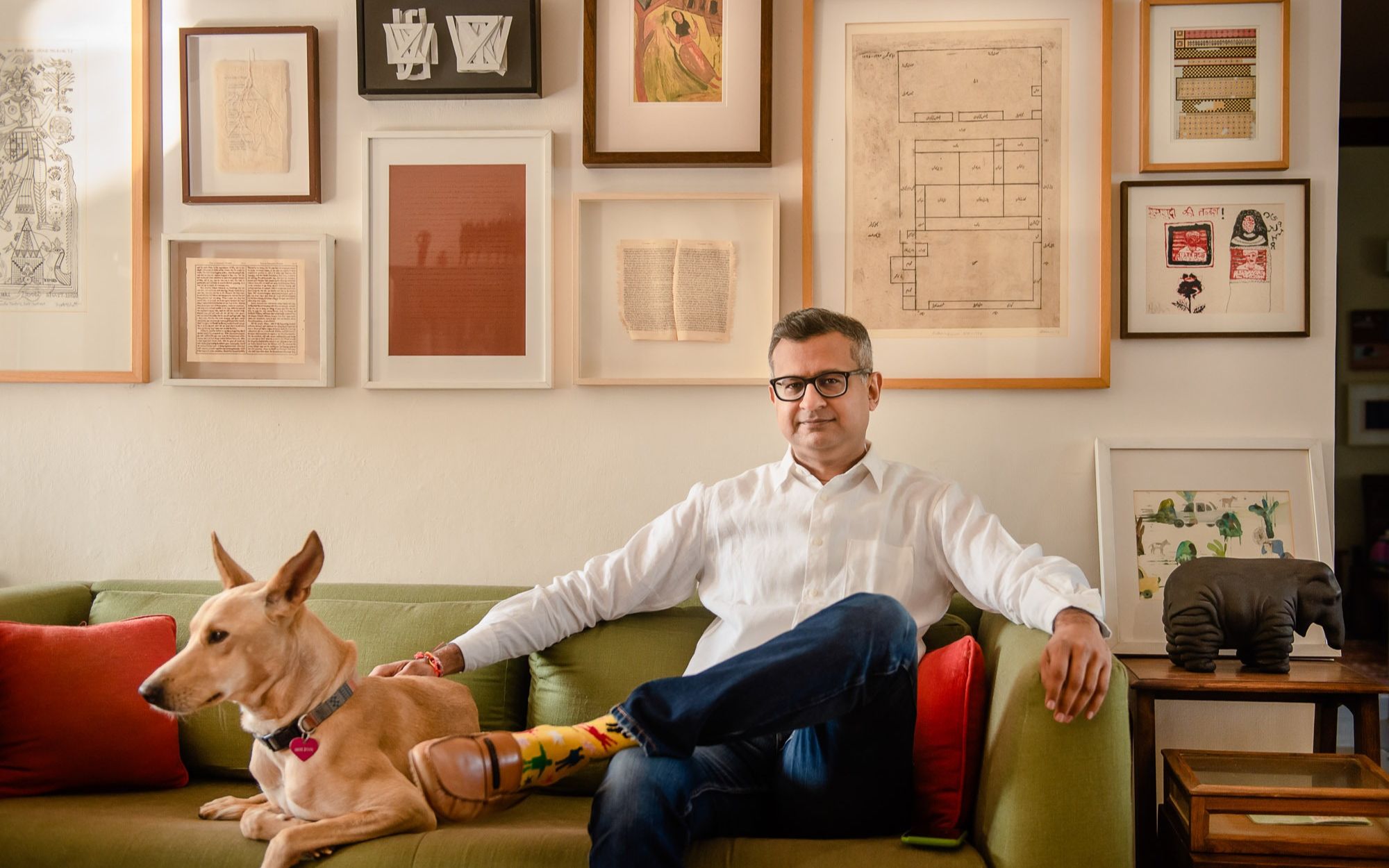
Amit Kumar Jain: Before the “Middle Class Collector,” my Instagram was called “Ghummakkadaj,” since I travelled extensively throughout college and early in my career, and that became a name people called me. The change happened when I started questioning what it meant to collect art. I come from a middle-class family, despite what people like to say. My father has a shop in Old Delhi and, given the choice, would have preferred that his son take a more illustrious (or, more accurately, better-paying) career. I chose art and became a curator. Buying art came next.
As much as I would have liked to collect canvases, I chose printmaking. It aligned with me in two ways: I had always wanted to be a printmaker in art school, and graphic art was historically more affordable, allowing more people to collect it. In hindsight, “Middle Class Collector” was a way of highlighting that you could collect art on lower budgets too. At the time, I was also very inspired by Dorothy and Herbert Vogel, a librarian and postal clerk who amassed 2,500 artworks, storing them in their one-bedroom apartment in Manhattan. I always thought I could become them: build a collection out of love and affection, live with it, and perhaps one day give it away as they did.
While my collection has grown in value today, my collecting journey has always been driven by personal connection, affordability, and storytelling rather than the financial privilege often associated with collecting art.
DP: Looking back, was there a moment when you realised you wanted to shape the art world not by making art, but by championing it?
AKJ: Yes, there was, and I remember it very clearly. It was a winter morning at the College of Art. My friends, all from the painting department, and I were at our usual canteen coffee spot, minutes before (or perhaps just after) our Art & Aesthetics class. Everyone was complaining about the lack of opportunities for emerging artists and how difficult it was to navigate the art world. I remember getting slightly frustrated and saying, “Instead of complaining, why don’t we take this into our own hands?”
That conversation became my first exhibition, ‘Navsar’ (2003), meaning a garland of nine strings, featuring nine artists, including me, at the India Habitat Centre in New Delhi. It was the beginning of a very different direction in my life.
DP: If you were advising someone with ₹20,000 to spend on art today, where would you tell them to begin and where would you tell them not to?
AKJ: Art has become expensive over time, and even in art schools, it can be difficult to find something within that budget. But the graphics studios in art schools are a great place to start. Smaller etchings, screenprints, and lithographs often fall within this price point, and it’s also possible to find something in the painting departments. You just have to look.
My advice is quite simple: please don’t expect ₹20,000 to become ₹20,00,000 overnight. That is the wrong reason to buy art at this price point. Buy it to support young talent. Often, that ₹20,000 will be an artist’s first sale, and it can give them the confidence to keep going and do much more. You’re also buying art because it speaks to you, reminds you of something you cherish, or simply makes you feel something.
A couple of weeks ago, I bought a mezzotint by a young printmaker, Archi Bhardwaj. She was making prints of trains, the Metro, and railway stations—something I’ve loved since I was a child and still do today. The print I bought, for ₹15,000, depicts a tunnel through which the Delhi Metro runs. I bought it because my father became a supplier to the Delhi Metro while it was being constructed, and he would come home and tell us about his day. This print brings back those memories.
DP: Has the Indian collector changed more in the past decade than the Indian artist?
AKJ: I think both have evolved alongside the growth of the Indian art ecosystem. As purchasing power has increased, more people are buying art, not only as an investment, but for their homes and as a form of cultural engagement. Collectors have also become more sophisticated, paying greater attention to provenance, research, and patronage. The value of artworks, particularly in the Classical, Pre-Modern, and Modern segments, has grown manifold, encouraging collectors to study the market and educate themselves. Institutional collecting of Indian art has also expanded globally, creating greater competition for top-end works.
Artists, too, are far more exposed and informed than they were a decade ago. Travel, social media, websites, and online talks have opened up access to ideas and conversations, and more artists now see art as a viable career. But while the artists and the market have evolved, the infrastructure supporting artists still has a long way to go. India’s contemporary art scene is growing and moving in the right direction, but we need much greater support through grants, mentorship programmes, residencies, and high-quality community studios.
DP: After years of working within established institutions, what gap in the art ecosystem did you feel was still missing, and how did that lead to what you do now with Interspace?
AKJ: Interspace has emerged after years of being in the art business to address the gap between graduating from art school and finding a gallery. The thought of creating a space where artists could be mentored and have open access to curatorial discussions has been on my mind for decades, and thanks to my co-founder, Kanika Goyal, some of these thoughts and dreams are taking shape. Interspace’s role is to be a bridge, to discover talent, of which there’s a lot in India, and assist artists with exhibitions, sales, exposure, and hopefully finding them a gallery. We are a third space, open to collaborating with multiple partners as long as they align with our artistic vision.
We don’t pick up artists just from an image; we visit every artist on our website and attend as many art school grad shows as possible. When we meet artists, it’s about understanding their psyche and helping them build the foundations of a sustainable art practice: developing a body of work, selling the work so there’s enough money going back to the artist to produce more, and eventually working with a gallery towards a solo show. I know my limitations; I’m not a gallery. A gallery takes a lot of effort and financial investment. I know who I am: I’m that bridge.
DP: How would you advise a young artist who is pricing their work for the first time?
AKJ: Pricing is one of the most difficult conversations I have with young artists. Every artist at Interspace goes through a pricing discussion because there has to be a sensible starting point. It’s easy to say, “My work is ₹1 lakh,” and then, when it doesn’t sell, drop the price to ₹50,000. It’s much better to start at ₹50,000 and build the price gradually over the next five or six years.
I usually ask artists to compare themselves with a more established artist at a similar price point and ask: as a buyer, why would I choose your work instead? That helps them understand where they should begin. Edition sizes matter too. The larger the edition, the lower the price tends to be. Most importantly, the studio price and the gallery or platform price need to be consistent. Otherwise, you undermine your own market.
These are difficult conversations, but artists need to understand that pricing is part of building a sustainable practice, not simply about putting the highest possible number on a work. And for buyers, especially at ₹20,000 or ₹50,000, my advice is always the same: buy the work because you love it, not because you’re wondering what it will be worth in five years. That first sale can give a young artist enormous confidence.
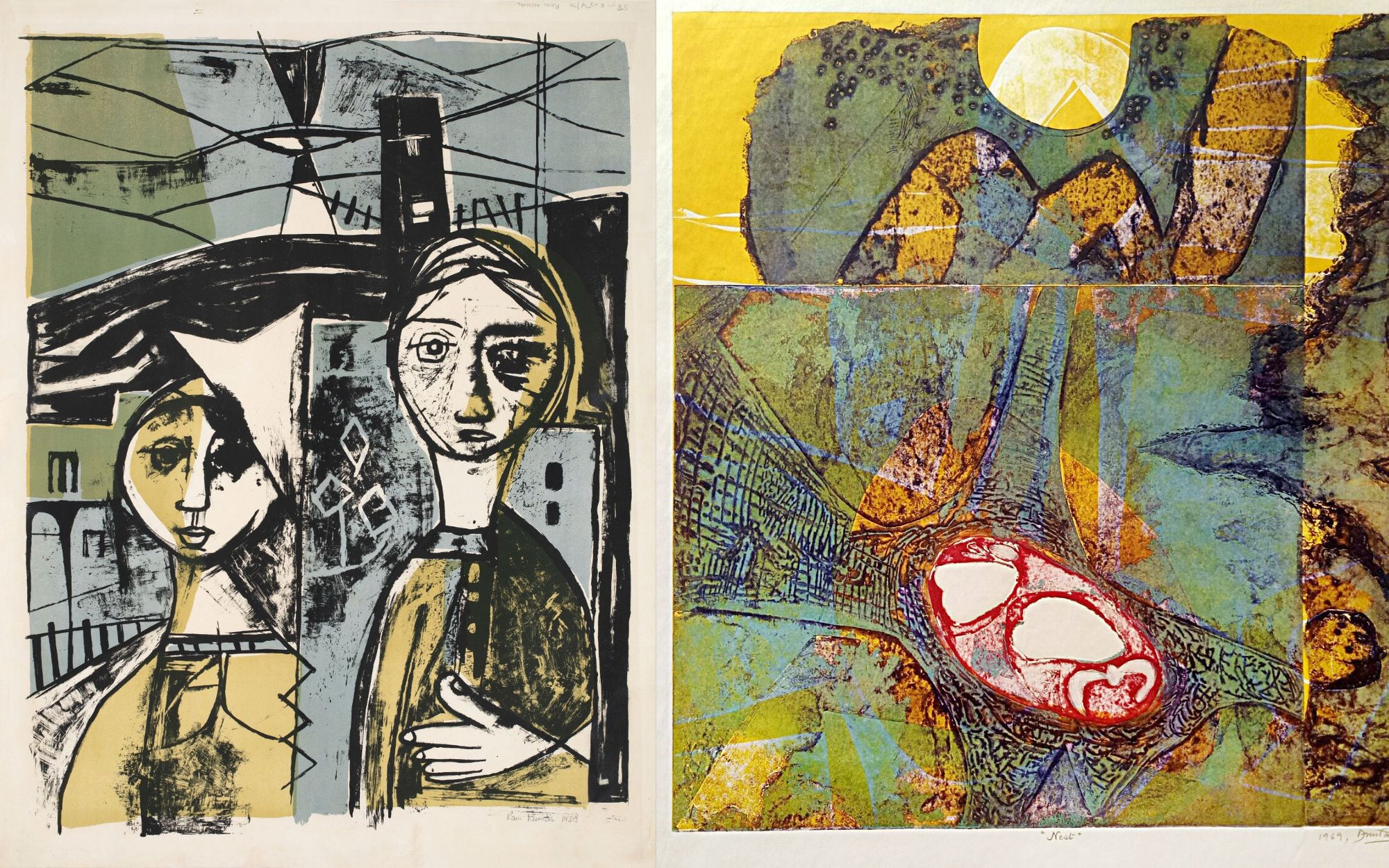
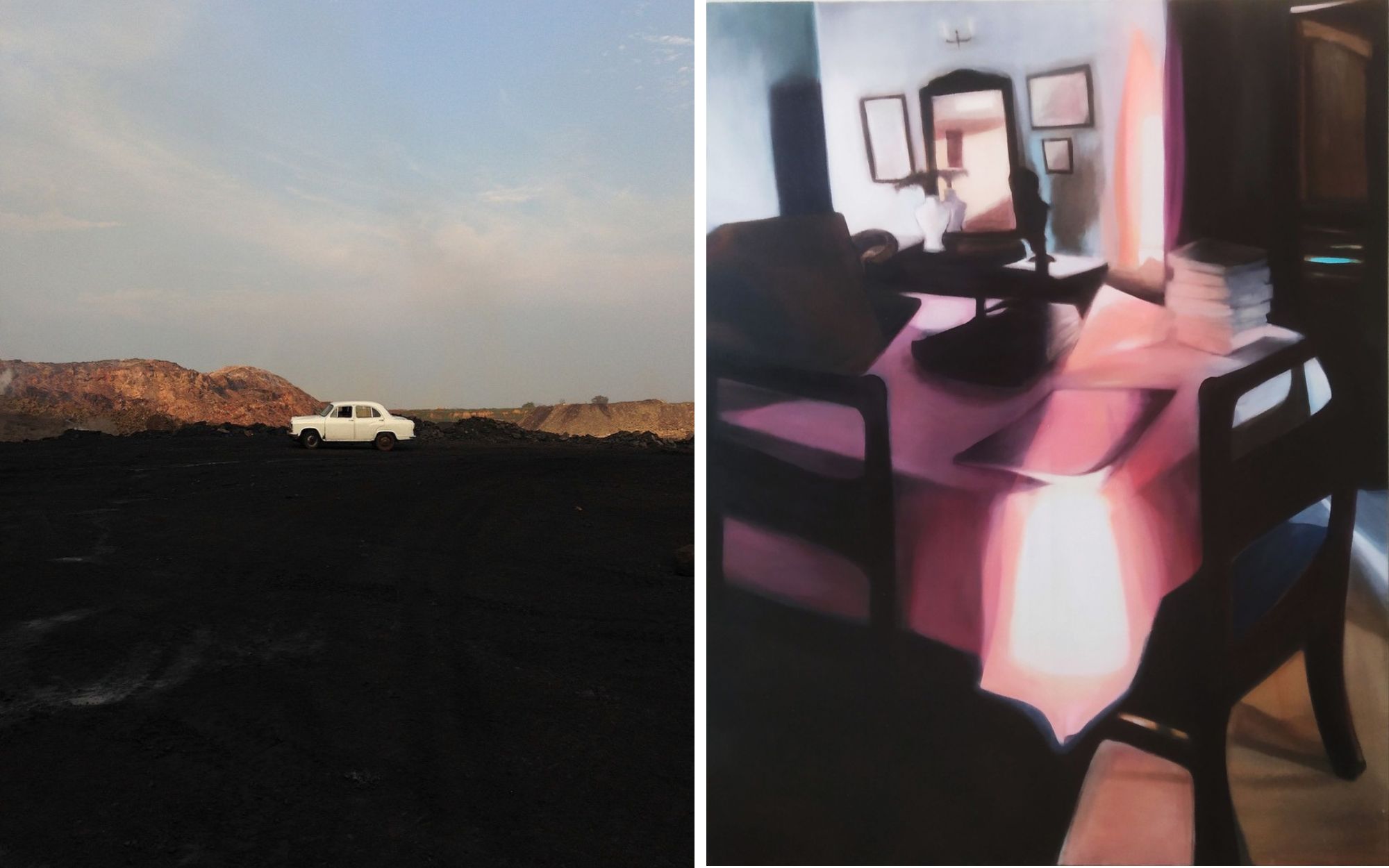
Right: Nest by Anupam Sud, Collograph on paper, 49 cm x 45 cm, 1969. (Image Credits: Artist and Amit Kumar Jain)
DP: Which artists are you particularly excited to watch right now, and why?
AKJ: It would be wrong to name a particular artist since there are so many on my radar. But if I have to choose artists that have excited me over time, they would be Zarina Hashmi, Krishna Reddy, Anupam Sud, Jyoti Bhatt, Youdhisthir Maharjan, Jangarh Singh Shyam, Arshi Irshad Ahmadzai, and many more. I wish I could name all of them.
DP: If you could leave every first-time collector with one piece of advice, what would it be?
AKJ: If you are entering your art-collecting journey, buy what you love, since it is you and only you who will live with that artwork. The rest is noise. Trust your instinct and your reasoning to buy emerging artists. Visit galleries, art schools, museums and train your eye. Learn from artists, gallerists, and advisors. Take it all in and then develop your own taste.