Three Artists Who Are Shaping Bhutan’s Contemporary Art Scene
Meet Pema “Tintin” Tshering, Zimbiri, and Yeshey Tsogyal, three artists shaping Bhutan’s emerging contemporary art movement by bridging cultural heritage with new narratives of identity and expression.
- 10 Aug '26
- 6:12 pm by Manisha AR

As the global art world undergoes a period of recalibration, attention followed by the market is increasingly expanding towards emerging regions and new artistic narratives. This growing interest is reflected in the footfall at the current edition of the Sā Ladakh Biennale and the Kochi-Muziris Biennale held earlier this year, with the Bengal Biennale still to come. South Asia in particular has seen growing international interest, with artists, institutions, and collectors engaging more deeply with contemporary practices from the region. For Bhutan, where contemporary art is still developing its own frameworks and platforms, this moment presents both possibilities and challenges.
For centuries, Bhutan’s visual culture has been shaped by a close relationship between art, spirituality, and community. Nestled in the Eastern Himalayas between China and India, the kingdom’s artistic traditions evolved through Buddhist philosophy and monastic practice, with thangka painting, clay sculpture, wood carving, papermaking, and metalwork forming the foundation of its creative heritage. Unlike the neighbouring regions of India and Nepal, where modern art movements and institutions developed throughout the twentieth century, Bhutan’s artistic expression remained closely connected to collective rituals, religious teachings, and inherited forms of craftsmanship. While rooted in a broader Himalayan tradition, these practices developed a distinctly Bhutanese identity shaped by the country’s landscape, beliefs, and way of life.
Contemporary Bhutanese art, which began gaining visibility in the late 1990s, represents a new chapter in this evolving visual language. Its emergence has been gradual, shaped by educational reforms, international exchange, and artists trained both within Bhutan and abroad. Rather than moving away from tradition, contemporary artists are expanding its possibilities. In this feature, we spotlight three artists, Pema “Tintin” Tshering (b. 1985), Zimbiri (b. 1991), and Yeshey Tsogyal (b. 1993), whose practices explore what it means to create as a Bhutanese artist today. Working between inherited traditions and contemporary concerns, they reveal how a new generation is redefining Bhutanese identity through art.
1. Tintin Tshering: The Artist as a Keeper of Living Culture
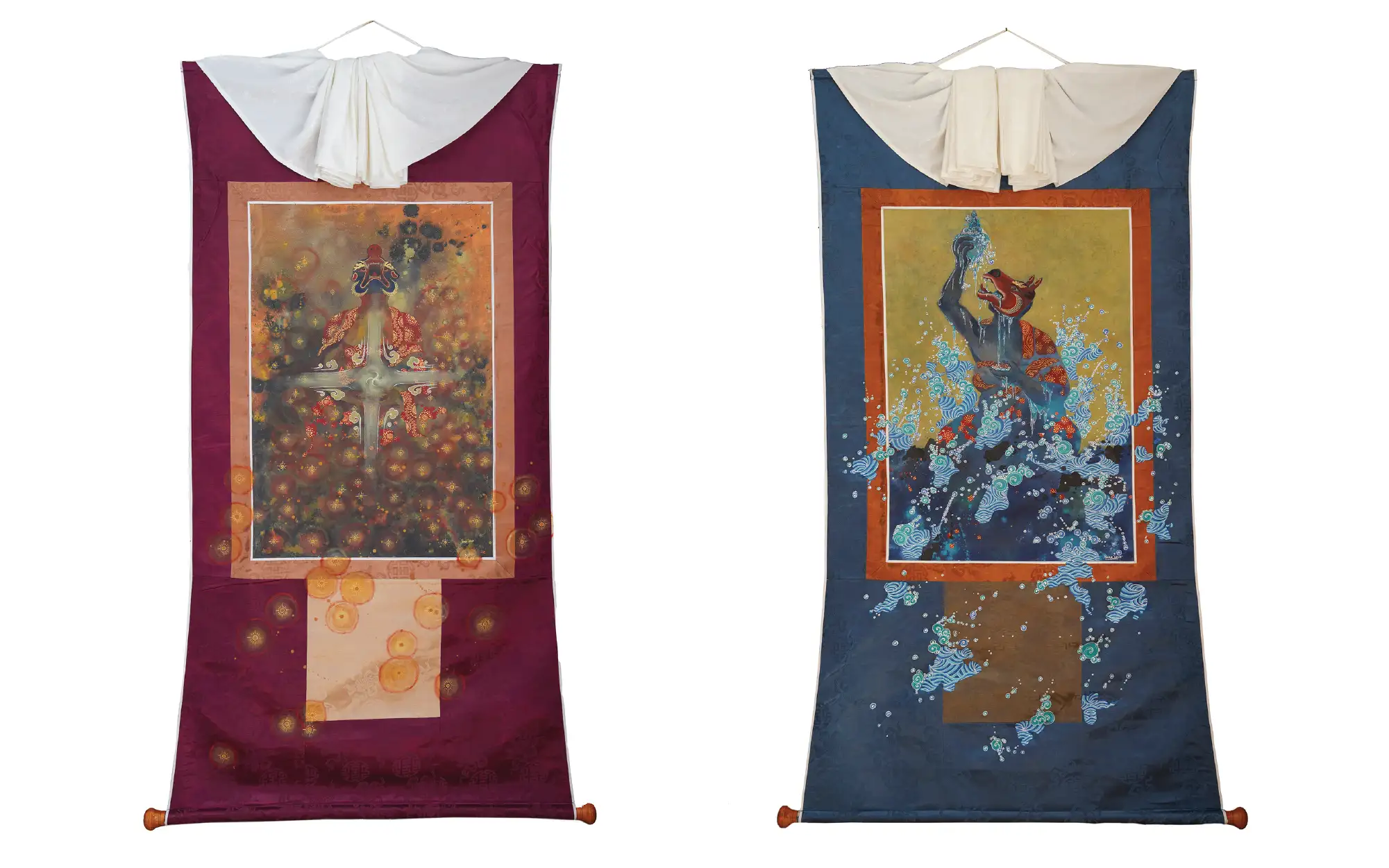
Pema Tshering, also known as Tintin, sees being part of Bhutan’s first generation of contemporary artists as both an honour and an opportunity. When he says, “we have no history,” he refers not to Bhutan’s rich artistic heritage, but to the absence of an established contemporary art canon. This allows artists like him to shape a new narrative. “Anything we create is, in essence, new,” he says, describing the process as both challenging and rewarding.
This idea of cultural evolution is central to Tintin’s practice. During a recent research trip to Switzerland through the Pro Helvetia programme, where he explored Alternative Museum Models for Living Cultures, he reflected on how traditions remain relevant. For him, culture must continue to evolve alongside the people who inherit it, with contemporary art playing a role in keeping cultural narratives alive.
Also read: A Complete Stay Guide To Paro, Bhutan’s Most Enchanting Valley
His own journey began with experimentation across different media and his involvement with the Voluntary Artists’ Studio of Thimphu, or VAST, founded in 1998 to support young Bhutanese artists. As a co-founding member, Tintin credits the organisation with exposing him to new artistic approaches and helping shape Bhutan’s emerging contemporary art scene.
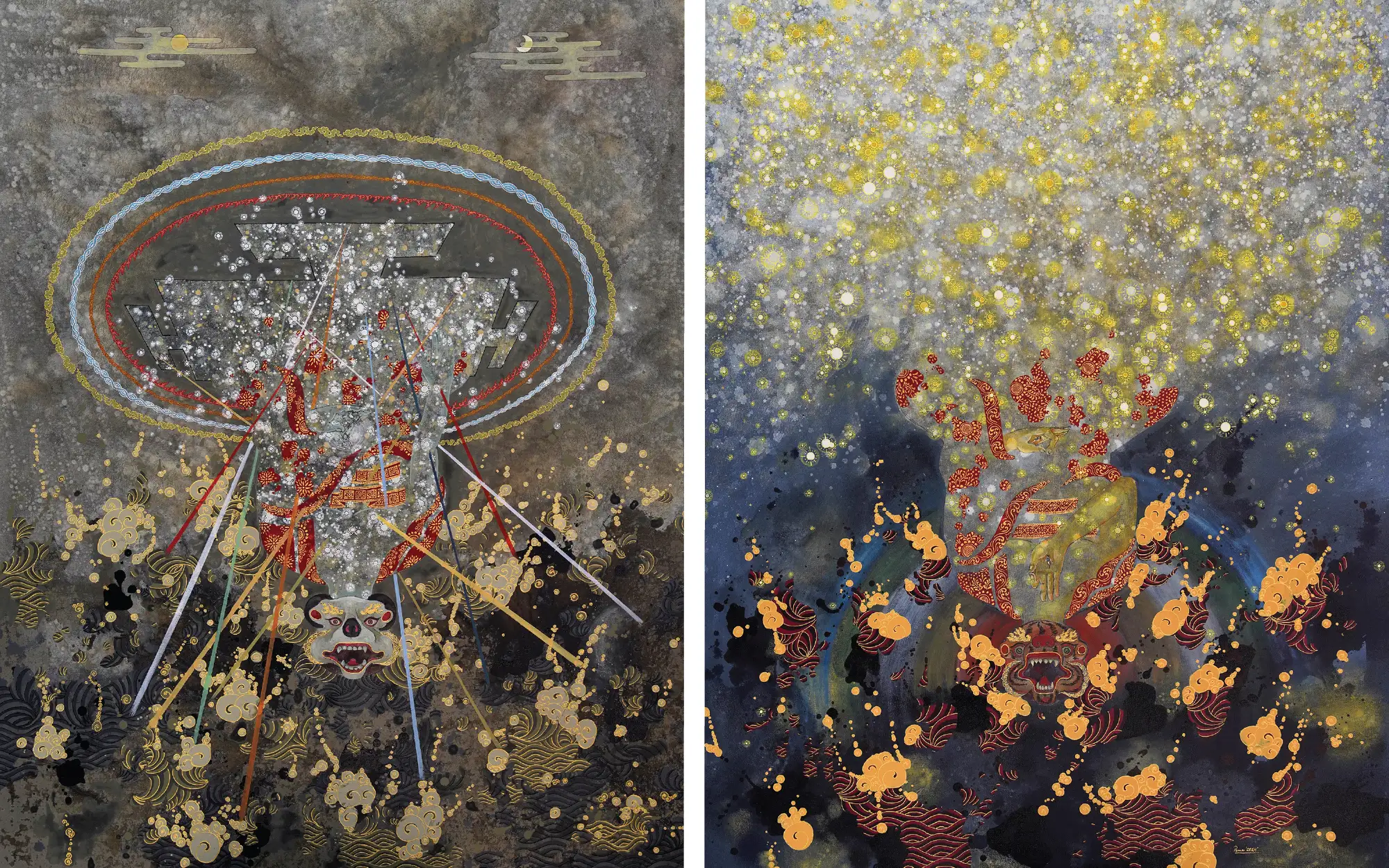
Working across painting, sculpture, and film, Tintin’s practice explores questions of existence, identity, and meaning through Buddhist philosophy. His 2025 solo exhibition ‘In-Between Dreams,’ at Threshold Art Gallery in New Delhi, revisited the concept of bardo, the transitional state between death and rebirth, while his installation ‘Objective Happiness,’ presented at the Rubin Museum’s ‘Reimagine: Himalayan Art Now’ (2024–25), reflected on Bhutan’s philosophy of Gross National Happiness. Together, these works reveal his ongoing interest in how art can connect personal experience, cultural memory, and universal questions of being.
Reflecting on his practice, Tintin says, “I feel that my main theme as an artist comes through my curiosity for understanding existence. And I try to do that through painting and visualising Buddhist philosophy and teachings, trying to find answers and trying to learn from them using art as the medium.”
2. Zimbiri: Where Cultural Memory Meets Personal Expression
Where Tintin’s practice explores questions of culture, philosophy, and existence, Zimbiri approaches Bhutanese identity through personal memory, symbolism, and reinterpretation. Among the first generation of contemporary artists shaping Bhutan’s visual landscape, Zimbiri’s practice brings together figurative painting with influences from Surrealism, Minimalism, and Pop Art. While her visual language is contemporary, it remains deeply rooted in Bhutanese culture.
“Bhutan has shaped my practice simply because it has shaped me,” she says. Growing up in a country where tradition is woven into everyday life rather than preserved behind museum walls has informed not only the symbols and materials that recur throughout her work, but also the questions she explores through painting.
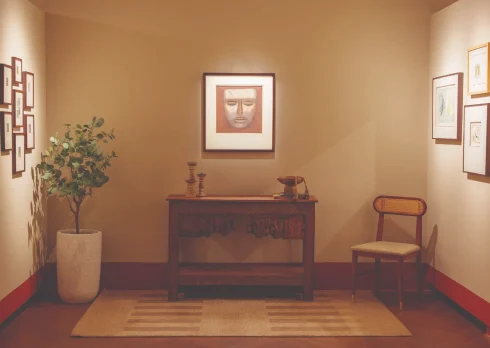
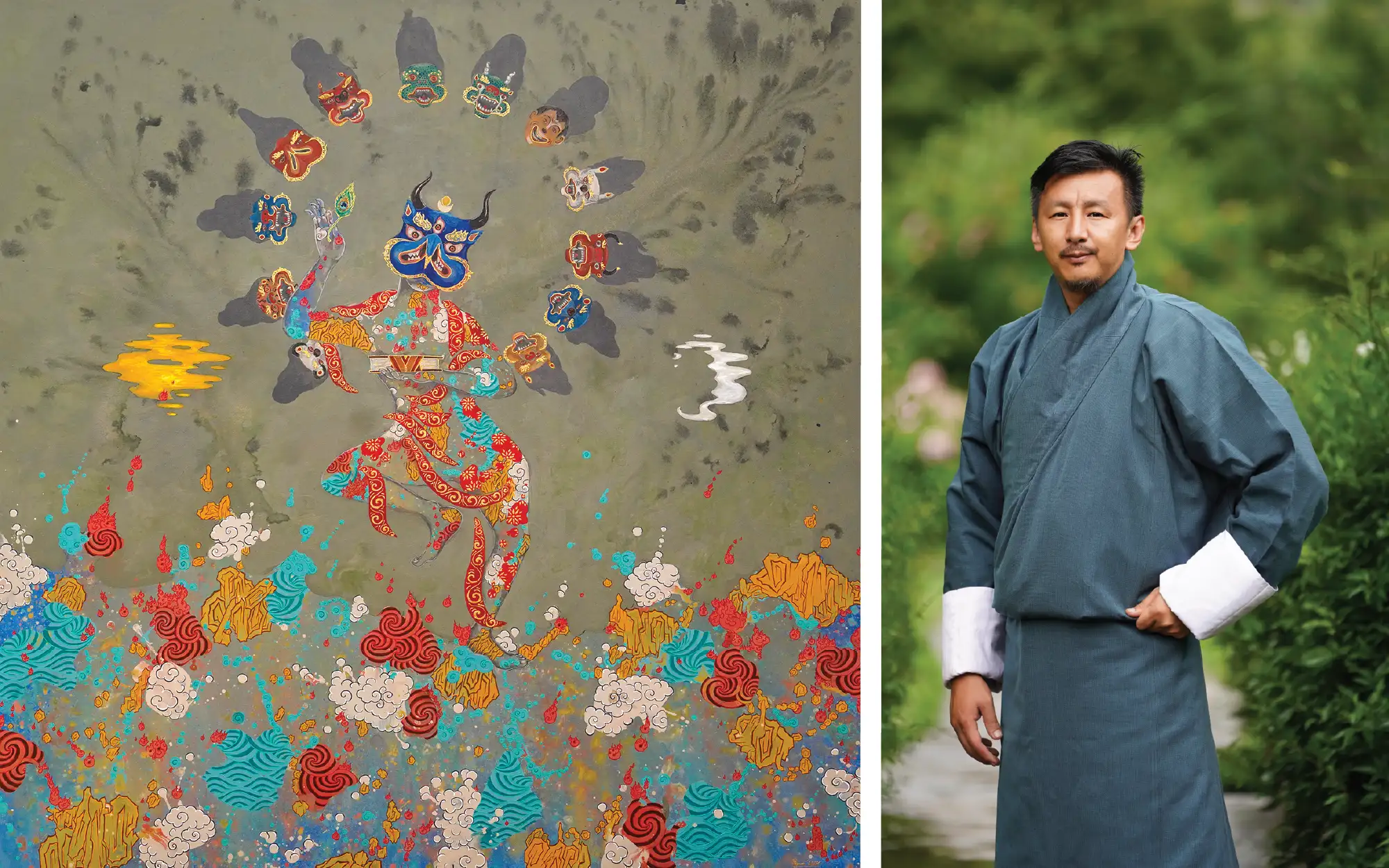
Zimbiri studied at Wheaton College in Massachusetts, where she initially pursued economics before turning to art. In 2015, she presented ‘Faces’ at the Royal Textile Museum in Thimphu, widely regarded as Bhutan’s first solo exhibition by a woman artist. Examining the masks used in cham dance performances, the exhibition reflected her longstanding interest in reinterpreting cultural symbols through a contemporary lens.
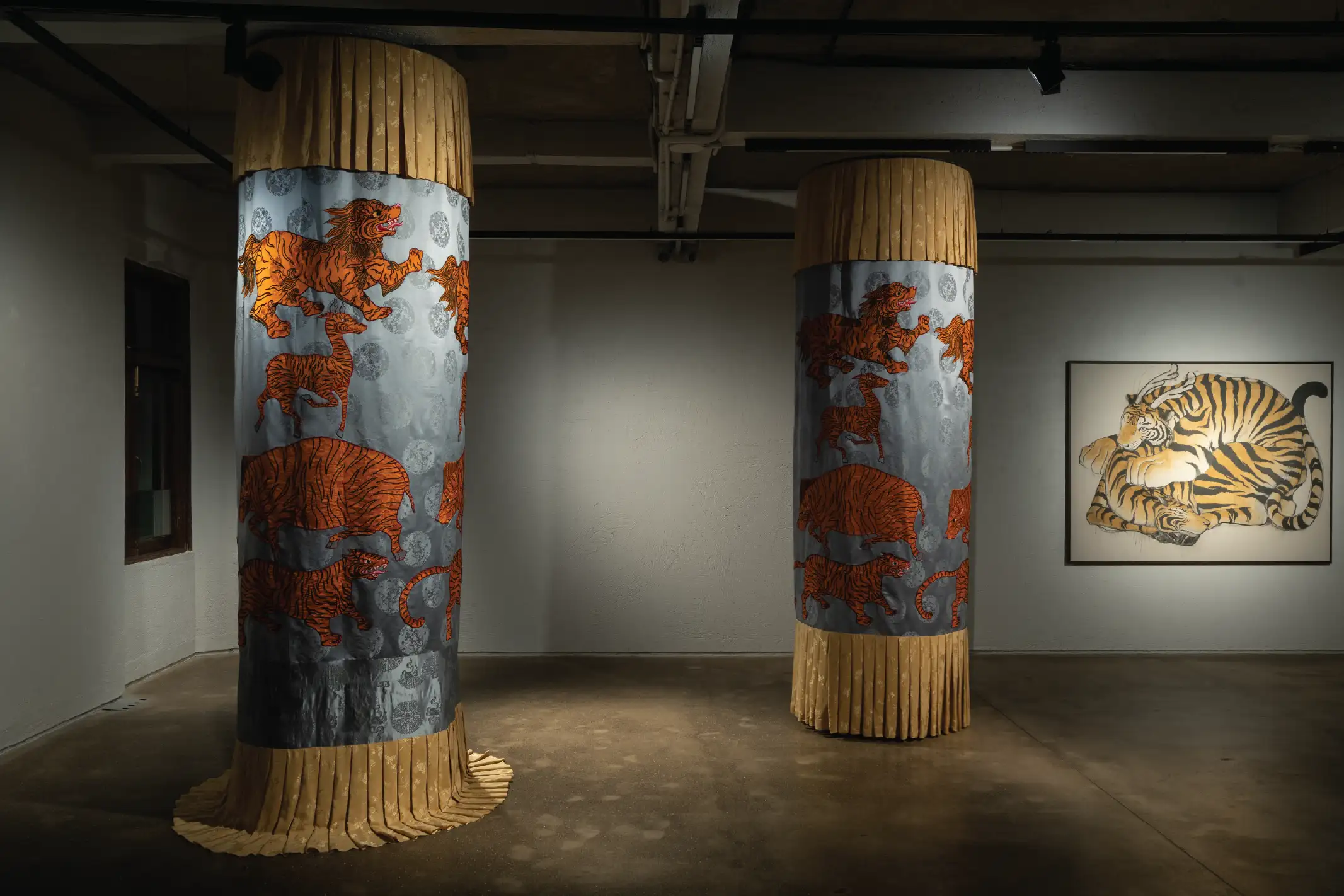
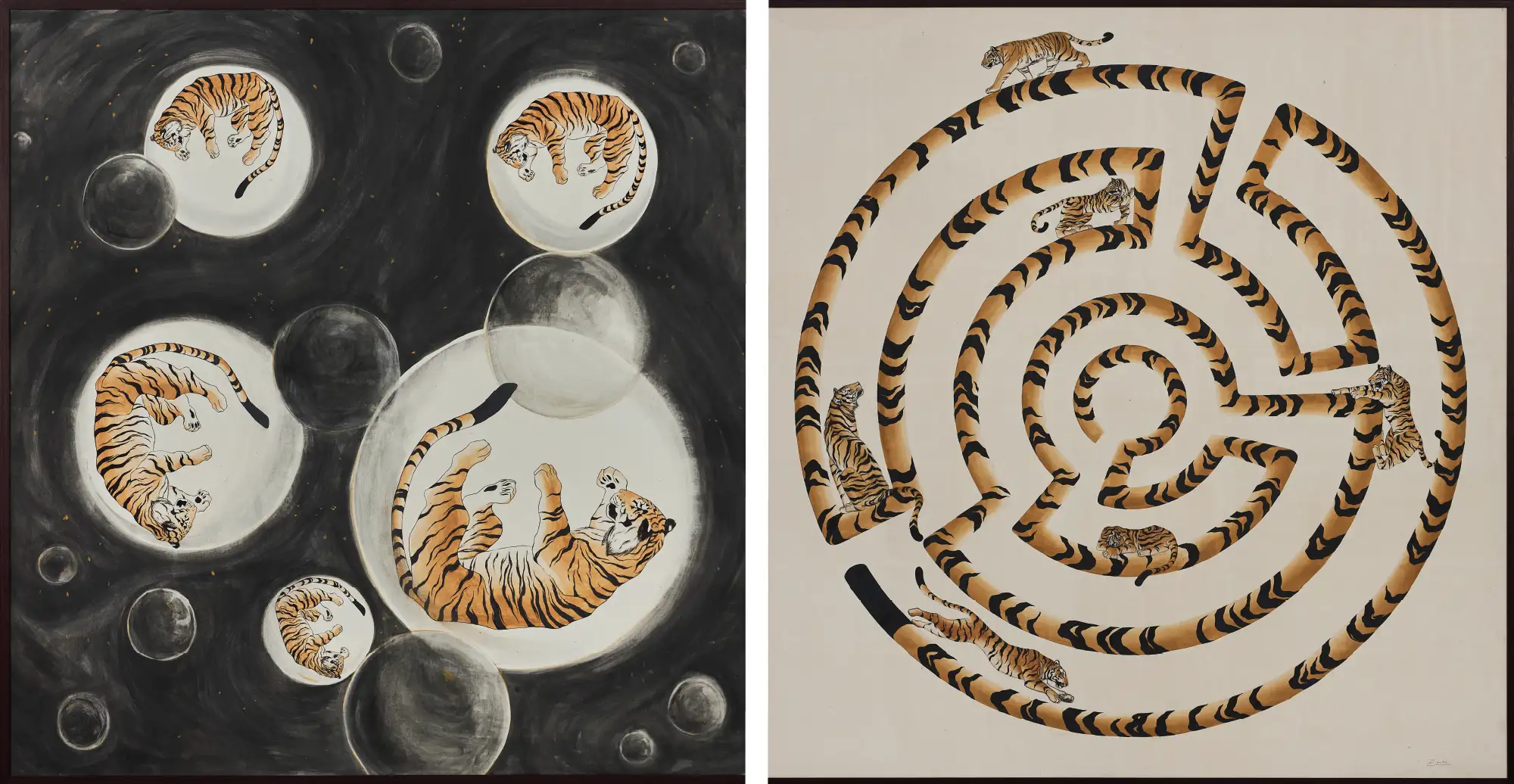
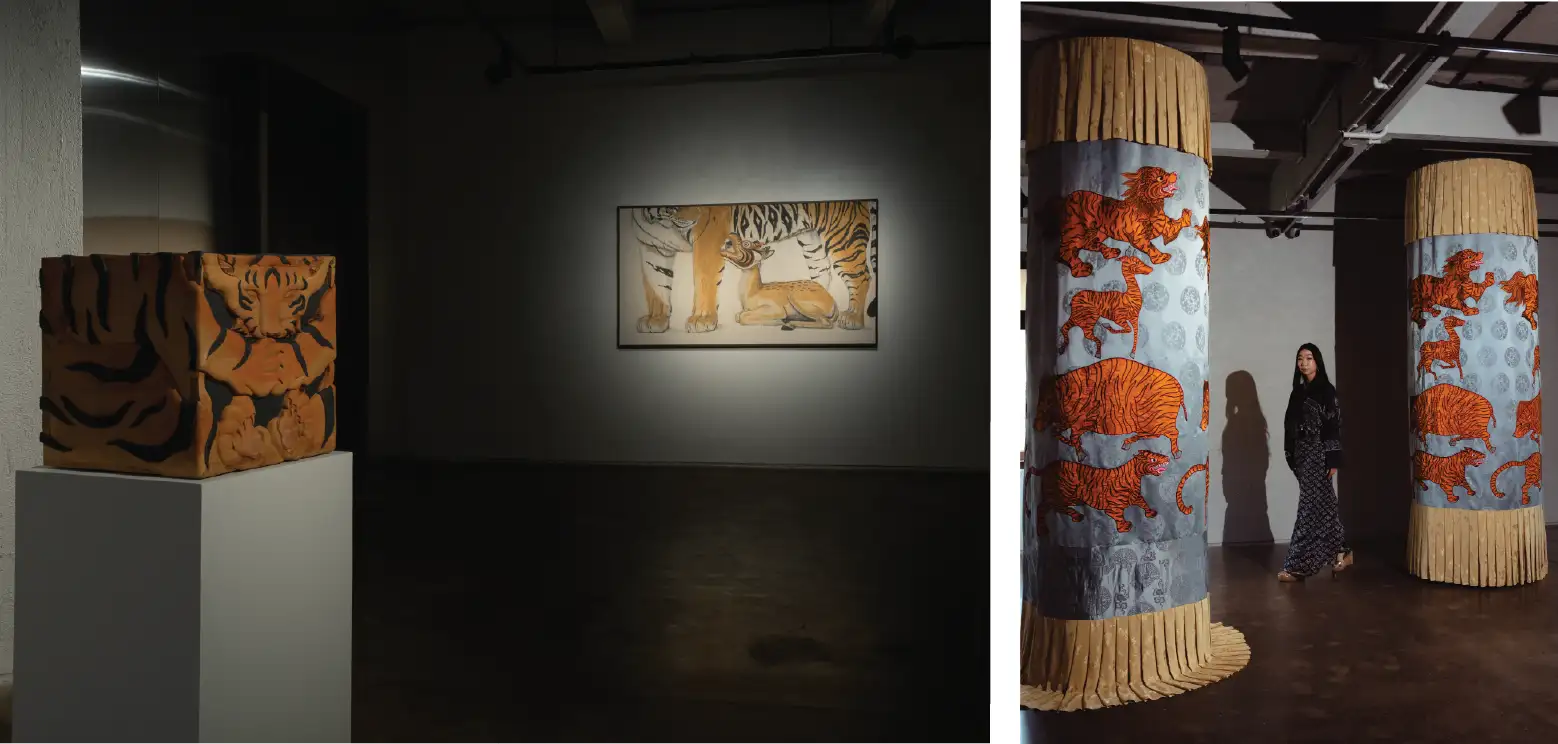
That exploration continues in her recent exhibition at Nature Morte, ‘Dear Tiger.’ Revisiting the tiger, a recurring motif in both Bhutanese culture and her own practice, Zimbiri considers themes of identity, transformation, strength, and collective belief. Rather than viewing each exhibition as a separate body of work, she describes her practice as an ongoing conversation, with each painting building upon the last. Over time, earlier works reveal new meanings as recurring ideas gradually emerge across her practice.
For Zimbiri, this evolving relationship with the past reflects a broader shift within Bhutanese contemporary art. She believes younger artists are moving beyond familiar cultural symbols to engage with everyday life, personal experiences, and changing realities while remaining connected to their heritage. “There is an evolution in how we are engaging with tradition,” she says. “Every generation asks different questions, and I think that’s a sign of a living culture.”
3. Yeshey Tsogyal: Imagining New Stories of Bhutanese Life
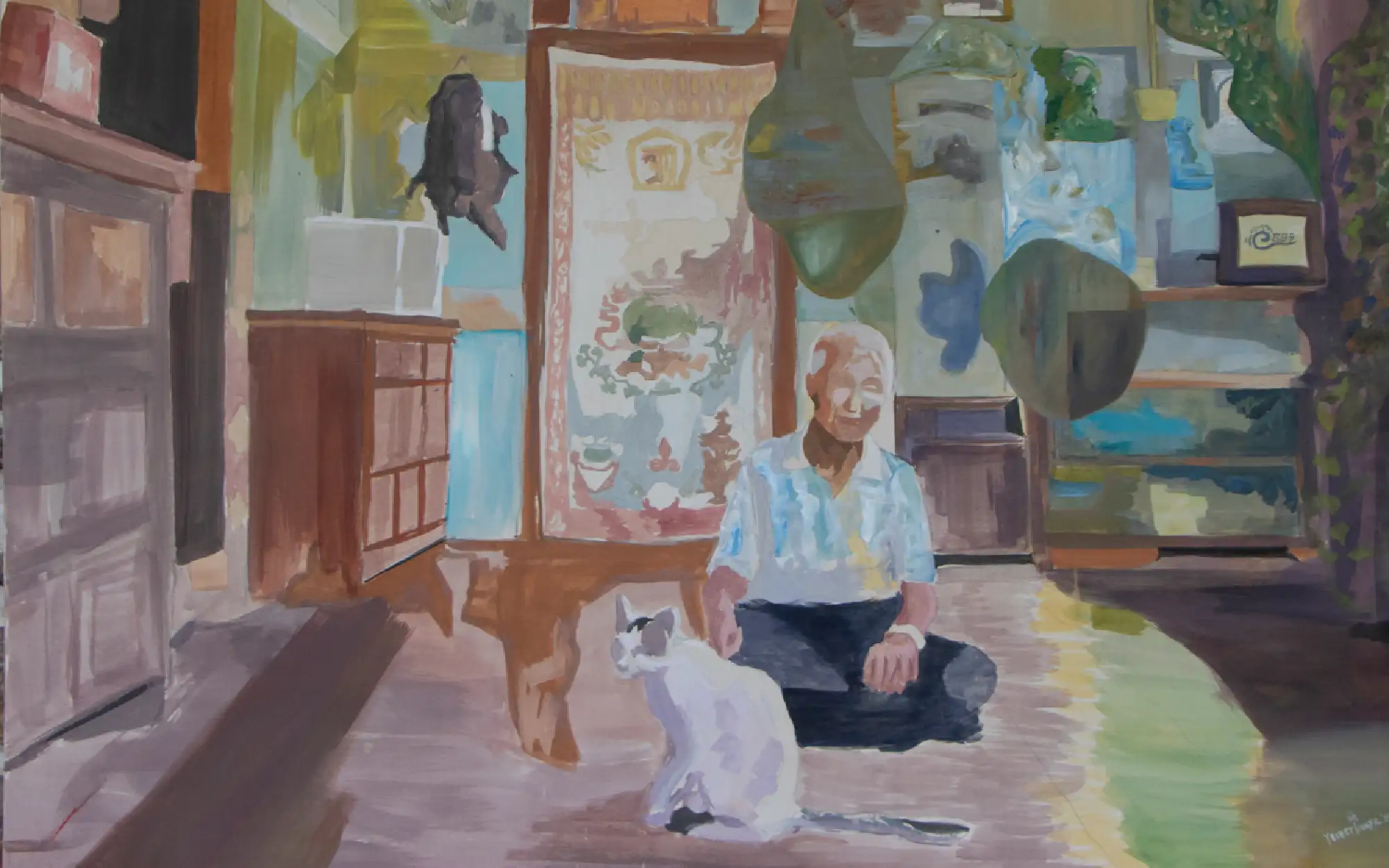
For Yeshey Tsogyal, being a contemporary Bhutanese artist means balancing tradition with experimentation. “For me, being a Bhutanese artist today means carrying a particular way of seeing while also having the freedom to question, experiment, and create work that is personal,” she says.
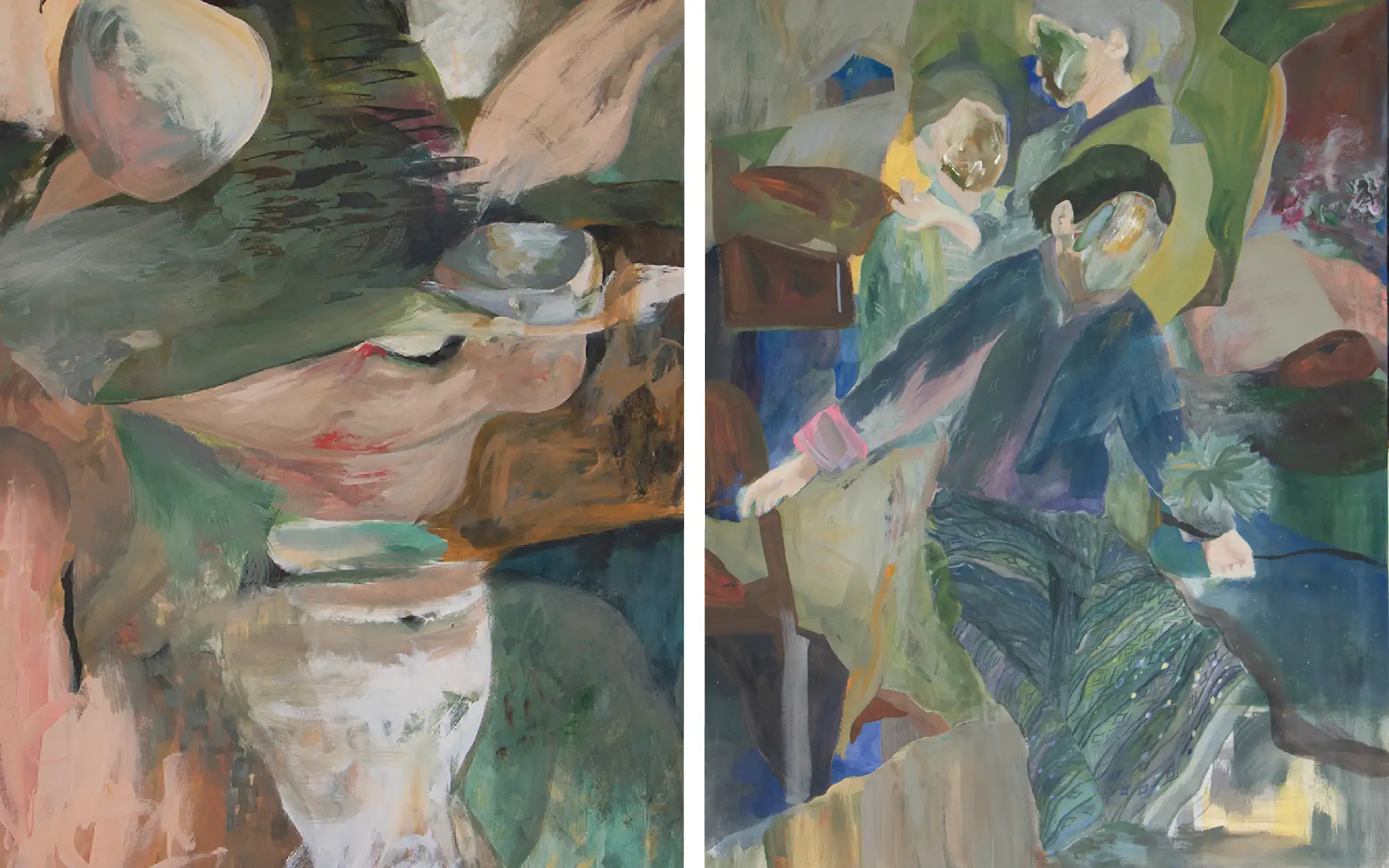
Working primarily with mineral pigments and acrylic, Tsogyal’s paintings explore memory, time, and the quiet significance of everyday moments. Alongside her studio practice, she co-founded Pada Art Studio in Thimphu, an art education space dedicated to expanding access to creative learning and artistic exploration.
Earlier this year, she presented her first solo exhibition, ‘Marrying a Blue Statue,’ in Giku Village, Thimphu, with an upcoming showcase in Hong Kong. Through the recurring presence of the colour blue –a silent character accompanying everyday acts such as waiting, walking, gathering flowers, and preparing for a wedding– the exhibition explores the abstract idea of committing to the unknown and finding meaning in ordinary experiences.
Also read: In Conversation With Raki Nikahetiya On The Highest Regenerative Art Biennale
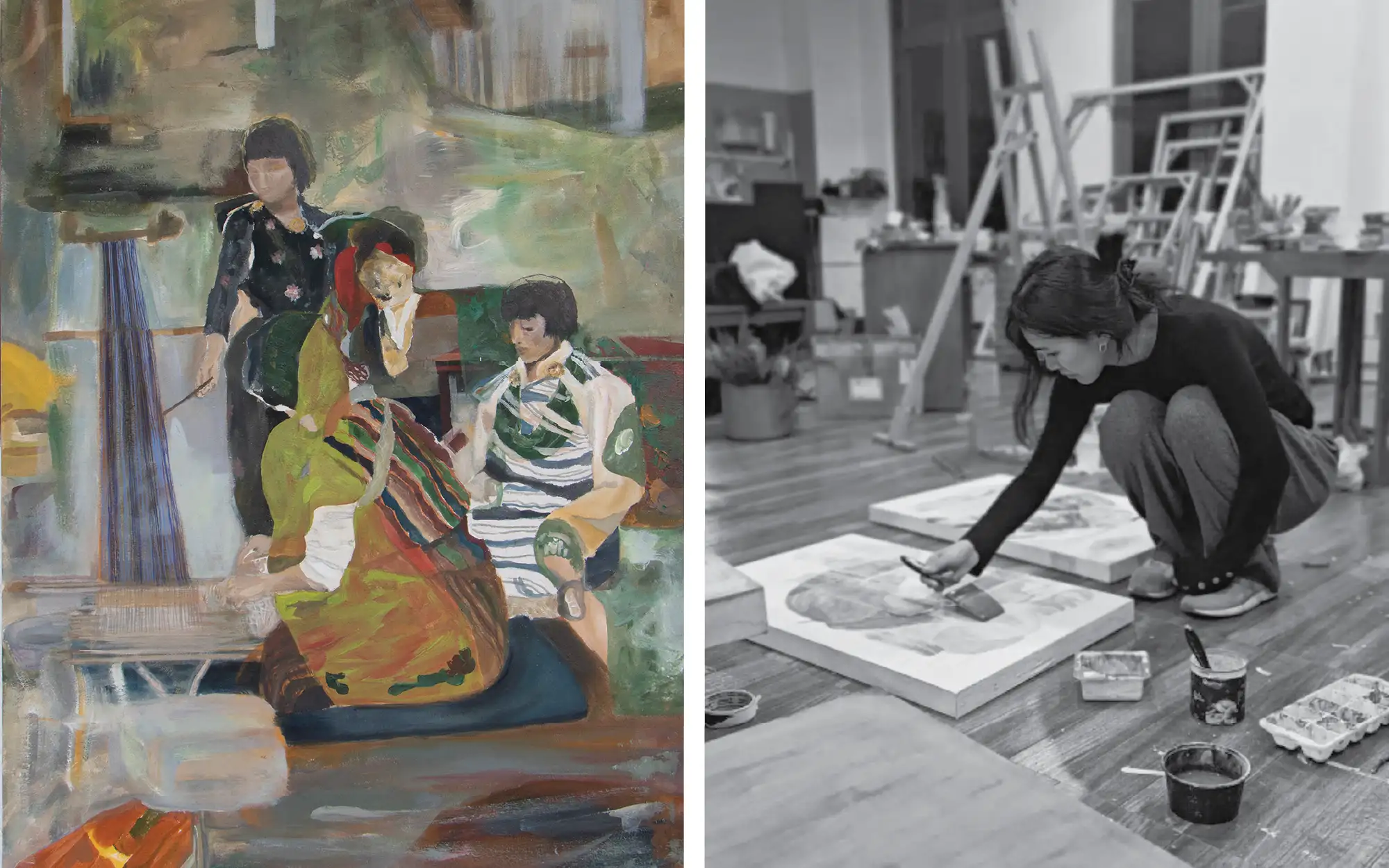
Beyond her own practice, Tsogyal sees contemporary Bhutanese art as a way to bring forward stories and perspectives that have long remained unseen. While Bhutan is often represented through religion, traditional architecture, festivals, and landscapes, she hopes artists will increasingly explore changing lifestyles, personal memories, identity, and the tensions between tradition and modern life.
She sees this shift already taking place among younger artists, who are experimenting with new materials, approaches, and personal narratives. Rather than simply reproducing traditional imagery, they are using heritage as a starting point, interpreting it through their own experiences. For Tsogyal, this dialogue between past and present is what allows Bhutanese art to continue evolving while remaining connected to its cultural roots.
Creating the Conditions for a New Canon
While all three artists have distinct practices and journeys, they share a common concern: the need for stronger infrastructure to support the growth of contemporary art in Bhutan. Beyond VAST, Tintin notes that contemporary art institutions and support systems in the country remain limited. “There isn’t any form of support or art endowment funds, especially because contemporary expression is still very new to Bhutan,” he says. “But slowly, it’s changing, and I am hopeful.” He acknowledges that this lack of infrastructure can make it difficult for artists to develop their practices, as significant time and energy are often spent navigating the practical realities of sustaining an art career.
Zimbiri echoes this sentiment, noting that artists are often building the structures they need as they go. “In Bhutan, where contemporary art is still growing, many artists are discovering these systems as they go and building this support network locally.” This means that artists are not only creating work but also laying the groundwork for future generations. As artistic expression evolves, so too must the audience. Zimbiri believes that expanding public engagement with contemporary art is essential, particularly in a context where people have fewer points of reference beyond their immediate experiences and histories. “Creating more opportunities for people to encounter contemporary art through exhibitions, museums, schools, and public spaces is an important part of building that understanding,” she says.
For Tsogyal, the absence of a professional gallery system and wider networks also creates challenges in connecting with international audiences and markets. “Artists often have to handle everything themselves, from creating and exhibiting their work to promotion, sales, shipping, and building international relationships,” she says. A stronger support system would allow artists to move beyond the expectation of constantly representing Bhutanese culture and instead focus on developing practices that are informed by their heritage without being limited to it.
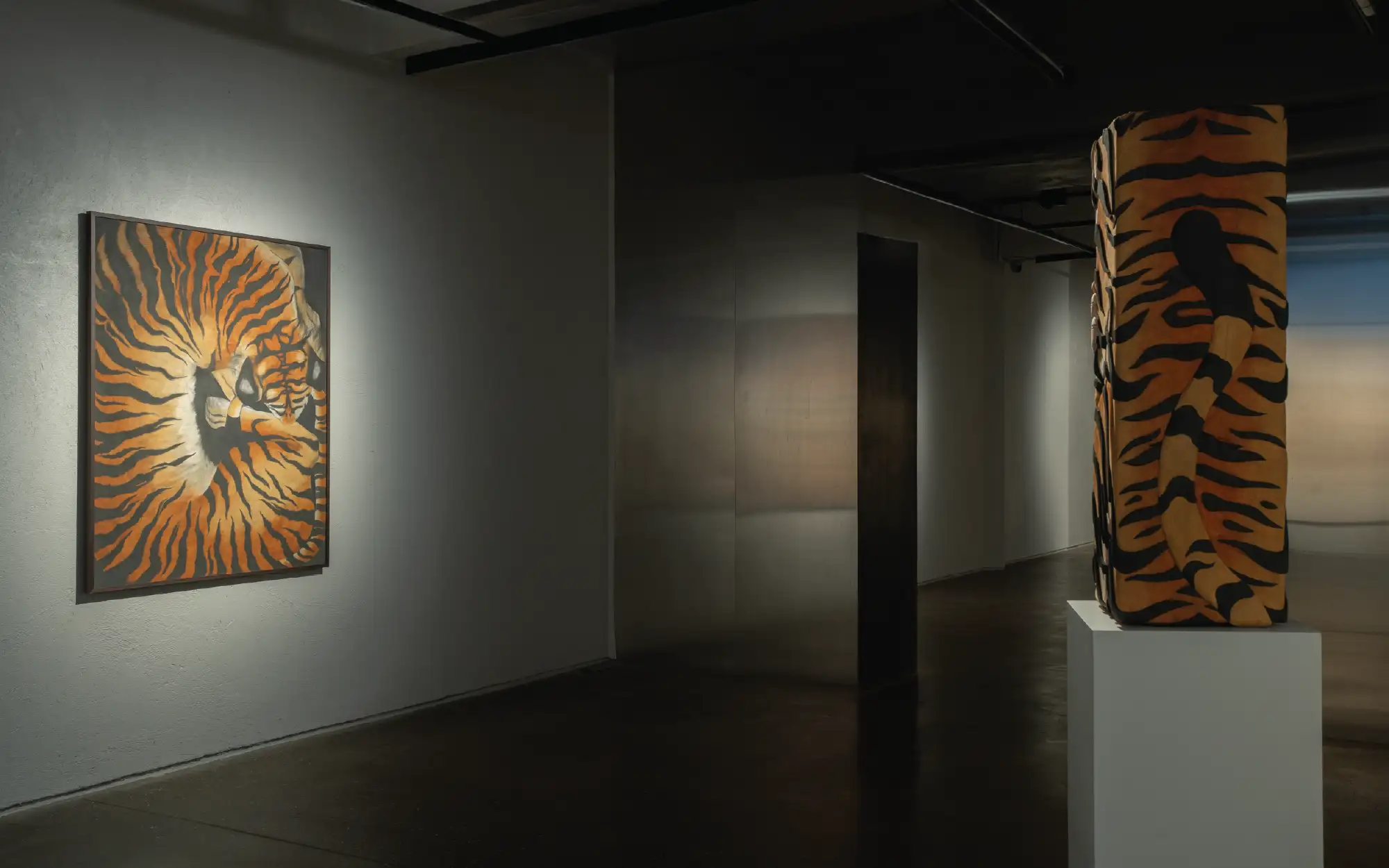
“Being Bhutanese is not just about the symbols, imagery, or traditions that are immediately recognisable. It is also about the experiences, questions, changes, and realities that shape us today,” says Zimbiri.
For her, being a Bhutanese artist does not mean feeling the need to constantly represent Bhutan. Instead, it means creating honestly from personal experience. “The culture, landscapes, histories, and values that have shaped me naturally find their way into my work, just as my experiences outside Bhutan have also become part of how I see the world.”
Together, Tintin, Zimbiri, and Tsogyal reflect a contemporary art scene still defining its identity, language, and possibilities. All three of these artists have expanded their audience and are working towards showcasing their work. While each approaches Bhutanese identity differently, through Buddhist philosophy, cultural symbolism, and everyday experience, they share an understanding that tradition is not something fixed, but something that continues to grow and transform. As Bhutan’s artistic ecosystem develops, these artists are not only shaping their own practices but also creating the foundations for a more expansive and inclusive future for contemporary Bhutanese art.