The Ritz-Carlton Kyoto: A Riverside Stay Rooted In Japanese Culture
The Ritz-Carlton, Kyoto draws on Japanese craftsmanship, art and landscape to bring Kyoto’s cultural heritage into a contemporary hospitality setting.
- 16 Nov '26
- 1:50 pm by Tanvee Abhyankar

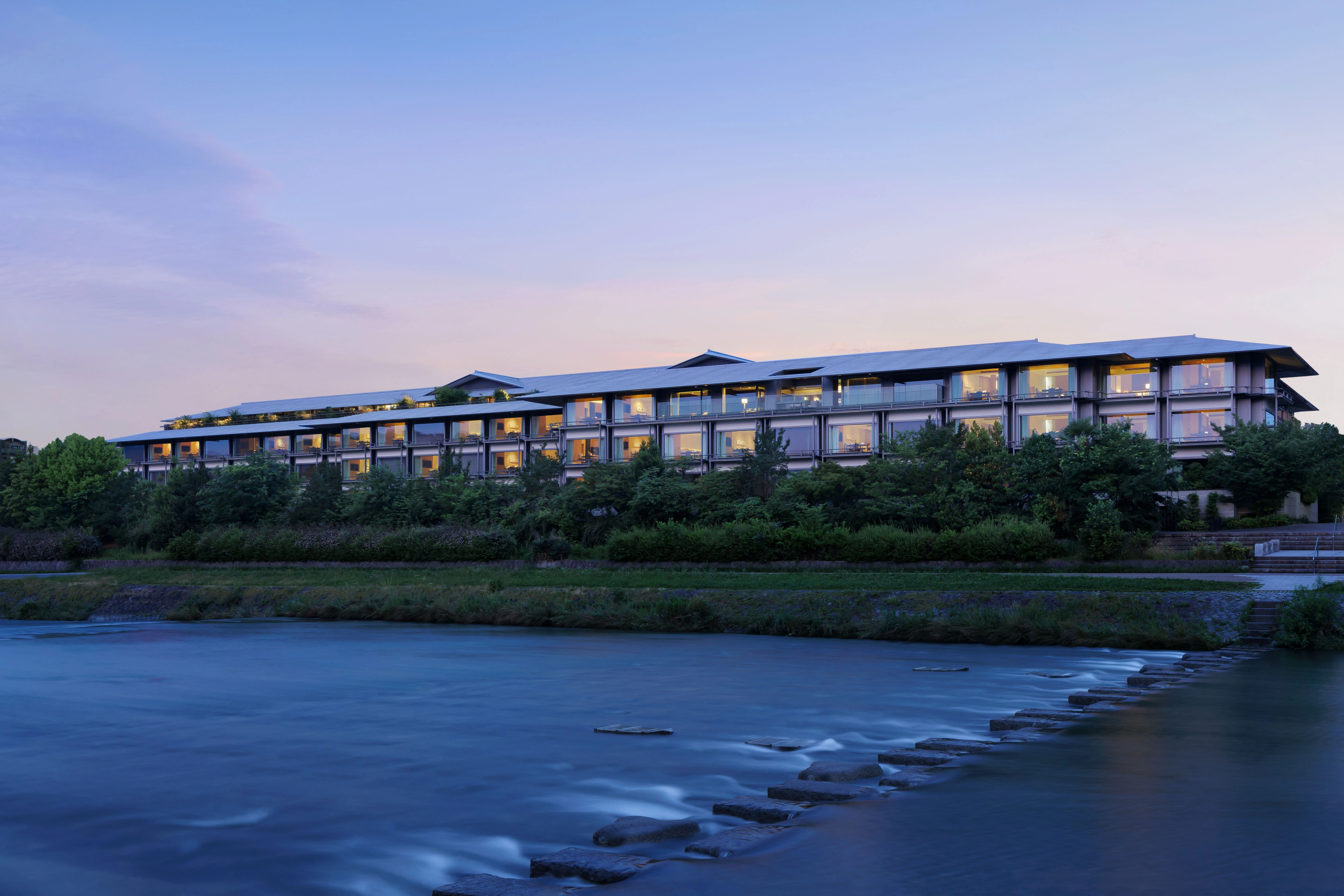
Set along the banks of the Kamogawa River, The Ritz-Carlton, Kyoto offers a luxurious base to explore one of Japan’s most historic cities. With views towards the Higashiyama mountains and many of Kyoto’s cultural landmarks, such as Kiyomizu-dera, Fushimi Inari, and Kinkaku-ji, within easy reach, the hotel combines the convenience of a city address with the calm of a riverside retreat. Its relationship with the city extends beyond its location, finding expression in the property’s architecture, gardens, art collection and cultural experiences. The minute you step inside, you will be taken over by a sense of traditional Japanese charm and tranquillity that is so unique.
Getting There
Cradled in the site favoured by Japanese nobility since the 17th century, the property now offers 134 guest rooms and suites with distinctive Japanese motifs, four restaurants and bars, authentic Japanese cuisine, and a spa for the ultimate rejuvenation. The hotel also cultivates experiences for all guests that are as diverse as the city itself. The easiest way to get to The Ritz-Carlton, Kyoto from outside the country is to fly into Kansai International Airport (KIX) or Osaka Itami Airport (ITM), take an airport limousine bus or express train to Kyoto Station, and grab a short 20-minute taxi directly to the hotel.
Interiors Taken Over By Traditional Japanese Charm
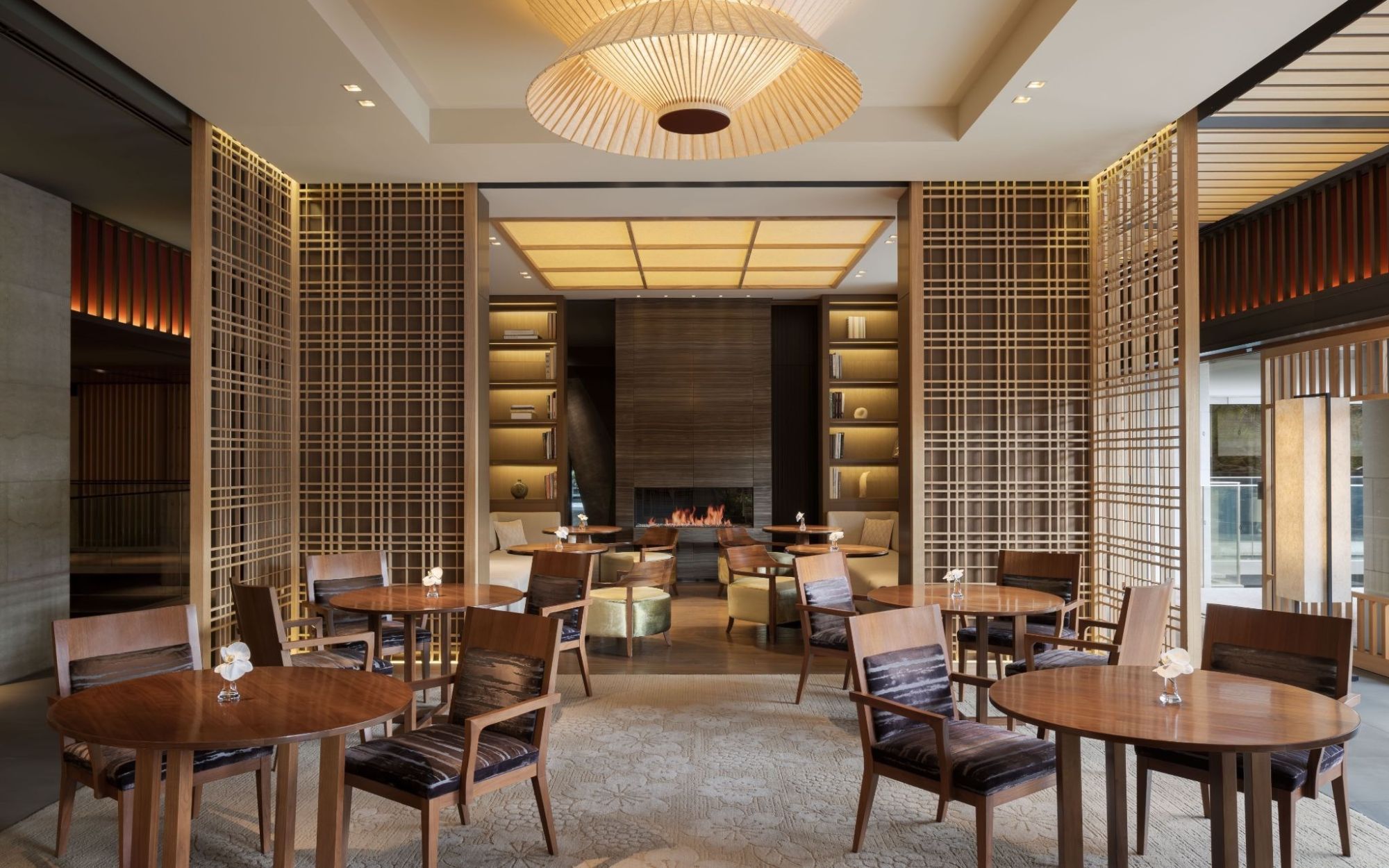
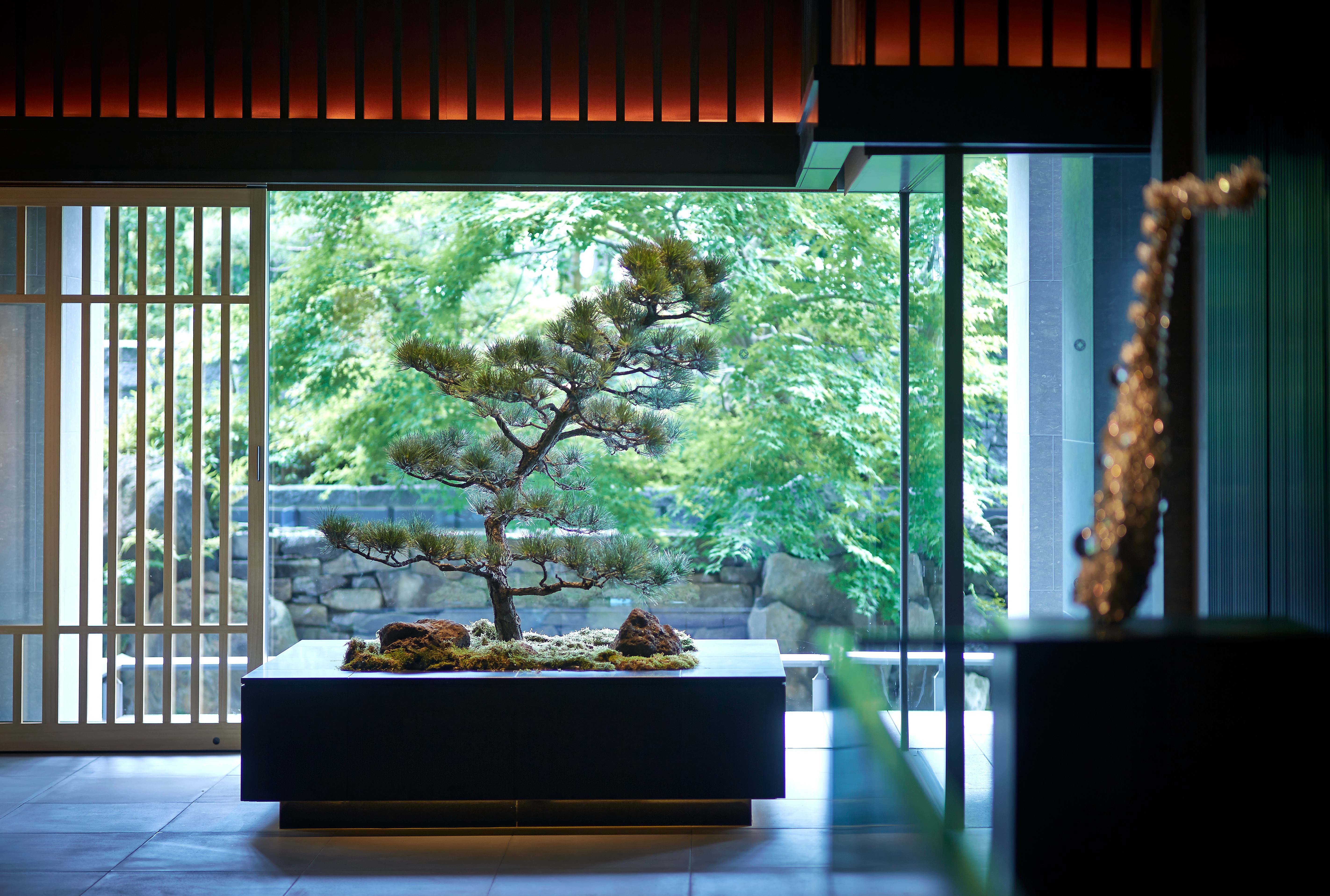
The first impressions come from the hotel’s interiors, where contemporary luxury is accompanied by Japanese design references. Surrounded by the warmth of wood panelling and a restrained material palette, the interiors imbue a strong connection to Kyoto’s cultural heritage. Artwork is displayed throughout the public spaces, with bespoke glass pieces forming a particularly striking part of the collection. The lobby also features a large bonsai tree, adding another element of Japanese horticultural tradition to the setting. The hotel’s collection includes 409 artworks by 80 Japanese artists, with works extending from the common areas into the guest rooms and spa.
The property’s connection to Kyoto is reflected in details across its design, from traditional patterns and timber craftsmanship to materials associated with Japanese architecture. Ribbed wood and gridded forms recall the city’s machiya townhouses and chashitsu tea rooms, while kumiko joinery demonstrates the precision of assembling timber without nails or screws. Nishijin-ori, the woven textile associated with Kyoto’s Nishijin district, adds texture to selected spaces, and lighting inspired by the kyowagasa, or Kyoto-style umbrella, translates a traditional form into contemporary design.
Rooms Designed For A Longer Stay
The urban hotel has 134 rooms and suites, designed with references to the traditional Kyoto townhouse. Some rooms feature an engawa, a transitional space traditionally positioned between the interior of a Japanese home and its garden or exterior. The rooms combine Japanese design details with contemporary comforts, including traditional tea sets and yukata robes. Natural materials, considered layouts and views towards the river, gardens or Higashiyama district give the accommodation a sense of connection to its surroundings.
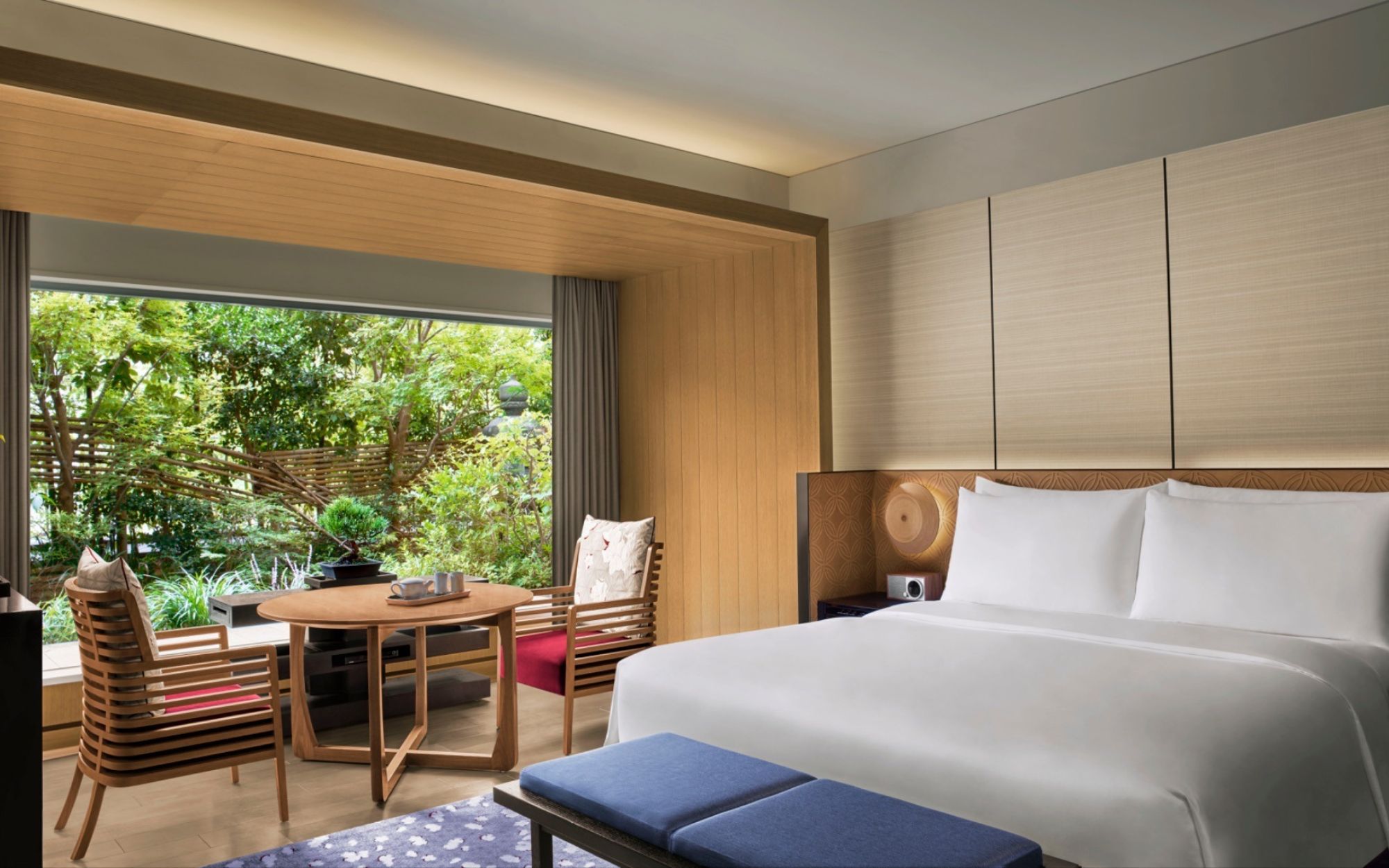
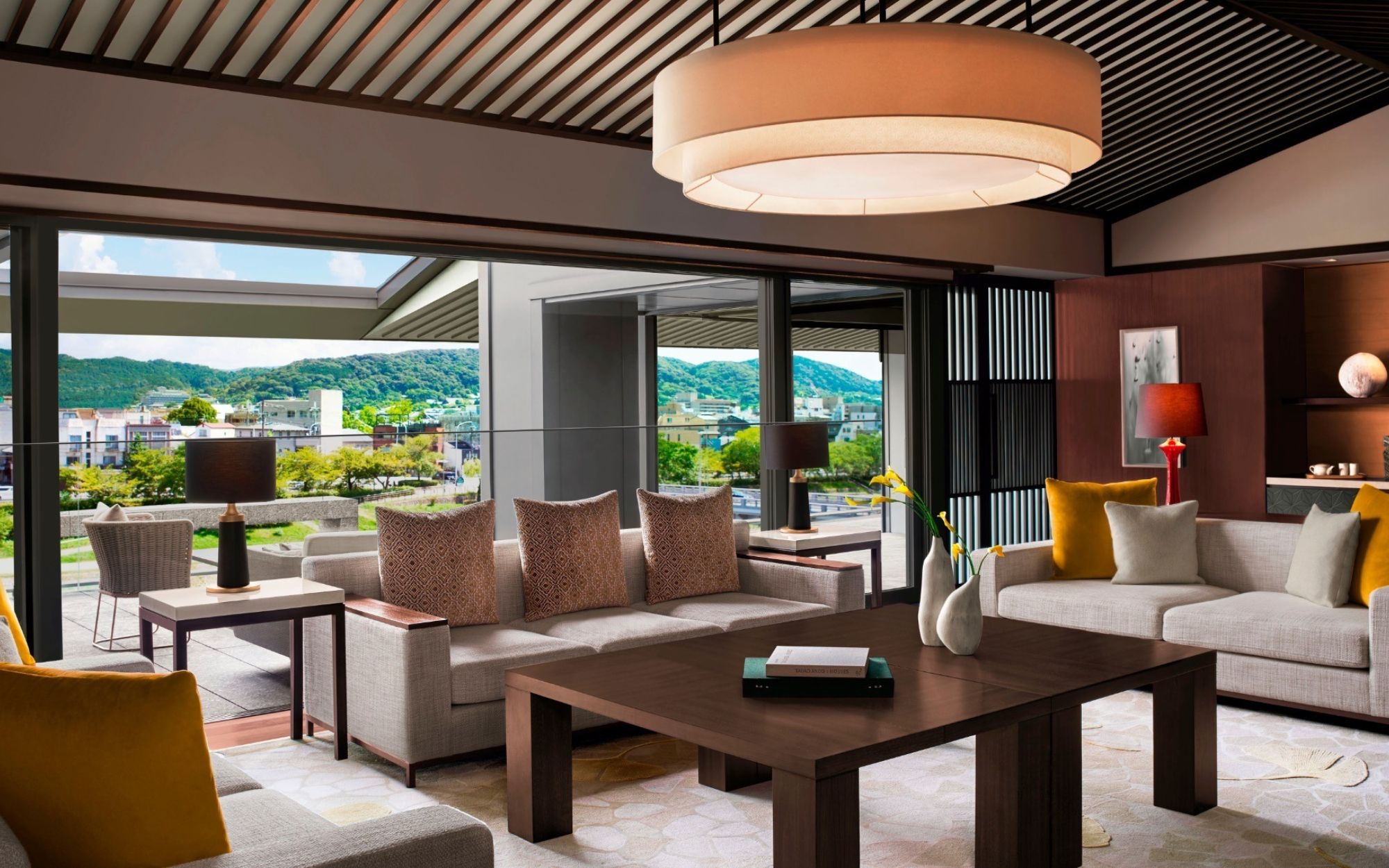
The layouts create distinct areas within the accommodation, with partitions helping to separate different functions of the room. Depending on the category, the experience may also include a closer relationship with the outdoors, through a garden-facing view or a private terrace. For those looking for a more expansive stay, the Ritz-Carlton Suite includes a living room with a fireplace, a separate dining room, a private service kitchen and a balcony with its own fireplace. The Garden Terrace Suite offers a different perspective, with a private terrace overlooking greenery and views towards the Higashiyama mountains.
A Destination For Dining
Dining is one of the defining parts of a stay at The Ritz-Carlton, Kyoto. The hotel brings together Japanese and Italian cuisines, a dedicated afternoon tea offering, a cocktail bar and a chef-led dining experience, giving guests several ways to explore different flavours without leaving the property.
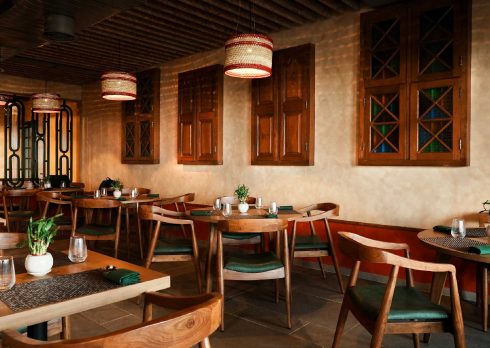
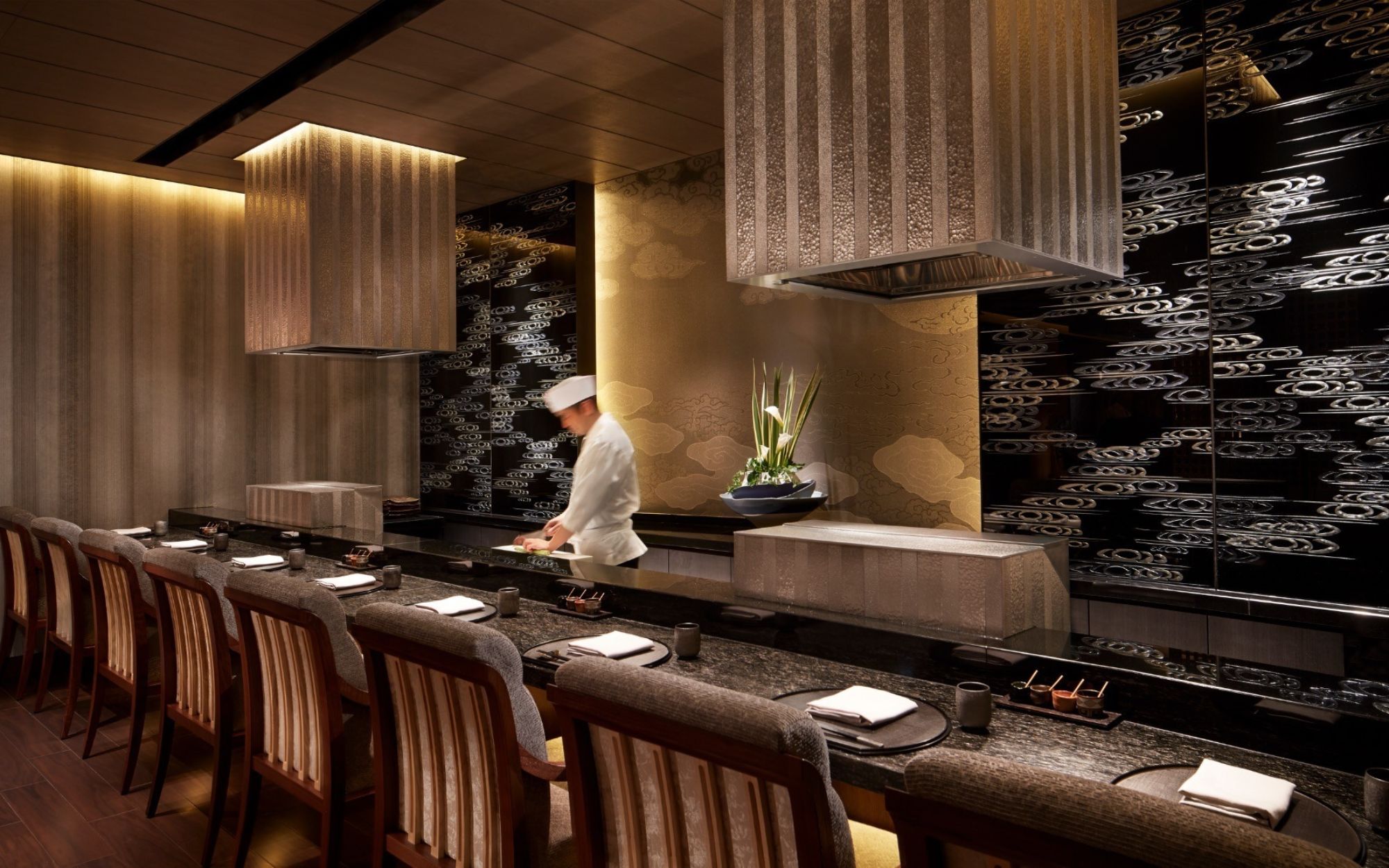
At Mizuki, Japanese dining is presented through four distinct formats: Kaiseki, Sushi, Tempura and Teppanyaki. Each offers a different way to experience Japanese culinary traditions, from the sequence of seasonal dishes associated with kaiseki to sushi served at an 11-metre counter. At the sushi and tempura counters, as well as at teppanyaki, guests can watch the chefs at work, making the preparation part of the dining experience. At Sushi Mizuki, sculptural forms set against flowing water, stone and greenery add another visual dimension to the setting.
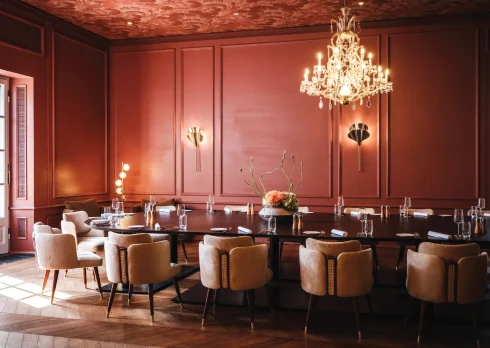
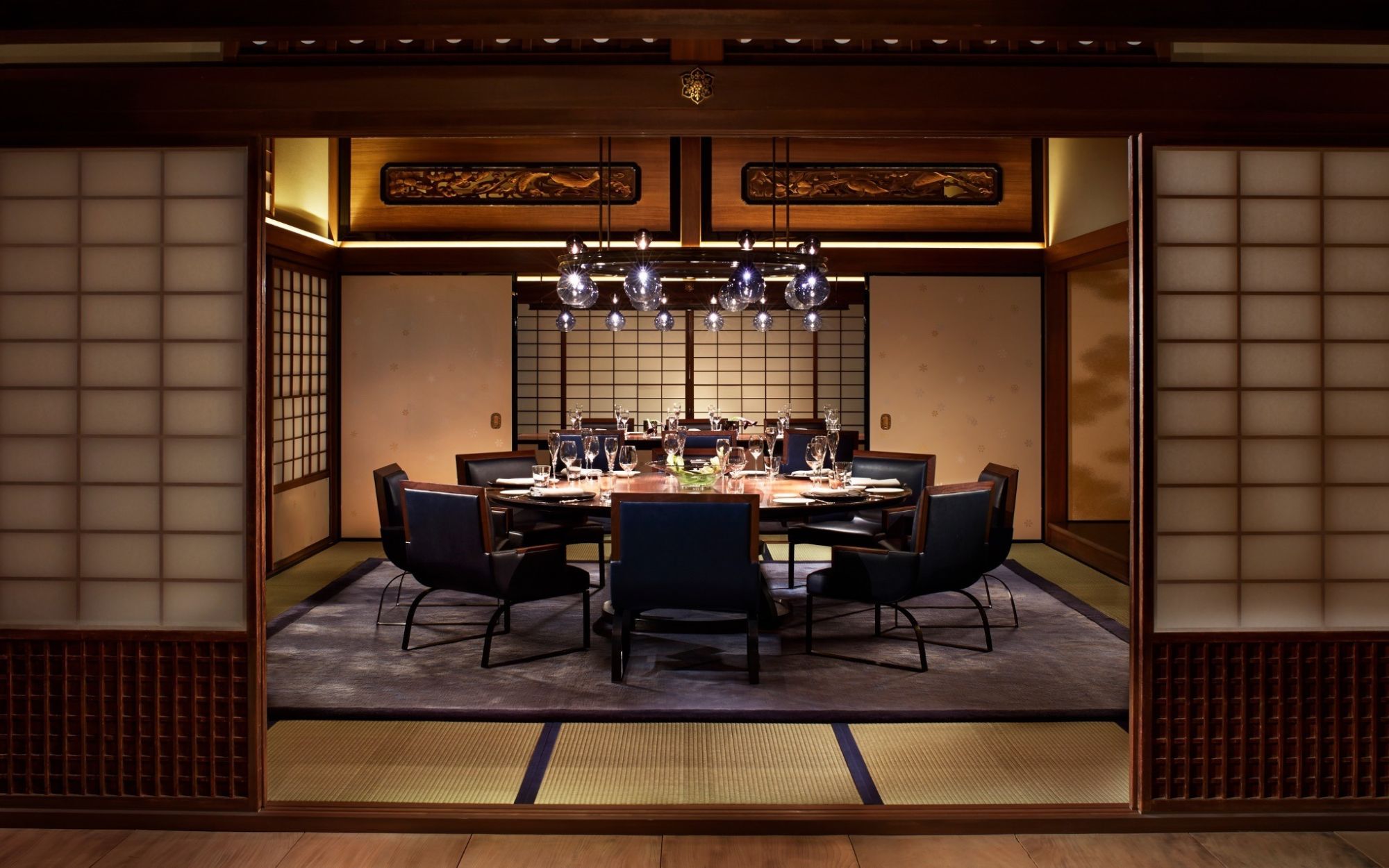
La Locanda offers a contrasting approach, serving Italian cuisine prepared with locally sourced Japanese ingredients. The restaurant also incorporates Ebisugawa-tei, a cypress-wood mansion built in 1908 by businessman Denzaburo Fujita. The site once belonged to merchant Ryoi Suminokura, and the banks of the Kamogawa were associated with entertainment during the Edo period. Today, the mansion has found a new purpose within the hotel’s dining programme, its traditional Japanese interiors sitting alongside Western furniture and Italian cuisine. The historic setting includes private dining rooms such as Goten-no-ma and Chidori-no-ma, offering more intimate spaces for gatherings. Rather than serving solely as a preserved architectural relic, Ebisugawa-tei remains in active use, connecting the property’s history with its contemporary hospitality.
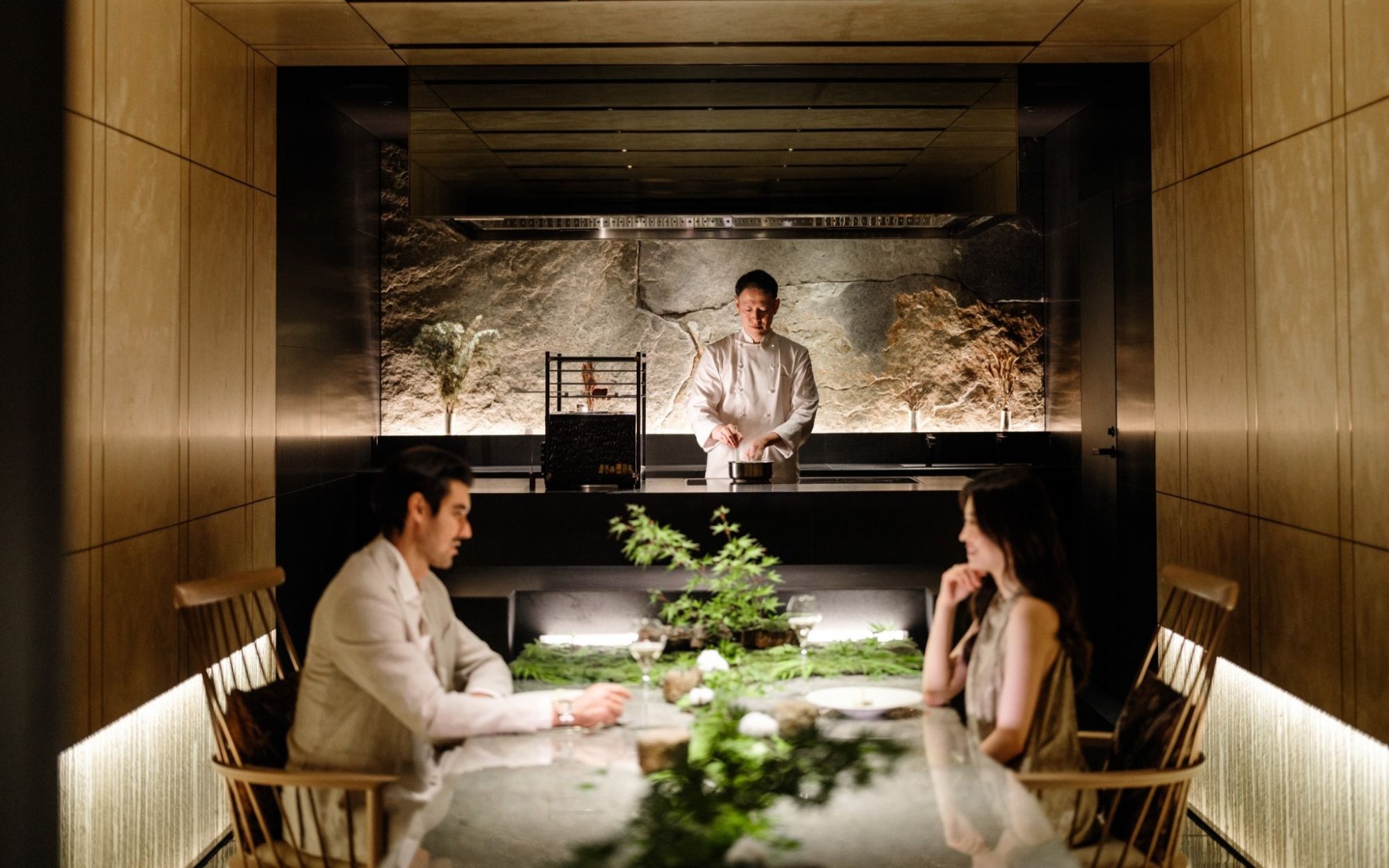
For a more intimate meal, Chef’s Table by Katsuhito Inoue offers a modern ‘Omakase’ experience for a group of eight. Its menus draw on Japan’s 72 micro-seasons, with the chef selecting ingredients according to season and availability. The approach places emphasis on local produce and the changing character of the year, making the experience an opportunity to explore Japanese food through its seasonal rhythms.
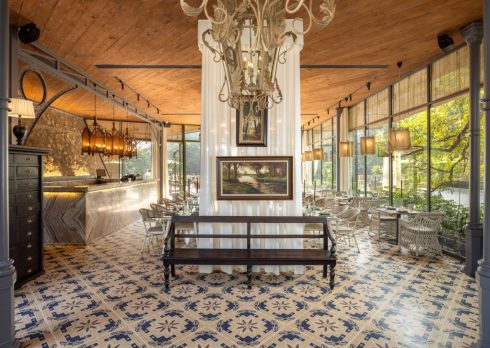
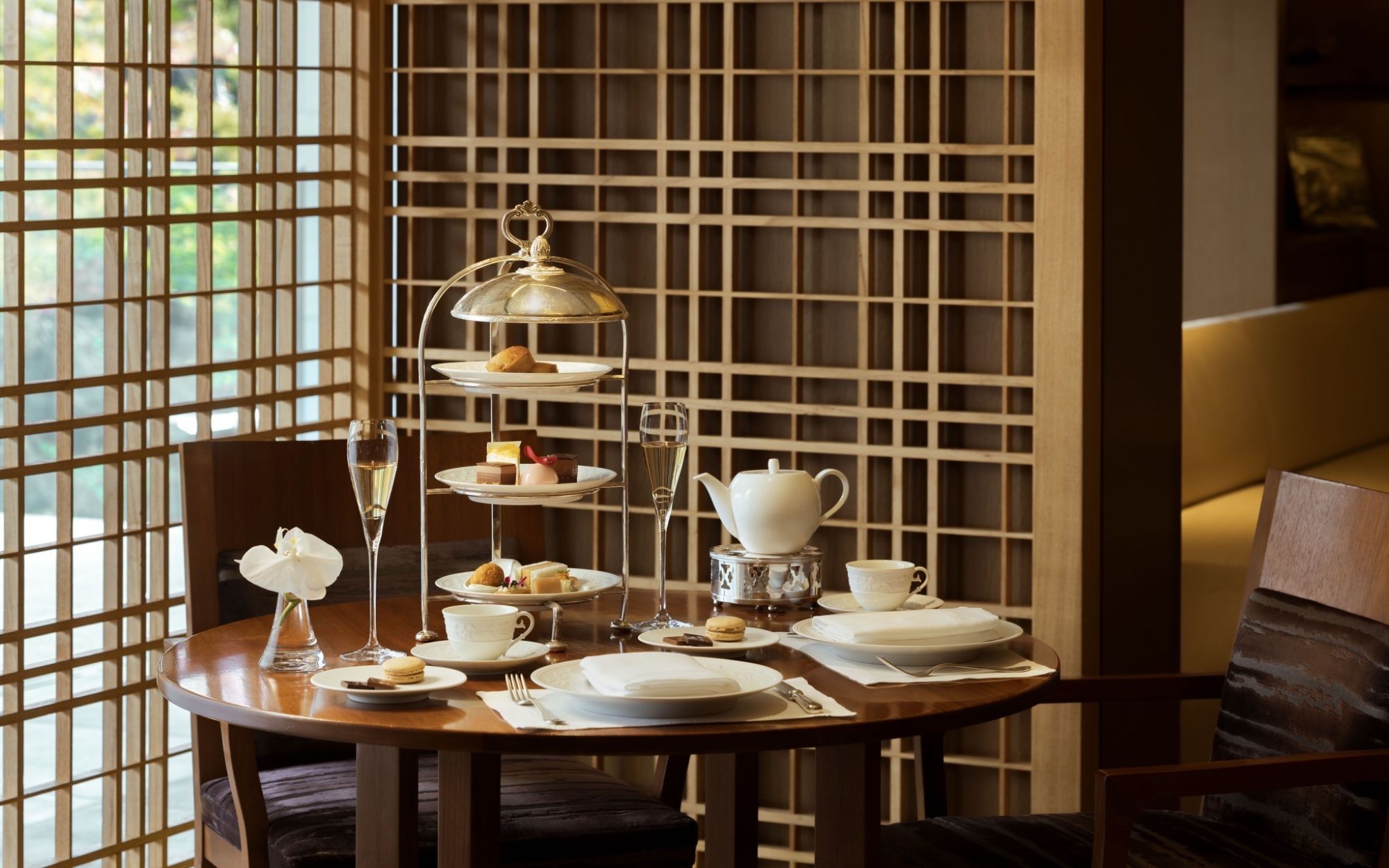
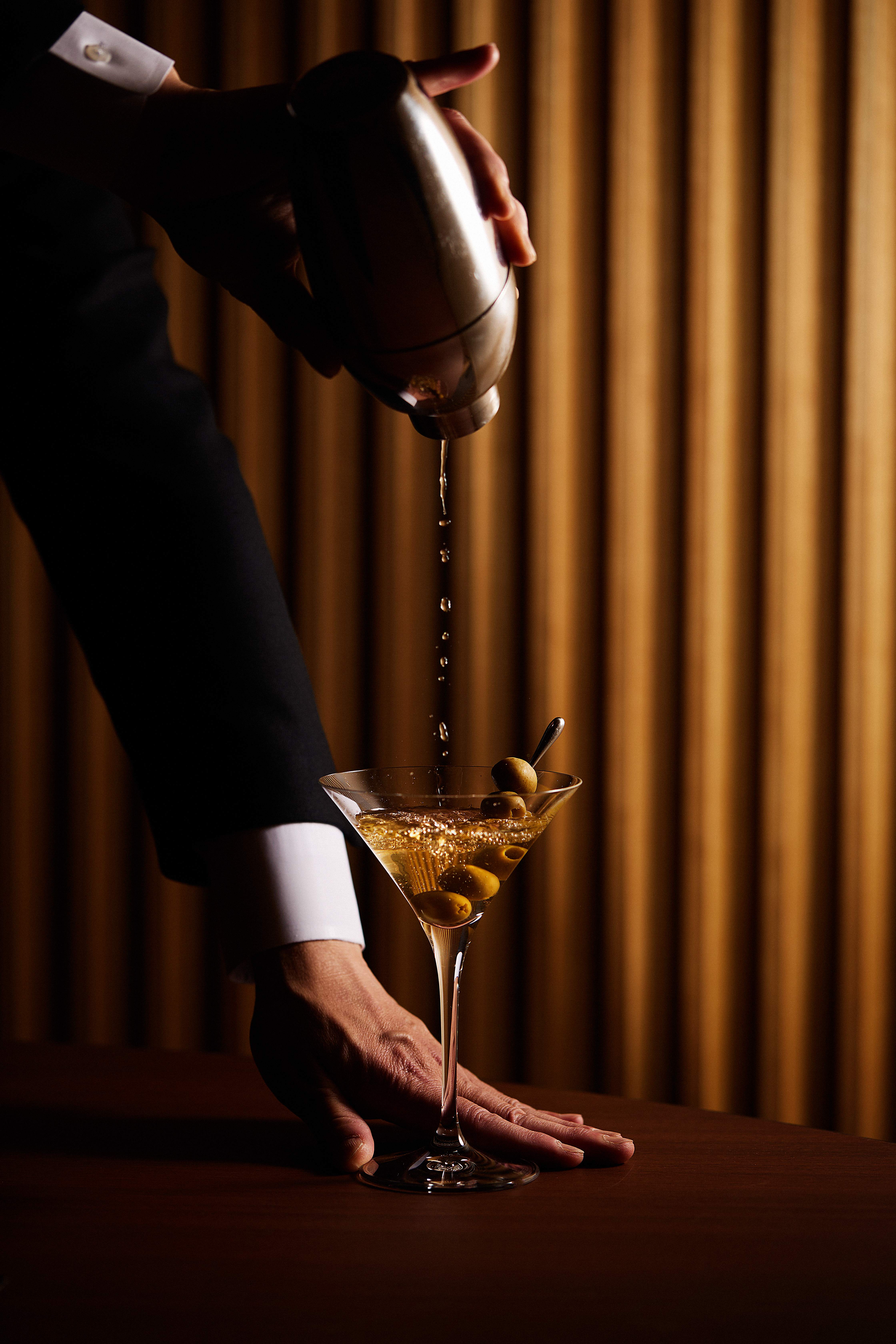
The Lobby Lounge offers a more relaxed setting for a break between outings. Through a unique partnership with famed patisserie PIERRE HERMÉ PARIS, you can relish a variety of exquisite desserts to complete the gastronomic experience. Seasonal savouries, pastries, cakes, macarons and chocolates bring a taste of Paris to the property, while Japanese artwork, a library and a terrace beside a cascading waterfall provide a setting in which to linger. Later in the day, The Bar serves cocktails, fine spirits and a selection of wines. Its drinks include signature creations and interpretations of classics such as the Smoked Old Fashioned, presented with an aromatic flourish.
Together, the dining venues make it possible to move between distinctly different experiences over the course of a stay, whether that means formal Japanese cuisine, Italian cooking in a historic setting, afternoon tea or cocktails in the evening.
Experiences Beyond the Hotel
For guests who want to explore Kyoto beyond its well-known sights, the hotel offers a programme of curated cultural activities. These include cycling tours, traditional craft workshops, Japanese sweets-making classes and guided outdoor experiences. The programme provides opportunities to engage with local traditions through direct participation, rather than simply visiting a landmark.
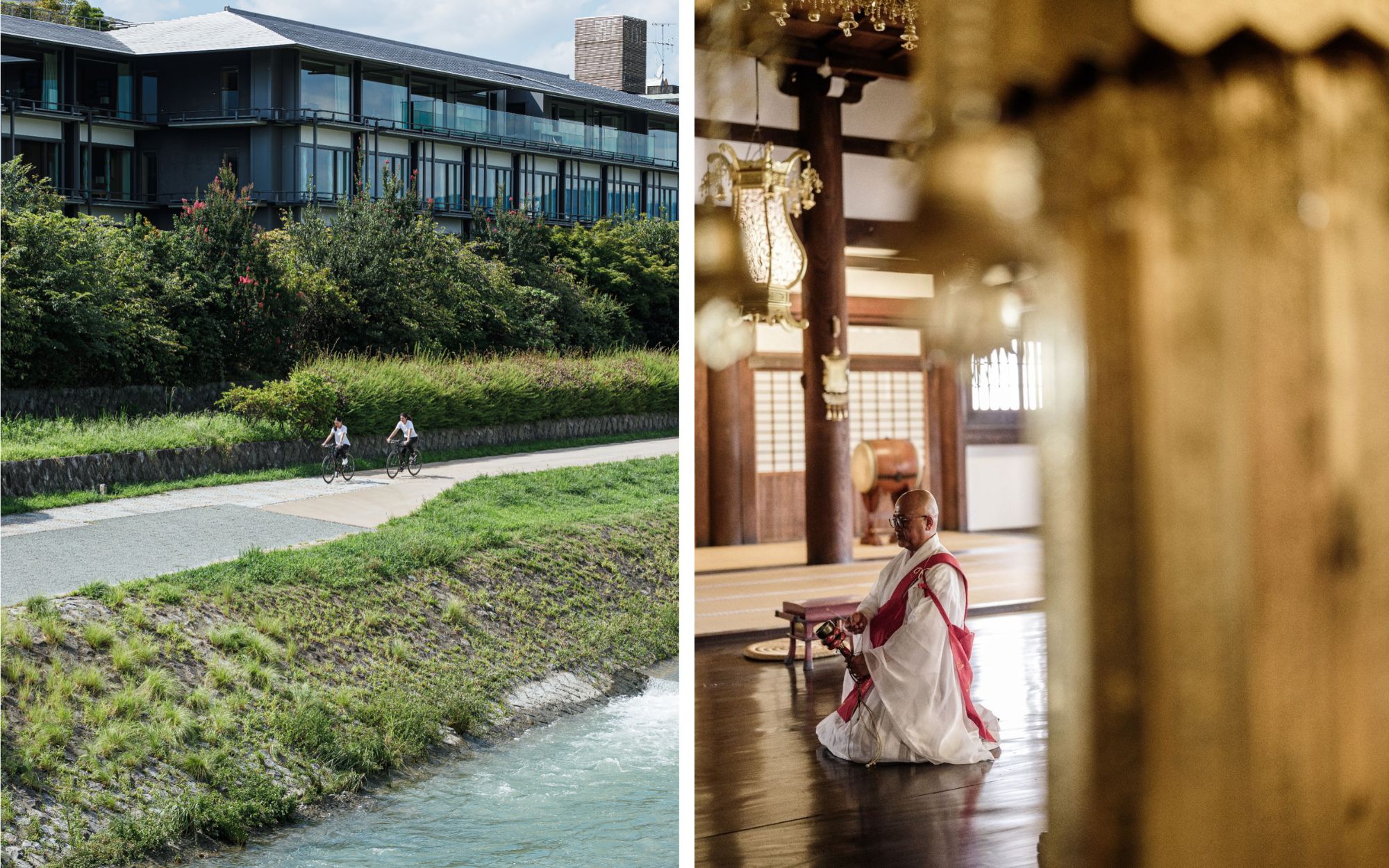
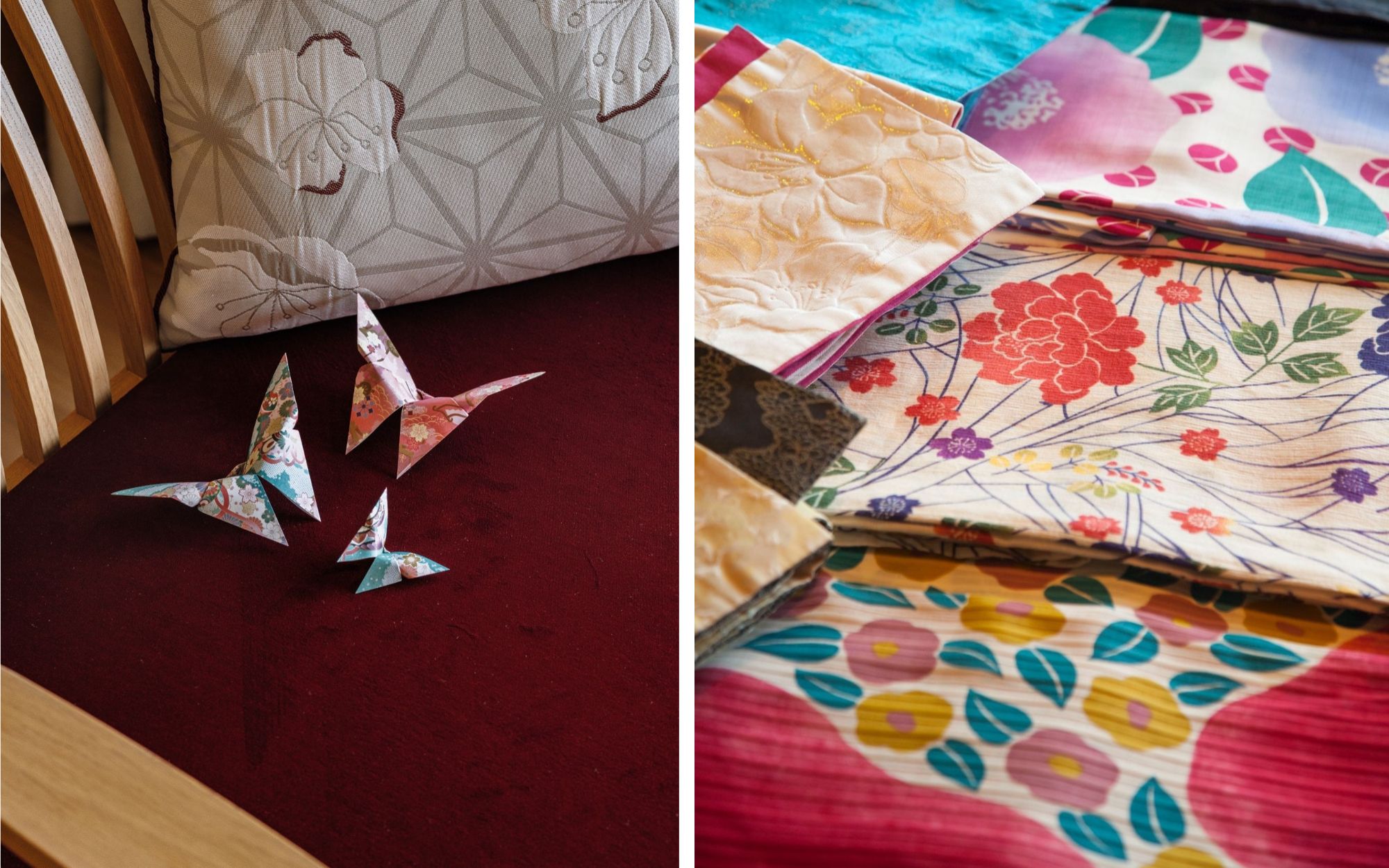
Other activities focus on the pleasure of making. An origami workshop introduces guests of all ages to the art of paper folding, from classic paper cranes to playful creations such as jumping frogs and ninja throwing stars. The hotel lists a temple-chanting experience too among its wellness offerings. The gardens offer another way to encounter Japanese traditions without leaving the property. Guests can also experience Kyoto in traditional attire through a kimono activity, choosing from a seasonal selection of colours and patterns before taking a stroll through the city.
Designed by Kanji Nomura around the principle of shijin-so-o, which draws on four directional guardians in Japanese cosmology, the gardens use distinct arrangements of stone, water, bamboo and planting. The northern garden references Genbu, the Black Turtle; the eastern garden draws on the Azure Dragon; the southern garden evokes Suzaku, the Vermilion Bird; and the western garden represents Byakko, the White Tiger. The central Atrium garden features traditional hoto lanterns, with pine, plum and bamboo adding further layers to the composition. The gardens change with the seasons and are maintained by the hotel’s resident gardening team.
Delve Into Wellness
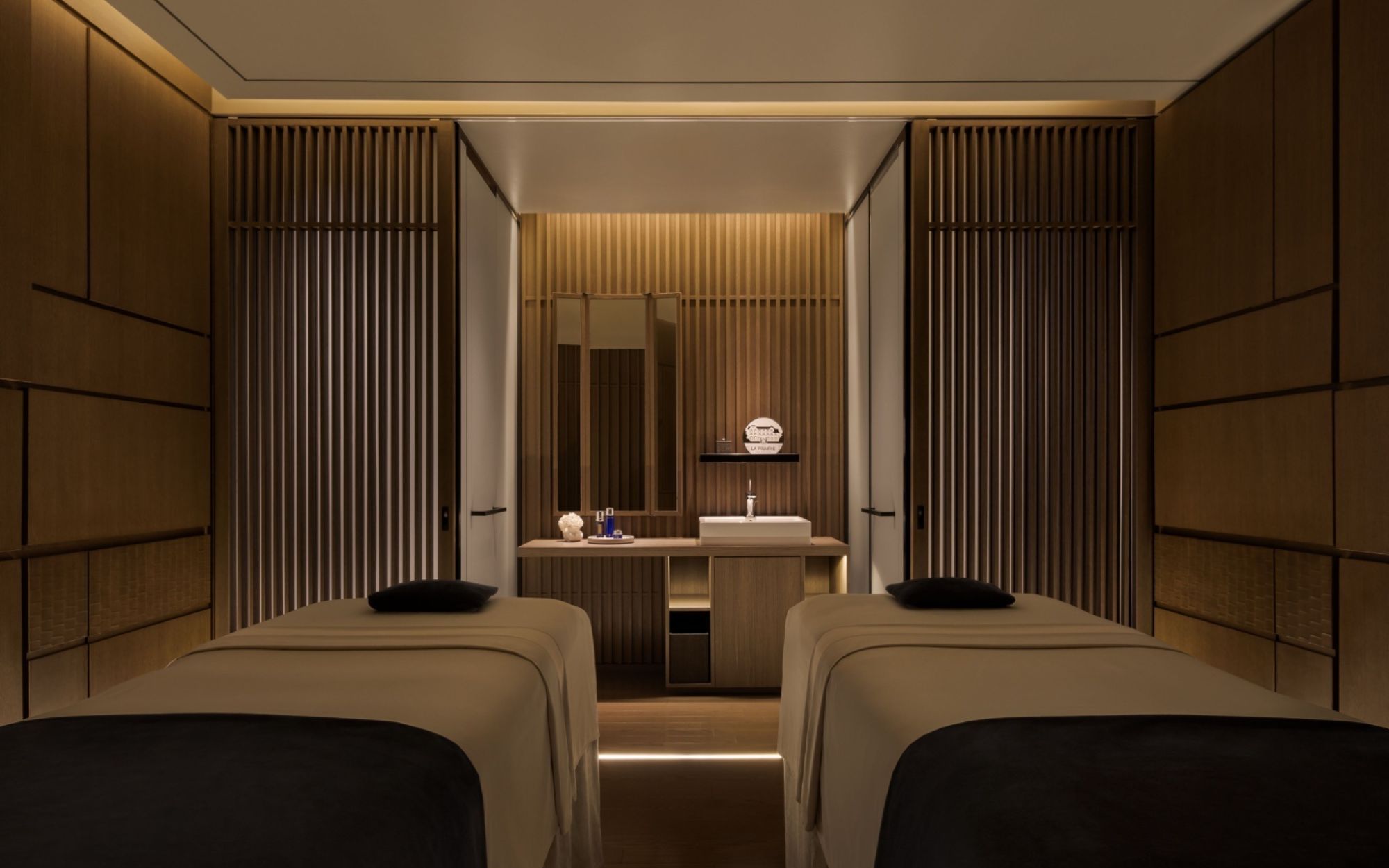
After a day in the city, the hotel’s wellness facilities offer space to slow down. The LA PRAIRIE SPA has seven treatment rooms and offers treatments using La Prairie products. There is also a heated indoor swimming pool and a fitness centre open 24 hours. The pool’s design draws on the landscape of the Kamogawa River, with three shades of blue evoking the spring at the river’s source. It is a subtle reference to the natural setting outside, carried into a contemporary indoor space. The Fitness Centre offers a calm, well-appointed space to move, reset, and carry your routine with a refreshing sense of wellbeing.
Final Thoughts
The Ritz-Carlton, Kyoto brings together the elements of a city stay: a riverside setting, thoughtfully designed accommodation, a varied dining programme and experiences that offer different ways to engage with Japanese culture. Its restaurants make a strong case for spending time within the hotel, while its cultural activities provide a starting point for exploring the city beyond it. From the artworks and gardens to the opportunity to fold origami, the property offers several ways to encounter the traditions that continue to shape the city. For guests looking to experience Kyoto at their own pace, it provides both a comfortable base and plenty of reasons to linger.
DP Loves
#1 The Ritz-Carlton, Kyoto makes a strong case for a city stay, with the Kamogawa River and Kyoto’s historic neighbourhoods close by, while offering the comforts of a full-service luxury hotel.
#2 The rooms are as thoughtfully planned as they are luxurious. Multiple partitions create distinct areas for sleeping, lounging and dressing, giving the accommodation a sense of space and privacy.
#3 The hotel’s public spaces are worth taking time over, with an extensive collection of Japanese art, including striking glass works. The lobby is also home to a bonsai tree said to be around 200 years old.
#4 Sweet-toothed guests have another reason to visit the Lobby Lounge, where the hotel’s association with PIERRE HERMÉ PARIS brings the French patissier’s creations to Kyoto.
#5 From the LA PRAIRIE SPA and heated indoor pool to the fitness centre and bridal salon, the hotel brings together an extensive range of facilities under one roof.
#6 The hotel’s experiences offer opportunities to explore Kyoto beyond its usual sightseeing circuit, such as cycling excursions and temple visits or even a private outdoor picnic.